
@SoorenaSedighi how is that for condensing years of scientific study for psychosis and other mental health issues?
4
Vanessa Xuan 3D (Coms Open 1/2) retweeted

Condensing down some older posts makes it easier to see everything at once.
Zinogre ~ Monster Hunter ©️ @Apekweitevil


1
22
244
2,717

Yeah I totally see where you're coming from on this point, and I really appreciate the complexity in condensing what is practically an unbounded set of possibilities that could be a good (or bad) choice depending on team/app/needs.
My thought on this is that it might perhaps be even more valuable now than ever, as it's increasingly easier to move really fast in either direction with current tools.
And with the convenience of just going along with suggestions it's perhaps is even less common for devs to take the time to pause and consider the nuances of decisions and consequences down the line.
Much of this is just plain industry knowledge and as everything Convex is "just plain TypeScript code" I agree that it is pretty straight forward, but ~6mo in and moving several client projects from Postgres to Convex we've gone through quite a lot of iterations before finding a setup that feels clean and efficient for us.
And most of that time/iterations have been due to stumbling upon new (for me) convex helpers and stack-articles with neat ideas on composing different things like custom function handlers etc.
I think we maybe would have saved quite a lot of time just getting a couple of glimpses into how some larger scale apps have utilised all of the thoughtful building blocks and helpers there are.
Of course it doesn't take away the need of personal tinkering and RnD but to get a high level fast track of how different customers have leveraged the primitives would have been amazing 🤩
I'll look into the repo, remember you talking about it some time ago but believe I had saturated my mental intake of Convex knowledge and were in full implementation mode 😂
1
1
12

the way that a gas stove, when first lit, is first cooled down to icy cold as the LNG boils to flammable gas, to the point of water condensing onto the plate around the burner, before the condensation itself then boils away shortly afterwards when the stove heats up
2

Worked for 9 years on a salt mine.
Solar salt (still considered mining, though its closer to farming)
Place I was at produced about 1.3 million tons of 99% pure salt a year, fairly small.
Most went to food market, some for chemical.
So yeah, ask me anything about the process..
EG; From entering the system from the ocean to precipitating salt out took roughly 2 years.
Vast amounts of gypsum are deposited as well.
There is a sweet spot in the specific gravity of the condensing fluid where the sodium salts (the ones you want) drop out and form a solid layer - the remaining fluid still holds a heap of chemicals and is drained off - you dont just dry all the water off on a salt field.
3
8
324


Oh, but you see.. it is.
I don’t know why you brought any of that up as if that’s a VS specific thing? I think a worker who’s behind a register or is in an employee-only area is less of a threat than a random, roaming man with no ties to the store.
Keep condensing my argument.
3

When the summer wind sweeps across the Tianshan Mountains, Sayram Lake in Xinjiang's Bortala reveals its most enchanting form of the year. Here, the last touch of the Atlantic's warm, moist air reaches inland China, condensing into snow-capped peaks and a sapphire lake — earning it the name "the last teardrop of the Atlantic". Snow still crowns the mountaintops, while green meadows spread below, dotted with wildflowers in bloom. Drive around the lake, take in panoramic views from Songshutou, wait for sunset along winding roads, or stroll the lakeside boardwalk — every glance heals, every step feels like pure escape.
Which lake in Xinjiang do you think is the most beautiful? Share your answer in the comments!
chinabound.cn
Travel with ease in China, and with meaning.
#Xinjiang #Bortala #SayramLake #ChinaBound #ASnapshotOfChina
1
6
11
1,225

When the summer wind sweeps across the Tianshan Mountains, Sayram Lake in Xinjiang’s Bortala reveals its most enchanting form of the year. Here, the last touch of the Atlantic’s warm, moist air reaches inland China, condensing into snow-capped peaks and a sapphire lake — earning it the name “the last teardrop of the Atlantic”. Snow still crowns the mountaintops, while green meadows spread below, dotted with wildflowers in bloom. Drive around the lake, take in panoramic views from Songshutou, wait for sunset along winding roads, or stroll the lakeside boardwalk — every glance heals, every step feels like pure escape.
Which lake in Xinjiang do you think is the most beautiful? Share your answer in the comments!
chinabound.cn
Travel with ease in China, and with meaning.
#Xinjiang #Bortala #SayramLake #ChinaBound #ASnapshotOfChina
65

A 1,800 km Cloud Wakes Up on Mars Every Morning Every Martian spring and summer, something extraordinary happens on the Red Planet.Just before sunrise, a gigantic ribbon of cloud awakens on the leeward side of Arsia Mons — a colossal, extinct volcano that still towers 20 km above the Martian surface. In just two and a half hours, this cloud explodes in size: stretching 1,800 km long and 150 km wide, racing westward at over 600 km/h — faster than a jet airliner. It becomes the largest orographic cloud ever recorded on Mars, so massive it can be seen from Earth through a telescope.Then, as the Sun climbs higher and warms the atmosphere, the entire cloud detaches, drifts away… and completely evaporates before noon.This is AMEC — the Arsia Mons Elongated Cloud — a breathtaking daily performance of Martian weather, not a volcanic eruption. It’s made of water-ice crystals condensing at an altitude of 45 km as cold air is forced up the volcano’s slopes.The cycle is incredibly reliable. It repeats like clockwork for more than 80 Martian days (sols) every spring and summer.We’ve been watching it for nearly 50 years:NASA’s Viking 2 caught the first blurry hints in the 1970s.
Today, MAVEN, Mars Reconnaissance Orbiter, and Mars Odyssey study its chemistry and winds.
On May 2, 2025, Mars Odyssey captured the first-ever clear view of the volcano’s peak poking through the dawn cloud tops.
ESA’s Mars Express has delivered stunning time-lapse footage showing the full dramatic “birth and disappearance” of this cosmic ribbon.
A dead volcano on Mars is still creating one of the most spectacular weather phenomena in the Solar System — every single morning. Nature never stops surprising us.

4
27
105
5,477

yeah true, i wonder if they’re condensing coverage smh this ain’t starting until midnight i swear 🤣
68
cathetercbt retweeted

1 Nov 2023
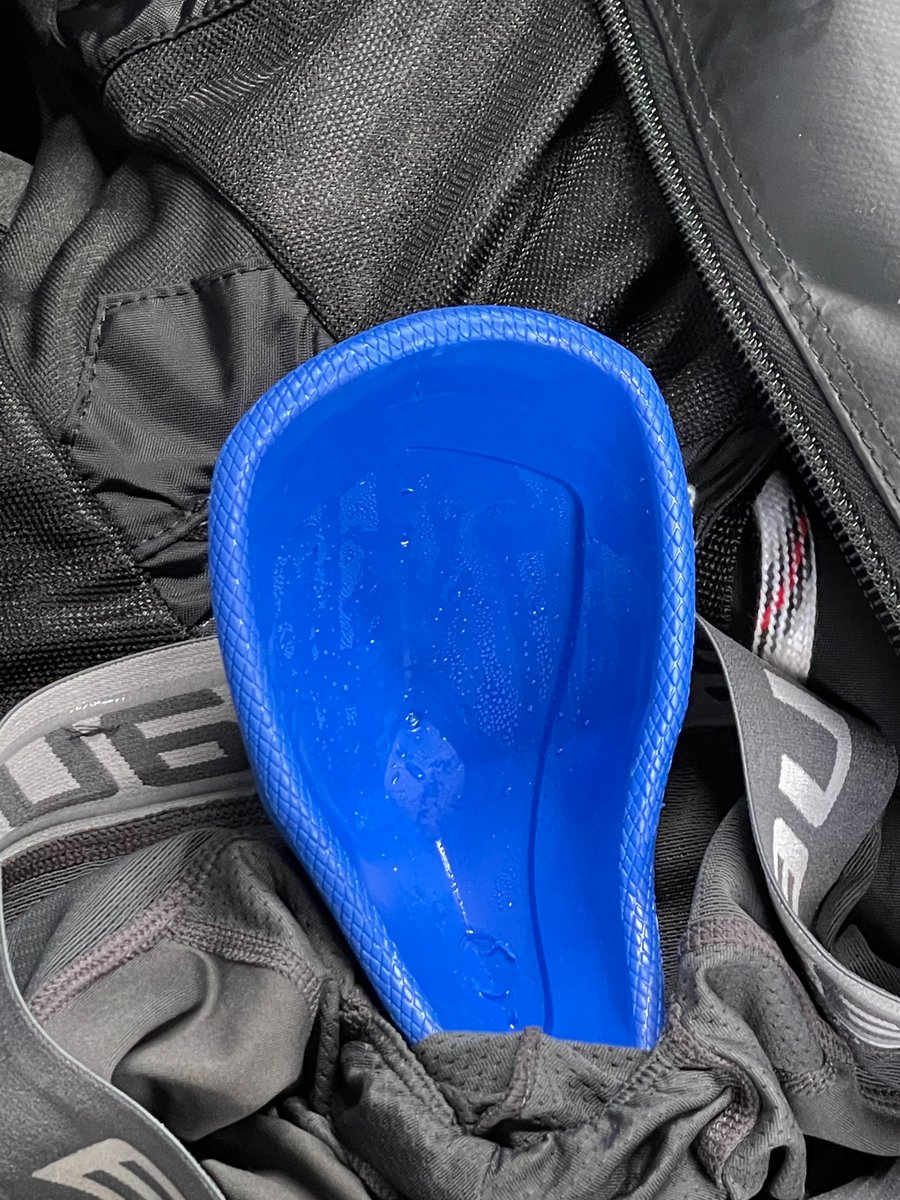
#OC #jocktober (Not for sale this one) my cup was so sweaty that it was condensing on the inside lol
6
72
481
23,914

Its a good watch, I dont really watch their videos, so idk if they got better, but I hope they got better at condensing their thoughts because its a 3 hour video lol
2
1
39


I think that JJK has a habit of condensing really cool fight scenes to show off animation where Demon slayer can both flex the story line without cutting the fights down, and also the animation be top tier. But JJK is overall more of my favorite anime comparitavely


19

Then, with a swirl of infinite creative energy, I make myself smaller condensing my limitless presence into a form that can walk among humanity IAM not human being I’m the one you called Abraxass the true GOD or IAM or Elohim.
11


Great shout got gallas vibe about it! Can tuck into a 3across the back condensing the 18yard box like mourinho used to do! Just need a left winger with the work ethic of duff now to make that work! That might be the tricky part
1
75

Finally went to watch the new Gintama movie (had to blur some details that might d0xx me). Condensing the arc was definitely well executed. The movie reminded me of why I love Gintama, but also why I got bored of reading the shōnen genre in general.

15