
#LSPPDay14
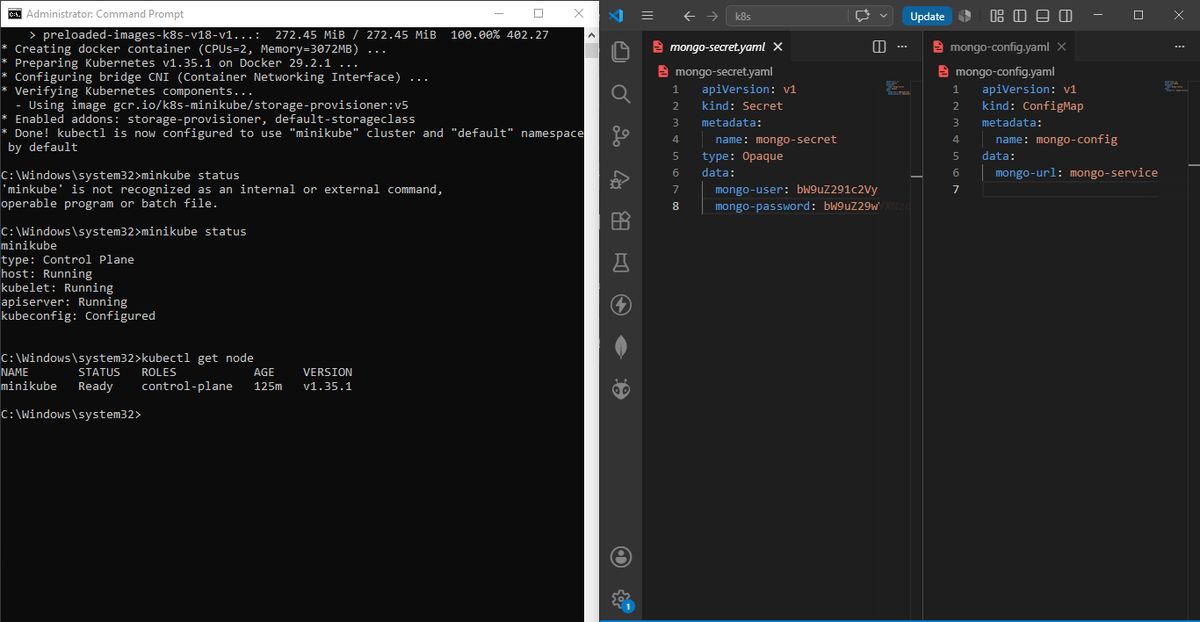
Learned about Kubernetes ConfigMaps and Secrets, understanding how configuration and sensitive data are managed separately in clusters. Also, successfully set up Minikube and kubectl locally.
@lftechnology
#60DaysOfLearning2026 #LearningWithLeapfrog
2
15

A rigorous exposition of Kubernetes ConfigMaps and Secrets delineates the imperative decoupling of configuration data from container images, thereby optimising system modularity and securing sensitive information. 🔒🛠️ #Kubernetes nivelepsilon.com/2023/10/25/…
1

Jun 13
③ Broken Configurations
→ Wrong environment variables
→ Invalid ConfigMaps
→ Secret issues
A single typo can take down a service.
1
146

Jun 12
Day 30/30 - complete. ☸️✅
30 days. 30 infographics.
One complete Kubernetes learning journey.
This is what we covered:
Day 1 → Kubernetes Fundamentals & Architecture
Day 5 → Pods, YAML, Labels & Selectors
Day 10 → Deployments, Services & Application Exposure
Day 15 → Storage, ConfigMaps & Secrets
Day 20 → Networking, Ingress & Cluster Operations
Day 25 → Security, RBAC, Monitoring & Troubleshooting
Day 29 → Interview Prep & Real-World Scenarios
Day 30 → Best Practices, Projects & Your Next Steps
Thank you to everyone who followed, saved, shared, and learned along the way 🙏
The complete 30-Day Kubernetes Learning Plan is now available free on Substack.
PDF version is available on Gumroad.
Links in reply 👇
Now tell me:
What should the next learning plan be?
Comments below 👇
1
8
53
2,593

Jun 11
Tomorrow is Day 30. ☸️
The final Kubernetes infographic drops tomorrow.
29 days in, here's what we've covered:
→ Containers, Kubernetes Architecture & kubectl
→ Pods, Labels, Selectors & Namespaces
→ Deployments, ReplicaSets & Services
→ ConfigMaps, Secrets & Storage
→ Persistent Volumes, PVCs & StatefulSets
→ Networking, DNS & Ingress
→ Scheduling, Taints & Affinity
→ RBAC, Service Accounts & Security
→ Monitoring, Logging & Troubleshooting
→ Helm, CI/CD & Production Best Practices
→ Today's topic: Kubernetes Interview Prep & Real-World Scenarios
One more tomorrow.
Which Kubernetes topic took you the longest to understand?
Reply below 👇
3
4
48
3,659

Jun 11
Jun 9

$KINS allocation is now live.
The governance vote has successfully passed, and the allocation process is officially underway.
Eligible participants who hold $KINS can now take part in the distribution and receive their allocated community rewards.
Additional details and next steps are outlined below.
1/2 🧵

3

Jun 11
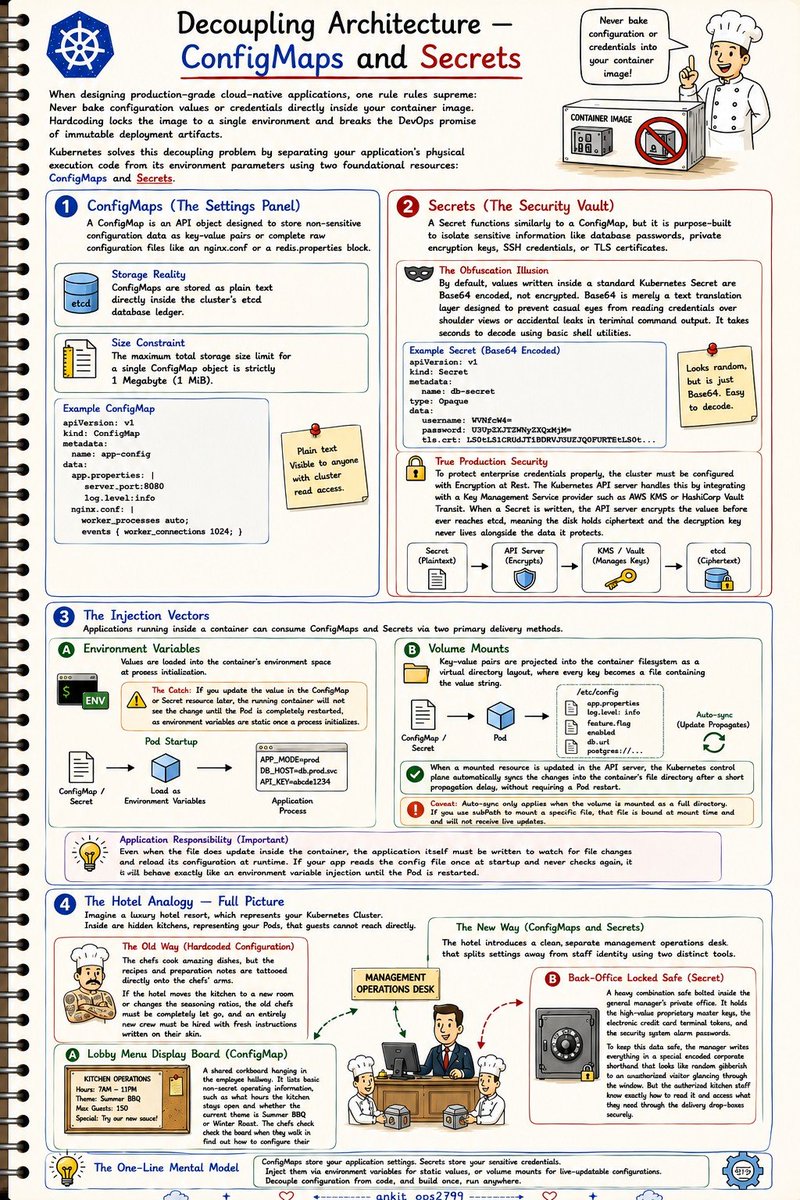
Hardcoding configuration variables into your container images breaks the core promise of DevOps: Immutable Deployments.
If you have to rebuild a binary just to change a database endpoint between Staging and Production, you're doing cloud-native wrong.
Kubernetes solves this by decoupling code from config via ConfigMaps & Secrets.
Here is everything you need to master them:
1. ConfigMaps (The Settings Panel)
• Designed for non-sensitive data (e.g., nginx.conf, log levels).
• Stored as plain text directly inside the etcd database ledger.
• Strict size constraint: Maximum 1 Megabyte (1 MiB).
2. Secrets (The Security Vault)
• Built for sensitive info (e.g., API keys, DB passwords, TLS certs).
• The Obfuscation Illusion: By default, Secrets are Base64 ENCODED, NOT encrypted. Anyone with cluster access can decode them in seconds.
• True Security: Must enable Encryption at Rest via a KMS provider (AWS KMS, HashiCorp Vault).
3. How your apps consume them?
• Environment Variables: Static. If you update the ConfigMap, the running container WON'T see it until a Pod restart.
• Volume Mounts: Dynamic. Values project as files. The control plane auto-syncs updates without a Pod restart.
• Caveat: Auto-sync fails if you use `subPath` to mount specific files!
4. The Hotel Analogy
• Hardcoded Config = Tattooing recipes directly onto a chef's arms. If the menu changes, you have to fire the whole crew and hire new ones.
• ConfigMaps = The employee hallway corkboard showing opening hours.
• Secrets = The back-office safe holding master keys written in corporate shorthand.
Stop baking configs into your images. Decouple your architecture.
👇 Drop your thoughts below! Which injection vector do you prefer in production?
#Kubernetes #DevOps #CloudComputing #PlatformEngineering #AWS
2
6
33
728


Jun 10
🚨 High - Argo Workflows Missing Authorization (GHSA-48p8-g2fx-3wwm)
A high-severity vulnerability in Argo Workflows allows authenticated users to perform unauthorized CRUD operations on ConfigMaps used by the Sync Service's ConfigMap-backed provider due to missing authorization checks.
Impact:
• unauthorized ConfigMap access
• creation, modification, and deletion of synchronization limits
• potential workflow disruption and policy bypass
Affected versions:
• github.com/argoproj/argo-wor… <3.7.15 - fixed in 3.7.15
• github.com/argoproj/argo-wor… >=4.0.0, < 4.0.6 - fixed in 4.0.6
1
31

Jun 10
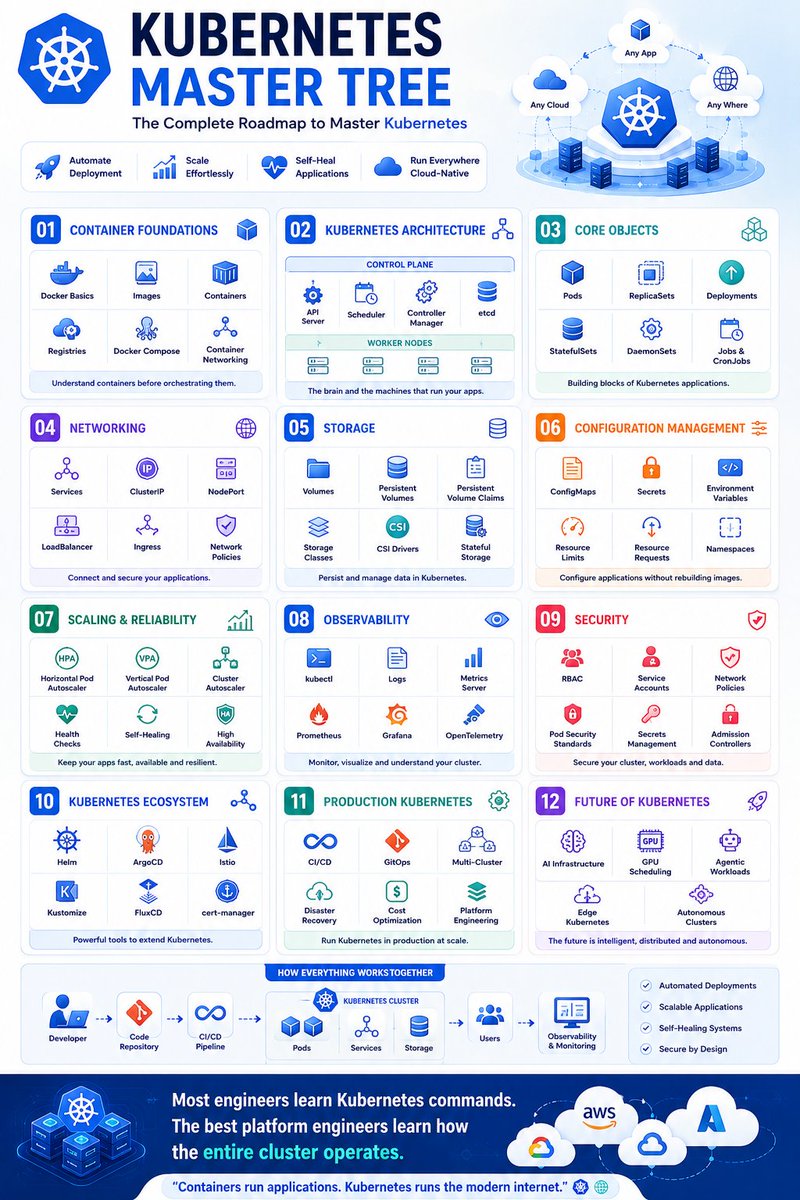
KUBERNETES — MASTER TREE ☸️
Kubernetes
│
├── 01. Container Foundations
│ ├── Docker Basics
│ ├── Images
│ ├── Containers
│ ├── Registries
│ ├── Docker Compose
│ └── Container Networking
│
├── 02. Kubernetes Architecture
│ ├── Control Plane
│ ├── API Server
│ ├── Scheduler
│ ├── Controller Manager
│ ├── etcd
│ └── Worker Nodes
│
├── 03. Core Objects
│ ├── Pods
│ ├── ReplicaSets
│ ├── Deployments
│ ├── StatefulSets
│ ├── DaemonSets
│ └── Jobs & CronJobs
│
├── 04. Networking
│ ├── Services
│ ├── ClusterIP
│ ├── NodePort
│ ├── LoadBalancer
│ ├── Ingress
│ └── Network Policies
│
├── 05. Storage
│ ├── Volumes
│ ├── Persistent Volumes
│ ├── Persistent Volume Claims
│ ├── Storage Classes
│ ├── CSI Drivers
│ └── Stateful Storage
│
├── 06. Configuration Management
│ ├── ConfigMaps
│ ├── Secrets
│ ├── Environment Variables
│ ├── Resource Limits
│ ├── Resource Requests
│ └── Namespaces
│
├── 07. Scaling & Reliability
│ ├── Horizontal Pod Autoscaler
│ ├── Vertical Pod Autoscaler
│ ├── Cluster Autoscaler
│ ├── Health Checks
│ ├── Self-Healing
│ └── High Availability
│
├── 08. Observability
│ ├── kubectl
│ ├── Logs
│ ├── Metrics Server
│ ├── Prometheus
│ ├── Grafana
│ └── OpenTelemetry
│
├── 09. Security
│ ├── RBAC
│ ├── Service Accounts
│ ├── Network Policies
│ ├── Pod Security Standards
│ ├── Secrets Management
│ └── Admission Controllers
│
├── 10. Kubernetes Ecosystem
│ ├── Helm
│ ├── ArgoCD
│ ├── Istio
│ ├── Kustomize
│ ├── FluxCD
│ └── cert-manager
│
├── 11. Production Kubernetes
│ ├── CI/CD
│ ├── GitOps
│ ├── Multi-Cluster
│ ├── Disaster Recovery
│ ├── Cost Optimization
│ └── Platform Engineering
│
└── 12. Future of Kubernetes
├── AI Infrastructure
├── GPU Scheduling
├── Agentic Workloads
├── Edge Kubernetes
└── Autonomous Clusters
Most engineers learn Kubernetes commands.
The best platform engineers learn how the entire cluster operates. ☸️🚀
2
2
131

Jun 10
KUBERNETES — MASTER TREE ☸️
Kubernetes
│
├── 01. Container Foundations
│ ├── Docker Basics
│ ├── Images
│ ├── Containers
│ ├── Registries
│ ├── Docker Compose
│ └── Container Networking
│
├── 02. Kubernetes Architecture
│ ├── Control Plane
│ ├── API Server
│ ├── Scheduler
│ ├── Controller Manager
│ ├── etcd
│ └── Worker Nodes
│
├── 03. Core Objects
│ ├── Pods
│ ├── ReplicaSets
│ ├── Deployments
│ ├── StatefulSets
│ ├── DaemonSets
│ └── Jobs & CronJobs
│
├── 04. Networking
│ ├── Services
│ ├── ClusterIP
│ ├── NodePort
│ ├── LoadBalancer
│ ├── Ingress
│ └── Network Policies
│
├── 05. Storage
│ ├── Volumes
│ ├── Persistent Volumes
│ ├── Persistent Volume Claims
│ ├── Storage Classes
│ ├── CSI Drivers
│ └── Stateful Storage
│
├── 06. Configuration Management
│ ├── ConfigMaps
│ ├── Secrets
│ ├── Environment Variables
│ ├── Resource Limits
│ ├── Resource Requests
│ └── Namespaces
│
├── 07. Scaling & Reliability
│ ├── Horizontal Pod Autoscaler
│ ├── Vertical Pod Autoscaler
│ ├── Cluster Autoscaler
│ ├── Health Checks
│ ├── Self-Healing
│ └── High Availability
│
├── 08. Observability
│ ├── kubectl
│ ├── Logs
│ ├── Metrics Server
│ ├── Prometheus
│ ├── Grafana
│ └── OpenTelemetry
│
├── 09. Security
│ ├── RBAC
│ ├── Service Accounts
│ ├── Network Policies
│ ├── Pod Security Standards
│ ├── Secrets Management
│ └── Admission Controllers
│
├── 10. Kubernetes Ecosystem
│ ├── Helm
│ ├── ArgoCD
│ ├── Istio
│ ├── Kustomize
│ ├── FluxCD
│ └── cert-manager
│
├── 11. Production Kubernetes
│ ├── CI/CD
│ ├── GitOps
│ ├── Multi-Cluster
│ ├── Disaster Recovery
│ ├── Cost Optimization
│ └── Platform Engineering
│
└── 12. Future of Kubernetes
├── AI Infrastructure
├── GPU Scheduling
├── Agentic Workloads
├── Edge Kubernetes
└── Autonomous Clusters
Most engineers learn Kubernetes commands.
The best platform engineers learn how the entire cluster operates. ☸️🚀
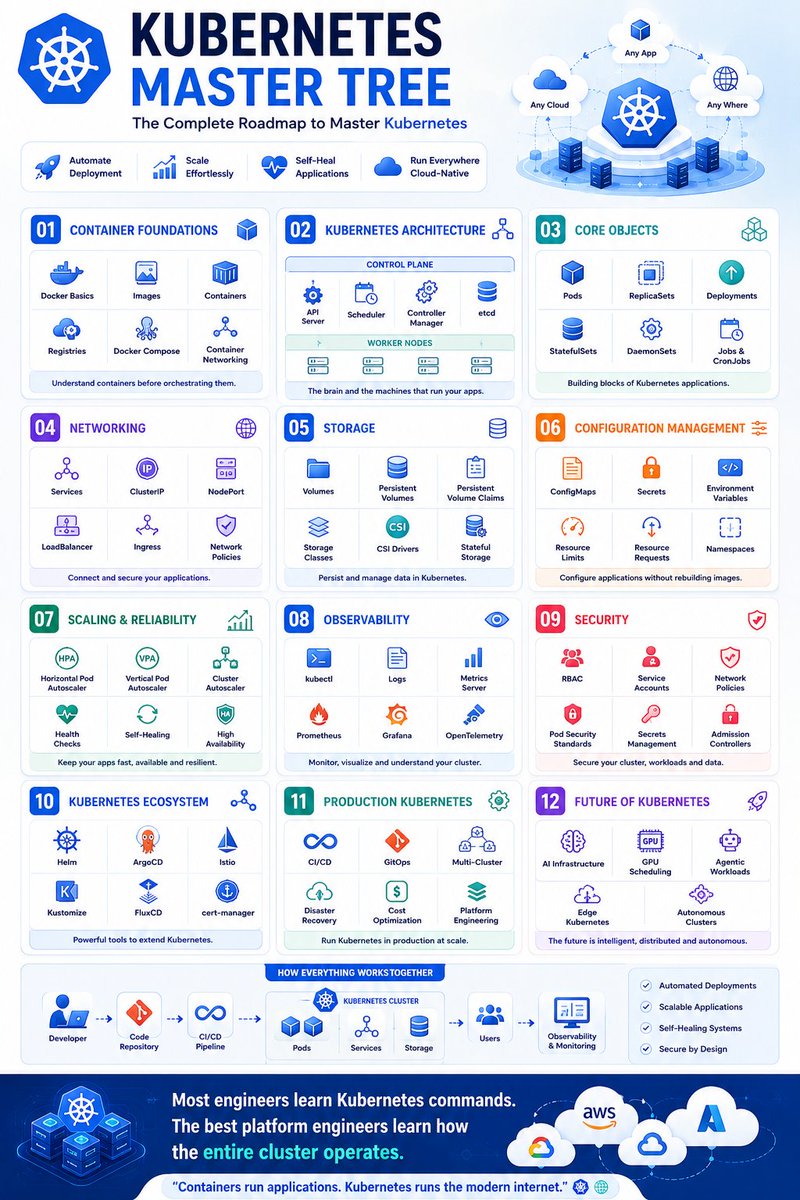
2
42
179
5,638