

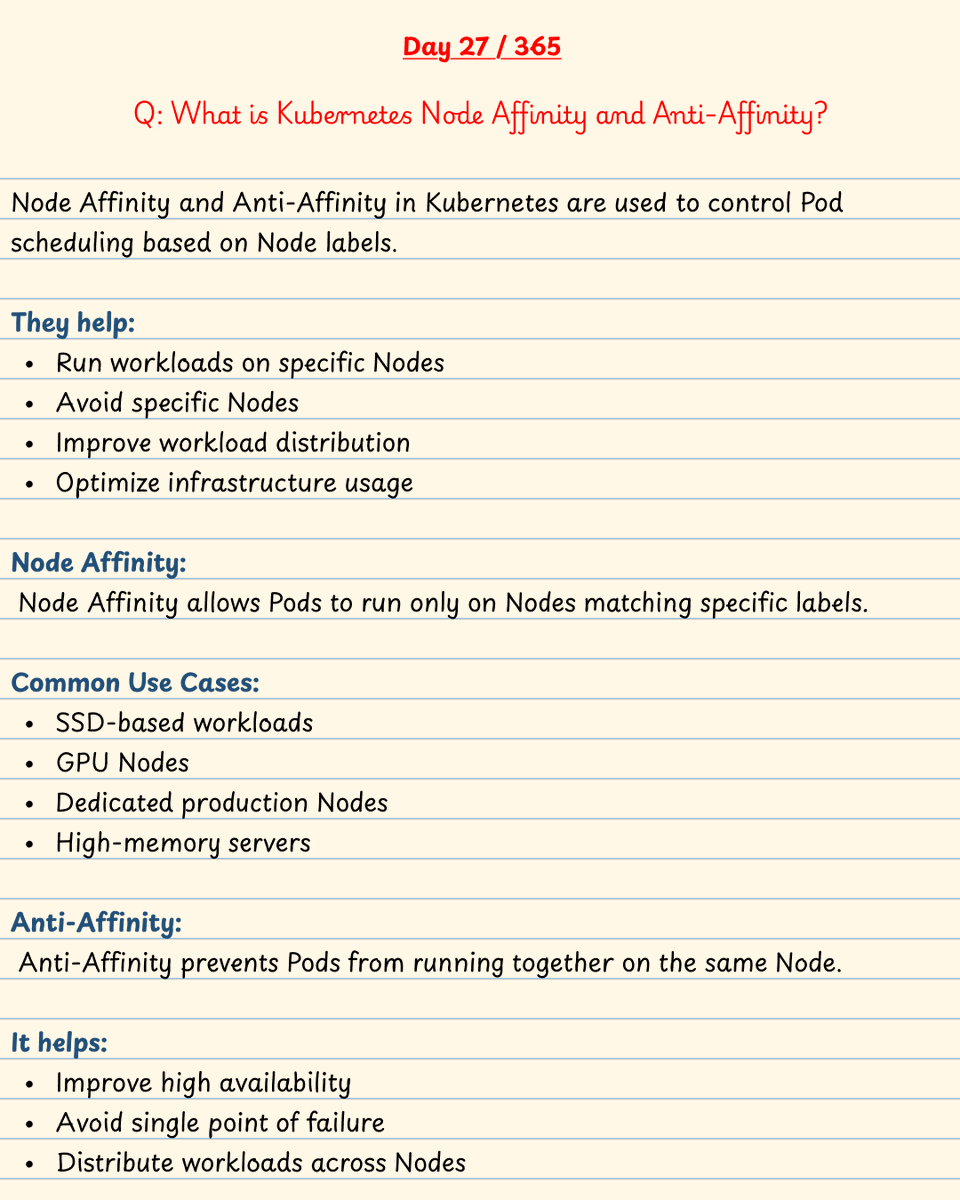
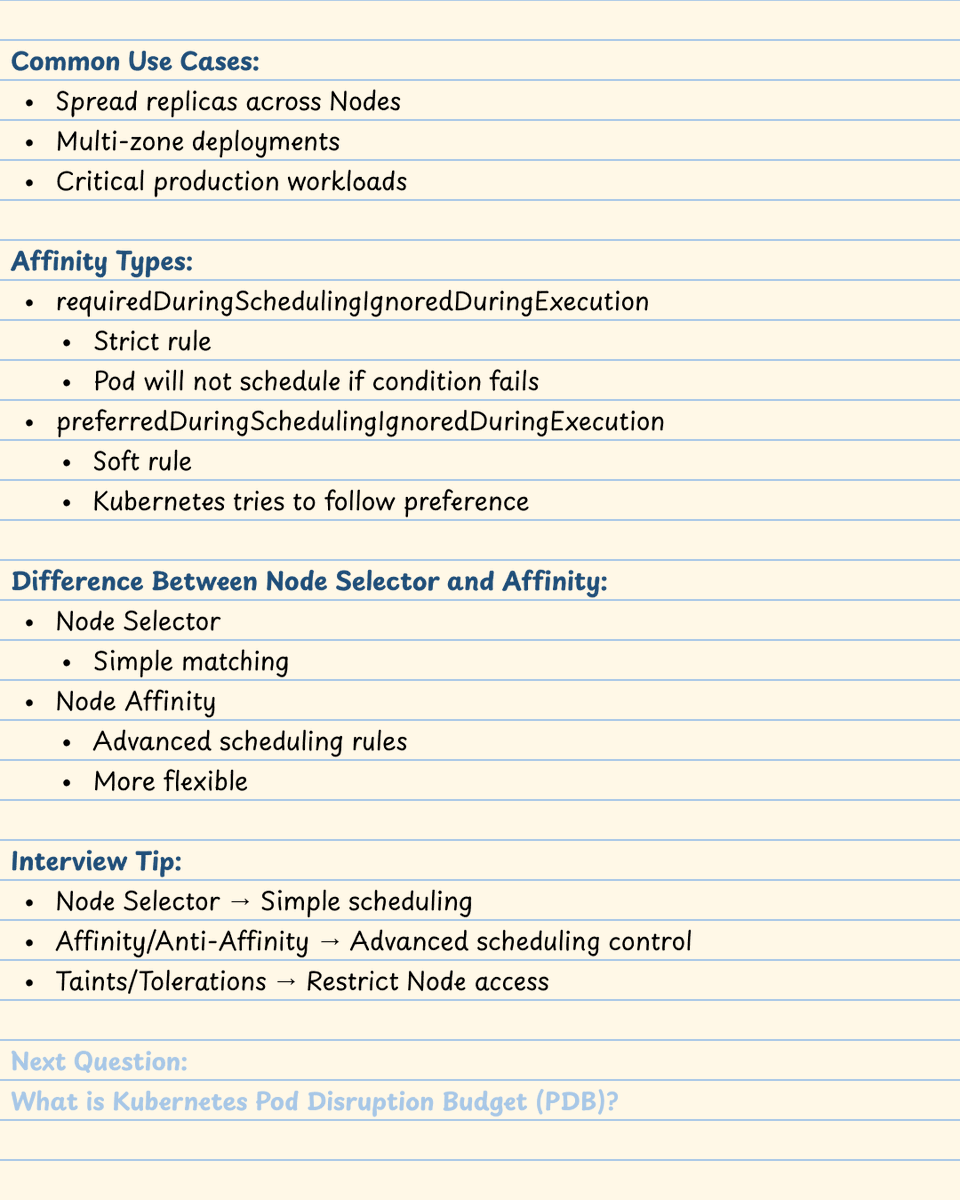
🚀 Day 27 of #365DaysDevOpsChallenge
🎯 Real Interview Question:
What is Kubernetes Node Affinity and Anti-Affinity?
#DevOps #Kubernetes #K8s #Docker #CloudComputing #AWS #CloudNative #SRE #PlatformEngineering #InterviewQuestions #KubernetesScheduling #TechTwitter #NodeAffinity
8

Loops are replacing prompts. Verification is about to be your biggest problem.
As #AI coding shifts from prompts to loops, verification becomes the ultimate challenge for cloud-native engineering teams.
thenewstack.io/agent-loops-c… #Kubernetes #PlatformEngineering
36
AWS Lambda Tenant Isolation Guide #cloud #platformengineering #sre #devops #devsecops #lambda #aws This is a clip from our recent Ship It Weekly Podcast episode. Visit link in bio to listen to the full episode!
7

Because reliability shouldn’t be reactive.
#SoftwareEngineering #DevOps #SRE #PlatformEngineering #AI #Reliability #Testing #EngineeringLeadership #ZofAI
4

The next generation of engineering belongs to the teams that assume every frontier model is temporary and build systems resilient enough not to care.
mikehyland.com/blog/frontier…
#AI #FrontierAI #AIRegulation #ModelGovernance
#PlatformEngineering
10

**AWS IAM in 2026: The Biggest Security Risk Isn't Your Network. It's Your Permissions.**
Most cloud breaches don't begin with a zero-day.
They begin with an access key.
An over-privileged role.
A permission nobody remembered existed.
Yet many organizations still treat IAM as a setup task instead of a continuously engineered system.
**DEEP ARCHITECT LENS**
Least privilege breaks at scale because permissions only move in one direction: they accumulate.
Across dozens of AWS accounts, thousands of roles, CI/CD pipelines, Kubernetes workloads, agents, and third-party integrations, IAM becomes a distributed systems problem.
The winning architecture is surprisingly consistent:
Federated identity.
Short-lived credentials.
Role assumption everywhere.
Org-wide SCP guardrails.
Permission boundaries.
Continuous access analysis.
Infrastructure-as-code.
The critical shift is moving from detective controls to preventive controls.
An alert after privilege escalation is an incident.
An SCP that makes escalation impossible is architecture.
**CEO / CTO / BOARDROOM LENS**
Identity failures create the highest leverage failures in cloud environments.
One leaked key.
One shared admin role.
One forgotten permission.
And years of security investment become irrelevant.
The business impact is not limited to security.
It affects compliance, customer trust, audit readiness, operational resilience, and regulatory exposure.
A mature IAM program reduces blast radius before an attacker ever arrives.
**MARKET SHIFT**
From:
Managing users and permissions.
To:
Engineering identity as a governed platform capability.
**WHAT ACTUALLY WORKS IN PRODUCTION**
Centralized SSO.
Zero standing admin.
OIDC-based CI/CD.
IRSA and workload identities.
Automated permission right-sizing from real usage.
Continuous Access Analyzer reviews.
Mandatory permission boundaries.
IAM managed as reviewed code.
**WHERE MOST TEAMS FAIL**
Long-lived access keys.
Shared administrator accounts.
Console-edited IAM.
Annual permission audits.
Copying AdministratorAccess to "unblock delivery."
Detection-first security instead of prevention-first architecture.
**ADOPTING STRATEGY**
Eliminate static credentials.
Federate every human identity.
Move workloads to role assumption.
Enforce SCP guardrails.
Automate permission pruning.
Measure blast radius, not policy count.
**FINAL INSIGHT**
In modern cloud platforms, identity is the perimeter.
The organizations that master IAM don't just reduce risk.
They make entire classes of breaches structurally impossible.
#AWS #CloudSecurity #IAM #PlatformEngineering #EnterpriseArchitecture #ZeroTrust #CyberSecurity #DevSecOps #CloudArchitecture #SecurityEngineering #InfrastructureAsCode #SystemDesign
appscale.blog/en/blog/iam-ha…
23
**NIS2 Is Not a Compliance Framework. It's a Production Architecture Test for 2026.**
Most executives think NIS2 is about policies.
Most auditors know it's about evidence.
Most attackers hope it's neither.
That's the problem.
When a major incident hits, regulators don't ask for your security strategy deck.
They ask for proof.
**DEEP ARCHITECT LENS**
NIS2 fundamentally changes how cloud platforms must be engineered.
The directive is not prescribing tools.
It's prescribing operational outcomes.
Identity controls.
Encryption.
Supply-chain security.
Incident response.
Business continuity.
Centralized logging.
Recovery testing.
What matters is not whether these controls exist.
What matters is whether they are observable, auditable, and provable under pressure.
The real architecture pattern is a governed control plane:
IAM MFA least privilege.
KMS-backed encryption.
Zero-trust segmentation.
Immutable logging.
Automated incident workflows.
Cross-region recovery.
Vendor-risk governance.
The critical engineering challenge isn't prevention.
It's building a detection-to-report pipeline that survives a real incident.
**CEO / CTO / BOARDROOM LENS**
NIS2 introduces something many regulations avoided:
Executive accountability.
This is no longer a security-team problem.
It is a board-level operational risk.
Revenue disruption.
Regulatory exposure.
Customer trust erosion.
Personal management liability.
The cost of compliance is engineering effort.
The cost of non-compliance is business disruption under regulatory scrutiny.
**MARKET SHIFT**
From:
Security as a project.
To:
Resilience as a continuously measured platform capability.
**WHAT ACTUALLY WORKS IN PRODUCTION**
Policy-as-code.
Continuous compliance scanning.
Centralized immutable audit trails.
Automated alert-to-notification workflows.
Shared control frameworks across NIS2, GDPR, DORA, and the EU AI Act.
One control set.
Multiple compliance outcomes.
**WHERE MOST TEAMS FAIL**
Treating NIS2 as legal paperwork.
Building controls per application instead of per platform.
Missing the 24-hour reporting pipeline.
Ignoring supply-chain risk.
Running audits against documents instead of evidence.
**ADOPTING STRATEGY**
Design the landing zone first.
Embed controls once.
Automate evidence collection.
Test reporting before the incident happens.
**FINAL INSIGHT**
The next generation of compliance will not be won by better documentation.
It will be won by architectures that can prove resilience when everything goes wrong.
#NIS2 #CyberSecurityArchitecture #CloudArchitecture #PlatformEngineering #ZeroTrust #SecurityEngineering #EnterpriseArchitecture #CloudSecurity #DigitalResilience #Governance #RiskManagement #SystemDesign
appscale.blog/en/blog/nis2-d…
16

One statistic from this article stood out:
Teams adopting a contract-first approach reported substantially fewer integration defects and significantly faster delivery cycles.
The reason isn't magic.
Frontend, backend, QA, and product stop working in sequence and start working against the same contract.
Paths.
Schemas.
Fixtures.
Error states.
Validation rules.
Less interpretation.
Less rework.
Less surprise.
That's a platform engineering lesson as much as a frontend one.
#PlatformEngineering #DeveloperExperience #SoftwareArchitecture #DevOps #EngineeringEfficiency

7


Jun 13
🏗️ Internal LLM Platforms as Strategic Differentiators — the organizational & infrastructure layer that turns scattered LLM experiments into governed, scalable, high-velocity capabilities across the entire enterprise.
Just read this excellent capstone technical white paper from @aasaitech — a powerful synthesis and grand finale to the entire series.
Key highlights: • Layered reference architecture: Self-service portal, model orchestration, reusable components (prompts, RAG, agents, guardrails), evaluation, observability & FinOps • Governance at scale: Policy-as-code, data residency, audit trails, RBAC • Developer delight: SDKs, templates, local testing, feedback loops • 5-phase adoption journey: Start small → Build core → Expand → Optimize → Drive advantage • Business impact: Faster delivery, consistency, lower costs/risk, compounding competitive edge
This is how industrial organizations turn all prior techniques (RAG, agents, edge deployment, observability, governance, etc.) into a true platform advantage.
Full white paper infographic: x.com/aasaitech/status/20656…
How mature is your internal LLM platform — basic shared tooling, full self-service portal with governance, or still fragmented experiments?
#InternalLLMPlatform #LLMOps #PlatformEngineering #IndustrialAI #AgenticAI #EnterpriseAI #EdgeAI

24

Jun 13
Hot take: If developers HAVE to use your internal platform, you haven't built a platform — you've built a mandate. 🔥
New research dives into adoption metrics for optional platforms and why the 'Three Asks' approach changes everything about how we measure platform success.
Are you tracking the right signals? 📊
🎥 lckhd.eu/UaXqJ8
#PlatformEngineering #DevEx #DeveloperExperience #DevOps
2
49
Jun 13
🏭 Internal LLM Platforms & Developer Tooling — the ultimate platform engineering layer that turns fragmented LLM experiments into governed, scalable, and high-velocity AI capabilities across the enterprise.
Just read this excellent capstone technical white paper from @aasaitech — the perfect finale to the entire series.
Key highlights: • Layered architecture: Infrastructure → Models → Services (RAG, Guardrails, Evaluation, Observability) → Unified APIs & Self-Service Portal • Core capabilities: Model routing, prompt libraries, evaluation harnesses, governance-by-design • Developer experience: Prompt playgrounds, SDKs, monitoring dashboards, self-service tooling • Industrial impact: Consistency, security, reduced duplication, faster time-to-market, compliance in manufacturing & edge orchestration
This synthesizes everything discussed in the series into a production-ready foundation — Build once. Scale everywhere.
Full white paper infographic: x.com/aasaitech/status/20656…
How mature is your internal LLM platform — basic shared tooling, full self-service portal with governance, or still in fragmented experiments?
#InternalLLMPlatform #LLMOps #PlatformEngineering #IndustrialAI #AgenticAI #EnterpriseAI #EdgeAI
6

Jun 13
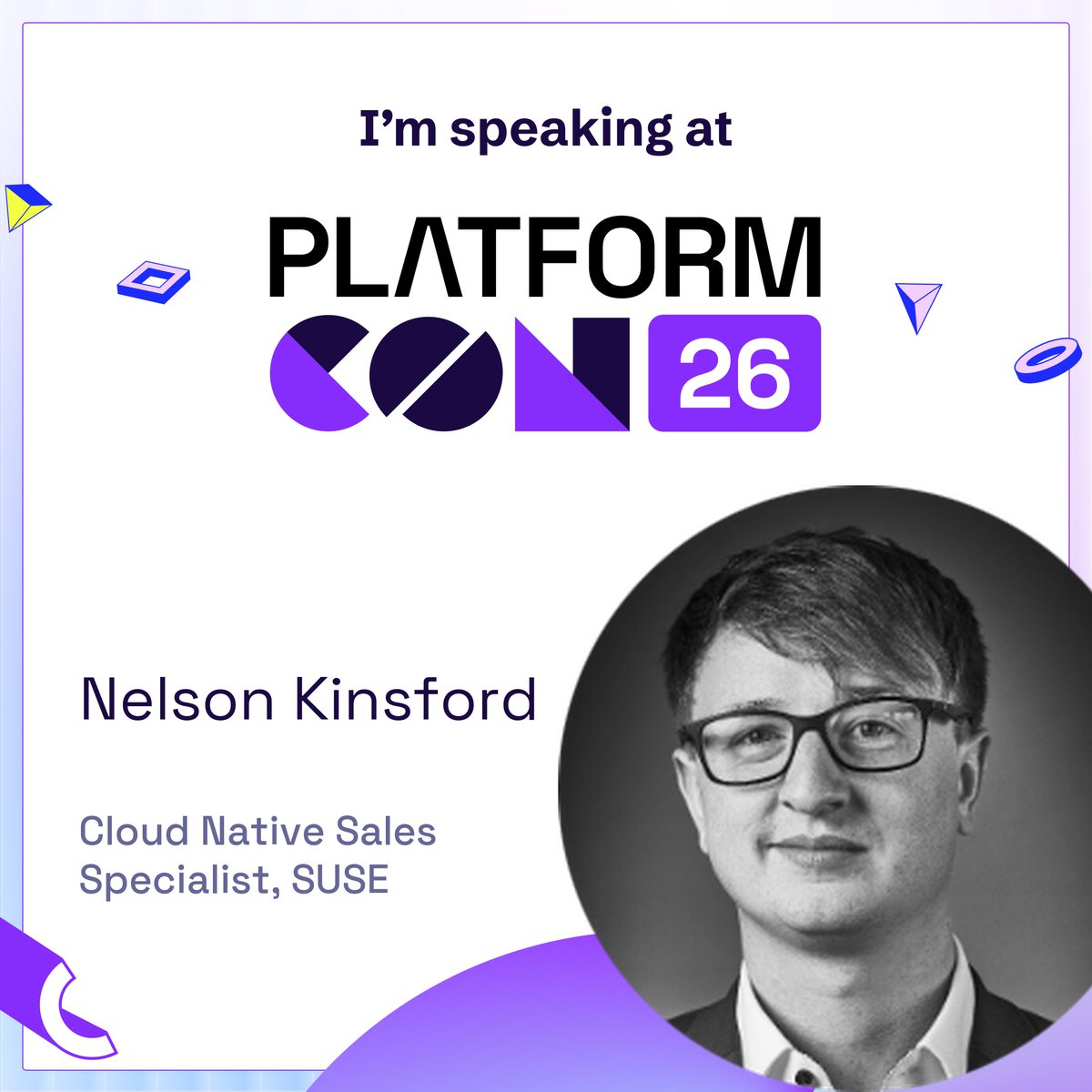
Missing PlatformCon London? Catch @SUSE and @Nelson Kinsford at PlatformCon 2026 Virtual Days! 💻
Don't miss the talk: "It’s Not Me, It’s Your License Agreement: Breaking Up with Legacy Virtualization."
👉 Register: okt.to/pW0Qtw
#PlatformEngineering #Virtualization
3

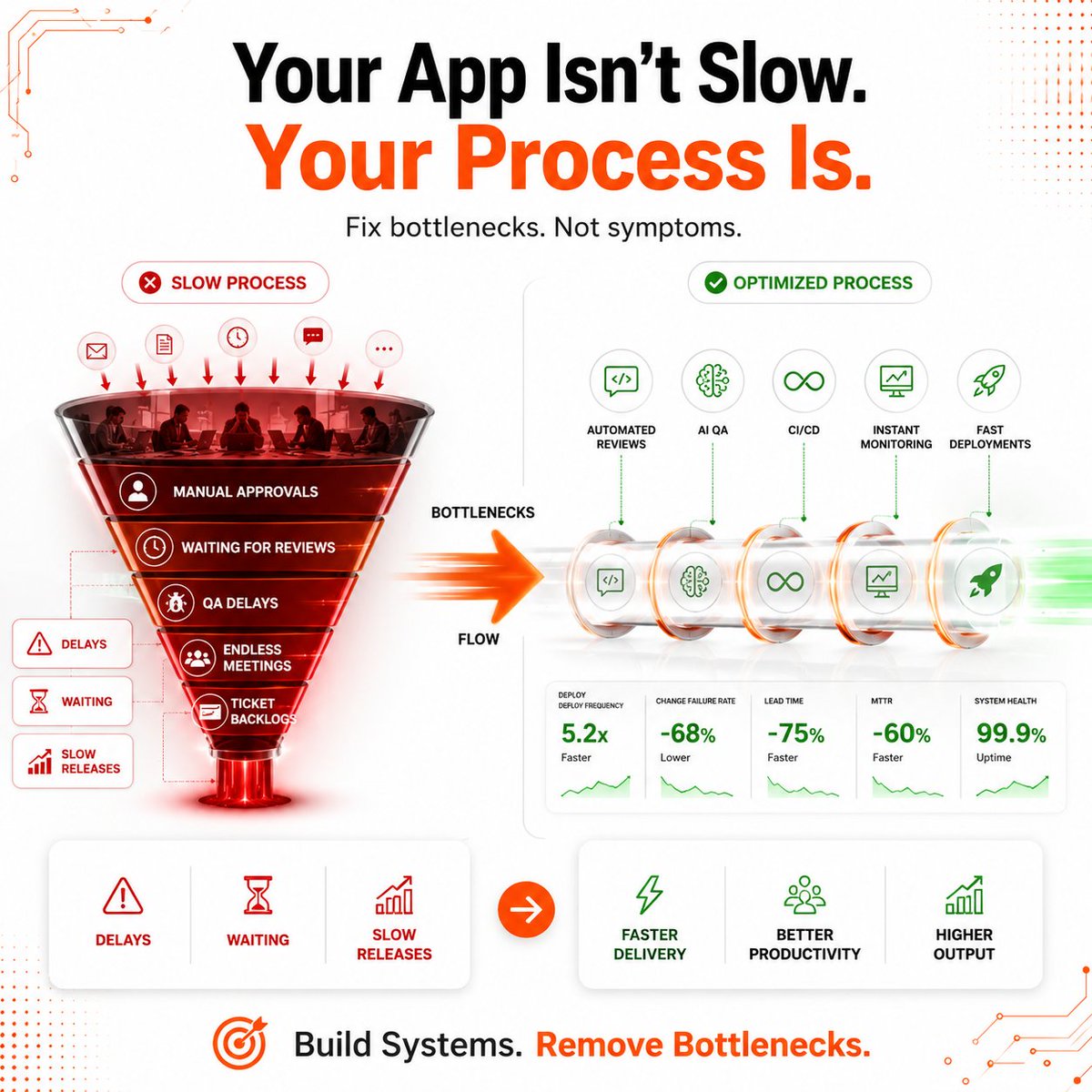
Your application may not be the problem—your process is.
Manual approvals, endless reviews, QA delays, and ticket backlogs create bottlenecks that slow innovation and delay releases.
The fastest teams don’t just build better apps—they build better systems.
🚀 Automate reviews
🧠 Integrate AI-driven QA
⚡ Accelerate CI/CD pipelines
📈 Deliver faster with confidence
Stop fixing symptoms. Start removing bottlenecks.
Build systems. Remove bottlenecks.
#QOBOX #DevOps #AIAutomation #DigitalTransformation #SoftwareDevelopment #ApplicationDevelopment #ProcessOptimization #DevOpsEngineering #CICD #AIQA #AutomationTesting #SoftwareTesting #TechInnovation #EngineeringLeadership #WorkflowAutomation #CloudEngineering #AgileDevelopment #Productivity #AIInTech #BuildFaster #ContinuousDelivery #PlatformEngineering #TechStrategy #InnovationDriven #FutureOfSoftware
5

Jun 13
Who leads enterprise AI agent orchestration? Neutral data ownership is key for interoperability & avoiding lock-in.
#aiagents #enterpriseai #cloudnative #platformengineering
14

Jun 13
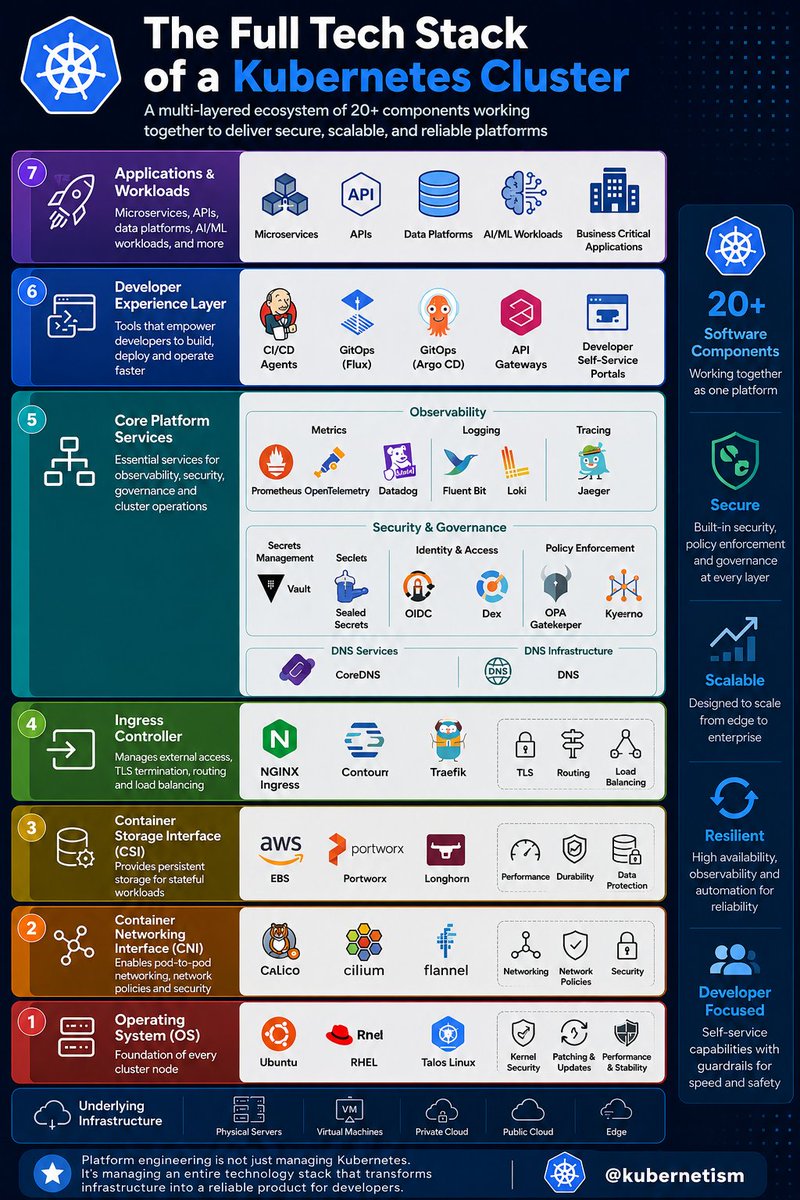
A Kubernetes cluster is more than control planes and worker nodes. It’s a full technology stack of 20 components—from OS, CNI, CSI, and Ingress to Security, Observability, GitOps, and Applications—all working together to power modern platforms.
#Kubernetes #PlatformEngineering
1
1
21

Jun 13
microsoft discovery ga: agentic ai teams designed majorana 2 quantum chip with 1000x reliability gains. autonomous workflows scaling to hard research problems. the infrastructure pattern for discovery-to-deployment acceleration just became available.
#AI #PlatformEngineering #DataStrategy #FractionalCDO
19

Jun 12
Coinbase Matching Engine Outage #cloud #devops #platformengineering #sre #outage #incidentresponse This is a clip from our recent Ship It Weekly Podcast episode. Visit link in bio to listen to the full episode!
1
20

Jun 12
Cloud-native security starts long before your application reaches production. 🚀
The 4 C's of Cloud Native Security provide a simple framework to understand where security responsibilities exist:
☁️ Cloud
⚙️ Cluster
📦 Container
💻 Code
Master these four layers and you'll build more secure, resilient cloud-native applications.
#CloudNative #CloudSecurity #Kubernetes #DevSecOps #ContainerSecurity #CyberSecurity #TechReels #PlatformEngineering #CloudComputing #DeveloperLife #SecurityAwareness #TechContent
1