
Jun 12
The SolarWinds KEV alert this week and the Cisco SD-WAN zero-day earlier made the same point in the same week.
Known. Exploited. Active.
By the time a vulnerability hits the CISA catalog it is already being used against real organizations.
Your annual pen test didn't test the version of SolarWinds you're running today.
Your quarterly scan didn't catch the Cisco zero-day before exploitation started.
This is the fundamental problem with point-in-time security testing in a world where the KEV catalog updates weekly and exploit code drops within hours of disclosure.
Continuous testing doesn't mean running the same scan more often.
It means having ongoing visibility into whether what's running in your environment today is actually secure today.
That's a different posture. And right now it's the only one that keeps pace with the threat.
@Parabellyx @CISAgov @Tenable
#CyberSecurity #PenTesting #ContinuousTesting #InfoSec
1
104

Jun 12
❓Running out of automation ideas in your DevOps flow? You’re probably looking in the wrong place.
In the latest ZAPTALK, Paul Grossman reminds us that automation doesn’t stop at DevOps—there’s a goldmine waiting in BizOps.
💡 Highlights:
✅ Why most orgs underutilize automation
✅ How AI avatars (like AZA) are reducing human input
✅ What makes ZAPTEST uniquely capable of cross-functional automation
🚀 Don’t just streamline. Rethink where you automate.
Watch now.
hubs.ly/Q04lc1680
#testautomation #AIinTesting #BizOps #ZAPTEST #DevOps #SoftwareTesting #ContinuousTesting
8

Jun 12
4 Types of Software Testing and When You Should Use Them bit.ly/4xw6HOr #ExploratoryTesting #SoftwareTesting #QualityAssurance #QATesting #SoftwareQuality #TestAutomation #ManualTesting #AgileTesting #ContinuousTesting #ComplexSystems #QAValley

13

Jun 12
How Generative AI Is Changing Software Testing in 2026
bit.ly/4eyWCZo #GenerativeAI #SoftwareTesting #AITesting #QualityAssurance #TestAutomation #SoftwareQuality #DevOps #ArtificialIntelligence #ContinuousTesting #FutureOfTesting #TechUnity

6
Jun 12
Agentic QA: Elevating the Role of Software Testing Teams
bit.ly/4vHlh3U #AgenticQA #SoftwareTesting #QualityAssurance #AIAutomation #AgenticAI #TestAutomation #SoftwareQuality #DevOps #ContinuousTesting #DigitalTransformation #TechUnity

7
Jun 11
Two major US banks, Citizens Financial and Frost Bank, were hit via a shared vendor this week.
Same pattern. Different victims.
The breach didn't come through the front door.
It came through a vendor that had standing access and nobody was actively testing that access path.
Canvas. GitHub. Carnival. Medtronic. Now two banks.
Here's the question worth asking your security team this week:
When did you last test the access paths your vendors use to reach your environment?
Not when did you last audit the vendor. When did you last test whether their access into your systems is actually secure today.
Most organizations can't answer that question.
That's not a compliance gap. That's a visibility gap.
And it's exactly where attackers are living right now.
@CISAgov @Mandiant @Tenable @Parabellyx
#CyberSecurity #PenTesting #ContinuousTesting #InfoSec
69
Jun 11
How Agentic AI Is Transforming Software Testing and Validation bit.ly/4urLToe #AgenticAI #SoftwareTesting #QualityAssurance #AITesting #TestAutomation #SoftwareQuality #ContinuousTesting #DigitalTransformation #AIInnovation #QAEngineering #ShiftLeftTesting #QAValley

1
17

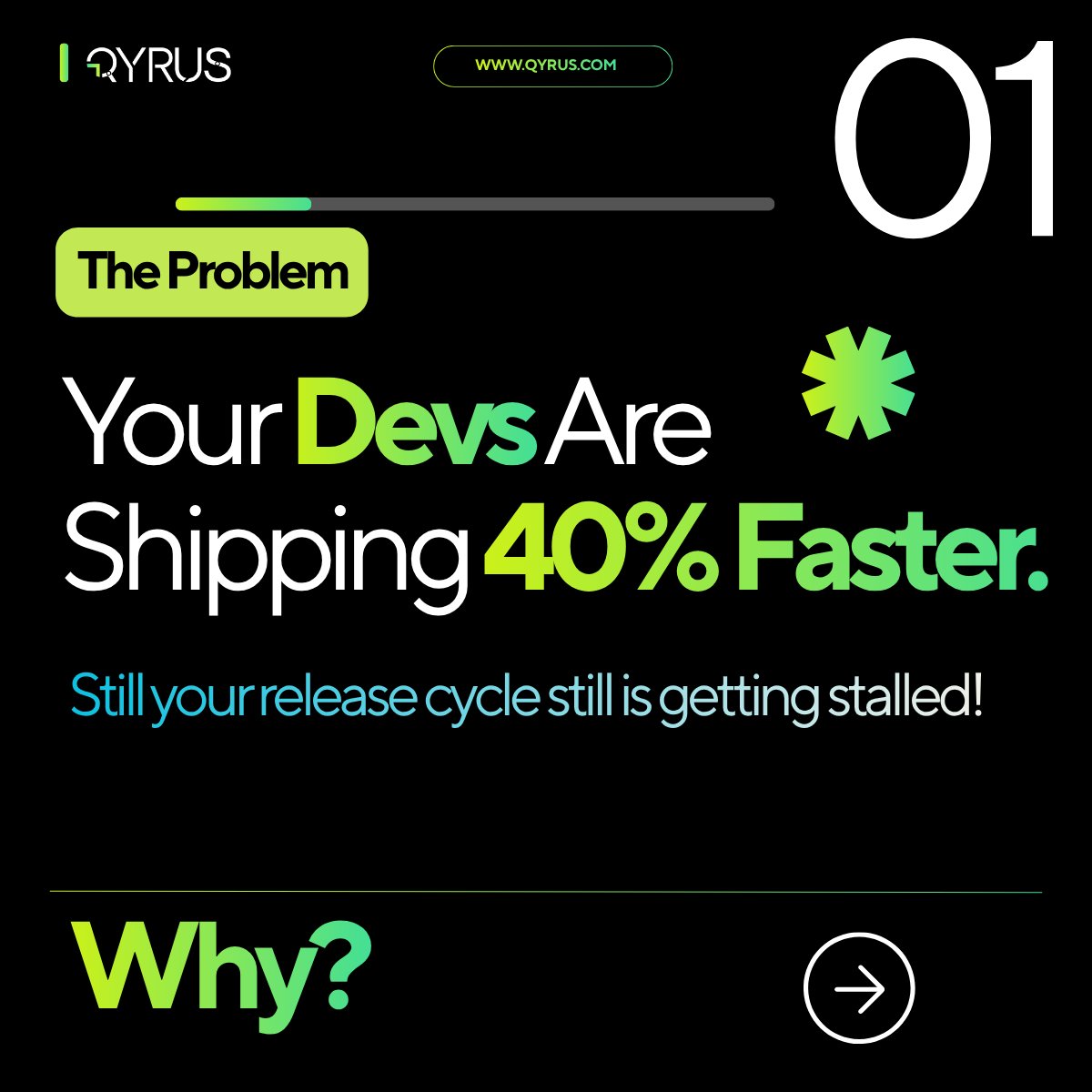
Your developers are using tools like GitHub Copilot and Amazon CodeWhisperer to generate 20% to 40% of all new code.
They are shipping faster than ever. Yet, for many organizations, the actual release cycle remains completely stalled.
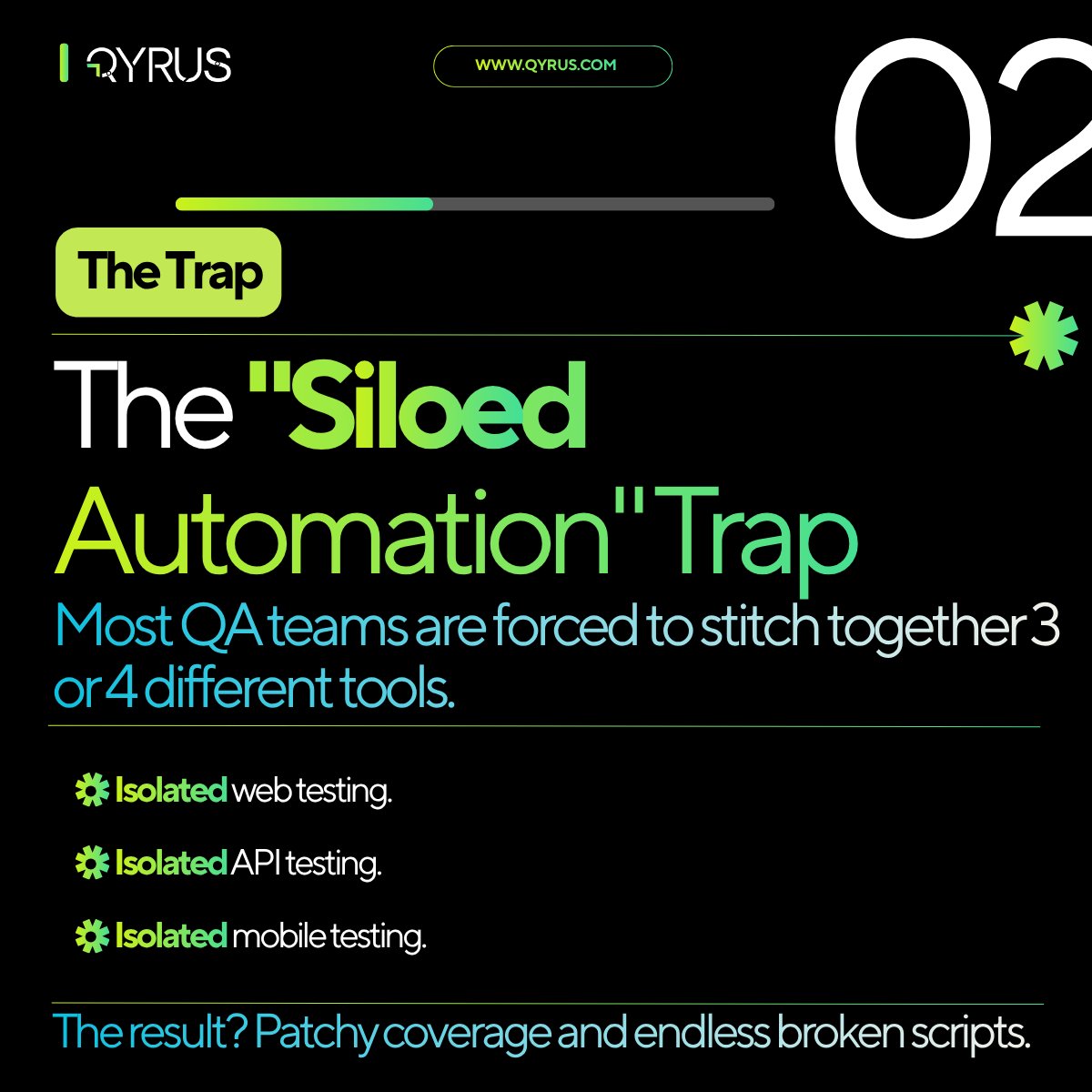
The bottleneck isn’t a lack of effort; it’s toolchain fragmentation. The global automation testing market has crossed $40 billion, yet nearly two-thirds of organizations remain permanently stuck in trial or pilot phases, unable to scale for real business impact.
When your team is forced to manually stitch together three or four fragmented, siloed tools to cover web, mobile, API, and legacy enterprise software, the cost is staggering. Traditional, disconnected frameworks end up eating up 80% of QA budgets just on manual test script maintenance.
To bridge this gap and protect your release velocity, enterprise QA leaders are shifting away from tracking raw activity. Instead, they are anchoring their strategies on precise outcome targets:
☑️ Test Maintenance Effort: Slashing script upkeep to under 20% of total QA hours.
☑️ Test Creation Time: Accelerating delivery with an 80% reduction in hours spent building new tests.
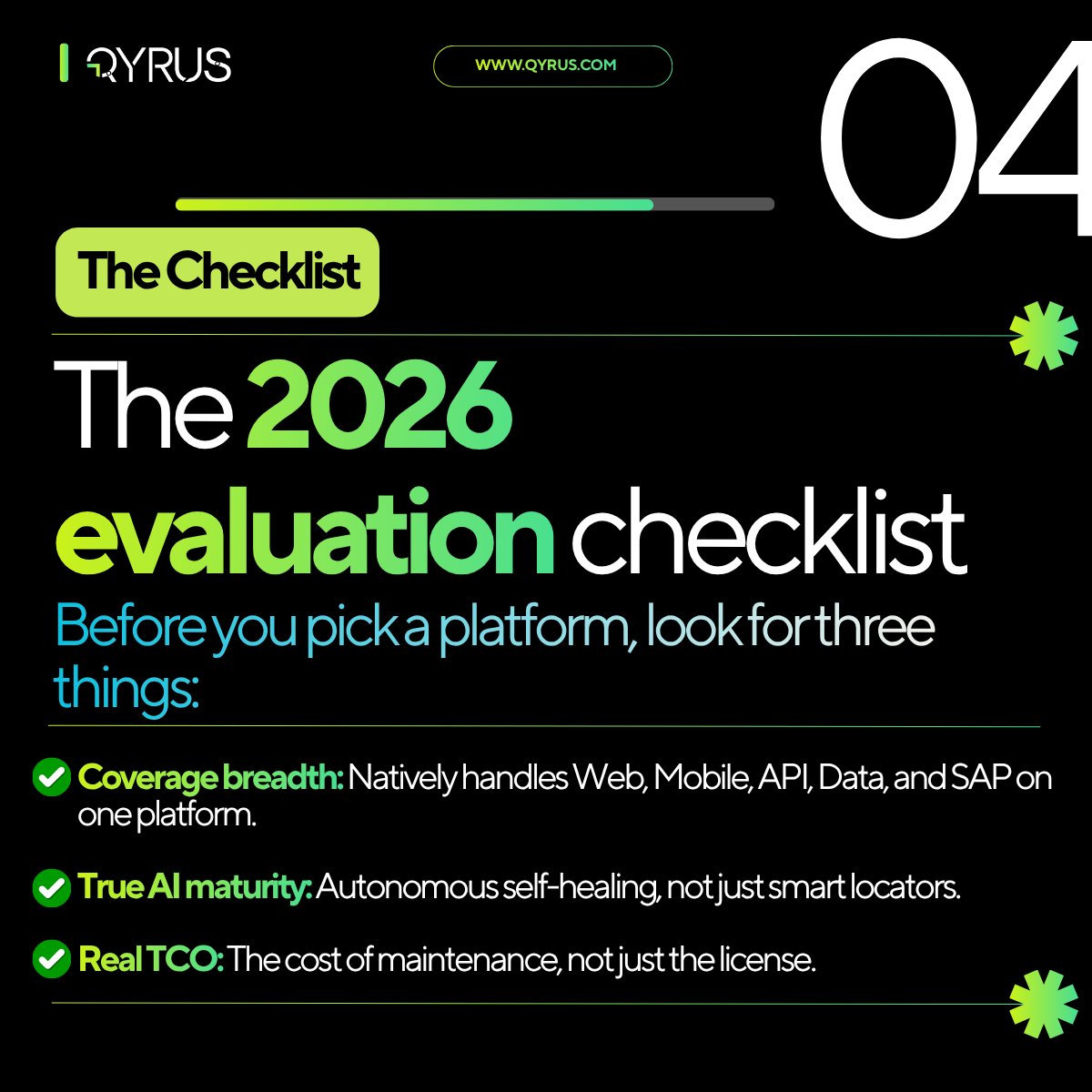
☑️ Cross-Stack Coverage: Pushing past a 70% automation rate natively across Web, Mobile, API, Desktop, Data, and complex SAP ecosystems.
Choosing a SaaS test automation platform isn’t about surviving today’s web UI update. It’s about ensuring your framework can handle the complexity of your multi-system enterprise flows 18 months from now.
𝐒𝐰𝐢𝐩𝐞 𝐭𝐡𝐫𝐨𝐮𝐠𝐡 𝐭𝐡𝐞 𝐜𝐚𝐫𝐨𝐮𝐬𝐞𝐥 𝐛𝐞𝐥𝐨𝐰 to see the exact evaluation blueprint and the phased rollout plan to scale your quality engine seamlessly.
👉 𝐑𝐞𝐚𝐝 𝐭𝐡𝐞 𝐟𝐮𝐥𝐥 𝐠𝐮𝐢𝐝𝐞 𝐡𝐞𝐫𝐞: qyrus.com/post/how-to-choose…
#SoftwareTesting #QualityEngineering #DevOps #ContinuousTesting #TestAutomation #SaaS #AIinTesting #SoftwareDevelopment #QA #EnterpriseTech

1
1
105
Jun 8
Agentic QA: Elevating the Role of Software Testing Teams bit.ly/4vrIqHo #AgenticQA #QualityEngineering #SoftwareTesting #AITesting #TestAutomation #QualityAssurance #AgileTesting #IntelligentAutomation #SoftwareQuality #DigitalTransformation #ContinuousTesting #QAValley

12

16 Dec 2025
Getting 1 pentest per year may not be enough to keep up with the threats and changes to your network. Link in comments! ⬇️
#cybersecurity #continuoustesting
1
1
4
75

11 Dec 2025
We’re looking forward to BSides London on Saturday🎉
📍 BSides London | 🗓️ 13 December 2025
Come find us at our stand and say hello 👋 See you there!
#BSidesLDN25 #CyberSecurity #InfoSec #ContinuousTesting #CTEM #InfosecCommunity

2
6
452

5 Dec 2025
Organizations stay ahead of emerging threats when security researchers pressure-test their systems. That’s the power of bug bounty programs: real findings, real risk reduced.
In our blog, we break down how bug bounties work, what makes them successful, and why more enterprises are incorporating them into their security strategies.
Read the full breakdown here 👉 bit.ly/48itjY2
#BugBounty #ContinuousTesting #Cybersecurity

1
2
14
4,157

23 Nov 2025
Our code is open. Our defense is closed-loop. 🛡️
We supplement public audits with continuous, internal, and automated Security Assurance Testing (SAST/DAST).
An audit is a snapshot. Our security is a live video feed.
#ContinuousTesting #SAST #BeyondProtocol
2
172

6 Nov 2025
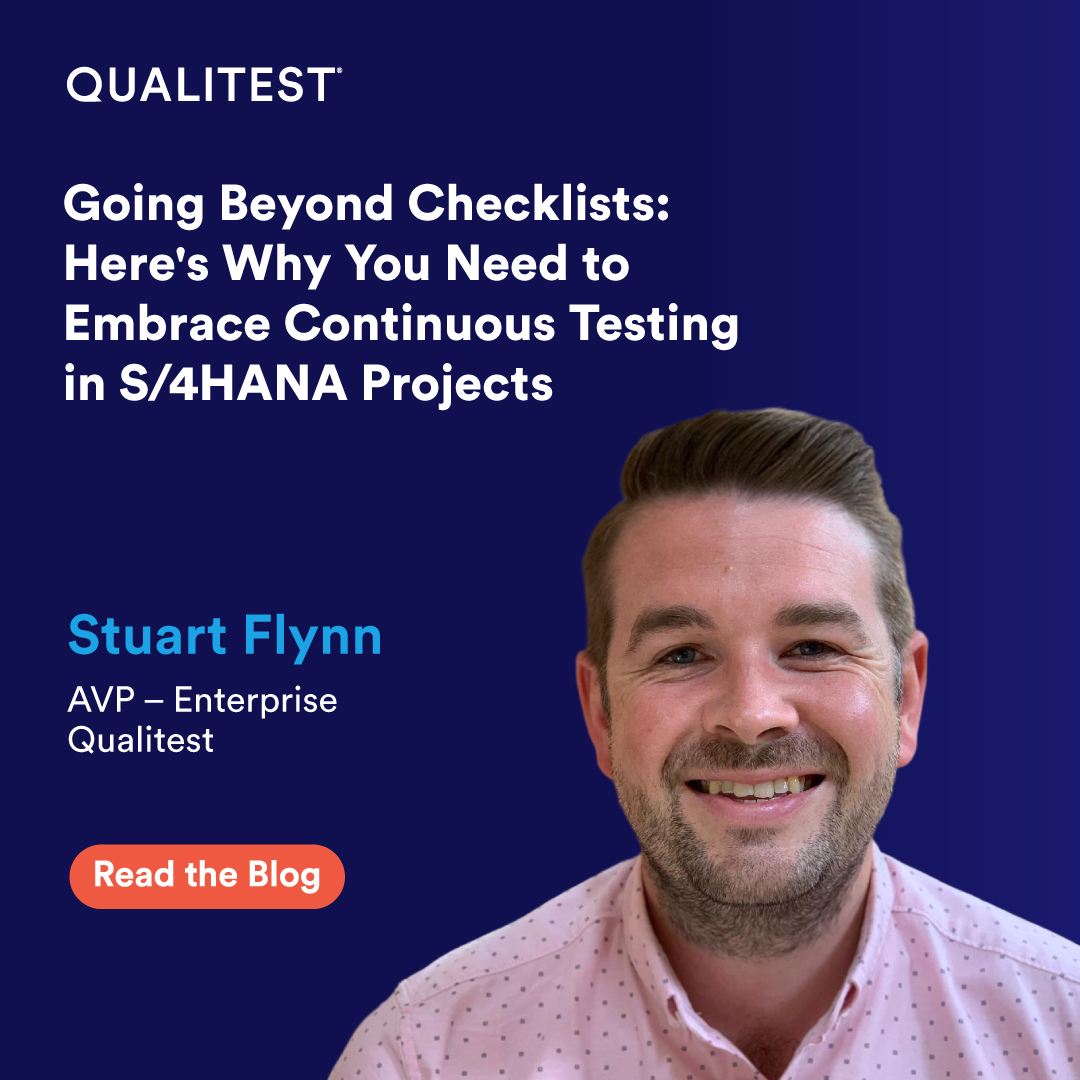
Stop treating S/4HANA validation like a checklist!
Our blog reveals how #ContinuousTesting reduces defect costs and boosts go-live confidence in every SAP Activate phase.
Read more 👉 qualitestgroup.com/insights/…
#S4HANA #SAP #Quality #Qualitest
1
79

22 Oct 2025
Once-a-year pen tests don’t cut it anymore 🚫
Join us tomorrow (1PM EST) for the ASM Field Guide with Cory Wolff to see how #continuoustesting helps find every exposure point before attackers do.
Register now → risk3sixty.com/webinars/asm-…
#CyberSecurity #AttackSurface
2
2
118

13 Oct 2025
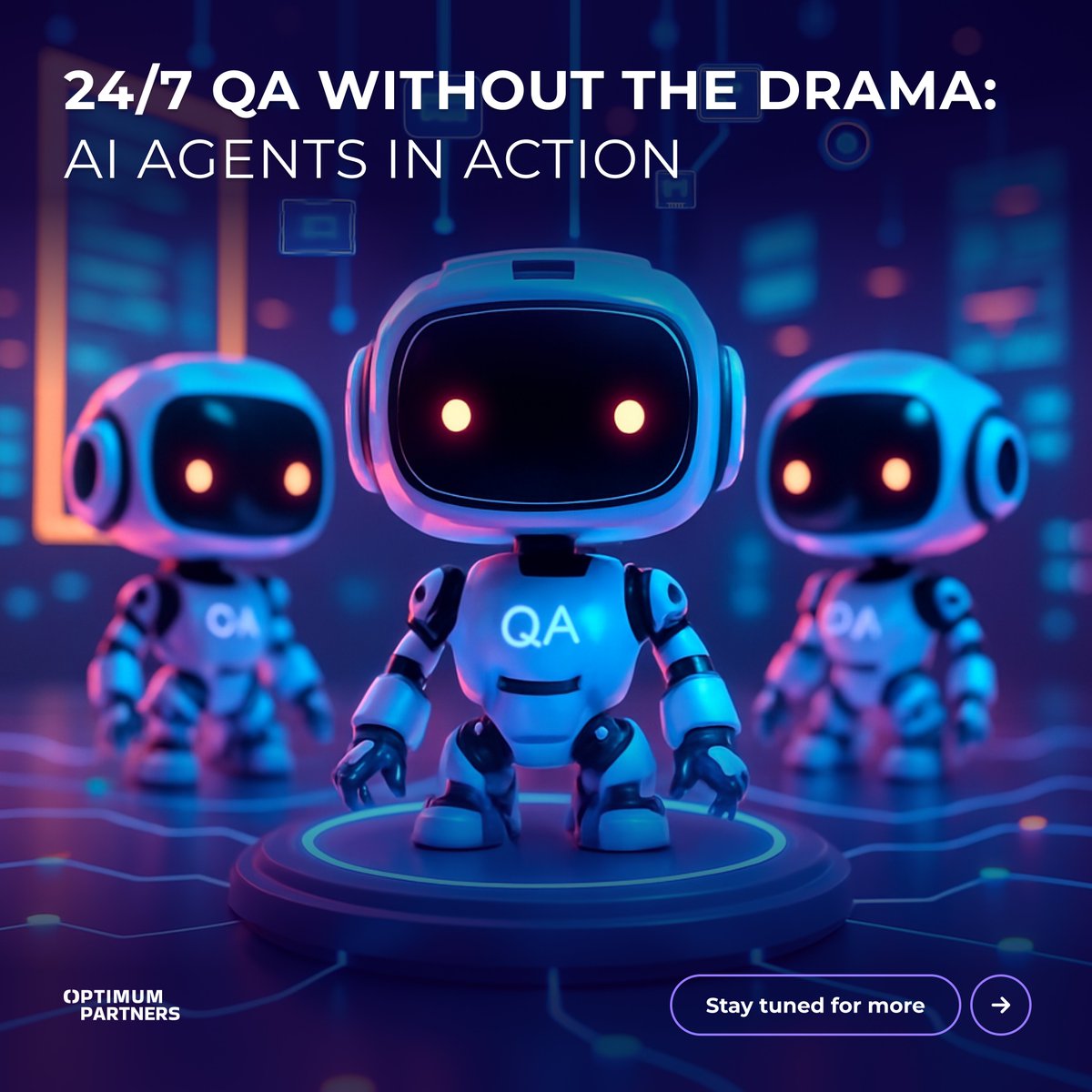
🚀 24/7 QA Without the Drama: AI Agents in Action
Testing software isn’t just about scripts anymore. It’s about intelligent agents collaborating at scale:
📖 Requirement analysis and risk spotting
🛠 Dynamic test planning and adaptation
🚦 Cross-platform execution: UI, API, performance, security
🐞 Early bug detection before deployment
📊 Automatic reporting and actionable insights
All autonomous. All smart. All in sync.
🧠 Around-the-clock QA without human bottlenecks
❌ No more flaky tests
❌ No more fragmented tools
✅ A self-learning, AI-powered QA squad delivering reliable, high-speed results
Software testing is evolving. The future is continuous, agent-driven intelligence.
#AIQA #AgenticAI #ContinuousTesting #DevOps #Automation #SoftwareTesting
2
29

1 Oct 2025
What makes hybrid pentesting so powerful?
Pure automation misses critical vulnerabilities. Legacy point-in-time testing can't scale. The future belongs to hybrid approaches that deliver both depth and breadth. In this strategic episode, Casey explains why hybrid pentesting is the top trend for 2025:
- Human expertise for deep-dive analysis when complex vulnerabilities require investigation
- Automated coverage for scalable testing across constantly evolving attack surfaces
- Balanced approach that addresses the limitations of purely automated or traditional testing methods
- Continuous validation that keeps pace with dynamic infrastructure changes
The key insight? Organizations need both the thoroughness of human analysis and the scale of automation to secure modern attack surfaces effectively.
Listen now to understand why hybrid is the strategic choice for forward-thinking security teams: hubs.la/Q03LJ9P_0
Have a cybersecurity challenge you'd like Casey to tackle? Email podcast@sprocketsecurity.com with your question for future Ask Casey episodes!
#CyberSecurity #HybridTesting #ContinuousTesting #PenTesting #OffensiveSecurity
1
120

1 Oct 2025
The excitement is real, and our team can hardly contain it!
We’re just as excited to receive this recognition as we are to stand alongside our clients, with AI at the heart of modern engineering, intelligent delivery, and resilient digital practices.
At the ISG Provider Lens™ Awards 2025, Birlasoft has earned the Leader’s Badge in the US AI-Driven ADM Services study, with recognition in the Continuous Testing Specialists quadrant.
Together, we’re driving agility, accelerating transformation, and shaping enterprises that are ready for the future.
#ISGAwards #AI #ADM #ContinuousTesting #PoweringProgress

1
5
115
29 Sep 2025
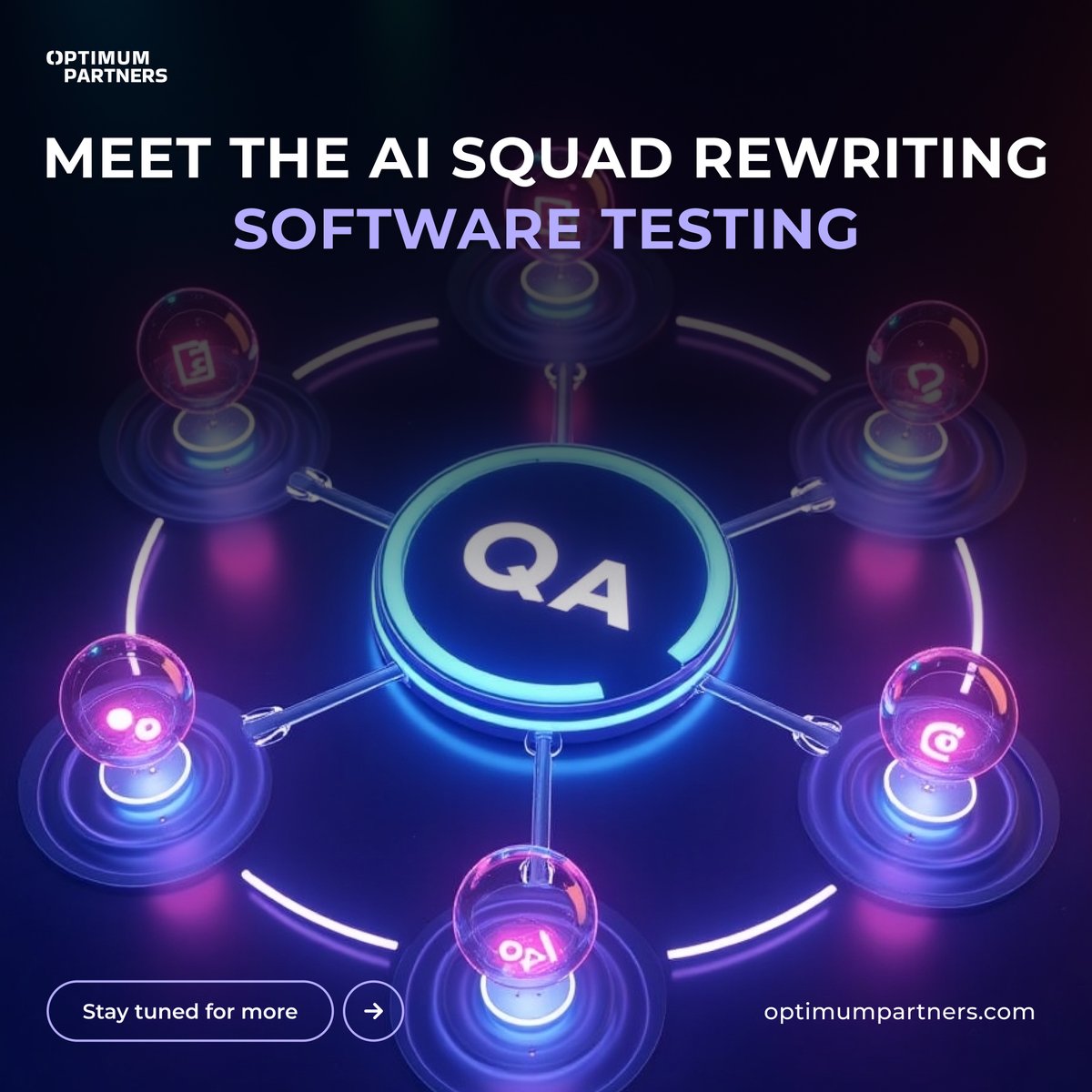
🚀 The QA Team That Never Tires
AI agents plan, test, hunt bugs, and generate insights—24/7, no flaky scripts, no micromanagement.
The future of QA isn’t automation—it’s orchestrated intelligence.
#AIQA #AgenticAI #ContinuousTesting #SoftwareTesting #DevOps #Automation
3
44

2 Sep 2025
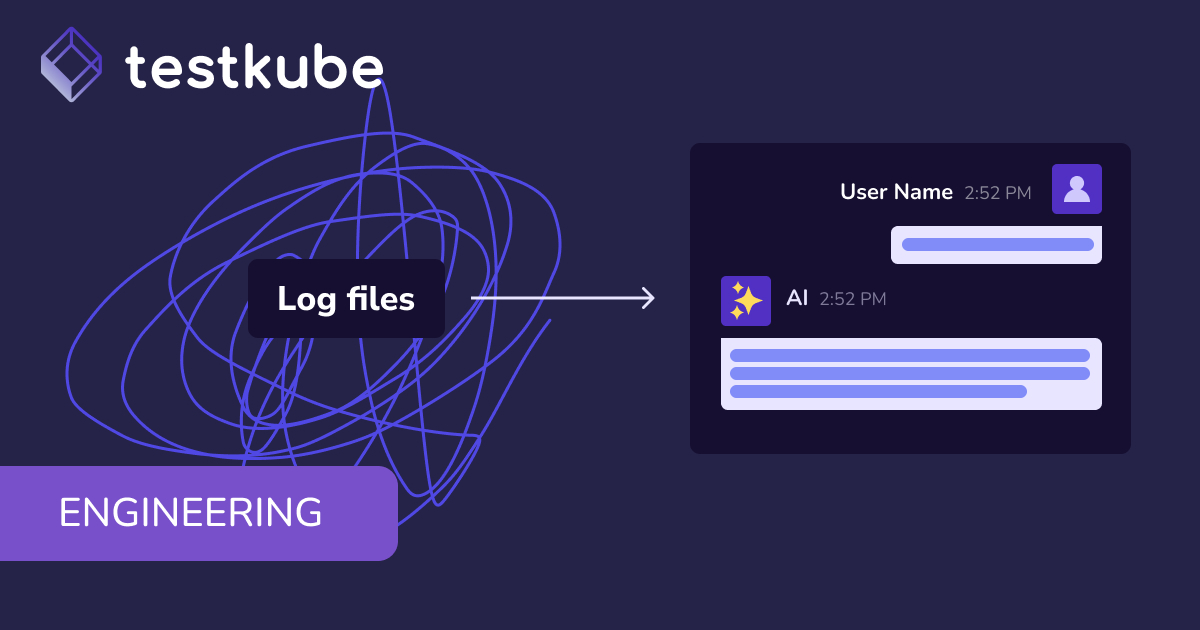
Failed test? Instead of hunting logs for hours, ask AI to run the test, find the bug & raise the PR.
@TheTechMaharaj covers how #Testkube MCP @GitHub Copilot make testing conversational & intelligent.
Read here 👉 testkube.io/blog/building-ai…
#devops #continuoustesting #github
3
288