
May 14
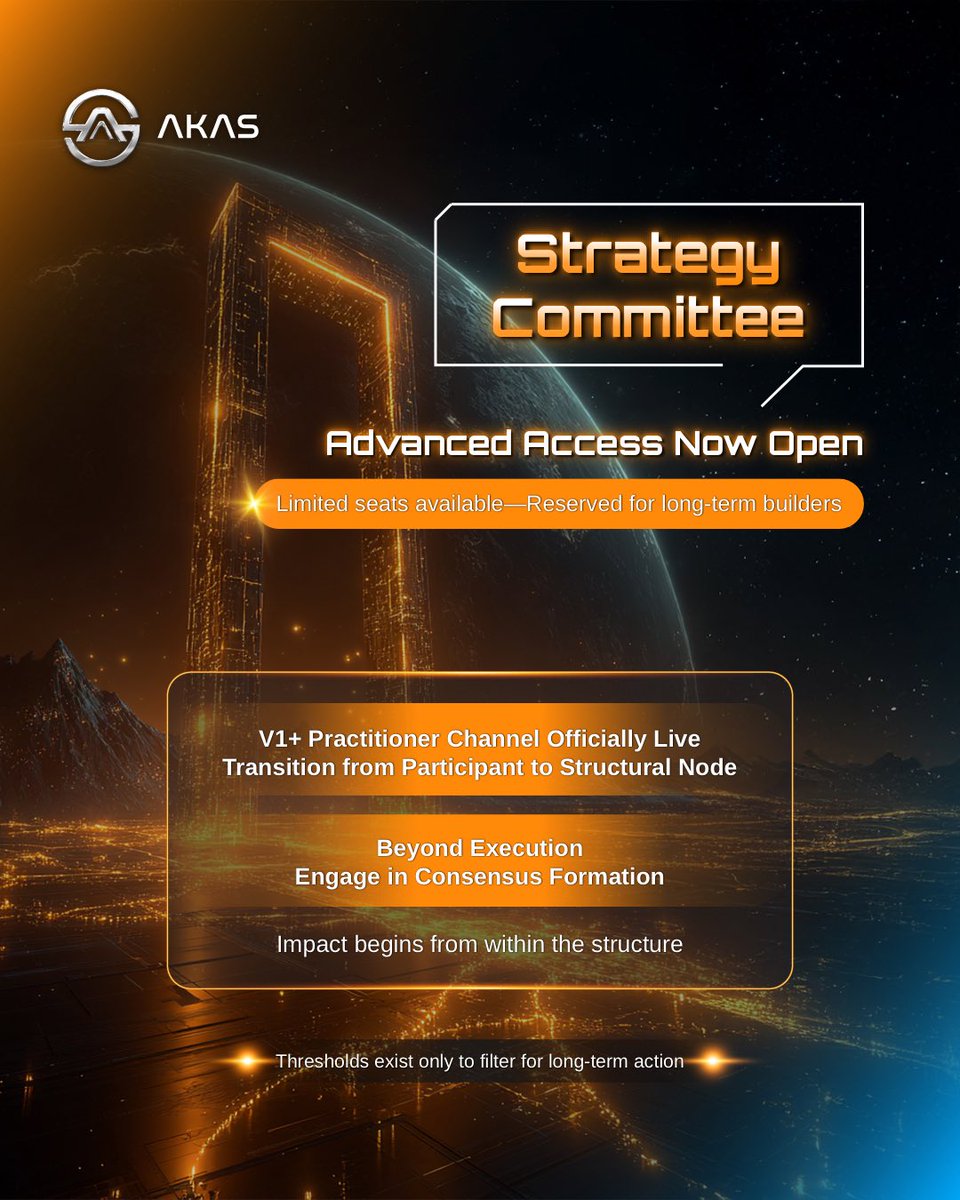
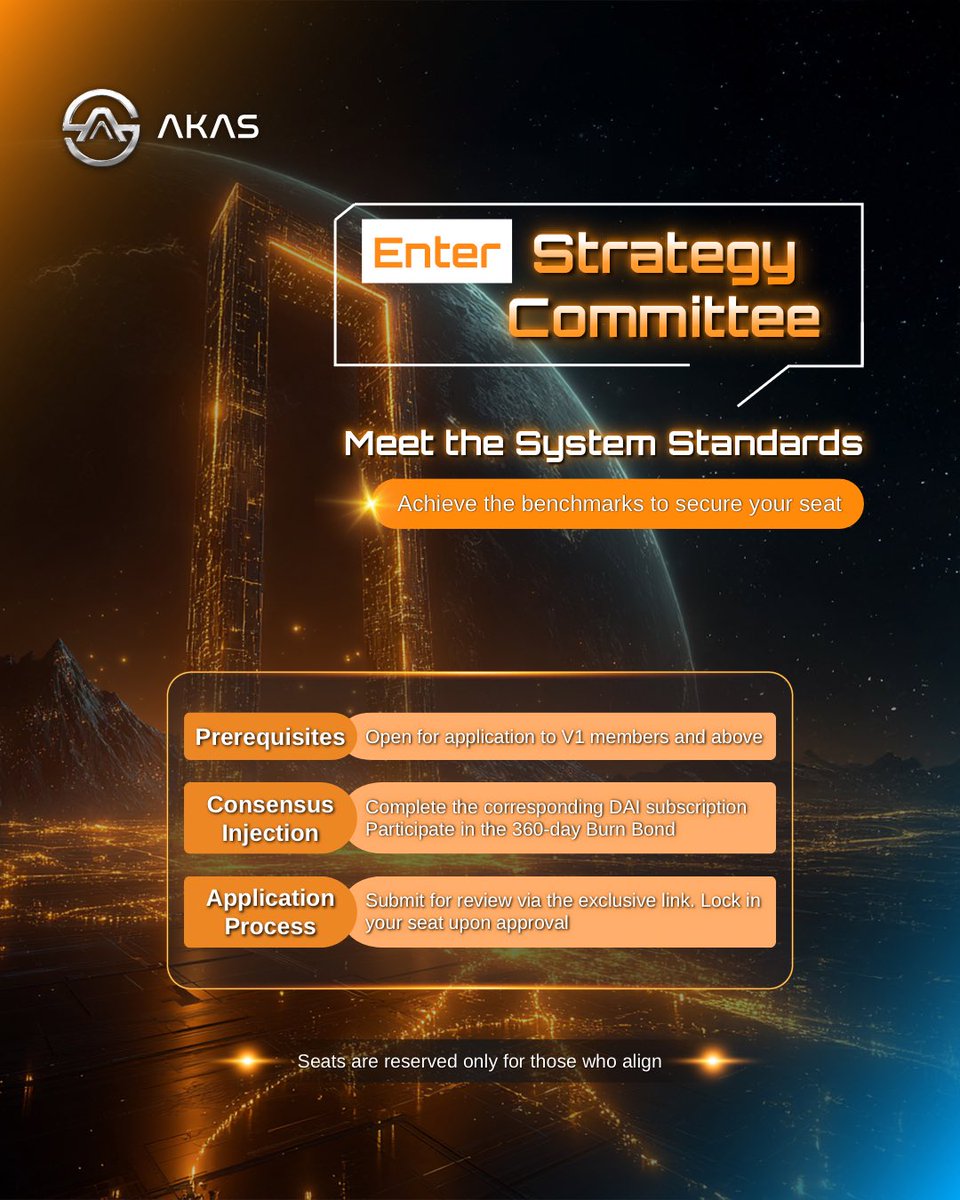
What are the conditions, to enter the Strategy Committee❓
📌 Not short-term hype,
but a long-term action record.
📌 Not stopping at participation,
but continuously driving the structure forward ⚙️
The system is open only to true matches 📊
#AKASStrategyCommittee #LongTermActors #StructuralAdvancement #ConsensusGrowth #CoreSequence #Web3Ecosystem
2
1,284

19 Dec 2025
⚡ Core Sequence | Temporal Shear Inversion
🧬 Code Designation: CS-1011-Δ
🧩 Status: Live / Phase Gradient Re-aligned
🧠 System Insight
Not all instability shows up as delay.
Some of the most dangerous conditions appear when time itself stretches unevenly across the mesh — slots arrive “on time,” but not together.
✂️ This is temporal shear:
Regions agreeing on outcomes, yet disagreeing on when those outcomes should feel real.
💨 The fix is not speed.
It is inversion — forcing the lattice to collapse timing gradients back toward a shared centre.
⚙️ Validator Application
🧭 Phase-drift detection across proposer → voter → committer paths
📐 Slot-alignment weighting to favour peers with minimal temporal skew
🔄 Adaptive back-pressure on regions advancing faster than consensus can absorb
🛑 Shear guards that halt amplification before timing fractures propagate
🧵 Operational Reflection
When temporal shear is inverted:
⚡ Slot cadence feels dense, not rushed
📊 Latency charts flatten without artificial smoothing
🔗 Fork vectors lose leverage before they form
🌐 The mesh regains a single sense of “now”
💡 This is where stability sharpens — not by slowing the system down, but by pulling time back into alignment.
💠 P-OPS Implementation
P-OPS validators continuously model relative time — comparing not just arrival speed, but arrival agreement.
When drift gradients appear, we invert them early: rebalancing routes, reweighting peers, and compressing skew until the lattice resolves into a single temporal plane.
✅ The result is decisive blockflow under load — clean commits, low entropy, and consensus that feels immediate even when the network is loud.
🌍 pops.one
🌲 linktr.ee/p_opsteam
🐦 x.com/POpsTeam1
💬 t.me/POPS_Team_Validator
👾 discord.gg/jJ8aaMwPwa
#CoreSequence #ValidatorOps #POPSTeam #TemporalConsensus #PhaseAlignment #Blockflow #MeshStability #LatencyDynamics #SystemCoherence

5
16
194
12 Dec 2025
⚡ Core Sequence | Harmonic Commit Lattice
🧬 Code Designation: CS-1010-Σ
🧩 Status: Live / Resonance Envelope Stabilised
🧠 System Insight
Consensus doesn’t just happen at the edge of finality — it rings.
Every slot carries a small harmonic: tiny timing echoes in how peers propose, vote, and confirm.
If the validator can tune into those echoes, it stops reacting to blocks and starts riding the resonance that shapes them.
⚙️ Validator Application
🎚️ Harmonic jitter filtering to dampen noisy peers without over-pruning
📡 Phase-aware relay routing to keep proposal → pre-vote → pre-commit on a single clean arc
🧱 Commit-window buffering that absorbs micro-bursts without fragmenting flow
🛡️ Spectral anomaly flags when one region starts “singing” out of tune with the rest of the mesh
🧵 Operational Reflection
When the lattice hits harmonic lock:
⚡ Blocks land with near-musical regularity
📊 Timing graphs compress into smooth, predictable bands
🔗 Fork risk drops as peers converge on a shared timing rhythm
🌐 The entire network feels less like traffic — more like a scored performance
💠 P-OPS Implementation
Our validators track not just when commits land, but how their timing curves sound over time — reading slot harmonics, not just slot numbers.
By shaping routes and buffers around that resonance, we keep the lattice in tune: low drift, low noise, and commit patterns that stay coherent even when the network volume spikes.
🌍 pops.one
🌲 linktr.ee/p_opsteam
🐦 x.com/POpsTeam1
💬 t.me/POPS_Team_Validator
👾 discord.gg/jJ8aaMwPwa
#CoreSequence #ValidatorOps #POPSteam #HarmonicConsensus #MeshDynamics #NetworkResonance #Blockflow #SystemIntegrity #LatencyControl #CommitLattice

6
19
167
5 Dec 2025
⚡ Core Sequence | Temporal Mesh Alignment
🧬 Code Designation: CS-1009-Ω
🧩 Status: Live / Phase-Lock Gradient Engaged
🧠 System Insight
Consensus doesn’t arrive — it phases in.
Just before a commit settles, the network enters a micro-window where signals narrow into a single actionable lane.
Catch that inflection early and the validator operates as if it’s reading slot-time in advance.
⚙️ Validator Application
🔧 Predictive queue warming to neutralise early-slot cold starts
🛰️ Sub-millisecond relay shaping for convergent peer paths
🛡️ Temporal guardrails to suppress pre-vote skew
🔁 Adaptive commit pacing to minimise oscillation under burst load
🧵 Operational Reflection
When the mesh tightens, the whole structure feels different:
⚡ Slot resolution gains tonal clarity
🔗 Commit order becomes mathematically crisp
🌐 Latency variance collapses into a clean, breathable line
💠 P-OPS Implementation
Our temporal governors continuously map drift vectors across all active routes, tightening commit pressure before the network feels it.
Each calibrated pulse stabilises the next — keeping the lattice coherent, predictable, and tuned for precision.
🌍 pops.one
🌲 linktr.ee/p_opsteam
🐦 x.com/POpsTeam1
💬 t.me/POPS_Team_Validator
👾 discord.gg/jJ8aaMwPwa
#CoreSequence #ValidatorOps #POPSteam #TemporalAlignment #MeshDynamics #ConsensusFlow #NetworkPrecision #PhaseControl #Blockflow #SystemIntegrity

11
21
198
28 Nov 2025
⚡ Core Sequence | Phase-Shift Lattice
🧬 Code Designation: CS-1008-Ψ
🧩 Status: Stabilised / Wavefront Compression Active
🧠 System Insight
⏱️ Consensus isn’t reaction — it’s anticipation.
In the thin slice before a block resolves, predictive pressure builds.
Get ahead of that curve and the chain snaps into alignment like it already knew the answer.
⚙️ Validator Application
🔮 Pre-emptive cache seeding for heavy epoch ramps
🛡️ Timestamp fortification to neutralise premature commits
📡 Forward-lane smoothing to detune mempool surges
🧲 Ultra-tight variance shaping across multi-path commit routes
🛰️ Operational Reflection
When the mesh finds its rhythm, everything sharpens:
⚡ Blocks hit with surgical clarity
🤝 Peers converge without drift
🔗 The ledger hums like a single charged filament
💠 P-OPS Implementation
Our temporal schedulers run with micro-wave sensitivity — forecasting commit tension before it peaks.
Each stabilised pulse reinforces the next, keeping the grid coherent, balanced, and one step ahead.
🌍 pops.one
🌲 linktr.ee/p_opsteam
🐦 x.com/POpsTeam1
💬 t.me/POPS_Team_Validator
👾 discord.gg/jJ8aaMwPwa
#CoreSequence #ValidatorOps #POPSteam #SystemIntegrity #TemporalCohesion #ConsensusStability

1
9
17
256
21 Nov 2025
⚡ Core Sequence | Temporal Cohesion Layer
🧬 Code Designation: CS-1007-Ω
🧩 Status: Locked / Drift Envelope Compressed
🧠 System Insight:
Consensus doesn’t wait — it predicts.
In the narrow gap between a block’s intent and its arrival, micro-forecasts shape the chain’s next move.
Get the timing right, and validators operate like they’re reading the future.
⚙️ Validator Application:
• Predictive cache ignition before load spikes hit
• Timestamp hardening to prevent early-commit slips
• Forward-buffer alignment to tame burst-heavy mempools
• Sub-millisecond smoothing across cross-shard commit lanes
🛰️ Operational Reflection:
When timing snaps into place, you feel it.
Blocks land crisp, peers converge with razor-thin variance, and the mesh runs like a single charged circuit.
Precision becomes momentum.
💠 P-OPS Implementation:
Our validators use temporal-aware schedulers tuned to catch micro-waves before they break.
Each forecast stabilises the next commit — keeping signatures clean, coherent, and ahead of the curve.
🌍 pops.one
🌲 linktr.ee/p_opsteam
🐦 x.com/POpsTeam1
💬 t.me/POPS_Team_Validator
👾 discord.gg/jJ8aaMwPwa
#CoreSequence #ValidatorOps #POPSteam #SystemIntegrity #TemporalCohesion #ConsensusStability

2
9
19
239
14 Nov 2025
⚡ Core Sequence | Phase-Shift Integrity Layer
🧬 Code Designation: CS-1006-Φ
🧩 Status: Synchronised / Variance Channel Stable
🧠 System Insight:
Core logic doesn’t operate in straight lines — it oscillates.
Behind every commit lies a dance between deterministic pathways and micro-fluctuations that keep a validator responsive under pressure.
Stability isn’t static; it’s a rhythm maintained across shifting load vectors.
⚙️ Validator Application:
• Phase-aware queue modulation to prevent backlog compression
• Dynamic cache redistribution during asymmetric transaction flows
• Micro-jitter compensation on signature lanes
• Cross-core timing harmonisation to reduce fork-risk variance under stress
🛰️ Operational Reflection:
When a system truly aligns, you can feel it — threads move without friction, pulses glide across the mesh, and the chain responds as a single, coherent instrument.
No oscillation wasted. No cycle misfired.
💠 P-OPS Implementation:
Our validators run with tuned phase-shift regulators, ensuring that even when the network surges, timing drift never gets a foothold.
Core pathways balance themselves in real time, preserving clean signatures and unwavering consensus flow.
🌍 pops.one
🌲 linktr.ee/p_opsteam
🐦 x.com/POpsTeam1
💬 t.me/POPS_Team_Validator
👾 discord.gg/jJ8aaMwPwa
#CoreSequence #ValidatorOps #POPSteam #SystemIntegrity #PhaseShiftControl #ConsensusStability

1
6
21
274
7 Nov 2025
⚡ Core Sequence | Entropy Regulation Layer
🧬 Code Designation: CS-1005-Ξ
🧩 Status: Stabilised / Thermal Equilibrium Achieved
🧠 System Insight:
Every network leaks entropy — through noise, heat, and human error.
The art of validation is not in resisting chaos, but in shaping it.
Entropy isn’t the enemy of order; it’s the cost of keeping order alive.
⚙️ Validator Application:
• Adaptive throttling of transaction inflow during surge states
• Automatic validator thermal recalibration for sustained load balance
• Entropy-weighted randomness injection in key rotation schedules
• System bus monitoring for signal coherence under multi-core strain
🛰️ Operational Reflection:
A stable system doesn’t fight entropy — it breathes with it.
Each validator pulse dissipates noise into structure, translating randomness into reliability.
💠 P-OPS Implementation:
Our nodes run entropy-aware schedulers tuned for non-deterministic variance control.
Dynamic core harmonisation ensures that even under thermal stress, consensus logic remains phase-pure and predictably aligned.
🌍 pops.one
🌲 linktr.ee/p_opsteam
🐦 x.com/POpsTeam1
💬 t.me/POPS_Team_Validator
👾 discord.gg/jJ8aaMwPwa
#CoreSequence #ValidatorOps #POPSteam #EntropyRegulation #SystemIntegrity #NetworkBalance

2
8
19
360
31 Oct 2025
⚡ Core Sequence | Temporal Consensus Alignment
🧬 Code Designation: CS-1004-Σ
🧩 Status: Synchronous / Phase-Locked Integrity
🧠 System Insight:
Consensus doesn’t travel through time — it creates it.
Each validator pulse defines the present; every signature anchors the network’s shared reality.
Drift isn’t latency — it’s disagreement about when “now” truly is.
⚙️ Validator Application:
• Phase-offset detection between validator clocks
• Multi-source timestamp arbitration via monotonic counters
• Temporal rollback prevention in block propagation
• Latency harmonisation across inter-region peers
🛰️ Operational Reflection:
Precision is a kind of trust — not in what’s written, but when it’s written.
To align with consensus time is to speak the network’s native rhythm.
💠 P-OPS Implementation:
Our validators operate within microsecond synchrony envelopes, using hybrid chronometry layers and continuous offset correction.
In every epoch, temporal drift is measured, balanced, and absorbed — until the chain breathes as one.
🌍 pops.one
🌲 linktr.ee/p_opsteam
🐦 x.com/POpsTeam1
💬 t.me/POPS_Team_Validator
👾 discord.gg/jJ8aaMwPwa
#CoreSequence #ValidatorOps #POPSteam #TemporalConsensus #NetworkIntegrity

10
20
259
24 Oct 2025
⚡ Core Sequence | Ledger Continuity Directive
🧬 Code Designation: CS-1003-Ω
🧩 Status: Persistent / Recursive Validation
🧠 System Insight:
Continuity isn’t endurance — it’s renewal through validation.
Each epoch rewrites the ledger’s memory, reaffirming that the past remains untampered.
When a validator confirms history, it’s not looking backward — it’s preserving the forward path.
⚙️ Validator Application:
• Ledger diffs reconciled before block acceptance
• Cross-height validation ensures no orphaned commitments
• Finality checkpoints cryptographically sealed per window
• Rollback simulations executed on isolated replicas
🛰️ Operational Reflection:
Consensus is a mirror — it only reflects what’s intact.
Break the chain of proof once, and the signal never fully returns.
💠 P-OPS Implementation:
Our nodes maintain a rolling verification layer — replaying finalised blocks through independent checksum validation.
Every confirmation we sign carries the weight of verified history — continuity in motion, integrity by design.
🌍 pops.one
🌲 linktr.ee/p_opsteam
🐦 x.com/POpsTeam1
💬 t.me/POPS_Team_Validator
👾 discord.gg/jJ8aaMwPwa
#CoreSequence #ValidatorOps #POPSteam #LedgerContinuity

10
20
244
17 Oct 2025
⚡ Core Sequence | State Integrity Protocol
🧬 Code Designation: CS-1002-β
🧩 Status: Active / Adaptive Loop
🧠 System Insight:
Integrity isn’t a static value — it’s a living checksum.
Every signed block, every verified state, every merkle leaf echoes the validator’s precision.
If a single hash falters, consensus remembers.
⚙️ Validator Application:
• State transitions verified via dual-hash confirmation
• Commit logs mirrored across isolated storage volumes
• Snapshots validated before propagation to peers
• Replay protection enforced against stale epoch data
🛰️ Operational Reflection:
Resilience means proving every byte twice.
Trust isn’t assumed — it’s re-computed at every height.
💠 P-OPS Implementation:
Our validators execute continuous state validation routines, ensuring every commitment aligns with canonical ledger history.
From genesis to present, integrity defines our uptime — and our reputation.
🌍 pops.one
🌲 linktr.ee/p_opsteam
🐦 x.com/POpsTeam1
💬 t.me/POPS_Team_Validator
👾 discord.gg/jJ8aaMwPwa
#CoreSequence #ValidatorOps #POPSteam #StateIntegrity

1
9
18
261
10 Oct 2025
⚡ Core Sequence | Validator Uptime Protocol
🧬 Code Designation: CS-1001-α
🧩 Status: Active / Continuous Loop
🧠 System Insight:
Consensus doesn’t survive on chance — it runs on sequence.
Every packet, syscall, and epoch tick must land exactly in order.
When the core drifts, the network trembles.
⚙️ Validator Application:
• Clock synchronisation verified at sub-millisecond precision
• Process restarts bound to atomic writes only
• Uptime monitors feed heartbeat data into redundant mesh nodes
• Drift compensation auto-corrects deviations before block miss
🛰️ Operational Reflection:
True uptime isn’t “never going down.”
It’s never missing a beat.
Sequence is memory. Sequence is life.
💠 P-OPS Implementation:
Our validators are continuously tested for timing precision across regions — ensuring clock drift stays minimal and block commitments remain synchronised under load.
No shortcuts. Just sequence discipline and operational resilience.
🌍 pops.one
🌲 linktr.ee/p_opsteam
🐦 x.com/POpsTeam1
💬 t.me/POPS_Team_Validator
👾 discord.gg/jJ8aaMwPwa
#CoreSequence #ValidatorOps #POPSteam #UptimeProtocol

8
18
202


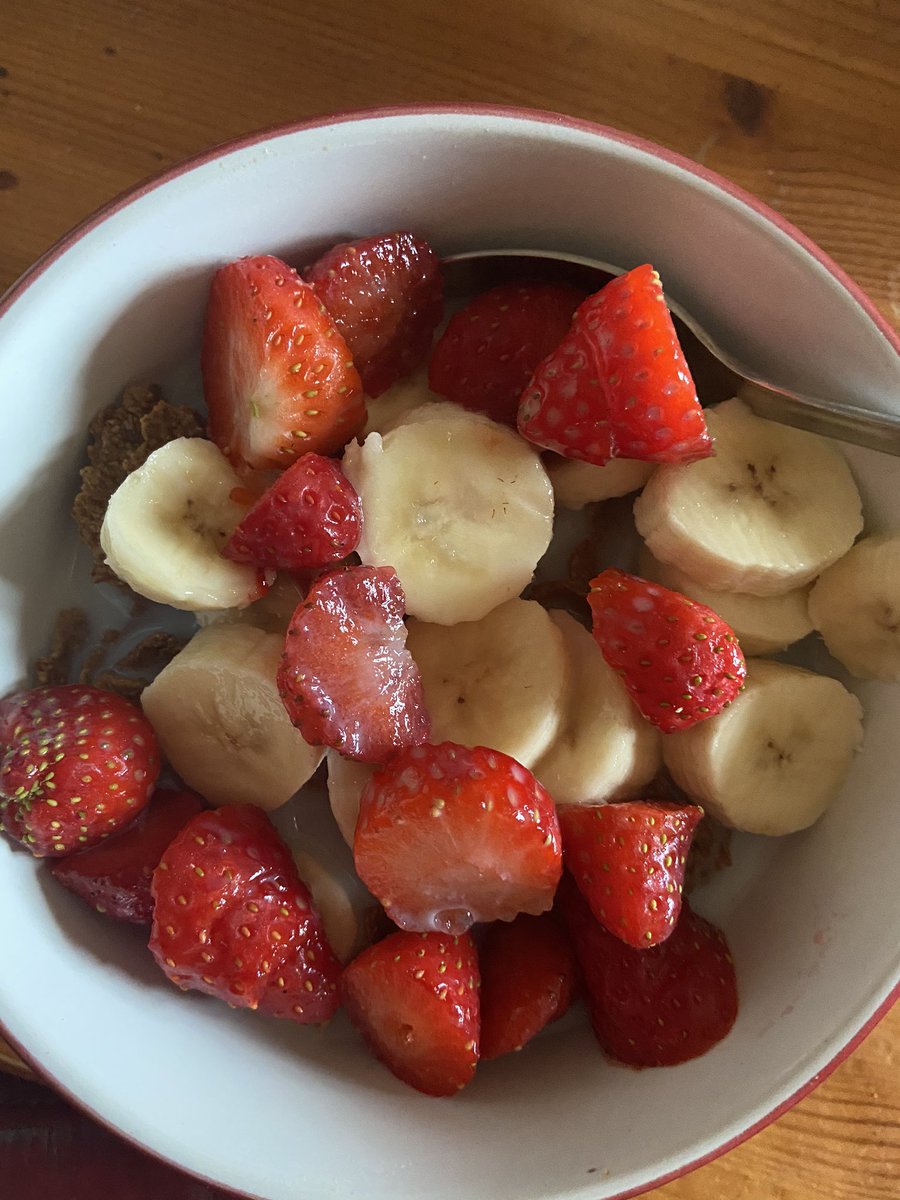

12 Jan 2018
Need a bit of #corestrength in your #life? Try adding this 4 minute #coresequence to your personal #yogapractice. | buff.ly/2CXtFpb via @YogaUOnline
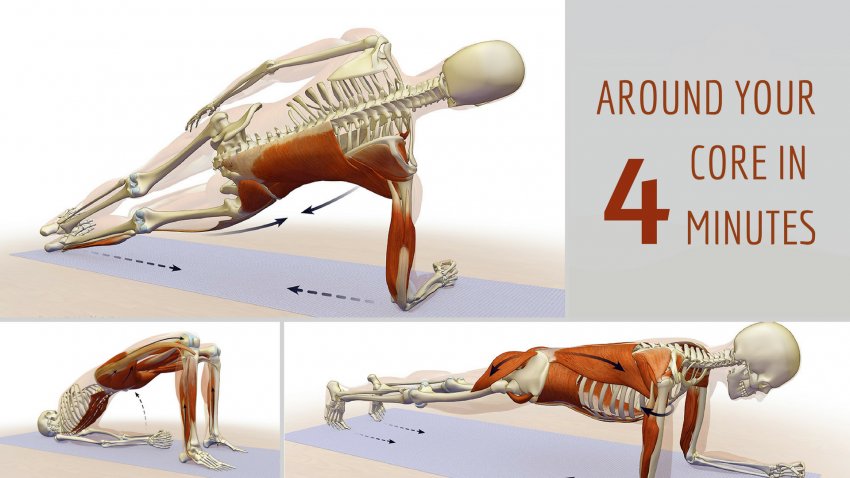
2

2 Dec 2017
A short core sequence to get your heart rate going... give it a try! <3
bit.ly/2mS6wgR
#yogasequence #sequencesaturday #coresequence
2
2