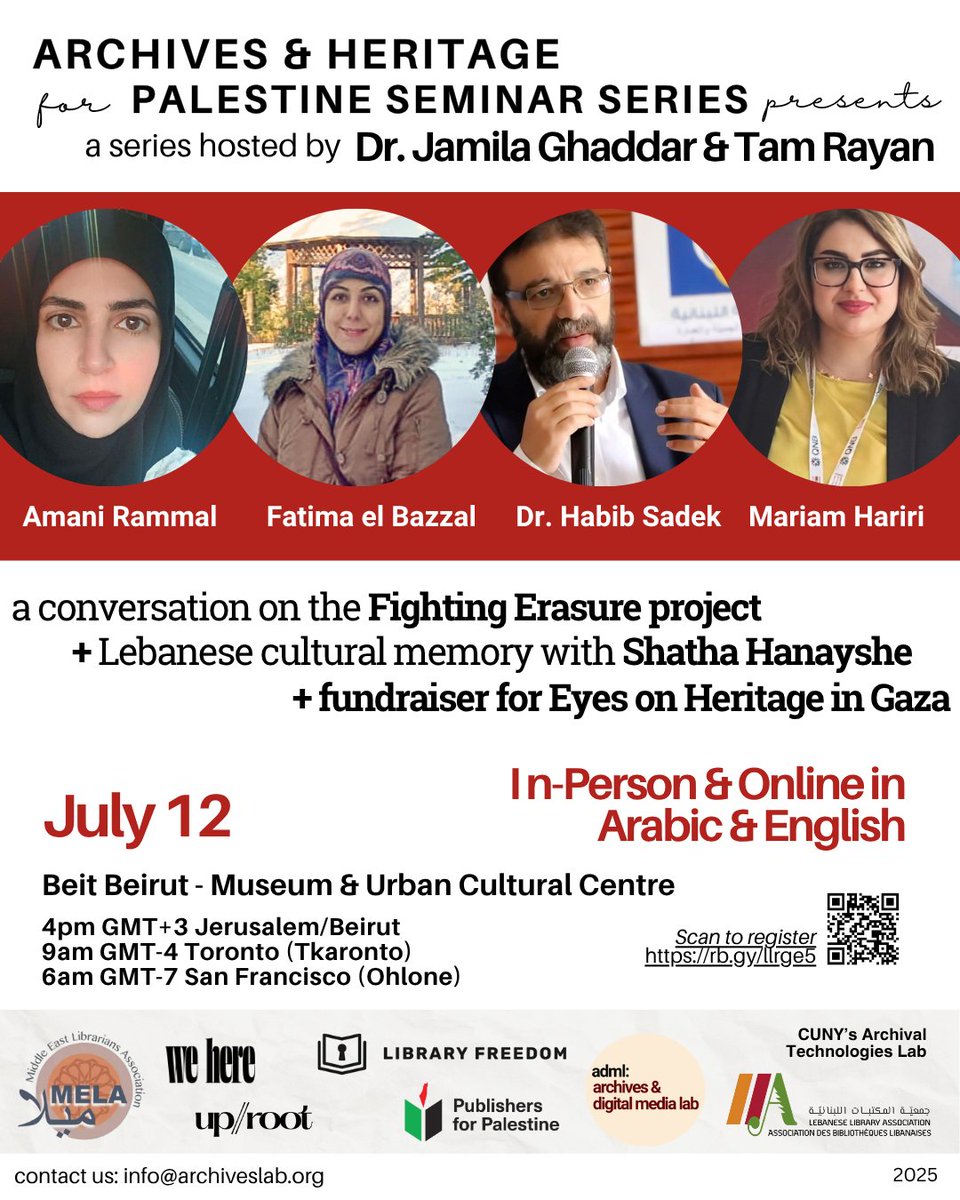
ALT 📢🕊️ Join us for the 9th installment of the Archives & Heritage for Palestine seminar series on July 12 featuring Dr. Habib Sadek, Maryam Hariri, Amani Rammal & Fatima el-Bazzal in conversation with Shatha Hanayshe ! 🔗Register here: https://rb.gy/llrge5 #CritArch #CritLib #GLAMs
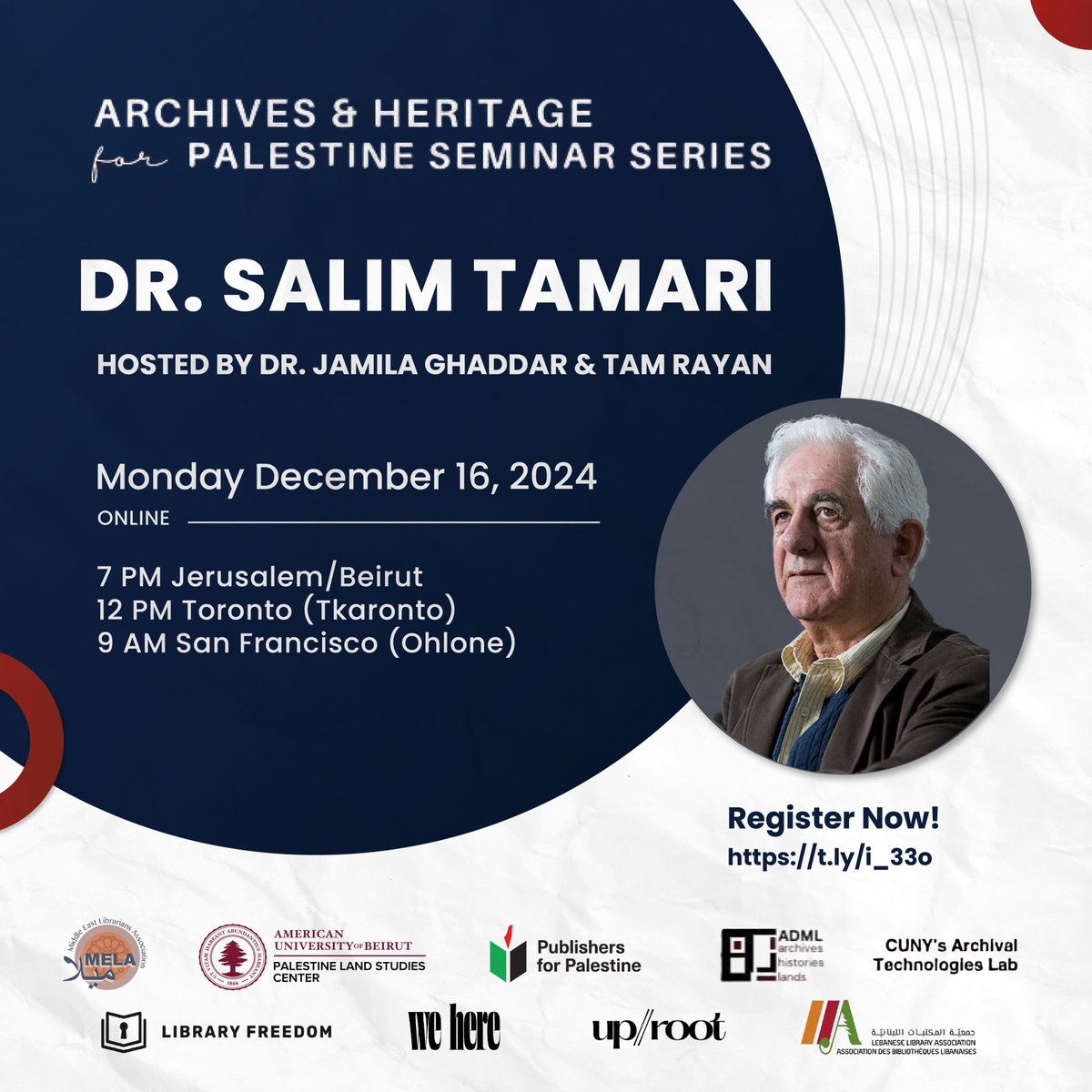
ALT Archives & Heritage for Palestine Seminar Series; Dr. Salim Tamari; Hosted by Dr. Jamila Ghaddar & Tam Rayan; Monday, December 16, 2024 Online; 7 PM Jerusalem/Beirut; 12 PM Toronto (Tkaronto); 9 AM San Francisco (Ohlone); Register now https://t.ly/i_33o. Images include photo of Dr. Tamari, who is an older man with short white hair and is wearing a brown lapelled jacket and a white shirt, and the logos of all the co-sponsors of the event.

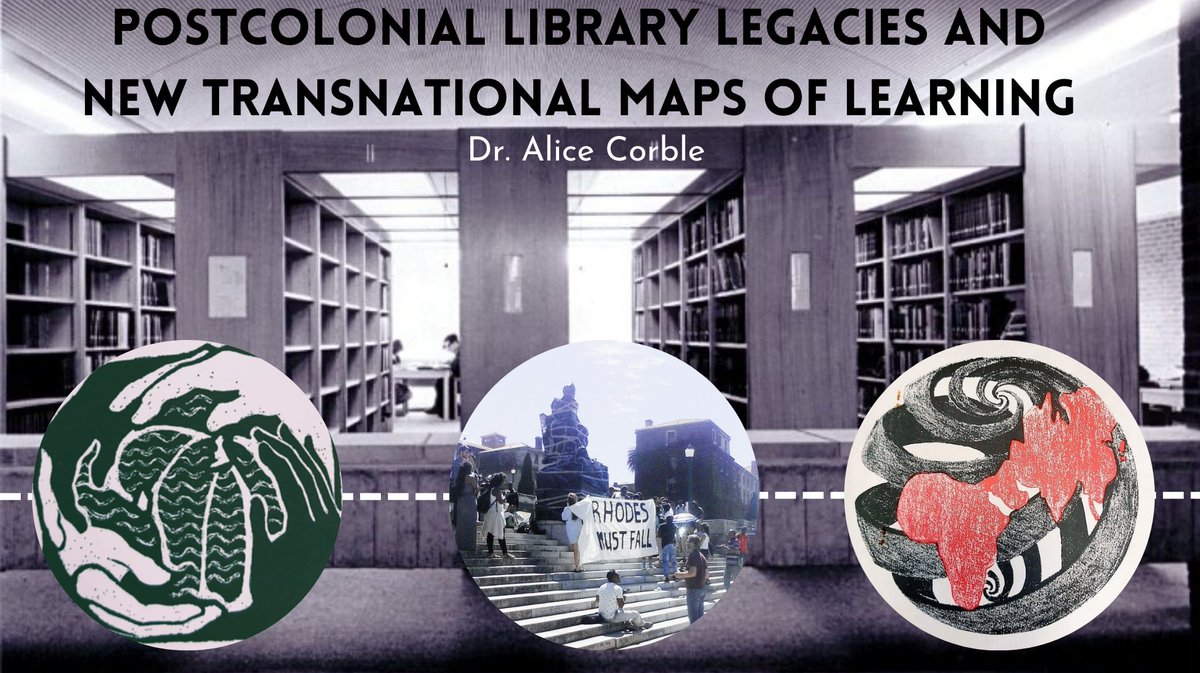
ALT A black and white photograph of the interior of University of Sussex Library from the 1960s, with three circular images in the foreground depicting global maps on either side and a photograph of the statue of Cecil Rhodes bound in tape next to a banner reading 'Rhodes Must Fall' underneath with Black people surrounding it on some steps. The header at the top of the image reads POSTCOLONIAL LIBRARY LEGACIES AND NEW TRANSNATIONAL MAPS OF LEARNING. Dr. Alice Corble.



![screenshot of linked article: Critiquing the Machine: The Critical Cataloging Database1by B. M. Watson Libraries are [...] desiring machines that seek to collect everything for everyone for all time, making knowl-edge universally accessible through cataloging and classification schemes from which nothing escapes... Knowledge organization structures are also about power, the power to produce both order and excess... our catalogs and classification structures are themselves technologies of power, facilitating some ways of know-ing and not others, representing certain ideological ways of seeing the world, and, crucially, not others. (Drabinski 2019, 49–51).INTRODUCTIONCritical Cataloguing (CritCat) is a descriptor for a variety of critical approaches to the cataloguing, classification, and creation of metadata for resources2 in Galleries, Libraries, Archives, Museums, and Special Collections (GLAMS) and in other information systems. Critical cataloguing places](https://venexa.site/media/FnQiJ5maUAEf46D.jpg)
ALT screenshot of linked article: Critiquing the Machine: The Critical Cataloging Database1by B. M. Watson Libraries are [...] desiring machines that seek to collect everything for everyone for all time, making knowl-edge universally accessible through cataloging and classification schemes from which nothing escapes... Knowledge organization structures are also about power, the power to produce both order and excess... our catalogs and classification structures are themselves technologies of power, facilitating some ways of know-ing and not others, representing certain ideological ways of seeing the world, and, crucially, not others. (Drabinski 2019, 49–51).INTRODUCTIONCritical Cataloguing (CritCat) is a descriptor for a variety of critical approaches to the cataloguing, classification, and creation of metadata for resources2 in Galleries, Libraries, Archives, Museums, and Special Collections (GLAMS) and in other information systems. Critical cataloguing places

ALT screenshot of endnotes from article: This article is dedicated to Emily Drabinski. Without Emily’s inspirational scholarship, encouragement of an MLIS student, and her friendship, this article and the work that it discusses would not exist. My title is a riff on Emily’s foundational work Queering the Catalog