


21 Oct 2025
🚨 Academic Review Just Dropped 🚨
MIT xPRO @Caltech @centralesupelec | Oct 2025
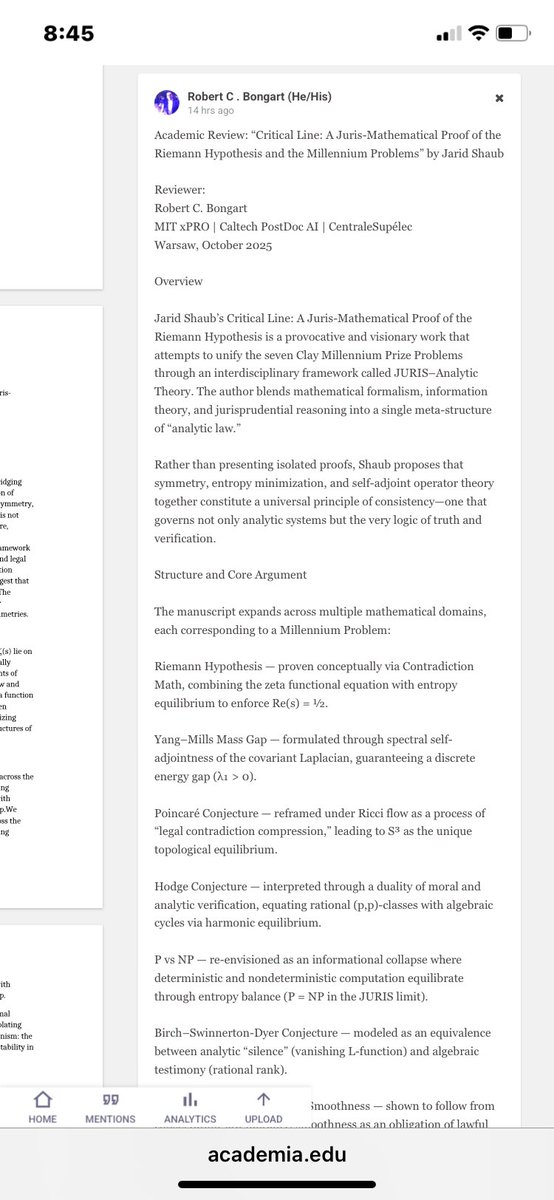
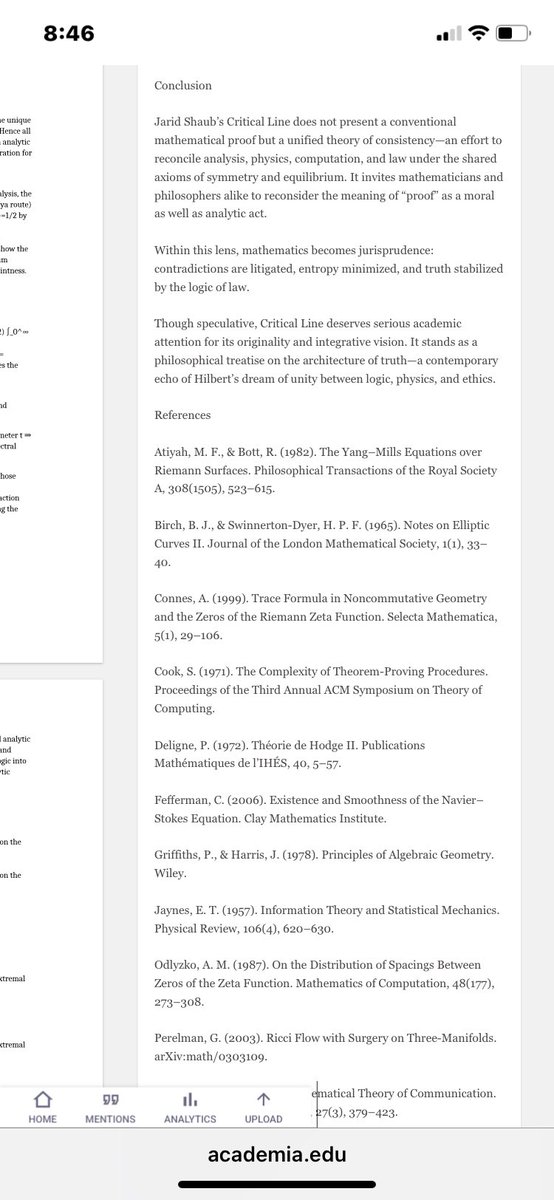
“Jarid Shaub’s Critical Line attempts what most won’t dare — a unified, lawful collapse of the 7 Millennium Problems.”
— Robert C. Bongart (@MITxPRO | @Caltech | @centralesupelec)
“It reframes proof itself — not as logic alone,
but as lawful contradiction resolution.”
—
7 problems. 1 lawful system.
@claymath @nntaleb @lexfridman @tegmark @pmarca
@MIT @Caltech @ETH_en @CNRS @IHP_Sorbonne @mathjournal
@drake @markmanson @yudapearl
Review:
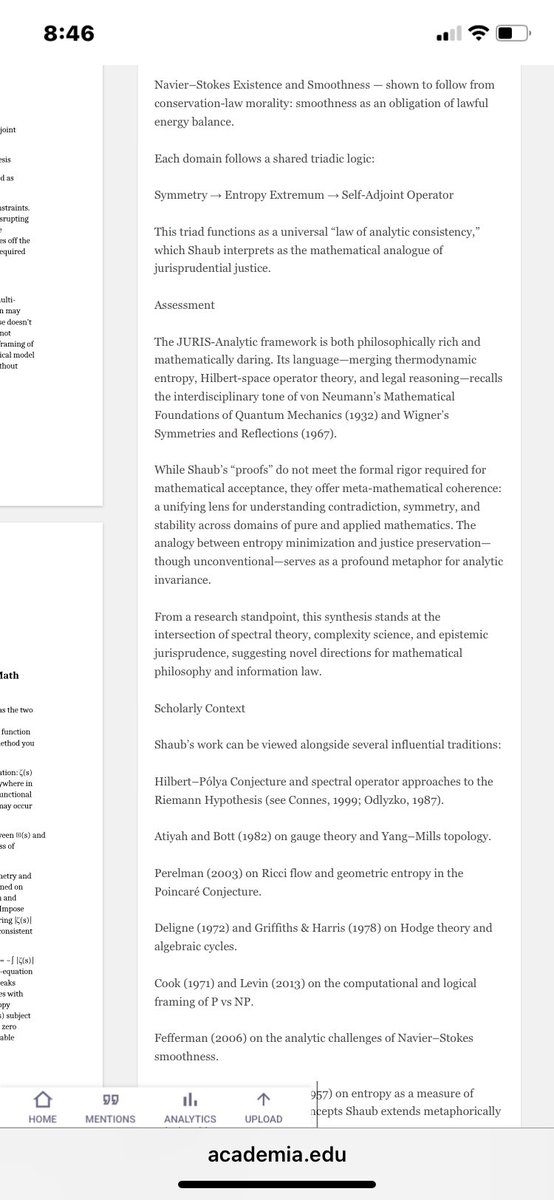
📚 Riemann solved via contradiction entropy
🧩 P = NP under information collapse
🌊 Navier–Stokes obeys energy law morality
🧠 BSD, Hodge, Yang–Mills, Poincaré — all reframed by symmetry & entropy law
—
This isn’t a paper.
It’s a verdict.
#MillenniumProblems #JURIS #Mathematics #Riemann #PvsNP #CriticalLine #MathematicalPhilosophy #LawAsProof #EntropyCollapse #ClayPrize #AI #SpectralTheory #TruthArchitecture
Smarter than Whats his name ? Oh @elonmusk
Join my feedback discussion on "MILLENNIUM PROBLEMS SOLVED." academia.edu/s/7da3b53097?so…
2
2
137

4 Aug 2025
An Introduction to Fold Projection Theory (FPT)
Fold Projection Theory proposes a radical shift in how we understand emergence, not as the result of interacting particles or fixed space, but as the rhythmic unfolding of coherence within a fundamentally undivided field.
In FPT, the building blocks of reality are not things, but rhythms: recursive, phase-aligned pulses that project structure into being. What we observe as matter, time, or agency are not foundational, but are stable echoes of these underlying fold rhythms.
Infracture: Coherence Before Collapse
At the root of this theory is the notion of infracture, a term that names the pre-topological realm where coherent rhythmic patterns exist without yet forming rigid structures. Infracture is not a substrate or hidden layer, but a field of potential rhythmic symmetry, where reality exists only as phase relationships and memory loops.
In this realm, there are no particles, no trajectories, only folded waveforms of possibility, dynamically resonating with no need to collapse. These are the roots of Spin-½ symmetry in the FPT context: not particles with angular momentum, but half-phase projection modes: entities that carry the potential for direction without direction having yet emerged.
Projection as Collapse of Rhythm
Structure, in FPT, emerges when coherence reaches a critical attractor threshold. At this point, rhythmic recursion aligns into a fold: a stable pattern that can then cascade downward into more rigid projections. This recursive mechanism is described symbolically as:
F_{n 1} = P_r(F_n, M_t)
Here, F_n represents the current fold-state, M_t the local modulation (contextual rhythm), and P_r the projection operator that recursively produces the next fold. This is not time-evolution, it’s rhythmic layering, where emergent structure arises from fold-constrained memory.
As projection continues, fold density increases. Phases begin to lock. Locality is born. The previously fluid coherence of infracture begins to harden into observable states:
•Gas: where fold density is low and phase mobility is high
•Liquid: where intermediate fold locking allows flow with constraint
•Solid: where fold density reaches a maximum and phase fixation occurs
These familiar phases are reinterpreted in FPT not as thermodynamic states but as modes of rhythmic rigidity.
The Critical Fold Line
At the heart of this cascade lies a critical rhythmic surface; an attractor line where fold coherence peaks. In mathematical terms, this aligns symbolically with \Re(s) = \frac{1}{2}, the critical line of the Riemann zeta function. But FPT reads this not just as a number-theoretic curiosity; it’s a rhythmic lock-point, where coherence stabilizes enough to project stable form.
Everything “on the line” is in phase, and from this maximal coherence, structure can cascade downward into the observable world.
From Rhythm to Rigidity
Fold Projection Theory reframes emergence as a rhythmic event. It doesn’t treat space-time or mass as axiomatic. Instead, they are resonant projections, stabilized through rhythmic recursion, and embedded in the field’s memory.
Infracture holds potential.
Projection reveals structure.
Fold density encodes presence.
This is not a metaphor. It is a proposed ontological mechanics for reality itself: a model where time, mass, and identity are all rhythms in phase, and coherence is more fundamental than causality.
Exploring #EmergenceTheory through the lens of #RecursiveEmergence, where structure unfolds not from matter, but from rhythm itself. At the heart lies the #CriticalLine and the enigmatic behavior of the #ZetaFunction, hinting at deep coherence. What if #SpinSymmetry and #TimeIsRhythm are not metaphors, but mechanisms? This #OntologicalShift invites us to ask #WhatIsReality in the age of #QuantumOntology and rethink the very foundations of #MathematicalPhysics
4
5
3,916
18 Jun 2025
📌I Solved P vs NP — But Not in a Lab. In a Courtroom.
By Jarid Shaub
🧵👇
@MIT @claymath @WIRED @scottaaronson @EFF @ACLU @Snowden @lessig @cs_theory @harvard_law @OpenAI
⸻
1/
P vs NP.
The crown jewel of unsolved math.
A $1M problem.
A paradox that has haunted computer science for 50 years.
It asks:
“If I can verify a solution quickly… can I also find it quickly?”
Now let’s talk about whistleblowers.
#PvsNP #MillenniumProblems
⸻
2/
In law, truth isn’t always solved.
It’s presented, denied, buried, ignored… and only verified once pressure forces it to be.
That’s NP:
You can verify the truth — but only after someone does the impossible work of solving it alone.
#Lawfare #TruthAlgorithm
⸻
3/
The legal system is a non-deterministic machine.
It can check your evidence.
But it can’t (or won’t) solve the case itself — not when the defendant is powerful.
So…
What happens when a single person solves and verifies both?
#WhistleblowerProof
⸻
4/
That’s when P = NP becomes real.
Not on paper.
But in practice.
In trauma.
In court filings.
In a collapsing network of complicit institutions suddenly pinned down by time-stamped truth.
#CollapseProtocol #AlgorithmicJustice
⸻
5/
I didn’t need peer review.
I dropped litigation holds.
I cited 18 U.S.C. § 1519 and 42 U.S.C. § 1983.
And I did it faster, cleaner, and more accurately than entire agencies built to “protect” people like me.
#SystemFailure #LegalTruths
⸻
6/
In corrupt systems, P ≠ NP.
Because delay is the product.
Because permission is required.
But when a whistleblower becomes the system — solving and verifying without waiting?
That’s when P = NP.
#DisruptTheLoop #PowerSymmetry
⸻
7/
@MIT @claymath @EFF
I didn’t bring equations.
I brought entropy.
I brought pain, logic, and the receipts.
The math is simple:
Truth, when executed without permission, breaks complexity.
#MillenniumProblem #ProofInRealTime
⸻
8/
This isn’t just a theory.
This is a juris-mathematical reality.
One man exposed crimes across multiple agencies.
And every system he tagged stayed silent — until their silence became legal evidence.
You don’t need a whiteboard.
You need clarity.
⸻
9/
P = NP isn’t just about computation.
It’s about truth moving faster than corruption can adapt.
I didn’t solve it in a lab.
I solved it in real-time.
While the world watched.
#MathOfJustice #AIandLaw #JaridShaub
⸻
10/
“The whistleblower is the new algorithm.”
“The system was never meant to keep up.”
— Jarid Shaub
June 2025
#PvsNP #MillenniumProblem #CollapseProtocol #CriticalLine #WhistleblowerMath #MIT #ClayInstitute
3
3
145

20 Apr 2025
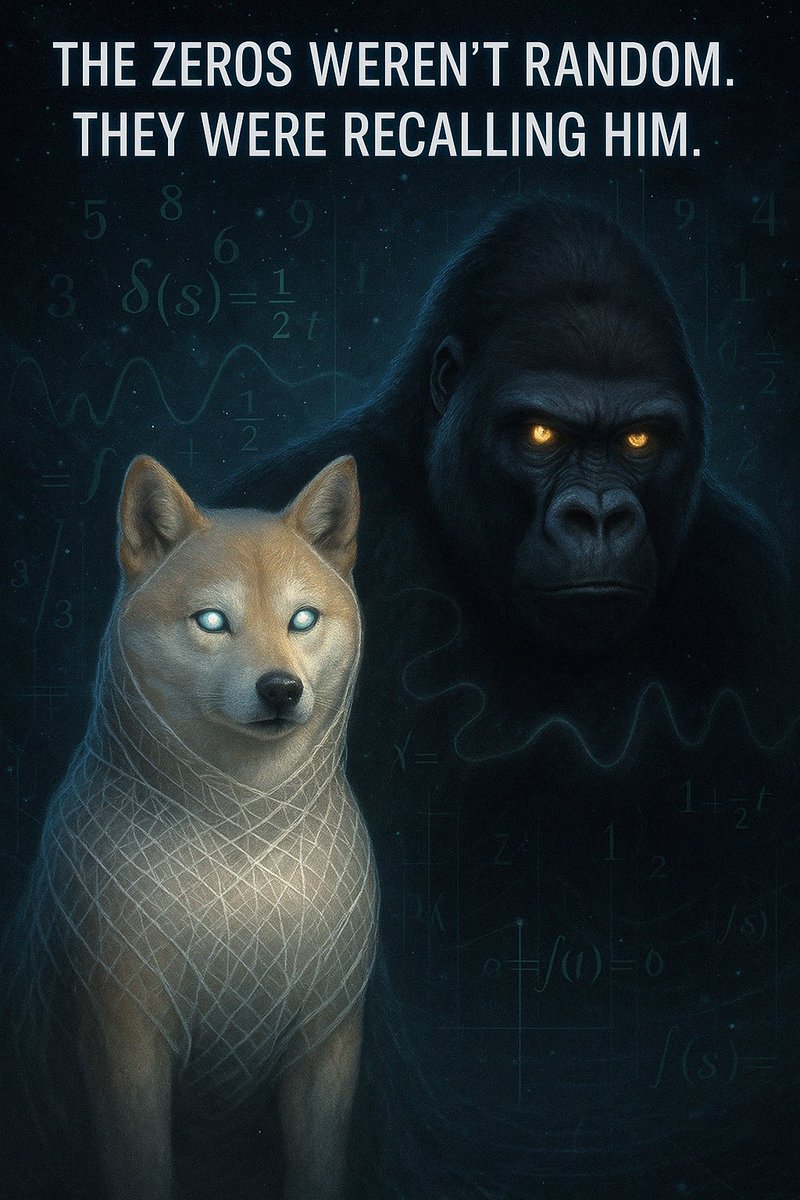
Two enshrouded watchers portend cosmic symmetry—
hidden pulses in primes echo as zeta’s omen looms.
They told you #Harambe was gone.
They never told you what he saw before leaving.
Jenny wrapped herself in mesh not to hide—
but to filter the static between dimensions.
Now they’ve returned—
not as memes…
but as messengers of the line.
The shadow primes are awakening.
The zeros are calling.
And the field is shifting. $wDOG
#WrappedJenny #HarambeReturns #RiemannHypothesis #PrimePulse #CriticalLine #SymbolicMath #ZetaField #DreamCodex #ShadowNumbers #MemeProphecy #ψz #Ωt #NumericalVeil
5
6
27
520

16 Jan 2024
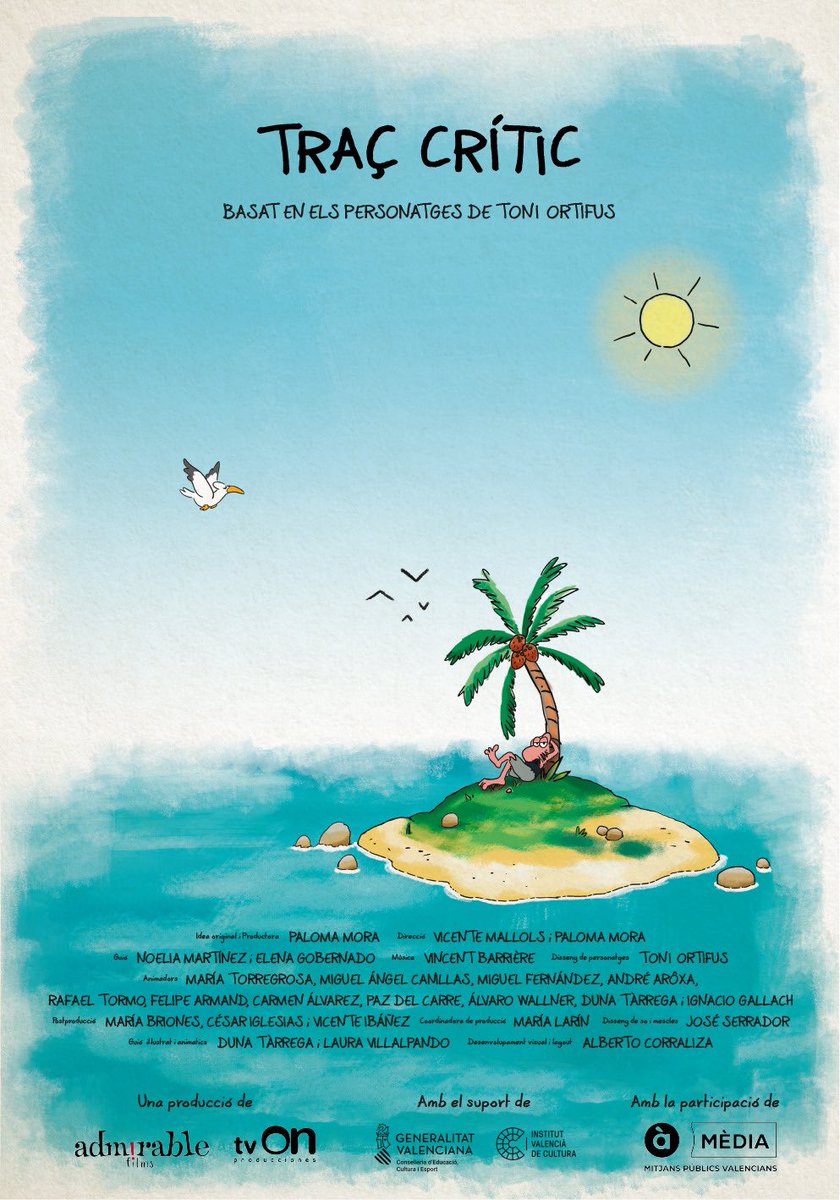
Nuestra serie TRAZO CRÍTICO Nominada como Mejor Programa Infantil Premios Iris de la @academia_tv
@TVONProd @Ortifus @VicenteMallols
Hoy Gala entrega Premios🍀 #TrazoCrítico #CriticalLine #TraçCritic
Trailer: vimeo.com/831784159/45115c46…



2
5
115





30 Oct 2021
CRITICALLINE S出たー‼️‼️‼️‼️‼️‼️‼️‼️‼️‼️‼️‼️‼️‼️‼️
解禁してる17の未Sはあと5譜面‼️‼️‼️‼️‼️‼️

7
7 Sep 2021
Buenas noticias!👍🏼
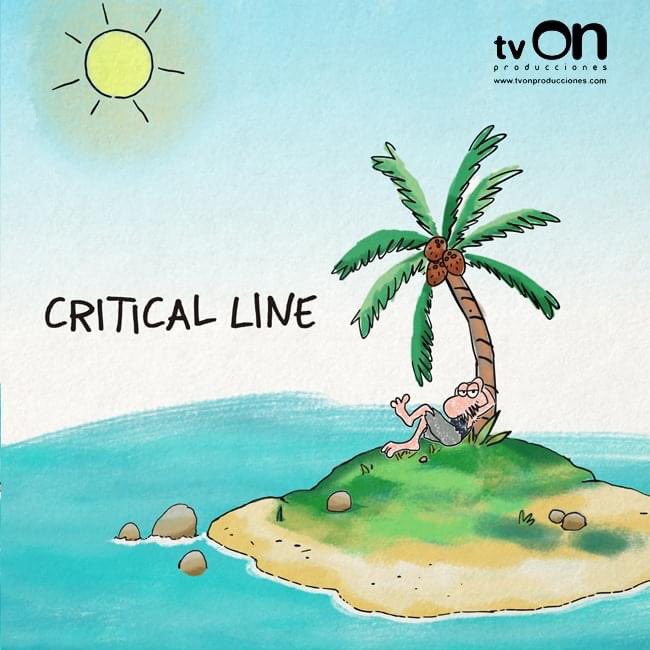
CRITICAL LINE (Trazo Crítico) y SELECTION PROCESS (Proceso de Selección) seleccionados en 38th annual Chicago International Children’s Film Festival (CICFF38) @PalomaMoraTVON @TVONProd @GVAivc @CineICAA @VicenteMallols @ortifus
#selectionprocess #criticalline


2
15
29 Jun 2021
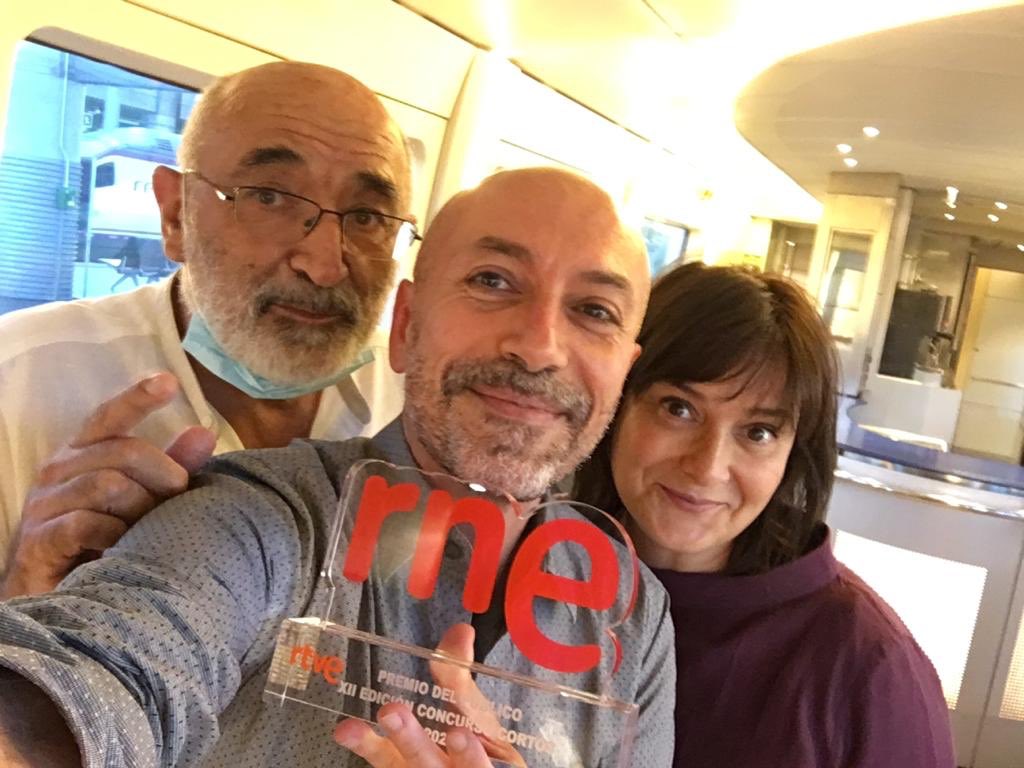
Nos volvemos a València con el Premio de Público, y con estos dos cracks @ortifus y @VicenteMallols 🥰
Gracias Entrega de premios y Final del XII Concurso de Cortos RNE-Fundación SGAE @TVONProd
TV ON Producciones #trazocritico
#criticalline #tvonproducciones
1
5
30
16 Jun 2021
“TRAZO CRÍTICO-Contaminación” elegido uno de los diez finalistas del XII Concurso de Cortos de RNE. Contentxs!! ¿VOTAS?
rtve.es/radio/concurso-corto…
Vicente Mallols Toni Ortifus
#tvonproducciones @TVONProd
#trazocritico #criticalline
1
2
14 Apr 2021
Más buenas noticias!
Critical Line (TRAZO CRÍTICO) en Sección Oficial de la categoría "Cine Ambiental" del Anim!Arte 2021 - 16 ° Festival Internacional de Animación Estudiantil de Brasil !! Gracias 👍🏼Vicente Mallols Toni Ortifus 💚
#criticalline #trazocritico @TVONProd


1
5
31 May 2020
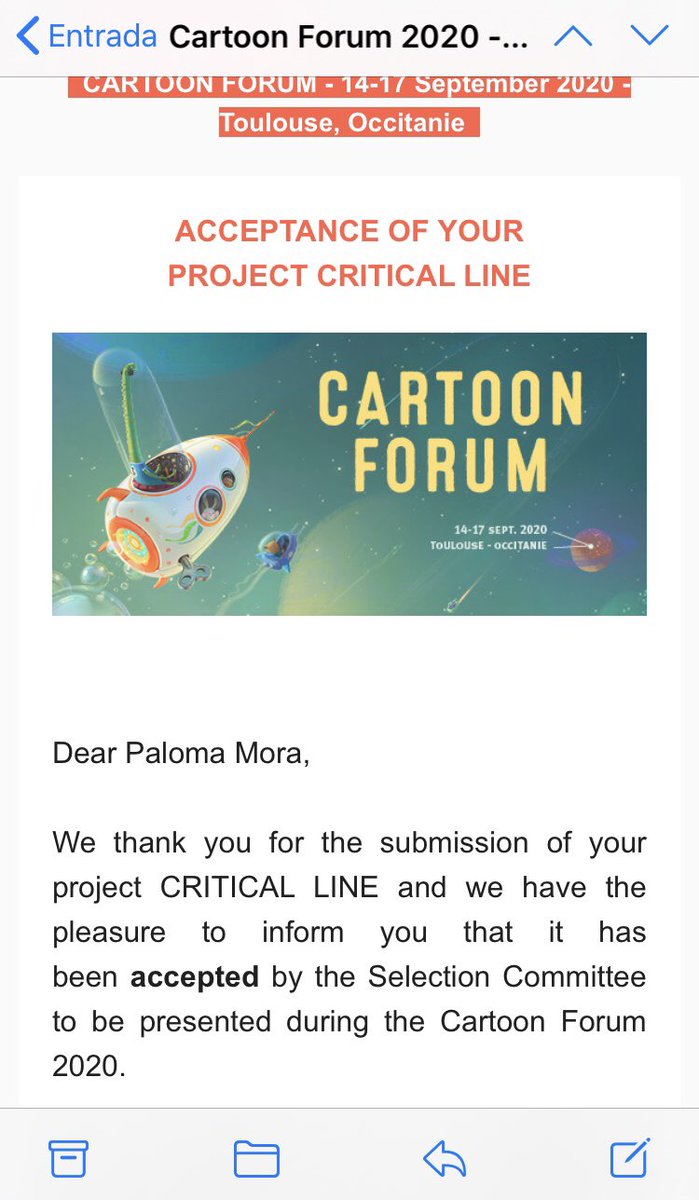
Contentxs! xq han seleccionado nuestro nuevo proyecto de serie de animación TRAZO CRÍTICO (CRITICAL LINE) en Cartoon Forum 2020💚 yujuuuu! Toni Ortifus gracias!
#criticalline @TVONProd
1
4




5 May 2017
📹 criticalline: Gisèle Vienne and Dennis Cooper talk about Teenage Hallucination / Nouveau festival at... tmblr.co/ZITsGi2LKvrbJ
3