
📰Owen Gregorian Stories📰
1. Coffee could slow aging
a. x.com/OwenGregorian/status/2…
2. Ramp up Alaska oil and gas drilling
a. x.com/OwenGregorian/status/2…
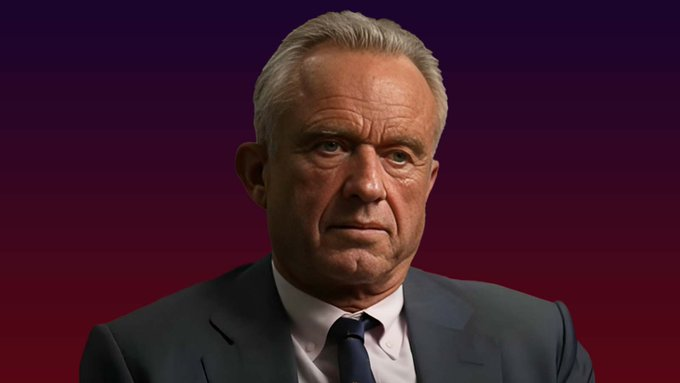
3. False Rumors That RFK Jr. Will Resign
a. x.com/OwenGregorian/status/2…
4. US To Withdraw Fighter Jets From Europe
a. x.com/OwenGregorian/status/2…
5. Water systems hit by Iranian hackers
a. x.com/OwenGregorian/status/2…
6. Working From Home Has Grim Effect on Brain
a. x.com/OwenGregorian/status/2…
7. Setting Forests on Fire
a. x.com/OwenGregorian/status/2…
8. Regrow lost cartilage and reverse arthritis
a. x.com/OwenGregorian/status/2…
9. Congress must kill the tax on online shopping
a. x.com/OwenGregorian/status/2…
10. FBI built small town to simulate cyberattacks
a. x.com/OwenGregorian/status/2…
11. Platner's response to trillionaire sparks outrage: Loserthink
a. x.com/OwenGregorian/status/2…

HHS Shuts Down “Utterly False” Rumors That RFK Jr. Will Resign This Summer | Kaley, WLT Report
The Department of Health and Human Services is setting the record straight after rumors spread that HHS Secretary Robert F. Kennedy Jr. is planning to resign.
According to the baseless rumor, RFK Jr. may step down from the role after July 4th, and Dr. Mehmet Oz will take over.
This claim originated from a post made (without evidence) by Dr. Robert Malone on X:
BREAKING- Very active rumor mill currently with specifics from senior USG (government) employees that RFKjr will be leaving as Secretary HHS in July, after the 4th. Meeting was apparently held last Monday. Oz to head transition team.
— Robert W Malone, MD (@RWMaloneMD) June 12, 2026
The HHS was quick to fully shut down this report, calling it “utterly false.”
Despite the HHS denying it, Dr. Malone doubled down in a follow-up post:
HHS is denying the robust rumors that RFKjr is on his way out – given the pattern above, I am not ready to concede the strong possibility the July will see transition to a new Secretary. But as I originally posted, this must be considered a rumor at this time.
— Robert W Malone, MD (@RWMaloneMD) June 12, 2026
These rumors also come shortly after RFK Jr. blasted the fake news New York Times for publishing a hit piece claiming that he has “checked out” from his job.
Here’s an excerpt from the NYT article, which is titled RFK Jr. Appears Disengaged on Many Health Department Matters Beyond Vaccines:
Shortly after the World Health Organization declared the Ebola outbreak in Africa a public health emergency, a reporter asked Health Secretary Robert F. Kennedy Jr. if he was worried about the virus. Six Americans had already been exposed. His response was brief: “Yeah, we’re working on it.”
In the nearly three weeks since, as the Centers for Disease Control and Prevention imposed travel restrictions to keep the virus from coming to the United States, Mr. Kennedy has made no public comments about the spreading outbreak. He has received very few briefings about the virus from C.D.C. scientists, although he speaks daily to the acting director, according to people familiar with his response.
ADVERTISEMENTMr. Kennedy’s approach to the crisis reflects his broader management of the Department of Health and Human Services, which affects the health of 340 million Americans and provides health care to 40 percent of the population through Medicare and Medicaid.
Mr. Kennedy has shown little interest in managing the details of work in his department, according to multiple colleagues. Instead, they say, he is single-mindedly focused on his top priorities, including food recommendations and pesticide exposures, and hunting for evidence to support his long-held beliefs that vaccines are harmful.
Deeply mistrustful of career civil officials, the secretary has surrounded himself with a close circle of handpicked advisers and stacked agencies with political appointees aligned with his views. While major posts have sat vacant and a wave of veteran health experts and scientists have departed, Mr. Kennedy has remained isolated from much of the department’s top staff.
He rarely engages with members of Congress, colleagues said, unless he is asked to testify. He has made just one known visit to the C.D.C., after a gunman opened fire on its headquarters and killed a police officer last August.
In a lengthy post on X, Secretary Kennedy put the New York Times in their place, thoroughly fact-checking them into oblivion!
Read his full response to the fake news outlet’s attempt to smear him here:
Sheryl. Your article exemplifies the biased reporting we have come to expect from you and @nytimes. It was unfair, inimical, and inaccurate. All one needs to refute your argument is to glance at my publicly available calendar and to review my unprecedented list of accomplishments on a wide range of issues, all of which I drove. You evidently never undertook these foundational due diligences. Why let facts obscure a good story?
You fault me for missing a couple of monthly counselor meetings. However, I meet one-on-one with my counselors every day to decide policy and strategy. We schedule the monthly meetings to give the divisions a chance to keep each other informed about HHS-wide policies with which I’m already intimately familiar. Had you read my calendar, you would have seen that I have back-to-back meetings all day, every day, with both career and political staff, with my counselors and with outside stakeholders, interspersed with press conferences and other policy announcements.
I am knowledgeable and active on every issue in every division of my department, and I always make the final decisions. I meet with the principals at FDA, NIH, CDC, and my senior counselor every morning, something, I’m told, is unprecedented in HHS history. I try to get out of the office between 4:30 and 6:00 PM, so that I can spend three hours, in quiet, responding to emails. I normally work until 11 PM every night, mostly on phone calls to staff.
In order to prove your preconceived case for my disengagement, you quote anonymous employees, some of whom I fired or who quit to avoid being fired. You also deceptively quote HHS employees without identifying whether they were among those I fired, thereby depriving your readers of the opportunity to make an independent judgment about their credibility.
I came into this job to change the culture of a broken agency that has presided over the worst decline in public health in American history. Of course I fired people—lots of them! It’s an easy task for even the laziest journalist, to comb that flotsam and jetsam for malevolence toward the Trump administration. And of course, this species of journalist will always be able to find disgruntled individuals among the 70,000 employees of the Department from whom to cherry pick “facts” to flesh out a preordained hit piece. All that is required for this brand of journalism is the ethical elasticity that you seem to have in spades. You had a preconceived thesis, and you set out to prove it. This is a widely accepted technique in journalism today, but I grew up in an era when it would not have been tolerated by the New York Times.
Ultimately, God puts us all on this earth to search for existential truths. I’ve tried to instill this mission at HHS by implementing gold standard research to end the regime of politicized science that COVID exposed to the American public. There was a time that journalists were proud to be the fearless and uncompromising champions of truth. Standards have devolved, and journalism is dead. The Times now employs propagandists. Your capitulation to partisanship further compounds your journalistic challenges; since we all are aware of your predictable bias, we at HHS are unwilling to talk to you about the topics that are important. The fact that you have minimal access to decision makers leaves you covering trivia and relying on your own capacity for invention.
Btw. When I took this job, the building was empty. About 90% of the employees were not coming to work. I changed that, but your newspaper never covers my reforms. Nor did you cover the fact that my predecessor almost never showed up for work here during his four years in office. When we came in, there were still artifacts from the first Trump administration in many of our office drawers because no one showed up for work during the Biden years. Just as Rochelle Walensky spent her entire term as CDC Director in Cambridge, Xavier Becerra reportedly spent most of his term as HHS Secretary in California. (I live in California, but I’ve only been there once in fifteen months).
His only notable accomplishments here were losing 300,000 children, referred to HHS for custody and care, to human traffickers and drug runners, encouraging transgender surgeries, and disabling the entire program-integrity apparatus, allowing hundreds of billions of dollars of theft from my agency. I have set out to find the children Becerra lost. He is now the front-runner for the governor of California. These are not invented stories; they are genuine scandals that the Times will never cover, presumably, because the malefactors are Democrats.
Finally, you criticize me for spending time with the Indian tribes in Alaska. I consider that part of my job. I run the Indian Health Services, and I’ve had unprecedented success in transforming IHS from a backwater to a top priority for this department. I’ve made more trips to Indian country and to Indian health clinics and hospitals than any HHS secretary in history, and I’ve brought Indians into high positions on the sixth floor for the first time in agency history. This is another success story that the Times will never cover.
Now, let me ask you: does that sound like a guy who is on the verge of resigning?
Or, rather, does it sound like a man who remains passionate about doing everything in his power to help Americans live healthier, longer, better lives?
By the way, after RFK Jr. responded to the hit piece on him, The New York Times attempted to defend their horrible reporting.
Fox News shared a statement from the NYT:
The New York Times responded to Kennedy’s criticism, saying he declined an interview and didn’t address the “detailed questions” prior to publication.
“The Times set out to examine Secretary Kennedy’s leadership and management style in light of numerous vacancies within the Department of Health and Human Services and concerns internally about his detachment from key issues and officials,” a spokesperson for the Times told Fox News Digital. “The secretary declined an interview request and did not address detailed questions before publication about his approach to running the department. This article is based on conversations with a dozen people who have worked directly with Mr. Kennedy during his tenure as secretary. We are confident in our reporting.”
Robert F. Kennedy Jr. is one of the best members of the Trump administration.
He is committed to making America healthy again, and he’s made a lot of progress during his time at the HHS.
So, why on earth would he resign now?
If you ask me, this whole thing seems like yet another failed attempt to try to sow division in the administration.
Read more:
wltreport.com/2026/06/12/hhs…
2

From arrests and cybercrime cases to deportations, cyberattacks, and reporting restrictions, journalists faced mounting pressures across the globe this week. Where is press freedom headed next? #PressFreedom #Journalism #JournalistSafety #DigitalRights

A closed-loop environment for training (sandbox). Good idea @FBI 💡
'The FBI built its own replica small town to simulate real-world cyberattacks'
techcrunch.com/2026/06/13/th…
7

The #Cybersecurity Spiral of Failure - And How to Break Out of It
How decades or #corporate short-termism and lip-service around cybersecurity have led to the endless series of #cyberattacks and #databreaches we see today
Everything #security vendors and consultants don't want you to read >> buff.ly/Foijj3H
#tech #business #leaders #leadership #management #governance #CISO #CIO #CTO #CEO #cyberthreats #cyberrisks


How decades or #corporate short-termism and lip-service around #cybersecurity have led to the endless series of #cyberattacks and #databreaches we see today
The second book from our Founder & CEO @Corix_JC >> buff.ly/y99gGTR
#business #leadership #governance #CISO #CEO
1

Fraud is changing fast as criminals now use AI, deepfakes, and sophisticated cyberattacks to target victims at scale. visualcapitalist.com/ig02-th… via @visualcap
7

Ongoing – GPS jamming near Kaliningrad, Baltic Sea cable damage attributed to Russia’s “shadow fleet,” cyberattacks on Polish government/media sites.
5
EDIMO PEREIRA retweeted

Jun 13
The FBI built its own replica small town to simulate real-world cyberattacks techcrunch.com/2026/06/13/th…
13
15
62
20,509

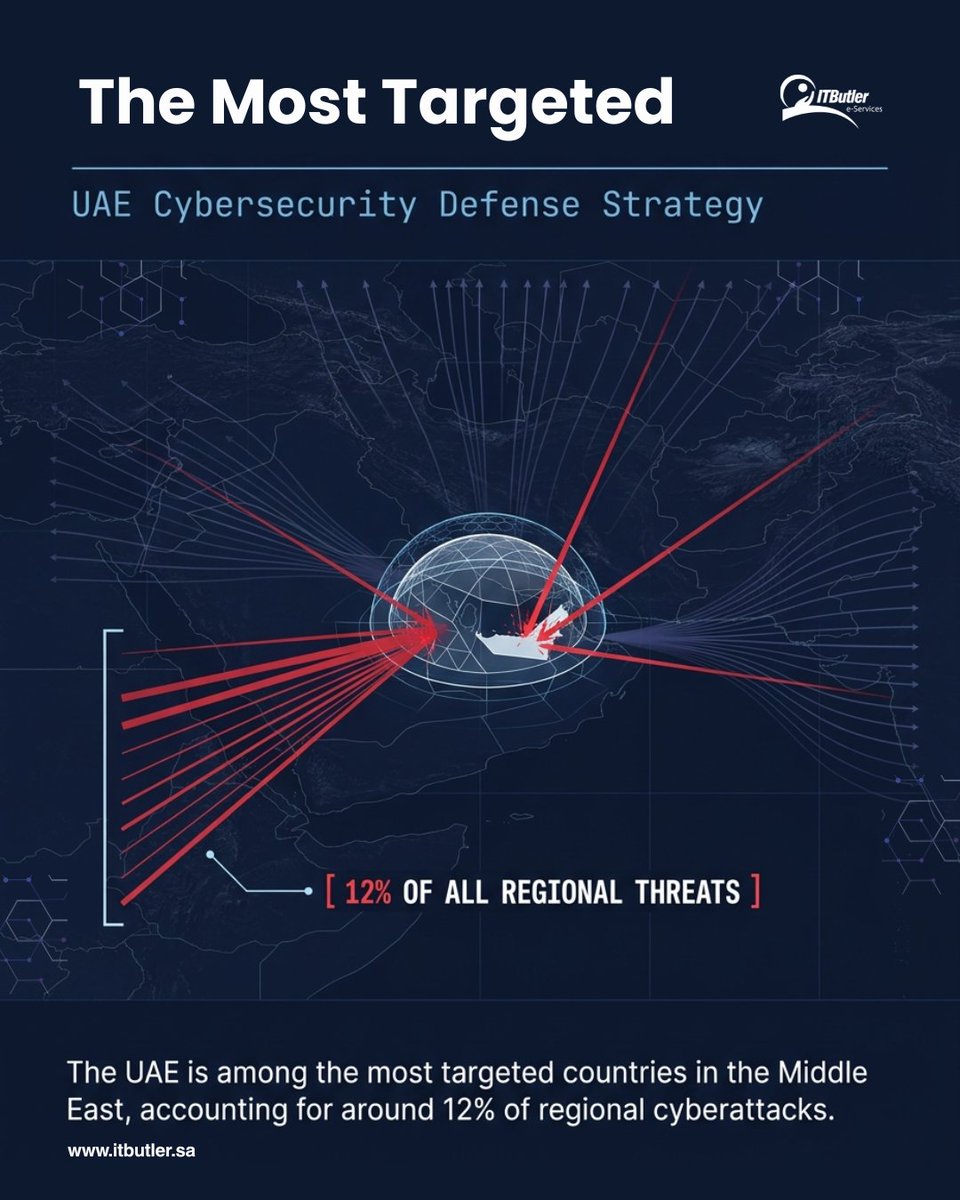
⚠️ The UAE is among the most targeted countries in the Middle East, accounting for around 12% of regional cyberattacks.
👉 𝗟𝗲𝘁’𝘀 𝗱𝗶𝘀𝗰𝘂𝘀𝘀, 𝘄𝗵𝗮𝘁 𝗱𝗼 𝘆𝗼𝘂 𝘀𝗲𝗲 𝗮𝘀 𝘁𝗵𝗲 𝗯𝗶𝗴𝗴𝗲𝘀𝘁 𝘀𝗲𝗰𝘂𝗿𝗶𝘁𝘆 𝗴𝗮𝗽 𝗶𝗻 𝘁𝗼𝗱𝗮𝘆’𝘀 𝗨𝗔𝗘 𝗹𝗮𝗻𝗱𝘀𝗰𝗮𝗽𝗲?
1
3

AI has changed the speed of cyberattacks. Defenses must evolve just as fast. #BoozAllen’s Vellox™ helps cyber teams accelerate detection, analysis, and response against AI-powered threats—enabling faster, smarter cyber operations at machine speed. boozallen.co/4otKjRE
2
C Wagner retweeted

The FBI built its own replica small town to simulate real-world cyberattacks | Zack Whittaker, TechCrunch
The Federal Bureau of Investigation is pulling back the curtain on a 22,000 square-foot replica town on its Huntsville, Alabama campus that it built to train law enforcement in simulating and investigating real-world cyberattacks.
The aim is to teach investigators in a secure environment beyond the classroom by getting hands-on with some of the latest consumer and enterprise technologies, many of which are frequently targeted by malicious hackers. The numbers put the training into context. The FBI’s 2025 Internet Crime Report, drawing on more than one million complaints, logged a record $20.9 billion in U.S. cybercrime losses, a 26% jump over the prior year, with ransomware ranked the top ongoing threat to critical infrastructure.
Dubbed the Kinetic Cyber Range, the FBI’s small purpose-built town opened in February 2025 and features fully furnished houses, a hotel, a gas station and grocery mart, a courthouse, a hospital, and a power company — complete with roads and traffic lights — designed to mimic a real U.S. community. Since opening, says the agency, the facility has trained more than 1,400 students, including FBI personnel and partners from other federal and local agencies.
Each part of the town is wired with functioning devices and systems that behave as they would in a real community or business, while preventing any simulated attacks from spilling out of the facility.
The range also includes a data center with more than 200 physical servers — some running Windows, some Linux — reflecting the corporate environments investigators are likely to encounter when responding to a breach or executing a search warrant. “They’re cold, they’re cramped, they’re noisy, they’re dark, they’re miserable,” Dave Beachboard, the range’s program manager, explains in the FBI’s write-up about the training environment.
The replica town also allows the FBI to simulate ransomware attacks and their real-world consequences, including the high-pressure decisions that investigators must make when responding to incidents that could cause harm to people, such as hospital systems going dark.
The Kinetic Cyber Range also helps to train U.S. investigators in digital forensics, which police use to crack the cybersecurity defenses of encrypted modern devices to extract data from devices, often for the purposes of building a criminal investigation. The tools used for this are controversial as they work by exploiting vulnerabilities that are never disclosed to the device maker, such as Apple or Google, to defeat the protections those companies build in for their users.
techcrunch.com/2026/06/13/th…



2
3
15
1,304

Cyberattacks and nuclear saber-rattling are not just headlines; they are direct threats to our existence. We need transparency, ethics, and a focus on human safety, not just tactical dominance. Technology should be a tool for progress, not a weapon of mass suffering
8
Humanity is standing on a precipice. From the shadow of nuclear warfare to the invisible destruction of cyberattacks, we are losing our grip on morality. Politics has become a game, while ordinary people pay the ultimate price. A thread on our collective survival. 🧵 #Humanity
9

Iranian cyber units spent 2024 methodically working through zero-day exploits in VPN systems, hitting defense contractors and operational technology with surgical precision. They weren't alone. The House Homeland Security Committee just dropped numbers that should make anyone paying attention sit up: 70% of cyberattacks in 2024 went straight for critical infrastructure.
That's not normal distribution. That's target selection.
We're looking at energy grids, communications networks, transportation systems, water treatment plants. The stuff that keeps 330 million Americans fed, warm, and connected. Foreign adversaries figured out that going after these systems gives them maximum leverage with maximum chaos potential.
The timing wasn't coincidental either. Federal cybersecurity defenses were running on fumes through much of 2024, with lapsed authorities creating gaps that state-sponsored teams exploited aggressively. When your defensive capabilities are degraded by budget fights and bureaucratic dysfunction, sophisticated adversaries notice. They plan around it.
What makes this assessment particularly stark is how it breaks from historical attack patterns. Cybercriminals and state actors used to spread their efforts across financial institutions, healthcare networks, government agencies, and private sector targets more evenly. The 70% concentration on critical infrastructure represents a fundamental strategic shift.
This looks like preparation, not opportunism.
Iranian teams weren't just throwing exploits at random targets and seeing what stuck. They systematically identified and compromised VPN vulnerabilities that gave them access to operational technology systems. These are the networks that actually control physical infrastructure, not just the IT systems that support it.
Defense contractors got hit hard throughout the assessment period. That's a dual-purpose strategy: steal sensitive information about defense capabilities while simultaneously probing the cybersecurity posture of companies that build and maintain critical systems for the military and intelligence community.
The documentation shows sustained campaigns, not one-off intrusions. Foreign cyber units established persistent access and maintained it across months of operations. They mapped networks, identified key systems, and positioned themselves to cause maximum disruption if geopolitical tensions escalated.
Federal authorities tracked this activity in real time but struggled to respond effectively due to weakened defensive capabilities. Lapsed authorities meant some protective measures couldn't be implemented or sustained. The threat of government shutdowns created additional operational constraints that foreign adversaries factored into their planning.
The vulnerabilities documented in 2024 carried over into 2025, creating extended windows of opportunity for continued exploitation. Critical infrastructure systems that were compromised remain at risk, and the zero-day vulnerabilities in VPN systems haven't been fully addressed across all potential targets.
What we're seeing is adversaries treating critical infrastructure as high-value strategic targets rather than opportunistic victims. The 70% figure suggests coordinated planning across multiple state-sponsored teams, possibly with shared intelligence about vulnerabilities and timing.
Energy systems faced particularly intensive targeting. Power grids, natural gas distribution networks, and renewable energy infrastructure all showed evidence of sustained reconnaissance and exploitation attempts. Communications networks that support emergency services and military operations were priority targets.
Transportation infrastructure targeting included both operational technology systems and the IT networks that support logistics and scheduling. Ports, airports, rail systems, and highway management networks all registered significant intrusion attempts throughout the assessment period.
The Iranian focus on operational technology systems is especially concerning because these networks control physical processes. Compromising them doesn't just mean stealing data or disrupting computer networks. It means potentially causing physical damage to infrastructure or interrupting essential services for millions of people.
Defense contractors represent a specific category of target that combines immediate intelligence value with long-term strategic positioning. The companies that build and maintain critical infrastructure for national security purposes hold detailed information about system vulnerabilities, defensive measures, and upgrade plans.
The systematic nature of these campaigns indicates sophisticated planning and resource allocation by foreign adversaries. The 70% targeting concentration didn't happen by accident. It represents a deliberate strategic choice to focus offensive cyber capabilities on maximum-impact targets.
Federal defensive capabilities need sustained funding and clear authorities to operate effectively against this level of coordinated targeting. The gaps that opened in 2024 due to lapsed authorities and potential shutdowns created exactly the kind of opportunities that sophisticated state actors are designed to exploit.
The assessment period shows how quickly adversaries adapt to changing defensive postures. When federal capabilities weaken, foreign cyber units redirect resources and accelerate operations to take advantage of reduced opposition.
Critical infrastructure targeting at this scale requires sustained defensive coordination across federal agencies, state and local governments, and private sector operators. The 70% figure represents an attack surface that no single entity can defend alone.
The continued vulnerabilities extending into 2025 mean this isn't a historical problem that got resolved. Foreign adversaries maintain access and capabilities against critical infrastructure systems right now, with demonstrated intent to use them.
foreigninterference.org/post…
#foreigninterference #CriticalInfrastructureTargeting #ZeroDayExploitation #VpnExploitation
1
22

Every week brings a new crisis.
Wars, sanctions, oil shocks, cyberattacks, trade disputes.
The global economy is being held together by optimism and central banks.
1

1h
#Claude #Mythos Preview has turned #AI security from a future concern into an immediate policy challenge. In #SouthKorea, fears over AI-enabled cyberattacks are driving tighter oversight of banks, telecoms, and critical infrastructure—while reigniting debate on sovereign AI and technological dependence: @AVIRAL96 or-f.org/39071
110

RT @Abnormal: AI is fueling a surge in hyper-personalized cyberattacks, with over 54% of threats now targeting individual human vulnerabili…
276
