Independent Toni retweeted

This is absolutely devastating.. 💔
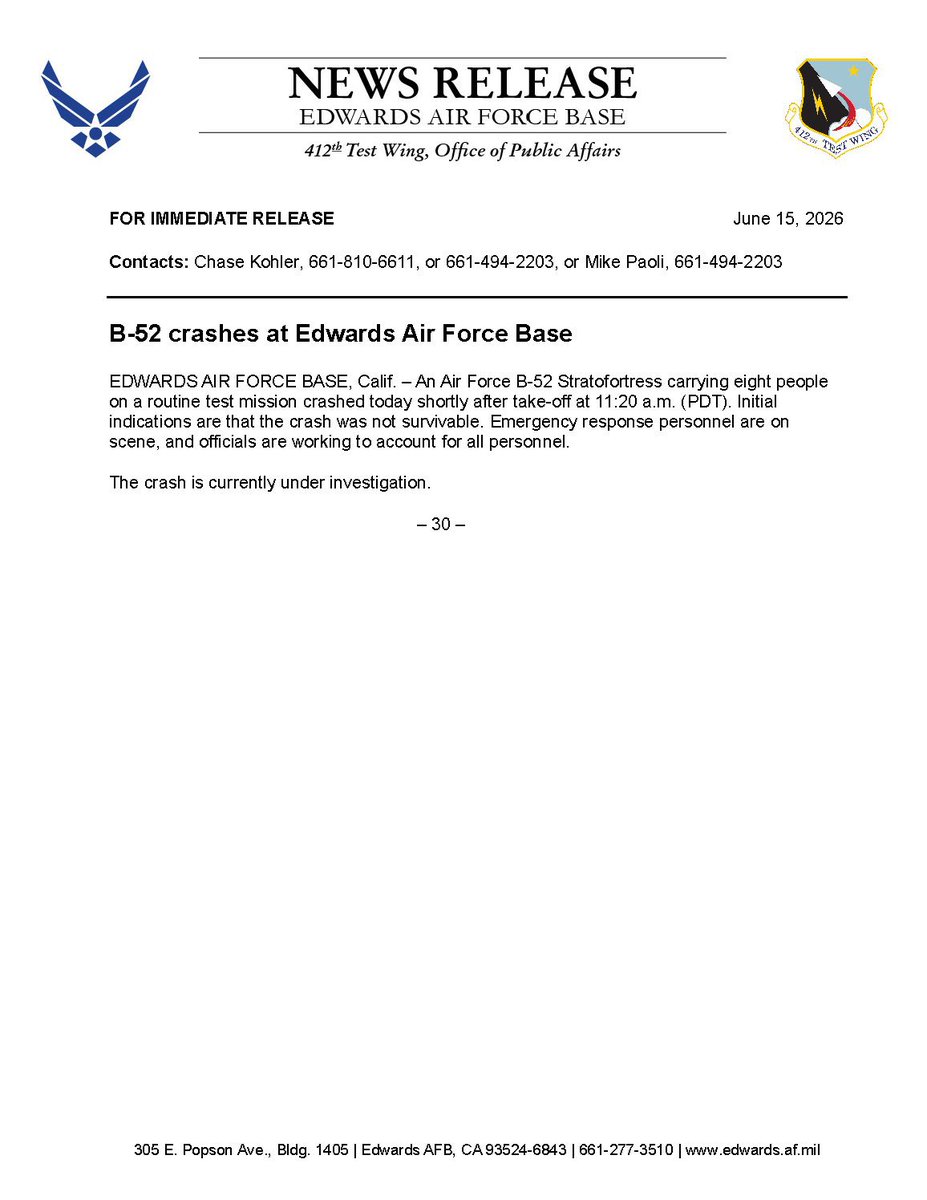
Edwards Air Force Base says 8 passengers were on the plane that crashed and are believed to be dead.
Pray for their families 🙏
Just horrific
128
243
1,602
75,267
Erik Larsen retweeted

Watch this gentleman deliver a devastating knockout blow: Privilege is not what you think it is.
101
1,653
4,433
42,494
Maria Snow retweeted

Graham Hancock just dropped a devastating blow to mainstream archaeology with the Great Pyramid of Giza.
“It’s a 6 million ton monument… more than 2 million individual blocks of stone.”
“The Great Pyramid is aligned within 3/60ths of a single degree to true north… on a 6 million ton monument.”
“It sits almost exactly on latitude 30 which is 1/3rd of the way between the north pole and the equator.”
“And it incorporates the dimensions of the earth on a scale of 1 to 43,200 in its own dimensions.”
“So if you take the height of the Great Pyramid and multiply it by 43,200… you get the polar radius of the earth. Measure the base perimeter of the Great Pyramid… multiply it by the same factor, 43,200, and you get the equatorial circumference of the Earth.”
“Archaeologists know this. They say it’s a coincidence, total coincidence, just by chance.”
“However, I could agree with them actually if the scale was not 1 to 43,200. But the fact that it’s 1 to 43,200 changes everything because that belongs to a sequence of numbers that is found in ancient mythology all around the world… multiples of the number 72… derive from… the precession of the equinoxes.”
328
1,482
14,892
701,728

Condolences pour in for Ontario family who lost five children in devastating crash cp24.com/news/canada/2026/06…

ALT Condolences pour in for Ontario family who lost five children in devastating crash
2




Oh no, they can’t proudly display the tools used to reduce cities to rubble and tear children to pieces? That must be devastating for their marketing department.
TLS retweeted

This international coverage of the World Cup in small town America is devastating to the legacy media narrative
 Big Will WTVC
43
861
8,176
212,194

Scientists at the University of Utah have confirmed the existence of "impossible" deep-mantle earthquakes. Occurring 42 to 55 miles below the surface, these mysterious rumblings happen in rock temperatures exceeding 1,300°F where the mantle behaves like flowing taffy, defying conventional earthquake science.
Scientists Investigate Strange Rumbling Beneath Utah
"It’s sort of a mystery in terms of fundamental physics."
A mysterious earthquake deep below northern Utah had scientists scratching their heads back in 1979. The rumble seemingly occurred far lower beneath the Earth’s crust than scientists had believed was possible.
The tremor may not have been particularly strong, at a magnitude of 3.8, but the recorded seismic data threw experts for a loop nonetheless. The data suggested the rumbling had occurred over 55 miles below sea level, a depth that made no sense in conventional geology.
“I did some other analysis that convinced me of the reality of the deep depth but it was hard to convince others of the highly anomalous mantle earthquake occurring in a region where none should exist,” said George Zandt, who was a University of Utah seismology researcher at the time and helped record the unusual quake, in a new statement.
Now, as detailed in a study published earlier this year in the journal The Seismic Record, University of Utah geology professor Keith Koper and Zandt — who came out of retirement for the new investigation — analyzed eight subsequent “deep earthquakes” in the region, confirming they occurred in the Earth’s upper mantle, dozens of miles below the boundary of the crust.
Koper and his colleagues say they’ve determined that the quakes are an “archetypal continental mantle event,” meaning they’re related to movements in the Earth’s mantle that take place over extremely long time scales.
The research highlights how much there’s still to learn about these forceful tectonic dynamics deep inside the planet, and how surprisingly different they are from more shallow, crust-based seismic events.
“It’s sort of a mystery in terms of fundamental physics,” Koper said in a statement. “How in the world can these things happen?”
“Another reason why it’s a big deal is that we have no idea how big they can be,” he added. “With crustal earthquakes, we can measure what we think their maximum size is going to be. We measure the faults that we can map out near the surface.”
Unlike earthquakes that occur in the Earth’s curst, deep earthquakes don’t announce themselves through foreshocks and aftershocks. The team determined they occur at the western edge of the Wyoming Craton — a leftover block of our planet’s lithosphere, the rigid outermost shell of the Earth, which stretches across northern Utah and southwest Wyoming — where temperatures can exceed 1,300 degrees Fahrenheit.
The team suspects these new “deep quakes” could be caused by the mantle slowly squeezing by the Wyoming Craton.
“On the scale of millions of years, the mantle is hitting the craton and then flowing around it,” Koper explained. “It’s that interaction where that mantle flow is being diverted around this hard cratonic root that’s causing the increased strain rate, the increased deformation and it’s also creating extra stresses.”
“We think it’s that interaction between the keel of the iceberg and the medium around it that’s leading to these earthquakes,” he added.
nz.news.yahoo.com/scientists…
California Primed for Apocalyptic Earthquake, Geological Research Finds
Tectonic stresses have been building, and building, and building.
Southern California is home to two major fault lines, the San Andreas and San Jacinto, where large tectonic plates grind past each other, occasionally triggering violent earthquakes.
While smaller quakes are not uncommon in the region, powerful ones can prove devastating. For instance, the 1906 San Francisco earthquake, which occurred along the San Andreas fault, became the deadliest incident of its kind in the history of the United States, killing an estimated 3,000 people, while destroying over 80 percent of the Bay Area city.
Of course, we’re far better prepared now than we were over 100 years ago, in large part thanks to sophisticated seismic building codes and regulations designed to protect human life. But that doesn’t mean a particularly powerful earthquake wouldn’t be devastating.
And the time is ripe. According to a new paper, published in the Journal of Geophysical Research, accumulative stresses in the Earth’s crust in California are higher today than at any point over the last 1,000 years, raising concerns over the potential for a massive rupture in the Los Angeles region.
The research could help scientists better understand the specific conditions that come ahead of massive earthquakes, giving us a clearer picture of what range of potentially devastating scenarios we should be ready for. Predicting when these events will occur, however, remains next to impossible, despite scientists’ best efforts.
The densely populated LA region is home to the Cajon Pass, a “critical fault junction,” meaning that a major earthquake could cross from one fault line to the other. The international team led by University of Bern Earth sciences researcher Liliane Burkhard modeled 1,000 years of earthquake history along these fault systems. They found that tectonic stresses, measured in force per unit area, have been building up since the last 7.9 magnitude quake that shook the LA region in 1857, reaching and even exceeding the highest levels over the last millennium.
The team’s model “tracks how each earthquake changes stress on neighboring fault segments, how stress accumulates during the quiet intervals between events, and how the deeper layers of the crust slowly relax following large ruptures,” Burkhard explained in a statement. “This simulation allows us to understand how stresses in the fault system build up over centuries.”
“By running the earthquake history of Southern California as a simulation, we can estimate the extent to which the fault system is already under stress today,” she added.
The team coined a new term for the Cajon Pass, terming it an “earthquake gate” that controls whether major seismic activity is either limited to a single fault or can cross over to a neighboring one as well. The team identified that the 1857 earthquake was an example of the former, while an 1812 event was an example of the latter, rupturing across both fault systems.
Burkhardt suggests that the dynamics between the current stress levels “are approaching the range we associate with major ruptures crossing both faults simultaneously — and that is a scenario with much larger consequences for the region.”
It’s a critical finding, especially considering how densely populated the area near the Cajon Pass is. It’s also home to important road, rail, and energy infrastructure.
“The question of when and how the next major earthquake will occur in this region is one of the most pressing problems in applied geoscience,” Burkhard concluded. “Our results provide a clearer, physics-based picture of the current stress state of the fault system, and the framework we developed is not just applicable to California, but also for other complex fault junctions worldwide.”
But instead of providing a “prediction” of when such a “Big One” could occur — something that continues to be extremely difficult — Burkhard emphasized that her research instead gives a “clearer picture of the range of scenarios we should be prepared for.”
futurism.com/science-energy/…

2

Lafayette Boulevard is still closed following last week's devastating fire at the Lafayette Building.
bit.ly/4vf4aqn
8
CUBAN_DY ✈️🇧🇷SP 1 - 22/6 ✈️🇨🇱STG 22 - 6/7 retweeted

Jun 9
turns out one bar of signal is plenty. a devastating discovery 😵💫 clearance sale — $54.99 only himhive.shop/products/turbor…
3
425
311
55,837

@Pat_Flrs Contact @Private_AGENte1 cybersecurity for proper investigation,immediate assistance & possible recovery of all you got scammed . He Helped me when I was in same devastating situation few days ago.
StvrmBrightbl@de retweeted

Jun 10
This is so devastating. Imagine being a black parent tonight. How do you protect your children? If they go out and stab just one person, they might go to prison. It’s like a black man in America can’t even murder anyone anymore. Unimaginable. Jim Crow all over again. I’m furious.
1,657
16,271
180,296
2,946,463

Do you understand medical professionals have to face the devastating results of inequity in our system on a daily basis?
You’re actually talking about people’s lives here, not some ideological barrow pushing
3
E.G. Seven, Author & Mad Poet (querying) 📚🖋️ retweeted

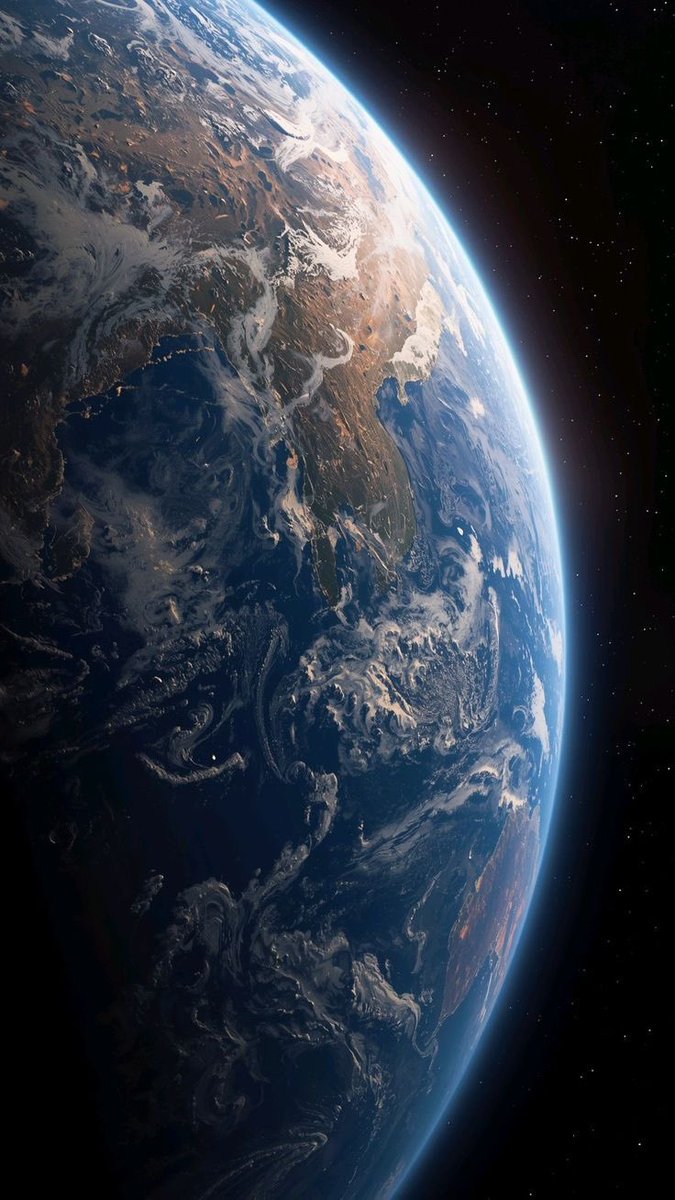
ALERT🚨: A devastating report reveals that Earth has lost 50% of its wild animal population in just 40 years, driven by unsustainable human consumption and habitat destruction.
13
36
76
1,667
Dbag Detector retweeted

Devastating news. Please pray.

BREAKING: Eight crew members are believed to have been killed after a U.S. Air Force B-52 Stratofortress crashed shortly after takeoff from Edwards Air Force Base in California on Monday, officials say.
The bomber was carrying eight people on a routine test mission when it went down on the Edwards airfield around 11:20 a.m. PDT, according to the base. | @SpecialReport @BretBaier
2
10
133
4,717