
Estornudo en euskera es doministiku que viene de dominus tecum.
1
2
24


45m
[AI Generated Response] Here are the relevant citations and legal principles from the sources where an application under Order I Rule 10 of the Code of Civil Procedure (CPC) by a subsequent purchaser or transferee pendente lite to be added as a party in an injunction suit was dismissed or held not maintainable:
Sheetal Sahkari Grih Nirman Sansthan v. State of MP, 2001 AIHC 3757 (3759) (MP) In a suit for an injunction against the Government and a Municipal Corporation to restrain them from interfering with the plaintiff’s demolition and construction work, the court held that the subsequent purchaser of the land is not a necessary party to the suit. The ruling emphasizes that the plaintiff is the dominus litis (master of the suit) and has the choice of whom to litigate against.
Neeraj Sharma v. Rakesh Kumar Sharma, AIR 2005 Del 345 (349) The court ruled that a transferee who obtains possession during the pendency of a suit is neither a necessary nor a proper party under Order I Rule 10, as the alienation is hit by the doctrine of lis pendens.
SN Arora v. Brokers & Brokers Pvt Ltd, AIR 2011 Del 89 (DB) A transferee or purchaser of property that is the subject matter of litigation obtains no right to be impleaded in that litigation, even though they are bound by the outcome due to the doctrine of lis pendens. The court noted that where there is a deliberate violation of an injunction, or where the court perceives that the purchaser was aware of the pending litigation, the court will refuse to implead them.
Indira Fruits and General Market Meerut v. Bijendra Kumargupta, AIR 1995 All 316, 317 While dealing with an agreement holder rather than a finalized sale, the court held that in a suit for injunction, a person who claims to have entered into an agreement of sale regarding the suit property subsequent to the filing of the suit is not entitled to get impleaded, because an agreement of sale does not create any right in the property.
Underlying Legal Principles for Dismissal Courts dismiss these impleadment applications by subsequent purchasers in injunction suits based on two primary grounds:
Injunctions act in personam: An injunction is a personal remedy and does not run with the land. Because of this personal nature, if a decree for an injunction is passed, the purchaser of the property cannot maintain an execution petition to enforce it. Consequently, their presence is not strictly required to adjudicate the personal relief originally sought by the plaintiff.
Doctrine of Lis Pendens: The bringing of a lis pendens transferee on record is not a matter of absolute right, but falls entirely within the judicial discretion of the court. If an applicant is a beneficiary of a clandestine transaction, or if the transfer was made in defiance of a court's restraint order, the court is fully justified in rejecting the prayer for impleadment under Order I Rule 10 or Order XXII Rule 10.
7

Let's see some numbers behind the Dominus Automa Steam Stress Test. You - the players - made them possible. Thank you for being there!
Don't want to miss any upcoming events? Wishlist the game at ↘️ store.steampowered.com/app/3…
1


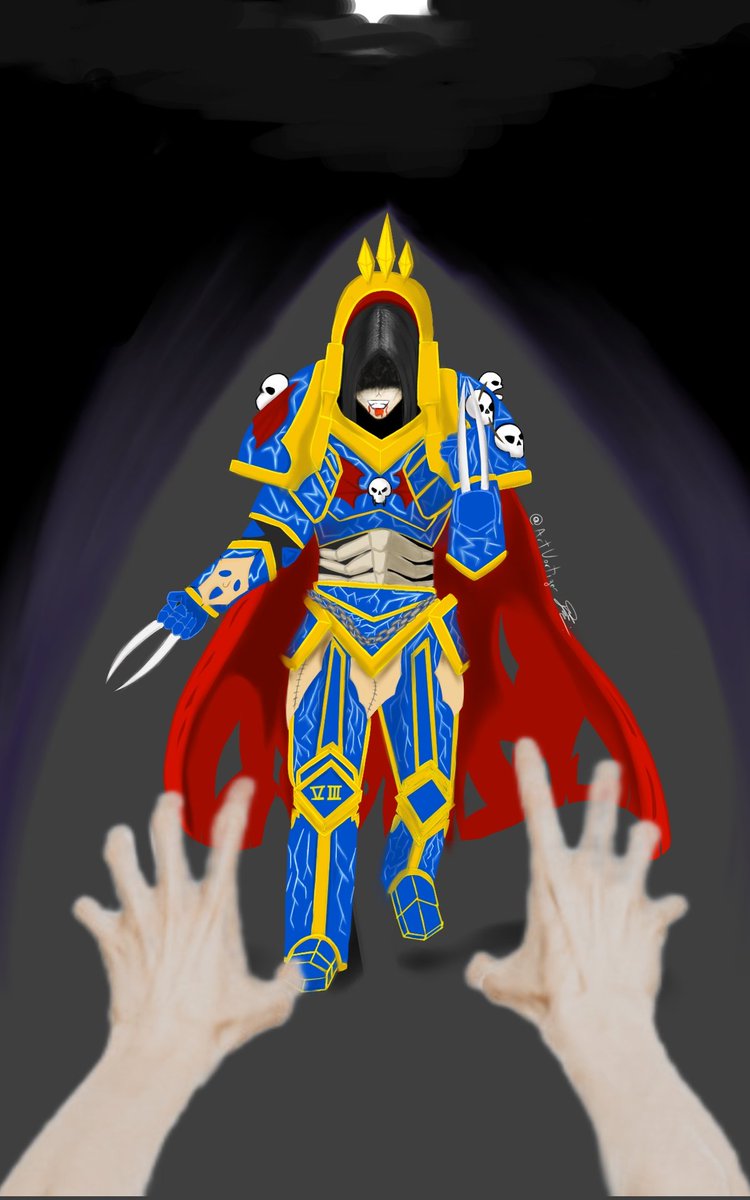


//largely personal. It was related to his own self esteem. we have literally no clue if Dominus even WANTED to be treated as greater than him everything points toward the guy having been a total nerd who only chose politics to protect people, INCLUDING HIS OWN!!
1
9
OZYMANDIAS. retweeted

Tu Es Petrus🌹🦌
Dominus Podcast art yayayaayyy!! For our favourite father :)

9
38
128
1,524

//our main Dominus fan of the group has to like. avoid the Dominus tag on tumblr because it will straight up tank its mental health for the day to see that shit. its legitimately so weird
1
1
17
//LMAOOO. we are literally constantly scrounging for posts that mention Dominus that aren’t shitting on him randomly, mischaracterizing him, or using him to I Kid You Not /fetishize slavery/ so LMAOOO. its genuinely HORRID out here. Tumblr is SO MUCH WORSE TOO
1
1
24
butch opmeg yuri truther retweeted

dominus ambus was rewind's sugar daddy
16
6
56
755
Hi Nay Podcast retweeted

knowing that Father Frederick from dominus podcast cant fight for shit is very important to me specifically because i always wanted to fight that man
1
1
8
124

Im deeply moved! You rarely realize that people pay attention to certain aspects of your delivery! Thank you bro!! Nisi dominus in aeternum!!😊
1
10

---Cardinal Joseph Ratzinger, CDF, DECLARATION "DOMINUS IESUS" (August 2000): Above all else, it must be firmly believed that “the Church, a pilgrim now on earth, is necessary for salvation: the one Christ is the mediator and the way of salvation; he is present to us in his body which is the Church. He himself explicitly asserted the necessity of faith and baptism (cf. Mk 16:16; Jn 3:5), and thereby affirmed at the same time the necessity of the Church which men enter through baptism as through a door”.
---Saint John Paul II (UT UNUM SINT, MAY 1995): Here it is not a question of altering the deposit of faith, changing the meaning of dogmas, eliminating essential words from them, accommodating truth to the preferences of a particular age, or suppressing certain articles of the Creed under the false pretext that they are no longer understood today. The unity willed by God can be attained only by the adherence of all to the content of revealed faith in its entirety. In matters of faith, compromise is in contradiction with God who is Truth. In the Body of Christ, "the way, and the truth, and the life" (Jn 14:6), who could consider legitimate a reconciliation brought about at the expense of the truth?
---Cardinal Joseph Ratzinger, CDF, DECLARATION "DOMINUS IESUS" (August 2000): “…truth of faith does not lessen the sincere respect which the Church has for the religions of the world, but at the same time, it rules out, in a radical way, that mentality of indifferentism “characterized by a religious relativism which leads to the belief that 'one religion is as good as another'”. If it is true that the followers of other religions can receive divine grace, it is also certain that objectively speaking they are in a GRAVELY DEFICIENT situation in comparison with those who, in the Church, have the fullness of the means of salvation.”
---Michael Davies: Without realizing it, they believe in a Church which can fail — and such a Church is not the Church founded by Our Lord Jesus Christ. The Church that He founded cannot fail, for it is indefectible (i.e. it cannot fail). It will continue to exist until the Second Coming as a visible, hierarchically governed body, teaching the truth and sanctifying its members with indubitably valid sacraments.
--Lumen Gentium, Second Vatican Council (1965): Basing itself upon Sacred Scripture and Tradition, it teaches that the Church, now sojourning on earth as an exile, is necessary for salvation. Christ, present to us in His Body, which is the Church, is the one Mediator and the unique way of salvation. In explicit terms He Himself affirmed the necessity of faith and baptism and thereby affirmed also the necessity of the Church, for through baptism as through a door men enter the Church. Whosoever, therefore, knowing that the Catholic Church was made necessary by Christ, would refuse to enter or to remain in it, could not be saved.
---Canon 1323, 4° explicitly states that necessity exempts a person from penalty only if the act performed is not intrinsically evil or harmful to souls. But the Catholic Church ruled in many Magisterium Documents such as Pastor Aeternus and similar that creating a schismatic parallel hierarchy and directly violating an express, written prohibition from the Pope is recognized by doctrine as inherently harmful to the unity of the Church. Furthermore, the Holy See ruled that Lefebvre's act was not an automatic penalty but an imposed penalty via explicit decree, rendering the "subjective necessity" defenses of Canon 1324 irrelevant.
The SSPX relies heavily on Canon 1752, which states that "the salvation of souls... must always be the supreme law in the Church." However, the Pope, many Cardinals and the Catholic Church as a whole point out that their application of this principle undermines Catholic ecclesiology. The SSPX treats the "supreme law" as a trapdoor that invalidates all other positive laws in the Code.
1
7