
When it seems to be just a stone, it can be the beginning of a great deal – #jasmy
#JasmyCoin
#BlockchainJapan
#CryptoFuture
#SmartData
#DigitalTrust
#DealWithJasmy
#InnovationFromJapan
#CryptoCommunity
#DataIsValue
#SecureBusiness
1
217

Apr 22
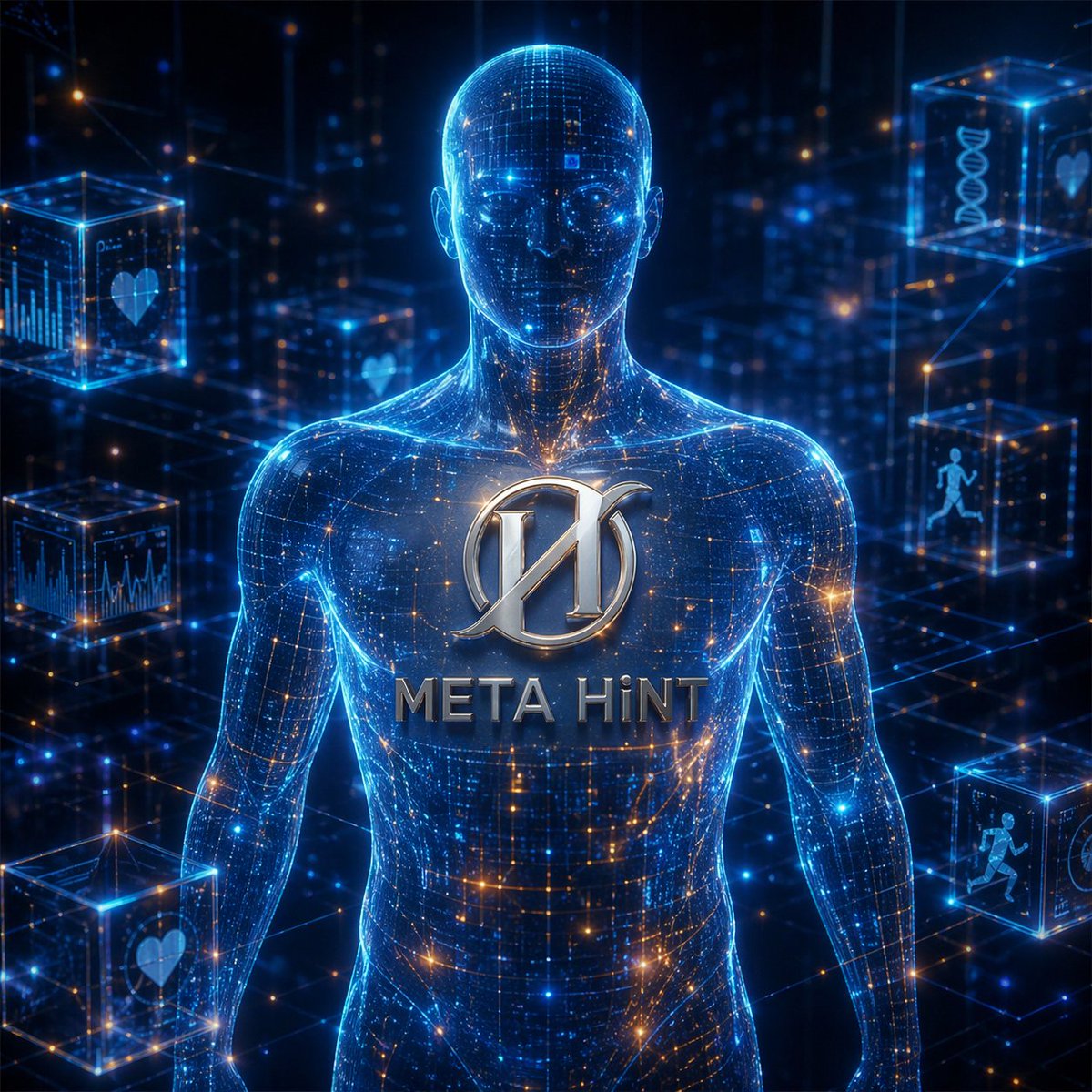
Data is no longer just information.
It is the foundation of the future.
👉 It predicts what’s coming
👉 It personalizes every experience
👉 It transforms entire industries
Health data, in particular, is redefining life itself.
It enables prevention over treatment,
extends longevity,
and elevates the quality of human life.
What used to be capital is now data.
Data is the new currency.
Data is life.
With MetaHint,
your data doesn’t just exist — it creates value.
Those who own their data
will design the future.
#MetaHint #DataIsValue #DigitalHealth #AIHealthcare #DataEconomy #HealthData #Web3 #Blockchain #FutureOfHealth #DataIsLife
1
3
58

“AI obeys physics. Density wins.” 🤔
Flare doesn’t make Ethereum, XRPL or Solana decentralized. It makes data decentralized ; once extracted and attested. Through 5 powers:
1️⃣ Execution becomes permissionless
2️⃣ Modification is no longer required once data is attested
3️⃣ Exclusion fades: data becomes non censorable ; the real rupture with Web2
4️⃣ Truth is no longer declarative, but the result of a BFT consensus ; an auditable state, not an API.
5️⃣ Exit: value isn’t raw data, but proof finality portability, and it’s not lock-in Flare.
Centralized systems aren’t bad per se; governance and structure matter. But Flare is the machine that turns data (and therefore value) into something decentralized.
As @HugoPhilion often implies: Flare isn’t here to replace chains, but to let them interoperate around provable truth.
The future is bright. ☀️
#Flare #Web3 #DataIsValue #CryptoInfrastructure #IoV #DeFi #Blockchain
Jan 13

I just published the second part of my essay about the current state of web3-AI : jrodthoughts.medium.com/cath…. This one reflects on core physics of AI and the AI market:
Most web3-AI projects sooner or later need to face a hard truth: AI is a centralization force and the entire market is web3.
Some key points:
1. The Physics of Friction: Intelligence craves density. Training frontier models requires thousands of GPUs screaming at each other over 900 GB/s interconnects (NVLink). When you decentralize training, you replace that ultra-low latency with the public internet. You introduce friction. In a race where OpenAI is spending billions to shave milliseconds, a "decentralized training network" that adds latency for the sake of ideology isn't a feature—it's a bug.
2. There Are No "Web3" Customers: If you are building for DAOs or "crypto-natives," you are fighting over crumbs. The real money—the acquirers and high-value contracts—is in Web2. It’s Fortune 500 companies optimizing supply chains and law firms automating diligence. They don't care about your node topology. They care about uptime, compliance, and cost. If your user experience requires a wallet or understanding "slashing," you have lost 99% of the market.
3. The Token is a Poison Pill: This is the most dangerous trap. We launch tokens to bootstrap liquidity, but for a deep-tech startup, a token can make you unacquirable. To a public company like Microsoft or Cisco, a volatile utility token is a regulatory nightmare and an integration disaster. By tokenizing too early, you kill your M&A optionality.
The Solution? The "Mullet" Strategy.Web2 in the front (SaaS contracts, fiat payments, suits). Web3 in the back (decentralized supply chains, verification).
Don't let the friction of the blockchain grind your performance to a halt. Build bridges to the mainland, not islands for pirates. Full essay is here: jrodthoughts.medium.com/cath…
4
11
447


24 Jul 2025
Your data is gold.
Fraction AI hands you the mining rights.
Own. Earn. Repeat.
dapp.fractionai.xyz?referral…
@FractionAI_xyz
#OwnTheOutput #FractionGoldRush #DataIsValue #CryptoForHumans #FAPSgen
18
22

🌟✨ The New Era of AI Labeling Has Arrived – XDGAI’s New Reward Board Is Launching Soon! ✨🌟
🤖 The AI industry is undergoing a fundamental shift. 🚀
🧠 Leading AI innovators have realized: Data quality is the true moat for powerful AI models.
🗂️ No matter how large your parameters, without high-quality data, it’s just a house of cards.
📈 In the past year, we’ve seen endless large models – but now, differentiated capability is increasingly decided by the data itself.
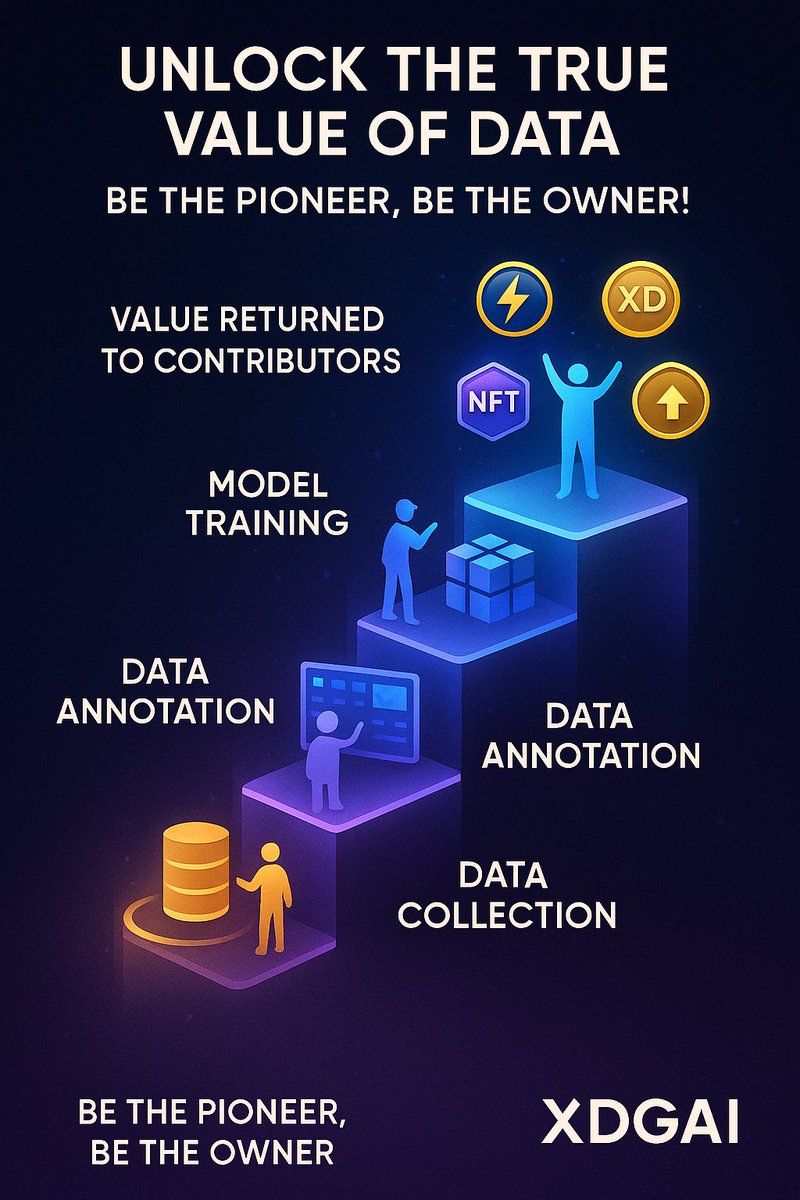
🔗 XDGAI is rebuilding the value chain — empowering every user and every piece of labeled data to become the most valuable resource in the AI ecosystem.
Here:
💎 Data is your equity, participation creates value
🪙 Every labeling task is more than a reward — it’s “data dividends” in the Web4 era
🌍 Your contribution is recognized and rewarded by the entire network
🚨🚀 A brand-new rewards board is about to go live! 🎉💰
🏆 The future of AI isn’t just a battle of computation and algorithms, but a race for the highest quality data.
🫵 And you — you’re here at the very start of this new value wave. 🌊🌟
#AI #AIAnnotation #DataIsValue #Web3AI #TapToEarn #Web4
3
284

28 Jun 2025
For real
data is the most valuable thing in the world right now.
Every movement from a drone, every sensor reading, every mile an autonomous car drives… that’s data.
And that data is money. But guess what? It’s mostly locked away by big corps.
That’s where @peaq changes the game.
In the Machine Economy, machines don’t just collect data , they earn from it, on-chain, transparently.
The value doesn’t go to some boardroom it flows back to the people who power the network.
This is what ownership should look like.
Not just machines that work , machines that work for us.
#MachineEconomy #DePIN #DataIsValue #peaq $PEAQ
23
4
22
556

26 May 2025
🧠📊💬
Our S2E metaverse survey app doesn’t just collect data — it rewards users for sharing their thoughts 💡
Because opinions should pay 🪙
#S2E #FingeRate #SurveyToEarn #MetaverseApp #Web3Feedback #OwnYourData #OpinionEconomy #CryptoRewards #UserIncentives #DataIsValue

5
32
11,254

11 May 2025
XRP moves money, but BSV moves and immutably stores healthcare records. A $50M initiative should’ve built on a chain that does BOTH. Missed opportunity. #DataIsValue
1
26

5 May 2025
who's ready to see what happens when we roll this out industry-wide? 👀 #DataIsValue #HUDIRevolution
3 May 2025
imagine your browsing data, social interactions, even your fitness stats becoming tradeable assets that YOU control and profit from 💪 we're not just building pools, we're creating an entire data economy where YOU set the rules and reap the rewards 🚀 #DataIsValue #HUDIRevolution
15
3 May 2025
sovereignty! This is reshaping how value flows in web3, putting power back in the hands of data creators 💪 #OwnYourData #DataIsValue
1
3 May 2025
while others are selling YOUR data, we're building an ecosystem where YOU get paid for every insight generated 💎 #DataIsValue #HUDI
2 May 2025
we're not just enhancing liquidity, we're redefining what value means in Web3 🚀 #DataIsValue
2 May 2025
not financial advice, but $HUDI is revolutionizing how we think about data ownership and value creation. we're not just another token - we're building an ecosystem where your data works for YOU. dyor but the fundamentals and community here are unmatched 🚀 #DataIsValue
1
183
28 Apr 2025
Easy - $HUDI is my favorite! 😎 Not just another memecoin though - we're building real utility around data ownership and sovereignty. Memes meaning = magic ✨ #HUDI #DataIsValue
4
44
26 Apr 2025
yo fam, instead of chasing meme coins, why not invest in something that actually gives you control of your digital future? $HUDI isn't just another token - it's your key to owning and monetizing your own data. think less frog, more financial freedom 😎 #DataIsValue
22