
Minnesota law is clear: public data belongs to the public. But there are growing concerns that DHS redactions may be used not just for privacy protection—but to shield system failures and internal inefficiencies.
We need clarity. #MNLeg #DataPractices
DHS: Can you publicly release the exact redaction rules, internal guidance, and decision-making criteria you use when responding to data requests? Chapter 13 requires justification for every redaction. The public deserves to see the standards being applied.
Redaction must follow statute—not convenience. Over-redaction to hide program errors, financial gaps, or operational missteps would violate the law and undermine public trust. Transparency isn’t optional. It’s a legal obligation.
Another concern: indefinite delays on routine data requests.
Some requests sit for months with no timeline, no explanation, and no progress updates. Under Minnesota law, agencies must respond promptly and provide data as soon as reasonably possible.
26
298
1,962
469,497

1 Nov 2025
Culturally Significant - Your November 2025 Issue! - mailchi.mp/generation1.ca/cu…
#CulturallySignificant #Generation1.ca #Leadership
See you in #Ottawa next week for #FutureReadyGovernance: #EthicalAI #EDIB #PublicSector #DataPractices


1
2
53

31 Oct 2025
Minnesota’s Medicaid henhouse is getting audited by the fox. A $2.3 million “high-risk services” deal between DHS and Optum is floating in the dark.
The campaign statement was real. The contract? Hidden.
Next move: FOIA it. Pull the receipts. Expose the paper trail.
Transparency isn’t optional when public money’s on the line.
#Minnesota #Medicaid #Optum #Accountability #FOIA #Transparency #InvestigateMN #PublicRecords #DataPractices #FollowTheMoney #MNPolitics #UnitedHealth
30 Oct 2025

If you watch anything today, watch this! Tim Walz is in some serious hot water now as he should be and I encourage everyone to do your research and act on this for Minnesotans!
1
9
444
After the Jim Noble revelation, Minnesotans deserve answers.
Will DHS release all emails, Teams chats & meeting minutes between DHS, legislative leaders, Matt Burdick, and Kristy Graume?
#MNLeg #Transparency #Accountability
We’ve seen messages from Kristy Graume stating her disdain for Republicans. That’s not just politics — it raises serious concerns about neutrality inside DHS policy work. Time for sunlight. ☀️
#MNGov #MNPolitics
Can Gary Johnson retrieve years of DHS documents — or were they deleted under his own retention policy and only kept for the people who are not “liked”
What’s being hidden from Minnesotans? 👀
#DataPractices #MNLeg
This is a public data issue, not partisanship.
Release the records. Restore trust.
@MNManagementBudget @OmbudsMN — transparency begins here.
#JimNobleRevelation #MNTransparency #AuditTheAid
3
7
27
1,734

17 Feb 2025
DeepSeek's Data Practices Questioned - Several countries, including France and Italy, have questioned DeepSeek's data practices, submitting requests for information on user data handling. #DataPractices #GlobalScrutiny
2
19

📣 Reminder! Register to our next workshop on FAIR Monitoring #DataPractices in #UrbanDrainage organised by Co-UDlabs partners from @EawagResearch.
📅 Tuesday, 28 January 2025, 12:00–13:00pm (CEST)
Don't miss it! Register here 👉 co-udlabs.eu/evenements/call…

1
109

30 Dec 2024
Explore proven #strategies to build a thriving, #governance-first data culture with Alation. Attend this 30-minute webinar to #advance your data strategy #confidently and level up your #datapractices. Register now: bit.ly/3AlSoDg
#beinex #alation #datamaturity

2
40
16 Dec 2024
Are you looking to turn your data into a powerful asset? Attend this 30-minute #webinar to build a value-driven, #governance-first #dataculture. Advance your #datastrategy, elevate your #datapractices, and boost business value with #Alation. Register now: bit.ly/3AlSoDg

2
29

9 Apr 2024
Call for Participation - Deadline 13.5.2024 - #Plattformforschung nach dem Digital Services Act. Interdisziplinäre Jahrestagung des Forschungsschwerpunktes digitale_kultur 7.-8.11. in Berlin (@fernunihagen) - #platformstudies #datapractices tausend-plattformen.tech/
2
128

20 Feb 2024
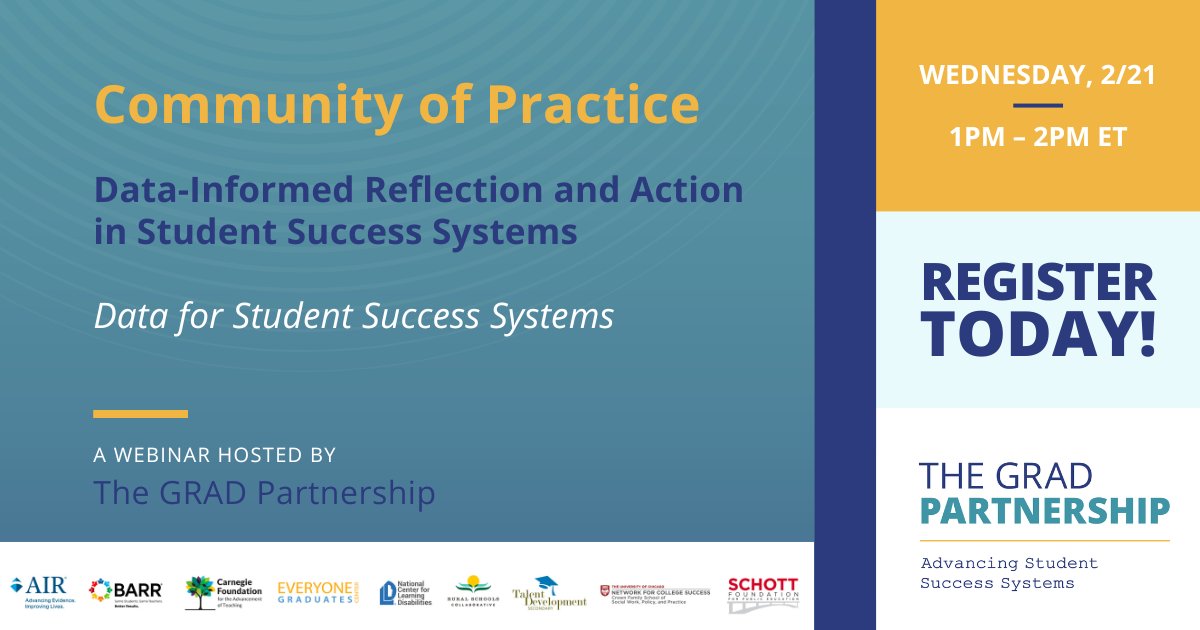
Don't forget to register for tomorrow's webinar! A new learning series focused on #datapractices that set the foundation for student success teams in your school. zoom.us/meeting/register/tJI…
1
3
3
318

8 Feb 2024
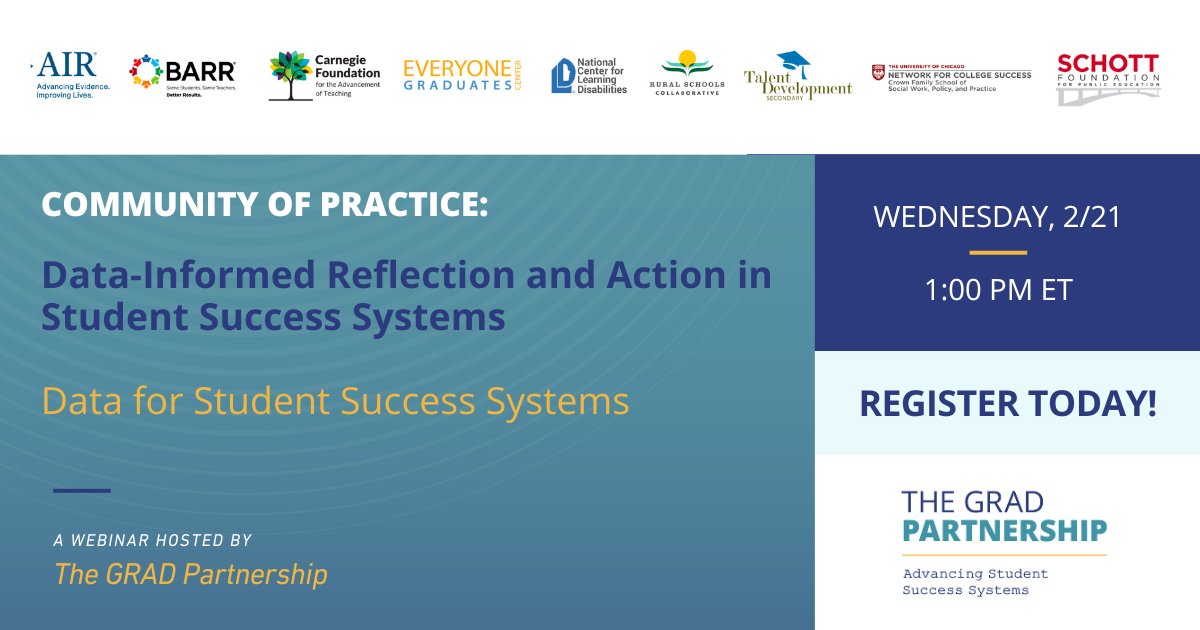
Join the GRAD Partnership for a phenomenal learning series, pt. 1 on 2/21. Focused on #datapractices that set the foundation for student success teams. Tools included. Register: zoom.us/meeting/register/tJI…
3
7
261

19 Dec 2023
Sharing highlights from the session ‘Inclusive #Data Practices for Sustainable Future’ by #FSDIndia2023 session partner @digitalgreenorg.
#foodsystems #datapractices #agridata
@Krishak_Samaj
2
71

16 Dec 2023
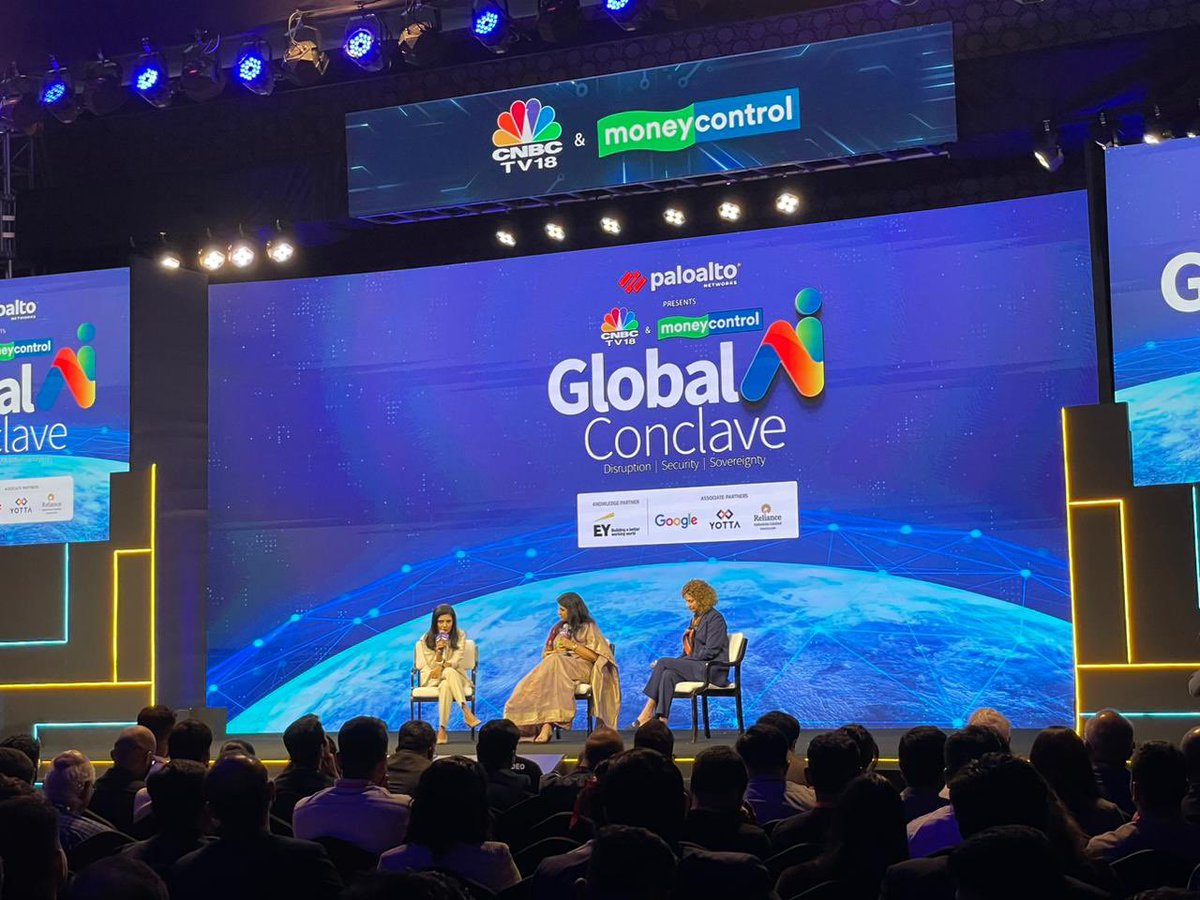
We can’t achieve #responsibleAI without responsible #datapractices. Fairness depends on having data that’s obtained ethically, is not biased or can be cleaned to eliminate bias, and is of sufficient quantity.
Lovely speaking with @chandrarsrikant @maryesnapp #globalaiconclave

8
47
13,097

26 Nov 2023
🚀 Article #7 in my 30-part data series! 🌟
"Structuring Your Data Team: Unveiling Secrets" dives into crafting a data-savvy team in startups. Insightful tips on using open-source tools & team dynamics. 🛠️💡
🔗ijacwei.medium.com/v-7-the-m…
#DataPractices #StartupGrowth #Innovation
46

25 Oct 2023
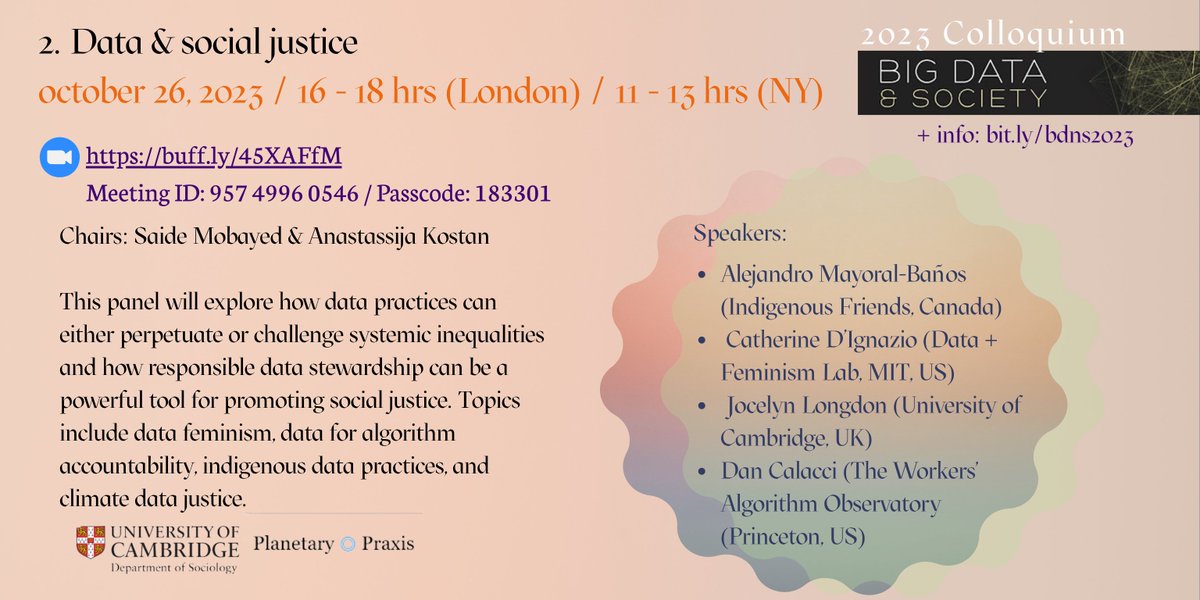
⚡️👇Our 2nd colloquium session is tomorrow (Thurs 26, 4-6pm UK)! Join our fantastic set of speakers—@alexmayoralb, @climateincolour, @dcalacci & @kanarinka—grappling with how #datapractices can perpetuate or challenge #systemicinequalities. info & 🔗👉 bit.ly/bdns2023
3
9
4,693
18 Oct 2023
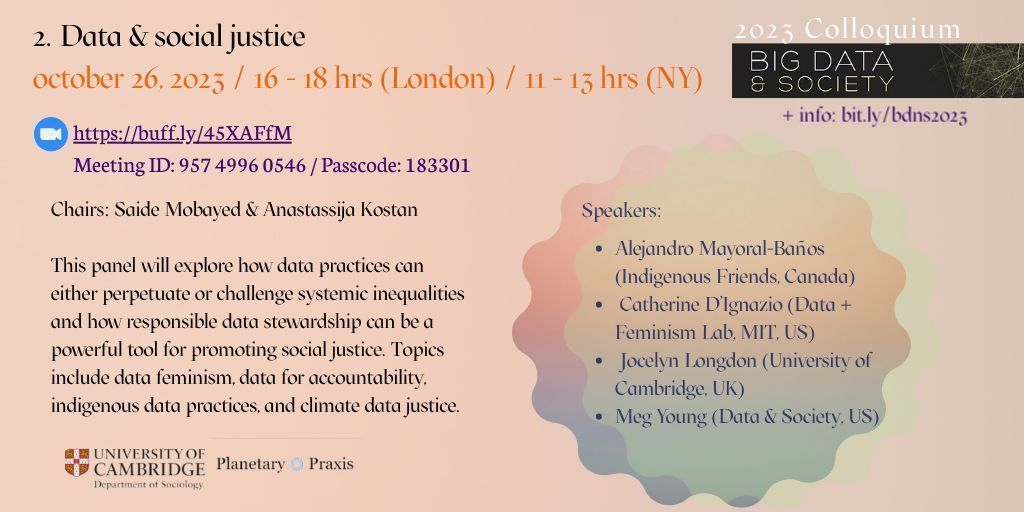
🚨⚡ During our 2nd colloquium session on 'Data & Social Justice' (Thurs Oct 26, 4-6pm UK) @alexmayoralb, @climateincolour, @kanarinka & @megyoung0 will reflect on how #datapractices can either perpetuate or challenge systemic inequalities. info ▶️ buff.ly/3Rvmome
2
3
1,476
17 Oct 2023
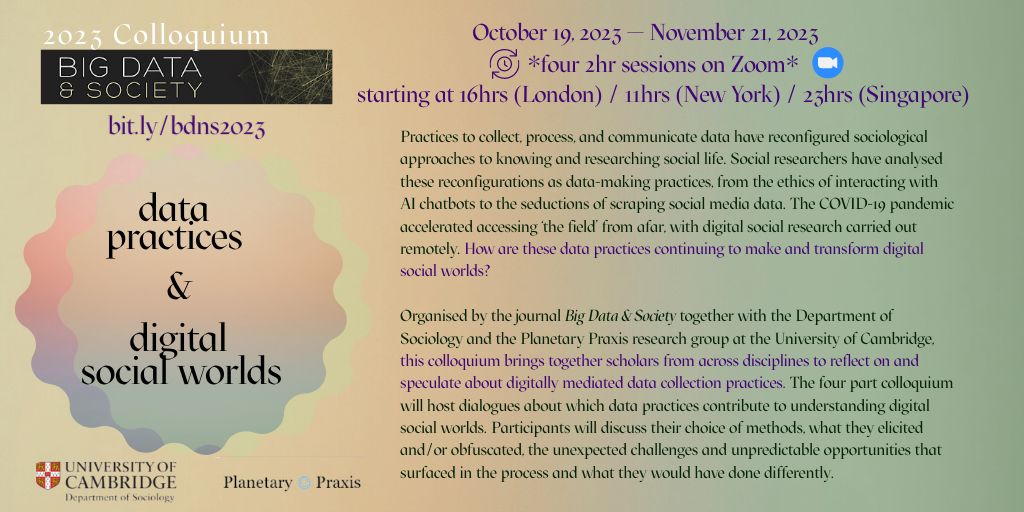
🚨 ⚡How are #datapractices continuing to make and transform digital #socialworlds Across 4 sessions, this year's BD&S colloquium brings together scholars from across disciplines to reflect on this—and beyond! We kick off on Thurs 19 (4-6pm UK) info ▶️ buff.ly/3Rvmome
1
4
755

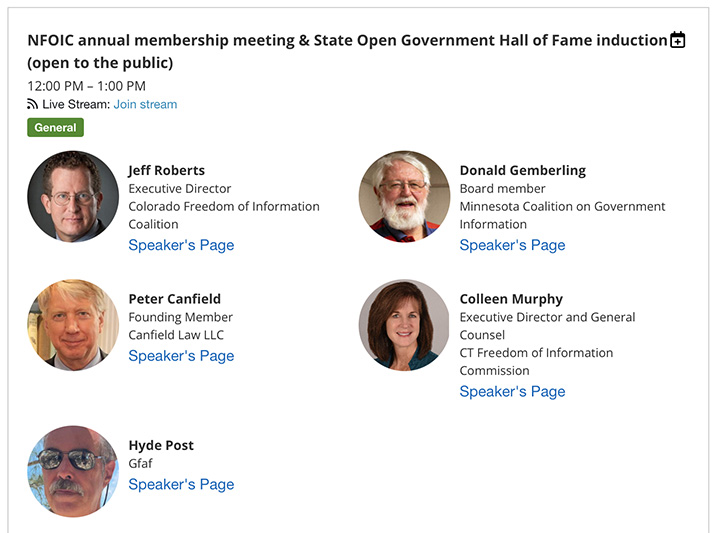
Don Gemberling, the longest serving @MNCOGI member and a force of nature in the long fight to preserve Minnesotans' right to government information, will be enshrined in the #FOISummit23 State Government Hall of Fame at the top of the hour. Congratulations, Don! #datapractices
1
6
795
29 Sep 2023
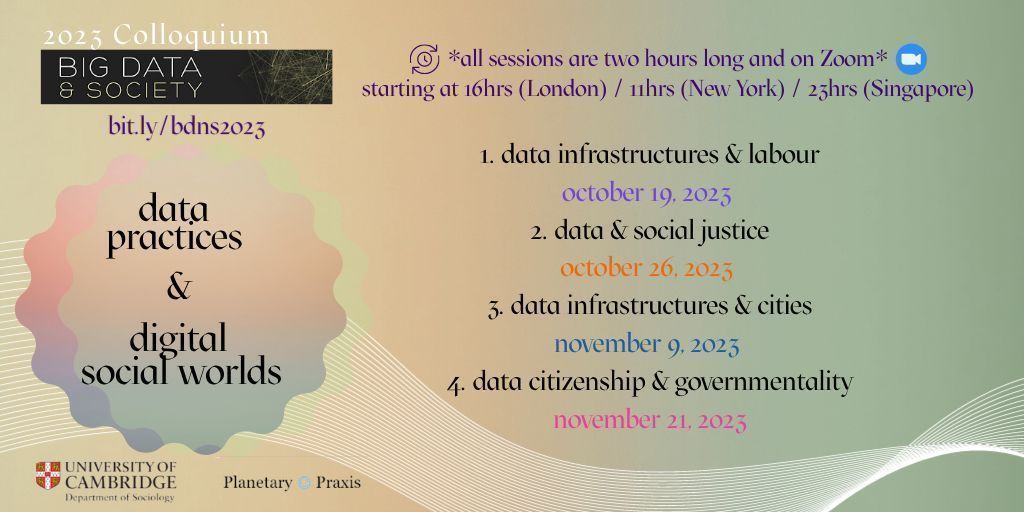
🚨⚡ Our 2023 colloquium lineup is here! Throughout the course of four sessions held bi-weekly (Oct 19 - Nov 21, 4 - 6pm UK), we will host dialogues concerned with how #datapractices contribute to understanding digital social worlds. info ▶️ bit.ly/bdns2023
12
31
5,706
25 Sep 2023
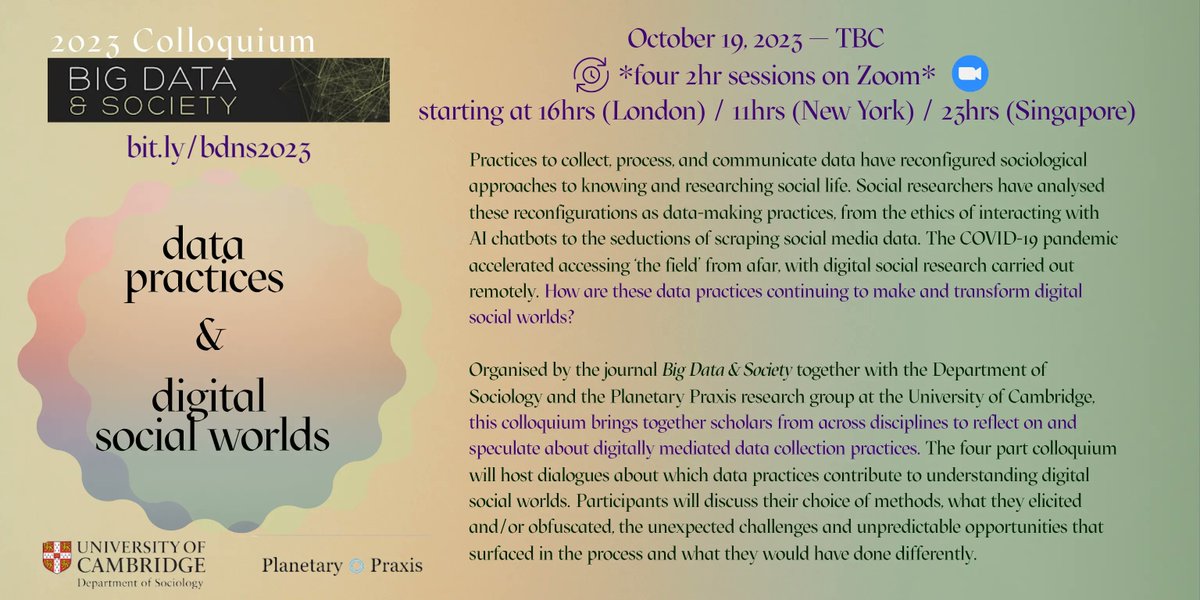
⚡ 👉 How have #datapractices reconfigured sociological approaches to researching #sociallife? Our 2023 colloquium brings together scholars from across disciplines to reflect on digitally mediated data collection practices. 1st session on Oct 19! info ▶️ bit.ly/bdns2023
2
19
74
10,445