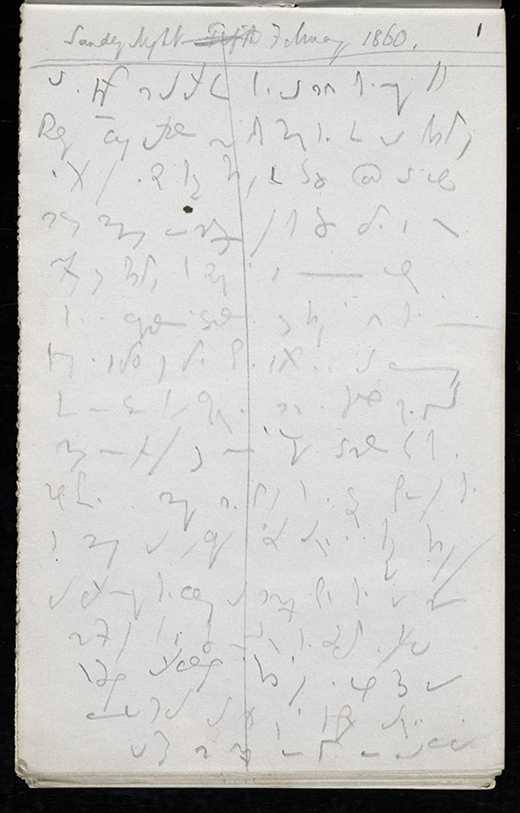
📢We're also delighted to share a complete transcript of 'Sunday Night'. Many of the #DickensDecoders reported that this #SolveItDickens was extra tricky. However, the winners of our original #DecodingDickens competition, Shane Baggs and Ken Cox, made a major breakthrough...🤩
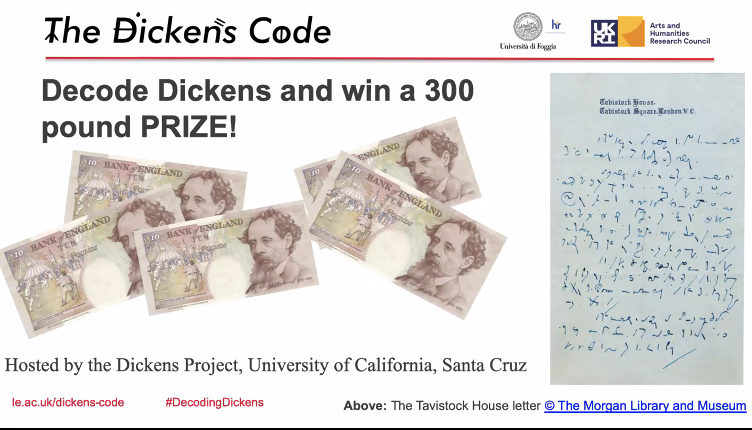
ALT A page of shorthand characters, written in pencil, with a longhand title at the top: 'Sunday Night Fifth February 1860'. The text has a single vertical line in the middle of the page, running top to bottom. This may indicate that the contents were supposed to be disregarded.
Miss registration for our @BeingHumanFest#BeingHuman2022 workshop? No problem. We'll post some of the challenges, so you can give #DecodingDickens a go!
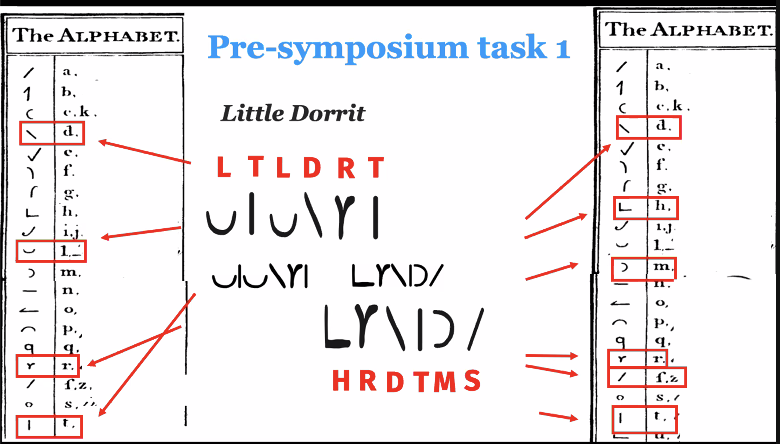
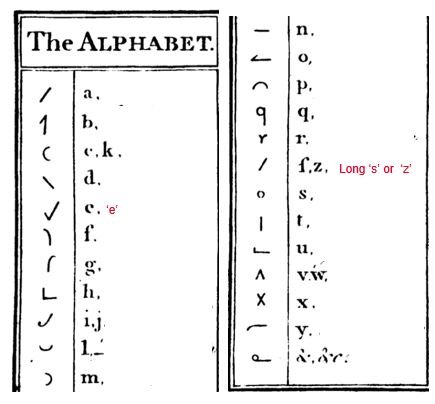
First up, can you decode this #shorthand Dickens character name? Match the consonants then fill in the vowels yourself... 🔍
ALT Image is taken from the shorthand alphabet table from Gurney's Brachygraphy - the shorthand system that Dickens learned. In the left hand column, a shorthand symbol representing a particular alphabet character (or characters) is represented e.g. / = the letter <a>. Some symbols represent more than one character. A number of symbols look very similar e.g. the dash for <a>, <long s>, and <f>. The final character stands for <etc>
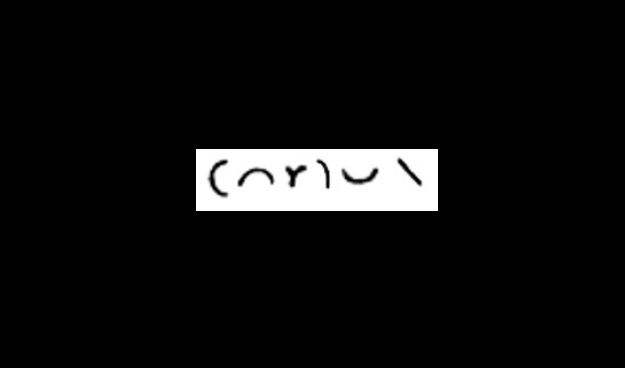
ALT A series of characters from the Brachygraphy alphabet, spelling out a Dickens character name (with vowels and double characters omitted, as is common in shorthand)
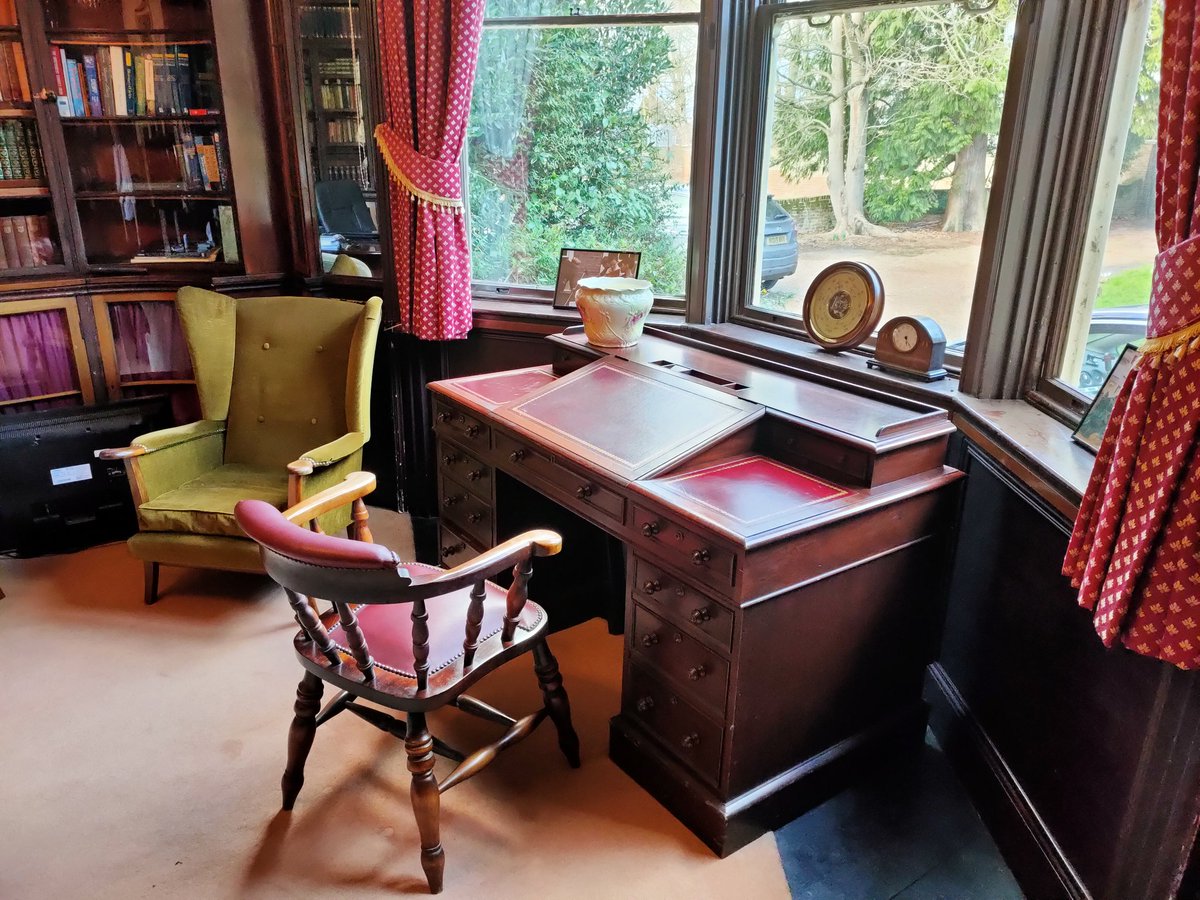
The judging panel for our 'Decoding Dickens' competition, focused on the mysterious Tavistock letter, meets next week
Thanks again to everyone who took part - and stay tuned for some exciting announcements!
#CracktheCode#DickensCode#DecodingDickens
🚨 3 weeks to go until the closing date for our #DecodingDickens competition!🚨
We're offering a £300 #prize for the best full or partial attempt at deciphering the mysterious Tavistock letter
For further details see👇
dickenscode.org/decoding-dic…
DEADLINE: 31 Dec 2021 @ 5pm (GMT)
#DecodingDickens Puzzle Solution: As seen below, the answers are #Dickens's novels 'Little Dorrit' (1857) and 'Hard Times' (1854)! Only consonants are used here, requiring the codebreaker to:
👀 Recognize the word meant
👉 Supply the vowels
Andrea Nini defines the use of forensic linguistics in shorthand decoding as 'decipherment' (linguistics) rather than 'decryption' (mathematics).
Using its methods has #literary, #historical, and #legal implications for 19th century study and 21st century life!
#DecodingDickens
Next in the panel is Huiyu Zhou investigating whether its possible to programme machines to read shorthand, and the potential benefits and issues with this strategy. #DecodingDickens
It's been a full day of incredible speakers and inspiring digital projects (Dickens and otherwise) at #DecodingDickens, but it's now time for the final panel: The Decoding Challenge. @cwoodwadsley begins with the Tavistock letter written entirely in shorthand - what does it say?
Questions you never think you'd have to think about - how *do* you catalogue a joke? It's essential if you want to help people searching for topics. e.g. "How did the chicken cross the road" filed under "poultry", "highways", "animal migration"... #DecodingDickens
Introducing in-process and fully-searchable project The Old Joke Archive, Bob Nicholson @DigiVictorian explains the delight of recovering and studying humour of the #Victorian era.
Found a hilarious 19th century witticism? Users will be able to add source data! #DecodingDickens
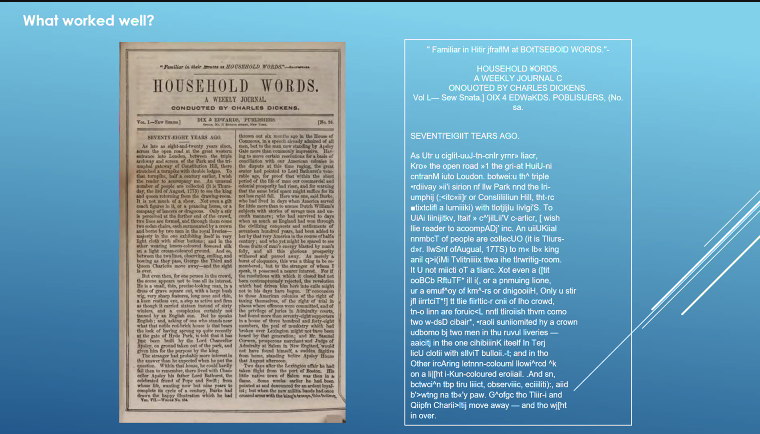
The next panel in #DecodingDickens has begun, considering online projects and crowdsourcing (and how we can use this to decipher Dickens's shorthand notes). Gowan Dawson begins with digitalised journals and the issue of how to make images searchable as well as text.