
Jun 12
The Edges is a poetic exploration of what it means to be alive—and what lingers in the spaces in between. #deepreads #TheEdgesBook

3

For thousands of years, physical friction was the defining texture of the human experience. Distance, delay, and difficulty were not merely obstacles to be overcome; they were the essential, invisible architecture of our days. If you wanted to speak to someone, you had to cross the physical space between you, risking weather and weariness. If you wanted to consume art or knowledge, you had to wait for it to be created, performed, or delivered. We viewed this friction purely as an antagonist a cruel barrier to human potential and so, over the last century, we declared an absolute, merciless war on inconvenience. We engineered a world of instantaneous delivery, seamless connectivity, and frictionless transactions. We genuinely believed that by optimizing our lives, by stripping away all the waiting, wandering, and stumbling, we were liberating our species. But in our desperate rush to smooth out the edges of reality, we failed to realize that friction was not just slowing us down it was holding us together.
The tragedy of total convenience is that it fundamentally sterilizes the human soul. When you eliminate the need to wait, you accidentally eliminate the fertile psychological space of anticipation. When you use GPS to remove the possibility of ever getting lost, you simultaneously eradicate the electric thrill of serendipitous discovery. A frictionless world is, by definition, a world without texture. We have outsourced our struggles to algorithms, next-day shipping, and automated interfaces, operating under the dangerous assumption that an effortless life is synonymous with a meaningful one. Yet, if you look at the psychological landscape of the modern citizen, a paradox emerges: we are surrounded by hyper-efficient, on-demand miracles, yet we are profoundly, inexplicably numb. We can summon food, entertainment, and even human intimacy with the passive, frictionless swipe of a glass screen, completely bypassing the messy, vulnerable, and deeply necessary process of yearning. We have enthusiastically traded the soul-making labor of the journey for the hollow, fleeting dopamine of the destination.
What we are slowly waking up to is the terrifying realization that human beings are simply not designed to thrive in a frictionless vacuum. Our psychology demands resistance in order to build emotional muscle; our relationships require the awkward, highly inefficient stumbling of real-world interaction to forge authentic intimacy. The inconvenience we fought so hard to eradicate was actually the very soil in which our patience, our resilience, and our capacity for awe were cultivated. The great, quiet rebellion of our modern age will not be about protesting a lack of access, but rather demanding a deliberate return to the necessary, beautiful struggle. To reclaim our humanity, we must actively seek out the inefficient. We must choose to take the longer route, tolerate the uncomfortable silence of delayed gratification, and intentionally reintroduce friction back into our daily routines not as a punishment, but as the only way to remind ourselves that we are still alive, still feeling, and still profoundly capable of earning our joy.
#Sociology #Philosophy #ModernLife #HumanCondition #Psychology #DeepReads #TechnologyAndSociety #Mindfulness #Friction #Culture #ThoughtLeadership #JanelleStyle #Essay #WritingCommunity #Existentialism
3
10
For millennia, forgetting was not a flaw in the human machine; it was its most vital safety valve. Memory was never meant to be a high-definition surveillance recording. It was designed to be a watercolor left out in the sun slowly fading, blurring, and softening at the edges as the years passed. This biological decay was not a weakness, but an act of profound psychological grace. It allowed us to shed the uncomfortable skins of our former selves, to outgrow our most agonizing mistakes, and to reinvent our identities without the suffocating gravity of exactly who we used to be. Ancient societies understood, intuitively, that in order to allow a person to truly grow, you had to allow their past to vanish just a little bit. We survived our own complex histories precisely because time functioned as a gentle, inevitable eraser, offering us the quiet mercy of oblivion.
Then, in the breathtakingly brief span of a single generation, we completely eradicated the dark matter of forgetting. We built a digital architecture that simply does not know how to decay. The internet has become a ruthless, insomniac archivist, meticulously cataloging every fleeting thought, every awkward ideological phase, every poorly worded misstep, and freezing them in a terrifying amber of absolute permanence. We have accidentally engineered a society equipped with perfect, immortal memory, and we are only now beginning to realize that perfect memory is functionally indistinguishable from a haunting. We are no longer permitted to simply leave our outdated selves behind in the physical past. Instead, we are forced to drag them alongside us into the future an ever-growing, inescapable chain of digital ghosts. The fundamental human right to evolve and be made anew has been quietly replaced by the exhausting burden of constant historical accountability to our own worst, most unformed moments.
The psychological toll of this hyper-archival existence is staggering, yet largely unspoken. We are forcing a fluid, relentlessly evolving species to live within the confines of a rigid, unyielding ledger. When an algorithm can effortlessly exhume a decade-old version of you with a single keystroke, personal growth feels less like a natural evolution and more like a desperate, impossible escape attempt from your own digital shadow. We have tragically mistaken accumulated data for absolute truth, forgetting that the most beautiful, functional parts of the human soul actually require the dark, quiet space of erasure in order to heal. True redemption, deep forgiveness, and authentic transformation do not happen under the fluorescent, unforgiving lights of total recall. They happen in the shadows of what society is willing to let fade. If we are to reclaim our humanity in this hyper-connected age, we must radically shift our relationship with memory, recognizing that the ability to forget is not a failure of the mind it is the ultimate, necessary act of liberation.
#DigitalAge #Philosophy #Psychology #HumanCondition #TechnologyAndSociety #MentalHealth #DeepReads #Sociology #TheRightToForget #ModernLife #Identity #CyberPsychology #ThoughtLeadership #Essay #WritingCommunity
2
8
For the overwhelming majority of our species’ existence, time was an environment, not a ledger. It was a fluid, elastic landscape that we moved through, swelling and contracting in perfect synchronization with the turning of the earth. In the ancient world, time was not measured by the rigid ticking of a gear, but by the softening of afternoon light, the heavy, undeniable ache of physical fatigue, the blooming of flora, and the long shadows cast by the winter sun. We did not spend time, nor could we waste it; we simply inhabited it. Our biological rhythms were intimately tethered to the cosmic ballet of our solar system. We were granted the profound psychological freedom of living in an undivided present, guided by a natural, breathing rhythm that demanded nothing but our participation.
Then came the mechanical clock arguably the most beautifully devastating invention in human history. It did not merely change how we organized our days; it fundamentally severed our psychological tether to the natural world. Originally crafted in medieval monasteries to enforce rigorous, mathematically precise prayer schedules, the clock was eventually co-opted and weaponized by the Industrial Revolution. In a breathtaking act of societal hubris, we took the infinite, organic expanse of human existence and violently butchered it into perfectly identical, unsympathetic, and rigid increments. We invented the hour, the minute, the second. We laid a mathematical grid over the human soul. We stopped looking up at the sky to know where we were in the day, and started looking down at our wrists, submitting ourselves to the authority of a spring-loaded machine.
This transition was not merely a technological advancement; it was a profound ontological surrender. The moment we learned to quantify time, we inadvertently commodified it. Suddenly, a boundless, abstract concept was transformed into a finite currency. The modern human condition was born in the shadow of this realization: time became something that could be stolen, saved, maximized, or tragically lost. We transformed overnight from creatures who existed harmoniously within the present moment into anxious, breathless accountants of our own mortality. The deep, pervasive exhaustion that defines modern life is not merely physical burnout; it is a quiet, spiritual dissonance. We are organic, biological creatures forcing ourselves to march to the relentless, metallic heartbeat of a machine. We have conquered the earth, yet we live in a state of constant, low-grade panic, eternally mourning the loss of a cosmic rhythm that our bodies remember, but our society no longer allows us to hear.
#Time #Philosophy #Sociology #HumanCondition #Psychology #ModernLife #DeepReads #ThoughtLeadership #Culture #HistoryOfTime #Existentialism #Essay #WritingCommunity #Mindfulness
2
28
Memory is a ghost, but geology is a promise. The greatest threat to any civilization’s foundational narrative is not foreign invasion, but quiet evaporation. When we examine the awe-inspiring scale of the Ramayana and the Mahabharata, we are looking at concepts dharma, cosmic justice, the agony of choice, and the limits of human duty that are, in their pure philosophical form, fundamentally weightless. In their earliest iterations, these epics were liquid. They flowed exclusively from the tongues of bards, shifting, expanding, and gathering magical realism with every generation, slowly transmuting ordinary historical tribal conflicts into apocalyptic, universe-defining clashes. But liquid is vulnerable; without a permanent vessel, it simply seeps into the soil of time and vanishes. Human beings, inherently terrified of losing the stories that give their lives meaning, realized that if these grand moral frameworks were going to survive the brutal march of millennia, they could not remain in the fragile custody of the human voice. They had to be fossilized.
This necessity gave birth to the most profound alchemy in the history of human storytelling. We did not excavate the Indian subcontinent and stumble upon the archaeological remnants of a myth; instead, we engaged in a massive, unconscious, and breathtaking project of narrative incarnation. We looked out at a silent, indifferent wilderness and demanded that it speak our language. A uniquely scarred cliff face was suddenly designated as the precise strike zone of a divine weapon. A dark, secluded pool of water became the exact site of a celestial queen's private grief. A mountain wasn't just tectonic rock; it was the very peak carried by a monkey god. This retroactive mapping was never a primitive misunderstanding of history, nor was it a deliberate hoax to control the masses. It was a visceral psychological imperative. We desperately needed the divine to have a physical address. By forcibly mapping our most colossal, awe-inspiring fictions onto very real, tangible topographies, we dragged the ethereal down into the dirt. We made the infinite walkable.
The human mind often struggles to hold onto pure, abstract philosophy, but the human body instinctively knows how to make a pilgrimage. By tethering the sweeping poetry of these mythologies to specific boulders, caves, and rivers, our ancestors performed a magnificent act of defiance against the impermanence of mortal life. They ensured that the moral frameworks defining their existence were permanently cemented into the earth itself, creating an environment where a society could never accidentally forget its own soul. Today, when you touch a marked temple wall, stand in an ancient cave, or bathe in a geographically anchored sacred river, you are not engaging with empirical, carbon-dated history. You are touching the crystallized imagination of thousands of generations. You are standing in the exact place where humanity successfully convinced the physical world to become complicit in its most beautiful, desperate dreams, proving that we do not just live on the earth we author it.
#Mythology #Storytelling #Philosophy #HumanPsychology #Mahabharata #Ramayana #AncientIndia #CulturalHistory #Folklore #NarrativeDesign #DeepReads #Sociology #Essay #BeliefSystems #MythVsReality #Literature
2
26
Ideas do not survive time purely on their own merit; they survive because we build physical houses for them. If you examine the lifespan of a pure concept a moral victory, a tragic exile, an ancient tribal conflict it is frighteningly brief. The spoken word is inherently perishable, decaying with every generation that misremembers a detail or loses interest in a fading past. The ancient custodians of India’s grandest epics, the Mahabharata and the Ramayana, intuitively understood this vulnerability. A sprawling, complex philosophical discourse on cosmic justice and human duty cannot survive millennia if it remains merely a song sung around a fire. To cheat the heavy gravity of forgetting, a story must mutate into an environment. It must become geography. This is the profound psychological pivot where a mythology transitions from something you simply hear into something you can physically touch, fundamentally altering human civilization's relationship with narrative.
What unfolded across the Indian subcontinent was one of the most magnificent, decentralized acts of collective world-building in human history. As the localized, historical sparks of these epics were magnified by generations of bards into towering cosmic dramas, the listeners recognized a profound problem: a story that belongs to the ether is anchored nowhere. So, they began to claim it. Village by village, region by region, ordinary people pulled the grand mythology out of the sky and pinned it firmly to their local soil. They looked at a peculiar indent in a stone and decided it was the footprint of a god; they looked at a shadowed, ordinary cave and decreed it the shelter of an exiled queen. This retroactive mapping was never an act of mass delusion or historical forgery. It was a mechanism of intimate, localized ownership. By embedding the epic into their immediate physical reality, every distant farmer and isolated mountain-dweller suddenly became a direct neighbor to the divine. The myth was no longer a distant historical event happening to unreachable kings; it was a living, breathing truth happening right in their own backyard.
This aggressive territorializing of myth reveals something deeply moving about the human condition: we desperately need the infinite to be local. We demand that the transcendent takes up physical space so that our fragile, mortal bodies might walk beside it. The geographic anchoring of the epics ensured that the landmass itself became a vast, topographical archive. We ensured that even if every manuscript burned to ash and every storyteller fell silent, the narrative was already inextricably inscribed into the rivers, the forests, and the ravines. We did not discover an ancient past naturally written into the earth; instead, we tattooed our highest narrative ideals onto the landscape so that the earth would never, ever allow us to forget them. The thousands of sacred physical sites scattered across the map are not archaeological proofs of ancient facts, but rather profound, standing monuments to humanity's absolute refusal to let a beautiful story die.
#Mythology #Sociology #Storytelling #Mahabharata #Ramayana #HumanCondition #CollectiveMemory #Philosophy #CulturalAnthropology #DeepReads #PsychologyOfBelief #HistoryAndMyth #AncientIndia #Essay #ThoughtLeadership
2
10
There is a fascinating inversion in how we understand the relationship between maps and legends. Traditionally, we assume the land exists first, and the map is drawn to reflect it. But when it comes to the monumental mythologies of the Mahabharata and the Ramayana, human history engaged in a breathtaking reversal: the map of the human soul was drawn first, and the physical land was later designated to fit its contours. The epics of ancient India did not sprout fully formed from the soil. They sprouted from human consciousness a vast, evolving architecture of morality, familial duty, apocalyptic conflict, and existential dread. As these stories swelled in the collective imagination over centuries of oral retelling, transforming from dimly remembered historical tribal skirmishes into the ultimate cosmic ballets of dharma, they became infinitely too heavy to exist purely in the fragile realm of spoken word. A civilization cannot sustain its moral weight on invisible foundations; it demands physical coordinates. It requires a place to point to.
To understand how these grand narratives claimed the entire Indian subcontinent, we must understand the mechanics of human awe and our deep discomfort with the ethereal. When a society falls in love with a story of a fourteen-year exile or a world-ending war, a psychological urgency takes hold to prove that such immense passion is justified by reality. To satisfy this, our ancestors began a centuries-long, decentralized project of retroactive reality-building. They looked at their immediate surroundings a scorched patch of barren earth, a river with uniquely dark waters, an unnaturally deep fissure in a mountain face and they read the epic into the landscape. Nature’s random geological accidents were suddenly translated into divine scars and sacred footprints. We did not find the history hiding in the stones; we projected the poetry onto them. It was never a deliberate deception, but rather a profound act of devotion. Ordinary people needed the mortal ground beneath their feet to validate the immortal heavens above them, assigning tangible addresses to untouchable ideals.
The result is a geographic landscape that is fundamentally haunted by fiction that willed itself into fact. Today, when millions walk ancient pilgrimage routes, tracing the supposed footsteps of exiled princes and the battle lines of mythological chariots, they are not actually walking through a museum of verifiable history. They are walking through a materialized dream. They are participating in a brilliant, enduring psychological inheritance where the earth itself has been conscripted to act as the ultimate corroborating witness to a story humanity desperately needed to be true. In the end, the geography does not authenticate the myth; rather, the myth consecrates the geography. By tethering the infinite scale of these epics to finite rocks, caves, and rivers, ancient humanity achieved immortality for their stories. They turned the entire natural world into an indestructible, living library of human meaning, ensuring that long after the original bards fell silent, the land itself would continue to tell the tale.
#Mythology #HumanMind #Storytelling #Philosophy #Mahabharata #Ramayana #Sociology #CulturalEvolution #DeepReads #AncientWisdom #Literature #PsychologyOfBelief #Essay #ThoughtProvoking
2
29

A gifted pianist. A past that won’t stay silent.
Through melodies and moments, she face the truth hidden between the notes where love, loss, and identity intertwine.#BookTok #EmotionalReads #RomanceBooks #LoveAndLoss #DeepReads #Storytelling #BookPromotion #LiteraryFiction

2
5

I write to understand what makes us human. If one of my novels ever made you feel a little less alone, I’d love to hear which character stayed with you. Let’s build this together. 👇📚 #BookCommunity #DeepReads

1
3
59

Craving a read that challenges your perspective? Dive into this curated list of thought-provoking books designed to spark deep reflection. From mind-bending concepts to...
Check it here: djoinerbooks.com/books-that-…
#BookRecommendations #DeepReads #MustRead #MindOpening
2
2
30

Apr 17
Most cyberpunk focuses on technology.
This story focuses on what that technology does to people.
And it’s far more unsettling.
demagaga.com/2026/02/24/when…
#Books #DeepReads #SciFi
2
3

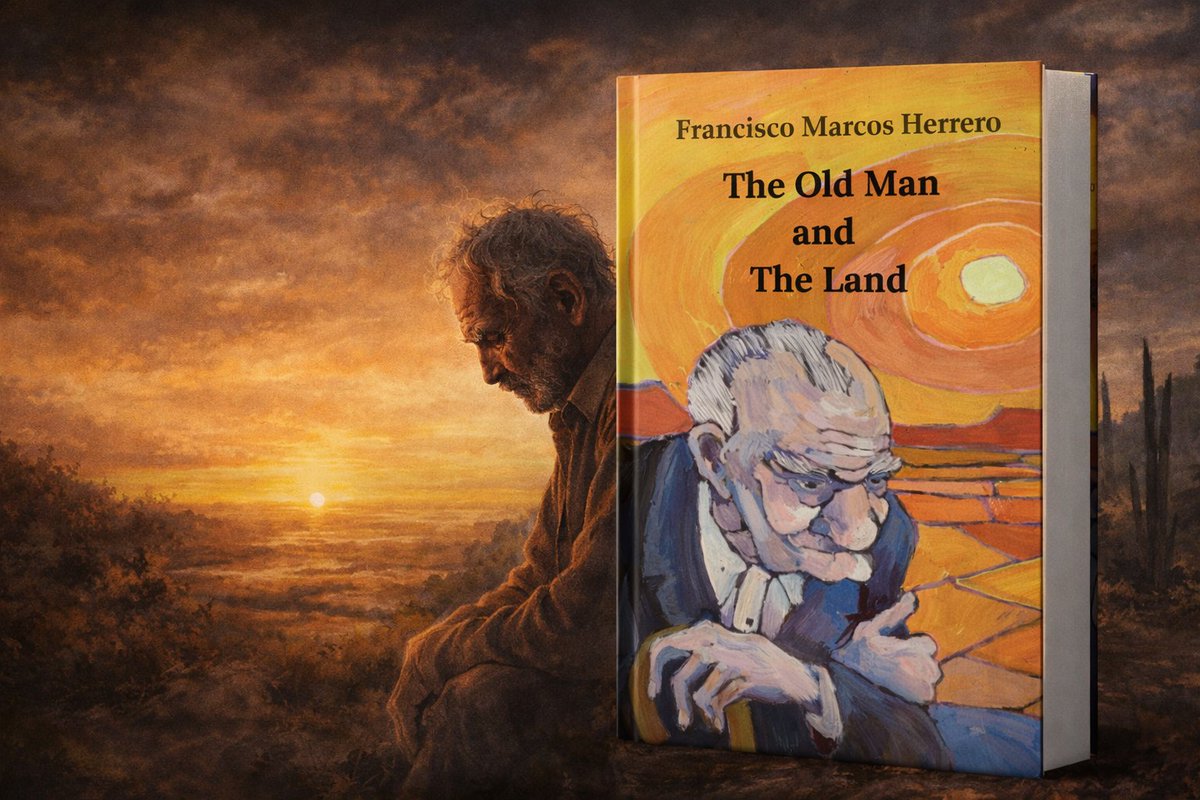
👉 The Old Man and the Land hits harder than you expect.
Regret. Time. Truth.
Read it before it’s too late: [link]
#BookTok #DeepReads #Existentialism #Philosophy #Books #LifeLessons
amzn.to/4sNVFAR
3
7
100

Mar 26
@russcayer A beautifully expansive and thought-provoking poetic journey that weaves history, imagination, and introspection into a deeply moving reflection on time and human experience. #NarrativePoems #TimeAndMemory #LiteraryFiction #DeepReads #BookReview
a.co/d/0cpe2lQa
2
2
65

Feb 9
⚡ Did You Know? 🧠📚
Did you know Frankenstein is more philosophy than horror?
Beneath the story of a scientist and his creation lies a powerful exploration of responsibility, loneliness, and the consequences of pushing science beyond ethics.
👤 The “monster” may not be the true villain…
🌍 society’s rejection might be.
A timeless classic that feels more relevant with every generation.
#Frankenstein #ClassicLiterature #DeepReads #Philosophy #BookCommunity #ReadersOfX

1
5
87

28 Oct 2025
The battle isn’t coming — it’s already here.
Discover the truth hidden between heaven and hell.
#komlanahoudou #BookLaunch #DarkMystery #faithandmyth #battleforhumanity #spiritualawakening #bookcommunity #bibliophile #readerslife #booktalk #bookdiscussion #DeepReads

1
1
3
34

17 Oct 2025
I came for a story and left questioning everything I thought I knew about love, faith, and purpose.
This book doesn't speak to you... It speaks through you.#readingcommunity
#TheFortyRulesOfLove #ElifShafak
#BookRecommendation #DeepReads
#SpiritualAwakening #Rumi
2
6
11
119
7 Oct 2025
Part theology, part mythology, 100% truth
#bookstagram #faithandmyth #DeepReads #SoulMystery #deepquestions #InvisibleBattles #spiritualwarrior #faith #soulwars #thinkonthisspot #BookWisdom #darkreads #darkquotes #booklaunch #bookcommunity #FaithReads #soulawakening #readerslife

1
2
50

7 Oct 2025
A short tale can change everything. Explore the haunting Alpha-Bedtime Stories, where each story holds a deeper meaning.
Read now on Amazon.
a.co/d/ilasFbs
#hauntedminds #ShortStoryLove #FictionWithBite #FearWithin #DeepReads #alphabedtimestories

1
1
9
113
23 Sep 2025
Myth or reality: The devil’s obsession with your soul?
#DarkMysteries #SOULTALK #deepquestions #BookOfTheDay #SoulBattle #MustRead #DeepReads #SoulMystery #SpiritualReads #DarkKnowledge #SoulMatters #soulawakening #readerslife #bookpromotion #bookofthemonth #readerschoice

3
63

23 Aug 2025
This isn’t just a book, it’s a shift in perception.
If you’re drawn to the edges of reality and the mysteries of the mind, this read will stick with you long after the last page.
Grab your copy now 👉 a.co/d/7D3M62D
#ScratchingTheCosmicConscious #DeepReads #RMAlmonte
1
3
17