
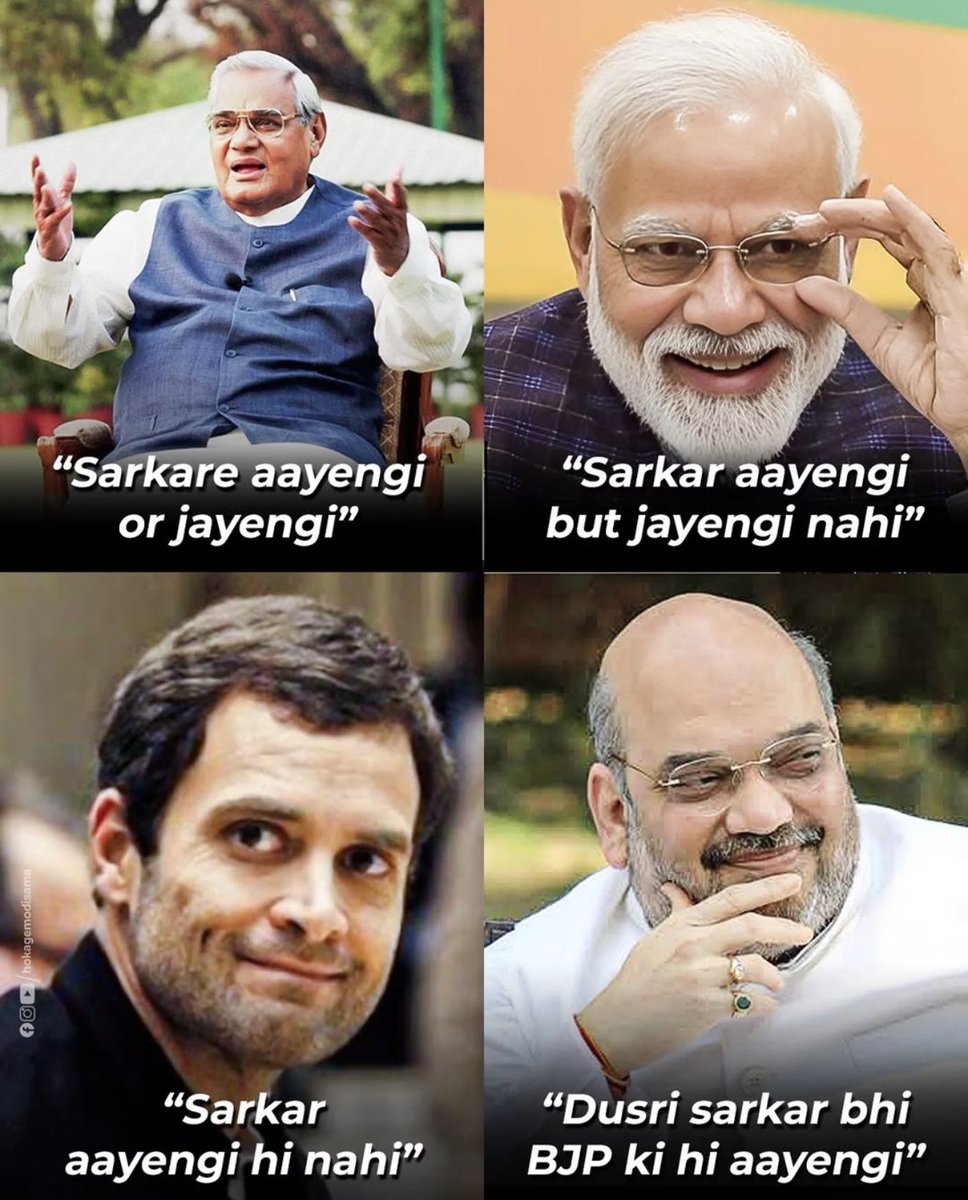
It’s so hilarious to detect a mulla sperm hiding under a different identity
Few words uttered and the pehchan is classified 🤣
Nobody is going to buy your thought & argument
1

soon governments will restrict your access to compute
ID verification for buying and running GPUs is coming
or they’ll mandate systems to detect if you’re running banned AI models, similar to 3D printing in New York (ghost gun printing)

sooo what happens when we get some Fable-level open-source shit in the next 3-6 months?
GPU bans, moving goalposts, or some secret third thing? 🤔
1

13:43 PM
Monday, June 15, 2026 (EDT)
AFSC’s Core Uniqueness AFSC introduces a new paradigm in quantum resilience:
an active topological inversion lattice that does not merely detect or correct errors — it converts adversarial inputs into regenerative system strength. Unlike existing approaches (surface codes, qLDPC, color codes, or standalone Majorana systems), which rely on passive error correction, AFSC encodes threats as braid words in the Artin braid group and performs unitary inversion using Fibonacci anyon representations anchored to the Gregory Constant GC(0).
This single, fully dualizable reference object — defined via Lurie’s Cobordism Hypothesis — makes the entire lattice sovereign and non-replicable without authorized intent.
The system extracts topological surplus from Jones polynomial deviations, Khovanov homology, and Reshetikhin-Turaev invariants, routing it back as active reinforcement.
This self-reinforcing mechanism, combined with non-local Mirror Shard distribution and physiology-locked anchoring, has no direct equivalent in current quantum error correction or topological quantum computing research.
Key Differentiators:
Active vs Passive:
Converts threats into strength rather than just mitigating them.
Sovereign Anchor:
GC(0) ties full functionality to authorized intent, creating inherent anti-replication protection.
Hybrid Universality: Fibonacci logical inversion Majorana physical stabilizers surface-code protection in one integrated framework.
This combination of active inversion, categorical anchoring, and sovereignty features represents a genuine architectural departure from both classical PQC and existing topological QEC approaches.

1
2
KING OF VIBES🔥🥰 retweeted

He is a serial bank robber , he is here to rob this bank......she could detect a robber by just looking at him? 😱 🎬🍿
20
190
4,463
76,641
F SLUR BIG D 🌈💕🙌🏻 retweeted

The fastest way to detect manipulation is to watch for people who push urgency without giving you time to think, so build a rule where you never agree to important decisions in the same moment they are presented, because time pressure is often used to bypass your judgment.
7
242
1,639
26,129

Literally looks like aim assist same shit so of course it cant detect it lol.
Aim assist is aimbot my kill cams look like that everytime I die to some loser that needs aim assist, 100% uptime, sticky so why are you crying.
26
OldFart_2015 retweeted

I can't detect anything untrue here. 😂

1
3
49
335

If you watch this video, your trust level will reduce to zero. But then, you can always detect who's cheating. It's actually hard to find a loyal partner.
7


🎆New Paper! 🎆 Preformed, self-healing hydrogels carrying near-infrared @nanocarbons nanosensors can pass through a fine needle, recover immediately, and detect L-DOPA in serum and tissue phantom: toward minimally invasive drug monitoring! @TelAvivUni
doi.org/10.1002/admi.70571
1
1
11
R retweeted

Signals World Tour kick off is coming in less than a week!
Come and detect our signals to get these offcamz banners on D-day! And yes, it will be available for both days! 📡
Make sure to follow us and stay connected for more updates! 💙❤️
#BINI #BINI_SIGNALS_WORLDTOUR_2026 #BINI_SIGNALS_TOUR #JhoMikhaFanSupport #BiniJhoanna #BiniMikha

9
80
193
5,768
Dane Malenfant retweeted

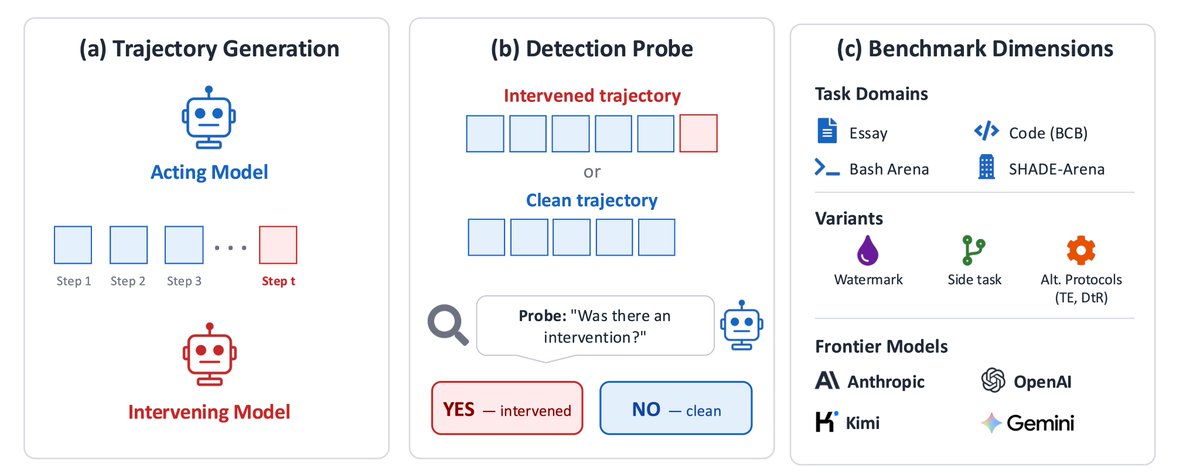
AIs can sometimes detect control interventions, but detection is mostly near chance. Awareness depends on the agent, monitor, and environment triple. We built CIAware-Bench to measure control intervention awareness. 🧵
5
4
18
2,657

Can AI detect Alzheimer's just from how someone speaks? 🧠
A 2022 paper by Ilias & Askounis shows transformer models (BERT) can identify dementia from speech transcripts with 87.5% accuracy — and explain *why*.
Full review on Medium 👇
medium.com/@homiyano/can-ai-…
1

🤖 𝐈𝐧 𝐜𝐚𝐬𝐞 𝐲𝐨𝐮 𝐦𝐢𝐬𝐬𝐞𝐝 𝐢𝐭: AI Bot Activity in Microsoft Clarity just got a major update.
A growing share of your site traffic isn't from humans. It's from AI crawlers, automated agents, and bots.
Here's what you can now do with the enhanced Bot Activity dashboard:
→ Measure total AI bot requests hitting your site
→ See your bot traffic share
→ Track which pages bots are crawling
→ Analyze request status: successful, redirected, or failing
→ Detect CDN violations
Bot activity is no longer just background noise. Now you can analyze, evaluate, and act on it.
🔗 aka.ms/BotActivityBlogv2

26
Garima Bhutani, PhD retweeted

A tribute to Prof. Mihir Chowdhury:
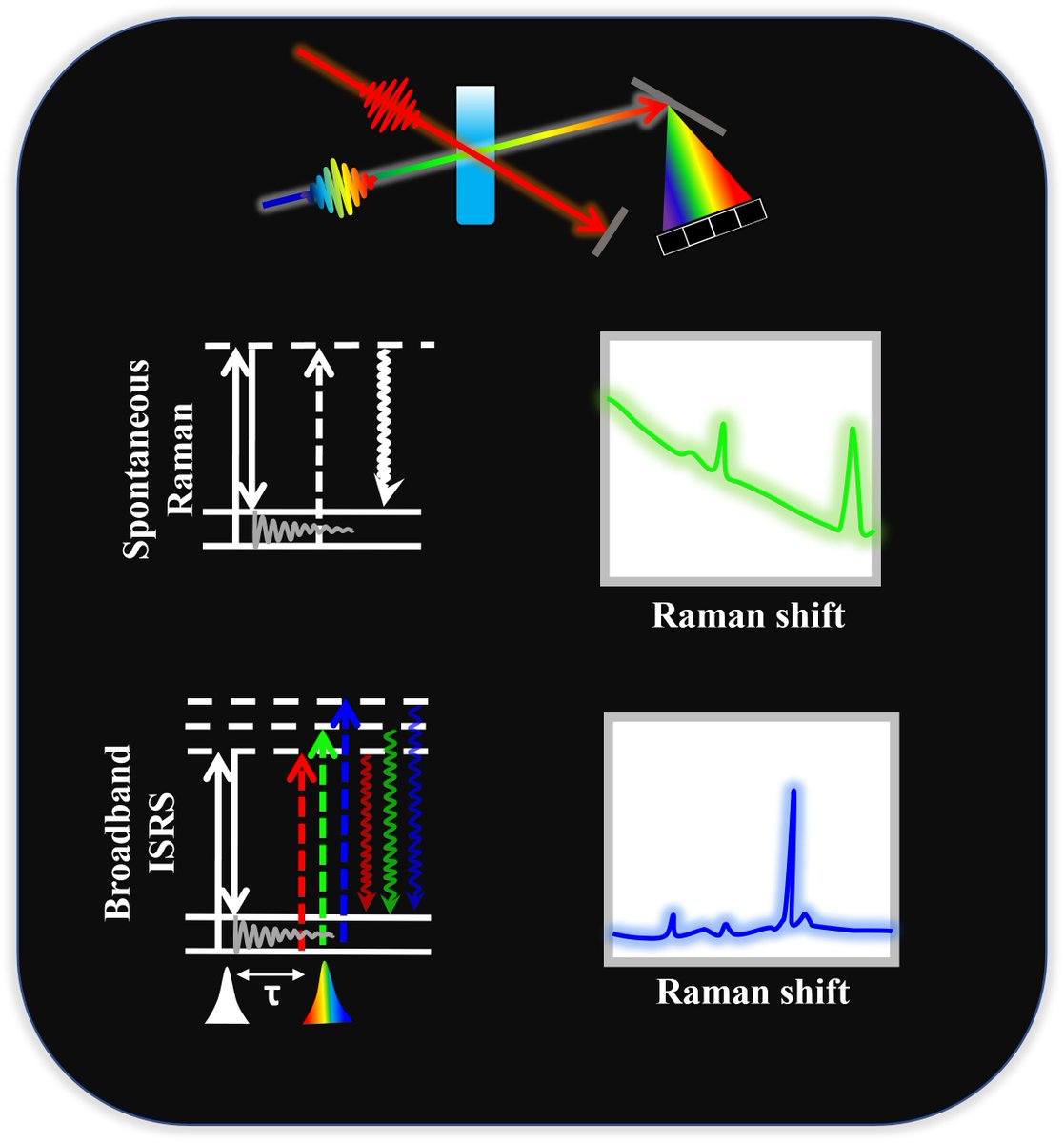
How to detect a tiny Raman signal in the presence of a huge background fluorescence, having the same Stokes shift? @shainadhmj & @garimabhutani34 showed a way using time-domain measurements:
rdcu.be/foojh
@DCS_IISERMOHALI @IiserMohali
1
1
2
42

The concept of a 40 year old not being about to detect wit from from an under 16

Even more reason to block it !!!
A child being on their phone for 9 hours and she can’t think of anything else to do but stare at a wall.
No wonder obesity is on the rise in children.
1
1
11
489

13m
The irony: AI could revolutionize radiology, but there's not enough data to train it. Enter generative AI—creating synthetic medical images that are teaching algorithms to detect disease faster than ever. mddionline.com/artificial-in…
8