
#Iran Launches First #DirectStrike on #IsraeliTargets, Analysts Say #Conflict Enters #NewPhase
naturalnews.com/2026-06-09-i…
30

Key question: Did either side hit what they publicly warned about, or are we seeing deliberate misses to save face while signaling capability? The targets matter more than the tonnage here. 🇮🇷🇮🇱 #IranIsrael #DirectStrike
46

Apr 30
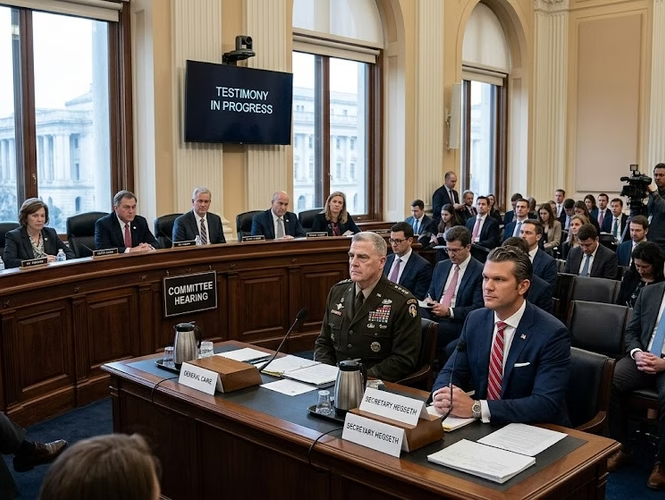
HEGSETH & CAINE SHRED THE LEFT! 🚨
While the radical Left roots for our enemies, the adults are in the room. The Iran blockade is working, the $6B freeze is a death blow, and the Tehran regime is at the breaking point.
Trump is clear: "All they need to do is cry uncle and give up."
Full report in the first comment below! 👇"
#DirectStrike
#IranBlockade
1
1
2
98

19 Jun 2025
🔴 BREAKING: IDF CONFIRMS STRIKES ON IRANIAN REGIME’S INTERNAL SECURITY COMMAND CENTERS
The Israeli Defense Forces have launched targeted strikes on the Islamic Republic’s Law Enforcement Headquarters and Special Forces Command Posts. These are the regime’s core domestic repression hubs—now reduced to rubble.
#IDFStrikes #TehranTargetsHit #RegimeRepressionCenters #SpecialForcesHQ #IranUnderAttack #MilitaryPrecision #CommandAndControlDown #MAGA #ShadowWar #DirectStrike #F3EA #CombatOps
2
93

12 Apr 2025
Online chess broke my heart, and I proved it was rotten. Not to flex, but to stop wondering if I was losing my mind—or my brain. This is for honest players feeling gaslit, kids thinking they’re talentless, and old-schoolers who miss real chess before it became a sanitized dopamine slot machine.
I cut my teeth OTB. At 13, I was battling 1600-1800 high school and college kids in tournaments. By 17, I hit 1700 OTB—not master material, but good enough to know when I’m being played. I can hit Times Square, face the hustlers—Black, Jewish, anyone—and give them hell, even if I never won against them. That’s chess: human, raw, real.
Online? Everyone’s a god. I peaked at 1850 online, but over time, I slid to 1600ish—not because I got worse, but because cheating exploded. I’m better at chess now than ever, yet the losses piled up. It got so bad I thought,
“Either half the world’s cheating, or I need a neurologist. because I have a cognitive disease that is being revealed by me getting worse at chess."
So I ran an experiment to find out.
I took Stockfish, set it to “draw mode” (least winning moves—drawish unless a top move was >100 centipawns better or draw moves were <100 centipawns below the top three). I made it human: Instant recaptures after opponent captures, otherwise move times from a quantile simulation of 15-min game averages across thousands of games. Looked legit.
Over 2000 games:
290 draws
595 time losses
126 checkmate losses
The rest? Wins, but even those felt wrong.
Over half the games ended in draws or losses against a gimped Stockfish. I still lost to it at 1900 strength, yet randos were holding or beating it.
The law of large numbers doesn’t lie: at least half the playerbase uses engines from move one. And it’s uglier than that.
About 50 wins were “saved by the bell”—I nearly timed out, but they did first. Others? Opponents went “rock solid” after I landed a haymaker. Defensive cheating, clear as day—they’d draw or win on time, reeking of engine help.
Then there’s the “blunder checker.” These ghosts run an engine, wait for your mistake, then shred you with “perfect” moves—forced, optimal, invisible to anti-cheat systems. They probably lost to my draw-mode Stockfish, but they’re out there, making every game a crapshoot. My experiment underestimates the problem because of them.
What tipped me off? The Scandinavian Defense. I played 1e5…d5, 2…exd5...Qxd5, Nc3...Qa5 exclusively—a rare line. Suddenly, players who’d never faced it knew it better than me, the guy who lived it.
Overnight, they were gods at a niche setup. That’s when I knew.
People say, “You cheated to catch cheaters, you’re no better!” Wrong. I ran a science experiment to see if chess was worth my time. They cheat to inflate egos and humiliate others. I cheated to stop them from humiliating me—and to know I wasn’t paranoid.
Here’s why I’m done with online chess and never going back: it’s not chess. It’s a rigged casino. Half the field’s on engines from the start.
Half the rest flip to bots when they’re losing. Blunder checkers haunt the gaps. I don’t care about losing—I care about playing a lie.
But there’s a silver lining. I’ve got a theory why I get such sick glee from Direct Strike in StarCraft II.
You can’t cheat. The game’s literally uncheatable—no engines, no shortcuts, just you. And in games where cheating’s impossible, I thrive. I’m currently top 25 in the world on ds-rating.com (TurtleTerran , youg uys see me playing the game a lot on X live streams).
It’s not chess, but it’s honest, and it’s mine.
Chess was my first love, but online it’s dead to me. Direct Strike filled the void—a game where skill still matters. To everyone else stuck in the online chess grinder: you’re not crazy, and you’re not alone. This is why we can’t have nice things.
#Chess #OnlineChess #Cheating #DirectStrike #StarCraft2
2
2
9
246

24 Feb 2024
Check our the kids modelling the new away kits from @PendleSports (cannot recommend them enough for price, design and speed of delivery never mind the online creator)
#grassrootsfootball
#newstrips
#kitsupplier
#awaykit
#pendlesportswear
#sponsorship
#BritishGas
#DirectStrike

2
3
475

8 Dec 2021
Pourtant y'a des jeux que j'aime beaucoup et que j'ai vraiment envie d'essayer, genre j'ai vachement envie de jouer au mode DirectStrike de SC2 mais ça me stress de fou.
2


20 Mar 2019
Cheers for the #TwitchRivals invite, brutal ping frustrations and brutal hour but still some good times, got some cash 💰
DirectStrike pro league when?
2
24

2 Aug 2018
We’re in a lightning delay, and no joke, lightning directly struck the power pole behind centre field. #DirectStrike #SmokeShow #Wild
1
1
3

14 Jul 2018
Direct Strike weekly brawl #7 poll. Pick whatever you want, and I'll make it happen.
patreon.com/posts/brawl-7-20…
#DirectStrike #StarCraft #SC2 #Blizzard
1
3


8 Nov 2016
#ModiFightsCorruption,those people notorious in skills 2've amassed #BlackMoney, need #DirectStrike,not just Rs 500 and Rs 1000 #currency?