
18 Oct 2025
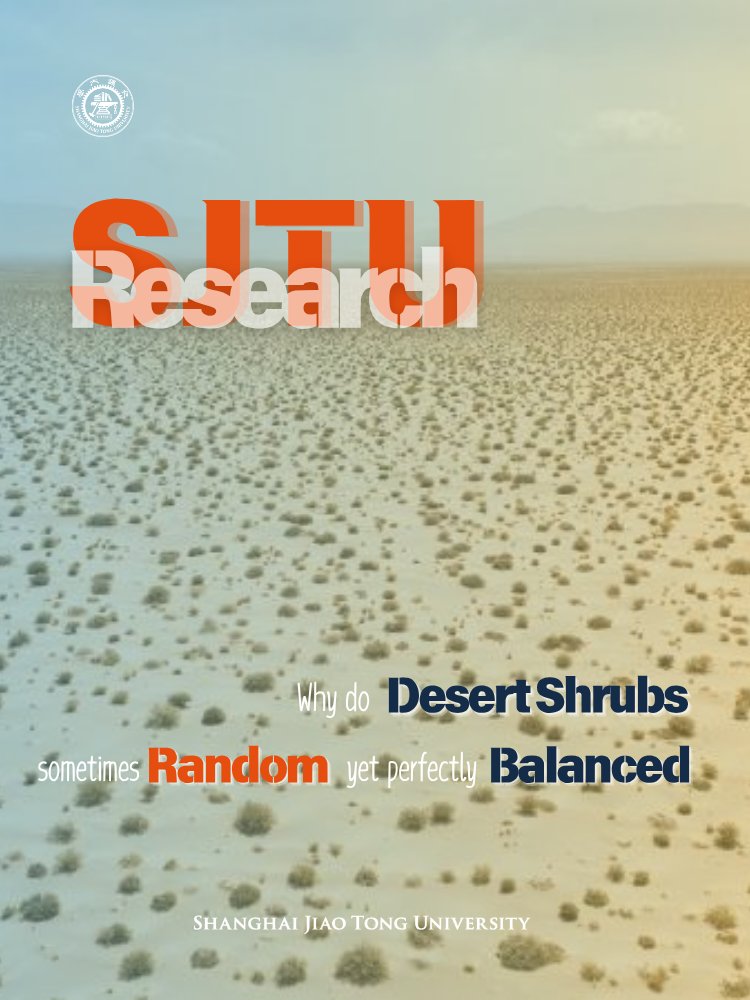
Why do desert shrubs sometimes look “random”—yet act perfectly balanced?
A recent study by researchers at Shanghai Jiao Tong University reveals a hidden spatial order in global dryland ecosystems: disordered hyperuniformity.
On small scales, vegetation seems scattered and disordered; but on larger scales (hundreds of meters), density fluctuations become surprisingly minimal—far more uniform than random. This hidden structure helps ecosystems distribute water and resources more efficiently, resisting drought stress.
However, once locally disturbed (e.g. by human activity), recovery is slow. This duality—stability vs. repairability—offers new insights for ecosystem monitoring, restoration, and resilience planning in arid regions. 🌿
🔗 doi.org/10.1073/pnas.2504496…
#SJTUResearch #EcosystemResilience #EnvironmentalScience #DisorderedHyperuniformity #LandscapeEcology #ClimateChange #AridRegions #Biodiversity #ScientificDiscovery #GlobalScience #Sustainability
4
6
531