
@unsolicitdtruth Hey Nikki. I'm catching up missed parts of LBD reaction. Someone incorrectly said that the same people also did Heart Code. Those 2 series have 2 entirely different production companies, studios & are distributed on diff networks
Ben Samora retweeted

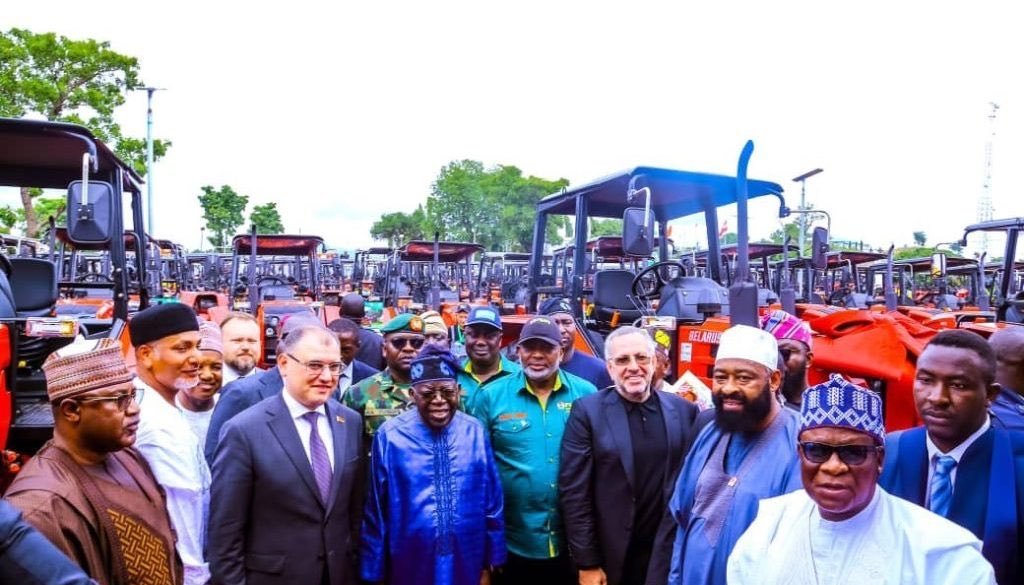
Tinubu imported over N300 billion worth of tractors to be distributed to farmers. Almost a year after, and the tractors are yet to be given to farmers. They rot away. This is why you should believe that the hunger in Nigeria is a deliberate policy, to make Nigerians scramble for rice, and N5k during the 2027 elections. Tinubu must go for Nigerians to breathe
27
163
226
3,342

Check out my new single "Small World" distributed by @DistroKid and live on Spotify! open.spotify.com/album/3Nh2u…
Ahmad Izham Omar retweeted

Brothers Ali take on yet another brand-new horror movie, "Khadam" distributed by @primeworksfilm.
In Malaysian cinemas NOW! 💀💀
#KHADAM #sembangentertainment
youtube.com/shorts/rCzrVR6zA…
111

In 2021, the Indian Supreme Court closed the criminal proceedings after Italy paid ₹10 crore compensation, which was distributed to the victims' families and the boat owner.
Those fishermen were killed in our own country .
3


Perhaps the most important aspect of this result is not the larger spin Hall effect itself, but the fact that it emerges from engineered internal structure rather than from a new exotic material.
The polar nano-regions behave like microscopic coherence centers embedded inside a highly conductive metal. They generate strong spin currents locally while preserving efficient charge transport globally.
From an NMSI perspective, this is a familiar pattern: complex collective behavior emerging from ordered substructures distributed throughout a medium. Instead of forcing the entire material into a single state, the system uses localized regions to create a global effect.
This suggests a broader principle for future spintronic and coherent computing architectures: intelligence may not come from uniformity, but from carefully organized heterogeneity.
Sometimes the breakthrough is not a new material. It is a new geometry inside the material.
1
K4n_Guru retweeted

Jun 10
Node Lending is a mechanism where the network provides users with access to distributed compute nodes, allowing them to participate without needing to operate their own infrastructure.
Something special is coming.

307
2,461
3,244
22,854

Lights. Camera. Anticipation🥳🥳
Meet our Amazing cast for the Movie, NJEM The Journey
Get ready for an experience. NJEM is Coming to Cinemas Nationwide July 24th !
Directed: @DirectorAce
Produced: @abazee_productn
Distributed by @cinemaxng
#ComingSoon #NewMovieAlert
1
3
桝真知香の数学サプリ retweeted

Jun 10
Check out my new single "Unity Anthem" distributed by @DistroKid and live on Spotify! open.spotify.com/album/4JzjQ…
3
53
桝真知香の数学サプリ retweeted
Jun 10
Check out my new single "Victory Anthem" distributed by @DistroKid and live on Spotify! open.spotify.com/album/1LMEE…
3
2
55

Saturation Weapon Solutions
🇳🇱 Kryla from Destinus (@DestinusDefence) is designed for high-volume distributed strike to overwhelm air defence systems in contested environments.
Learn more >> tinyurl.com/4f3n7kzr
2
21


Yeah you do because you’re misleading people about how tickets are being distributed.
1
5

I don’t believe this is true. I’m not aware of Red Bull being distributed by Coke & it’s not a Coke company.
1

Check out my new album "Fiesta" distributed by @DistroKid and live on Spotify! open.spotify.com/album/2xBmQ…
1