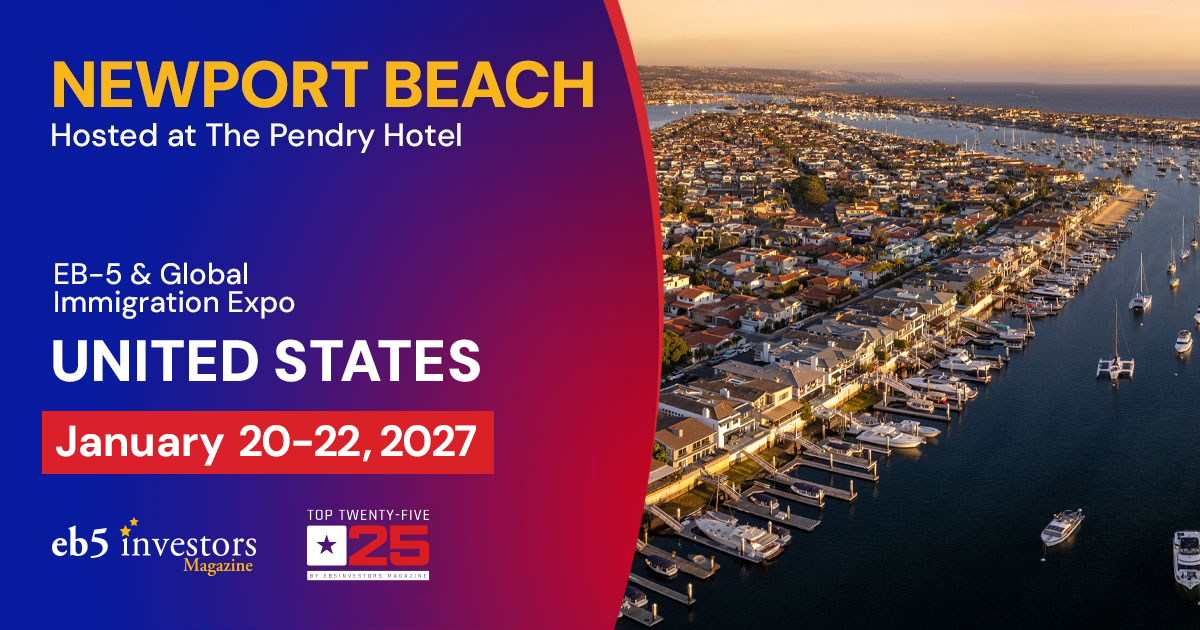
Join us at the Newport Beach expo to celebrate the Top 25 winners and connect with local investors and agents!
Don’t miss out—book your tickets now!
eventbrite.com/e/2027-eb-5-g…
#eb5 #eb5visa #eb5investors #eb5program #visa #usvisa #usa #attorneys #newport
eventbrite.com/e/2027-eb-5-g…
17
Nominate yourself or other leading figures in the EB-5 industry for the Top 25 awards!
The deadline is June 22.
eb5investors.com/blog/nomina…
#eb5 #eb5visa #eb5program #eb5attorneys #eb5lawyer #top25 #immigration #usa #usvisa #visa
eb5investors.com/blog/nomina…
14
The EB-5 Program is a U.S. immigration category established by Congress in 1990 to facilitate foreign investment and job creation. It is administered by U.S. Citizenship and Immigration Services (USCIS) under the Immigration and Nationality Act.
While often viewed as an immigration pathway, EB-5 also functions as a structured investment framework governed by immigration law, securities regulations, and Project-level execution. Our latest article outlines how the Program works from a legal, capital, and compliance perspective.
Understanding how the EB-5 Program works requires examining four key pillars:
1. Foundations
• Legal Framework
• Core Parameters
• Direct vs Regional Center
2. Visa & Process
• Visa Set-Asides & Backlog
• Rural Priority Processing
• Immigration Process
3. Capital Flow
• Capital Structure & Flow
• Capital Stack & Risk
• Escrow & Deployment
• Source & Path of Funds
4. Compliance & Risk
• Compliance & Oversight
• Securities Law
• Principal Risks
• Due Diligence
Disclaimer: For informational purposes only. Not an offer to sell or solicitation to buy any security. No general solicitation intended. Any offering made exclusively via PPM to qualified accredited investors. EB-5 investments involve risk, including loss of capital, and immigration outcomes are not guaranteed. Investors should consult qualified legal, tax, and immigration advisors.
More info: eb5united.com/blog/2026/05/h…
#EB5 #EB5United #EB5Program #USA #GreenCard

1
64
USCIS's prompt approval of EB-5 projects highlights growing opportunities in the EB-5 visa program.
eb5investors.com/blog/latest…
#eb5 #eb5program #eb5visa #eb5project #eb5investor #visa #usa #usvisa #investment #investors #investmentopportunity
eb5investors.com/blog/latest…
74
4 DAYS LEFT TO SUBMIT YOUR ARTICLE IDEA!
You have until Friday, June 19, to submit your topic proposal for the upcoming EB5 Magazine Top 25 — 2026 Issue.
Email marie@eb5investors.com and marta@eb5investors.com with your pitch or any questions.
#EB5 #EB5visa #eb5program #visa

51
Join us at the Newport Beach expo to celebrate the Top 25 winners and connect with local investors and agents!
Book your tickets now!
eventbrite.com/e/2027-eb-5-g…
#eb5 #eb5visa #eb5investors #eb5program #visa #usvisa #usa #attorneys #top25
61

𝐈𝐧𝐯𝐞𝐬𝐭 𝐓𝐨𝐝𝐚𝐲. 𝐄𝐦𝐩𝐨𝐰𝐞𝐫 𝐆𝐞𝐧𝐞𝐫𝐚𝐭𝐢𝐨𝐧𝐬.
The best investments don't just create wealth—they create opportunities for future generations.
📞𝐒𝐜𝐡𝐞𝐝𝐮𝐥𝐞 𝐲𝐨𝐮𝐫 𝐅𝐑𝐄𝐄 𝐜𝐨𝐧𝐬𝐮𝐥𝐭𝐚𝐭𝐢𝐨𝐧 𝐭𝐨𝐝𝐚𝐲
🌐 eb5path.com
#EB5Visa #EB5Program

4

Jun 11
🚧 Exciting Progress Underway at Akhanda Gardens! 🌿
Akhanda Gardens is set to become a promising addition to the EB-5 investment landscape.
#AkhandaGardens #EB5Investor #EB5Program #RuralTEA #USInvestors
#USInvestment #InfrastructureDevelopment #AkhandaGroup
𝐒𝐭𝐫𝐨𝐧𝐠𝐞𝐫 𝐅𝐮𝐭𝐮𝐫𝐞. 𝐆𝐫𝐞𝐚𝐭𝐞𝐫 𝐏𝐨𝐬𝐬𝐢𝐛𝐢𝐥𝐢𝐭𝐢𝐞𝐬.
A successful future isn't just about where you are today—it's about the opportunities you create for your family tomorrow.
🌐 eb5path.com
#EB5Visa #USAGreenCard #AmericanDream #EB5Program

1
For Indian EB-5 applicants currently in the Unreserved pipeline, an “Unavailable” status immediately freezes final approvals in the U.S. and abroad.
#eb5 #eb5visa #india #unreserved #indiaeb5 #eb5program #usvisa #usa #visa #visaopportunity
eb5investors.com/blog/india-…
144
Attention EB-5 professionals!
Submit your topic proposals for the upcoming EB5 Magazine Top 25 — 2026 Issue by June 19.
Email marie@eb5investors.com and marta@eb5investors.com with your pitch or any questions.
#EB5 #EB5visa #eb5program #eb5lawyers #immigrationattorney #usvisa

40
Gain industry exposure by advertising with EB5 Investors Magazine, the premier source for peer-reviewed EB-5 articles, interviews, and event coverage.
eb5investors.com/magazine/ad…
#eb5 #eb5investors #eb5program #eb5visa #immigration #usvisa #visa #usa
eb5investors.com/magazine/ad…
48

1
24
We are proud to announce that Diep Truc Hoang of Citizen Pathway will be a speaker at our EB-5 Expo in Ho Chi Minh City, Vietnam, on March 17-18, 2026!
Book your tickets now:
eventbrite.com/e/2026-eb-5-g…
#eb5 #eb5visa #eb5program #eb5investor #invest #us #visa #vietnam #hochiminhcity

48
We are proud to announce that Stephen Isidore of WhinChester Corporate Powerhouse will be a speaker at our EB-5 Expo in Ho Chi Minh City, Vietnam, on March 17-18, 2026!
Book your tickets now:
eventbrite.com/e/2026-eb-5-g…
#eb5 #eb5visa #eb5program #eb5investor #usa #visa #vietnam

45
We are proud to have @eb5united as a Platinum sponsor of our EB-5 Expo in Ho Chi Minh City, Vietnam, on March 17-18, 2026!
Book your tickets now:
eventbrite.com/e/2026-eb-5-g…
#eb5 #eb5visa #eb5program #eb5investor #investors #investment #usa #visa #usvisa #vietnam #hochiminhcity

1
49

30 Sep 2025
EB5 United is pleased to announce that the Yellowstone Club Village Core Phase II Fund #2 has officially received I-956F approval from USCIS (September 2025). With this milestone, both Village Core Phase II Funds (#1 and #2)—representing EB5 United’s largest raise to date—are fully approved. Phase II Fund #1 already has 350 I-526E approvals, underscoring the continued success and demand for our Rural EB-5 Priority Processing Projects.
This approval underscores the strength and scale of the Project, confirming that USCIS has reviewed and approved this additional offering for EB-5 compliance.
What this means for investors:
Investors now know that the Project is USCIS-approved and I-526E Approval will depend solely on their Source of Funds
The approval confirms the Project’s compliance and job-creation capacity
As a Rural EB-5 Project, investors benefit from Priority I-526E Processing (our recent approvals are averaging 5 months and we have seen multiple recent approvals in 3.5 months)
If you’d like to know more about our other Priority Processing Rural EB-5 Projects, we encourage you to get in touch with your EB5 United representative TODAY.
Disclaimer: Individual processing timelines may vary. Immigration benefits are not guaranteed and are subject to USCIS approval. This is not legal or financial advice. This is not an offer to sell or a solicitation to buy any security.
More info: eb5united.com/blog/2025/09/e…
#EB5 #EB5program #EB5United #EB5Investors #EB5PriorityProcessing #I956FApproval #PushingPossibilities

1
1
469

6 Jun 2025
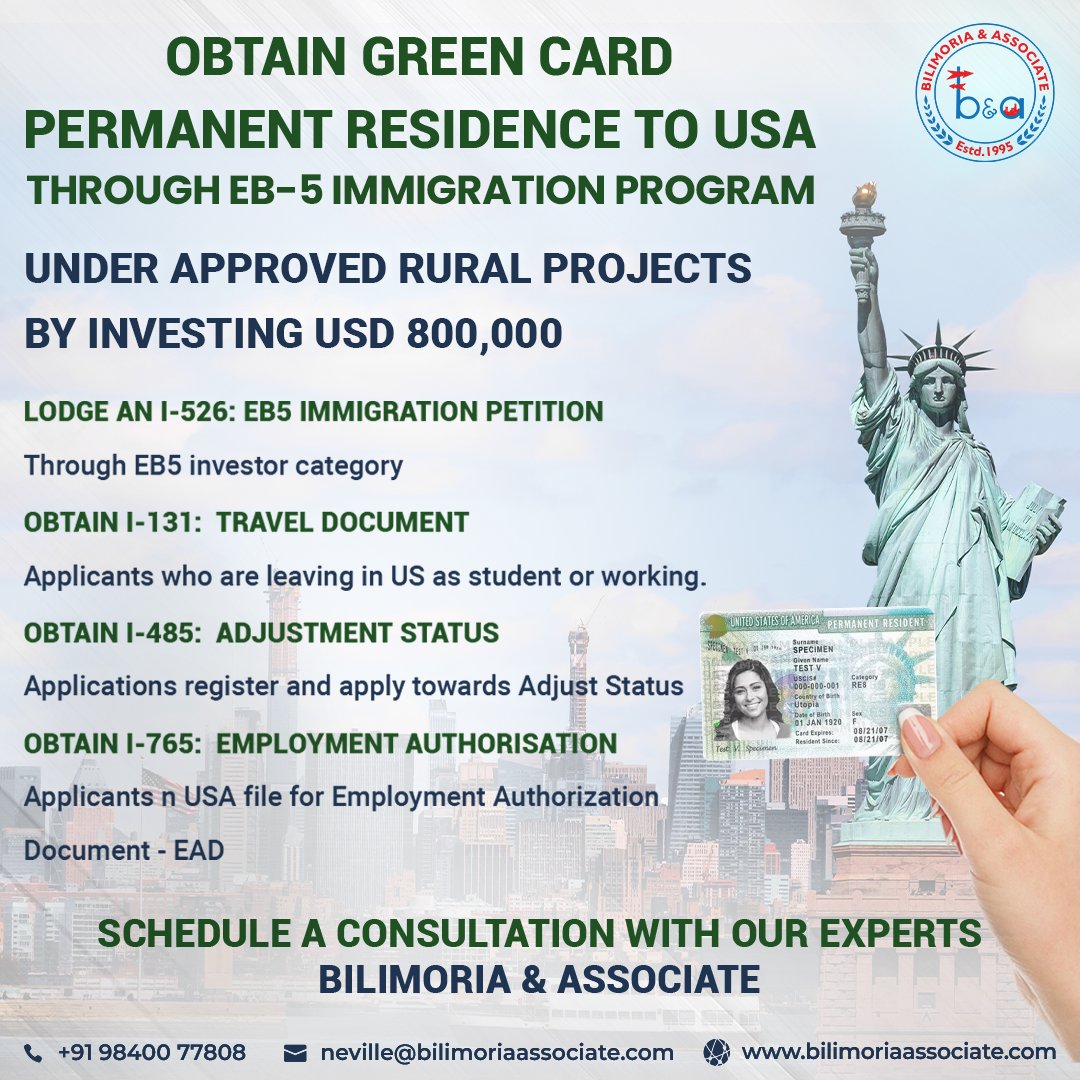
𝐄𝐁-𝟓 𝐔.𝐒. 𝐆𝐑𝐄𝐄𝐍 𝐂𝐀𝐑𝐃 𝐅𝐎𝐑 𝐘𝐎𝐔 𝐀𝐍𝐃 𝐘𝐎𝐔𝐑 𝐅𝐀𝐌𝐈𝐋𝐘:
Contact Bilimoria & Associate to assist and guide your family application for Green card to U.S., which leads to US Citizenship.
#EB5 #eb5visa #EB5Investment #eb5program #eb5investors #USResidency
1
7
53

28 Mar 2025
Ali Jahangiri, CEO of EB5Investors.com and EB5 Investors Magazine, explains President Trump's recently announced $5 million gold card and how it could be implemented.
Watch now!
#usa #goldcard #visa #investment #investor #eb5 #eb5program #eb5visa
6
2
5
887

27 Feb 2025
બિઝનેસમેન એવા પ્રમુખ ડોનાલ્ડ ટ્રમ્પ વેચી રહ્યા છે અમેરિકાની નાગરિકતા, તમારી પાસે આટલા રૂપિયા હોય તો ખરીદી લો યુએસએ સિટીઝનશિપ
#America #USA #DonaldTrump #USACitizenship #TrumpGoldenCardVisa #EB5Program
tv9gujarati.com/photo-galler…
236