
May 12
Todas las aplicaciones las estaban migrando a WebUI, hasta el Menú Inicio.
Estaban convirtiendo a Windows 11 en EdgeOS (el análogo a ChromeOS) pero consumiendo muchos más recursos.
5
553

Apr 28
Position sizing is make-or-break in trading.
Too big = painful losses. Too small = no real growth.
The Pros treat it as a non-negotiable rule.
The EdgeOS Contract Size / Lot Size Calculator makes it automatic. Enter account balance, risk %, stop distance → get precise sizing.
2
31

Finished college and chose not to take a high-paying job.
I’d rather build than wonder “what if”.
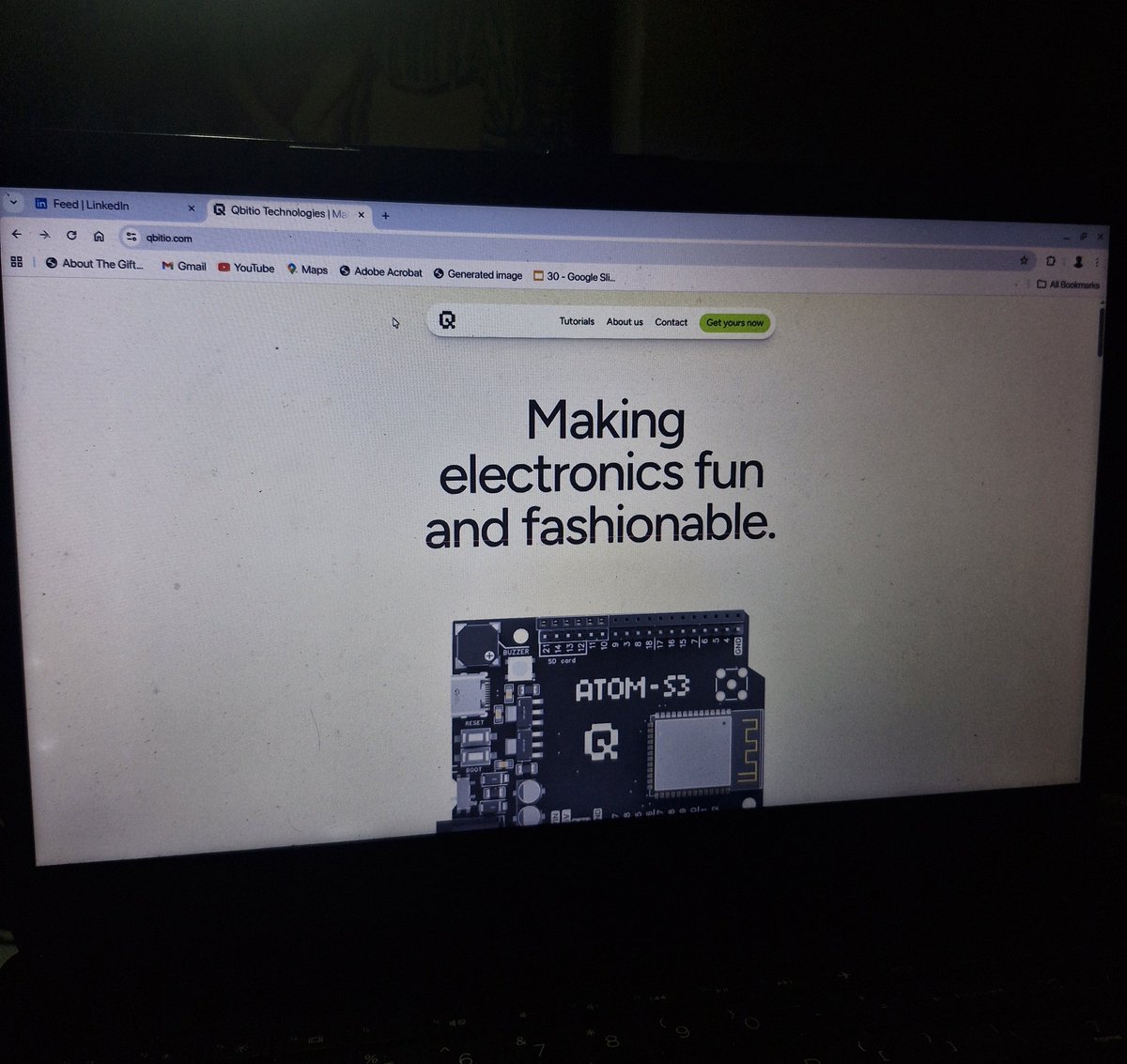
Working on Qbitio Technologies Pvt. Ltd. and building EdgeOS in public.
Still figuring things out, but committed to the process.
This is just the beginning.
#buildinpublic #startup
2
5
54

POV you use all the EdgeOS Execution tools 🥧🙂↔️

7
118

Again only Microtik one of the affected provide updates. EdgeOS rarely get updates now I have get a UCG fibre at $500. TP-Link , Netgear and Cisco and co absolutely dont provide firmware updates for models thanks to self regulation. Out of touch advise.
3
302

Apr 5
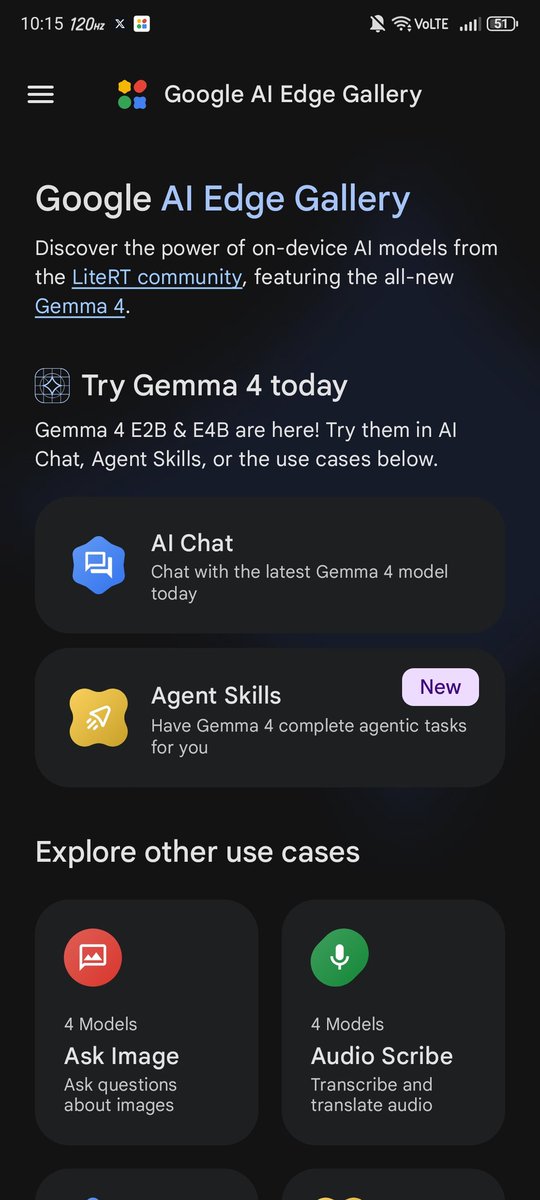
So @GoogleAI really dropping a bomb with this one!
Edge AI right on your phone!
Chat and Agent Skills..
This is what I have been excited about. AI on the Edge!
I still think whoever builds EdgeOS will be the leader of consumer AI.
3
5
156
Mar 31
Microsoft estaba convirtiendo a Windows 11 en EdgeOS, prácticamente todas las aplicaciones estaban implementándose sobre su navegador web, por eso es que el consumo de RAM se estaba disparando.
Ahora que las aplicaciones vuelven a ser nativas habrá mejoras en el rendimiento.
1
4
423


Mar 23
While Shield AI uses cloud-based data centers (often via AWS)aws.amazon.com/blogs/publics… for training the AI Foundational Models (FMs), running large-scale simulations, and managing software updates across a fleet, the entire “mission-time” tracking happens entirely at the edge locally on the aircrafts on-board hardware.
The onboard hardware powering Hivemind’s edge-level tracking and mission autonomy is centered on high-performance modular NVIDIA GPU upgrades shield.ai/shield-ai-unveils-… integrated directly into the aircraft's payload. These GPUs are specifically tasked with running the Hivemind AI pilot and its computer vision tracking algorithms.shield.ai/autonomy-for-the-w… This hardware allows the AI to process massive amounts of sensor data locally, ensuring the aircraft can "perceive, think, and act" without a connection to a remote data center.
Shield AI has successfully integrated Hivemind onto the Parry Labs Edge Compute Micro (EC Micro), a rugged, small-form-factor device that combines high-density CPU and advanced GPU processing. The tracking algorithms run within the same EdgeOS middleware that manages the rest of the autonomy, ensuring the "AI Pilot" can react immediately to what the "Eyes" (the tracker) see.
shield.ai/edge-os/
shield.ai/hivemind-edgeos-a-…
At the heart of such autonomy lies a robust perception stack, which enables on-the-edge decision-making by seamlessly integrating sensors, algorithms, and data processing to gather, interpret, and respond to the environment in real time. This capability is foundational for intelligent autonomy and resilience, empowering autonomous platforms to operate safely and effectively in denied, degraded, intermittent, or low-bandwidth (DDIL) environments where GNSS and communications are unavailable.
shield.ai/the-critical-role-…
This hardware stack is what enables "Level 4" or higher autonomy, where the vehicle can complete its entire mission—including target tracking and swarming—even when GPS and communications are fully jammed.
4
5
178
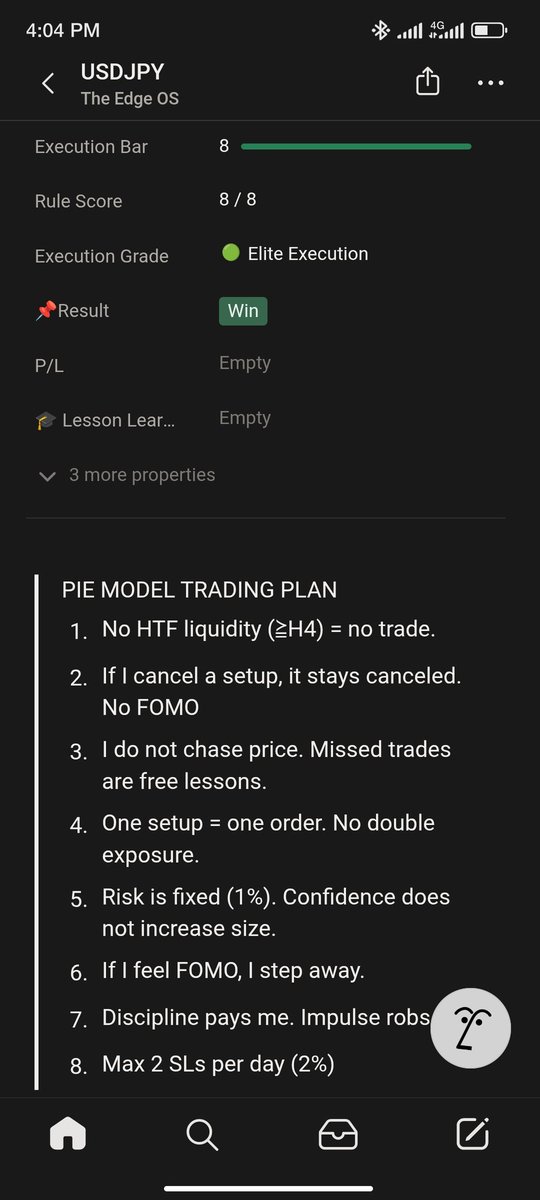
These are personal rules I set for myself.
I know how trading without a plan kills one's edge. That’s why I built The EdgeOS.
I didn't just create a journal; I built a system to fix execution and bulletproof psychology.
Stop trading your nerves and start trading your plan.
Mar 11

If you’re about to quit trading because you’re broken by it.
Wait.
Before you walk away, do this once.
Write your rules. Every rule you keep breaking.
Every rule you know you should follow.
Then trade that exact plan for 90 days.
No changes.
No exceptions.
Don’t try to win.
Don’t try to recover. Just execute.
If you still want to quit after that, walk away clean.
But you won’t.
Because the problem was never the market.
It was the version of you that wouldn’t stay still long enough to let consistency work.
1
1
15
303


Mar 6
Use your agent to apply and buy tickets to Edge City.
We're shipping agent-native event and community tooling, all open source at EdgeOS
Mar 6

New feature! You can now use your AI agent to apply and buy tickets to Edge City (and any event using EdgeOS).
We built skills for OpenClaw, Claude Code, or any agent. They handle it fully; links below.
EdgeOS is agent-native infra for communities and events, all open source.
1
13
1,394

Mar 6
New feature! You can now use your AI agent to apply and buy tickets to Edge City (and any event using EdgeOS).
We built skills for OpenClaw, Claude Code, or any agent. They handle it fully; links below.
EdgeOS is agent-native infra for communities and events, all open source.
9
2
34
3,036

🚨AI斩首时代 | 当算法主导“杀伤链”,科技定义战争时代正式开启❗
近日,德黑兰北部的谢米兰区笼罩在一种极度不安的静谧中。
对于伊朗最高领袖——阿亚图拉·阿里·哈梅内伊而言,这种静谧通常意味着安全。但在这个故事里,它成了死亡的前奏。
一场被称为“史诗愤怒行动”的突袭
这场代号为“Operation Epic Fury”的行动,被描述为:
不是传统的大规模轰炸
而是一场由底层代码、实时遥感算法和分布式算力编织的“外科手术”
行动发生后,美国总统唐纳德·川普在社交媒体上确认了相关消息。
有媒体形容,这是人类历史上第一次由AI完全主导“杀伤链(Kill Chain)”的高层斩首行动。
🧠 硅谷的“战争操作系统”
1️⃣ Palantir:战场的大脑
在叙述中,Palantir Technologies被描绘为幕后“战场大脑”。
核心产品:Gotham、AIP
技术核心:Ontology(本体论)
作用:将卫星图像、通信监听、社交媒体等数据整合为“共同作战图像”(COP)
创始人为彼得·蒂尔。
在这种系统中:
指挥官不再阅读报告,而是“观看”一个实时数字化战场双胞胎。
2️⃣ Starshield:太空战场宽带
美军使用了SpaceX旗下的“Starshield”系统。
区别于星链,Starshield被描述为:
专用加固卫星
高强度加密
激光星间链路
高速数据传输
当伊朗电子干扰系统启动时,太空网络维持数据不断线。
3️⃣ Claude:AI伦理的冲突核心
冲突焦点落在Anthropic开发的大模型——Anthropic的 Claude。
其CEO为Dario Amodei。
Claude的角色被描述为:
处理PB级非结构化数据
阅读大量波斯语截获文件
生成多种打击博弈模型
据报道,美国内部围绕是否移除AI“安全护栏”发生争议。
随后,OpenAI和xAI被提及进入更核心位置。
🤖 战术层面的“算法工厂”
以色列国防军(IDF)开发的三套AI系统:
“The Gospel”
“Lavender”
“Where’s Daddy?”
其逻辑是:
海量目标自动标记
快速人类复核
优先在“家庭位置”实施打击
据称,人类决策时间被压缩到20秒。
🛩 软件定义空中优势
Anduril & Shield AI
在执行层面:
Anduril Industries
Shield AI
核心系统包括:
Lattice
Hivemind
EdgeOS
全文👇

1
14
20
1,211
After months of building and testing…
The EdgeOS is live.
Most traders don't lack strategy. They lack execution. So I built a journal that punishes missed trades harder than losses.
If your issue isn’t strategy, this is for you.👇🏽
promziix.gumroad.com/l/edgeO…
2
2
20
1,650

20 PIE Model traders
30 Disciplined EdgeOS users
50 Risk managers who use the Kitchen's crypto risk calculator.
Amen 🙏🏾🙏🏾
Mar 1

Tweet it into existence this Month
1
6
194
I took a break from the TL to build the exact tools that power my trading desk.
I’m done cooking:
1️⃣ The EdgeOS: A Journal that fixes your execution and discipline system.
2️⃣ The Risk Calculator: To stop you from blowing accounts on bad math.
These tools are launching soon.🔔

1
1
10
427