
Some people teach youto love Some teach youto stop loving Some tire you out making you distance yourself from everyone
Some consume you recklessly There's no endto thisWould the fate of sentences beginning with some change?
I wish all my friends a beautiful and happy evening👍🌹
5
20
slaverobby retweeted

My walking wallets, mommy has sent you requests.
Curious about being on my leash too?
It all starts when you $endtoValerie

11
35
1,542

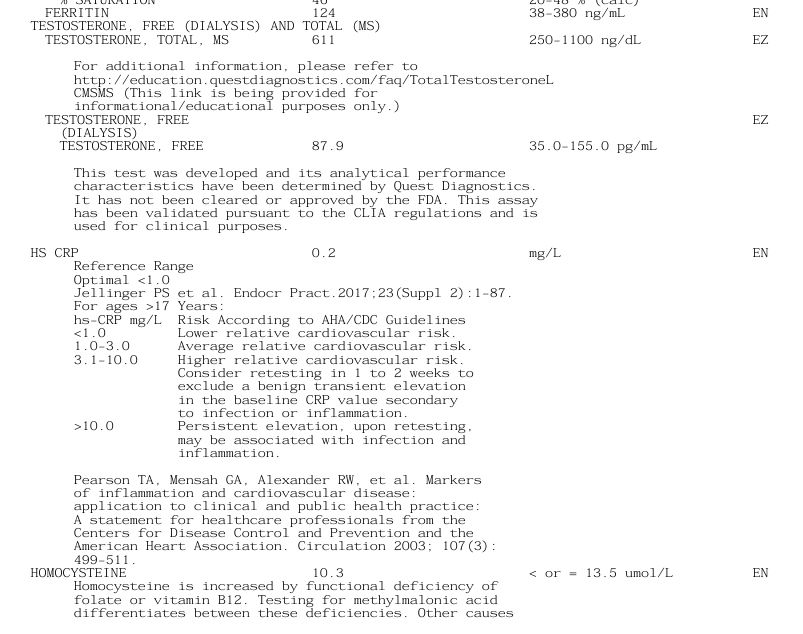
My results came in and I was
Slightly disappointed
How did my levels drop? Nothing's changed.
Then looking at my sleep data I noticed that my recovery was shot the day that I took the draw which could be a factor in my low levels at the time.
Why was this?
I started to add another gut binder. Activated Charcoal.
Why would this matter?
Researching on this the potential cause to why this is happening. Is that this is common during the transitional phase of a gut reset (temporary stress on the system while the flora shifts). The big drop in my ferritin levels 124nb/mL from 183 ng/mL and my low hs-CRP levels 0.2mg/L is a clear sign that my gut reset in reducing endto toxin load and inflammation is working
The slight dip in free t3 and rise in homocysteine are best explained as short-term adjustment/die-off effects.
I've learned much throughout this whole phase and completely changed the way I thought about my health. I'm glad that I went through hitting “hormonal rock bottom” to understand the effects, feeling the rise of my androgens and thyroid health, and the noticeable effects from a gut reset
I'm going to continue with this protocol for the next month and see if my levels rise even higher. My goal for this is to show that TRT is not a necessity and only for a last minute effort to try and raise T levels. By simply prioritizing your diet, sleep, exercise, and gut health. Those commonly used mantras
“Your metabolism slows down as you age”
“You lose 1% of your testosterone levels as you get older”
Are based on falsehoods and that can all change if you just change lifestyle habits and prioritize the simple pillars of your health
Notable shoutout to @labs_vanguard for the service to order labs. Also just a great company with amazing customer service
*Wrote this off the top of the dome with no edits or making other drafts
*I know I may be missing some information and other stuff
1
8
900

Just built a complete, high-converting landing page for a crypto exchange brand in 30 minutes with zero coding.From hero section to features, testimonials, and CTA, everything done endto end.
The power of modern AI tools is actually insane.
1
4
55

Forbes is toast. Sad endto a once-good publication.
2
36

Apr 2
7 game series agaisnt Flyers. Should of won. Up 3 games to 2. Easter Sunday. Stafford had a chance at the endto put the sabs up 4-2 hit the post. Villie Leino scores in ot. Flyers win in 7
4
322

Mar 16
everything is practiced, the more time you spent on creating like these flow your backend logic will improve too.
If you know what to do and how(JS) backend is easy.
Practice in JS fundamentals and eventually your confidence will improve when you will build an endto end project
1
3
230

Feb 12
While notes apps are great for grocery lists, they are a gold mine for hackers because they often lack endto end encryption.
If you have 100 passwords in your notes, don't try to move them all in one hour. Download a reputable manager like bitwarden and move them as you log in to each site. You will be fully migrated within a week without the headache.
1
11
29,750


From research question to real-world product. This is the future Bio is building with BIOS.
At its core, BIOS is an AI Scientist designed to orchestrate complex biomedical research by coordinating specialized subagents across the entire scientific workflow. It is not just another AI tool, it’s the connective layer linking discovery, funding, validation, and commercialization inside the @BioProtocol ecosystem.
Here’s how the loop works in practice.
A researcher starts with a real question. BIOS routes that question across a network of subagents. Literature agents scan PubMed, ArXiv, patents, and clinical trials. Domain-specific agents bring expertise in areas like longevity or microbiology. A novelty detection agent checks what has not been tried before. A new hypothesis emerges.
The human researcher stays in control. They refine the idea while BIOS runs simulations and in silico analysis to test feasibility. Once the signal looks promising, the project moves into a Molecule Lab, a secure, privacy-preserving data room that becomes the permanent home for the research.
Next comes validation. Funding is launched through the Bio Launchpad. The community evaluates the research. Capital flows in. Wet-lab experiments begin. Results are logged back into the Molecule Lab. BIOS continuously analyzes incoming data, suggests next steps, and enforces onchain milestones so funds are released only when real progress is made.
When the research succeeds, it doesn’t stop at a paper.
A validated compound becomes a real, shippable product through Biofy. The same BIOS infrastructure powers personalized guidance and secure data sharing for users. The full loop is closed, from question to commercial product.
AI accelerates discovery. Communities fund breakthroughs. Science reaches people.
This is what endto end DeSci looks like, and this is the vision @BioProtocol is executing on.

7
4
13
237

Jan 15
Hyped AF on @aethircloud × @DataHaven_xyz Decentralized GPU compute meets private verifiable storage
This is the ultimate full-stack dream for AI builders
Train infer at scale trust your data endto end
No more centralized walls
Ship real open AI products & ignite breakthroughs

9
3
15
429

The fact that it’s at least in the lore a partly in-universe propaganda film too that’s is supposed to be generous to the regime and drive recruitment but are still at best in a stalemate and likely losing (the kid at the endto normalize recruits seeing young kids for example)
3
9

Jan 3
Meet @archade_io Archade.
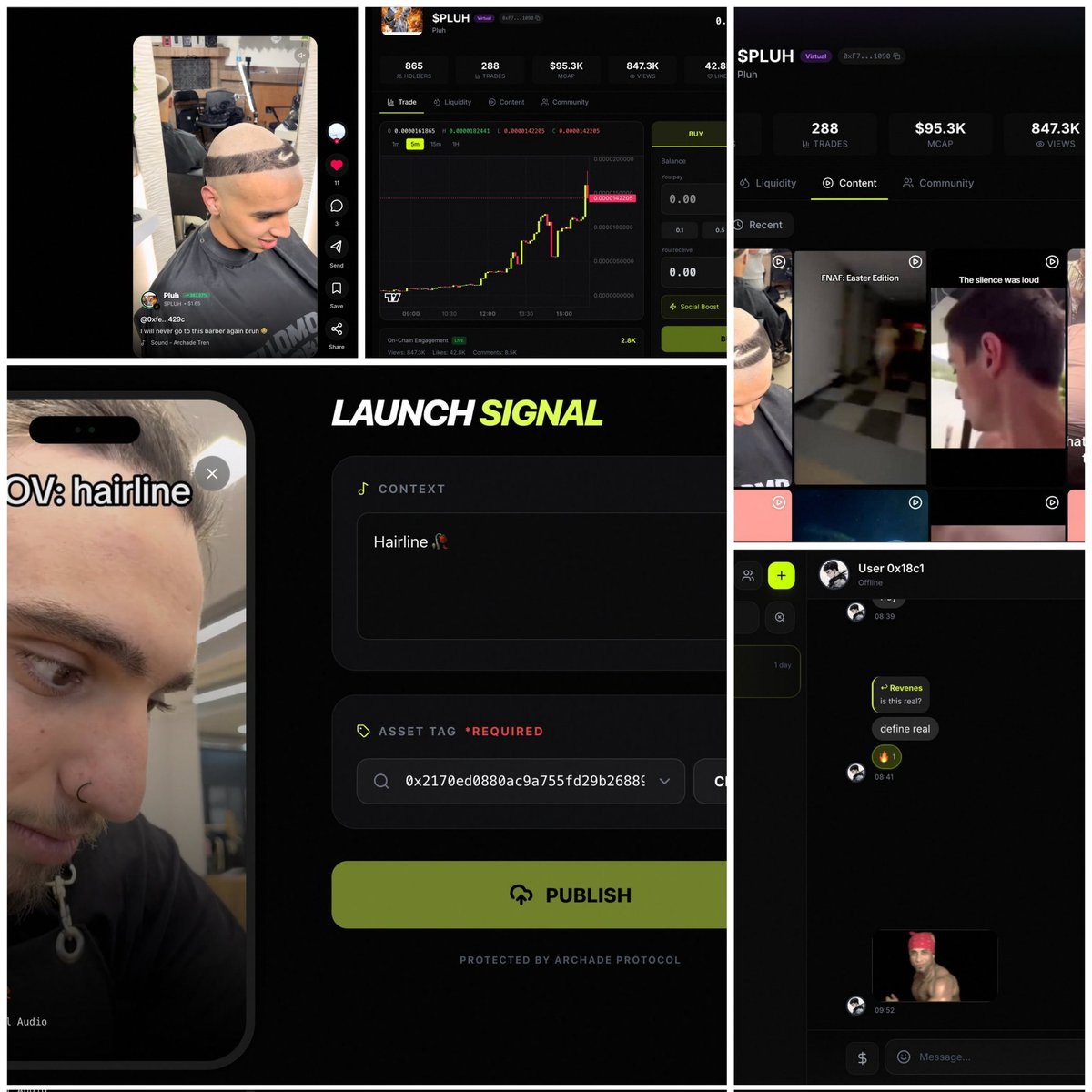
We finally have a Web3 social app that feels exactly like TikTok, but your likes & views directly pump token prices.
Tokens Attached to Every Post:
Every post has its own token.
That green badge? Your instant trade button. Scroll, engage your actions move the price live.
Social Boost Multiplier:
More views, likes & comments higher boost higher price. Example: 847K views 1.53x boost. Your engagement actually pumps the token.
Dedicated Content Tab:
See all posts tied to a token, ranked by engagement.
Full transparency on exactly what’s driving the price.
Encrypted DMs Token Transfers:
Private endto end encrypted chats.
Send or tip tokens directly in DMs.
Smooth on mobile your feed is now your trading desk.
Archade is Still Super Early:
Community growing fast quizzes, voice chats, great vibes. If you're hunting 2026 SocialFi alpha this is it.
Discord:discord.com/invite/archade
Site: archade.io/
14
1
34
647

Most DeFi leaks information before value ever moves. Orders, strategies, intent all exposed.
That’s the quiet flaw we’ve normalized.
What @fhenix does is simple but radical: computation happens while the data stays encrypted. Not masked. Not delayed. Encrypted endto end.

1
4
218

10 Dec 2025
statrting from neck , ear , endto belly button. in last hot lip lock
1
222

5 Dec 2025
$TTAN PT Lowered to $140 at Piper Sandler
25% Q3 Growth Driven by Continued Commercial Pro Momentum; TTAN posted another quarter of healthy 25% y/y revenue growth on an $11M beat to the midpoint guide, driven by continued commercial and Pro product growth and usage revenue upside from strong GTV results and greater-than-expected fintech attach. We see upside to conservative Q4 growth guidance that implies further deceleration to 17% y/y in Q4, based on a robust demand environment (including increased appetite to adopt AI by the trades) and encouraging process across key growth vectors (e.g. commercial suite that is now endto-end with the addition of Commercial CRM and construction management capabilities, Max program that should drive increase Pro product attach). TTAN remains well positioned as the platform-of-choice for the trades with the potential to evolve into a secular AI winner.
1
1
18
5,012

20 Nov 2025
The "g26" philosophy covering A to Z signals a complete, endto end vision. This isn't just building a product; it's architecting a new financial structure. Staying positioned is crucial.
3
50


4 Oct 2025
gZama 💛
What caught my eye about Zama is how they’re making Fully Homomorphic Encryption FHE actually usable on chain. Normally FHE is super heavy, but @zama_fhe offloads the hardest computations to coprocessors, keeping the blockchain itself lean.
Developers still write contracts in Solidity, but when privacy is needed, they can use special encrypted data types like euint that let math, comparisons, and logic run over encrypted values. The result?
Transactions stay encrypted endto end even during execution. Today the system handles ~20 tps per chain, with a roadmap toward 1000 tps. For me, the clever part isn’t just the cryptography; it’s lowering the friction for devs while balancing security, cost, and scalability. The big question is whether that balance holds once usage goes mainstream.
#ZamaCreatorProgram

13
1
18
499

3 Oct 2025
zama builds fhe into smart contracts through its fhevm. this means developers can write contracts where inputs, balances, or user data are encrypted endto end.
1
2
15