
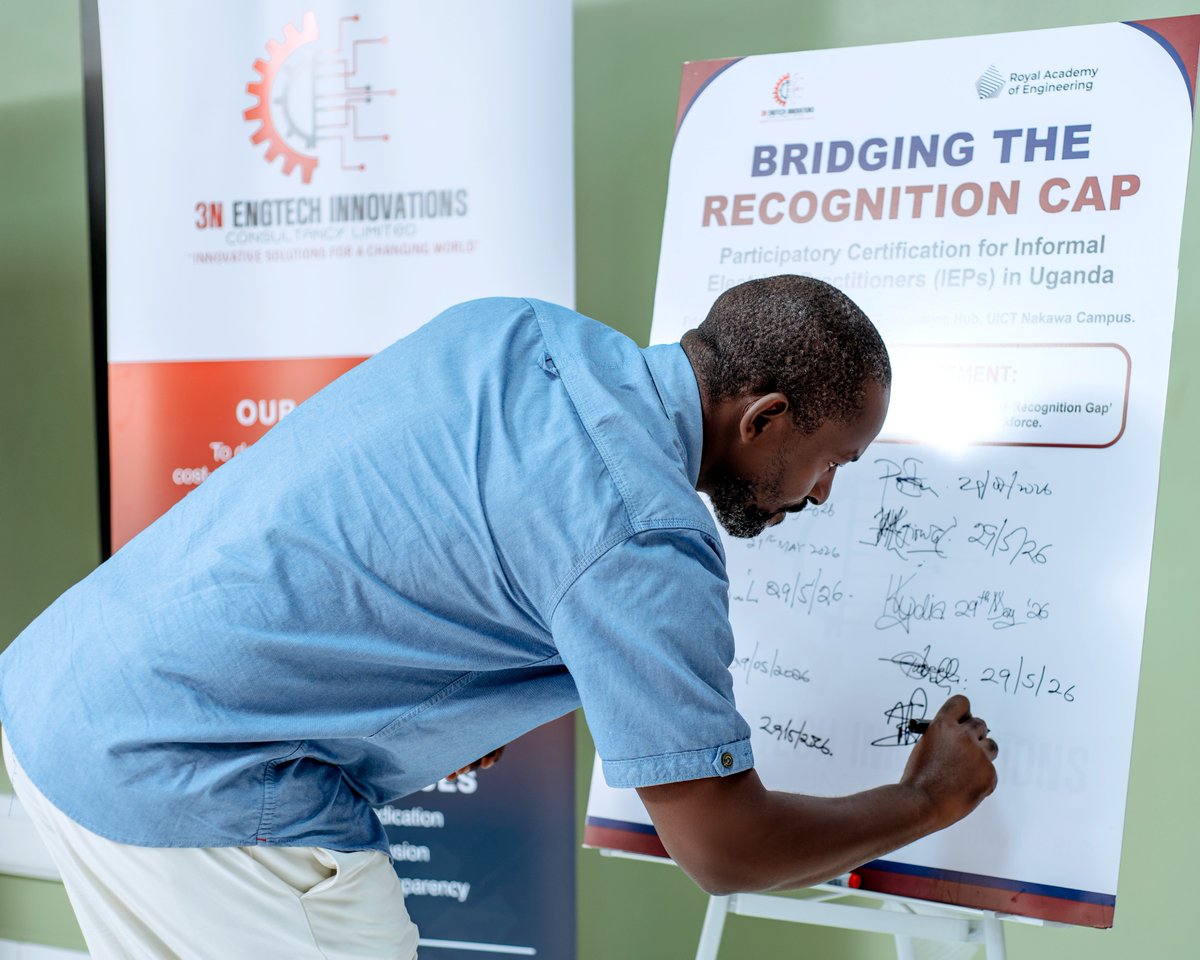
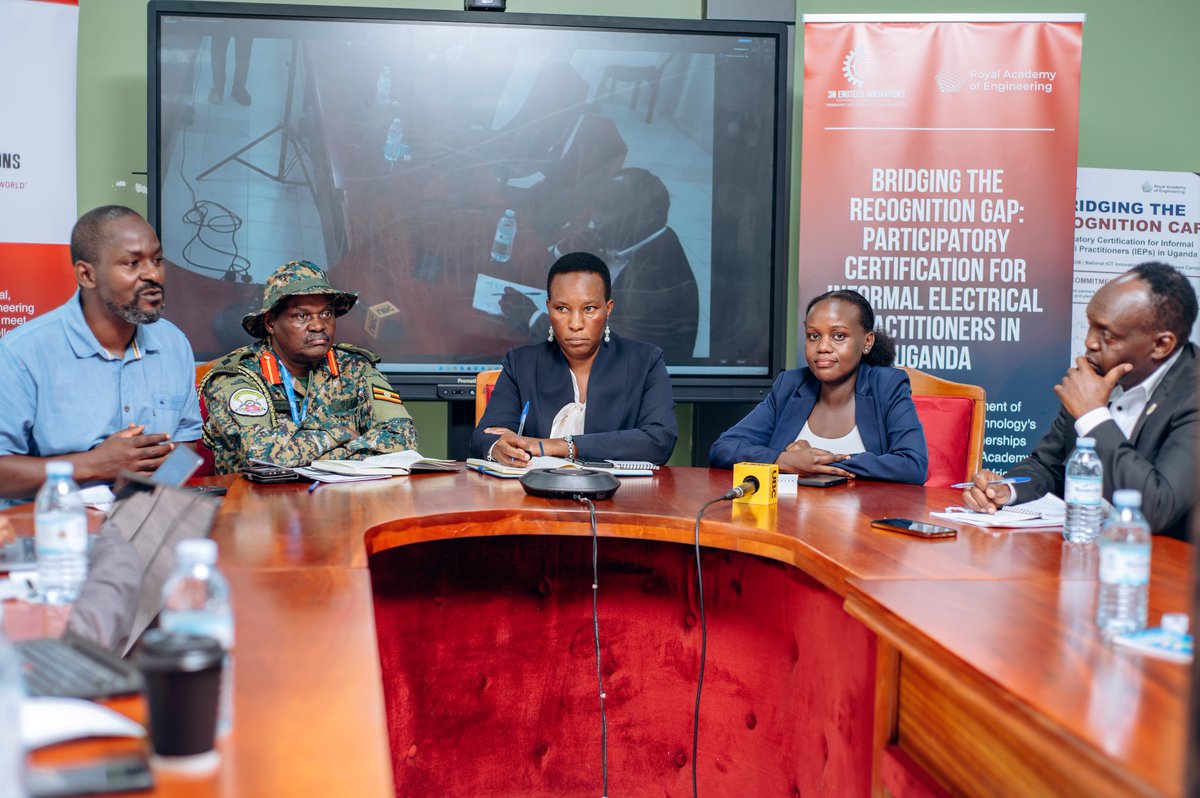
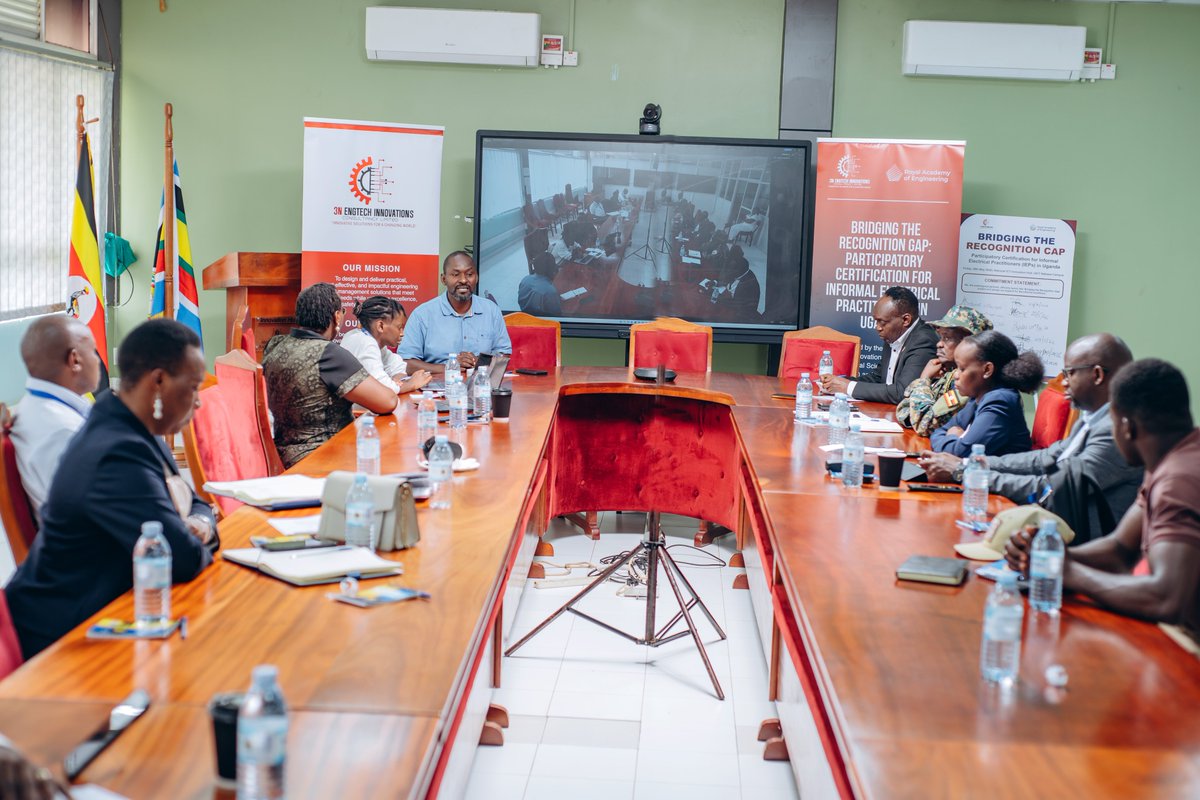
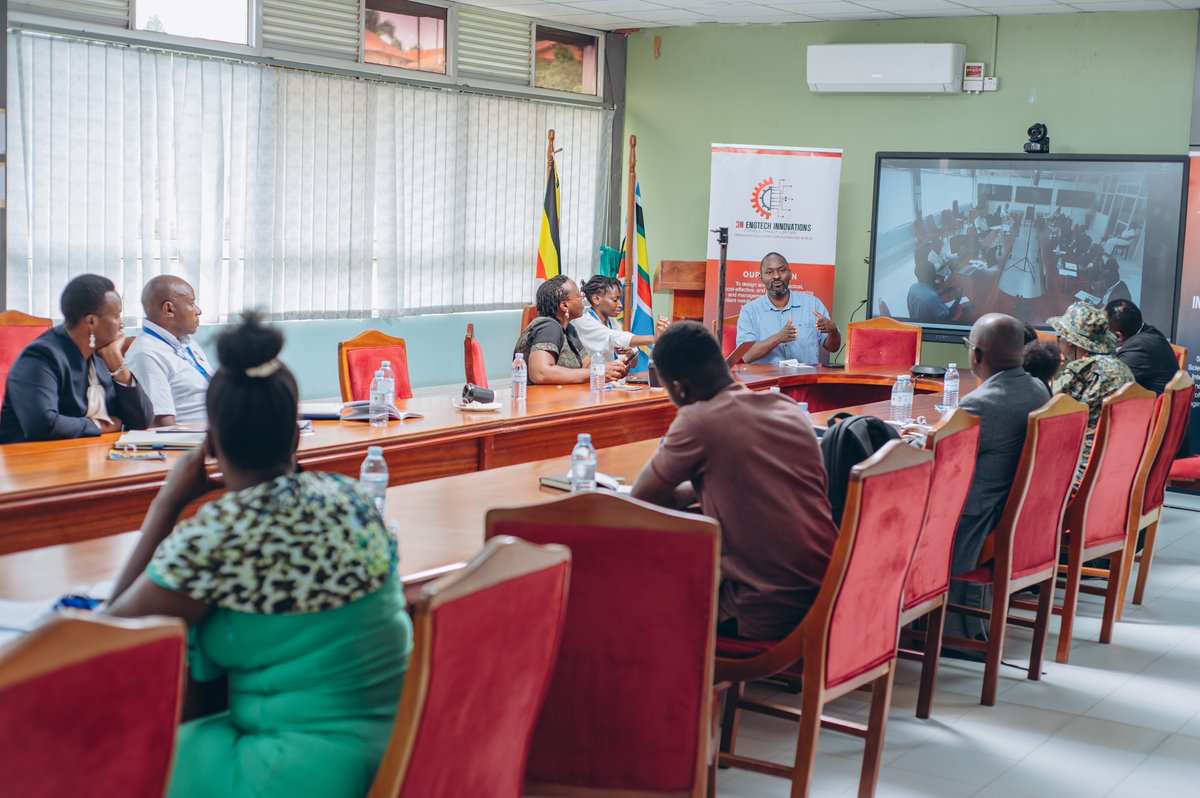
Last week, I had the privilege of moderating a panel discussion during the launch of the "Bridging the Recognition Gap" project, led by 3N ENGTECH Innovations Consultancy Limited and funded by the UK Department of Science, Innovation and Technology's International Science Partnerships Fund (ISPF), delivered through the Royal Academy of Engineering. The project seeks to create a practical Recognition of Prior Learning (RPL) pathway for Uganda's informal electrical practitioners, many of whom possess valuable technical skills acquired through years of work experience but remain outside formal certification systems.
The timing of this initiative could not be more important. Our informal sector contributes approximately 54.5% of national GDP, yet much of our economic thinking still treats informality as a problem to eliminate rather than a productive force to strengthen, upgrade, and organize. At this rate, one wonders whether Uganda is not actually an informal country with a small formal sector attached for paperwork, speeches, and tax reminders.
Yet much of the discussion around economic transformation still treats informality as a problem to be eliminated rather than a productive force to be strengthened and upgraded.
As I listened to the discussion, one thought kept returning to my mind. The greatest skills development programme ever invented is not the classroom alone, but the world of work; and strategic labour export is perhaps its most powerful expression.
China did not become a technological giant by keeping all its engineers at home. For decades, Chinese engineers, scientists, technicians, and entrepreneurs worked in some of the world's most advanced industries before many returned home or maintained strong links with their homeland. They carried back more than technical knowledge. They brought production systems, management methods, quality standards, industrial discipline, professional networks, and technological confidence.
That experience helped shorten China's learning curve and accelerated its journey toward technology leadership. Exposure became competence, competence became production, and production eventually became technological power.
Uganda, unfortunately, has largely chosen a different labour export model. We export thousands of domestic workers every year. While many return with income that supports their families, relatively few return with the industrial capabilities, technical skills, production methods, and technological exposure needed to transform the economy itself.
This is not a criticism of domestic workers. It is a question about national strategy and national priorities. A country that exports housemaids may receive remittances, but a country that exports electricians, welders, mechanics, machine operators, construction workers, technicians, programmers, and engineers receives something more enduring. It receives skills, discipline, industrial culture, professional networks, and technological experience.
Imagine thousands of Ugandans spending five years working on advanced rail systems in China, renewable energy projects in Germany, semiconductor factories in Asia, industrial plants in Europe, or modern construction projects in the Gulf. Those workers would return home with far more than savings. They would return with methods, standards, confidence, practical experience, and a deeper understanding of technologies that would otherwise take us decades to master.
Technology is not transferred through conferences alone. It is transferred through people who have touched it, installed it, operated it, repaired it, improved it, and learned from it through daily practice. Human beings remain the most effective carriers of technology ever invented.
In my forthcoming book, The Five Levels of Economic Power open.substack.com/pub/apollo…, I describe one of the highest levels as Technology Command. Nations achieve technology command when they can understand, adapt, improve, and deploy technologies for their own development rather than simply consuming what others have created. They stop being customers of technology and become masters of it.
One of the fastest routes to technology command is the strategic export of technical labour and the deliberate import of experience. Recognition of skills is therefore not merely a regulatory exercise. It is the beginning of a national strategy for building productive citizens who can compete globally and accelerate technological adoption at home.
Uganda's informal sector already contains millions of ambitious and capable people. Helping them gain recognition is an important first step. Creating pathways for them to learn globally, work globally, and return with the skills needed to build Uganda's productive capacity may be one of the smartest economic investments the country can make.
1
2
13
675
Our “Gaining Professional Registration with the Royal Aeronautical Society” webinar takes place on Tuesday, 26 May at 13:00 BST
Learn how to achieve CEng, IEng or EngTech.
Register now: events.teams.microsoft.com/e…

1
4
296
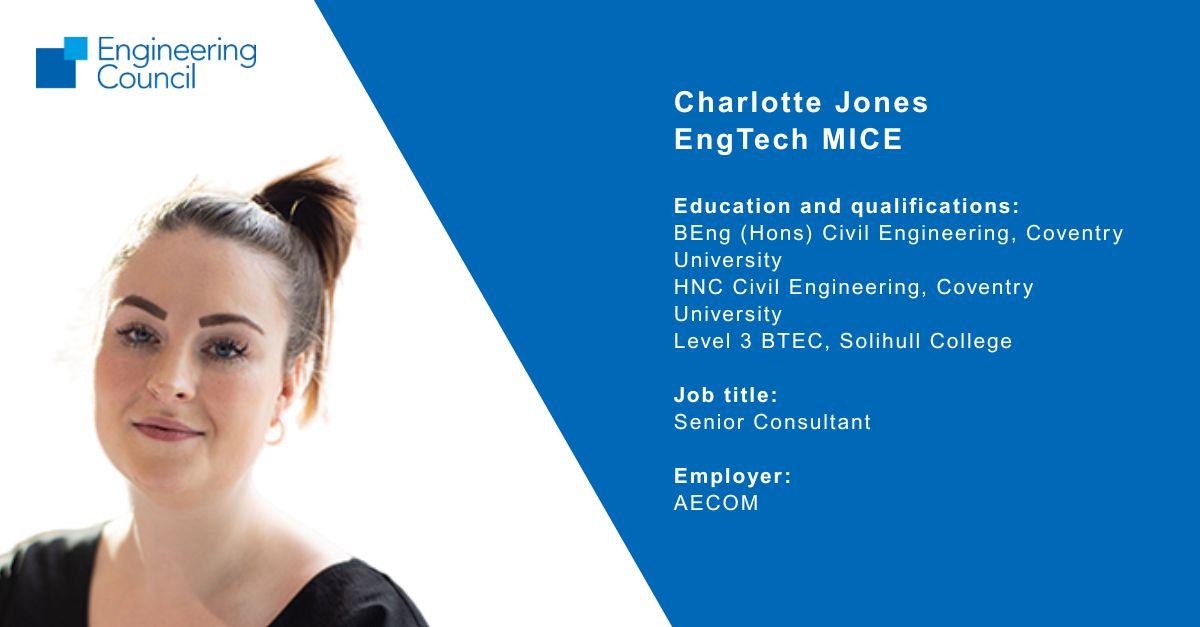
Charlotte Jones EngTech MICE:
"Through becoming professionally registered I met the criteria for promotion: I moved from being a Trainee Technician to a Technician, which gave me more responsibility on projects and a nice pay rise. buff.ly/sbbKzI3
2
190
Working towards professional registration? Our next closing date is 3 March 2026.
Gain designatory letters (CEng, IEng, EngTech), Increased credibility, and better career prospects.
Guidance and support here: ow.ly/2ycy50Y8aSN
4
12
923
Working towards professional registration (CEng, IEng, EngTech)?
Join our free webinar on 11 Feb at 13:00 GMT to learn how we can support your journey.
Register now: events.teams.microsoft.com/e…
2
2
536

17 Dec 2025
Our “Gaining Professional Registration with the RAeS” webinar is TOMORROW!
Learn how to achieve CEng, IEng or EngTech registration.
18 Dec 11:00 GMT
Last chance to sign up: events.teams.microsoft.com/e…
Don’t miss it!
2
231
15 Dec 2025
Working towards professional registration? Our next closing date is 13 Jan 2026.
Gain designatory letters (CEng, IEng, EngTech), Increased credibility, and better career prospects.
Guidance & support here: aerosociety.com/support

1
2
601

10 Dec 2025
Gary Ferrand EngTech FIFireE:
"Registration makes the ability to demonstrate competence and technical knowledge much easier and adds much more credibility to the organisation."
Read the full case study here: buff.ly/jHjsqe2
@ifeglobal #EngineeringTechnician #EngTech

2
178
10 Dec 2025
Want to become a professionally registered engineer (CEng, IEng, EngTech)?
Join our free webinar on 18 Dec at 11:00 GMT to learn how we can support your journey.
Register now: events.teams.microsoft.com/e…
3
4
656

17 Nov 2025
(Highlight) Lim Seong Hai Capital Bhd (KL:LSH) and its partner Besteel Engtech Sdn Bhd have secured the Selangor government’s Morib rejuvenation project for an undisclosed amount.
theedgemalaysia.com/node/780…
945
30 Sep 2025
Book a company briefing with the Royal Aeronautical Society—online or in person. We’ll cover membership benefits, professional registration (EngTech, IEng, CEng), and ways to motivate your team’s career growth. Book here: ow.ly/b73150X4jWI

1
3
670

17 Sep 2025
You have to pay someone to be an EngTech, we already have to carry enough parasites in assessment centres, certification bodies and registration bodies. Customers never commented on my EngTechMIGEM so whats the point unless you want to show off-Customers decide you competency
1
1
45
1 Sep 2025
Want to become a professionally registered engineer (CEng, IEng, EngTech)?
Join our free webinar on 18 Sept at 10:00 BST to learn how we can support your journey.
Register now: register.gotowebinar.com/reg…
2
4
865
4 Aug 2025
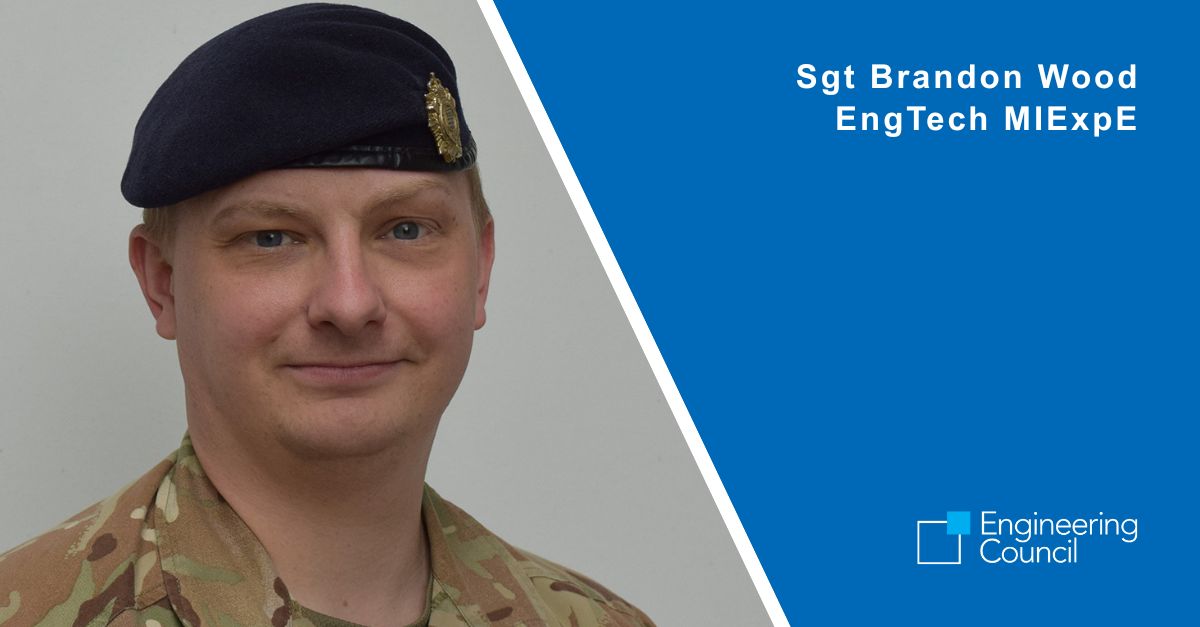
Sgt Brandon Wood EngTech MIExpE: "Professional registration allowed my skills to be formalised for the future, way beyond my military service!" buff.ly/lEpwiHR @IExpE
#EngineeringTechnician #EngTech
1
2
222

15 Jun 2025
This week’s Star is Ing. Momoh Bangura, a vibrant, outspoken, and outstanding Sierra Leonean Civil engineer and a Leader who doubles as the Co-founder of Engtech Builds Company Limited. Thanks for being a role model! ⭐️ #SaloneX #Staroftheweek.

2
5
18
1,025
18 Apr 2025
We have a webinar next week about Professional Registration with the RAeS!
Join us on 23 April at 14:00 BST for an opportunity to learn more about CEng, IEng, and EngTech registration.
Sign up now for free: ow.ly/McqU50VBK4I

1
4
665

28 Jan 2025
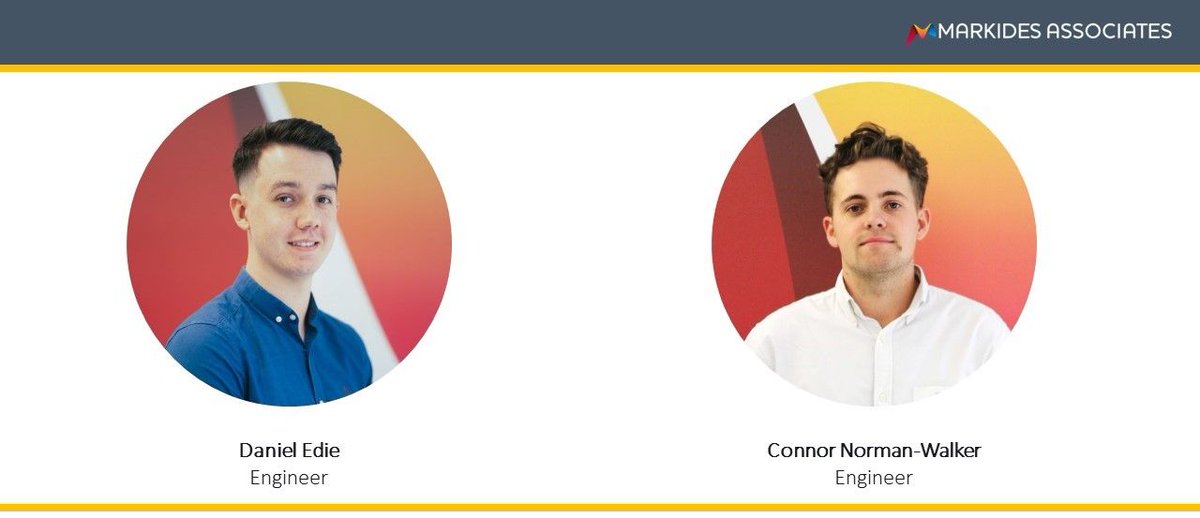
We're very pleased to celebrate our most recent promotions amongst our team. Matthew Hunter is our newest Associate Director, and Sarah Chapman and Panos Floros move to the senior team as Associates. Daniel Edie (EngTech MICE) and Connor Norman-Walker are promoted to Engineers.

34
1 Jan 2025
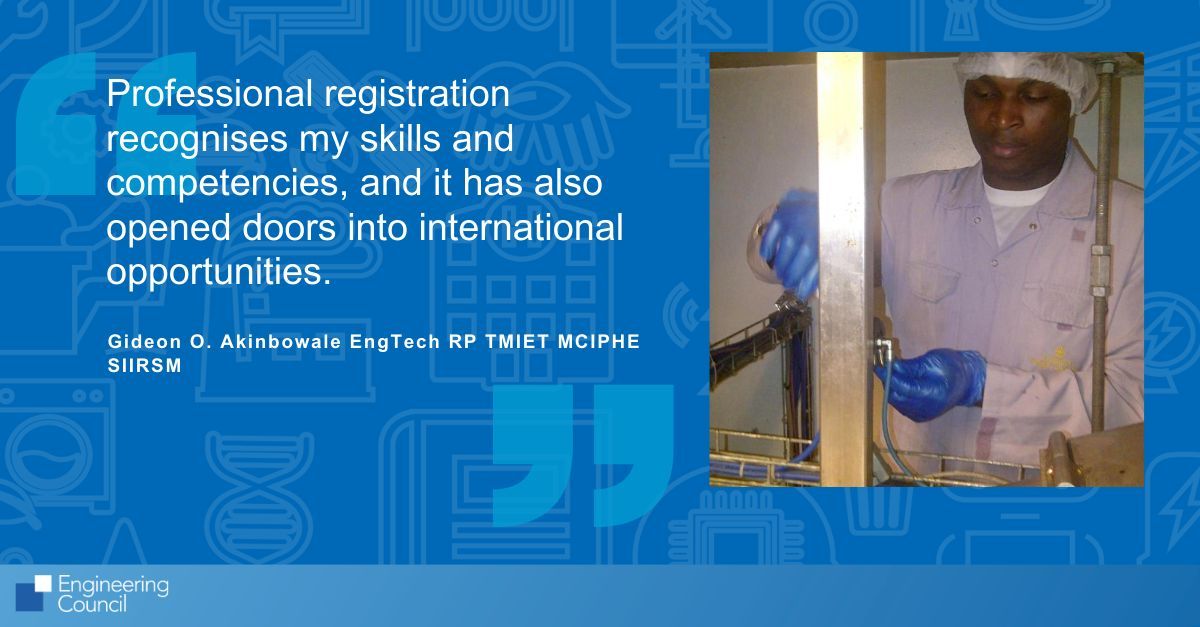
Gideon O. Akinbowale EngTech RP TMIET MCIPHE SIIRSM highlights the benefits of professional registration, noting that it acknowledges his skills and competencies while opening doors to international opportunities: buff.ly/3KYSS1Z
@TheIET #EngTech #EngineeringTechnician
1
1
1
952
27 Dec 2024
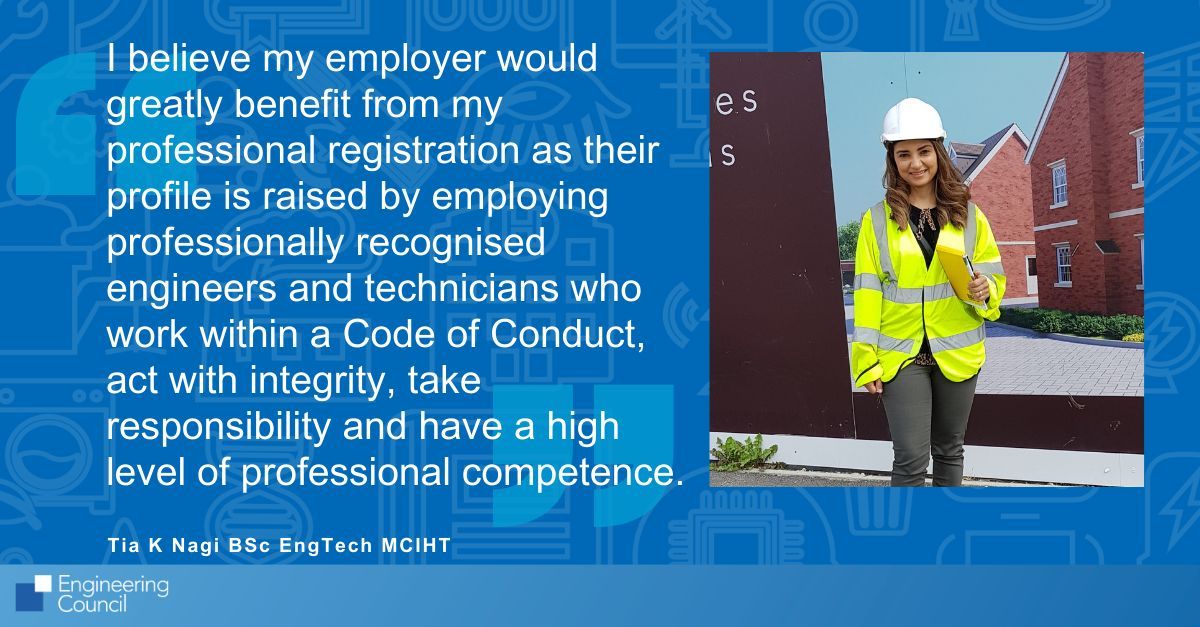
Tia K Nagi BSc EngTech MCIHT believes her professional registration enhances her employer's reputation by employing engineers and technicians who uphold integrity, responsibility, and high professional standards: buff.ly/46gufJ2
@CIHTUK #EngTech #EngineeringTechnician
1
241

11 Dec 2024
Congratulations to Isobel Howe, this year's Best Newly Registered Technician Award Winner!
Isobel is a Product System Design Engineer Degree Apprentice working in Power Generation. She obtained EngTech membership in 2023 and will apply for IEng on apprenticeship completion.

1
2
286