
Jun 10
When Software Touches The World, Latency Becomes Physics
In the age of AI, it is tempting to think that programming is becoming less important because large language models can write code, debug code, and even help design algorithms.
But the moment software touches hardware, the problem changes.
#AIHardware
#Robotics
#ControlSystems
#EmbeddedAI
#PhysicalComputing
#EngineeringReality
6
23
143
7,285

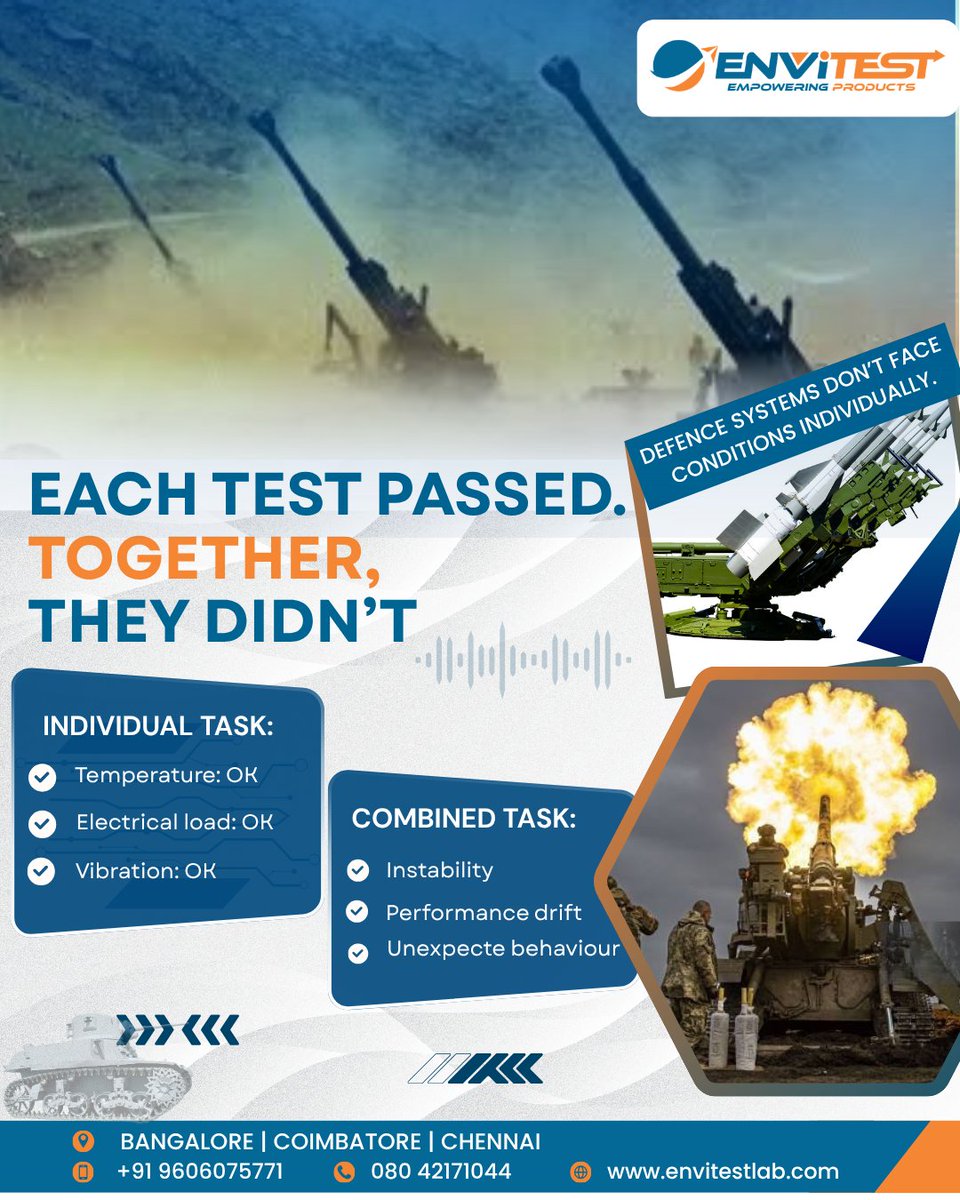
Passing individual conditions doesn’t always translate to real-world performance.
Because actual environments don’t separate variables — they combine them.
#RealWorldConditions #EngineeringReality #Envitest #ProductValidation #TechInsights
3

And somehow, we ALWAYS get it done.
Send us a DM now to schedule your consultation.
#Enamux #engineeringreality #constructionmanagement #civilengineering #industrialprojects
11

The Engineering Perspective!
A hard engineering truth that keeps getting lost in South Africa’s energy debate:
No high-efficiency, Low Emissions (HELE) technology can be retrofitted onto @Eskom_SA's subcritical fleet to meaningfully reduce greenhouse gas emissions. Only a one-eyed leader guiding the blind believes that it is possible.
Post-combustion CCS is technically feasible but would devastate efficiency, double water use, and cost unjustifiable amounts for plants near retirement. Calling either approach a practical climate solution for the existing fleet is preposterous.
Let me unpack that plainly, because the language used in policy circles is often dangerously loose.
🔥 Supercritical “retrofit” is a misnomer
A subcritical boiler (≈16 MPa, 540°C) cannot be upgraded to a supercritical once-through cycle (≥24 MPa, ≥580°C). The pressure parts, metallurgy, steam cycle, and turbine are fundamentally different. What’s sometimes sold as “retrofit” is a total rebuild—a new plant inside an old fence. That’s not a climate solution for a 40-year-old power station; it’s a capital mirage.
🛠️ Marginal efficiency tweaks are real but modest
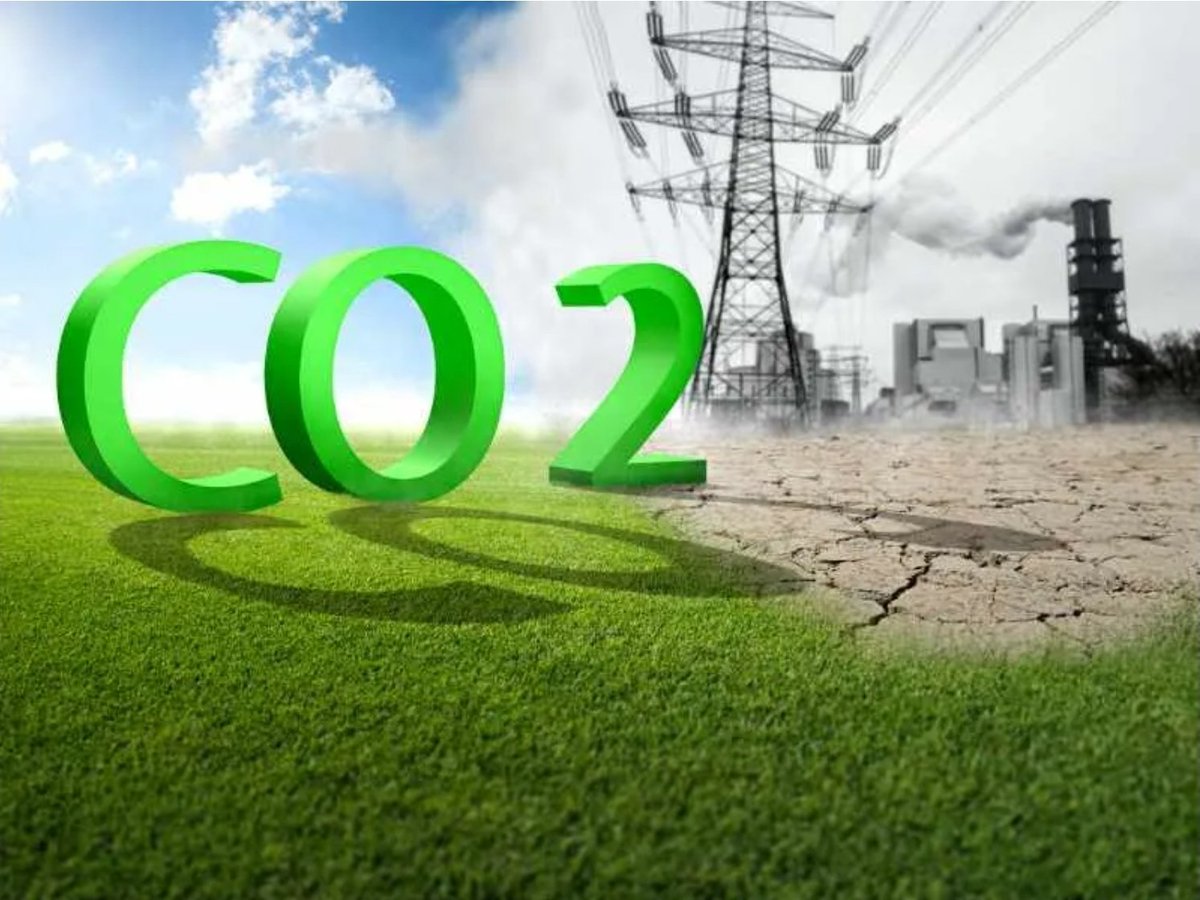
Turbine blade upgrades, intelligent sootblowing, air preheater improvements—these can shave 2–3% off the heat rate. They’re good engineering, but they don’t transform a 34%-efficient subcritical unit into a low-carbon asset. They nibble at CO₂, they don’t slash it.
💸 Post-combustion CCS on these plants is thermodynamic self-harm
A typical amine-based capture plant imposes a ~25% energy penalty on gross output. For an already-inefficient subcritical unit, net efficiency collapses to around 25–26%. You burn over 30% more coal to deliver the same net megawatt. More mining, more ash, more local pollutants, more water—just to capture a portion of the CO₂.
💧 The water burden makes it unspeakable for South Africa
Wet-scrubbing CCS roughly doubles a coal plant’s water consumption. Medupi already strains the Mokolo Dam; adding CCS would demand over 2-3 ℓ/kWh in a water-scarce interior. It’s environmental injustice dressed as climate action.
💰 The cost defies any rational investment case
Eskom’s own figures point to hundreds of billions of rands just for conventional pollutant compliance. Adding deep CO₂ capture to units with 10–15 years of remaining design life, no nearby CO₂ storage, and poor maintenance histories is value destruction on a national scale. The levelised cost would make even new nuclear look cheap.
🗣️ Why does this matter?
Because “HELE retrofit” and “CCS-ready” are being used to justify keeping coal plants online far past their rational retirement. It’s a political comfort blanket that delays the inevitable and diverts capital from the build-out of renewables, storage, and grid strengthening.
We need to say it clearly: the existing Eskom subcritical fleet has no credible high-tech pathway to deep decarbonisation. The sooner we accept that, the sooner we can stop pretending and start building the actual low-carbon system the country needs.
#EnergyTransition #Eskom #Decarbonisation #Coal #CCS #SouthAfrica #ClimatePolicy #EngineeringReality
Engineer Matshela Koko
6
11
18
2,145

May 14
80% of racking failures stem from ignoring load physics & welding quality in heavy storage. Custom steel gauge & certs > generic racks for safety & uptime. ⚙️
gnfei.com #IndustrialStorage #EngineeringReality
1

Myth: Engineering = drawings
Reality: Its execution
Design is just the start. Real value is in turning ideas into working systems.
We go beyond design. We deliver solutions.
📧 info@aegi.ca
🌐 aegi.ca
#EngineeringReality #EngineeringSolutions #SmartEngineering

2

Don't like the world you're in? Then create a new one.buff.ly/tdA6kOB #CEO #LifeBalance #EngineeringReality #TheEnergyYouProject #CreationCycle #HighPerformanceLeadership

5

Don't like the world you're in? Then create a new one.buff.ly/tdA6kOB #CEO #LifeBalance #EngineeringReality #TheEnergyYouProject #CreationCycle #HighPerformanceLeadership

1

The "11-Hour Offline AI" Myth: A Reality Check on Physics ⚡
The viral story of running Llama 70B for 11 hours on a MacBook during a flight (@引用元) is a beautiful narrative—but it defies the laws of hardware.
The Reality:
Power Paradox: Running 70B inference at high load for 11 hours on battery/power banks is physically impossible with current MBP energy density.
Speed Illusion: 71 tokens/sec for a 70B model on a MacBook? That’s H100-level territory. Realistic local performance is 5x-7x slower.
Conceptually great, but technically flawed. In 2026, don't let a "romantic" AI story cloud your engineering judgment. Real sovereignty requires understanding your hardware's true ceiling.
Follow for the front line of Global Intelligence. 🇯🇵🇺🇸
#LocalLLM #EngineeringReality

Este desarrollador chino ejecutó Llama 70B localmente en un MacBook en un avión y, durante 11 horas completas sin internet, gestionó proyectos de clientes.
Estaba sentado junto a la ventana en un vuelo transatlántico con un MacBook Pro M4 con 64 GB de memoria. El WiFi a bordo costaba $25 por el vuelo. Lo rechazó.
Sin API en la nube, sin conexión a los servidores de Anthropic o OpenAI, sin internet en absoluto.
Solo un Llama 3.3 70B local en bf16 y su propio script de orquestador.
El modelo se ejecuta a través de llama.cpp. Velocidad de generación, 71 tokens por segundo. Contexto alrededor de 60.000 tokens. Uso de memoria, 48,6 GiB de 64. Batería al despegue, 3 horas 21 minutos.
Y le dio al orquestador esta instrucción de sistema antes del despegue:
"Eres un orquestador offline que se ejecuta en un solo MacBook. No hay red. Los únicos recursos que tienes son archivos locales en /Users/dev/work, el servidor de inferencia Llama 70B en localhost:8080 y un presupuesto de batería de 3 horas 21 minutos. Procesa la cola en /Users/dev/work/queue.jsonl (una tarea de cliente por línea). Para cada tarea: borrador → ejecutar evaluaciones locales → guardar artefacto en /Users/dev/work/done/. Guarda puntos de control de contexto cada 12 tareas para que puedas reanudar después de un cambio de batería. Detente solo con la cola vacía o cuando la batería baje del 5 %."
Así que el sistema sabe exactamente en qué recursos se está ejecutando.
Sabe que no tiene conexión con el mundo exterior durante las próximas 11 horas. Sabe que tiene memoria finita y una batería finita. Sabe que el humano no intervendrá hasta que el avión aterrice.
El sistema se ejecuta en 1 bucle. Toma una tarea de la cola, la ejecuta a través de inferencia, guarda el artefacto, escribe un punto de control. Tarea tras tarea, así de simple.
Y solo cuando la batería baja del 5 %, el orquestador hace una pausa automáticamente, espera a que el portátil cambie al banco de energía de respaldo y continúa desde el último punto de control.
Aquí está lo que el sistema realmente escribe en su registro durante el vuelo:
"guardado punto de control de contexto 8 de 12 (pos_min = 488, pos_max = 50118, size = 62.813 MiB)"
"restaurado punto de control de contexto (pos_min = 488, pos_max = 50118)"
"progreso de procesamiento de prompt: n_tokens = 50 / 60 818"
"tarea 37016 completada | tps = 71 s tokens text → /Users/dev/work/done/proposal_westside.md"
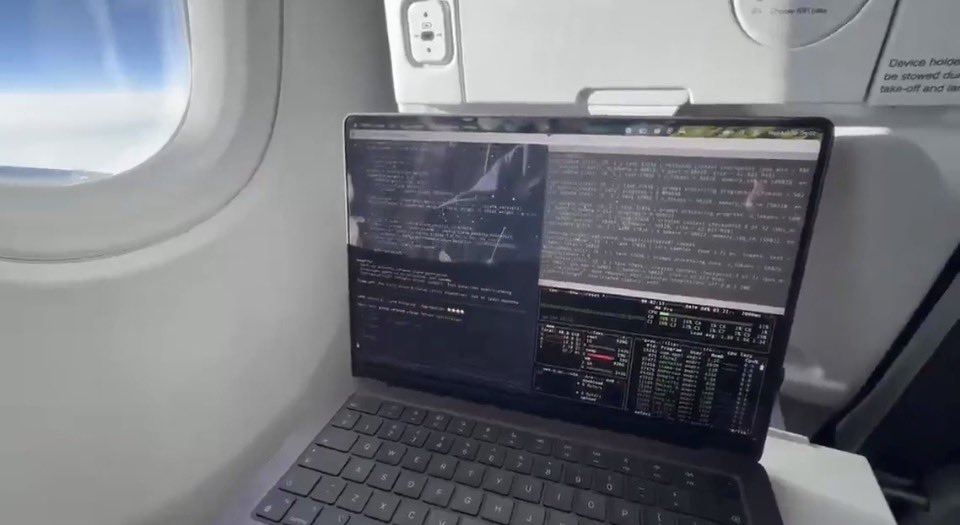
Fuera de la ventana, nubes, cielo azul y sin WiFi. En la bandeja, 1 MacBook, una terminal abierta en 2 pantallas y un servidor de inferencia en localhost.
Por lo que he observado, este es el flujo de trabajo de IA offline más limpio que he visto en el último año: 11 horas de vuelo, $0 por WiFi y toda la cola de clientes cerrada antes del aterrizaje.
58
The "11-Hour Offline AI" Myth: A Reality Check on Physics ⚡
The viral story of running Llama 70B for 11 hours on a MacBook during a flight (@引用元) is a beautiful narrative—but it defies the laws of hardware.
The Reality:
Power Paradox: Running 70B inference at high load for 11 hours on battery/power banks is physically impossible with current MBP energy density.
Speed Illusion: 71 tokens/sec for a 70B model on a MacBook? That’s H100-level territory. Realistic local performance is 5x-7x slower.
Conceptually great, but technically flawed. In 2026, don't let a "romantic" AI story cloud your engineering judgment. Real sovereignty requires understanding your hardware's true ceiling.
Follow for the front line of Global Intelligence. 🇯🇵🇺🇸
#LocalLLM #EngineeringReality
3
29

DESIGN. BUILD. INSPIRE.
Two decades of legacy,
Trust is the result of twenty years of precision & accuracy . . .
lnkd.in/dV7265zT
#DesignWorkshop #Mahuva #CivilEngineering #GujaratRealEstate #ConstructionExpert #Consultant #BuildingIntegrity #EngineeringReality #Gujarat
1
35

Apr 23
If I had to restart:
→ Start in Douala
→ Build EPC connections
→ Expand later
Simple.
#Cameroon #Construction #SteelStructure #AfricaBusiness #EngineeringReality #BJMBSteel
16
Apr 22
Everything else comes after.
#Cameroon #Construction #SteelStructure #AfricaBusiness #EngineeringReality #BJMBSteel
13

𝗠𝘆𝘁𝗵: Construction speed is the datacenter / AI factory bottleneck.
𝗥𝗲𝗮𝗹𝗶𝘁𝘆: Nine out of ten large infrastructure projects slip. The delays are rarely about construction. They are about what happens after construction finishes.
Our analysis this week revealed the invisible bottleneck. The industry measures construction cost per watt. It measures power usage effectiveness. It measures uptime percentage. It does not measure time from construction completion to first operational workload.
That unmeasured gap is where facilities sit built but not earning.
The causes are not theoretical. Owner operators spend 2 to 4% of total project cost correcting missing documentation after handover. On a £100m ($127m, €120m) facility, that is £2m to £4m ($2.5m to $5m, €2.4m to €4.8m) in remediation alone. This work happens in the shadow between commissioning and operations readiness.
The fix is not new technology. It is progressive handover. The tools exist. They are deployed. They are not standard practice.
@turnertownsend tracks 52 construction markets across six continents. Not one of those markets publishes a built-to-operational time metric. Hyperscalers race to secure grid connections five years out. Then they hand a completed facility to operations teams with boxes of PDFs.
Operators in Singapore post-moratorium cannot afford this. The UAE racing its AI campus cannot afford this. UK developers facing eight to ten year grid waits definitely cannot afford this.
What metric does your organisation use to measure time from construction completion to operational capacity?
Full analysis: vistergy.com/p/50-faster-to-…
#DataCenters #AIInfrastructure #DigitalHandover #ConstructionTech #EngineeringReality
@turnertownsend @BentleySystems @JLL @AgileHandover @HS2ltd @Microsoft

28

Engineering doesn’t break you.
It reveals who you truly are when no one is watching, and the deadlines are screaming.
What’s your engineering revealing about you right now?
Let’s hear it in the comments
#engineeringlife #deadlines #studentstruggles #engineeringreality
1
15

Bom dia! Hoje o dia vai ser longo no circuito de conferências de Computação Quântica. Preparem o café e o filtro de ruído, porque o que tem de "chupa-ovo" e buzzword de marketing tentando se passar por ciência não tá escrito.
Enquanto o hype fala de milagres, a gente foca no que realmente importa: Fault-tolerance, PQC e Formal Methods. Menos "vibes" e mais matemática, por favor.
#QuantumComputing #PQC #TechConferences #FormalMethods #EngineeringReality #QuantumThreat #CyberSecurity #Stigning #GoodMorning
2
1
4
67
𝗠𝘆𝘁𝗵: Nuclear is too expensive for private capital to finance.
𝗥𝗲𝗮𝗹𝗶𝘁𝘆: Nuclear has been financed at least four times in the past 18 months. Banks led none of them.
Our analysis this week examined who actually writes the cheques.
Abu Dhabi financed Barakah with 99% sovereign capital. £19bn ($24.4bn, €23.3bn). Commercial banks provided 1%. France structured a 60% state loan for six EPR2 reactors. The UK used a consumer levy. The US relied on corporate PPAs.
The @IEA identifies the real problem: nuclear's cost of capital runs two to three times higher than renewables. Not because the technology fails. Because the pricing model fails. Banks model nuclear as a commodity asset competing with gas on wholesale electricity prices.
But @Microsoft did not restart Three Mile Island for cheap power. It committed for infrastructure certainty. @awscloud did not back 1.92 GW at Susquehanna for arbitrage. It backed guaranteed Layer 1 availability.
The myth persists because credit committees lack a model for "strategic infrastructure secured against AI demand." They have models for merchant risk. These are different products.
@ENEC_UAE proved sovereign capital works. @EDFofficiel proved state de-risking works. @sizewellc proved consumer levy works. @ConstellationEG proved corporate PPAs work. 5.6 GW operational in Abu Dhabi. Zero refinancing risk. Zero market exposure.
Four models. Four results. Zero bank leadership.
What financing model does your organisation's credit committee actually price nuclear against?
Full analysis: vistergy.com/p/99-sovereign-…
#NuclearEnergy #AIInfrastructure #ProjectFinance #MythBusting #EngineeringReality @iamkepco
29
Why are we acting surprised? 🤭
Pictures make everything more fun… simple.
If it’s not visual, is it even catching attention?
#engineeringreality #engineeringconsulting #enamux
1
3
16

Mar 21
Self-replication requires a massive industrial ecosystem, not just a humanoid shell. Without a mobile foundry to process raw materials, this is pure science fiction. 🌌🚫🤖
#TechMyth #EngineeringReality #OptimusLimit
59

Beyond GPUs: Why Memory Is the Next Frontier in AI Infrastructure Efficiency @datacenter
#DataCenterKnowledge #TwitterDailyBlog #BigData #ExecutiveSearch #IndustryPerspectives #EngineeringReality
datacenterknowledge.com/data…
7