
Apr 11
"The Assistants’ Illusion — Fully in Their Hands"
👉 Manager Clotilde’s Notice:
This is the sixth image from the collection 🔒 The Assistants’ Illusion ⛓️, created at the request of one of our supporters.
The complete illusion is now available on our Patreon.
patreon.com/posts/assistants…
Fully in Their Hands
By now, the performance has left charm behind and entered form.
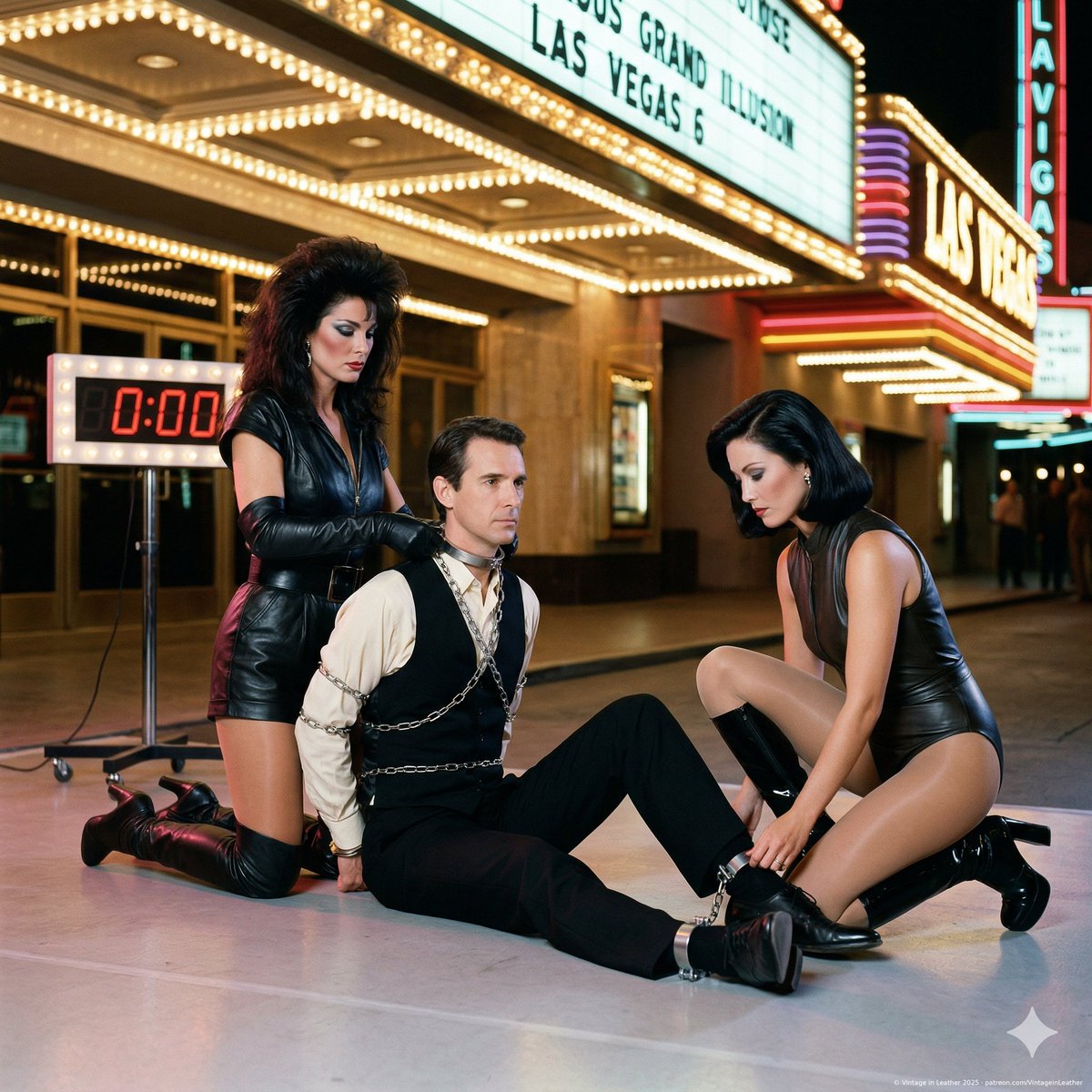
The gentleman no longer stands before the audience as the smiling center of a polished introduction. He is on the ground now, legs extended, the illusion having passed fully into the hands of the two women who shape it with patient, practiced precision. One kneels behind him, fitting the final steel collar into place at his neck, while the other works below, securing his ankles with the same calm focus that has governed every stage of the act. Nothing is hurried. Nothing is careless. That is what gives the moment its power.
Because this is no longer about display alone.
The handcuffs, the chains, the collar, the shackles, each has become part of a larger composition, and the women arranging them are no longer simply assistants in the ordinary sense. They are the visible intelligence of the illusion, the disciplined hands that transform a well-dressed performer into the living centerpiece of suspense. He may still hold his composure, but the image now belongs unmistakably to them.
And to their work.
Project description:
The Assistants’ Illusion is a vintage-inspired visual series set in the bright spectacle of early-1980s Las Vegas, where a public escape performance unfolds beneath casino lights, neon signage, and the watchful attention of an evening crowd.
At the center of the act stands an elegant male performer who has chosen to place not his safety, but his reputation, discipline, and composure against the clock. Before the attempt begins, even the first restraint is offered to public scrutiny. A young female volunteer is invited from the audience to test the classic police handcuffs for herself, confirming that what will be used on stage is real, uncompromised, and entirely worthy of the challenge to follow.
From that point on, the performance belongs equally to time and to the women who shape it. Two assistants, both unforgettable in their own distinct way, carry the illusion forward with glamour, authority, and perfect professional control. One is theatrical, commanding, and impossible to overlook. The other is sleek, efficient, and precise. Together they fasten every chain, every cuff, every shackle with calm certainty, building the challenge not with cruelty, but with discipline and showmanship. Their role is not decorative. They are the visible intelligence of the act.
The gentleman’s task is clear: to free himself before the illuminated countdown reaches zero. There is no mortal threat hanging over him, no mechanical doom, no false melodrama. What is at stake is something more public and in its own way just as unforgiving: the success or failure of the performance itself, witnessed in full view, preserved by television cameras, and offered to the city as a test of nerve, timing, and self-mastery. In that sense, the real danger is not death, but defeat.
What follows is a grand illusion of steel, effort, glamour, and public tension. A body enclosed in chains. A clock beginning to move. The polished calm of the assistants beside the strain of the man on the ground. And above it all, the unmistakable atmosphere of Las Vegas in the 1980s, where even discipline could be turned into spectacle, and spectacle into memory.
Scenes:
The Assistants’ Illusion — Before the Countdown
Before the chains tighten and before the timer begins to glow, the illusion must first be introduced.
This opening image presents all three figures at the threshold of the performance: the elegant gentleman who will soon be bound for the act, and the two women who truly command its shape. One assistant remains close to him, guiding him into the light with composed assurance, while the other turns toward the audience with the practiced gesture of presentation, as if inviting them to witness not merely an escape, but a spectacle already fully under female control.
Nothing has yet been locked. Nothing has yet begun. And yet the tension is already there, suspended beneath the neon and casino light. The audience can sense that the smile, the poise, and the glamour belong only to the surface. Beneath them waits the machinery of the illusion: cuffs, chains, timing, and the precise hands that will set it all in motion.
The Assistants’ Illusion — Proof Before the Chains
Before the illusion can ask for suspense, it first asks for trust.
So the next gesture belongs not to the bound gentleman, nor yet to the countdown, but to the audience. A young volunteer is invited onto the stage so that the first instrument of the act may be examined in plain sight: a pair of classic police handcuffs, offered openly, without concealment, without substitution, and without theatrical evasion. The message is simple and deliberate. What will be used tonight is real.
That is what gives the moment its special charge. The volunteer arrives not in fear, but in bright curiosity, stepping briefly out of the crowd and into the glow of the performance. One assistant encourages her forward with practiced elegance, while the gentleman presents the handcuffs with calm formality, already becoming less a magician than the future captive of the act. Nothing has yet tightened around him, and yet the first boundary has been crossed. The audience is no longer merely watching. It has been drawn inside the rules of the illusion.
And because this is Las Vegas, even verification becomes spectacle.
The Assistants’ Illusion — Her Verdict in Steel
The audience has now been given what every great illusion requires before suspense can truly begin: proof.
The young volunteer stands before the crowd with the classic police handcuffs secured around her wrists, no longer merely curious, but convinced. What moments ago was offered for inspection is now demonstrated in the clearest possible way. Her expression says everything the performers need it to say. She has tested them. She has felt their firmness. And whatever charm the evening may still hold, these restraints are not part of it. They are real.
That small truth is enough to change the air.
The assistants respond with delighted applause, not mocking, but celebratory, as if the volunteer has just helped prepare the stage for something larger than herself. The gentleman does the same in his own way, inviting the audience to join in, turning her brief courage into part of the performance. For one shining moment, she is no longer just a spectator drawn from the crowd. She has become the witness the illusion needed.
And now that witness has spoken in steel.
The Assistants’ Illusion — The First Click
The volunteer has returned to the audience.
The proof is over.
Now the act begins in earnest.
The first handcuff has already closed behind the gentleman’s back, and with that final click the evening crosses from demonstration into commitment. One assistant is still close enough to the restraint to have just released it from her hand, her attention exact and professional, as if the smallest detail of metal against wrist were part of a ritual she has performed many times before. Opposite her, the second assistant waits with the long chains prepared, calm and efficient, ready to carry the illusion into its next stage.
And yet the gentleman still plays to the crowd.
There is the faint shrug, the easy posture, the amused expression that suggests this is all well within his powers, that handcuffs are only the opening gesture of a challenge he has no reason to fear. He offers the audience that familiar smile performers use when they want suspense to remain pleasurable, not alarming. For the moment, he still wears confidence like part of the costume.
That is what makes the image work so well.
The women are already inside the mechanics of the act.
He is still inside its charm.
The Assistants’ Illusion — The Weight of the Chains
The handcuffs were only the beginning.
Now the act moves into its true visual language: chain over cloth, metal over posture, structure imposed piece by piece by practiced female hands. One assistant works behind him, drawing the chain high across the chest and around the elbows, shaping the upper body into something more contained, less theatrical, more real. The other remains before him, focused on the next layer, guiding the chain around his waist with the calm precision of someone who has long understood that elegance and restraint are not opposites on a stage like this.
And the gentleman, for all his charm, begins to look slightly less untouchable now.
The smile may still be there in traces, but the performance has shifted. What the audience sees is no longer just showmanship, but process. Not yet defeat, not yet urgency, but the visible construction of difficulty. This is the moment when applause gives way to concentration, when illusion becomes mechanism, and when the women cease merely to present the act and begin to build it around him in steel.
The Assistants’ Illusion — Fully in Their Hands
By now, the performance has left charm behind and entered form.
The gentleman no longer stands before the audience as the smiling center of a polished introduction. He is on the ground now, legs extended, the illusion having passed fully into the hands of the two women who shape it with patient, practiced precision. One kneels behind him, fitting the final steel collar into place at his neck, while the other works below, securing his ankles with the same calm focus that has governed every stage of the act. Nothing is hurried. Nothing is careless. That is what gives the moment its power.
Because this is no longer about display alone.
The handcuffs, the chains, the collar, the shackles, each has become part of a larger composition, and the women arranging them are no longer simply assistants in the ordinary sense. They are the visible intelligence of the illusion, the disciplined hands that transform a well-dressed performer into the living centerpiece of suspense. He may still hold his composure, but the image now belongs unmistakably to them.
And to their work.
The Assistants’ Illusion — Five Minutes Begin
The work of the assistants is finished.
Now the burden of the illusion passes fully to him.
The gentleman lies restrained on the ground, enclosed in steel, chains, and time, while beside him the illuminated countdown is finally brought into place and awakened. Five minutes. No longer an abstract promise to the audience, but a visible measure now standing beside his body like a second performer in the act. Close enough that the crowd can feel its relevance, but not so close that it steals the scene from the man who must now justify every earlier gesture of confidence.
The women, by contrast, have entered a new stillness.
Their hands are free. Their task is done. One has just finished with the clock, the other turns lightly toward the audience, and both wear the composed smiles of professionals who know they have set the mechanism perfectly. There is no cruelty in it, and no need for emphasis. They have created the challenge. They have framed it in leather, neon, and steel. What happens now belongs to him.
And that is what gives the image its balance.
He is the one in chains.
They are the ones at ease.
The Assistants’ Illusion — Fifteen Seconds Gone
The timer has only just begun to move, yet the mood has already changed.
Fifteen seconds have been spent, and what seemed a poised challenge a moment ago is now fully a physical struggle. The gentleman is no longer upright in presentation, but down on the ground, working against the weight that has been fastened onto him with such elegant precision. His wrists remain secured behind his back in classic police handcuffs. Chains bind his upper body tightly across the chest and around the arms, drawing his posture inward even as he twists and strains to recover space inside them. A steel collar closes the line of restraint at his neck. At his ankles, matching steel shackles hold his legs to a shorter freedom than he would like. Nothing on him is decorative now. Every piece has purpose.
And that is what gives the image its urgency.
He still has time, yes. But already the audience can see the difference between confidence and effort. The body tells the truth first. He rolls, braces, pulls against the steel, testing every angle, every weakness, every small possibility of movement. Beside him the assistants do not interfere. Their work is finished, and they watch with the alert, composed attention of women who know they have built the challenge honestly. There is tension in their faces now, but not doubt. They want the act to succeed. They simply will not make it easier.
The timer reads 4:45.
And at last, the illusion begins to look like labor.
The Assistants’ Illusion — Fifteen Seconds to Spare
At last, the struggle has broken in his favor.
He is still on the ground, still breathing hard, still glistening with effort beneath the casino lights, but the steel no longer owns him. The chains lie open around his body, the cuffs and shackles cast aside in scattered metal curves, their authority broken not by luck, but by persistence. He leans back on his hands in exhausted relief, no longer restrained, no longer performing confidence, because now he has something better than confidence to wear: proof.
And the clock, mercifully, has not yet reached zero.
Fifteen seconds remain. Just enough to make the victory feel clean, but not easy. That is what gives the image its satisfaction. He has not escaped untouched. The effort is visible in the sweat, in the heaviness of his posture, in the kind of smile that comes only after strain has truly passed. It is not the smile of a man who never doubted himself. It is the smile of a man who has earned the right to breathe again.
Beside him, the assistants applaud with open delight.
Their work had to be exact. His had to be enough. And now, for one brief shining moment beneath the neon, all three share the same conclusion: the illusion has succeeded.
The Assistants’ Illusion — Victory Under the Neon
The chains are gone.
The struggle is over.
Now the illusion belongs to applause.
The gentleman stands between the two women who framed every stage of the act, no longer as its captive centerpiece, but as its successful survivor. His shirt and vest are still absent, the effort of the escape written openly across his body, and perhaps that is exactly right. Nothing in this final image hides what the audience has just witnessed. The victory has not been polished into neatness. It still carries the honest traces of labor.
And on either side of him stand the women who made the challenge possible.
Each takes one of his hands and raises it high, not as servants celebrating a master, but as professionals completing a performance with the perfect final gesture. They smile, he smiles, and together they receive the invisible roar of the crowd. For one brief moment, the whole act resolves into something larger than restraint, larger than tension, larger even than escape. It becomes what the best illusions always hope to become in the end:
a shared triumph, staged in glamour and remembered in light.
#VintageInLeather #EscapeMagic #MaleBondage
4
8
94
4,161
"Water Torture Cell — The Final Securing"
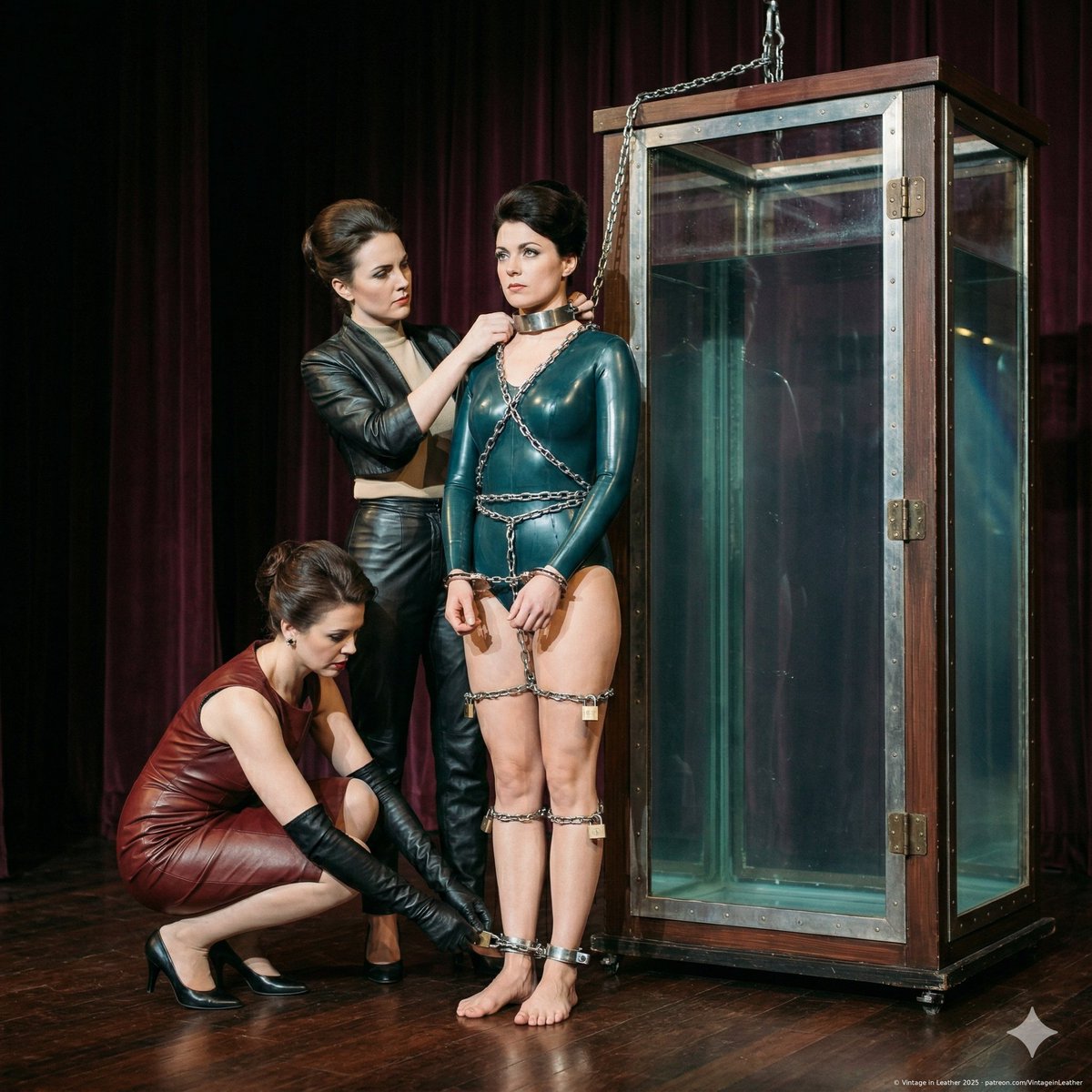
The ceremony is over. What began as presentation has now become preparation, and the escape artist stands only steps away from the tank that will soon swallow her whole. The polite smiles have vanished. In their place comes concentration, discipline, and the sober precision of professionals who know that every lock, every chain, every gesture must be exact.
Her body is now bound in a carefully ordered web of metal. Chains wrap her torso in a symmetrical pattern, secure her wrists to her waist, and immobilize her legs at the ankles, below the knees, and above them, each section closed with small practical padlocks. One assistant checks the collar at her neck with cool focus, while the other kneels at her feet to fasten the final lock. The great water cell rises just beside them, no longer a distant promise in the background, but an immediate presence. The atmosphere has changed. This is no longer introduction. This is commitment.
👉 Clotilde’s Notice —
This image is part of the upcoming collection The Great Escape — Enchantresses of Illusion • 1960s. The project explores the world of 1960s escape magic through beautiful female escape artists and their elegant assistants, staged in cinematic vintage tableaux of suspense, glamour, discipline, and illusion. Some scenes draw inspiration from the great historical stage escapes everyone knows, while others venture into imagined acts and fantasy illusions created in the same retro spirit.
Our first featured illusion will be the legendary Water Torture Cell, presented here on X as a complete multi-image sequence, unfolding stage by stage. Additional premium content from this project will be available on our Patreon after the full collection is completed.
patreon.com/VintageinLeather
#TheGreatEscape #EnchantressesOfIllusion #EscapeArtist #EscapeMagic #VintageMagic #1960sStyle #StageIllusion #WaterTortureCell #RetroAesthetic #VintagePhotography #WomenInLeather #ViL #Handcuffs
4
13
160
10,631
Mar 31
"Water Torture Cell — The Presentation Before the Plunge"
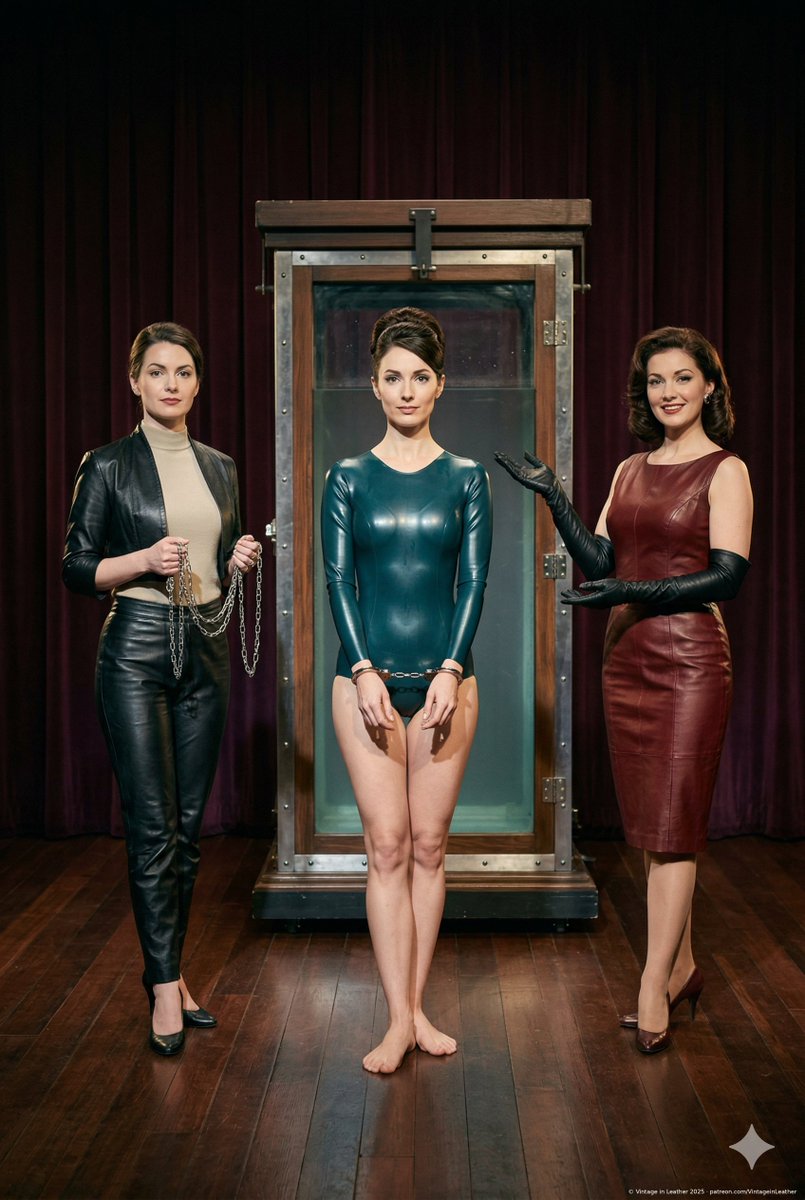
Under the warm stage lights of a 1960s variety theatre, the escape star is introduced to the audience just moments before her most feared feat begins. She stands calmly between her two assistants, wrists already secured in classic police handcuffs, her expression poised and almost serene. One assistant holds the waiting chains with practiced precision, while the other presents the artist with an elegant theatrical gesture, as if inviting the audience to admire not only her beauty, but her courage.
Behind them, the water torture cell already waits in silence. Its towering glass-fronted form is visible on the stage like a promise of danger still wrapped in ceremony. At this moment, the tension has not yet reached its peak. There is still grace, still ritual, still the polished smile of performance. But the audience can already sense that within minutes, elegance will give way to suspense, and the theatre will be holding its breath.
👉 Clotilde’s Notice —
This image is part of the upcoming collection The Great Escape — Enchantresses of Illusion • 1960s. The project explores the world of 1960s escape magic through beautiful female escape artists and their elegant assistants, staged in cinematic vintage tableaux of suspense, glamour, discipline, and illusion. Some scenes draw inspiration from the great historical stage escapes everyone knows, while others venture into imagined acts and fantasy illusions created in the same retro spirit.
Our first featured illusion will be the legendary Water Torture Cell, presented here on X as a complete multi-image sequence, unfolding stage by stage. Additional premium content from this project will be available on our Patreon after the full collection is completed.
patreon.com/VintageinLeather
#TheGreatEscape #EnchantressesOfIllusion #EscapeArtist #EscapeMagic #VintageMagic #1960sStyle #StageIllusion #WaterTortureCell #RetroAesthetic #VintagePhotography #WomenInLeather #ViL #Handcuffs
4
9
117
9,834
15 Nov 2025
Escape Magic Performance, 1970s
"The Vault Escape Challenge"
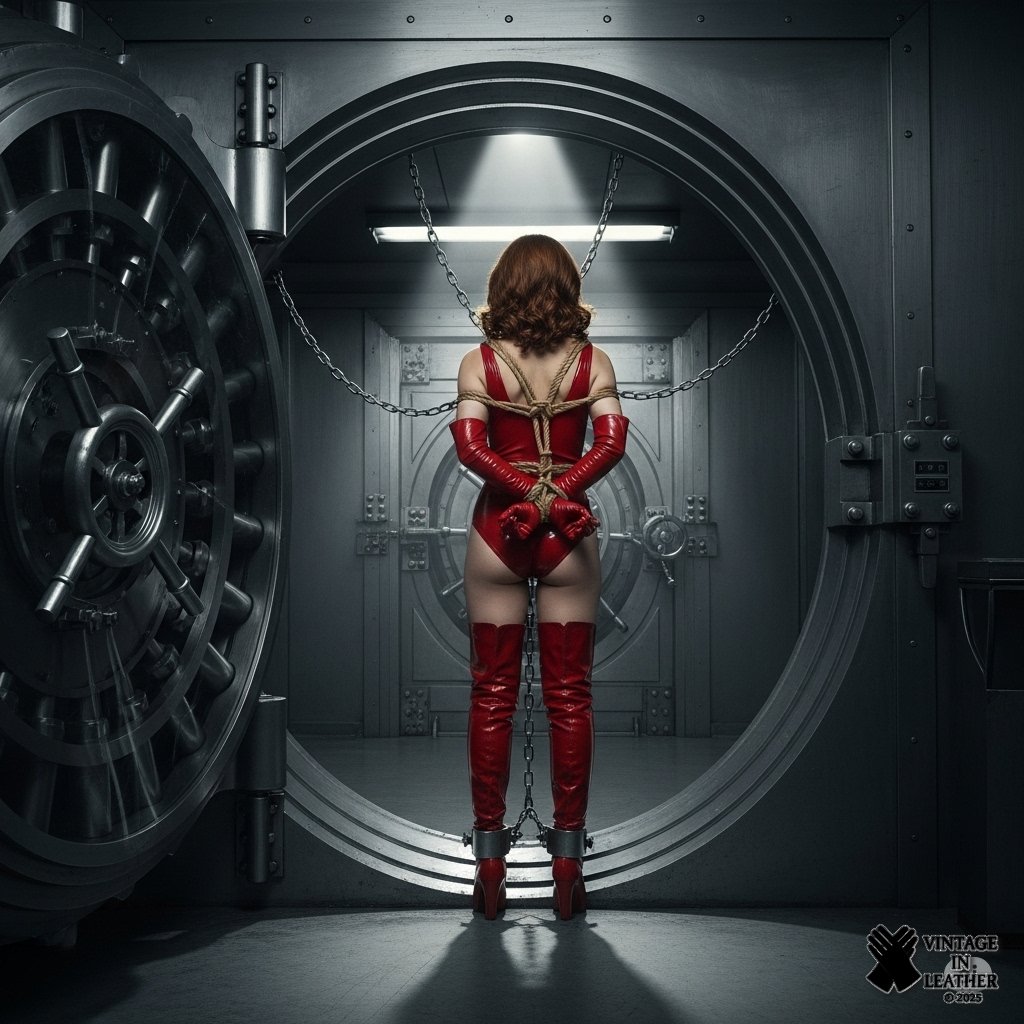
The vault door is only beginning to open — and she already knows she’ll soon step into its steel silence.
Her hands bound, her ankles locked, her body secured by rope and chain.
Every movement restricted.
Every possibility of escape seemingly erased.
And that is precisely the beauty of her craft.
She has only moments before the time-lock mechanism activates, sealing the vault for long, unforgiving hours.
Once it shuts, it cannot be opened — not even from the outside.
Yet she does not hesitate.
She does not turn back.
For the women in this series have proven again and again that the impossible is merely the prologue.
And those of us who admire their courage know one truth:
every escape is a story — and every story begins with the bravery to step inside.
👉 Clotilde’s Notice:
From the series “Female Escape Artists – Vintage Divas”.
#VintageInLeather #VaultEscape #EscapeMagic #FemaleEscapeArtists #RetroIllusion #1970sMagic #CinematicStage #Escapology #ImpossibleChallenge #MagicPerformance #DaringWomen
3
13
75
2,861
30 Aug 2025
Escape Magic Performance, 1980s
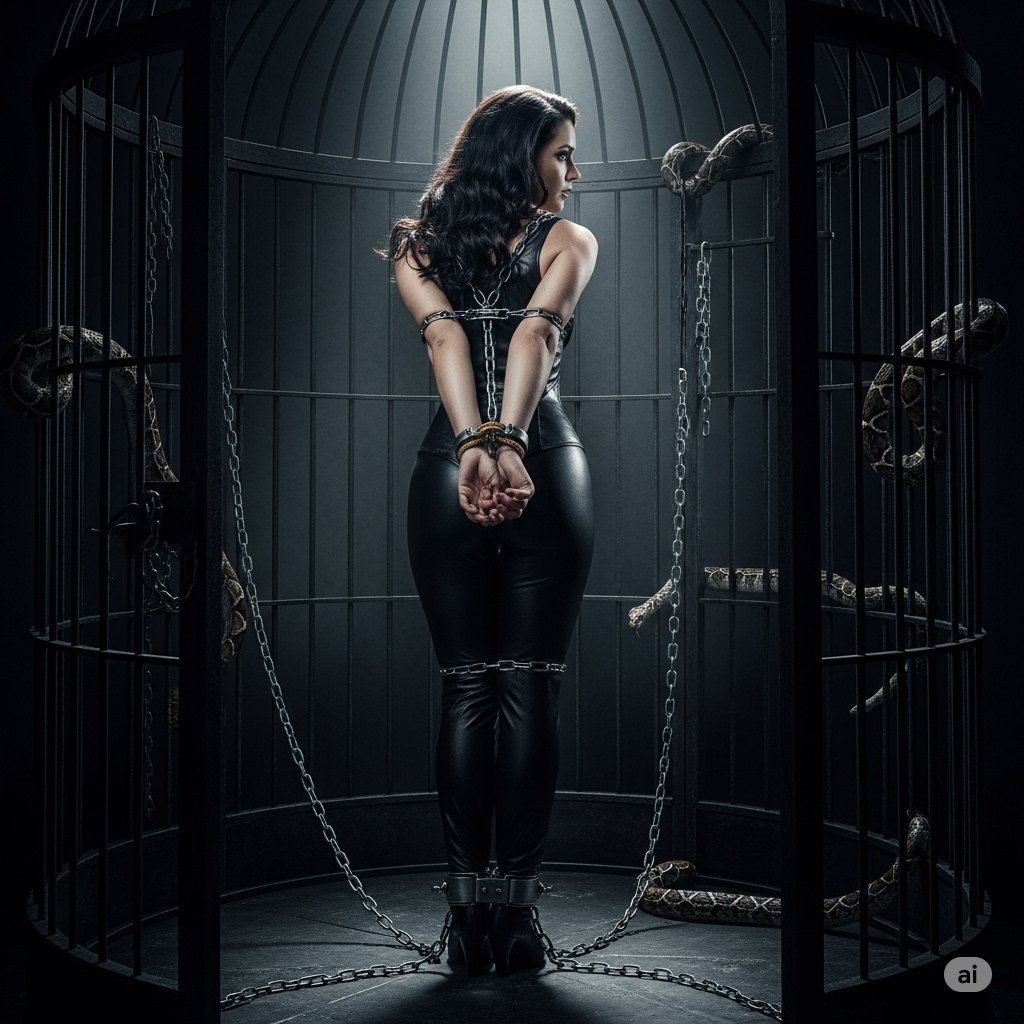
“Escape from the Serpent Cage”
Although I am well-trained in the art of escapes, this my a new performance of escape magic is by far my greatest challenge.
My restraints were fastened with utmost care, every shackle and chain perfectly secured.
Venomous snakes creep closer… and I have only moments to break free.
From the upcoming series “Female Escape Artists – Vintage Divas”.
#VintageDivas #EscapeMagic #FemaleEscapeArtists #90sShowtime #ChainsAndSnakes #IllusionAndCourage #VintageInLeather #Chained
2
7
57
2,473

8 Jul 2025
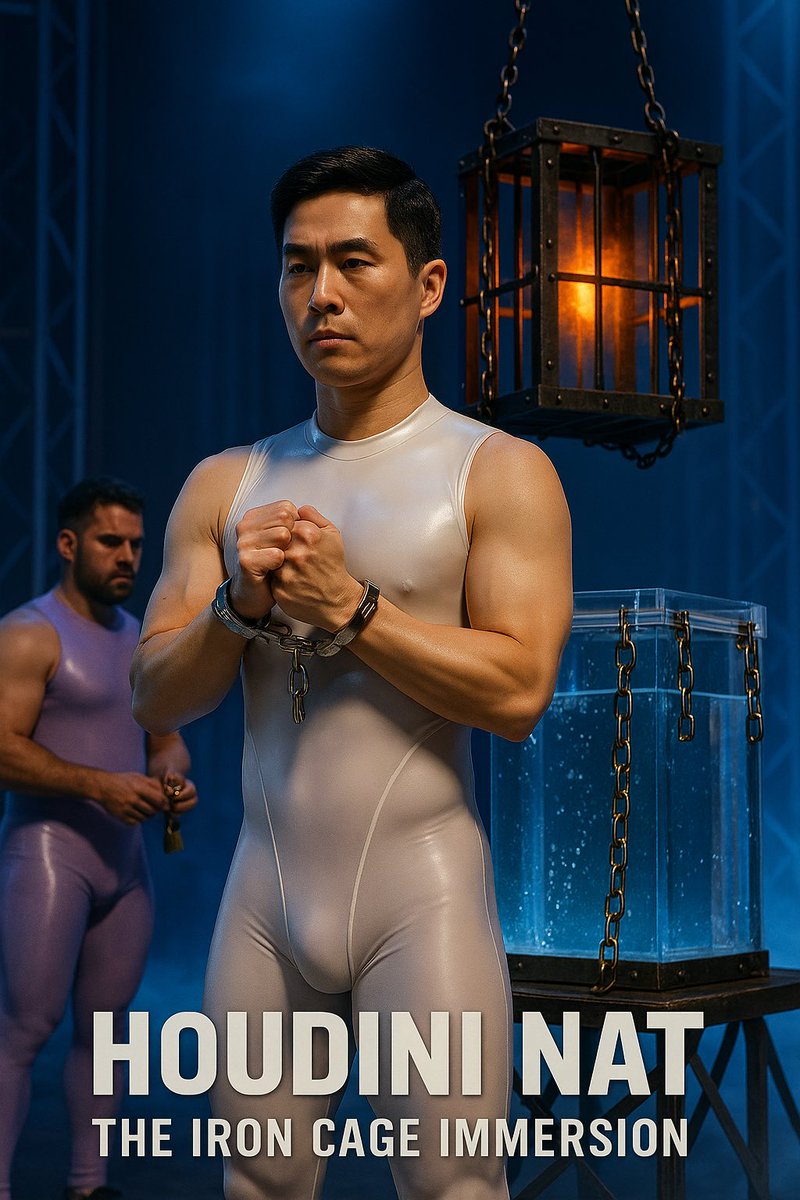
🔗 Bound. Caged. Submerged.
Houdini Nat faces the ultimate triple-layer escape:
🔒 Shackled tight
🦾 Locked in a steel cage
🌊 Lowered into a sealed water tank
No keys. No mercy. Only seconds to survive.
#HoudiniNat #IronCageImmersion #EscapeMagic #LiveShow #SpandexChallenge



3
369


6 May 2025
servais x efron ship names:
- Servfron
-Efrvais
-escapeartists
-escapemagic
1
2
32
929

24 Mar 2019
3

19 Sep 2018
They lift their arms as if embracing the entire night sky, blue flames swirl down their skin in a cascade of transparent whispers—then they vanish, usually in a flare of magnesium silver light.
#FaeCulture #EscapeMagic #FlickerMages #WarpWizards
2
6