
4 Jan 2025
Meta-EA: A Gene-Specific Combination of Available Computational Tools for Predicting Missense Variant Effects @NatureComms
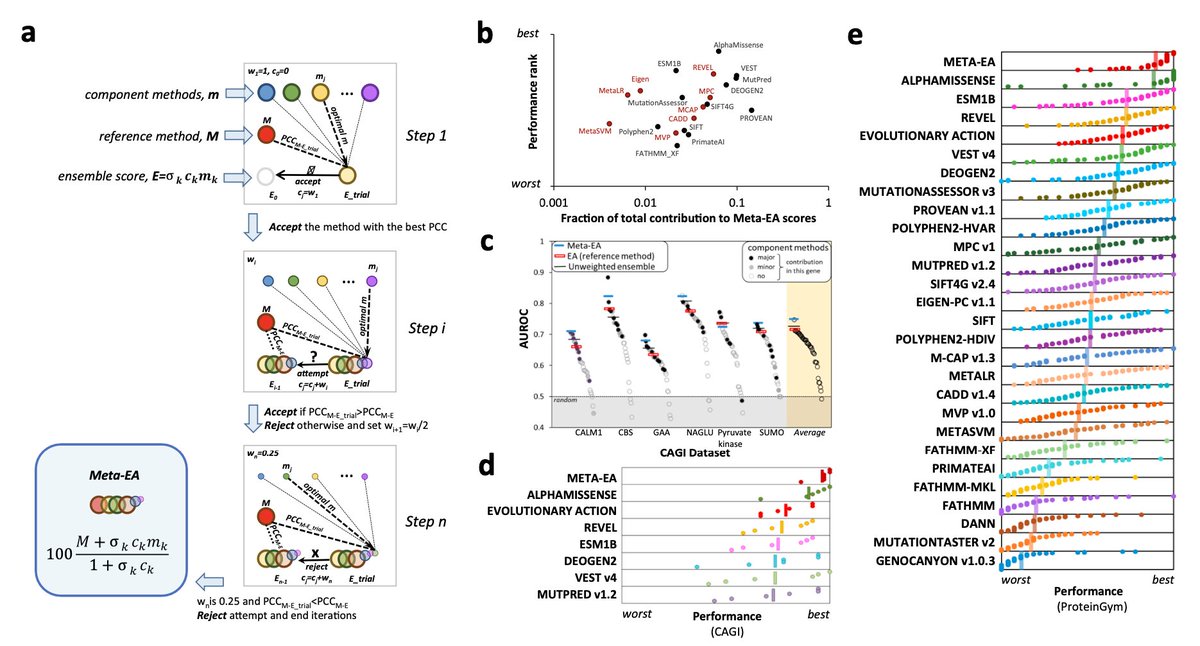
1. Meta-EA introduces a novel gene-specific ensemble framework to predict missense variant effects. It optimally combines over 20 standalone methods, ensuring high accuracy without relying on clinical or experimental annotations.
2. Leveraging Evolutionary Action as a reference, Meta-EA generates predictions based purely on evolutionary information, overcoming biases introduced by traditional machine learning-based ensemble approaches.
3. The framework achieves an AUROC of 0.97 in both gene-balanced and imbalanced clinical assessments, surpassing individual methods like SIFT, PolyPhen-2, and AlphaMissense in consistent performance.
4. Meta-EA integrates splicing effect predictions and human allele frequency data, enhancing the clinical applicability of predictions with its clinical version, Meta-EAclinical, which achieves an AUROC of 0.973.
5. Unlike existing ensemble tools, Meta-EA's iterative linear regression process ensures independence from overrepresented genes and biases, making it particularly robust in diverse datasets.
6. The study demonstrates Meta-EA's adaptability across genes and functional assays, outperforming over 30 alternative methods in experimental benchmarks like CAGI and ProteinGym datasets.
7. Meta-EAclinical offers superior predictions for pathogenicity by accounting for splicing impacts and allele frequency distributions, providing actionable insights for clinicians and researchers.
8. By addressing limitations like gene-specific bias, overtraining, and lack of clinical annotations, Meta-EA sets a new standard for variant impact predictions, paving the way for improved genome interpretation.
💻Code: meta-ea.lichtargelab.org
📜Paper: nature.com/articles/s41467-0…
#GenomeInterpretation #Bioinformatics #MissenseVariants #EvolutionaryAnalysis #ClinicalGenomics
4
1,033

20 Mar 2024
#NewNProt for #MCScanX: a toolkit to compare multiple genomes for the #evolutionaryanalysis of #synteny and #colinearity bit.ly/3Vr2c70
1
4
1,410

31 May 2023
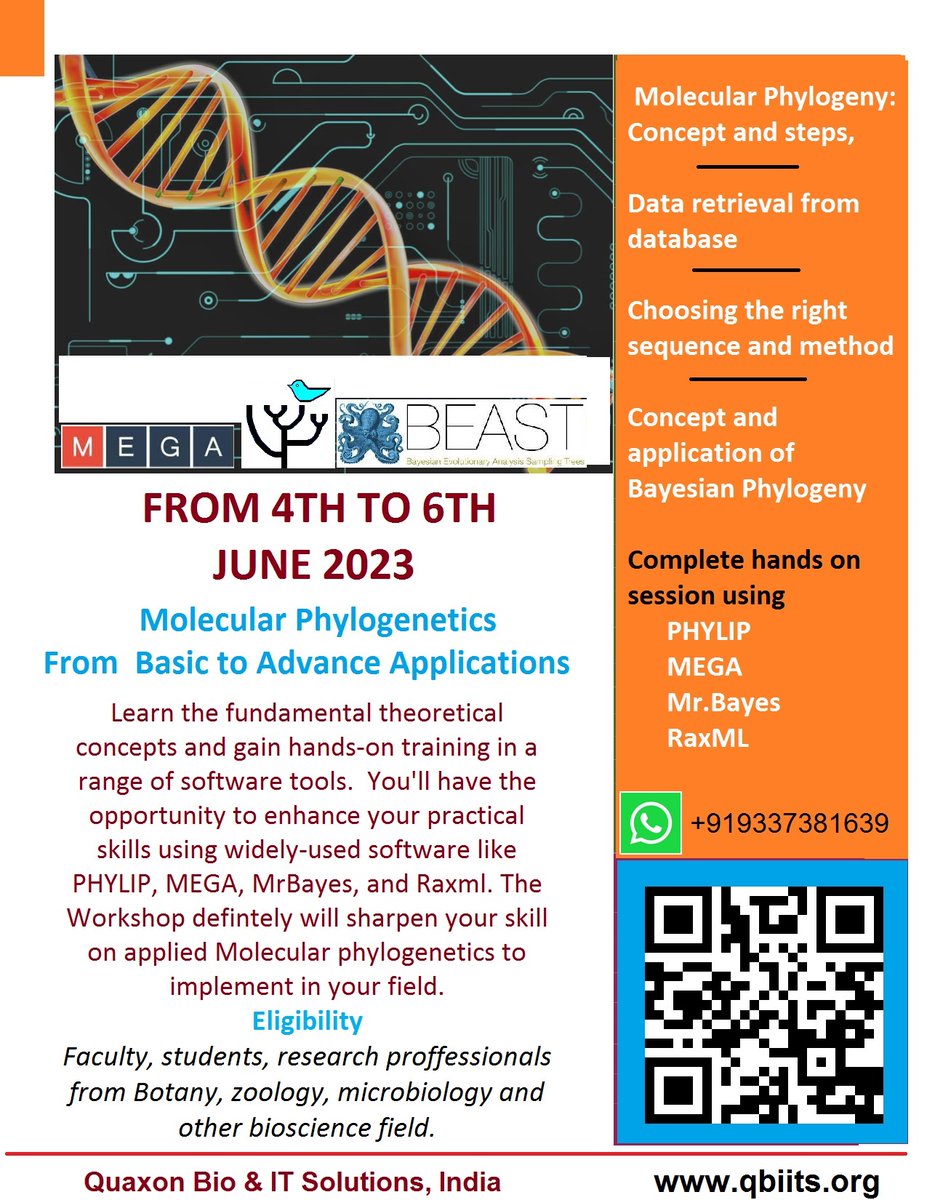
3 day hands-on-workshop on Advance Molecular Phylogenetics. For researchers, faculties, students from Zoology, Botany, Microbiology and other bioscience discipline #Workshop #EvolutionaryAnalysis #UnleashYourCuriosity #bioinformatics #computationalbiology
2
4
270

17 May 2023
Patterns of ontogenetic evolution across extant marsupials reflect different allometric pathways to ecomorphological diversity
doi.org/10.1038/s41467-023-3…
#MarsupialDiversity #OntogeneticAllometry #EvolutionaryAnalysis #MorphologicalDiversity #PhylogeneticPatterns
1
4
85

20 Dec 2022
Insight into #PopulationStructure and #EvolutionaryAnalysis of the Emerging Tomato Brown Rugose Fruit Virus 🍅🌶️ @MDPIOpenAccess @Plants_MDPI @acelik032 @HPTUGM doi.org/10.3390/plants112332…
1
2
385

16 Sep 2022
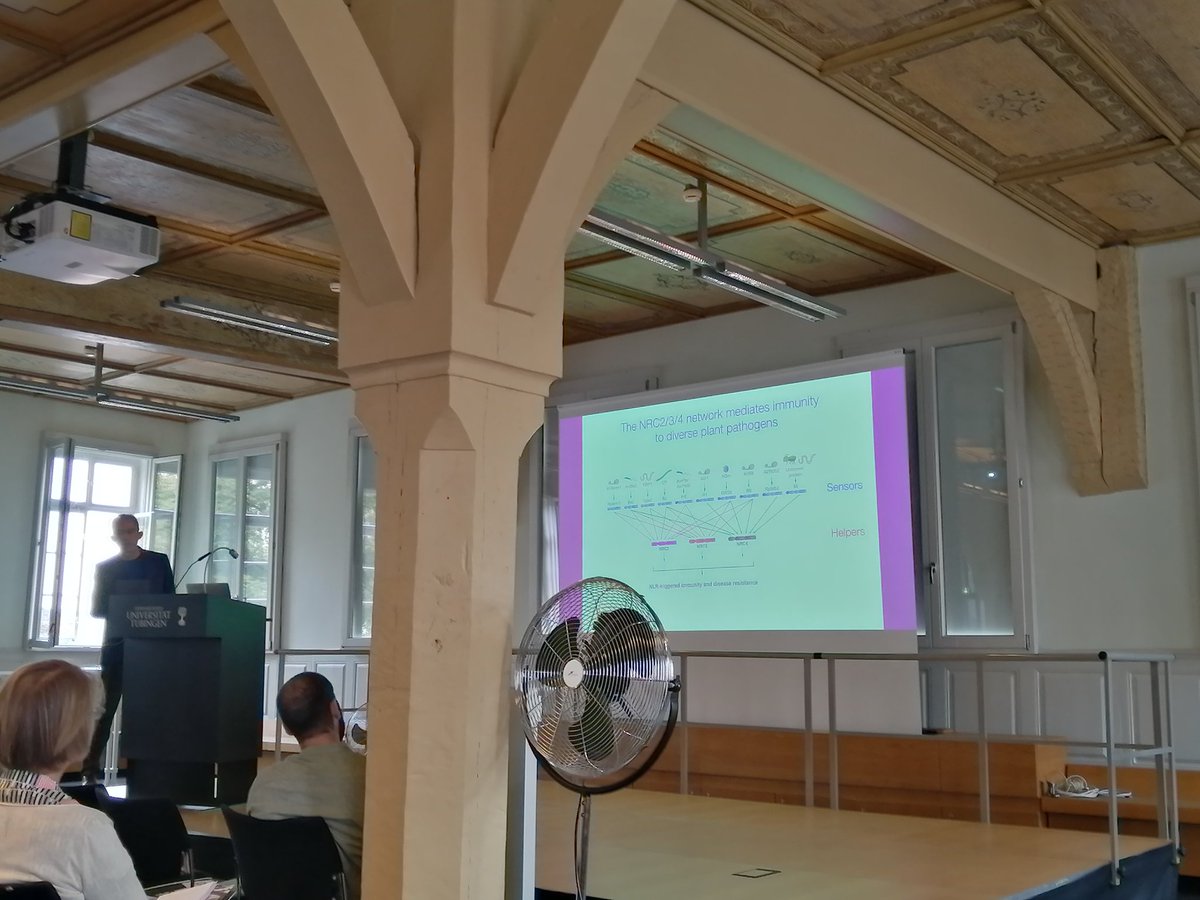
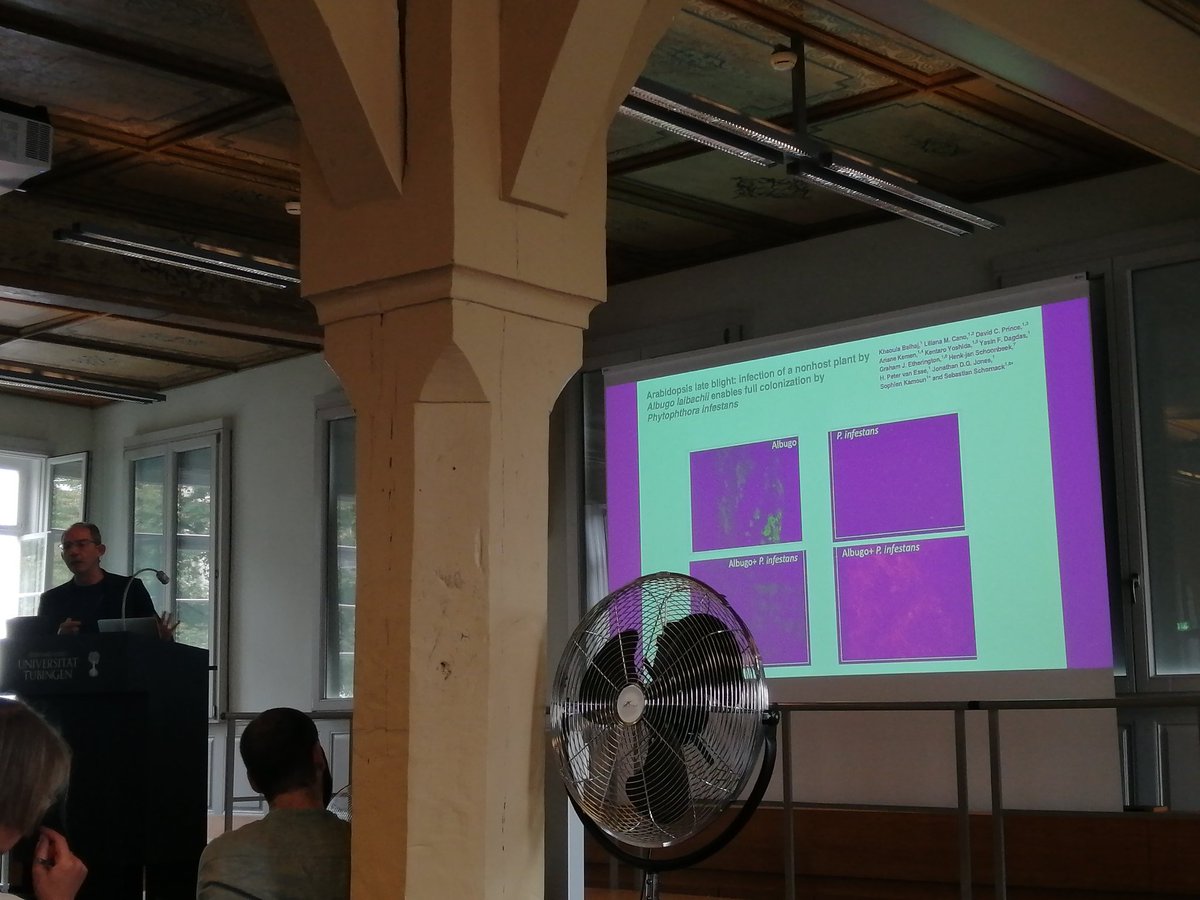
#Weigelfest Interesting talk by Sophien Kamoun @KamounLab about how to trick a #plantpathogen #Albugo #Phytophthora #Evolutionaryanalysis #redundancy in NRCs networks.
1
1
6

5 Jun 2022
Genome assembly and evolutionary analysis of the mandarin duck Aix galericulata reveal strong genome conservation among ducks. #MandarinDuckGenome #GenomeAssembly #EvolutionaryAnalysis academic.oup.com/gbe/advance… @GenomeBiolEvol
2
1

14 Aug 2018
Happy to share with you our very last #openaccess publication
BALCONY: an R package for MSA and functional compartments of protein variability analysis bmcbioinformatics.biomedcent… #bmcbioinformatics
Download #Rpackage here: cran.r-project.org/web/packa…
#evolutionaryanalysis #compchem
2
2