Next Up Entertainment retweeted

College Coaches…. If you want great football players in your program who exemplify what it means to be tough, physical, accountable, and smart look no further than @MohiganFootball
There’s a reason for their success!!
Our 2027 and 2028 classes are loaded with Dudes!!
3
9
317

A father's dad's impact reaches well beyond routine interactions; his language and behaviors are pivotal in molding a child's emotional, intellectual, and interpersonal growth.
Evidence reveals that encouraging and caring fathers cultivate durability, self-assurance, and effective emotional management, whereas critical or inattentive approaches can result in persistent mental harm.
Psychologists note that youngsters absorb parental responses from early on.
Constructive affirmation, motivation, and focused mentorship promote stable bonds, robust self-regard, and versatile handling techniques.
Conversely, disapproval, variability, or emotional detachment may heighten stress, melancholy, and conduct difficulties.
A father's attendance, demeanor, and reliability deliver crucial indicators for comprehending limits, reliability, and community standards.
Modest regular engagements-like attention listening providing commendaton, or exhibiting understanding can profoundly affect a youngster's advancement.
On the flip side, persistent unfavorable remarks or detrimental actions could erode assurance and influence enduring partnerships. Investigations highlight that deliberate, conscious rearing bolsters the family connection, arming kids with resources to manage life's hurdles proficiently.
Dads who participate dynamically, convey optimistically, and exemplify beneficial habits not only bolster educational and communal accomplishments but also nurture sustained emotional wellness.
The potency of a father's expressions and deeds is immense, establishing the groundwork for a child's prospective psychological, sentimental, and communal vitality.
7
nico retweeted

Which films exemplify queer joy to you? 🏳️🌈
As we continue our Pride Month coverage, we're sharing more answers from Tessa Thompson, Hayley Kiyoko, Andrew Ahn, Eva Victor, Hannah Einbinder, Shea Couleé and more.
Watch the full interview ➡️ boxd.it/h6q
2
45
331
25,040
Stevie 🐸🇬🇧🇺🇸🇬🇸🇪🇸🇨🇦 retweeted

Dear Nadine,
@NadineDorries
What gross ignorance of the countryside and farming traditions you exemplify.
But why does it not surprise me at all that you have a penchant for lethal injections? 👀
Rupert’s actions in relation to Cromwell and his much loved Labrador are traditional with rural and farming traditions and were you to have any type of sensitivity as to how farmers love their dogs you would understand that his approach is arguably far more humane.
We sadly had to put our Labrador down at the vet - our dog knew what was happening - he looked betrayed by those that he had lived with - we could see it in his eyes - was anxious all the way there and was terrified until the lethal injection extinguished his life and that beautiful soul left his now lifeless body on the cold veterinary surgeons floor. It was a brutally cold and sterile experience.
When Rupert told me and recounted what actually happened with his much loved Cromwell it was clear that he did what he knew his dog would experience more easily.
I know which way I would now prefer.
That you have put your name to this below the belt attempt to use this moment to tarnish the name of a good man in some sort of mkultra psyop attempt by the Daily Fail shows just how desperate you have become.
The people recognise this pattern though - we know the source of this story and it’s a vote loser.
But how sick.
You should know better.
—-
Do try and meet a few farmers at some point in your political journey such as it is.
Kind Regards,
John
@RupertLowe10 @RestoreBritain @cfdownes_ @Sargon_of_Akkad @MontgomeryToms @elonmusk @TuckerCarlson @buckleycarlson

He thought a stranger cocking a shotgun in the face of his loyal 17yo Labrador, was a more ‘humane’ way to end his days than to take him to the vet.
How can anyone vote for this man?
mol.im/a/15901733
8
28
141
6,729
🍑 Pit retweeted

New York DACA Recipients like Angel Morales exemplify why Congress must protect DACA.
Morales earned a scholarship to attend college and became a public-school teacher in Brooklyn for 12 years.
But due to delays in DACA renewals, Morales has not been able to teach in his community. Congress must protect Dreamers and pass the bipartisan Dream Act.

124
24
66
8,058

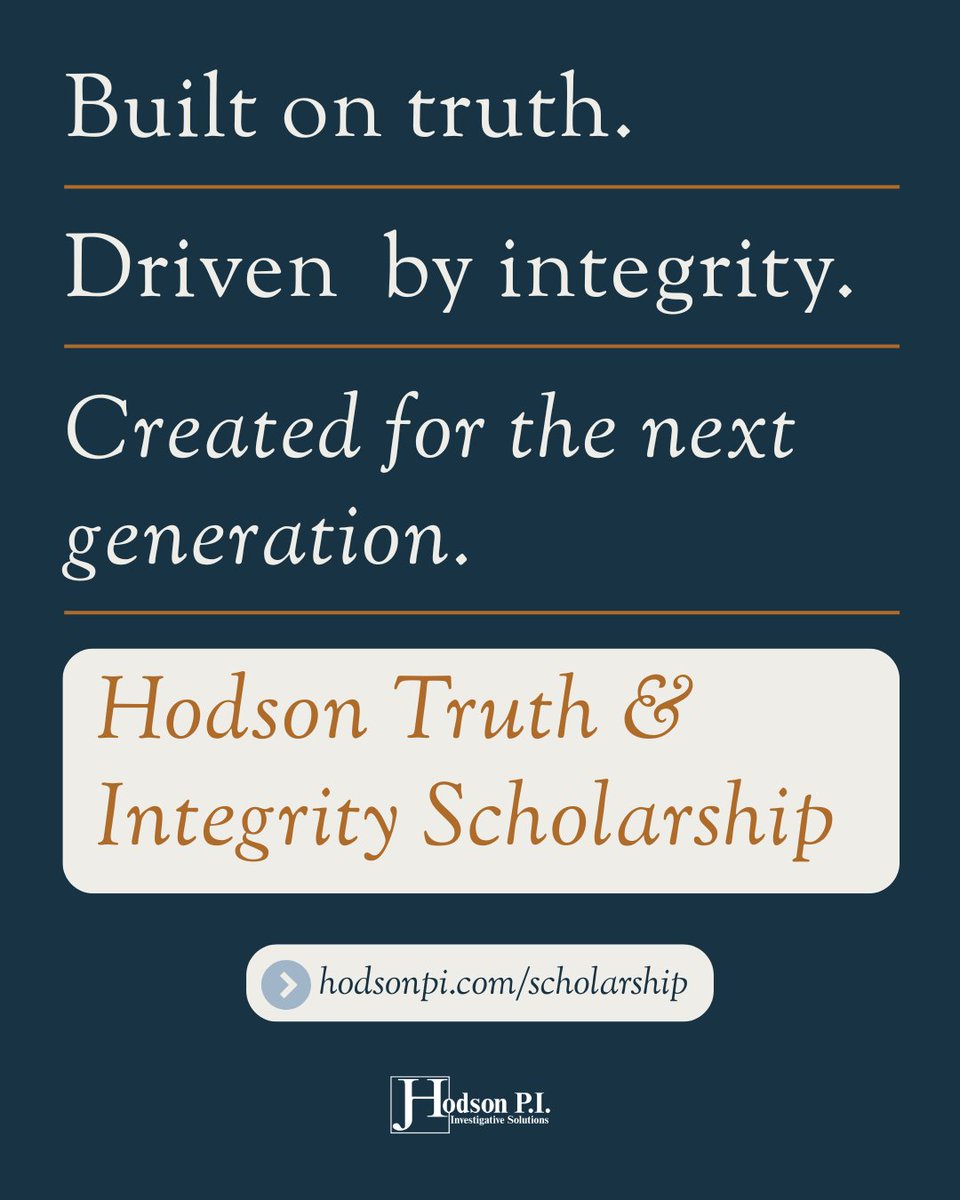
Your hard work, dedication, and integrity deserve recognition.
The Hodson Truth & Integrity Scholarship was created to support students who exemplify honesty, perseverance, and a commitment to excellence.
Apply today or share this opportunity with a student who may qualify!
Submit your application here: hodsonpi.com/scholarship/
#ScholarshipOpportunity #Scholarship #Lawschool #PrivateInvestigations #ClaimsCareers
1
1

Let us appreciate those who exemplify the best of our community and country, and affirm that their work belongs to all of us.
#EBRF #TransnationalRepression #BlueRevolution #RegimeChangeInEritrea #NoMorePFDJTerror @BeyeneGerezghe1 @CmaDawit @BereketKahsai1 @EGerasouli35992 @BradSherman @darrell @KjetilTronvoll @TiborPNagyJr @martinplaut @mrubin1971 @SenateForeign @washingtonpost @senatorscarr @SenAdamSchiff @SenatorDurbin @tedcruz @DrJPPham @SenJeffMerkley @DrChTouati @UN_HRC @UN @hrw @amnesty @IntlCrimCourt @washingtonpost @BBC @AJEnglish @_AfricanUnion @afric_insde


57
56
514

This integration of ART and exformational stability extends the theory’s scope beyond natural environments. While the Kaplans emphasized nature’s soft fascination, the wall represents an accessible, everyday analogue—democratic in its availability and unburdened by the logistical demands of outdoor excursions. Empirical support for ART, derived from studies on nature exposure, demonstrates improvements in concentration, memory, and mood following restorative periods. Similar benefits plausibly accrue from wall-gazing: reduced directed attention fatigue enables clearer executive function upon re-engagement with tasks. Moreover, the practice cultivates tolerance for boredom, a capacity eroded by constant digital dopamine. As attention researchers note, learning to inhabit unstimulated states diminishes the pull of addictive stimuli, fostering greater autonomy over one’s attentional resources.
Philosophically, this concept resonates with broader critiques of modernity. Digital environments instantiate what might be termed hard fascination—intense, attention-grabbing stimuli that leave scant room for reflection. Video games, social media, and streaming content exemplify this, prioritizing immediate engagement over contemplative depth. The wall, conversely, embodies a return to a more continuous temporal mode. Time unfolds without instrumental segmentation, supporting peripheral insights and the “default mode network” associated with mind-wandering and creative incubation. In this light, exformational stability emerges not as passive vacancy but as an active, albeit understated, epistemic virtue. It privileges the tacit, embodied dimensions of knowing over the explicit and modular, aligning with traditions that value apophatic approaches—knowing through negation or subtraction of excess.
Practical implications abound. Individuals in knowledge work or creative fields could incorporate brief “wall sessions” as structured breaks, akin to mindfulness practices but grounded in perceptual minimalism. Educational settings might reframe such moments not as disengagement but as essential to cognitive hygiene. For families navigating screen-time concerns, the wall offers a non-technological intervention that models attentional sovereignty. Challenges remain: cultural conditioning equates productivity with visible activity, rendering stillness suspect. Yet, as ART research indicates, restoration enhances subsequent performance, suggesting that strategic disengagement amplifies overall efficacy.
Critics might argue that the wall lacks nature’s extent and richness, potentially inducing restlessness rather than restoration. This objection, however, underscores the value of graduated practice. Initial discomfort signals depleted attentional reserves; persistence builds compatibility between the setting and one’s restorative needs. Hybrid approaches—pairing wall-gazing with natural elements or kinesthetic awareness—could further enrich the experience, bridging exformational stability with embodied ritual.
In conclusion, the act of staring at a wall transcends triviality when viewed through the lenses of Attentional Restoration Theory and exformational stability. It counters the fragmenting logic of informational modernity by providing a stable perceptual field conducive to mental recovery and subconscious integration. Far from boredom’s void, such practice cultivates a richer interiority, where directed attention replenishes and deeper knowing coalesces. As digital pressures intensify, reclaiming these moments of constancy may prove essential not only for cognitive health but for preserving the human capacity for reflective, integrated existence. In the quiet gaze upon an unadorned surface lies a subtle rebellion—and a pathway to renewed clarity.
5