
Jun 4
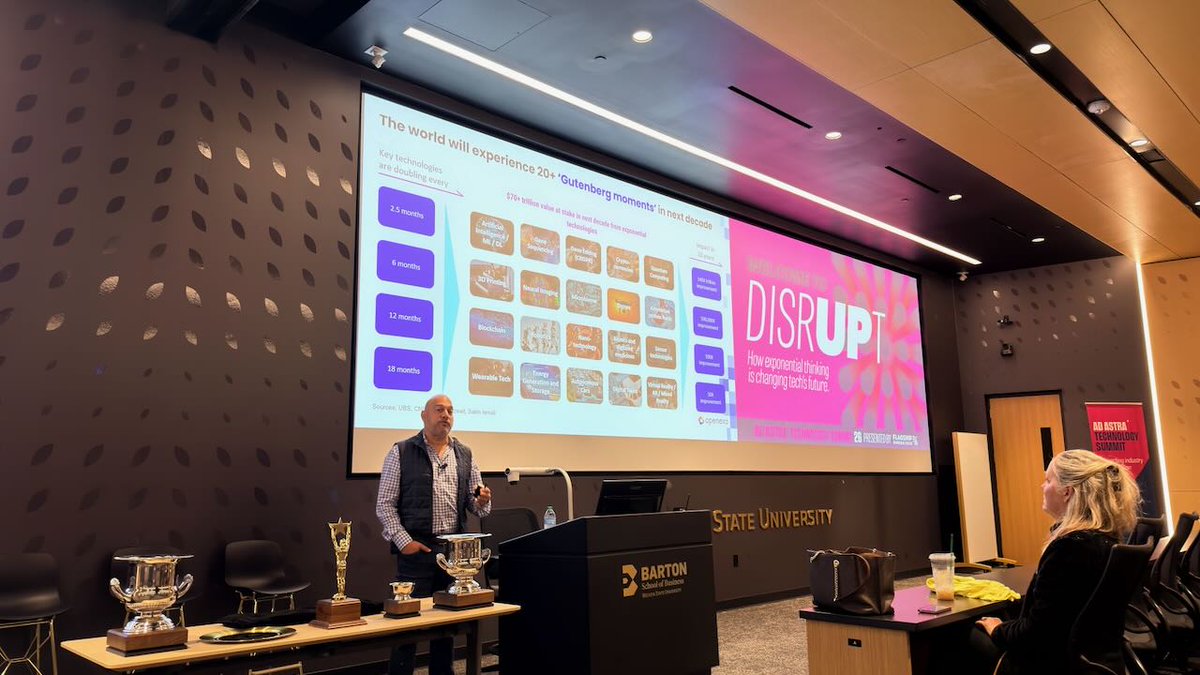
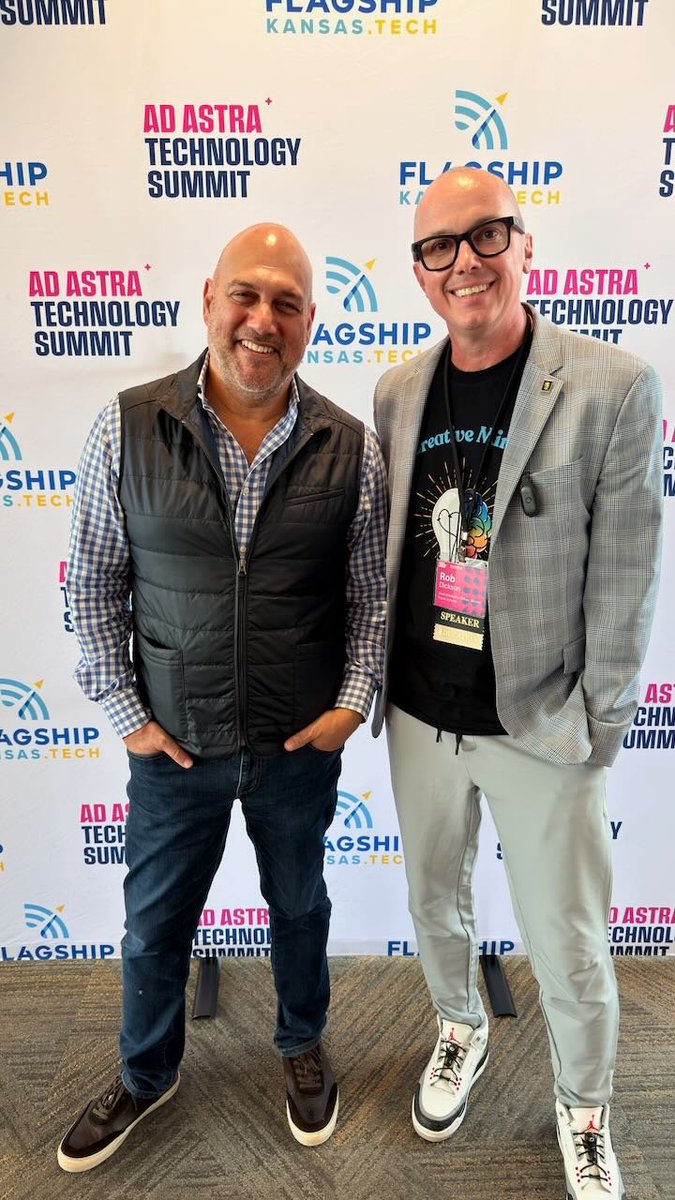
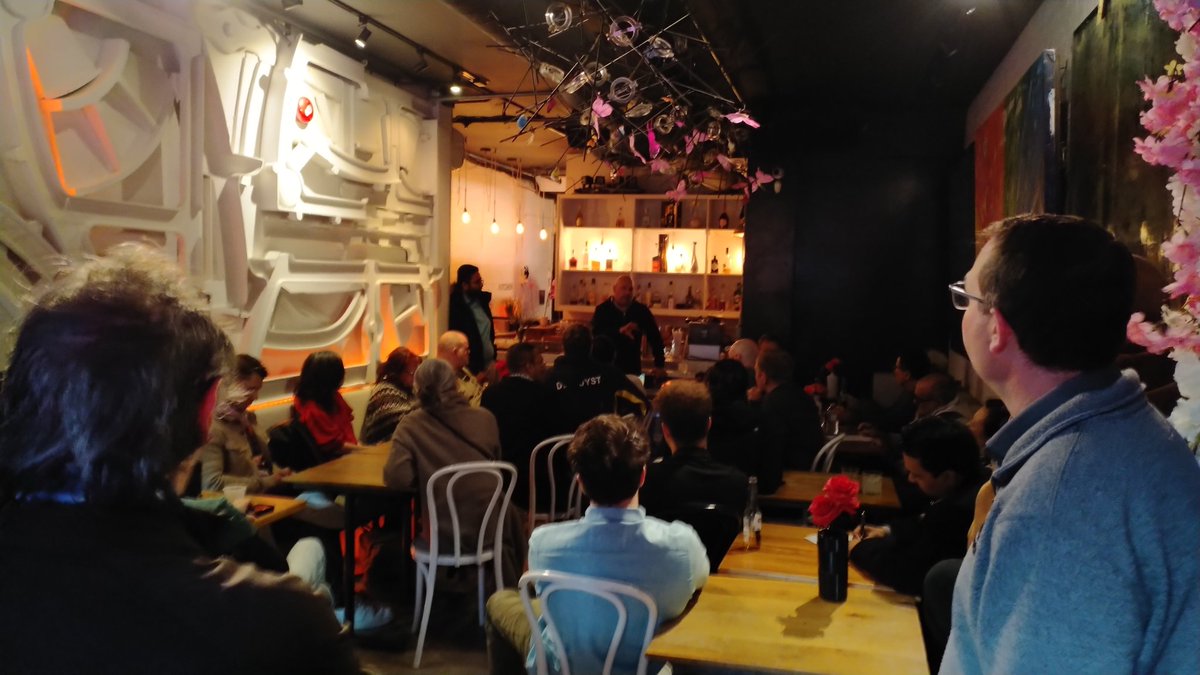
Today at the Ad Astra Technology Summit at Wichita State University’s Barton School of Business, I had the chance to hear Salim Ismail (@salimismail) deliver two powerful keynotes on exponential technologies, AI, and the future of our institutions—and to share a session on the State of Kansas Tech in Education alongside that conversation. 🚀📚
In his first talk, he argued that we are not moving toward a technological singularity—we’re already in it. 🤖 Drawing on more than a century of data behind Moore’s Law, he showed how once a field becomes “information‑based,” its price‑performance begins to double on a predictable curve, and that now a dozen technologies—AI, biotech, neuroscience, genomics, drones, solar, and more—are all doubling on their own timelines. 📈 He connected this to XPRIZE work on space, carbon removal, and longevity, suggesting that breakthroughs in areas like aging could push us toward “escape velocity” for human lifespan within the next decade, forcing us to rethink everything from pensions to religion to governance. 🌍⏩
The second session shifted from diagnosis to design. 🧠 Salim described how most 20th‑century organizations were optimized for efficiency and predictability, but the new requirement is agility, adaptability, and speed—especially as the “organizational immune system” in both corporations and the public sector resists needed change. He then turned directly to education, critiquing 200 years of “supply‑side” schooling organized around fixed jobs and credentials at a time when the half‑life of skills has shrunk from roughly 30 years to about 3. His proposed shift: move to a “demand‑side” model where we ask learners what problem they want to solve, help them define a massive transformative purpose, and continually assemble and refresh the skills, tools, and collaborators they need in that problem space. 🎯
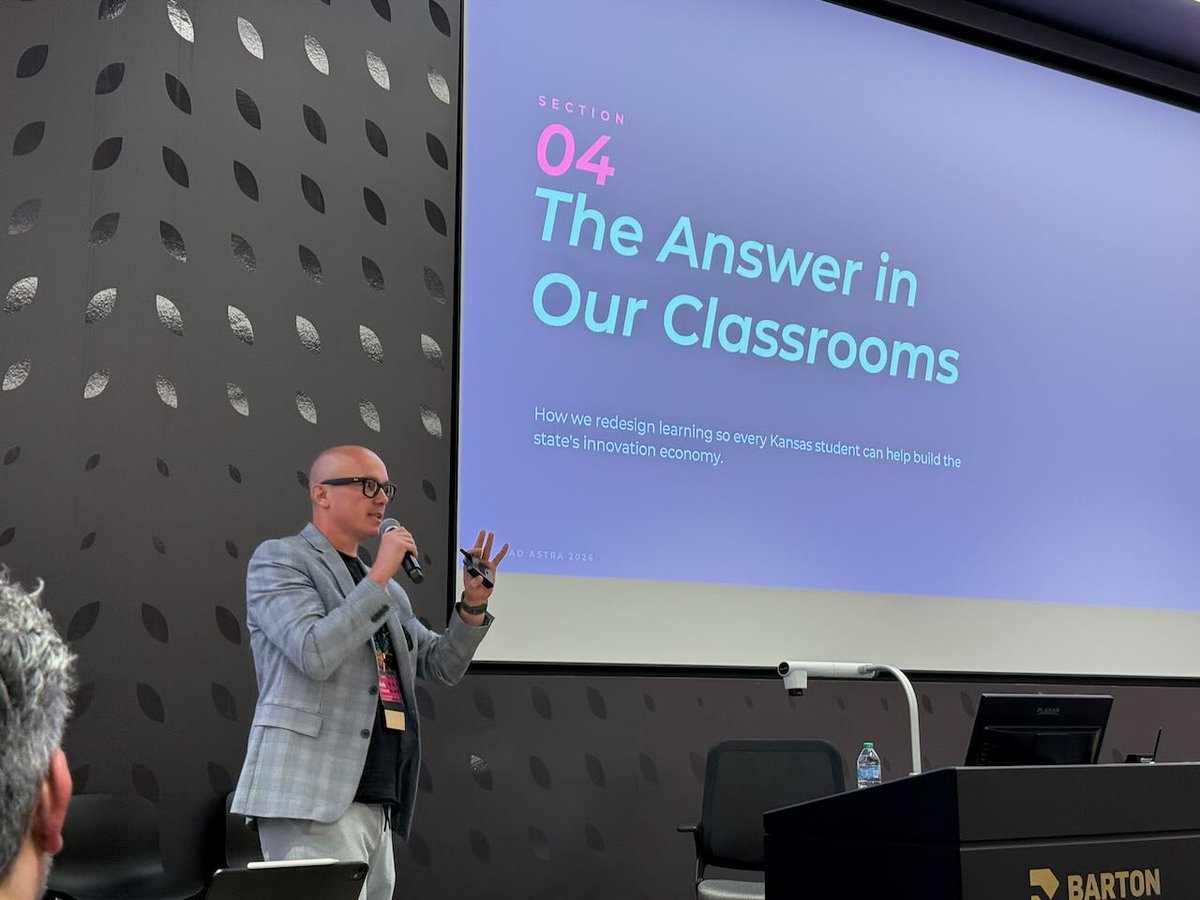
Against that backdrop, I was able to share how Kansas is approaching K‑12 technology—from workforce pipelines and apprenticeship urgency to district‑level innovation in AI, virtual learning, and new school models—as part of the broader State of Kansas Tech in Education. 🇺🇸💻 Across the day, the through‑line was clear: exponential technologies are colliding with institutions that were never designed for this pace of change. Whether in business, government, or education, the challenge now is to redesign our systems so they can keep up—and to see this disruption not only as a risk to manage, but as an opportunity to move from scarcity to abundance in areas like energy, healthcare, and learning. 🌱⚡
@FlagshipKansas @WichitaState
#AdAstra2026 #WichitaState #FlagshipKansas #AI #EdTech #K12 #FutureOfWork #FutureOfLearning #ExponentialOrganizations #KansasEducation #AIinEducation #WPSProud
4
1,371

6 Oct 2024
#ExponentialOrganizations leverage new technologies & organizational strategies to grow at exponentially faster rate than traditional companies. Created by @salimismail in his book *Exponential Organizations*. #ExO s operate with a focus on scalability, efficiency, & agility.
1
2
4
90

Unlock a better future with the ExO Pass ! 🔑🔮
Your journey towards exponential growth starts here👇
🎟️ExO Pass : hubs.la/Q02Bmy0l0
📚Exponential Organizations 2.0: hubs.la/Q02Bmy440
#openexo #exo #exponentialorganizations #market #business
1
1
3
194
Explore exponential thinking & tech on the ExO Blog!💡
Ready to transform? Start here👇
🎟️ ExO Pass: hubs.la/Q02yBXW60
📚 Exponential Organizations 2.0: hubs.la/Q02yBPsJ0
#openexo #exo #exponentialorganizations #exoblog

1
182

29 May 2024
Jupiter-Uranus Alignment: White Collar Workers Adopt AI or Risk Obsolescence By 2026! 🚀
AI is no longer a futuristic concept—it's reshaping businesses TODAY! Here is how AI is revolutionizing marketing, customer service, software development, and media production. 🌟
Key Takeaways:
AI will add $15.7 trillion to the global economy by 2030.
Giants like Google and Microsoft are fully investing in AI.
Successful AI case studies include ProFinda, FutureScope, Cainthus, and Khanmigo.
📈 Predictions:
AI will scale business experiments.
AI will unlock the Metaverse's potential.
AI will decentralize money and power.
AI will personalize customer experiences.
AI will radically redefine organizational structures.
AI will create new societal impacts.
🔑 How to Prepare:
Understand AI basics.
Start small-scale AI projects.
Upskill your team.
Partner with AI experts.
Continuously review your AI strategy.
Don't listen to the naysayers (who didn't see Bitcoin coming) and get left behind—embrace the AI revolution! 🚀
#AI #ArtificialIntelligence #BusinessInnovation #FutureOfWork #TechTrends #ExponentialOrganizations
2
3
17
1,243

24 May 2024
Introducing The Nimble Networker
Meet The Nimble Networker, the master of building connections from @SalimIsmail's #ExponentialOrganizations. With an unmatched ability to forge alliances, she navigates the complex web of networks effortlessly.🌐🧵👇
19
19
23
612
23 May 2024
Introducing The Renaissance Sam
Meet The Renaissance Sam, the master of 'Staff on Demand' from @SalimIsmail's #ExponentialOrganizations. Ready to tackle any challenge, Sam evolves with the tech landscape.🛠🧵👇
18
15
21
559
22 May 2024
🔍 Meet The Simplifier 🔍
Mastering "Interfaces" from @SalimIsmail's #ExponentialOrganizations, The Simplifier is here to turn complexity into clarity, making navigating systems a breeze. 💻🧵👇
19
18
26
530
21 May 2024
Introducing Captain Engage-O-Matic
Captain Engage-O-Matic, the vibrant force from the lab. She embodies the 'Engagement' attribute from @SalimIsmail's #ExponentialOrganizations.. With a knack for gamification and incentives, she’s a powerhouse for any project 🏆🧵👇
22
22
31
728
17 May 2024
Meet Dash, the second recruit from the lab. A product of innovation, he embodies the 'Dashboards' attribute from @SalimIsmail's #ExponentialOrganizations. 📊🧵👇
20
20
36
680
16 May 2024
1/ The Mad Scientist is the first recruit from the lab. A living embodiment of the 'Experimentation' attribute from @SalimIsmail's #ExponentialOrganizations. 📕🧵👇
3
1
9
211
Ready to transform? Get started today! 🎯
Your journey towards exponential growth starts here👇
🎟️ExO Pass : hubs.la/Q02vljb20
📚Exponential Organizations 2.0: hubs.la/Q02vl8xk0
#openexo #exo #exponentialorganizations #ai
1
2
7
229
How is AI reshaping the HR landscape in your organization?
Your insights will set the stage for a deep dive into actionable AI strategies with at the conference.
2024 Speakers: hubs.la/Q02tBYHJ0
#UNLEASHAmerica #ExponentialOrganizations #FutureWorkplace
4
206

8 Apr 2024
3
37
Dive deep into the future of business with "Exponential Organizations 2.0
Your journey towards exponential growth starts here👇
🎟️ExO Pass : hubs.la/Q02rtbGN0
📚Exponential Organizations 2.0: hubs.la/Q02rtcML0
#openexo #exo #exponentialorganizations #ai
4
308

20 Mar 2024
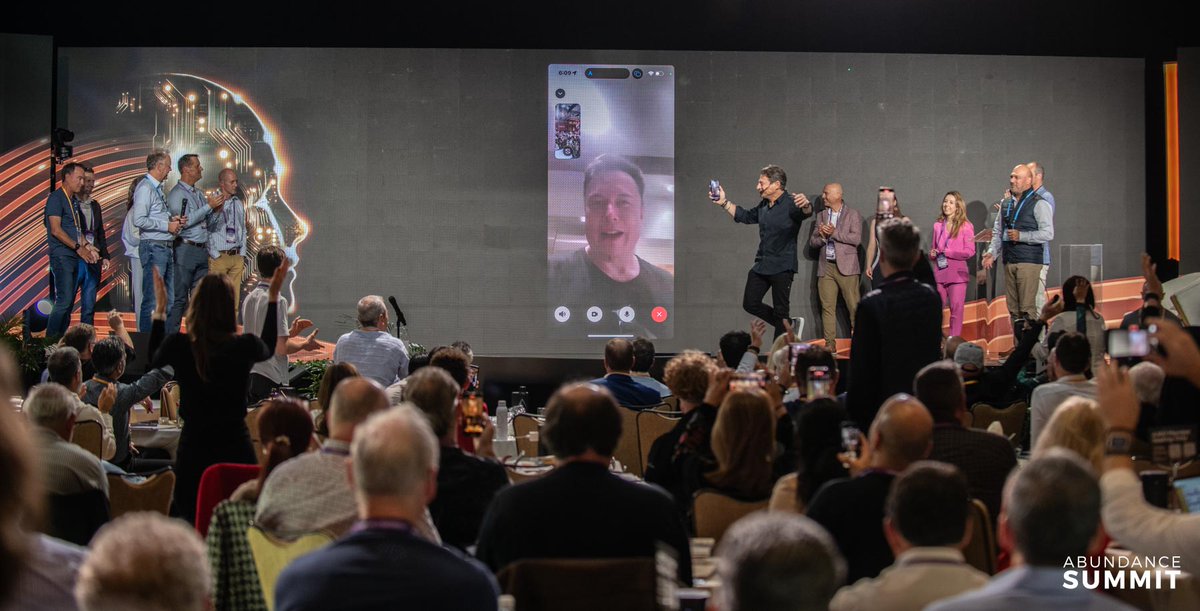
At #A360 prepping for #AGI. @ElonMusk dropped in to chat with us. On stage with @PeterDiamandis & @salimismail who together co-wrote the book #exponentialorganizations which is at the heart ❤️ of @openexo, now part of the $GNS Genius family.
19 Mar 2024

@elonmusk joined us on X video call yesterday at #Abundance360. Thanks for joining, buddy. ( X hologram communication—when?)
19
50
208
41,881

15 Dec 2023
Technology is helping businesses to automate and streamline processes, which frees up employees to focus on more creative and strategic tasks.
Read more 👉 lttr.ai/AJrcb
#ExponentialOrganizations #ExponentialRate #LeveragingTechnology #Business #Marketing
15
Curious about exponential thinking and technology?💡
Ready to transform? Get started today! 🎯
🎟️ExO Pass : hubs.la/Q022Z_z60
📚Exponential Organizations 2.0: hubs.la/Q022ZZvg0
#openexo #exo #exponentialorganizations
1
2
57
20 Nov 2023
Businesses need to invest in exponential technologies.
Read more 👉 lttr.ai/AJrbr
#ExponentialOrganizations #ExponentialRate #LeveragingTechnology #Business #Marketing #Entrepreneurship #Leadership
2
46

18 Nov 2023
In a world obsessed with slow, incremental growth, here's a brain-twister: What if your company could grow like a wildfire - unpredictably fast, powerful, and game-changing? Welcome to the radical universe of #ExponentialOrganizations!
Think it's just hyperbole? Think again. We're talking about organizations that harness AI, algorithms, and crowd wisdom to not just ride the wave of change but to BE the wave.
Here's the uncomfortable truth: Traditional business models are dinosaurs waiting for the meteor. The future belongs to those who adapt, scale, and disrupt at a pace that's downright unnerving.
📘 Dive into 'Exponential Organizations' and uncover why playing it safe in business today is the riskiest move you can make.
DM me and I will give you a basic plan for a month so you can read it online
openexo.com/book
or use
openexo.com/chat to talk with our chatbot trained on the books knowledge
It's time to rethink, reimagine, and reboot.
#ExponentialOrganizations #DisruptOrBeDisrupted #BusinessEvolution

1
4
738