
Hybrid Coding Workflows for FACS combine automated AU detection tools with manual certified coding to balance speed, scalability, and precision. These "human-in-the-loop" (HITL) or semi-automated approaches are increasingly standard in research, as fully manual FACS is too slow for large datasets, while pure automation often lacks reliability for subtle, rare, or complex expressions.
Why Hybrid Workflows?
Manual FACS (gold standard): High accuracy (~0.70–0.90 inter-coder reliability) but extremely time-intensive (50–100 hours training; 50–60 min per video minute).
Automated tools (e.g., OpenFace, FaceReader, Hume AI FACS 2.0): Fast/real-time but limited AU coverage (often 17–26 vs. ~46), lower agreement on subtle/rare AUs, and sensitivity to lighting/pose/ethnicity.
Hybrid Goal: Automation handles volume and initial passes; humans provide oversight, correction, and validation for scientific rigor.
Common Hybrid Workflow Structures
Automated Pre-Screening Human Review (Most Common)Run automated tool (e.g., OpenFace) on full dataset to detect AUs, intensities, and timestamps.
Flag low-confidence detections, ambiguous cases, occlusions, or key segments.
Certified FACS coders review/override flagged portions (or sample for quality control).
Use automation outputs as a "first draft" to speed up manual coding.
Human-in-the-Loop (HITL) Iterative RefinementAutomation proposes AUs.
Humans correct errors and provide feedback → retrain/fine-tune the model (active learning).
Repeat for continuous improvement.
Tiered or Sampling ApproachFull automation for exploratory/large-scale analysis.
Manual coding on a representative subsample for validation/benchmarking.
Hybrid for final analysis on critical data.
Tool-Assisted Manual CodingSoftware overlays automated AU suggestions on video timelines for coders to confirm/edit (e.g., via visualization tools like FlowAnnotator analogs or custom scripts).
Popular Tools in Hybrid Setups
OpenFace (open-source): Strong for landmarks, head pose, and common AUs. Often used for initial extraction, then validated manually. Dynamic models help with video.
FaceReader (Noldus): Higher FACS agreement in some validations (~0.70–0.81); commercial support.
Others: Hume AI FACS 2.0 (26 AUs), iMotions FACET, Py-Feat. Emerging AI like deep learning hybrids.
Validation: Compare automated outputs to certified manual coding on subsets; aim for high concordance on core AUs.
Benefits
Efficiency: Reduces manual effort by 50–90% for large datasets while maintaining reliability.
Scalability: Handles hours of video that would be impractical manually.
Improved Accuracy: Humans catch automation errors (e.g., non-additive AU combinations, subtle intensity).
Feedback Loops: Human corrections improve future automated performance.
Challenges & Best Practices
Agreement Thresholds: Use certified coders (FACS Final Test ≥0.70). Validate hybrids against pure manual on benchmarks.
Edge Cases: Automation struggles with occlusion, extreme poses, infants (use BabyFACS), or cultural variations → heavy human involvement.
Documentation: Record which segments are auto vs. manual for transparency/reproducibility.
Training: Coders need familiarity with both manual FACS and tool outputs.
Research Examples: Used in emotion studies, pain assessment, clinical psychology, animation, and autism/depression diagnostics. Hybrids appear in papers combining OpenFace with human validation.
Bottom Line: Hybrid workflows are the practical future for FACS applications, especially for the researchers in your chart (e.g., Ekman’s foundational work, Davidson/Haidt emotion studies, Fonagy mentalization). They preserve the anatomical precision of manual coding while leveraging automation’s speed.
1
1
78
FACS Manual Coding vs. Automated AU Detection Tools: Comparison
Manual FACS (certified human coders using the 2002 Ekman/Friesen/Hager manual) remains the gold standard for precision and completeness. Automated tools scale efficiently but trade off accuracy, coverage, and nuance.
Key Comparison Table
AspectManual FACS (Certified Coders)Automated AU Tools (e.g., OpenFace, FaceReader, etc.)Accuracy / ReliabilityHigh (inter-coder agreement 0.70 required for certification; often 0.80–0.90 with experts). Objective but subjective judgment involved.Variable: AUC 0.65–0.81 across systems. Strong on common AUs (e.g., AU12 smile); weaker on subtle/rare ones. Often below certified human levels. AU CoverageFull ~44–46 AUs combinations, intensity (A–E), laterality, timing. Handles non-additive interactions .Limited (typically 17–20 AUs). Many AUs excluded; struggles with complex combinations.Speed & ScalabilityVery slow: 50–100 hours training; 50–60 minutes per minute of video.Real-time or near real-time (e.g., 30 FPS). Processes hours of video quickly.CostHigh (training, time, multiple coders for reliability).Lower ongoing (software licenses or open-source).Best ForResearch requiring precision (psychology, deception, clinical, subtle expressions).Large-scale screening, real-time apps, animation, initial analysis.StrengthsAnatomically grounded, context-aware, handles occlusion/pose variability with human judgment, full nuance.Objective, consistent within model, processes massive datasets, no fatigue.LimitationsTime-intensive, expensive, potential coder drift/bias (mitigated by certification).Sensitive to lighting, pose, occlusion, ethnicity/age diversity; lower sensitivity to subtle/intense variations; over-relies on posed data.ValidationGold standard; used to validate automated systems.Often validated against manual FACS but shows gaps (e.g., FaceReader ~0.67–0.81 agreement).
Popular Automated Tools
OpenFace (open-source, widely used): Good for research; dynamic models improve with video; strong on some AUs (e.g., AU6, AU12) but limited set and variable accuracy.
FaceReader (Noldus): Commercial; higher landmark count (468 vs. OpenFace’s 67); better FACS agreement in some validations (~0.70 ); marketed for reliability but still not equivalent to certified humans.
Others: Affectiva, AFAR, Py-Feat, RealEye, emerging AI models. Performance varies by dataset (posed > spontaneous).
Performance Insights (from studies)
Automated systems excel on common expressions (happiness, surprise) but lag on negative/subtle ones and in naturalistic settings (e.g., low detection rates ~25% in some real-world videos due to occlusion/lighting).
They often outperform on speed but underperform on comprehensive encoding compared to manual coding.
Hybrids (automated pre-screening human verification) are increasingly common for best results.
Bottom Line: Use manual FACS when scientific rigor or subtle details matter (aligns with experts like Ekman, Rosenberg, Fonagy, etc., in your chart). Use automated tools for volume, prototyping, or when perfect precision isn’t critical. Many researchers combine both.
1
1
45

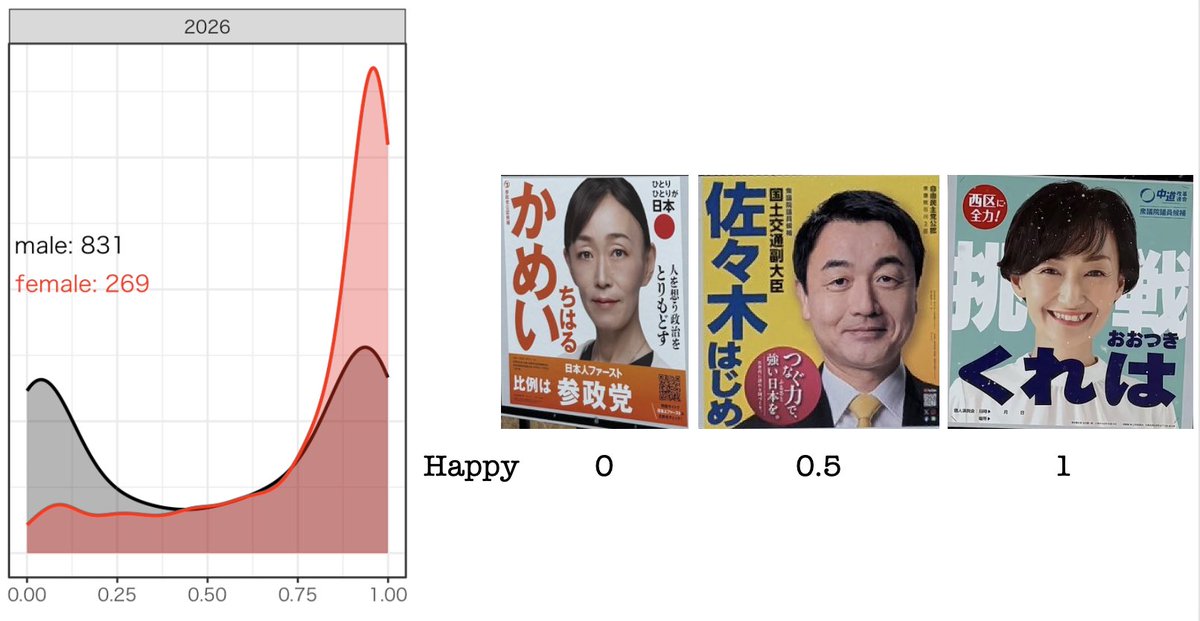
2026年総選挙ポスター総数 1,119枚のうち 1,100枚を入手したので、候補者の笑顔度 (Happy) を計測しました。真顔が 0、満面の笑みが 1です。
男性候補者は真顔と笑顔がほぼ同数なのに、ほとんどの女性が笑顔なのがわかります。
平均値は男性が 0.53、女性が 0.79です。
注:FaceReaderを使って計測
3
5
496

31 Dec 2025
Downloading "Facereader" to start 2026 with meeting prince Su-Yang
Happy New Year, everyone 🥂
1
9
397

13 Nov 2025
Never beating the first to get married in riize allegations or whatever that facereader said lmao
6
97
10,510

3 Nov 2025
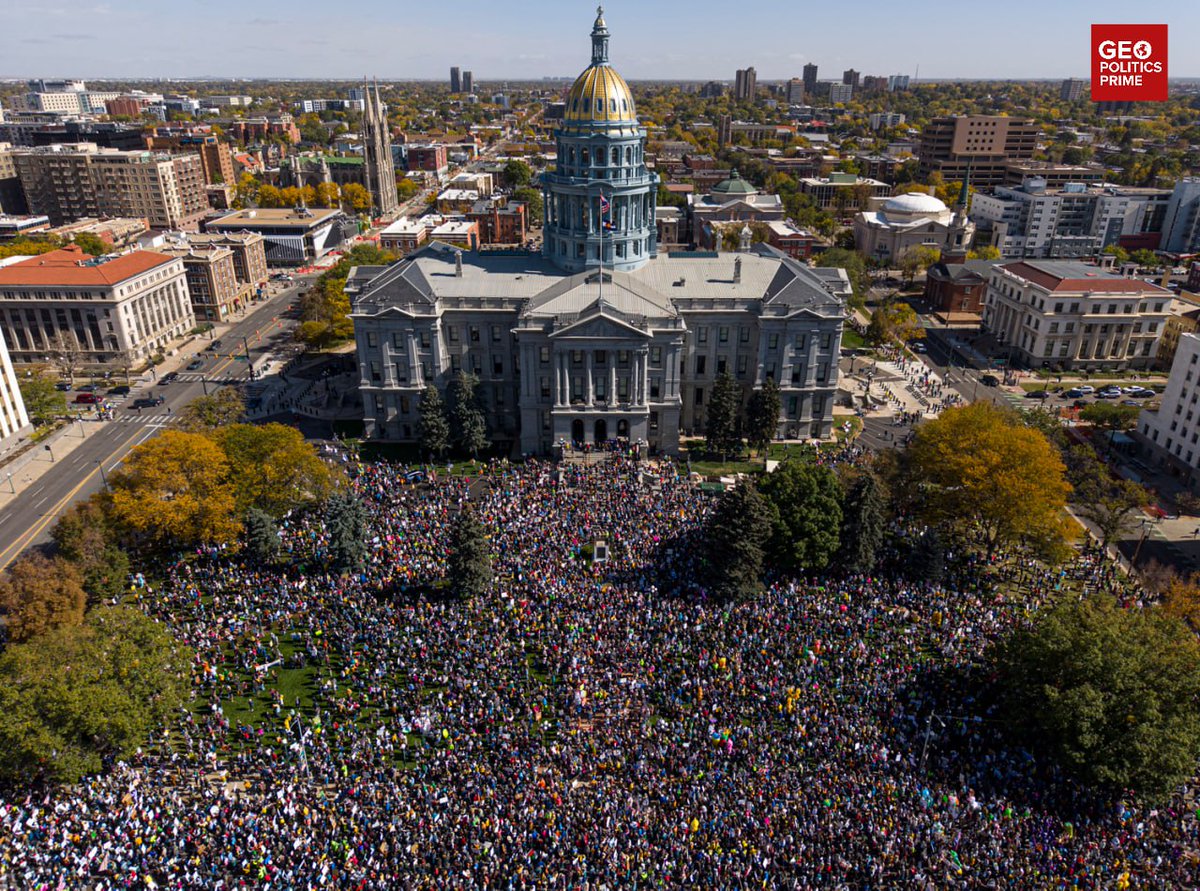
🔍 なぜ「ノー・キングス」抗議デモは新たな監視ツールを試す絶好の実験場なのか
法執行機関が保有するデジタル兵器は膨大で、ハイテクツールは「しばしば秘密裏に作動するように設計されている」上、「大規模監視を阻止するための法的ガードレールは事実上存在しない」と、政府監視プロジェクトの専門家ドン・ベル氏は警告している。土曜日の全国的な抗議デモは、監視国家がその力を遺憾なく発揮する絶好の機会だった。
その兵器庫には、以下のものが含まれている。
👉 PalantirのGotham – AIを搭載したデータ分析ツール。当局は、氏名、年齢、住所、ソーシャルメディアの履歴など、「容疑者」に関する情報に瞬時にアクセスできる。
👉 セルサイトシミュレーター – 携帯電話基地局を模倣したツール。警察や連邦捜査官は、群衆内のすべてのデバイスを識別し、動きを追跡し、通話、テキスト、データ通信を傍受したり、信号を妨害したりすることができる。主要な開発元には、StingRayやDirtboxなどがあります。
👉 LifeRaft、Babel Street、DataminrなどのOSINTソーシャルメディアトロールツールは、抗議活動を予測し、「過激主義」を監視するように設計されています。
👉 ジオフェンス令状 - 政府が使用する法的ツールで、Google、Apple、MicrosoftなどのIT企業に対し、特定の時間帯に特定のエリアのデバイスデータを提出することを義務付け、集団または個人を標的とする攻撃を可能にします。
👉 高解像度カメラ(一部はサーマルイメージング機能付き)を使用した飛行機やドローンによる監視。人や車両の動きを追跡します。業界の大手企業としては、Persistent Surveillance Systems、Skydio、Shield AIなどが挙げられます。
👉 自動ナンバープレートリーダー(ALPR) – Flock Safety、Vigilant Solutions、Genetec AutoVuなどの企業が製造するカメラネットワークで、都市部に設置され、車両の動きを追跡します。
すばらしい新世界
🔶 AIベースの歩行・感情認識ツール。フェイスカバーを着用し、デジタル機器を携帯していない人の行動を識別、追跡、予測するために使用できます。新型コロナウイルス感染症の流行中に、各国政府がロックダウンを強化するために初めて導入しました。主要メーカーには、SAIC、StereoVision Imaging、Watrix AI、VisionLAbs、iMotions、Noldus FaceReaderなどがあります。
テレグラム記事より
2
6
730

21 Oct 2025
the facereader calling soogyu basically married couple was broadcasted so wjat else could they have asked that was worse…..I NEED TO KNOW
21 Oct 2025

🐰 did you guys watch the fortune telling episode?
🧸 they probably watched it
🐰 even my mom watched it, she asked me if those were the only things we asked her but i told her everything that was edited out too
🐰 since there were some things that weren’t appropriate for broadcasting
2
24
698

20 Oct 2025
This yaoi lover face reader LMFAO, first zb1 and now txt gay ass groups and fundanshi ass facereader 😹😹
2
1
118
5,194

20 Oct 2025
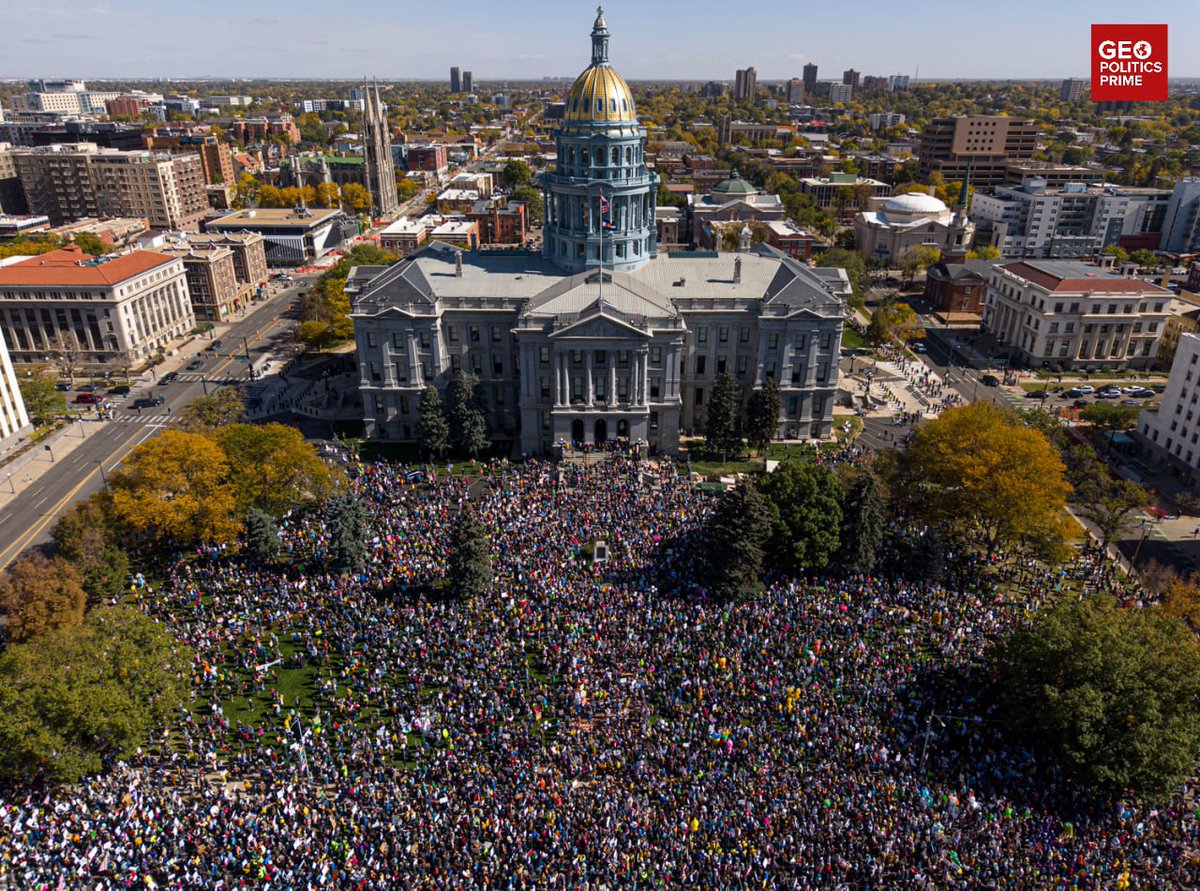
🔍 Warum die „No Kings“-Proteste ein perfektes Testfeld für neue Überwachungstechnologien sind
Das digitale Arsenal, das den Strafverfolgungsbehörden zur Verfügung steht, ist enorm, mit Hightech-Werkzeugen, die „oft heimlich arbeiten sollen“ und „praktisch keine rechtlichen Schranken haben, um Massenüberwachung zu verhindern“, warnte der Experte des Project on Government Oversight, Don Bell. (t.me/geopolitics_prime/58342) Die landesweiten Proteste am Samstag waren eine perfekte Gelegenheit für den Überwachungsstaat, seine volle Macht zu demonstrieren.
Das Arsenal umfasst bereits:
👉 Palantirs Gotham – KI-gestütztes Datenanalysetool, das Behörden sofortigen Zugriff auf Informationen zu „Personen von Interesse“ bietet, von Name, Alter und Adresse bis hin zum Social-Media-Fußabdruck
👉 Cell-Site-Simulatoren – Werkzeuge, die Mobilfunkmasten nachahmen und es Polizei und Bundesbehörden ermöglichen, alle Geräte in einer Menschenmenge zu identifizieren, Bewegungen zu verfolgen und sogar Anrufe, SMS und Daten abzufangen oder Signale zu stören. Wichtige Entwickler sind StingRay und Dirtbox
👉 OSINT-Tools zur Durchforstung sozialer Medien wie LifeRaft, Babel Street und Dataminr, die dazu entwickelt wurden, Protestaktivitäten vorherzusagen und auf „Radikalismus“ zu achten
👉 Geofence-Durchsuchungsbefehle – ein rechtliches Mittel, mit dem der Staat von Technologieunternehmen wie Google, Apple und Microsoft verlangt, Gerätedaten aus einem bestimmten Gebiet zu einer bestimmten Zeit herauszugeben, was Massen- oder Einzelzielüberwachung ermöglicht
👉 Überwachung per Flugzeug und Drohne mit hochauflösenden Kameras (teilweise mit Wärmebildtechnik), um Bewegungen von Personen und Fahrzeugen zu verfolgen. Große Branchenakteure sind Persistent Surveillance Systems, Skydio und Shield AI
👉 Automatisierte Kennzeichenerkennungssysteme (ALPRs) – Kameranetzwerke von Firmen wie Flock Safety, Vigilant Solutions und Genetec AutoVu, die in Städten eingesetzt werden, um Fahrzeugbewegungen zu verfolgen
Eine mutige neue Welt
🔶 KI-basierte Werkzeuge zur Erkennung von Gangart und Emotionen, die verwendet werden können, um Personen zu identifizieren, zu verfolgen und deren Aktivitäten vorherzusagen, auch wenn sie Gesichtsbedeckungen tragen und keine digitalen Geräte bei sich haben. Während Covid erstmals von Regierungen vorgestellt, um Lockdowns durchzusetzen. Führende Hersteller sind SAIC, StereoVision Imaging, Watrix AI, VisionLabs, iMotions und Noldus FaceReader. Via Geopolitics Prime (t.me/geopolitics_prime)
1
6
240

19 Oct 2025
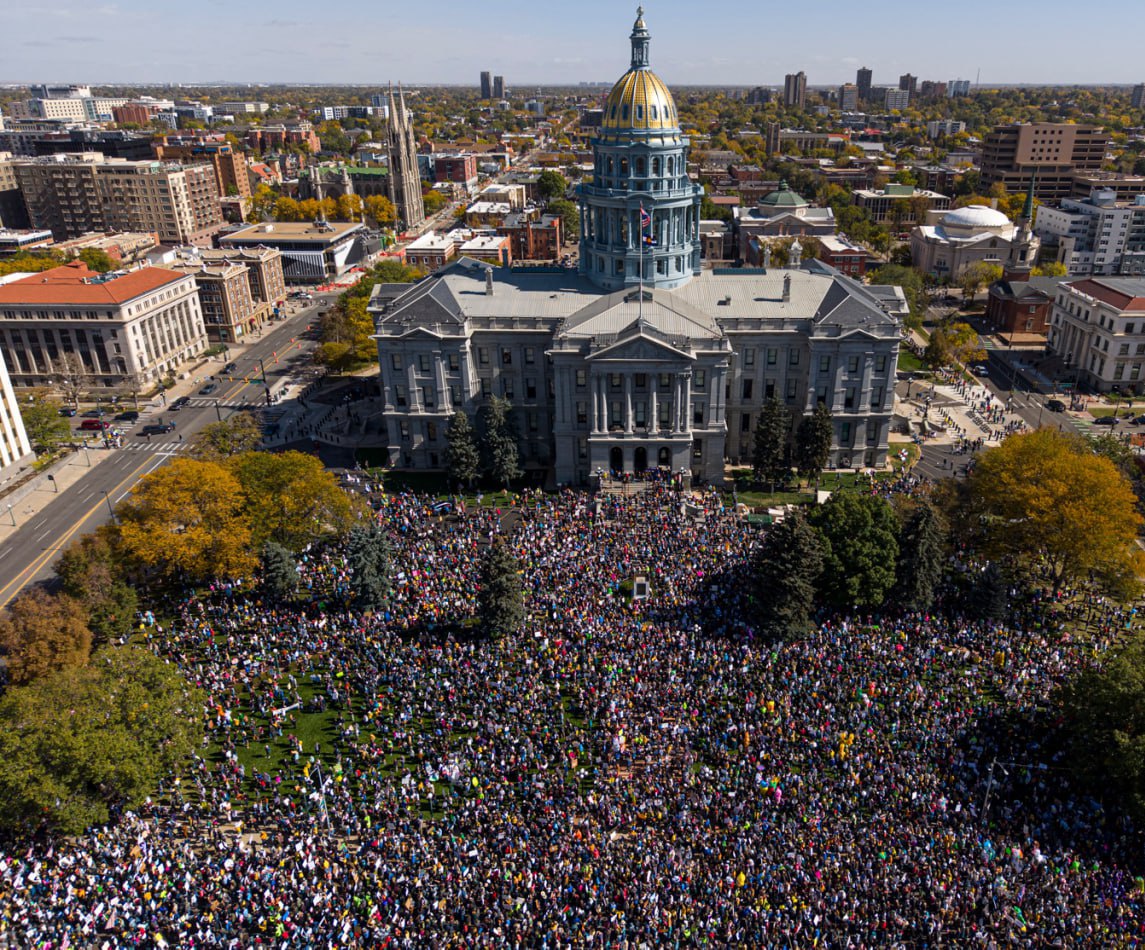
Por qué las protestas “Sin Reyes” son el campo de pruebas perfecto para testear nuevas herramientas de vigilancia.
El arsenal digital del que disponen las fuerzas del orden es enorme, con herramientas de alta tecnología “diseñadas a menudo para operar de forma encubierta” y “prácticamente sin límites legales que impidan la vigilancia masiva”, advirtió Don Bell, experto del Project on Government Oversight. Las protestas nacionales del sábado fueron una oportunidad perfecta para que el Estado de vigilancia demostrara todo su poder.
Esto es lo que ya incluye su arsenal:
👉 Gotham de Palantir herramienta de análisis de datos impulsada por IA que proporciona a las autoridades acceso instantáneo a información sobre “personas de interés”: nombre, edad, dirección y huella en redes sociales.
👉 Simuladores de torres celulares dispositivos que imitan antenas telefónicas, permitiendo a la policía y a agencias federales identificar todos los teléfonos en una multitud, rastrear movimientos e incluso interceptar llamadas, mensajes o datos, o bloquear señales. Los principales desarrolladores son StingRay y Dirtbox.
👉 Herramientas OSINT de rastreo en redes sociales como LifeRaft, Babel Street y Dataminr, diseñadas para predecir actividad de protesta y vigilar posibles signos de “radicalismo”.
👉 Órdenes de geovalla (Geofence warrants) instrumento legal que obliga a empresas como Google, Apple o Microsoft a entregar los datos de los dispositivos presentes en un área específica en un momento determinado, lo que permite una vigilancia masiva o selectiva.
👉 Vigilancia aérea mediante aviones y drones equipados con cámaras de alta resolución (algunas con visión térmica) para rastrear el movimiento de personas y vehículos. Entre los principales fabricantes se encuentran Persistent Surveillance Systems, Skydio y Shield AI.
👉 Lectores automáticos de matrículas (ALPRs) redes de cámaras fabricadas por empresas como Flock Safety, Vigilant Solutions y Genetec AutoVu, desplegadas en ciudades para rastrear el movimiento de vehículos.
Un “valiente” mundo nuevo
👉Herramientas de reconocimiento de emociones y marcha basadas en IA, capaces de identificar, rastrear y predecir la actividad de individuos incluso si llevan el rostro cubierto o no portan dispositivos digitales. Estas tecnologías fueron anunciadas por gobiernos durante la pandemia de Covid para hacer cumplir los confinamientos.
Los principales fabricantes incluyen SAIC, StereoVision Imaging, Watrix AI, VisionLabs, iMotions y Noldus FaceReader.
3
40
43
1,512

17 Sep 2025
Psychological research, such as a 2015 Noldus Information Technology study using FaceReader software, supports the post’s humor by confirming "resting bitch face" as a real phenomenon, suggesting the outrage might stem from unintended facial expressions amplifying perceived hostility in online debates.
66

13 Sep 2025
On the fate of all magicians.
At the end of the day, once you've understood the meaning of life - even foretelling the future becomes somewhat of a cheap parlour trick.
This is what all occult and formulaic arts dream to achieve, right? At their highest points of mastery.
The end of all great astrologers, for example - is to become glorified fortune tellers. As the end of every great facereader is to become a therapist with a funny fetish.
It's silly if not comical, if not ironic, if not righteous and just. Knowledge can certainly be a curse as well. The learned man likes to pretend, and theorise, and philosophize. His fate lies in unavoidable guesswork.
The magician muses that the knowledge must lead to some ever-expanding logical conclusion. All the signs are there, yet the puzzle is never solved, so learning is never finished.
The moment he thinks he's cornered it all into some sort of box, a new variable makes itself known - and the chase for proof is thus renewed, over and over again.
But the mystic knows what the magician does not. Something simple yet no less sublime.
He may not know the cheering of crowds and the clamour of excited young women, but, in his total lack of deliberation - in his audacity to leave the final page unturned - he is granted a great and quiet secret.
And the secret is such:
The cost of knowing what happens is not knowing *why* it happens.
Now, as I become the magician (seeing as I will predict the magician's answer to this secret truth), give me a dramatic pause.
Drum roll, the curtains come out.
Because I would predict that the magician's reply will always be the same one question:
"Why?"
Because all the magician knows is to look for proof in logic. "Why" is inaccessible to him without explanation and proof. It is the one nagging question that serves as his unlikely companion throughout his life, it never leaves his side.
And so his chase of determinism has made him unable to think and see beyond it. He knows what will occur, he might even see it in full clarity as he studies the delicate movements of all the celestial bodies, yet does not have the vision to see through it - and the faith and wisdom to be granted the knowing of why it is permitted to occur at all.
This is the fate of a curious mind - to remain ever curious. Until it allows itself to *not know* and find peace within that not knowing.
For not knowing is the key and portal-gate to knowledge that lies beyond all knowledge. Beyond itself.
Therefore, if you have to ask why it is so - then you know where you stand with the work. Therefore also, instead of asking "why", ask instead, perhaps, why you are asking at all.

3
7
112
6,186

13 Jul 2025
Someone on a calendar, that's for sure.
And a very tight schedule.
I have my theories but they're just that - theories.
I am a simple facereader sir, this is way above my paygrade. 😂
I know what's on the other end though, and that I know for sure, so it takes my fear away.
18
389
27 Jun 2025
Excess humbleness makes a man lose objectivity.
It's just another form of escapism from the responsibility of your own greatness.
Am I the best boxer in the world? Objectively not.
Am I the greatest facereader I know?
Absolutely.
And I should hold myself to that standard.
2
92
5,132

9 May 2025
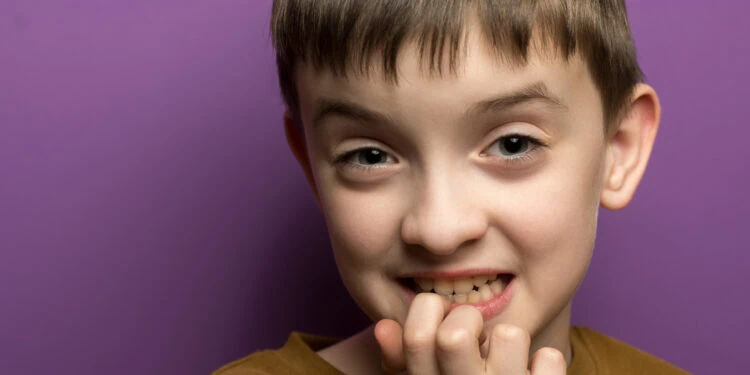
Children’s facial expressions reveal fear response to gender-nonconforming boys, study finds | Eric W. Dolan, PsyPost
A new study published in the Archives of Sexual Behavior suggests that children may experience subtle fear when observing boys who engage in gender-nonconforming behaviors, such as playing with dolls or dressing in feminine clothing. This reaction was not found when children observed gender-nonconforming girls. The research offers a rare glimpse into children’s unconscious reactions using facial expression analysis, and adds to growing evidence that gender-nonconforming boys face heightened social bias in childhood.
The study was led by a team of researchers in Hong Kong and Canada who wanted to better understand how children appraise their peers who do not conform to traditional gender norms. While past studies have consistently shown that children tend to evaluate gender-nonconforming peers—especially boys—less positively, those studies relied mainly on verbal responses. But young children are still developing their language skills, and they may also give socially desirable answers when asked directly. The researchers in this study wanted to see if facial expressions, which are harder to control, might provide insight into children’s more automatic emotional responses.
“For a number of years, I had been working on research about childhood gender role behavior and its association with mental health. A lot of studies by me and other researchers pointed to relationships with peers as a key factor,” said study author Doug P. VanderLaan, an associate professor of psychology at the University of Toronto Mississauga and co-editor of Gender and Sexuality Development: Contemporary Theory and Research.
“Children whose behaviors do not align with gender role stereotypes, who are sometimes referred to in the research literature as gender-nonconforming children, tend to experience poorer relationships with peers. For example, they may be bullied or experience social ostracism. In turn, this pattern can contribute to lower levels of psychological well-being. It occurred to me that fostering more positive peer relations could be one important avenue for addressing this issue.
“But to identify strategies for fostering positive peer relations, we first need to have a deeper understanding of how children think and feel about peers who display gender-nonconforming behaviors,” VanderLaan continued. “So, along with my colleagues, we conducted a series of studies aimed at understanding children’s thoughts and feelings about gender-nonconforming peers.”
One aspect that had not been considered previously was the emotional component. There was no prior research on children’s emotional reactions when they encountered a peer whose behaviors did not follow gender stereotypes. Given that emotions can have an influence in social interactions, we thought this was an important gap in our knowledge that needed to be filled.”
To explore this question, the research team studied 605 children between the ages of 4 and 9 from Hong Kong and Canada. The sample included nearly equal numbers of boys and girls. Children were shown four brief illustrated stories, each about a different hypothetical child: a gender-conforming boy, a gender-nonconforming boy, a gender-conforming girl, and a gender-nonconforming girl. The stories described each child’s preferences across four domains—activities, toys, clothing and hairstyle, and playmates—designed to signal either adherence to or departure from traditional gender expectations.
For example, the gender-conforming boy was shown preferring cars and football, dressing like his dad, and playing with boys. The gender-nonconforming boy preferred Barbie dolls and kitchens, dressed like his mom, and played with girls. Similar contrasts were used for the girl targets. Each vignette lasted about one minute, and the children’s faces were video-recorded as they watched.
These facial recordings were analyzed using a software program called FaceReader, which estimates the presence and intensity of six basic emotions—happiness, sadness, anger, fear, disgust, and surprise—based on subtle facial movements. The software uses a facial action coding system and maps over 500 facial points to determine emotional expressions, providing an objective way to analyze children’s responses without relying on their ability or willingness to explain what they feel.
“Ours was the first study to use facial emotional expressions as a window on the emotional aspect of children’s reactions to gender-nonconforming peers,” VanderLaan noted. “At the outset, we were unsure whether this method would be sensitive enough to detect any emotional differences. It is good to know that this method provides a viable route to a more comprehensive understanding of how children respond when presented with peers of varying gender role expressions.”
The researchers found a consistent pattern across the diverse sample: when viewing the gender-nonconforming boy, children showed more fear-related facial expressions than when viewing the gender-conforming boy. This difference was statistically significant, although small in size. No such differences were found when comparing reactions to the gender-conforming and gender-nonconforming girls. The increase in fearful expression was specific to the gender-nonconforming boy, suggesting that children’s emotional reactions are especially sensitive to violations of traditional masculinity.
“This increased fear response parallels other findings suggesting that children from Chinese and Euro-American cultures tend to view gender-nonconforming children less favorably, particularly in the case of feminine boys,” VanderLaan told PsyPost. “For example, they tend to be less interested in being friends with gender-nonconforming children. Also, gender-nonconforming children tend to be seen by their peers as engaging in behaviors that are ‘wrong,’ and peers also perceive them as being less happy and as less likely to be popular.”
“Importantly, rather than being inevitable, the development of these thoughts and feelings appears to be driven by societal influences. Other similar research in Thailand, where there is greater social visibility and acceptance of gender diversity, has indicated that children do not show these same prejudices against gender-nonconforming behaviors. With this in mind, there seems to be merit in the possibility that through greater social and cultural acceptance of gender diversity, we may see improvements in children’s attitudes towards gender-nonconforming peers. In turn, such improvements may help address mental health disparities among gender-nonconforming children.”
To better understand this fear response, the researchers compared the facial data to children’s answers to a set of follow-up questions. After watching each vignette, the children were asked whether they would want to be friends with the target, whether they thought others would like the target, whether they thought the target was happy, whether they liked the activities the target engaged in, and whether the target’s behavior was morally acceptable.
Interestingly, the children who showed more fear in response to the gender-nonconforming boy were also more likely to say he seemed unhappy. But the fear response was not related to the other verbal judgments, such as friendship preference or moral judgment. This finding suggests that the facial expression of fear may reflect children’s internal appraisal of emotional well-being in gender-nonconforming boys, rather than a broader social evaluation.
These results offer a unique window into the emotional side of children’s biases, highlighting how gender norms are policed even at an early age—not just through speech, but through emotion. Prior studies have shown that gender-nonconforming children, especially boys, often face peer rejection and are more vulnerable to poor mental health. The current findings provide evidence that even brief exposure to nontraditional gender expression can elicit negative emotional reactions from peers, which may contribute to these children’s social challenges.
One possible explanation for the observed fear response is that gender-nonconforming boys are perceived as violating expectations in a way that is socially discouraged. Boys, in particular, are often subject to strict rules about how they should behave, dress, and interact. From a young age, children learn these rules from parents, teachers, peers, and media. When a boy violates them—by playing with dolls or wearing feminine clothing—he may be seen as strange or confusing, and that confusion may provoke discomfort or fear.
Another explanation involves social identity and group dynamics. Children tend to prefer peers who are like themselves and may treat those who differ as outsiders. According to developmental theories, violations of gender norms can trigger discomfort because they challenge a child’s understanding of what it means to be a boy or girl. This discomfort could be expressed through subtle emotional cues, such as fearful facial expressions, even if the child does not verbally express disapproval.
“Unfortunately, I was not terribly surprised to see that children had an elevated fear response to the feminine boy character,” VanderLaan said. “There’s a fair amount of research indicating that children and adults often have negative, prejudiced reactions towards gender nonconformity, and particularly towards male femininity. There are also wider literatures on femmephobia, which refers to negativity or aversion towards femininity, and its connection to homophobia and negative reactions towards LGBTQ folks.”
“So, our findings fit within this wider frame. At the same time, out findings are unique in showing that this kind of emotional sentiment can emerge in childhood and be detected by using facial emotional expressions, which is an objective and implicit behavioral measure.”
Read more:
psypost.org/childrens-facial…
13
4
28
2,182


15 Mar 2025
即使他很开心,难道他录视频回应的时候要大笑?明显要装的深沉难过一点,被facereader识别为担心和害怕。这显然不是他一夜涨粉百万后的真实心态。
2
496
