Purnima Sharma retweeted
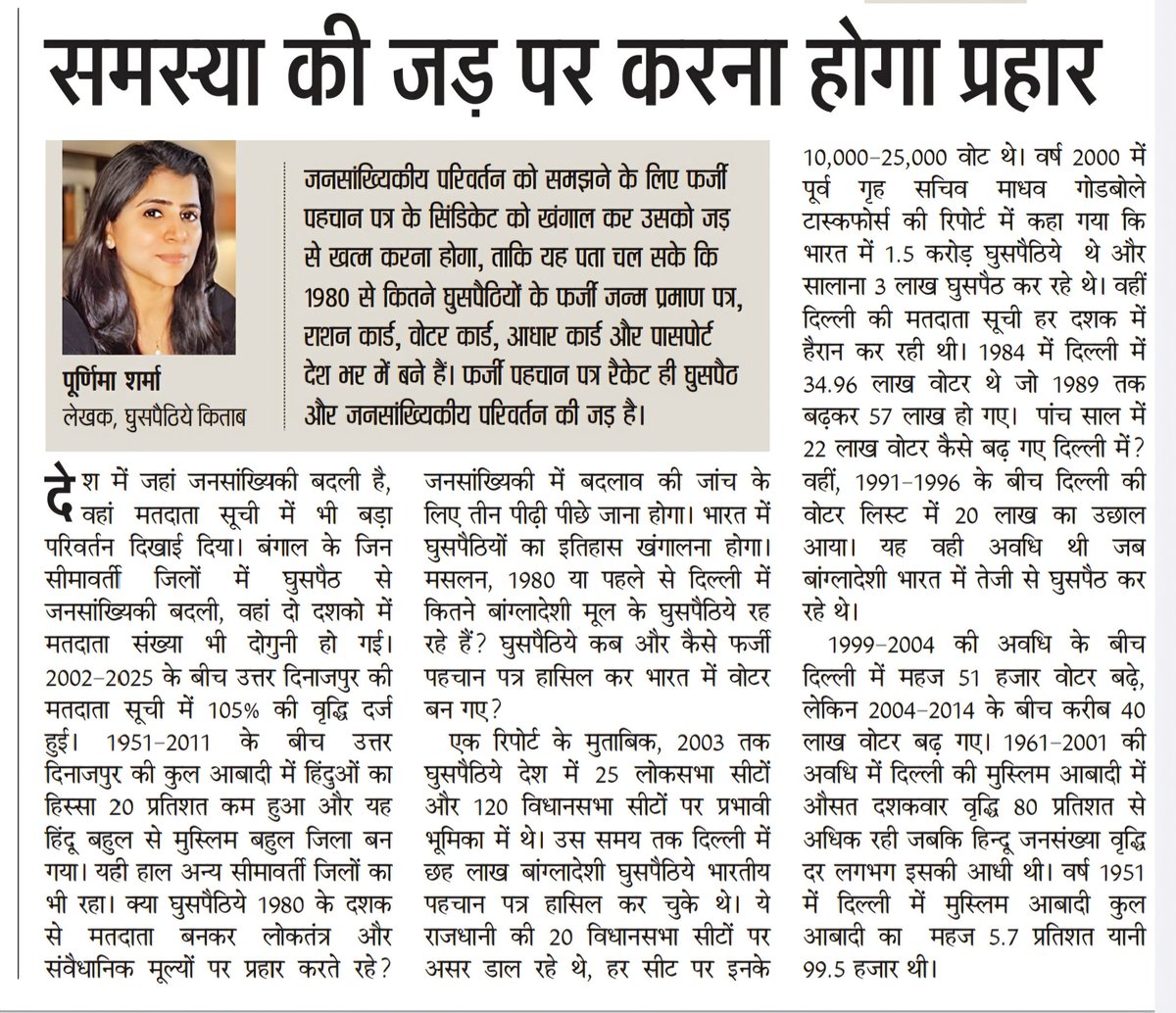
हाल ही में दैनिक जागरण @JagranNews में प्रकाशित मेरा लेख पढ़ें...
#FakeIDrackets #FakeIDs
#DemographicShift #VoterList
#FakeVoters #ElectoralRoll
#SpecialIntensiveRevision
#Demography #Bangladeshiinfiltrators #infiltrators #illegalimmigrants
#1971 #1977 #Encroachments
#illegalConstruction #illegalColonies #Bangladeshi #GovtLandEncroachments
6
16
907


May 14
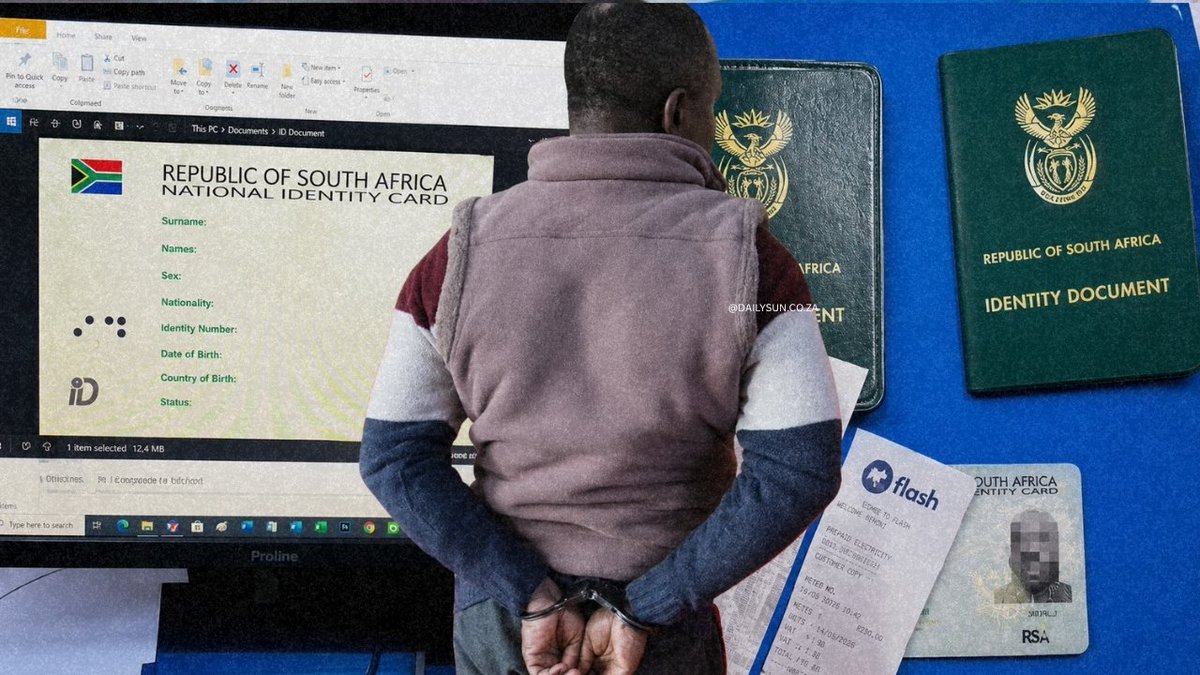
He banna! A FAKE “Home Affairs” shop was allegedly operating right under people’s noses in Benoni. 😳🔥 Cops found fake IDs, permits and licences during a shocking raid. #Benoni #FakeIDs #EMPD #DailySunNews #SouthAfrica snl24.com/dailysun/news/fake…
3
9
13
773



Apr 18
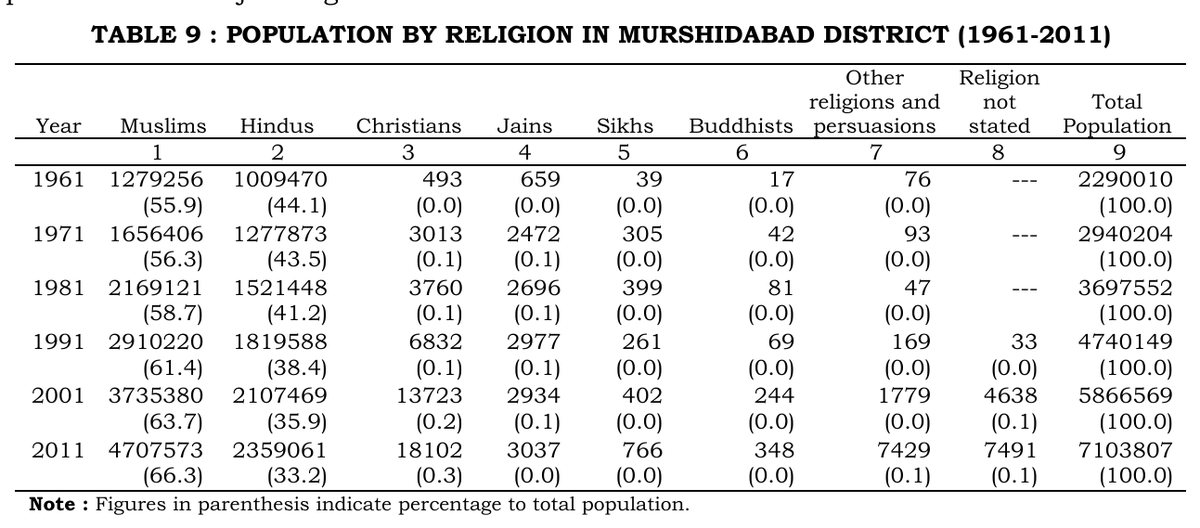
मुर्शिदाबाद में 1951-2011 के बीच
मुस्लिम 9.47 लाख से उछलकर 47 लाख पहुंच गए.
वहीं हिंदू 7.65 लाख से 23.59 लाख ही हुए.
हिंदू आधे 33%, मुस्लिम दोगुने 66% हो गए #Murshidabad #2011
1951 में केवल 1.8 लाख का अंतर,
2011 तक बढ़कर 23.48 लाख कैसे हुआ?
2026 तक डेमोग्राफी कितना बदली होगी?
मुर्शिदाबाद में 2002-2025 के बीच वोटर लिस्ट में 88% की बढ़ोतरी दर्ज हुई.
जिले में वोटर संख्या 30.6 लाख से बढ़कर 57.4 लाख पहुंच गई.
timesofindia.indiatimes.com/…
#WestBengal #BangladeshBorder
#illegalimmigrants #FakeIDs
#Bangladeshiinfiltrators #BangladeshiMusliminfiltrators
Mar 30

मुर्शिदाबाद की मुस्लिम आबादी
1951 में 9.47 लाख से बढ़कर
1961 में 12.79 लाख पहुंच गई. वहीं
1971 में 16.56 लाख से बढ़कर
1981 में 21.69 लाख हो गई,
1991 में 29.1 लाख ,
2001 में 37.35 लाख,
2011 में 47 लाख से अधिक हो गई.
मुस्लिम 55 प्रतिशत से 66.3 प्रतिशत हो गए.
हिन्दू 45 प्रतिशत से 33.2 प्रतिशत ही बचे.
मुस्लिम आबादी के मुकाबले हिन्दू जनसंख्या का प्रतिशत आधा रह गया.
#illegalimmigration
#Bangladeshiinfiltrators
#Bangladeshi #infiltrations
#FakeIDs #illegalimmigrants #WestBengal #Murshidabad #Farakka
1
1
145
असम में मुस्लिम सर्वाधिक तेजी से बढ़े,
2011 तक कुल आबादी में
मुसलमान 34% से अधिक हो गए!
- *1971 से मुस्लिम आबादी में अप्रत्याशित बढ़ोतरी
- 1951-2011 के बीच
मुस्लिम जनसंख्या में 435% की बढ़ोतरी !
- मुस्लिम आबादी में 5.3 गुना बढ़ोतरी
- 1951-2011 के बीच
मुस्लिम 19.96 लाख से 1.07 करोड़ हो गए
- विभाजन से बहुत पहले रची गई थी असम की डेमोग्राफी बदलने की साजिश
- मुस्लिम लीग असम को पूर्वी पाकिस्तान में मिलाना चाहती थी
- असम न मिल पाने की कसक में भेजे #घुसपैठिए?
#बांग्लादेशी_घुसपैठिए
- विभाजन से ही हो रही है असम में घुसपैठ...
- #EastPakistaniMuslimInfiltrators
# BangladeshiMusliminfiltrators
#Asam #DemographicInvasion
#DemographicOnslaught #DemographicShift #IMDTAct
#Bangladeshiinfiltrators #Bangladeshi #Muslims #illegalimmigrants #घुसपैठिए
#FakeIDs #FakeIDracket
#Dhubri #Karimganj #barakValley #Cachar
#IndiaBangladeshBorder #Mancachar
1
3
294
“these land hungry illegal Bangladeshis, like swarms of ants flock and spread into any vacant government land, work on them like vultures do on the corpse. They encroach upon all classes of land — hills or beels, reserved forests or roadside reserved lands, xatras or tribal belt/block lands.”
sentinelassam.com/topheadlin…
#Bangladeshiinfiltrators #Bangladeshis #infiltrators
#illgalBangladeshi #BangladeshiMusliminfiltrators
#FakeVoters #FakeIDs #ThreatToNationalSecurity
1
1
1
218
The Muslim cultivators from East Bengal were encouraged by the Muslim League government of Mohammad Sadullah in Assam ostensibly for the Grow More Food Campaign.
However, Viceroy Lord Wavell said in his Memoirs that Sadullah was much more interested in growing more Muslims.
#Assam #DemographicShift
#BangladeshiMusliminfiltrators
#illegalBangaldeshiMuslims #Infiltrators #FakeVoters
#FakeIDs #FakeBirthCertificates
Mr. D.N. Bezboruah, editor, The Sentinel, said that plans to alter Assam’s demography were launched much before the Partition. Amalendu Guha in Planter Raj to Swaraj: Freedom Struggle and Electoral Politics in Assam 1826-1947, pointed out that Muslim presence in the Brahmaputra Valley rose from nine per cent in 1881 to 19 per cent in 1931 and 23 per cent in 1941. In Barpeta sub-division alone, Muslims comprised merely 0.1 percent of the population in 1911, but were almost 49 per cent in 1941.
1
1
198
Bezboruah rightly suggests that these are very drastic reductions for a country that has otherwise had an annual population growth rate of over 3.5 percent.
The only credible explanation is that people migrated to India en masse. In fact, Bangladesh’s 1991 census speaks of a “missing population” of six million!
#Assam #DemographicShift #BangladeshiMuslims
#BangladeshiMusliminfiltrators #illegalBangladeshiMuslims #FakeVoters #FakeIDs #illegalBangladeshiMuslims #Bangladeshiinfiltrators
#FakeBirthCertificate
A look at just three divisions in Bangladesh should suffice.
In Dhaka division, the annual population increase during 1961-1974 was 3.11 %,
but fell to 2.75 % during 1974-1981 and
2.22 % during 1981-1991.
In Khulna division,the figures were 3.31 % (1961-1974), 2.41 % (1974-1981) and 1.62 % (1981-1991).
In Rajshahi division, the figures were 3.56 % (1961-1974), 2.64 % (1974-1981) and 2.09 %.
In Bangladesh as a whole, the figures for these years were 3.21 percent (1961-1974), 2.57 percent (1974-1981) and 2.03 percent (1981-1991).
Bezboruah rightly suggests that these are very drastic reductions for a country that has otherwise had an annual population growth rate of over 3.5 percent.
The only credible explanation is that people migrated to India en masse. In fact, Bangladesh’s 1991 census speaks of a “missing population” of six million!
#Assam #DemographicShift #BangladeshiMuslims
#BangladeshiMusliminfiltrators #illegalBangladeshiMuslims #FakeVoters #FakeIDs #illegalBangladeshiMuslims #Bangladeshiinfiltrators
#FakeBirthCertificate
1
61
A look at just three divisions in Bangladesh should suffice.
In Dhaka division, the annual population increase during 1961-1974 was 3.11 %,
but fell to 2.75 % during 1974-1981 and
2.22 % during 1981-1991.
In Khulna division,the figures were 3.31 % (1961-1974), 2.41 % (1974-1981) and 1.62 % (1981-1991).
In Rajshahi division, the figures were 3.56 % (1961-1974), 2.64 % (1974-1981) and 2.09 %.
In Bangladesh as a whole, the figures for these years were 3.21 percent (1961-1974), 2.57 percent (1974-1981) and 2.03 percent (1981-1991).
Bezboruah rightly suggests that these are very drastic reductions for a country that has otherwise had an annual population growth rate of over 3.5 percent.
The only credible explanation is that people migrated to India en masse. In fact, Bangladesh’s 1991 census speaks of a “missing population” of six million!
#Assam #DemographicShift #BangladeshiMuslims
#BangladeshiMusliminfiltrators #illegalBangladeshiMuslims #FakeVoters #FakeIDs #illegalBangladeshiMuslims #Bangladeshiinfiltrators
#FakeBirthCertificate
From 1951 to 1961, Assam's population rose by 34.98%, and from 1961 to 1971, the growth rate was 34.95% . Thus, for two decades the population grew at almost 3.5 percent annually, which is unparalleled elsewhere in the country. Clearly, the main causative factor was the large-scale illegal migration from East Pakistan. Indeed, a study by Ashok Swain traces how the annual population increase in each division of Bangladesh declined correspondingly between 1961 and 1991.
1
1
203
1951 की जनगणना में दिल्ली में सिर्फ 99,501 मुस्लिम थे,
राजधानी की कुल जनसंख्या का केवल 5.7%.
1961-2001 की अवधि में दिल्ली में मुस्लिम आबादी की दशकवार औसत वृद्धि 80% रही. #DecadalGrowthAverage
ये दिल्ली की जनसंख्या की औसत वृद्धि दर और हिन्दू वृद्धि दर से बहुत ज्यादा थी.
#BangladeshiMusliminfiltrators
#Bangladeshiinfiltrators #illegalBangladeshi
#illegalBangladeshiMuslims #Bangladeshi
#FakeIDs #FakeVoters #FakeBirthCertificates
#SKSinhareport #MadhavGodboleReport #IBreports
indiatoday.in/magazine/natio…
13 Nov 2025
घुसपैठिए दिल्ली में आते रहे और दिल्ली की डेमोग्राफी बदलते रहे? #infiltrators
1951 में जहां दिल्ली में महज 5.7% मुस्लिम आबादी थी 2011 तक वो करीब 13% पहुंच गई.
लगातार तीन दशकों तक दिल्ली में मुस्लिम आबादी का वृद्धि प्रतिशत 83% से ज्यादा रहा.
इस अप्रत्याशित वृद्धि की वजह क्या होगी? क्यों हर दशक में दिल्ली में मुस्लिम आबादी में अचानक तेज उछाल होता था.
आंकड़ों पर गौर करें तो 1951 में दिल्ली में मुस्लिम जनसंख्या सिर्फ 99,501 थी यानि कुल आबादी का 5.7%.
लेकिन 1961 में ये संख्या बढ़कर 1,55,453 हो जाती है, यानि 99.5 हजार में 56 हजार की आबादी और जुड़ जाती हैं – 10 साल में 99.5 हजार से 1.55 लाख. #NehruLiaquatPact1950
वहीं 1971 में दिल्ली की मुस्लिम आबादी में करीब 70% का उछाल देखने को मिलता है – 1.55 लाख से बढ़कर ये 2.63 लाख हो जाती है, यानि 10 सालों में 1 लाख से ज्यादा लोग दिल्ली की आबादी में शामिल हो जाते हैं.
1981 में उछाल बहुत तेज हो जाता है, दिल्ली की मुस्लिम आबादी 83% बढ़ जाती है, यानि अब ये 2.63 लाख से बढ़कर 4.82 लाख पहुंच गई. ये वो समय था जब बांग्लादेशी भारत में घुसपैठ करने लगे थे.
अब आते हैं 1991 में, 1981-1991 के बीच दिल्ली की मुस्लिम आबादी में रिकॉर्ड बढ़ोतरी होती है. 1981-1991 के दशक में दिल्ली की मुस्लिम आबादी में 85% का रिकॉर्डतोड़ उछाल होता है – मुस्लिम आबादी 4.82 लाख से बढ़कर 8.9 लाख पहुंच गई.
1991-2001 के बीच भी यही ट्रेंड कायम रहा. याद रहे, वर्ष 2000 में भारत के पूर्व गृह सचिव माधव गोडबोले से भारत सरकार को एक रिपोर्ट सौंपी थी. इस रिपोर्ट में 1.5 करोड़ बांग्लादेशी घुसपैठियों के भारत में होने की बात कही गई थी. ये भी बताया गया था कि सालाना 3 लाख घुसपैठिए भारत में दाखिल हो रहे हैं.
1991-2001 के बीच दिल्ली में मुस्लिम आबादी में अप्रत्याशित उछाल बना रहता है. इस दशक में भी मुस्लिम आबादी में 82.5% बढ़ोतरी दर्ज होती है – यानि मुस्लिम आबादी 2001 तक बढ़कर 16.24 लाख हो चुकी थी. 1991 में 8.9 लाख से बढ़कर, 2001 में 16.24 लाख पहुंच गई. क्या ये सामान्य बढ़ोतरी थी? इस अवधि में दिल्ली में हिन्दू आबादी में बढ़ोतरी का प्रतिशत मुस्लिम वृद्धि प्रतिशत के मुकाबले लगभग आधा था.
2001-2011 के बीच दिल्ली की मुस्लिम आबादी में 33% की बढ़ोतरी होती है – दिल्ली की मुस्लिम आबादी जो 1951 में 99.5 हजार थी 2011 तक बढ़कर 21.59 लाख पहुंच जाती है.
2011 से 2025 तक दिल्ली की मुस्लिम आबादी कहां पहुंची होगी, कितने घुसपैठिए दिल्ली में फैले होंगे?
2003 की एक रिपोर्ट के मुताबिक – बांग्लादेशी घुसपैठिए देश में 25 लोकसभा सीटों और 120 विधानसभा सीटों पर प्रभावी भूमिका में थे। 2003 तक दिल्ली में 6 लाख बांग्लादेशी घुसपैठिए भारतीय पहचान पत्र हासिल कर चुके थे – ये दक्षिण, पश्चिम दिल्ली समेत कई इलाकों में फैले थे, और आपराधिक गतिविधियों में लिप्त थे. दिल्ली की 20 विधानसभा सीटों में हर सीट पर इनके 10,000 - 25,000 वोट थे.
कोई भी विदेशी अवैध तरीके से भारत में घुसा चला आता है? हर दशक में घुसपैठिए दिल्ली में फैलते जाते हैं? जो देश के नागरिक नहीं है जिनकी भारत के प्रति निष्ठा नहीं है, उनका भारत में होना राष्ट्रीय सुरक्षा के लिए खतरा है.
हाल ही में इंटेलिजेंस रिपोर्ट्स में खुलासा हुआ है – आतंकी संगठन लश्कर-ए-तैयबा, जैश-ए-मोहम्मद बांग्लादेश के रास्ते भारत को निशाना बनाने की साजिश रच रहे हैं. आतंकियों को भारत में घुसाने के लिए बांग्लादेश में युवाओं को ट्रेनिंग दी जा रही है
पाकिस्तान और बांग्लादेश की नजदीकियां बढ़ चुकी हैं और कट्टपंथी संगठन लगातार बांग्लादेश में बहुत हावी हो रहे हैं
जरूरी है कि देश के नागरिकों की सुरक्षा के मद्देनजर घुसपैठियों को देश से फौरन बाहर किया जाए. असम की तरह दिल्ली से भी अतिक्रमण, अवैध झुग्गी-बस्तियां हटाए जाने की जरूरत है. घुसपैठिए अगर दिल्ली के ग्रामीण इलाकों,अवैध कॉलोनियों के फ्लैटों में रह रहे हैं तो वहां से भी इनकी पहचान की जानी चाहिए.
#Encroachments #JhuggiBastis #YamunaFloodplainEncroachment #illegalColonies
दिल्ली की स्पेशल सेल – बांग्लादेशी घुसपैठियों को डिटेक्ट, डिपोर्ट करने में जुट जाए.
स्पेशल इंटेंसिव रिवीजन की प्रक्रिया को प्रायोरिटी देते हुए, वोटर आईडी का पुनरीक्षण किया जाए. सरकार पैन कॉर्ड, राशन कार्ड और पासपोर्ट की भी गहन जांच करें.
फर्जी कागज देकर कितने घुसपैठियों ने भारतीय पासपोर्ट हथिया लिए हैं? राष्ट्रीय सुरक्षा के मद्देनजर, देश में सभी नागरिकों के लिए एकसमान कानून लागू होना चाहिए.
#Bangladeshiinfiltrators #illegalBangladeshiimmigrants
#DelhiRiotsBangladeshiinfiltrators
1
2
140
घुसपैठ से दिल्ली में जनसंख्या घनत्व बढ़ा? #populationdensity
#MostPopulousCity
घुसपैठियों ने संसाधनों, मूलभूत सुविधाओं पर दबाव बढ़ाया ?
घुसपैठियों ने दिल्ली में हवा, पानी, जमीन, पर्यावरण से जुड़े हर पहलू का संतुलन बिगाड़ा?
जनसंख्या घनत्व में दिल्ली को दुनिया में दूसरे नंबर पर पहुंचा दिया? #BangladeshiMusliminfiltrators
क्या हाल किया है देश की राजधानी दिल्ली का?
statista.com/statistics/9122…
लाखों घुसपैठिए फैले हैं दिल्ली में? #FakeIDs #FakeVoters
youtube.com/shorts/iuJJDR0UV…
indiatoday.in/magazine/natio… #IBreports
timesofindia.indiatimes.com/…
#Bangladeshiinfiltrators #BangladeshiMuslims
26 Dec 2025
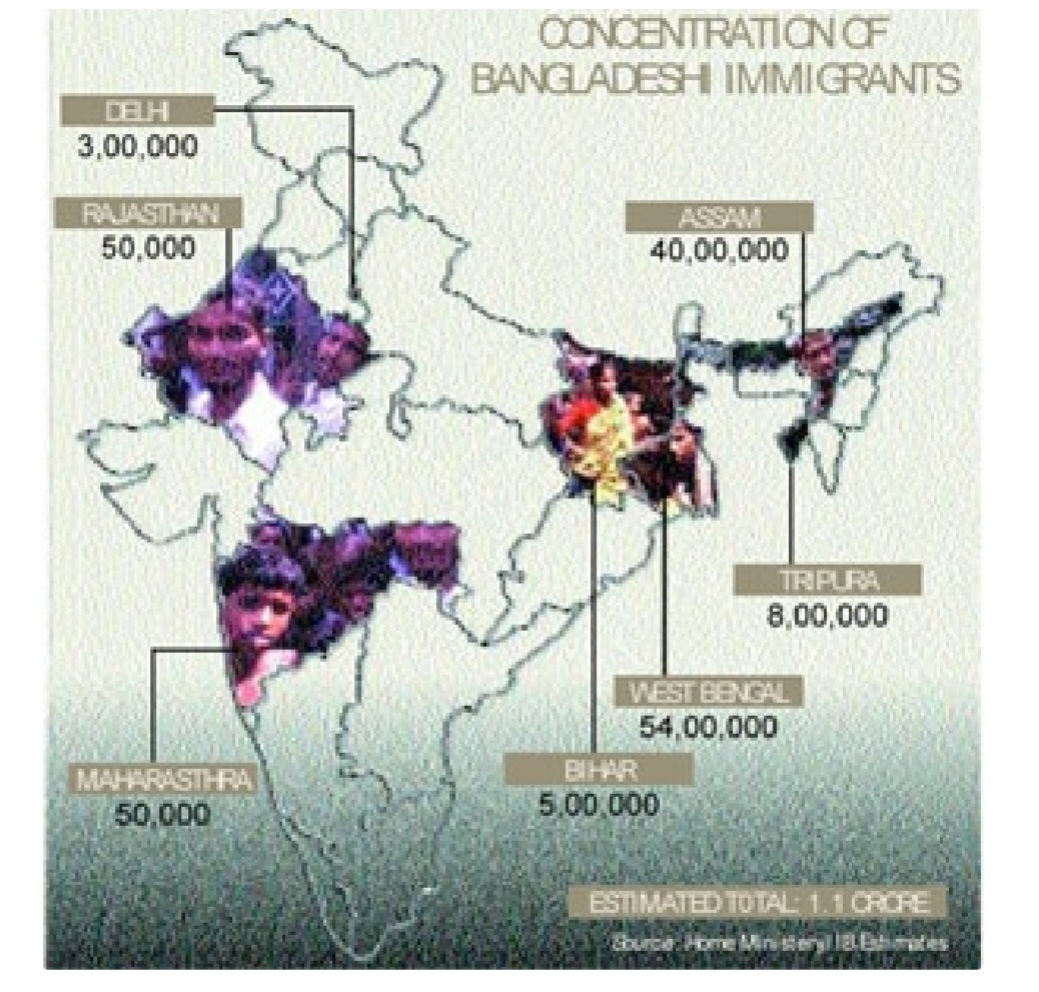
1998 की रिपोर्ट:
1998 तक 3 लाख बांग्लादेशी घुसपैठिए दिल्ली में फैल चुके थे, 5 लाख घुसपैठिए बिहार में घुस गए थे... #BangladeshiBihariMuslims
1998 तक 54 लाख बांग्लादेशी घुसपैठिए पश्चिम बंगाल में थे,
40 लाख असम में, 8 लाख त्रिपुरा में, इसी तरह राजस्थान, महाराष्ट्र और देश के बाकी राज्यों में फैल चुके थे 1998 तक .... 1971 के बाद से बांग्लादेशी घुसपैठिए भारत में फैलने लगे थे, 1977 के बाद से ये तेजी से भारत में घुस रहे रहे थे.... (1998 तक 1.1 करोड़ घुसपैठिए)
#BangladeshiMusliminfiltrator #BangladeshiMuslims
... Delhi's Seemapuri, home to an estimated 50,000 Bangladeshi immigrants (1998 report)
50-year-old Altaf Hussain still remembers the time his sons Milon and Haroon were caught by the authorities in the wake of an anti-Bangladeshi drive by the local BJP Government in 1994.
... they again came back to Seemapuri. " Here (Delhi) we live in comfort," says Hussain, a migrant from Khulna, Bangladesh.
Altaf Hussain The father of seven came to Delhi in 1970s. Two sons were deported to Bangladesh but they returned. #illegalimmigrants #Bangladeshis
27-year-old Multan Ahmed to cross the border and make his way to Ajmer last week. A matriculate whose parents still live in the Motijheel area of Dhaka, Ahmed speaks fluent Hindi...
#Bangladeshiinfiltrators
Bangladeshis who visit India on visas and then simply disappear. In 1991, 13,424 visited India but only 9,645 returned; in 1992, only 12,160 out of 21,574 went back; and in 1994, only 21,436 of the 29,757 visitors left India. A large number of them disappear only to re-emerge with new identities.
...to distinguish a Bengali from a Bangladeshi at the best of times- dialect is the only give-away. Identification become doubly difficult with dubious papers. In Calcutta's Metiabruz and Garden Reach localities certificates, allegedly issued by block development officers, are easy to come by.
These, in turn, are used to secure ration cards-the state Government is excessively generous in issuing these-a place in the electoral rolls and even Indian passports. In 1996, Regional Passport Officer A.K. Bhattacharya personally supervised the screening of 16,000 "suspicious" passport applications. He sent out letters to the permanent and present addresses given by the applicants and received almost all of them back with the "addressee not found" stamp.
Such a system cannot be conceived without political patronage. As their numbers have grown, Bangladeshi immigrants have become important vote banks. The way was shown by former President Fakhruddin Ali Ahmed and Congress leader Moinul Haq Choudhury in Assam.
Left Front can hardly pretend that the problem of illegal immigration from Bangladesh doesn't exist. During his tenure as home minister, veteran CPI leader Indrajit Gupta stumped everyone by casually telling the Lok Sabha on May 6, 1997 that the government estimated the number of illegal immigrants at nearly one crore.
"Out of every 10 persons, one could be from among those who got in illegally," he said. ...the Intelligence Bureau estimates the number of illegal Bangladeshi immigrants at 1.1 crore (1998), with the greatest concentration in West Bengal and Assam . In 1992, an internal note prepared by the Union Home Ministry suggested that illegal immigration has changed the "demographic landscape" of the eastern border states.
Bangladesh has stead fastly denied that its citizens cross over to India, but the country's census figures tell a different story of the missing millions. Sharifa Begum, a demographer at the Bangladesh Institute of Development Studies in Dhaka, calculated that nearly 3.5 million people "disappeared" from East Pakistan between 1951 and 1961-probably as a result of Partition.
She indicated that another 1.5 million may have entered India between 1961 and 1974. Another fact kept under wraps is that a quarter of the 10 million refugees who came to India during the 1971 liberation struggle probably stayed behind.
indiatoday.in/magazine/natio…
1
188

Yurii Nazarenko pleaded guilty to running OnlyFake, an AI-powered site that created over 10,000 fake IDs and passports, used to bypass KYC at banks & crypto exchanges. Extradited from Romania, faces up to 15 years. #OnlyFake #Ukraine #FakeIDs
ift.tt/17jk3Nm
1
4
289
पश्चिम बंगाल में क्या खेल चल रहा है?
कितने घुसपैठिए फैल चुके हैं भारत में?
#BiggestInfiltrationCorridorWestBengal #FakeIDs
#FakeVoters
#FakeIDracketeers #FakeBirthCertificate
#Bangladeshiinfiltrators #illegalimmigrants
#illegalBangladeshi
youtube.com/shorts/6Qbeeu54Q…

1
1
357