“VAR? Oh, fuck off will ya!”(@mikeharristns,2024) 😂
VAR CONTROVERSY AT PARK HALL — ONLY AT THE NEW SAINTS!
🎥💚 RELIVE ONE OF THE MOST CHAOTIC MOMENTS FROM
@tnsfc: ROAD TO EUROPE — THE MIKE HARRIS STORY
NOW FREE ON YouTube FOR THE WORLDWIDE FANS THIS @FIFAWorldCup! 💚🎥
This is not just a football documentary.
This is passion.
This is controversy.
This is Park Hall.
This is Welsh football.
This is Mike Harris.
This is The New Saints.
From @ChampionsLeague dreams to VAR drama, The New Saints of Oswestry Town FC Road To Europe: The Mike Harris Story gives supporters a front-row seat to the emotion, humour and madness behind one of Welsh football’s most unforgettable journeys.
Now available to watch free of charge during The New Saints’ @UEFA Champions League 2026/27 run-up campaign.
🎬 To watch, please click here:
youtube.com/watch?v=aZwjIj0N…
🌐 Website: tnsfc.co.uk
🐦 X: @tnsfc
📘 Facebook: The New Saints of Oswestry Town FC
🎵 TikTok: @tnsfc
#TNSFC #TheNewSaints #RoadToEurope #MikeHarrisStory #VARControversy #ParkHall #WelshFootball #JDCymruPremier #UEFA #ChampionsLeague #EuropeanCampaign #WelshDomesticFootball #FootballDocumentary #FIFAWorldCup
Short Created by: @PlanetHippo
3
2
328
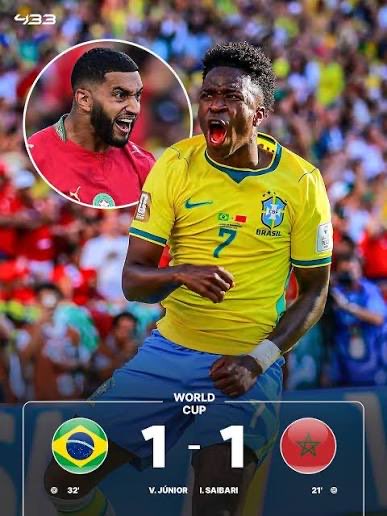
2026 FIFA WORLD CUP — BRAZIL VS MOROCCO: WHEN THE KING OF FOOTBALL MET THE NATION THAT REFUSED TO FEAR ANYONE
Some football matches are bigger than the 90 minutes.
They become symbols.
They represent a changing world.
They show one generation trying to protect its legacy while another generation fights to create its own.
That was the story when Brazil faced Morocco at the 2026 FIFA World Cup.
On one side stood Brazil.
The most successful nation in World Cup history.
Five trophies.
A country that gave football some of its greatest artists.
Pelé.
Garrincha.
Ronaldo.
Ronaldinho.
Neymar.
The yellow shirt carries a different kind of pressure because for Brazil, competing is not enough.
Brazil is judged by one thing.
Winning.
After years of disappointment, the dream remained the same.
The sixth star.
The return to the top.
But standing against them was Morocco.
A team that had already changed the history of African football.
Before Morocco’s incredible 2022 World Cup run, many people respected African football but still questioned whether an African nation could truly challenge the biggest powers.
Morocco answered that question.
They defeated giants.
They reached the semi finals.
They became the first African country ever to reach that stage of the tournament.
They did not just create a moment.
They changed expectations.
Now in 2026, Morocco did not arrive hoping for respect.
They arrived expecting it.
Brazil entered the match with some of the biggest names in world football.
⭐ Vinícius Júnior carried the responsibility of leading the next Brazilian generation. His pace, creativity, and ability to decide matches made him one of the biggest attacking threats in the tournament.
⭐ Rodrygo represented the kind of player Brazil has always produced. A footballer capable of creating magic when the pressure is highest.
⭐ Bruno Guimarães was the heartbeat of the midfield, the player expected to control the tempo and protect Brazil’s attacking freedom.
The expectation was clear.
Brazil had the stars.
Brazil had the history.
Brazil had the reputation.
But Morocco had something that cannot be measured.
Belief.
Their leaders represented a golden generation.
⭐ Achraf Hakimi was not only a defender. He was an attacking weapon and one of the most dangerous full backs in world football.
⭐ Hakim Ziyech brought creativity and unpredictability. A player who can change a match with one pass or one shot.
⭐ Yassine Bounou carried the confidence of a goalkeeper who had already stood against football’s biggest names and survived.
The match became a battle between two football ideas.
Brazil wanted control through talent.
Morocco wanted control through discipline.
Brazil wanted the ball.
Morocco wanted the moment.
The statistics showed how competitive the battle was.
Possession was almost evenly shared, proving Morocco were not simply defending and waiting.
Brazil created more attacking pressure and produced more dangerous moments, but Morocco remained organized and dangerous on the counter attack.
The shots on target showed the biggest story of the match.
Brazil had the quality.
Morocco had the resistance.
Every attack carried tension because one mistake could change everything.
Then came the moment that created debate.
A challenge inside the game became a talking point.
Brazil supporters questioned whether they deserved a decision.
Morocco supporters believed the officials made the correct call.
Within minutes, the conversation moved from the pitch to social media.
Former players debated it.
Fans argued.
The referee became part of the story.
And once again, the World Cup reminded everyone that football is not only about goals.
#WorldCupHistory #FIFAWorldCup #WorldCup2026 #Brazil #Morocco #ViniciusJr #Rodrygo #BrunoGuimaraes #AchrafHakimi #HakimZiyech #YassineBounou #AfricanFootball #FootballDocumentary #WorldCupStories #FootballHistory #SoccerHistory #WorldCupAnalysis #FIFAHistory

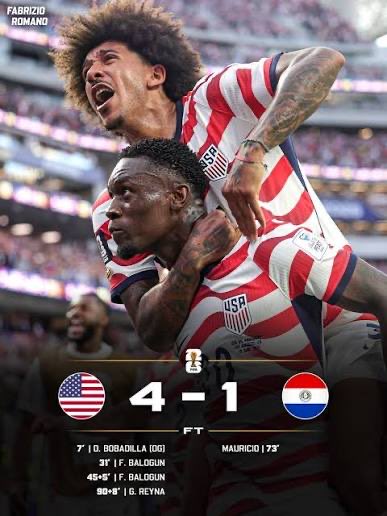
2026 FIFA WORLD CUP — USA VS PARAGUAY: THE NIGHT THE HOSTS DECLARED THEY WERE NOT JUST HERE TO HOST
The 2026 FIFA World Cup had reached its next chapter, and for the first time in history, the world turned its attention to the host nation.
The United States.
A country where football has spent decades fighting for attention.
A country that has always had the athletes, the money, and the infrastructure, but was still searching for one thing.
Football immortality.
Now the biggest World Cup ever created had arrived on American soil, and the pressure was enormous.
The question before the match was not only about winning.
It was about identity.
Could the United States finally announce itself as a serious football nation?
Standing in their way was Paraguay.
A team built from a completely different football culture.
Paraguay has always represented the difficult side of South American football.
They are not always the most glamorous.
They are not always the favourites.
But they are fighters.
A nation known for producing teams that are uncomfortable to play against.
They defend with pride.
They compete with emotion.
And they have a history of frustrating bigger nations.
But this was a new World Cup.
A World Cup where every team believed they had a chance.
The United States arrived with a golden generation.
The face of the team was Christian Pulisic.
The captain.
The player who carried the expectations of millions of American supporters.
For years, Pulisic had been described as the player who could change the perception of American football.
Alongside him were players who represented a new era.
Weston McKennie brought power and personality to midfield.
Yunus Musah brought youth, energy, and creativity.
This was a team that grew up watching the World Cup and dreaming of one day becoming the story.
Paraguay came with their own weapons.
Miguel Almirón represented experience and quality.
Julio Enciso represented the future.
Their mission was simple.
Silence the home crowd.
Because history has shown that hosting a World Cup can be both a blessing and a curse.
The support is massive.
But so is the pressure.
From the first whistle, the atmosphere told the story.
The stadium was not watching a host nation trying to survive.
They were watching a team trying to make a statement.
The United States controlled much of the game.
They moved the ball with confidence.
They attacked with purpose.
Their possession showed their desire to control the match.
The statistics reflected the performance.
The United States dominated possession.
They created more attacking opportunities.
They registered more shots on target.
Paraguay defended bravely, but the pressure continued to increase.
The breakthrough eventually arrived.
The goal changed everything.
The crowd exploded.
The players celebrated.
And Paraguay suddenly had to abandon the plan they came with.
#WorldCupHistory #FIFAWorldCup #WorldCup2026 #USA #USMNT #Paraguay #ChristianPulisic #WestonMcKennie #YunusMusah #FootballDocumentary #WorldCupStories #FootballHistory #SoccerHistory #WorldCupAnalysis #WorldFootball #RoadToWorldCup #FIFAHistory #FootballDebate #HistoricFootball #WorldCupFacts #FootballFans #SoccerFans
1
1
102

Jun 15
“He got sacked… in the shower!” 😂
SACKED IN THE SHOWER — ONLY AT THE NEW SAINTS!
🎥💚 RELIVE ONE OF THE FUNNIEST MOMENTS FROM
THE NEW SAINTS: ROAD TO EUROPE — THE @mikeharristns STORY
NOW FREE ON @YouTube FOR THE WORLDWIDE FANS THIS @FIFAWorldCup! 💚🎥
This is not just a football documentary.
This is passion.
This is chaos.
This is Welsh football.
This is Mike Harris.
This is The New Saints.
The @tnsfc Road To Europe: The Mike Harris Story is now available to watch free of charge during The New Saints’ @ChampionsLeague 2026/27 run-up campaign.
🎬 To watch, please click here:
youtube.com/watch?v=aZwjIj0N…
🌐 Website: tnsfc.co.uk
🐦 X: @tnsfc
📘 Facebook: The New Saints of Oswestry Town FC
🎵 TikTok: @tnsfc
#TNSFC #TheNewSaints #RoadToEurope #MikeHarrisStory #SackedInTheShower #WelshFootball #JDCymruPremier #UEFA #ChampionsLeague #EuropeanCampaign #WelshDomesticFootball #FootballDocumentary #FIFAWorldCup
Short Created by: @PlanetHippo
5
4
2,648

Jun 14
Days later, the world learned why.
He had failed a drug test.
The result sent football into chaos.
Maradona was expelled from the tournament.
Argentina’s campaign collapsed soon afterward.
Conspiracy theories spread everywhere.
Some believed FIFA had targeted him.
Others argued the rules had simply been enforced.
Even today, debates continue about the circumstances surrounding his expulsion.
For many football fans, it remains one of the most shocking scandals in World Cup history.
Meanwhile, Nigeria kept dreaming.
The Round of 16 paired them with Italy.
Most experts expected Italy to advance.
But Nigeria had stopped caring about predictions.
When Emmanuel Amunike scored, the Super Eagles took the lead.
The dream was alive.
As the clock ticked toward full time, millions of Nigerians could almost see the quarter-finals.
Then football delivered its cruelest lesson.
Italy’s legendary forward Roberto Baggio struck late to equalize.
The match moved into extra time.
Nigeria’s players were exhausted.
Italy sensed opportunity.
Baggio scored again.
The dream ended.
2–1.
Across Nigeria, heartbreak spread instantly.
Supporters who had spent weeks believing history was being made suddenly watched it disappear.
Many Nigerians still describe that defeat as one of the most painful matches the Super Eagles have ever played.
Not because they were outplayed.
But because victory was so close.
Just minutes away.
Yet something important had happened.
Nigeria had changed perceptions.
The world no longer viewed African teams as outsiders.
The Super Eagles had shown tactical quality, technical skill, and fearlessness.
They had topped their group.
They had pushed Italy to the limit.
And they had inspired a generation of young footballers across Africa.
Many future stars would later point to the 1994 Super Eagles as proof that African football belonged on the world stage.
As Nigeria mourned their elimination, Brazil and Italy continued toward the final.
Brazil sought their first World Cup title in 24 years.
Italy relied heavily on Roberto Baggio’s brilliance.
When the final reached penalties, history unfolded.
Baggio, the hero of Italy’s campaign, stepped forward needing to score.
His shot sailed over the crossbar.
Brazil were champions.
The image of Baggio standing alone became one of football’s most heartbreaking moments.
The 1994 World Cup left behind many memories.
America proved it could host football.
Brazil ended a 24-year wait for glory.
Maradona’s World Cup career ended in controversy.
And Nigeria announced itself to the football world.
For Nigerians, the tournament was not remembered as a failure.
It was remembered as an introduction.
A warning.
A declaration that the Super Eagles had arrived.
And four years later, in France, an even more talented Nigerian generation would produce one of the greatest victories in African football history when they stunned Spain and made the world believe they could go even further.
#WorldCupHistory #FIFAWorldCup #USA1994 #Nigeria1994 #SuperEagles #RashidiYekini #StephenKeshi #PeterRufai #SundayOliseh #FinidiGeorge #EmmanuelAmunike #Maradona #RobertoBaggio #Brazil1994 #FootballHistory #SoccerHistory #AfricanFootball #WorldCupFacts #HistoricFootball #FootballDocumentary #WorldCupLegends #RoadToWorldCup #WorldFootball #FIFAHistory #1994WorldCup #FootballStories #FootballNostalgia #NigeriaAtTheWorldCup #SuperEaglesHistory #GreatestWorldCupMoments
69
Jun 14
Maradona was constantly marked, kicked, and pressured.
Injuries limited his effectiveness.
Yet somehow, Argentina kept surviving.
Penalty shootouts became their lifeline.
Goalkeeper Sergio Goycochea emerged as an unlikely hero, making crucial saves that carried Argentina past stronger opponents.
In the semi-final, Argentina faced host nation Italy.
The match carried enormous emotional weight.
Italy expected to reach the final.
Their star player, Salvatore Schillaci, had become the breakout star of the tournament, scoring goals and captivating the nation.
But the match was played in Naples.
Maradona’s adopted city.
The city where he had become a hero while playing for Napoli.
Before the game, Maradona challenged Neapolitans to consider whether they truly felt represented by northern Italy.
His comments created controversy across the country.
When the match went to penalties, Argentina prevailed.
Italy were eliminated on home soil.
The heartbreak was immense.
Many Italians never forgave Maradona for that night.
The final brought together Argentina and West Germany.
It was a rematch of the 1986 final.
But the atmosphere was completely different.
The match quickly became physical, tense, and increasingly hostile.
Argentina had two players sent off.
The referee, Edgardo Codesal, found himself at the center of growing controversy.
Then came the decisive moment.
Late in the match, West Germany were awarded a penalty.
Argentina protested furiously.
Many believed the foul was soft.
Others argued it was the correct decision.
Even decades later, debate continues.
German defender turned midfielder Andreas Brehme stepped forward.
He scored.
West Germany led 1–0.
Minutes later, the final whistle blew.
West Germany were world champions.
For the third time.
The celebrations were enormous.
For many Germans, the victory carried special meaning because it arrived just months before German reunification.
Football had delivered a symbolic triumph during one of the most significant periods in the nation’s modern history.
For Argentina, however, the ending was painful.
Maradona left the field in tears.
One of the most iconic images of the tournament showed him crying uncontrollably after the final whistle.
The king who had ruled Mexico in 1986 had been dethroned.
The 1990 World Cup remains one of the most debated tournaments ever played.
Critics point to its defensive football, low scoring rate, and controversial final.
Supporters remember Roger Milla’s magic, Cameroon’s historic breakthrough, Schillaci’s rise from obscurity, and the emotional drama that unfolded across Italy.
Most importantly, it marked another step in the globalization of football.
African teams were no longer surprises.
They were becoming contenders.
New football nations were emerging.
And the balance of power was slowly beginning to shift.
As the tournament ended, the football world stood on the edge of another transformation.
The Soviet Union would soon disappear.
Yugoslavia would break apart.
New nations would emerge.
And in 1994, the World Cup would travel to the United States, introducing football to one of the largest audiences in history.
There, the world would witness triumph, tragedy, and the most heartbreaking penalty kick ever taken in a World Cup final.
#WorldCupHistory #FIFAWorldCup #Italy1990 #Maradona #RogerMilla #Cameroon1990 #WestGermany #AndreasBrehme #SalvatoreSchillaci #FootballHistory #SoccerHistory #WorldCupFacts #HistoricFootball #FootballDocumentary #WorldCupLegends #ClassicFootball #VintageFootball #FootballFans #SoccerFans #WorldFootball #FIFAHistory #FootballStories #RoadToWorldCup #WorldCupArchive #GreatestWorldCupMoments #FootballNostalgia #1990WorldCup #GermanReunification #WorldCupControversy #RogerMillaDance
1
44
Jun 14
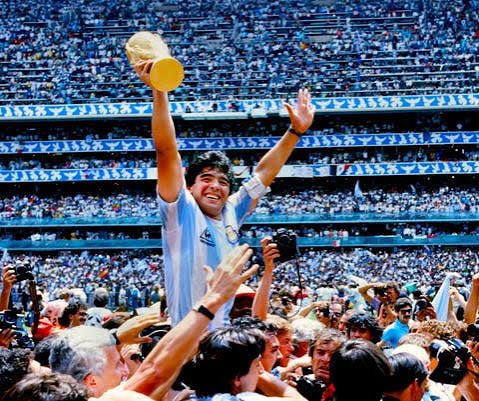
1986 FIFA WORLD CUP — THE TOURNAMENT THAT BELONGED TO MARADONA
By 1986, the FIFA World Cup had become the most watched sporting event on Earth. The expansion to 24 teams introduced in 1982 remained in place, allowing more nations from Africa, Asia, North America, and the Middle East to compete on football’s biggest stage. A record number of countries had entered qualification, proving that the game created by a few nations in the early twentieth century now belonged to the entire world.
The tournament was originally awarded to Colombia. However, financial difficulties forced the country to withdraw, and FIFA turned once again to Mexico. Mexico became the first nation in history to host the World Cup twice, having previously staged the tournament in 1970.
The competition arrived during a period of political tension and economic uncertainty across many parts of the world. Yet football remained the one event capable of bringing billions of people together. What nobody knew was that the tournament would become the personal stage of one man.
His name was Diego Maradona.
For Argentina, the memories of 1978 still carried both pride and controversy. They had won their first World Cup, but questions surrounding politics and the military government never disappeared. Now they arrived in Mexico under a democratic government, determined to prove their greatness without any doubts attached.
Maradona was already famous. He possessed extraordinary balance, vision, dribbling ability, and leadership. But he had not yet produced the tournament that would define his legacy forever.
That changed in Mexico.
From the opening matches, Argentina looked increasingly dependent on their captain. Every attack seemed to flow through him. Every moment of creativity began with him. Defenders kicked him, marked him, and chased him relentlessly, yet he continued to influence matches in ways that appeared impossible.
Meanwhile, the World Cup continued to expand its global reach. Nations from Africa, Asia, and the Arab world were becoming increasingly competitive. Teams that once arrived simply hoping to participate were now beginning to challenge traditional powers. The balance of football was slowly shifting.
As the tournament progressed, Argentina advanced to the quarter-finals, where they faced their old rivals, England.
This was more than football.
Only four years earlier, the two nations had fought the Falklands War. Emotions remained raw. The match carried political and historical weight far beyond sport.
What happened next would become the most famous six minutes in football history.
In the 51st minute, Maradona chased a loose ball into the penalty area. England goalkeeper Peter Shilton came out to claim it. Maradona jumped.
The ball entered the net.
The referee awarded the goal.
English players immediately protested.
Television replays showed what many suspected.
Maradona had used his hand.
The goal should not have counted.
Yet it stood.
Years later, Maradona famously described it as being scored “a little with the head of Maradona and a little with the hand of God.”
The phrase became immortal.
The goal became known as the Hand of God.
#WorldCupHistory #FIFAWorldCup #Mexico1986 #Maradona #HandOfGod #GoalOfTheCentury #Argentina1986 #EnglandVsArgentina #PeterShilton #Burruchaga #FootballHistory #SoccerHistory #WorldCupFacts #HistoricFootball #RoadToWorldCup #SportsHistory #WorldFootball #FIFAHistory #FootballJourney #WorldCupStories #HistoryOfFootball #ClassicFootball #VintageFootball #FootballFans #SoccerFans #1986WorldCup #FootballDocumentary #WorldCupLegends #DiegoMaradona #FootballControversy
Jun 14
1982 FIFA WORLD CUP — WHEN THE WORLD CUP OPENED ITS DOORS TO THE WORLD
The 1982 FIFA World Cup was not just another tournament. It was a revolution.
For the first time since the competition began in 1930, FIFA expanded the tournament from 16 teams to 24 teams. Eight additional places were created, allowing more nations from Africa, Asia, North and Central America, and other developing football regions to participate. The World Cup that once belonged mainly to Europe and South America was finally becoming a truly global event.
A record 109 nations entered the qualification campaign, demonstrating how much football had grown since the days when only 13 teams attended the first World Cup in Uruguay.
The host nation was Spain, a country eager to showcase itself to the world. New stadiums were built, cities were transformed, and expectations were enormous. Few people knew they were about to witness one of the most dramatic and controversial tournaments in football history.
Among the newcomers was Algeria. They arrived with little international reputation. Most European experts expected them to be eliminated quickly.
Then came one of the greatest shocks in World Cup history.
Algeria faced defending European champions West Germany.
Nobody gave them a chance.
What followed stunned the football world.
Algeria defeated West Germany 2–1.
The result sent shockwaves across continents. Newspapers called it impossible. Fans could hardly believe it. For the first time, an African nation had defeated a major European powerhouse at the World Cup.
But the celebration would not last.
As the group stage approached its conclusion, West Germany and Austria realized that a specific result would allow both teams to qualify while eliminating Algeria. When West Germany scored early, something strange happened.
The match slowed.
Attacks disappeared.
Players stopped taking risks.
The crowd began to whistle in anger.
Commentators openly criticized what they were witnessing.
For more than an hour, both teams appeared content with the scoreline.
The match ended 1–0.
Algeria were eliminated.
The scandal became known as the “Disgrace of Gijón.”
The outrage was so intense that FIFA changed its rules. From that moment forward, final group matches would be played simultaneously to prevent teams from manipulating results.
One controversial match had permanently changed the World Cup.
#WorldCupHistory #FIFAWorldCup #Spain1982 #PaoloRossi #Maradona #Brazil1982 #Zico #Socrates #Falcao #Algeria #DisgraceOfGijon #Italy1982 #FootballHistory #SoccerHistory #WorldCupFacts #HistoricFootball #RoadToWorldCup #SportsHistory #WorldFootball #FIFAHistory #FootballJourney #WorldCupStories #HistoryOfFootball #ClassicFootball #VintageFootball #FootballFans #SoccerFans #1982WorldCup #FootballDocumentary #WorldCupLegends
1
1
2
427
Jun 14
1982 FIFA WORLD CUP — WHEN THE WORLD CUP OPENED ITS DOORS TO THE WORLD
The 1982 FIFA World Cup was not just another tournament. It was a revolution.
For the first time since the competition began in 1930, FIFA expanded the tournament from 16 teams to 24 teams. Eight additional places were created, allowing more nations from Africa, Asia, North and Central America, and other developing football regions to participate. The World Cup that once belonged mainly to Europe and South America was finally becoming a truly global event.
A record 109 nations entered the qualification campaign, demonstrating how much football had grown since the days when only 13 teams attended the first World Cup in Uruguay.
The host nation was Spain, a country eager to showcase itself to the world. New stadiums were built, cities were transformed, and expectations were enormous. Few people knew they were about to witness one of the most dramatic and controversial tournaments in football history.
Among the newcomers was Algeria. They arrived with little international reputation. Most European experts expected them to be eliminated quickly.
Then came one of the greatest shocks in World Cup history.
Algeria faced defending European champions West Germany.
Nobody gave them a chance.
What followed stunned the football world.
Algeria defeated West Germany 2–1.
The result sent shockwaves across continents. Newspapers called it impossible. Fans could hardly believe it. For the first time, an African nation had defeated a major European powerhouse at the World Cup.
But the celebration would not last.
As the group stage approached its conclusion, West Germany and Austria realized that a specific result would allow both teams to qualify while eliminating Algeria. When West Germany scored early, something strange happened.
The match slowed.
Attacks disappeared.
Players stopped taking risks.
The crowd began to whistle in anger.
Commentators openly criticized what they were witnessing.
For more than an hour, both teams appeared content with the scoreline.
The match ended 1–0.
Algeria were eliminated.
The scandal became known as the “Disgrace of Gijón.”
The outrage was so intense that FIFA changed its rules. From that moment forward, final group matches would be played simultaneously to prevent teams from manipulating results.
One controversial match had permanently changed the World Cup.
#WorldCupHistory #FIFAWorldCup #Spain1982 #PaoloRossi #Maradona #Brazil1982 #Zico #Socrates #Falcao #Algeria #DisgraceOfGijon #Italy1982 #FootballHistory #SoccerHistory #WorldCupFacts #HistoricFootball #RoadToWorldCup #SportsHistory #WorldFootball #FIFAHistory #FootballJourney #WorldCupStories #HistoryOfFootball #ClassicFootball #VintageFootball #FootballFans #SoccerFans #1982WorldCup #FootballDocumentary #WorldCupLegends
Jun 14
1978 FIFA WORLD CUP — THE TOURNAMENT THAT STILL DIVIDES FOOTBALL
By 1978, the FIFA World Cup had grown far beyond the dreams of its founder, Jules Rimet. More than 100 nations entered the qualification process, a remarkable increase from the 13 teams that participated in the first tournament in 1930. Football had become a truly global obsession. Every continent wanted a place on the biggest stage.
The tournament traveled to Argentina, a nation passionate about football but deeply divided by politics. While stadiums were being prepared and fans were dreaming of glory, Argentina was under military rule led by Jorge Rafael Videla. Around the world, critics questioned whether the country should host the tournament at all. Human rights organizations accused the government of using football to improve its international image while political repression continued behind the scenes.
Yet once the competition began, football took center stage.
Argentina entered the tournament carrying enormous expectations. They had never won a World Cup and believed this was their greatest opportunity. Leading the team was captain Daniel Passarella, while the creative burden fell on the shoulders of the gifted playmaker Mario Kempes.
Kempes was unlike many forwards of his era. He could score, create, dribble, and dominate matches almost single-handedly. As the tournament progressed, he became the face of Argentina’s campaign.
But the road to the final was filled with controversy.
The most debated match in the history of the 1978 World Cup came in the second group stage. Argentina needed to defeat Peru by at least four goals to qualify for the final ahead of Brazil. The task appeared difficult. Peru had talented players and had performed well throughout the tournament.
Then something extraordinary happened.
Argentina won 6–0.
The result stunned the football world.
Immediately, questions emerged. How had Peru collapsed so completely? Were there political pressures behind the scenes? Had deals been made between governments? Was the result genuine or manipulated?
No definitive evidence has ever proven wrongdoing, but the controversy never disappeared. Decades later, supporters, journalists, and historians still debate the match. For many Brazilians, the result remains one of the most suspicious in World Cup history.
Regardless of the controversy, Argentina advanced to the final.
Waiting for them was the Netherlands.
For the second consecutive World Cup, the Dutch had reached the final. Yet this team looked different from the famous Total Football side of 1974. Most notably, their iconic leader, Johan Cruyff, was absent.
For years, people assumed Cruyff missed the tournament because of political objections to Argentina’s military government. Much later, he revealed that a violent kidnapping attempt against his family had played a major role in his decision not to travel.
Even without Cruyff, the Dutch remained dangerous.
The final took place in Buenos Aires before a passionate and overwhelmingly Argentine crowd. The atmosphere was intense. Every tackle, every pass, every decision felt magnified by the pressure of the occasion.
#WorldCupHistory #FIFAWorldCup #Argentina1978 #MarioKempes #DanielPassarella #JohanCruyff #PaoloRossi #FootballHistory #SoccerHistory #WorldCupFacts #HistoricFootball #RoadToWorldCup #SportsHistory #WorldFootball #FIFAHistory #FootballJourney #WorldCupStories #HistoryOfFootball #ClassicFootball #VintageFootball #FootballFans #SoccerFans #Argentina #Netherlands #1978WorldCup #FootballControversy #WorldCupLegends #GlobalFootball #FootballDocumentary
1
1
2
439
Jun 14
Argentina struck first through Mario Kempes, sending the stadium into celebration. The Netherlands fought back and equalized late in the match. Then, in one of the most dramatic moments in World Cup history, Dutch substitute Rob Rensenbrink hit the post in the closing moments of normal time.
Had the ball traveled just a few centimeters differently, the Netherlands would have become world champions.
Instead, the match went to extra time.
There, Mario Kempes produced the defining moment of his career. He scored again, restoring Argentina’s lead. Another goal followed, and the hosts secured a 3–1 victory.
Argentina were world champions for the first time.
Across the country, celebrations erupted.
For many Argentines, it was the greatest sporting moment in national history.
For others around the world, questions remained.
The controversy surrounding the Peru match never disappeared. The political environment surrounding the tournament never stopped being discussed. The 1978 World Cup became a competition remembered both for football brilliance and lingering suspicion.
Mario Kempes finished as the tournament’s leading scorer and biggest star. His performances carried Argentina to glory and secured his place among football’s great World Cup heroes.
The Netherlands, meanwhile, suffered another heartbreak. Two consecutive World Cup finals. Two defeats. One of the greatest football nations in the world still had no trophy.
As the celebrations ended, football was preparing for another transformation.
The next World Cup would travel to Spain in 1982.
For the first time in history, the tournament would expand from 16 teams to 24 teams.
Eight new places would open.
More nations would join.
More continents would be represented.
And the world would witness one of the greatest individual performances football has ever seen from a man named Paolo Rossi.
But before Italy’s triumph came chaos, heartbreak, and one of the most shocking matches ever played on a football field.
#WorldCupHistory #FIFAWorldCup #Argentina1978 #MarioKempes #DanielPassarella #JohanCruyff #PaoloRossi #FootballHistory #SoccerHistory #WorldCupFacts #HistoricFootball #RoadToWorldCup #SportsHistory #WorldFootball #FIFAHistory #FootballJourney #WorldCupStories #HistoryOfFootball #ClassicFootball #VintageFootball #FootballFans #SoccerFans #Argentina #Netherlands #1978WorldCup #FootballControversy #WorldCupLegends #GlobalFootball #FootballDocumentary
37
Jun 11
🚨PEOPLE OF AMERICA - PLEASE LISTEN,WATCH & READ!🚨
"He's a lovely guy but him & @mikeharristns together is just partners in Crime" (Kevin Harris-James,2026)
🎥💚 RELIVE THE TRIP UP TO @falkirk fc — NOW FREE ON @YouTube FOR THE WORLDWIDE FANS THIS @FIFAWorldCup ! 💚🎥
The @tnsfc Road To Europe: The Mike Harris Story is now available to watch free of charge during The New Saints’ @ChampionsLeague 2026/27 run-up campaign.
🎬 To watch, please click here:
youtube.com/watch?v=aZwjIj0N…
🌐 Website: tnsfc.co.uk
🐦 X: @tnsfc
📘 Facebook: The New Saints of Oswestry Town FC
🎵 TikTok: @tnsfc
#TNSFC #TheNewSaints #RoadToEurope #MikeHarrisStory #BattleOfFalkirk #WelshFootball #JDCymruPremier #UEFA #ChampionsLeague #EuropeanCampaign #WelshDomesticFootball #FootballDocumentary
Short Created by: @PlanetHippo
7
9
1,129

Jun 11
🎥 The MUST-WATCH football documentary of 2026 is here!
The New Saints - Road To Europe: The Mike Harris Story
From a small Welsh village club to the UEFA Conference League — the incredible journey, chaos, triumphs & the man behind it all. Honest, emotional & packed with drama! ⚽💚
Watch now on Prime Video FREE on YouTube (until end of June) 👉 youtube.com/watch?v=aZwjIj0N…
#TNSFC #RoadToEurope #MikeHarrisStory #WelshFootball #FootballDocumentary
3
2
389
Jun 11
Here’s a ready-to-copy tweet optimized for engagement and shares to boost YouTube plays (free until end of June):
🎥 FREE on YouTube NOW – The MUST-WATCH football documentary of 2026!
Relive @tnsfc incredible Road to Europe with chairman Mike Harris. Honest, emotional, funny & packed with behind-the-scenes drama, resilience & mental health stories.
First Welsh side in UEFA group stage history – this is Welsh football at its best! ⚽💚
Watch here 👉 youtube.com/watch?v=aZwjIj0N…
#TNSFC #RoadToEurope #MikeHarrisStory #WelshFootball #FootballDocumentary
174
Jun 11
Here’s a ready-to-copy tweet optimized for engagement and shares to boost YouTube plays (free until end of June):
🎥 FREE on YouTube NOW – The MUST-WATCH football documentary of 2026!
Relive TNS FC’s incredible Road to Europe with chairman Mike Harris. Honest, emotional, funny & packed with behind-the-scenes drama, resilience & mental health stories.
First Welsh side in UEFA group stage history – this is Welsh football at its best! ⚽💚
Watch here 👉 youtube.com/watch?v=aZwjIj0N…
#TNSFC #RoadToEurope #MikeHarrisStory #WelshFootball #FootballDocumentary
1
215
“Bricks coming over the top, Stones, bottles, hurdles…”
(Rhian Harris, 2026)
🎥💚 RELIVE THE BATTLE OF @FalkirkFC — NOW FREE ON @YouTube FOR THE WORLDWIDE FANS! 💚🎥
The TNS Road To Europe: The @mikeharristns Story is now available to watch free of charge during The New Saints’ @ChampionsLeague 2026/27 run-up campaign.
In one of the most powerful moments from the documentary, Mike Harris recalls the unforgettable night at Falkirk — a night where The New Saints were not just tested on the pitch, but off it too.
Bricks coming over the top.
Bottles.
Hurdles.
Chaos.
Pressure.
And a football club standing together.
This was more than a game.
This was Welsh domestic football walking into a hostile environment and refusing to back down.
This is resilience.
This is belief.
This is the story behind The New Saints Road To Europe. 💚⚽
🎬 To watch, please click here:
youtube.com/watch?v=aZwjIj0N…
🌐 Website: tnsfc.co.uk
🐦 X: @tnsfc
📘 Facebook: The New Saints of Oswestry Town FC
🎵 TikTok: @tnsfc
#TNSFC #TheNewSaints #RoadToEurope #MikeHarrisStory #BattleOfFalkirk #WelshFootball #JDCymruPremier #UEFA #ChampionsLeague #EuropeanCampaign #WelshDomesticFootball #FootballDocumentary
Short Created by: @PlanetHippo
1
4
10
19,375
"Our Football Club is more than just playing Football on a Saturday" (@mikeharristns,2026)
🎥💚NOW FREE ON @YouTube FOR THE WORLDWIDE FANS! 💚🎥
The TNS Road To Europe: The Mike Harris Story is now available to watch free of charge during The New Saints’ UEFA Champions League 2026/27 run up campaign.
As the month of June begins and the countdown to the
UEFA Champions League gathers momentum, this is the perfect time for supporters, football fans and viewers from across the world to discover the story behind The New Saints of Oswestry Town FC.
This is Welsh domestic football.
This is ambition.
This is belief.
This is The New Saints Road To Europe. 💚⚽
🎬 To watch, please click here:
youtube.com/watch?v=aZwjIj0N…
🌐 Website: tnsfc.co.uk
🐦 X: @tnsfc
📘 Facebook: The New Saints of Oswestry Town FC
#TNSFC #TheNewSaints #RoadToEurope #MikeHarrisStory #WelshFootball #JDCymruPremier #UEFA #ChampionsLeague #EuropeanCampaign #WelshDomesticFootball #FootballDocumentary
Short Created by: @PlanetHippo
12
11
1,299
"We are different to everybody I suppose because of the People & Characters around the Club" (@IanTNSFC, 2026)
🎥💚NOW FREE ON @YouTube FOR THE WORLDWIDE FANS! 💚🎥
The TNS Road To Europe: The @mikeharristns Story is now available to watch free of charge during The New Saints’ @ChampionsLeague 2026/27 run up campaign.
As the month of June begins and the countdown to the
@UEFA Champions League gathers momentum, this is the perfect time for supporters, football fans and viewers from across the world to discover the story behind The New Saints of Oswestry Town FC.
This is Welsh domestic football.
This is ambition.
This is belief.
This is The New Saints Road To Europe. 💚⚽
🎬 To watch, please click here:
youtube.com/watch?v=aZwjIj0N…
🌐 Website: tnsfc.co.uk
🐦 X: @tnsfc
📘 Facebook: The New Saints of Oswestry Town FC
#TNSFC #TheNewSaints #RoadToEurope #MikeHarrisStory #WelshFootball #JDCymruPremier #UEFA #ChampionsLeague #EuropeanCampaign #WelshDomesticFootball #FootballDocumentary
Short Created by: @PlanetHippo
3
5
949
"Scrapping with the Fans" (Jimmy Aggrey, 2026)
🎥💚NOW FREE ON @YouTube FOR THE WORLDWIDE FANS! 💚🎥
The TNS Road To Europe: The @mikeharristns Story is now available to watch free of charge during The New Saints’ @ChampionsLeague 2026/27 run up campaign.
As the month of June begins and the countdown to the @UEFA Champions League gathers momentum, this is the perfect time for supporters, football fans and viewers from across the world to discover the story behind The New Saints of Oswestry Town FC.
This is Welsh domestic football.
This is ambition.
This is belief.
This is The New Saints Road To Europe. 💚⚽
🎬 To watch, please click here:
youtube.com/watch?v=aZwjIj0N…
🌐 Website: tnsfc.co.uk
🐦 X: @tnsfc
📘 Facebook: The New Saints of Oswestry Town FC
#TNSFC #TheNewSaints #RoadToEurope #MikeHarrisStory #WelshFootball #JDCymruPremier #UEFA #ChampionsLeague #EuropeanCampaign #WelshDomesticFootball #FootballDocumentary
Short Created by: @PlanetHippo
5
5
1,104
🚨 PLEASE SHARE: THANK YOU EVERYONE! 🚨
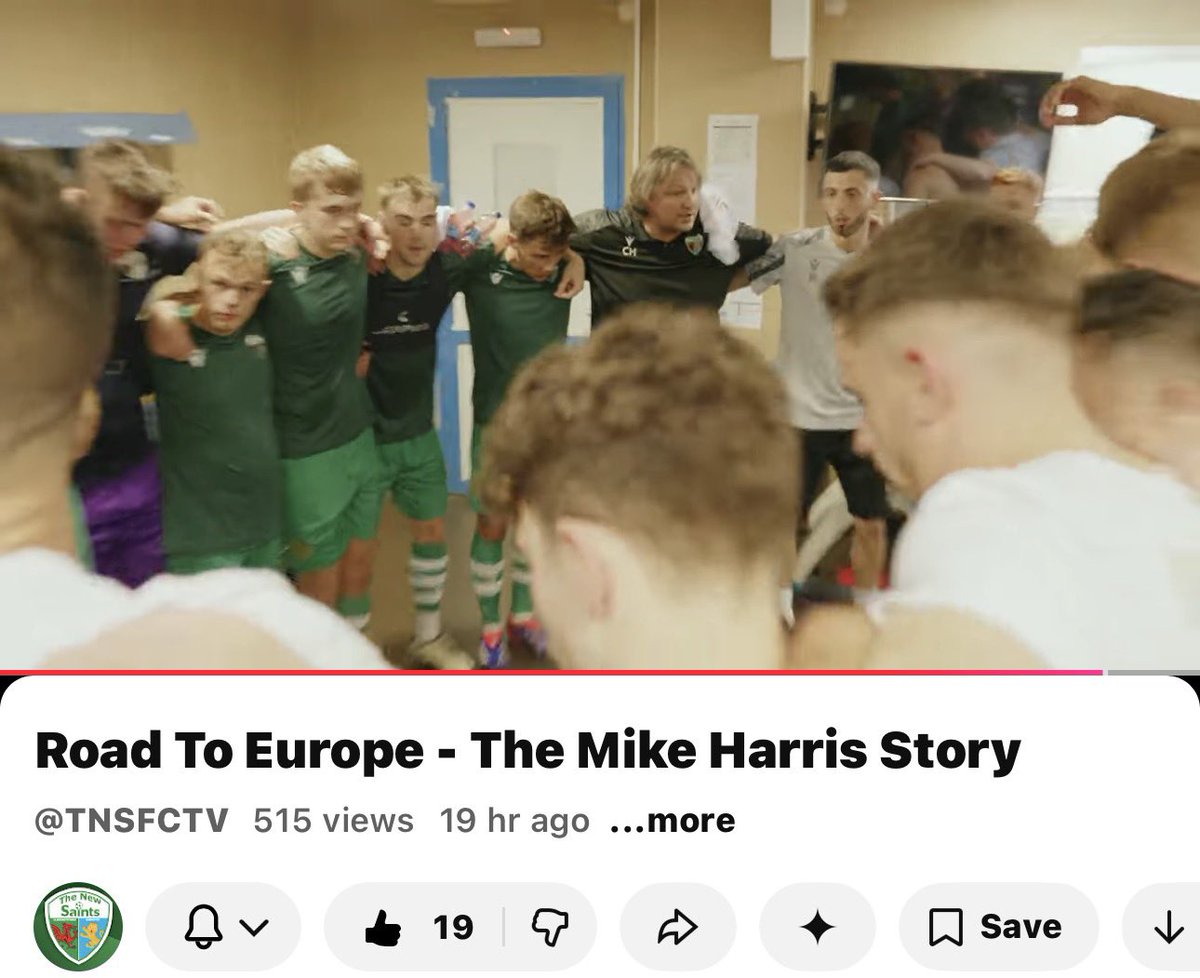
🎥💚 515 VIEWS IN LESS THAN 24 HOURS! 💚🎥
What an incredible response from football supporters, Welsh football fans and viewers from across the world.
In less than 24 hours, The TNS Road To Europe: The @mikeharristns Story has reached 515 views on YouTube, and we would like to say a huge thank you to every single person who has watched, liked, commented, shared and supported the documentary.
The numbers themselves are fantastic, but what matters even more is that people are discovering the story of The New Saints, the people behind the club, and the incredible journey of Welsh domestic football.
This has never been about chasing views.
This has always been about giving Welsh domestic football the eyes, attention, respect and hearts that it deserves.
For too long, Welsh domestic football has been one of the best-kept secrets in British sport.
The quality.
The characters.
The stories.
The passion.
The communities.
They deserve to be seen.
As The New Saints continue their road towards the UEFA Champions League 2026/27 campaign, we hope this documentary helps introduce even more people to the wonderful world of Welsh domestic football.
If you have not watched it yet, please take a look and share it with friends, family, football supporters and anyone who loves a great sporting story.
🎬 Watch here:
youtube.com/watch?v=aZwjIj0N…
Together, let’s continue to grow the game.
Let’s support our clubs.
Let’s celebrate our communities.
Let’s show the world what Welsh domestic football is all about.
💚⚽ LET’S MAKE WELSH DOMESTIC SPORT GREAT AGAIN! ⚽💚
And now there is only one question left…
🤔 Has Rob McElhenney watched it yet?
🤔 Has Ryan Reynolds watched it yet?
🤔 Has Snoop Dogg watched it yet?
We live in hope… 😎
🌐 Website: tnsfc.co.uk
🐦 X: @tnsfc
📘 Facebook: The New Saints of Oswestry Town FC
#TNSFC #TheNewSaints #RoadToEurope #MikeHarrisStory #WelshFootball #JDCymruPremier #UEFA #ChampionsLeague #WelshDomesticFootball #FootballDocumentary #LetsMakeWelshDomesticSportGreatAgain

🚨PLEASE RETWEET: BREAKING NEWS 🚨
🎥💚NOW FREE ON @YouTube FOR THE WORLDWIDE FANS! 💚🎥
The TNS Road To Europe: The @mikeharristns Story is now available to watch free of charge during The New Saints’ @ChampionsLeague 2026/27 run up campaign.
As the month of June begins and the countdown to the UEFA Champions League gathers momentum, this is the perfect time for supporters, football fans and viewers from across the world to discover the story behind The New Saints of Oswestry Town FC.
This is more than a football documentary.
It is a story of ambition, belief, sacrifice, vision, characters, community and the journey of a club that continues to put Welsh domestic football on the map.
From the people behind the scenes to the moments that shaped the club, The Mike Harris Story gives fans a real insight into the heart, humour and determination behind TNS and their incredible Road To Europe.
Whether watching from Wales, the UK or anywhere across the world, this is the story behind the club’s European dream.
This is Welsh domestic football.
This is ambition.
This is belief.
This is The New Saints Road To Europe. 💚⚽
🎬 To watch, please click here:
youtube.com/watch?v=aZwjIj0N…
Let’s get behind The New Saints.
Let’s celebrate Welsh domestic football.
Let’s take this story to the world during the road to the UEFA Champions League.
🌐 Website: tnsfc.co.uk
🐦 X: @tnsfc
📘 Facebook: The New Saints of Oswestry Town FC
#TNSFC #TheNewSaints #RoadToEurope #MikeHarrisStory #WelshFootball #JDCymruPremier #UEFA #ChampionsLeague #EuropeanCampaign #WelshDomesticFootball #FootballDocumentary
1
2
4
522
🚨PLEASE RETWEET: BREAKING NEWS 🚨
🎥💚NOW FREE ON @YouTube FOR THE WORLDWIDE FANS! 💚🎥
The TNS Road To Europe: The @mikeharristns Story is now available to watch free of charge during The New Saints’ @ChampionsLeague 2026/27 run up campaign.
As the month of June begins and the countdown to the UEFA Champions League gathers momentum, this is the perfect time for supporters, football fans and viewers from across the world to discover the story behind The New Saints of Oswestry Town FC.
This is more than a football documentary.
It is a story of ambition, belief, sacrifice, vision, characters, community and the journey of a club that continues to put Welsh domestic football on the map.
From the people behind the scenes to the moments that shaped the club, The Mike Harris Story gives fans a real insight into the heart, humour and determination behind TNS and their incredible Road To Europe.
Whether watching from Wales, the UK or anywhere across the world, this is the story behind the club’s European dream.
This is Welsh domestic football.
This is ambition.
This is belief.
This is The New Saints Road To Europe. 💚⚽
🎬 To watch, please click here:
youtube.com/watch?v=aZwjIj0N…
Let’s get behind The New Saints.
Let’s celebrate Welsh domestic football.
Let’s take this story to the world during the road to the UEFA Champions League.
🌐 Website: tnsfc.co.uk
🐦 X: @tnsfc
📘 Facebook: The New Saints of Oswestry Town FC
#TNSFC #TheNewSaints #RoadToEurope #MikeHarrisStory #WelshFootball #JDCymruPremier #UEFA #ChampionsLeague #EuropeanCampaign #WelshDomesticFootball #FootballDocumentary
1
15
13
12,691

Feb 20
Episode III: LEADERS
From UNDERESTIMATED: A Lower Richland Football Story
"Episode III opens with a harsh reality check. After the break, the Diamond Hornets return to team conditioning out of rhythm, bodies heavy and focus fractured. The early sessions expose fatigue, frustration, and the cost of time away. It’s a moment every team faces—but not every team survives.
Rather than raise his voice, Coach Taylor responds with quiet urgency. In a fatherly, deliberate tone, he challenges the heart of the program: the 25 seniors who have grown together over the last five years. Leadership, he reminds them, isn’t about titles or speeches—it’s about accountability, consistency, and example. Slowly, the message begins to take hold.
An extended, revealing interview with Defensive Coordinator Coach Curnell offers a rare look inside the evolution of the defense—its strengths, growing pains, and hunger to define its identity. On the other side of the ball, Offensive Coordinator Coach White provides an honest assessment of an offense still searching for rhythm and confidence."
@4QuarterFriday @Guardian_Caps @DiamondHornetFB @THEOLWHISPERX4
@SCFCA1 @DavidHe05739152 @natedorton @mrs_vfrierson @coachMontM @80Rhett @justinbhall @fastdawg101 @Coachtimboallen @CoachJamison @coachadamrice @LRHathletics @Bignickle51 @OphirHill_ @OGrading @LouatTheState @iguerin @MovinChain @BSNSPORTS_SC @HighSchoolBlitz @Bradley706 @_Nard3
@CIWilson_2 @Josh_Tuck27 @dariusjack15 @jordanh_2 @1luhhchama @AdrianDavis5851 @JamereLinnen @ZiyearYates @jamellmyers4 @DanielGee_52 @Eric_Kirk0 @HUDSONSETHH @FryeMightbehim @MauriceHorry @Jeremiah_adams2 @StylesP2027 @kelson_solomon @007kev_ @faithkendallsc @BigFishLBs
#UnderestimatedSeries #FamilyOverEverything #LowerRichlandFootball #UnderestimatedSeries, #LowerRichlandFootball, #HighSchoolFootball, #FootballDocumentary, #SouthCarolinaFootball, #FridayNightLights, #GrindSeason, #Brotherhood, #FaithFamilyFootball, #RoadToGreatness
5
7
412

Feb 12
If you missed it in theaters or have been meaning to watch Luv Ya Bum! is now available to stream.
It’s more than football.
It’s about culture, connection, and a man who led with authenticity before it was a buzzword.
🎬 Available on Apple TV, Prime Video & Google Play
Watch it. Share it. Luv Ya Bum!
#LuvYaBum #FootballDocumentary #NowStreaming #PrimeVideo #AppleTV

5
2
35