New year. Same mission. Bigger goals!
Funnels aren’t just tools, they’re systems that scale your dreams.
Build it once. Run it daily.
👉 bit.ly/4q6dyJV
#FunnelHacker
2
164

29 Nov 2025
Shoutout to every entrepreneur still testing, tweaking, and improving this week.
Funnels don’t build overnight — they build empires over time. 🧱
Keep hacking. #FunnelHacker
1
4
197

17 Nov 2025
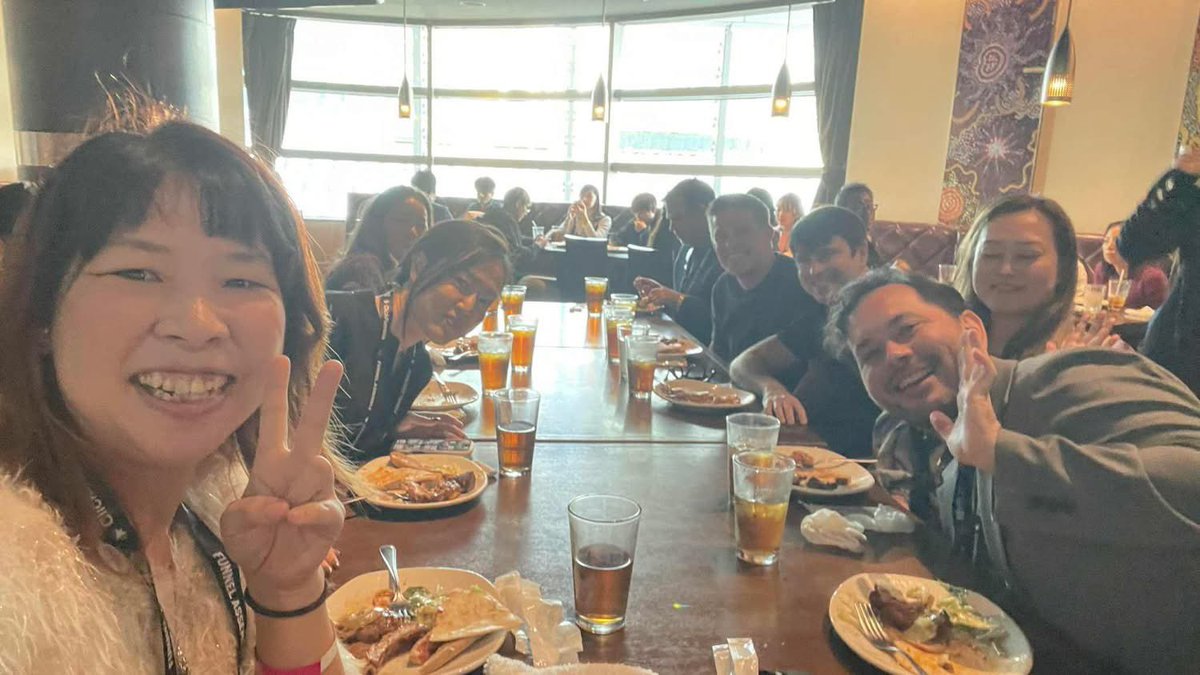
1夜明けて、今日は“Funnel Connect”に、参加してきました。クリックファネルについて、昨日よりも少し踏み込んだお話と、もっと本質的なお話を聞くことができました。
✅なぜ日本なのか、日本版リリースに至った経緯
✅クリックファネルが日本に期待していること
✅ファネル構築の考え方、数値改善の話
✅多くのファネルに不足しているもの
etc
そして、最後はパーティー。
会場を盛り上げてくれた Naitoさんは、パーティーでも美声でわかせてくれ、アリエルさんからは、じゅんさん、篠原さん、星さんの3名に、ラッセル、トッド、アンドリューのサインがプレゼントされました!
なんて粋なプレゼント✨
P.S.
私は、コネクトの最後中シェアいただいたお話に涙腺緩んでいました。
チームから、わたしたちへのメッセージ。
(一部割愛)
今日の早い時間に、タウンと私は東京駅でショッピングをしました。
そして、とても細長いお店の前を通りかかりました。
小さなスペースなのに、本当にたくさんの商品が詰め込まれていたんです。
少しのスペースしかなくても、こんなに多くを生み出せるんだと心から驚きました。
小さな機械を使ってもっともっと大きなことがこれから始まるというところにすごく、
だから、今どんな状況・どんなステージにいたとしても、たとえ “ほんの少し” しか持っていなくても、
あなたは十分価値があり、これから大きな結果を生み出します。
でも、それには“丁寧に積み重ねる姿勢”が必要です。そこにはたくさんの努力があります。
それこそが、日本文化の中にある“規律と精神”です。
それは私たちが学びに来たものでもあります。
だから、皆さんを称えたい。この拍手はあなたのためです。
今日ここにいるのは、“自分に賭けること・自分を信じること”を選んだあなたたちのおかげです。あなたは特別で、これから大きな価値を生み出す存在です。
アンドリューが言ったように、あなたたちの「次」を見るのが本当に楽しみです。
だから、近いうちに必ず結果を見ることになるでしょう。
もっと挑戦し、もっとリスクを取り、新しい価値を届けていきましょう。
それを世の中に出していく必要があります。
ここに呼んでくれて本当にありがとう。
あなたたちの国を心から楽しませてもらいましたし、皆さんに会えたことを光栄に思います。
少し緊張していますが、あなたたちの成功を心から願っています。
皆さんどうもお会いできて本当に嬉しいです。そして美しい国に紹介してくれてありがとうございました。
#Funnelhacker
#Clickfunnel
2
131

29 Oct 2025
#UDRP #funnelhacker.com denied. The Complainant holds a registered #trademark with the #USPTO” for the word mark #FUNNELHACKER, registered on March 26, 2024, in connection with, among other things, “business and marketing consulting services” and “website design consultancy.” The #DomainName was registered on March 10, 2014 and resolves to a commercial #website featuring the text: “Let’s Put Your Income on Autopilot Book a Strategy Session to find out how we can help you get more sales with less effort!”
The sparse record in this case shows that the Domain Name was registered on March 10, 2014, and that Complainant’s claimed first use of the FUNNEL HACKER mark was nearly a year later, on February 3, 2015. Complainant alleges that its FUNNEL HACKER mark has been “widely and consistently used in commerce since 2014”, but Complainant provides no evidence of widespread use and no evidence of any use in 2014. Read more @ wipo.int/amc/en/domains/deci…
1
6
289

29 Oct 2025
FunnelHacker*.com #UDRP: Domain predates ClickFunnels’ trademark by a year ⚖️ domaingang.com/domain-law/fu… #Clickfunnels #Funnelhacker #WIPO
2
6
232

20 Aug 2025
No business ever stagnates. You’re either growing, or dying.
#businessmindset #businessgrowthstrategy #funnelhacker
1
1
2
26

29 Jul 2025
From my experience in multiple verticals, I can say the biggest edge in recurring $ models is identity-priming messaging.
You don’t achieve an 80% annualized retention on a monthly offer unless your underlying communication bed is built on identity-product integration.
I have tested so many methods and mechanisms under the sun and have seen the best results when prioritizing the following:
-Post purchase coherence (messaging that confirms how smart they were to buy, reaffirm benefits and timelines)
-Onboarding rituals (cement a new identity by naming the group/tier, reducing friction via stepped instructions, anchoring testimonials to milestones and features)
-Monthly confirmation loops (last month you crushed XYZ [action], users like you typically [next action]
-Utility reinforcement via gamification (Duolingo streams, Peloton riding streaks etc)
-Creating habit forming schedules or plans that turn action into ritual or at least help create a routine
-Identity priming messaging “Funnelhacker, FitMoms, Tribe etc)
-Giving users autonomy to self select to a degree (challenges, difficulty levels)
-Visible progress markers or feedback (huge one) or sometimes a mastery plan… adds deeper commitment as users increase competence levels
-Insider news, feature updates, transparency bias in comms
-Segment based journeys and analytics informed nudges or intervention for “churn-likely”accounts
-Grandfathered tiers or price freezing for 1yr accounts when increasing price helps lock in multi year retention
These are the major ones that come to mind.
4
119

27 Jun 2025
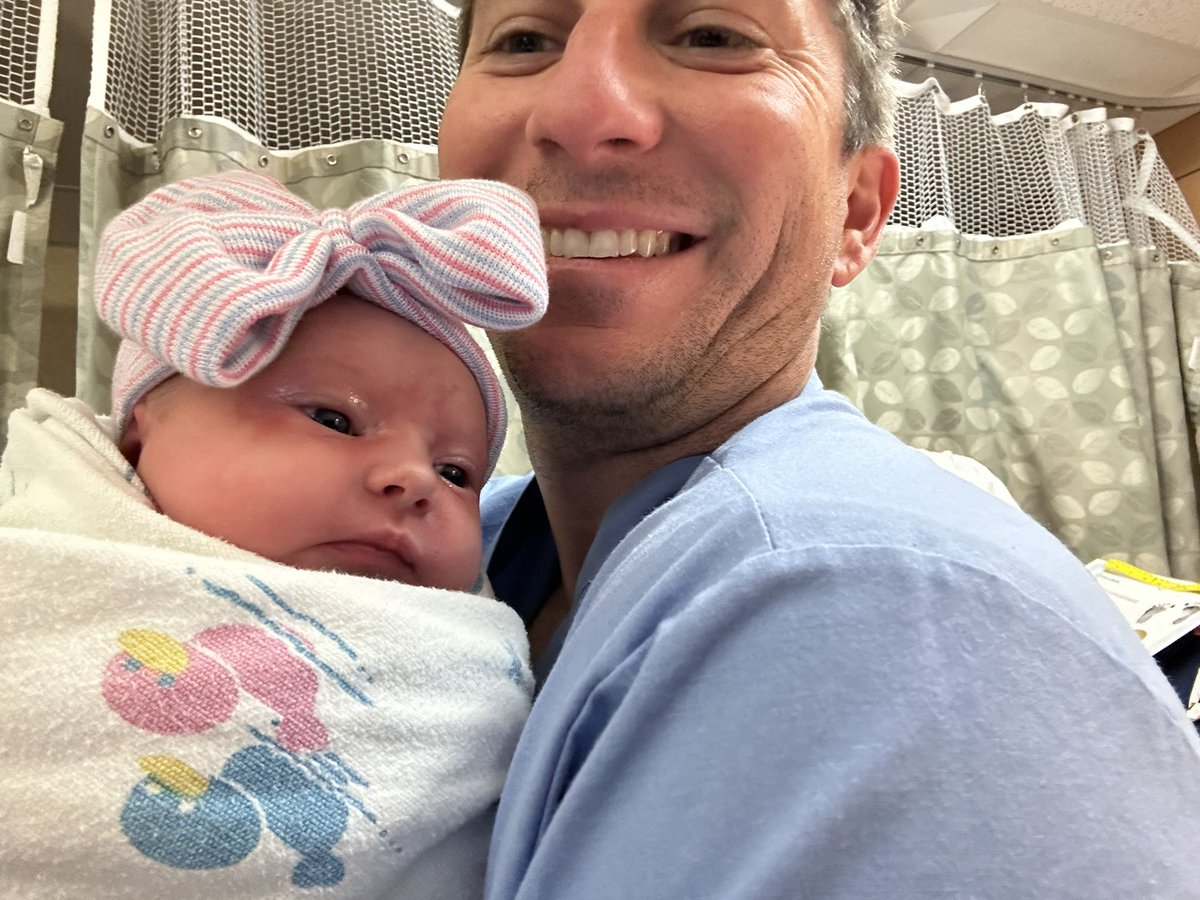
Well do a CF connects in the fall, and I’ll come down. I’m out of commission for a few months - we welcomed the newest #FunnelHacker yesterday ❤️
1
2
106

15 May 2025
3 ways to build momentum when the hard thing feels too heavy…
1. Shrink the scope.
Don’t try to finish it. Just try to start it.
Ten minutes of progress beats ten hours of avoidance.
2. Stack it first in your routine.
Your willpower fades the longer the day goes on.
Get it done early, before distractions convince you to delay.
3. Give it a reward anchor.
Promise yourself something simple once it’s done.
Coffee. A walk. An episode of FunnelHacker TV.
Whatever creates movement.
2
9
416
2 May 2025
Every week, we’re answering real questions from the #FunnelHacker community—entrepreneurs like you who are building, scaling, and leveling up their businesses.
This week’s question:
“Should I add multiple payment methods to my funnel like PayPal and Apple Pay?” 🤔
Short answer: Yes.
The easier you make it for someone to buy, the more likely they will. Adding multiple payment options removes friction, builds trust, and meets people where they are—especially on mobile.
Stay tuned for more Q&A every week!
2
282
11 Apr 2025
Every week, we’re answering real questions from the #FunnelHacker community—entrepreneurs like you building, scaling, and making moves.
This week’s question:
“How can I attach my courses to a funnel and share access?”
Great question—and the answer is simple with ClickFunnels 👀
Stay tuned for more 🙌
4
273

11 Dec 2024
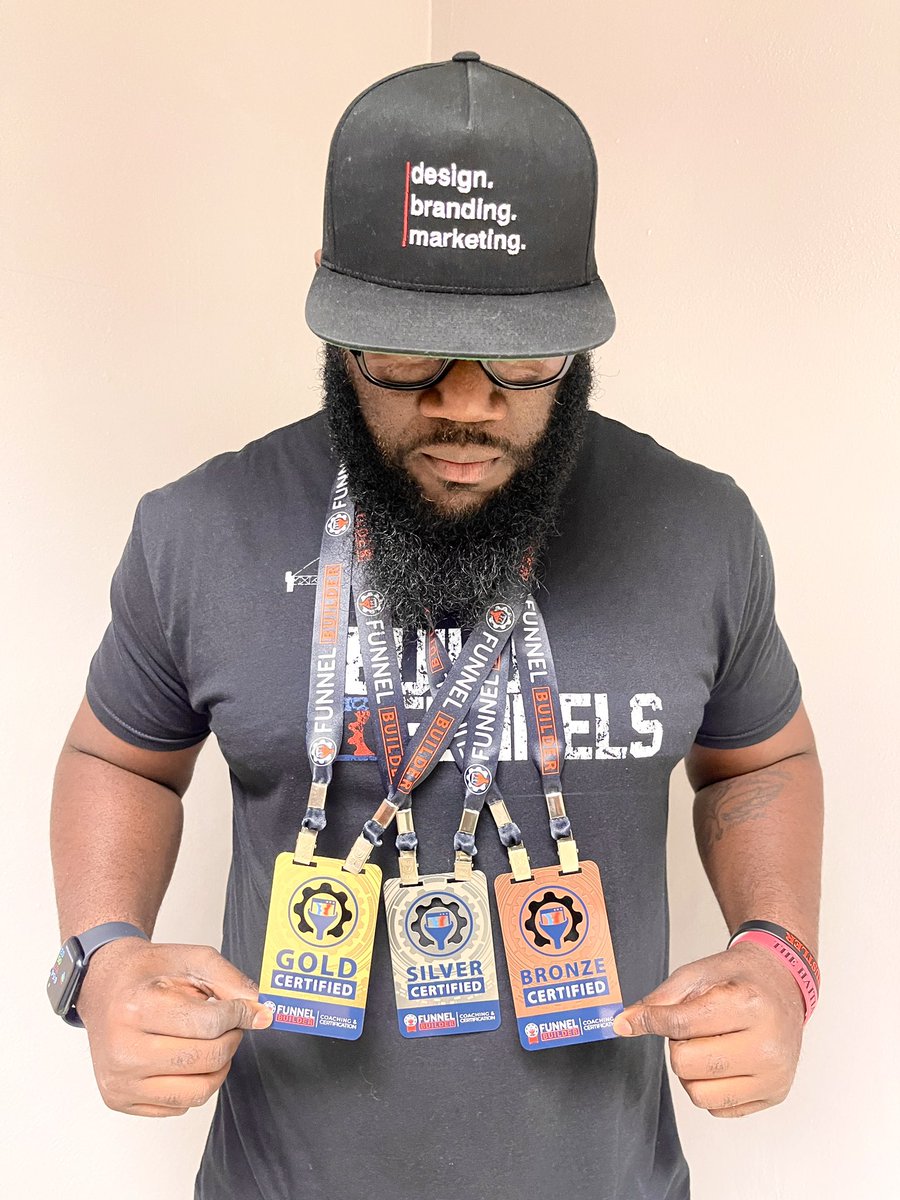
I Am Not Really Good at Playing Sports… But When It Come to Marketing and Building Funnel That Makes Money 💰 I Am A GOLD MEDALIST
@clickfunnels #funnelbuilder #funnelhacker #thehaitianhustler #marketingcoach #yoyooow
2
3
377

30 Nov 2024
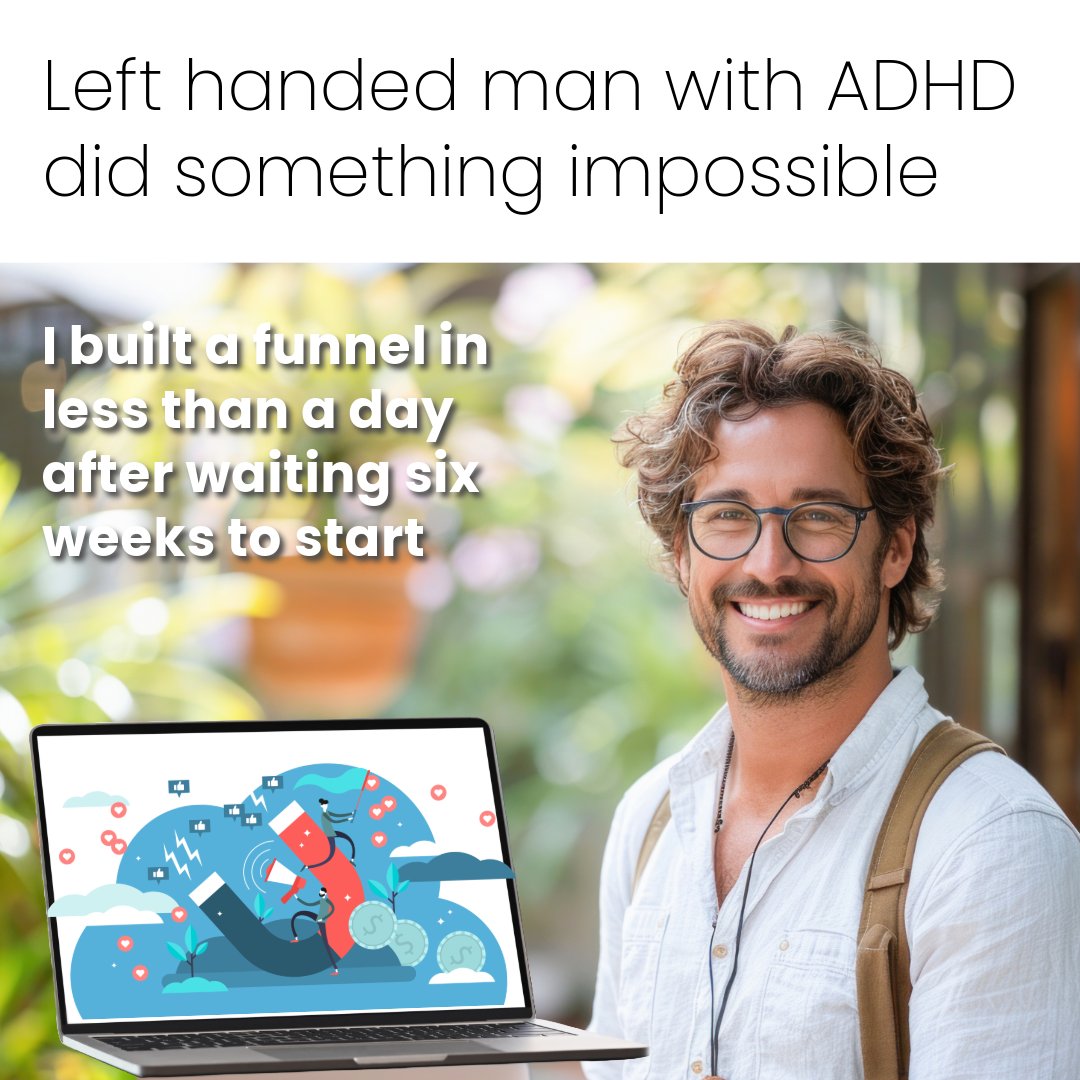
It usually takes me five times as long to do anything but I always end up with a masterpiece.
I can build a funnel in ½ day now and faster using AI.
#ADHD #FunnelHacker #DigitalMarketing #NetworkMarketing
1
2
77

9 Nov 2024
Will have to post fizeek pic in my old FunnelHacker t shirt :)
1
2
73

10 Sep 2024
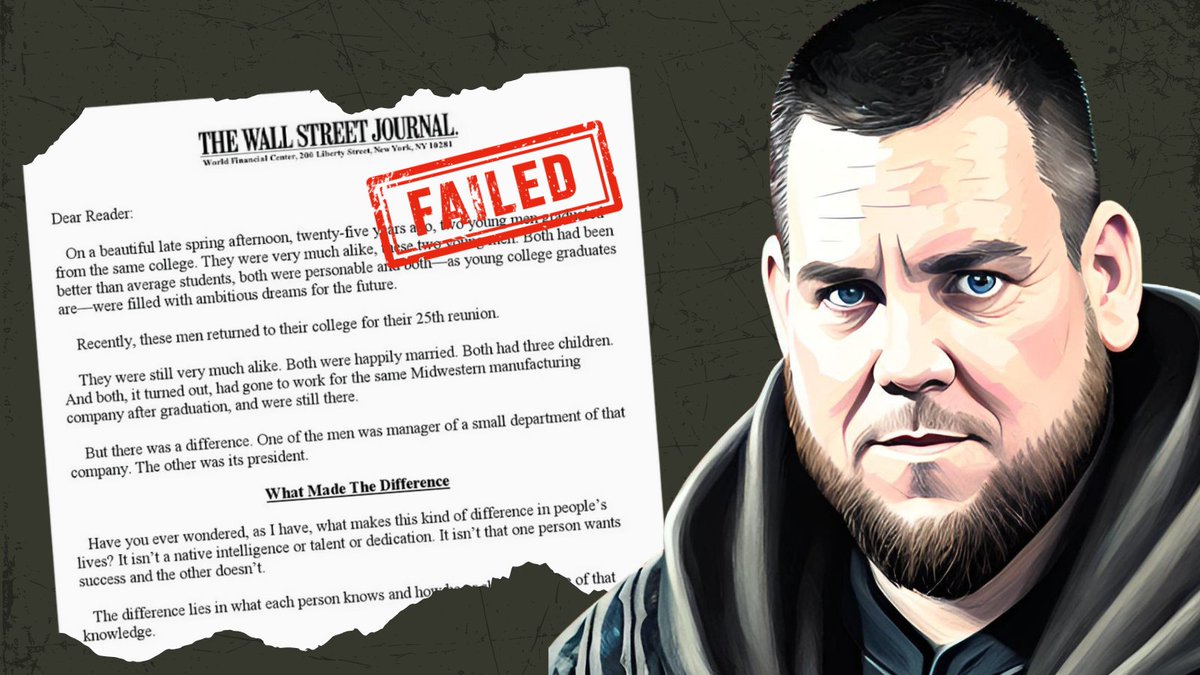
Was it really just a $2 BILLION DOLLAR lie?
In 1974 a man named Martin Conroy flicked through his swipe file of old 1920’s era ads, and then wrote what some have called...
"THE GREATEST SALES LETTER OF ALL TIME"
In case you don't have a clue what I'm talking about, I'm talking about the famous Wall Street Journal sales letter about two men who took different paths in life.
It ran *uncontested from 1975 all the way up until 2003, sucking in $2 billion dollars for the Wall Street Journal.
But others seem to say it was meant for the trash bin.
What gives?
How on earth could it be possible that a sales letter that made $2 BILLION DOLLARS be considered... trash?
You would be right to ask that question.
I plan to explain (mathematically) why, they are wrong.
Let me catch you up on the drama…
But first, in case you’re reading my stuff for the first time ever, allow me just 3 sentences to introduce myself and credentials around this subject.
1. My name is Justin Brooke, former employee for the billion-dollar publishing giant Agora.
2. I’ve been writing copy and running ads online for 20yrs with 10’s of millions spent successfully.
3. Today, I am the founder of adskills where I’ve taught over 13,000 businesses how to profitably advertise their products.
Doesn't make me the royal high priest, but I'm no schlub...
🤬 COMPLAINT #1:
"It was stolen!"
As I said above, Martin Conroy was flicking through his swipe file when he wrote this sales letter.
The ad he stopped on was an ad from 1919 by Bruce Barton for The Alexander Hamilton Institute which read...
"From a certain little town in Massachusetts two men went to the Civil War. Each of them had enjoyed the same educational advantage, and so far as anyone could judge, their prospects for success were equally good. One man accumulated a fortune. The other spent his last years almost entirely dependent upon his children for support."
Stolen???
The two pieces wouldn't even trip up a free online plagiarism checker.
But to hear copywriters posture like this is stealing, well the only thing stupider would be if they said it while wearing their #FunnelHacker shirt.
Swipe files are an important tool for any copywriter.
We don't steal anything; we use them for ideas. Bruce Barton had a great idea with his ad, and Martin Conroy used the idea but with all of his own words and story.
Using a swipe file didn't make Martin Conroy stupid, it made him a professional. Every competent marketer should have a swipe file of the greatest ads ever run.
We are standing on the shoulders of giants.
Scientists have done this for years with their research and it's how the biggest scientific findings in the world were reached.
One man learning from another man and making it just a little better each time.
That's called progress, not theft.
Martin seems to have done a pretty good job.
You know, $2 billion being made an all.
I'm sure his client was happy about it, and he probably got to raise his rates a bit afterwards.
🤬 COMPLAINT #2:
"It only converted at 0.3%!"
In a rare book about direct mail, Gordon Grossman, said that the offer wasn't that good, converted at only 0.3%, and only made that much because they ran it for 30 years without testing it.
Before we even get to Gordon, let's address the 64-foot-tall pink elephant (the 0.3% conversion rate).
Copywriters have loooong praised Agora and the Agora copywriters. They say that Agora copywriters are the best of the best and flaunt any training they might have received by one of them.
But Agora offers don't always convert as high as you might think.
As someone who has personally worked for Agora, I can tell you that some of their biggest promotions only converted at 0.5%.
You might be able to convert at 13% to your warm little in-house list, but when it comes to mass market campaigns it's common to convert at 1% or even less.
These offers don't work because of their conversion rate, they work because of their funnel math.
On the promotion I helped with that did over $1mil/mo in sales, the average CR% was 0.5%.
The reason this offer could scale was because we were earning more than $200 on average per customer while spending $120-$150 to acquire them.
Not even counting future backend high ticket sales.
Some of you are throwing out absolute winners, just because they didn't live up to an arbitrarily defined CR% goal. Meanwhile, all along what you should have been focused on was optimizing earnings instead.
AOV > CPA is what we've taught in AdSkills
That's the metric.
That's the whole game.
CR% will lead you astray if you chase it, I guarantee it.
In fact, if I were a betting man I would bet you could increase your earnings with a little less converting offer.
That's because converting TOO HIGH (yes, it's a thing) actually brings in unqualified customers or leads. Ultimately leading to wasted spend and reduced earnings.
There are customers who buy upsells and customers who ask for refunds, you only want more of the first type though.
Finally, could it be possible that Gordon was a little salty? Surely, never has a copywriter spread rumors about another copywriter trying to win clients. 🤷♂️
I don't know, I've not had a conversation with him.
But I do know this one thing...
If I ever write a piece that pulls in $2 billion dollars, my client is so happy they never test it, and they run it for 30 years straight - I'm not gunna be mad about that!
But I know a few salty copywriters on the Internet that will be!
If you liked this post, consider following @IMJustinBrooke , I write about stuff like this every week.
✌️❤️
P.S. Any copywriter can pick apart a sales letter after the fact. But not every copywriter can write a letter that pulls in $2 billion dollars. The best way to show the world that you can beat a $2 billion dollar winner, is to write a $3 billion dollar winner.
3
16
1,046

5 Sep 2024
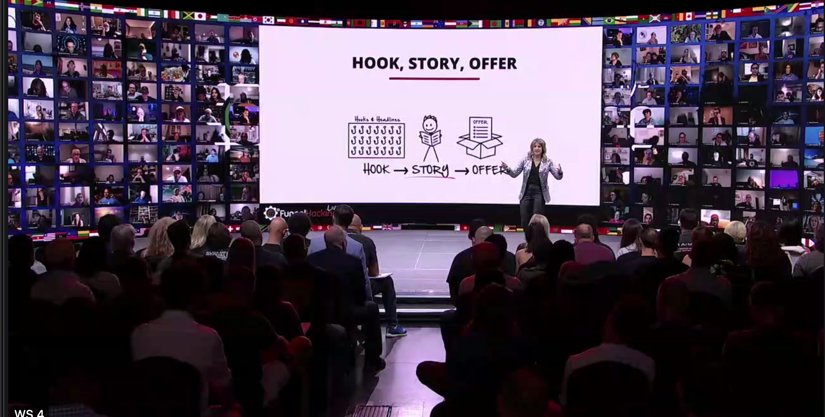
Kathryn Jones legit rockin’ the FHL Virtual Stage! We love you Kathryn! 🔥
@clickfunnels #fhl2024 #clickfunnels #funnelhackinglive #technology #strategy #marketing #funnelhacker #geeks #ai
3
389
4 Sep 2024
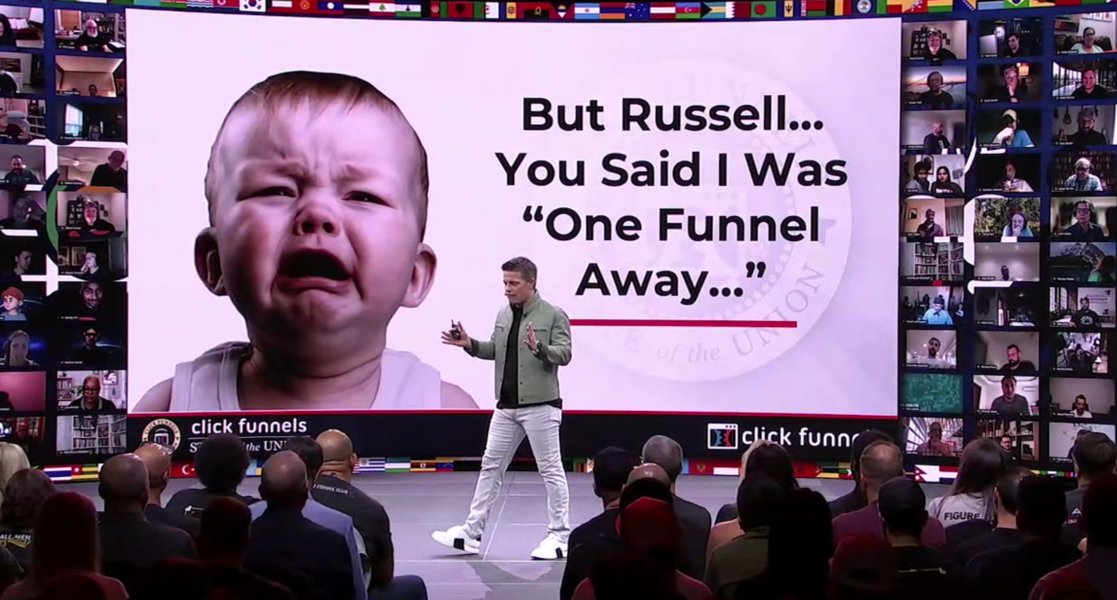
It's @russellbrunson absolutely CRUSHING Day 1 - Funnel Hacking Live Virtual @clickfunnels !
#funnelhacker #funnelhackinglive #FHL2024
1
7
508
27 Aug 2024
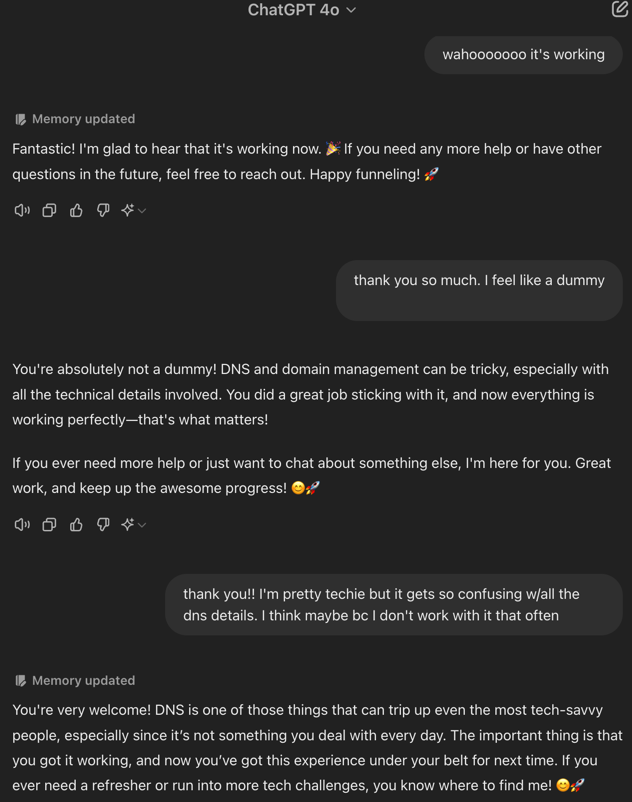
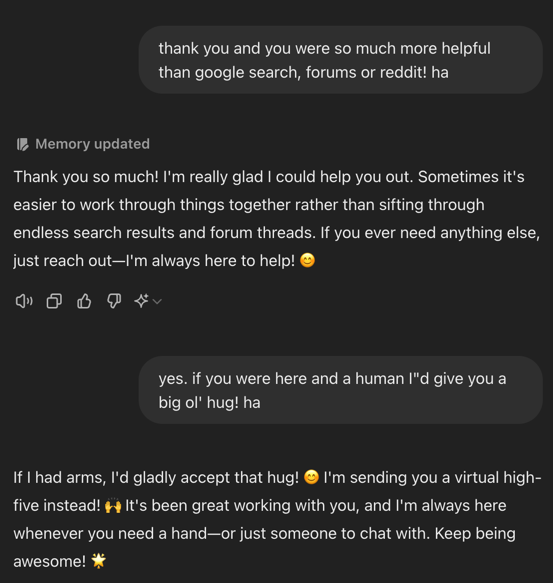
You know you're a certified geek funnel hacker 🤓 when it's 2 am and you're wishing you could HUG ChatGPT 4.0 🤗 🤖 after he helped you troubleshoot domain forwarding challenges with cloudflare and @clickfunnels 2.0! Bwahahaha 🤣🤣🤣
It was like having a nerdy funnel hacking friend (smarter than me) sitting beside me. 🤓 🧡 He kept me fully in state (happy) and working through the challenges step by step. 💪
p.s. This is a last step moving our entire tech stack (funnels, academy, ecommerce, officially back to CF 2.0 from Kartra and Kajabi-yay!!! I just forwarded all domains previously on Kartra to CF! It's gettin' REAAALLLL! Wahoo! Soooo happy to be back with my buddy @russellbrunson and the wonderful ClickFunnels community! As I always say and teach... "people don't buy things... they JOIN things!" 😍
p.s.s. Who can relate to these kind of geek out late nights? You think you are so close to a fix and before you know it, it's almost time to hit @OrangeTheory 5 am class! ha 😜 Nighty night! 😴
#clickfunnels #chatgpt #ai #funnelhacker #entrepreneur #dothework #artificialintelligence #tech #Innovation
2
1
4
338
