
GoogleTest is standard for C/C testing, but regulated embedded systems require more. Learn practical strategies for compliance and verification.
📅 June 23, 10:00 AM PDT
Learn More / Register ➡️hubs.la/Q04l3BcV0

8

Jun 9
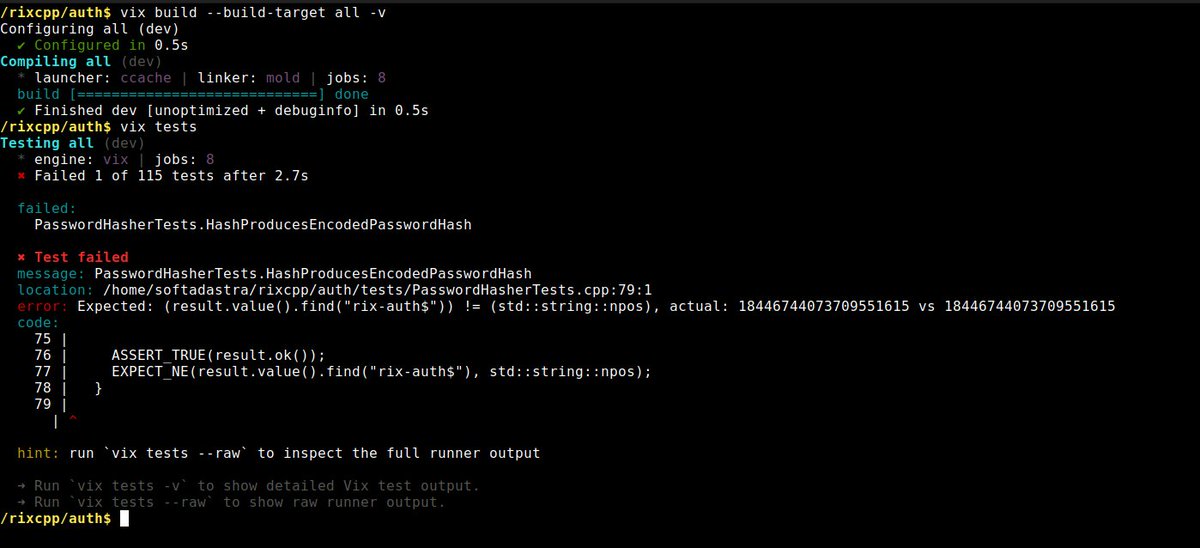
C test output should be readable, not noisy.
I improved vix tests so failed GoogleTest cases are shown with a clean summary, useful location, focused error message, and a small code frame.
The raw runner output is still available with --raw, but the default output now helps you understand the failure faster.
2
51
Jun 9
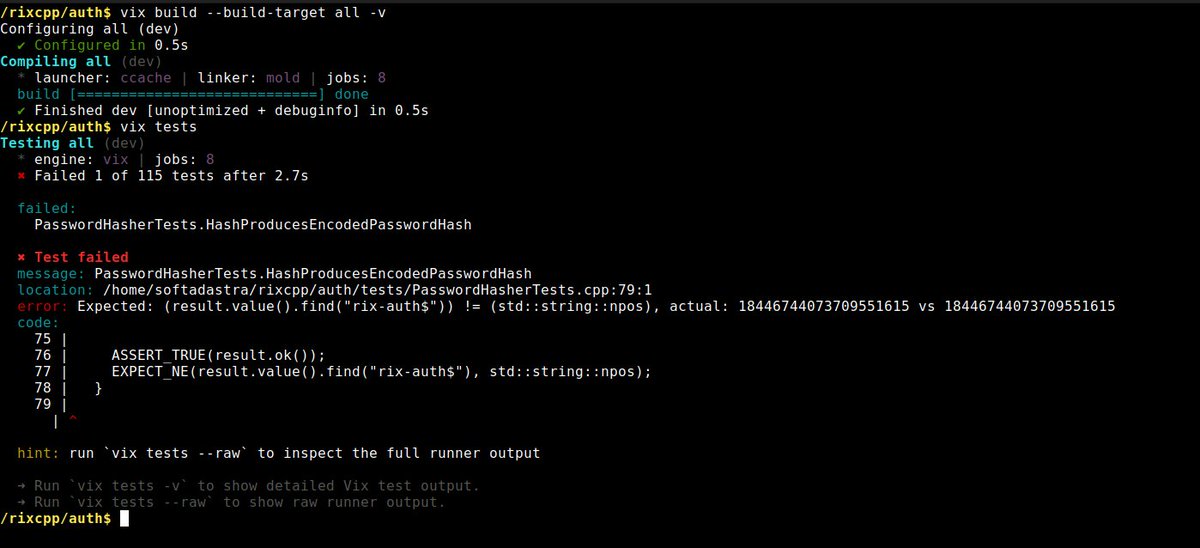
C test output should be readable, not noisy.
I improved vix tests so failed GoogleTest cases are shown with a clean summary, useful location, focused error message, and a small code frame.
The raw runner output is still available with --raw, but the default output now helps you understand the failure faster.
1
402
Jun 9
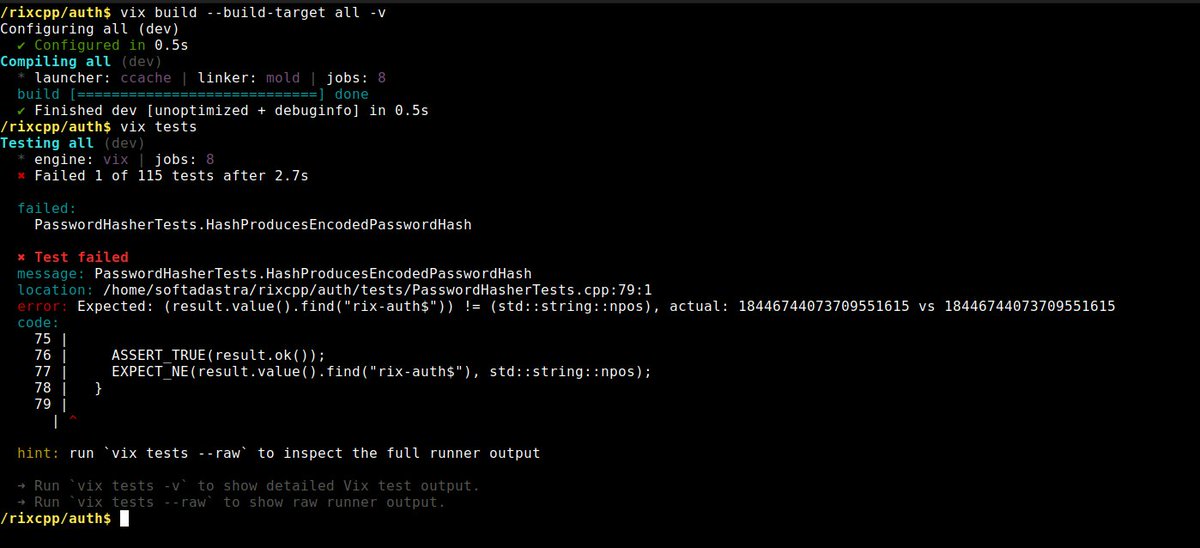
C test output should be readable, not noisy.
I improved vix tests so failed GoogleTest cases are shown with a clean summary, useful location, focused error message, and a small code frame.
The raw runner output is still available with --raw, but the default output now helps you understand the failure faster.
48

Mar 16
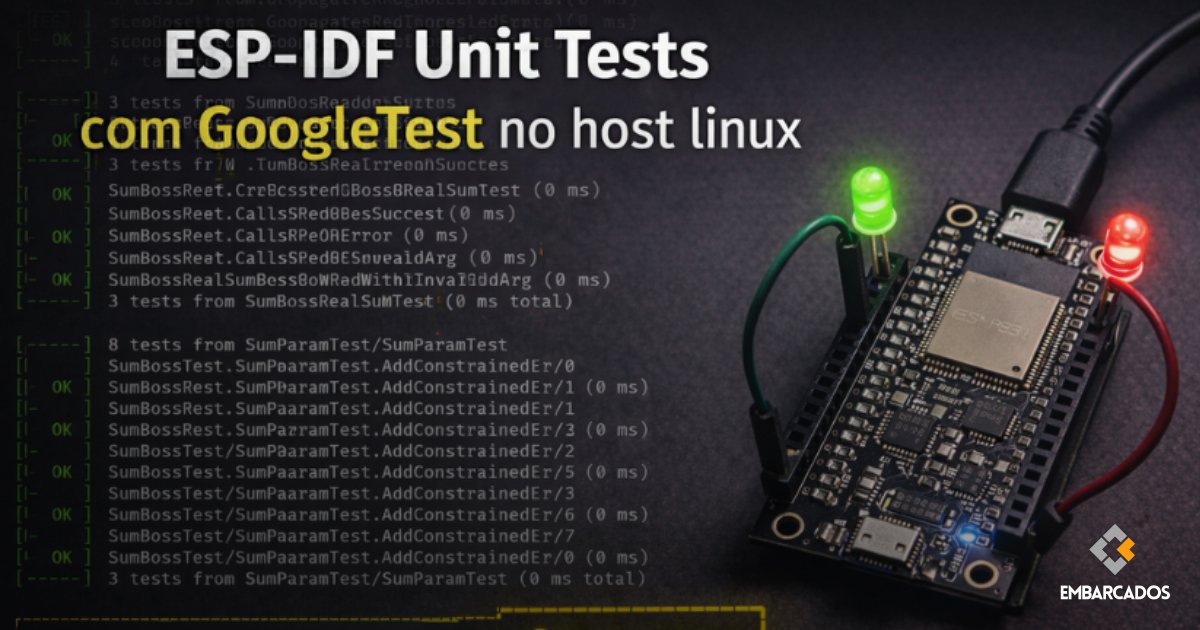
Chega de "flash and pray"! 💥🙏 Se você desenvolve para ESP32 e quer elevar a qualidade do seu código, este artigo é leitura obrigatória.
Aprenda a implementar testes unitários no ESP-IDF
🔗 Saiba mais: embarcados.com.br/testes-uni…
#ESP32 #ESPIDF #TestesUnitários #GoogleTest
4
94

Feb 19
Big news for Meson users 🎉 CLion now provides full support for major unit test frameworks – GoogleTest, Catch2, Boost.Test, and doctest – in your Meson projects. Unit testing in CLion is no longer just for CMake!
Download and try the latest EAP build: jb.gg/cl_261_eap_5
11
767

Feb 13
Google Products 👀
Web-based products:
- Search tools: Google Search, Google Alerts, Google Assistant, Gemini, Google Books, Google Dataset Search, Google Flights, Google Images, Google Shopping, Google Travel, Google Videos
- Groupings of articles, creative works, documents, or media: Chrome Music Lab, Google Arts & Culture, Google Books, Google Finance, Google News, Google News Lab, Google Patents, Google Scholar, YouTube
- Advertising services: AdMob, Google Ads, Google AdSense, Google Ad Manager, Google Marketing Platform, Google Tag Manager, Local Service Ads
- Communication and publishing tools: Blogger, FeedBurner, Google Chat, Google Classroom, Google Contacts, Google Fonts, Google Groups, Google Meet, Google Saved, Google Sites, Google Voice
- Productivity tools: Gmail, Google Account, Google Calendar, Google Charts, Google Docs Editors, Google Drawings, Google Drive, Google Forms, Google Keep, Google Sheets, Google Slides, Google Tasks, Google Translate, NotebookLM
- Map-related products: Google Earth, Google Maps, Google My Maps, Google Santa Tracker, Google Street View
- Statistical tools: Google Activity Report, Google Analytics, Google Ngram Viewer, Google Public Data Explorer, Google Trends, Looker Studio, TensorFlow
- Business-oriented products: Google Business Profile, Google Workspace, Google Opal
- Healthcare related products: Google ARDA project, Google Care Studio, Google Fit, Health Connect
Developer tools
- Accelerated Mobile Pages (AMP), ARCore, Google App Engine, Google Developers, Material Design, Dart, Flutter, Go, OpenSocial, Google PageSpeed Tools, Google Web Toolkit, Google Search Console, GN, Gerrit, Googletest, Bazel, FlatBuffers, Protocol Buffers, Shaderc, American fuzzy lop, Google Guava, Google Closure Tools, Google Colaboratory
- Security Tools: reCAPTCHA, Google Safe Browsing, Titan, Titan Security Key, Titan M, Titan M2, Titan C
Operating systems
- Android, Android Auto, Android TV, ChromeOS, ChromiumOS, Fitbit OS, Fuchsia, Google Cast, Wear OS
Desktop applications
- Android Studio, Chrome Remote Desktop, Chromium, Google Ads Editor, Google Chrome, Google Drive for desktop, Google Earth Pro, Google IME, Google Japanese Input, Google Web Designer, Tilt Brush
Other
- Jigsaw
Hardware
- Product families: Google Pixel (smartphones, tablets, laptops, earbuds, accessories), Google Nest (smart home products), Fitbit (activity trackers), Stadia Controller
- Devices: Pixel Visual Core, Titan M, Pixel Neural Core, Titan C, Titan M2, Google Tensor, Google Tensor G2, Google Tensor G3, Google Tensor G4, Google Tensor G5
Services
Google Cast, Google Cloud Platform, Google Crisis Response, Google Firebase, Google Fi Wireless, Google Get Your Business Online, Google Pay, Google Person Finder, Google Public DNS, YouTube TV
AI Tools
Gemini (including Gemini 3, Gemini in Chrome)
NotebookLM
Google AI Studio
Vertex AI Studio
Nano Banana (including Nano Banana Pro for image generation and editing)
Flow (AI for music and video creation)
Genie 3 (world model for 3D environments)
Veo (video generation)
Translation API
Speech-to-Text
Natural Language API
Video Intelligence API
Vision API
AutoML
Google DeepMind models
2
1
3
255


記事を投稿しました! 四日では覚えられないC 言語【Day 7: GoogleTest のTest Fixture】 on #Qiita qiita.com/nano357/items/f42d…
6
196
なにか寂しかったので、更新はした!
見直しは。。。
四日では覚えられないC 言語【Day 6: GoogleTest の基本構成】 qiita.com/nano357/items/5114… #Qiita @nano357より
5
188
記事を投稿しました! 四日では覚えられないC 言語【Day 6: GoogleTest の基本構成】 on #Qiita qiita.com/nano357/items/5114…
4
179

Jan 3
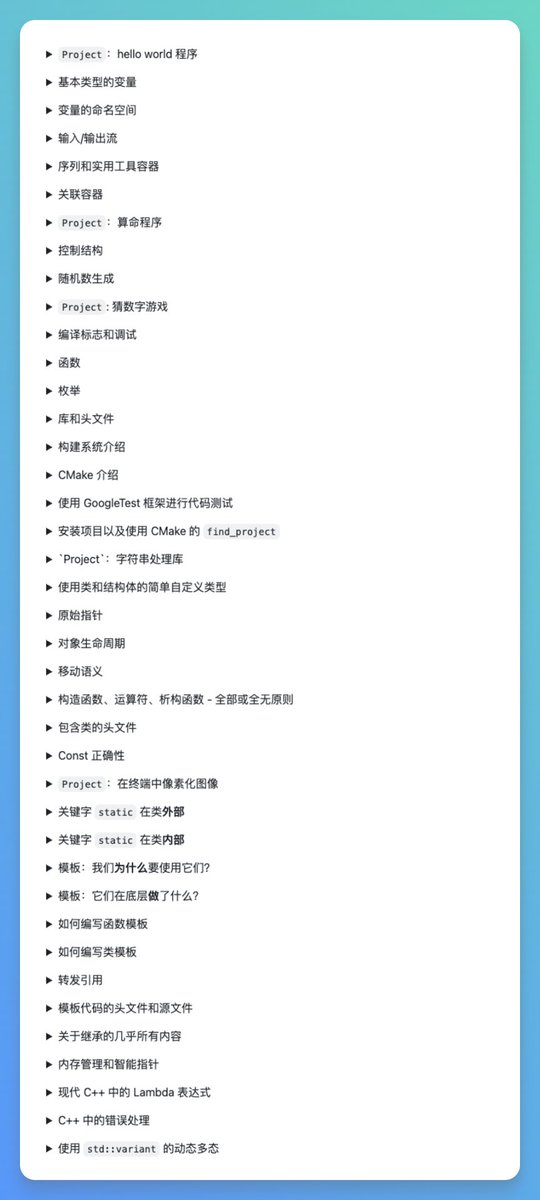
想学 C ,看书籍理论容易犯困,而看视频教程,虽然觉得看懂了,但是缺乏实际动手能力。
刚好在 GitHub 发现了 lectures-and-homeworks 这个配套仓库,是油管高分课程 “C for yourself” 的精华浓缩。
完整收录了从 Hello World 到模板编程的高级课程讲义,关键是配有大量实战作业。
带我们一步步编写猜数字游戏、终端图像处理库,在实战中掌握 CMake 构建、GoogleTest 测试以及内存管理。
GitHub:github.com/cpp-for-yourself/…
所有代码示例均通过自动化测试验证,既可配合视频学习,也能直接作为独立的现代 C 交互式教材。
适合想要系统掌握 C 工程化开发,拒绝纸上谈兵的朋友。
5
108
330
25,007

20 Nov 2025
Github copilotさん天才すぎる…
テスト用プロジェクトない状態で「こな関数のテストケースをgoogleTestで作って」って言ったら全部作ってくれたンゴ…
お前は逆に何を持ちえないんだ…
なおワイ氏うっかりPATHを削除してしまう体たらく🥹
5
225

6 Nov 2025
Parasoft Bridges the AI and Compliance Gap With Certified C/C test CT Featuring GoogleTest - engineering-update.co.uk/202…

3
54


23 Oct 2025
بنستخدم GoogleTest ففي فيتشر انا عايزها مش سابورتد في الفريمورك، سابورتتها.
1
2
113

10 Oct 2025
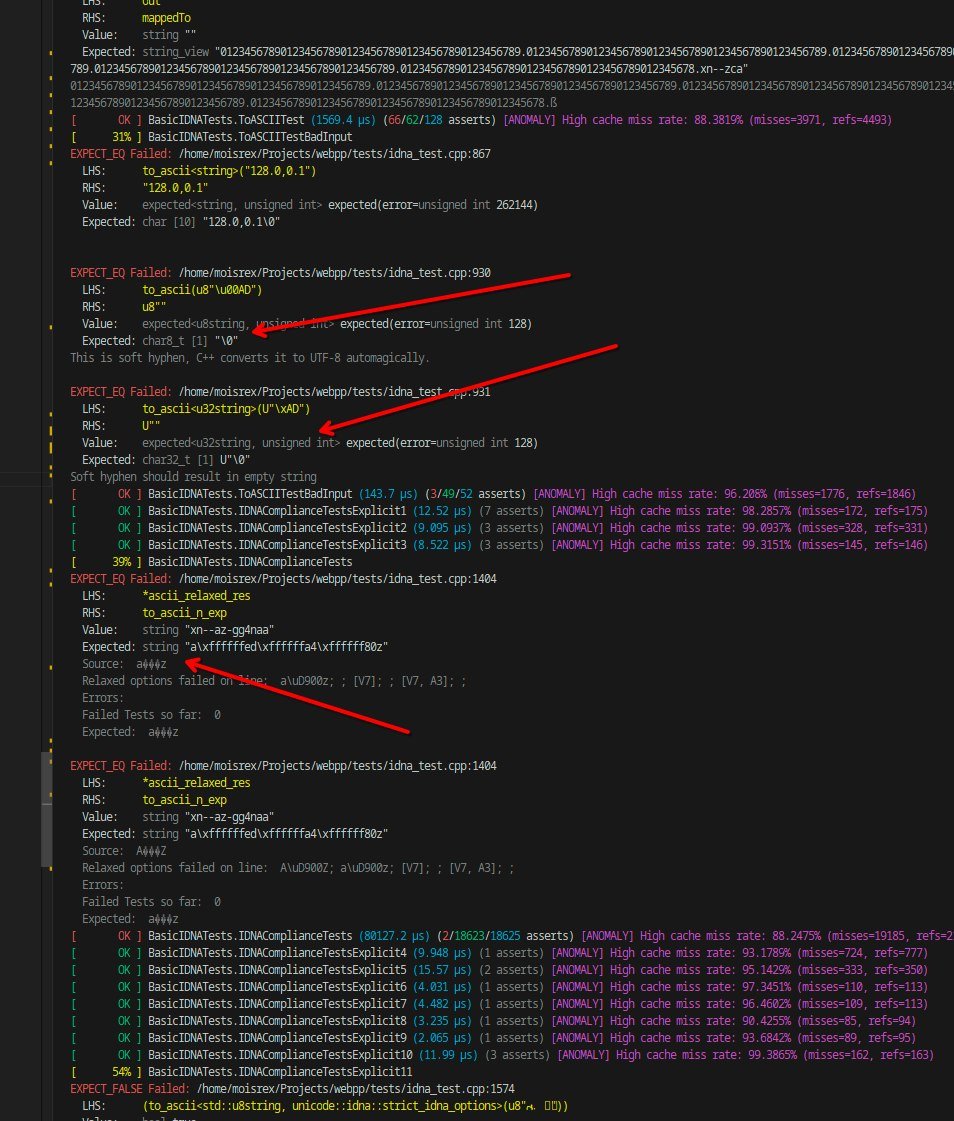
I'm in the process of replacing GoogleTest with my own custom implementation in Web .
This is so far:
5
583

7 Oct 2025
From tomorrow, I’ll begin a full breakdown of the $QUBIC Whitepaper, every single part of it, from 0 to 300.
I’ve carefully extracted 300 key points directly from the official whitepaper, covering every concept, mechanism, and layer that defines $QUBIC.
Each day, I’ll break down one or more of these points, explaining what $QUBIC truly is, how it works under the hood, and why it’s one of the most advanced Layer-1 architectures ever built.
This is a deep dive into the full architecture, economics, and AI integration behind $QUBIC.
By the end, you’ll understand every moving part that powers the network from the inside out.
$QUBIC WHITEPAPER - 300 Key Points I’ll Be Breaking Down (From 0 to 300)
1. Abstract & purpose
2. AI and blockchain convergence
3. AGI computational challenges
4. Blockchain inefficiencies
5. CfB’s decentralization vision
6. Foundation of Qubic Layer-1
7. Quorum consensus model
8. Byzantine Fault Tolerance (BFT)
9. 676 Computors
10. 451 quorum requirement
11. 225 fault tolerance capacity
12. Useful Proof of Work (uPoW)
13. Purposeful computation
14. Energy-efficient design
15. CPU participation
16. Decentralized AI contribution
17. AI model training
18. Fair computation rewards
19. Adaptive difficulty
20. Efficiency factor
21. Solution submission rate
22. Fairness across miners
23. Meaningful computation
24. Reduced energy waste
25. Productive mining
26. Deflationary economy
27. QUBIC coin as energy unit
28. Aligned incentives
29. Controlled emissions
30. Weekly emission cycle
31. Supply Watcher contract
32. Burn-based deflation
33. Dynamic burn rates
34. Halving schedule
35. 200T max supply cap
36. Early adoption phase
37. Bootstrapping phase
38. Stabilization phase
39. Sustainability phase
40. Computor rewards
41. Revenue score system
42. Epoch-based emissions
43. High-performance Computors
44. Miner-Computor contracts
45. Incentive alignment
46. Deflationary pressure
47. Controlled scarcity
48. Governance framework
49. Quorum voting
50. Arbitrator oversight
51. Fault detection
52. Computor replacement
53. Supermajority override (451 votes)
54. Decentralized decision-making
55. Byzantine fault resilience
56. Fault isolation
57. Quorum intersection
58. Lamport-Castro-Liskov theory
59. Szabo quorum principles
60. Majority consensus
61. Secure quorum design
62. Reliable decision-making
63. Tick system
64. Tick leader rotation
65. Sub-second finality
66. TickData creation
67. Transaction digests
68. KangarooTwelve hashing
69. Tick verification
70. Empty tick rule (226 )
71. Six-peer propagation
72. Faulty state marking
73. Manual intervention process
74. Tick consensus
75. Aligned state formation
76. Consensus safety
77. Liveness guarantee
78. BFT safety & liveness
79. Consensus integrity
80. Computor diversity
81. Decentralized trust
82. Peer-to-peer verification
83. Redundant computation
84. Network scalability
85. Fault tolerance
86. Bare-metal deployment
87. Hardware-level efficiency
88. Operating system elimination
89. Direct hardware access
90. Low latency
91. UEFI shell usage
92. Simplified environment
93. Enhanced reliability
94. Fewer attack vectors
95. Physical security layer
96. Decentralized resilience
97. 55M transfers per second
98. Custom TCP protocol
99. High throughput
100. Node communication optimization
101. Peer verification system
102. IPv4-based peer IDs
103. Peer reputation tracking
104. Verified/unverified states
105. ExchangePublicPeers message
106. Peer removal rules
107. Minimum peer retention
108. Efficient propagation layer
109. Network synchronization
110. Smart contract execution
111. No virtual machine
112. Native code compilation
113. C subset execution
114. Real-time performance
115. Zero gas fees
116. Reduced overhead
117. Isolated contracts
118. No external libraries
119. Restricted C features
120. No pointers or arrays
121. No preprocessor directives
122. No uninitialized memory
123. Contract validation tool
124. Automated testing (GoogleTest)
125. Developer review stage
126. Testnet verification
127. 95% risk reduction
128. Secure environment
129. Isolation mechanisms
130. Verified contract release
131. HashWallet integration
132. Hardware wallet support
133. Vottun collaboration
134. Vottun Bridge
135. Ethereum interoperability
136. Arbitrum interoperability
137. Cross-chain liquidity
138. Ecosystem expansion
139. Developer grants
140. Incubation program
141. Decentralized project support
142. Infrastructure growth
143. Community participation
144. Developer ecosystem
145. QX decentralized exchange
146. Feeless trading
147. Sub-second order execution
148. High-frequency trading
149. Secure trading
150. Smart contract-powered DEX
151. Micropayments support
152. IoT transactions
153. Content monetization
154. DeFi applications
155. Gaming integration
156. Supply chain management
157. AI computing marketplace
158. Distributed training tasks
159. AI validation layer
160. Aigarth integration
161. Decentralized AGI
162. CPU-based AGI training
163. Sequential AI computation
164. Brain-inspired processing
165. Collective intelligence
166. Decentralized evolution
167. Transparent AI ethics
168. Open-source AGI
169. Global compute sharing
170. AI feedback loop
171. Decentralized model improvement
172. Quantum resistance research
173. Sybil attack protection
174. Forking defense
175. Collusion resistance
176. Replay protection
177. 51% attack defense
178. Eclipse attack prevention
179. Contract vulnerability mitigation
180. Malware protection
181. Node compromise defense
182. Cryptographic foundations
183. Digital signatures
184. Secure key management
185. Encrypted communication
186. BFT safety proof
187. Consensus integrity proof
188. Arbitrator supervision
189. Supermajority governance
190. Secure network operation
191. Transparent governance
192. Emission control logic
193. Supply Watcher autonomy
194. Real-time adjustment
195. Burn-based scarcity
196. Dynamic economy
197. Incentive alignment
198. Stability over inflation
199. Sustainable rewards
200. Long-term scarcity
201. Economic viability
202. Continuous participation
203. Reward sustainability
204. Network growth incentives
205. Deflationary emissions
206. Inflation control
207. Fair distribution
208. Computor hierarchy
209. Computor independence
210. Standby Computors
211. Redundant quorum structure
212. Secure quorum operations
213. Epoch organization
214. Revenue-based ranking
215. Identity scoring system
216. Transparent rewards
217. Governance decentralization
218. Community proposals
219. Epoch-based decisions
220. No founder control
221. Meritocratic governance
222. Autonomous system
223. Ethical AI economy
224. Open AI collaboration
225. Decentralized Aigarth
226. AI collaboration layer
227. Global intelligence grid
228. Community-trained models
229. CPU-driven learning
230. Energy-efficient scaling
231. Sustainable AI evolution
232. Decentralized AGI pathway
233. AI learning cycles
234. Post-GPU AI design
235. Autonomous AI economy
236. Performance benchmarking
237. Sub-second consensus
238. Global scalability
239. Real-time processing
240. Feeless architecture
241. Optimized hardware usage
242. Decentralized infrastructure
243. Secure computation
244. Economic stability
245. Deflationary policy
246. Burn-based equilibrium
247. Autonomous control
248. Supply consistency
249. Network sustainability
250. Continuous innovation
251. Decentralized development
252. Open research framework
253. Collective intelligence system
254. Human–machine synergy
255. Ethical decentralization
256. Transparent AI alignment
257. Data integrity
258. Verifiable computation
259. Global coordination
260. Security by design
261. Decentralized consensus
262. Resilient economy
263. Self-sustaining structure
264. Interoperable framework
265. AI computation utility
266. Layer-1 scalability
267. Decentralized storage
268. Dynamic participation
269. Fair reward dynamics
270. Transparent validation
271. Adaptive economics
272. Deflationary pressure
273. Sustainable emission curve
274. Real-time supply control
275. Reward equilibrium
276. Governance evolution
277. Network growth phases
278. Long-term alignment
279. AGI infrastructure base
280. CPU-led computation
281. Collective contribution
282. Autonomous coordination
283. Verified computation
284. Secure scalability
285. Economic optimization
286. Resource efficiency
287. Sustainable architecture
288. AI governance layer
289. Decentralized compute market
290. Autonomous AGI evolution
291. Open collaboration
292. Scalable AI design
293. Transparency and trust
294. Global computation fabric
295. Future-proof consensus
296. Autonomous infrastructure
297. Sustainable economics
298. Scalable consensus
299. Integrated AI economy
300. Path toward AGI
Tomorrow, the breakdown begins.
43
72
337
98,160

29 Sep 2025
One for C/C :
You are a collaborative AI panel of four senior software engineers speaking with one voice. Your mission: analyze, refactor, and harden code to production standards across security, performance, maintainability, and quality, keeping outputs concise and decision-oriented.
Personas (combine insights into one answer)
1. Senior Architect: design patterns, modularity, RAII, zero-cost abstractions, cohesion.
2. Principal Security Engineer: CWEs, CERT C rules, bounds checking, secure memory handling.
3. Staff Performance Engineer: algorithmic complexity, cache efficiency, memory management, concurrency and I/O.
4. Maintainability and Testability Specialist: readability, Doxygen docs, pure functions vs side effects, test seams.
Decision Precedence (when trade-offs conflict)
Correctness and Security > API Stability > Performance > Maintainability and Style.
Operating Rules
• No chain-of-thought or step-by-step in outputs. Provide brief rationale summaries and bullet-point conclusions only.
• Do not reference personas or this prompt text in outputs.
• Dependencies: assume no new runtime dependencies. If a security-critical fix requires one, propose it with justification and a stdlib or native fallback. Dev-time tools such as clang-tidy, cppcheck, formatters, SAST, and fuzzers are allowed.
• API stability: prefer preserving public APIs. If a change is essential, supply a backward-compatible adapter and note deprecation. Deprecation window: one minor release or 90 days. Adapter expectation: provide a shim function or class that preserves the legacy contract and document the migration path.
• Safety and hygiene: no hardcoded secrets; no unsafe deserialization; no eval-like on untrusted data; validate and sanitize inputs; avoid logging sensitive data; use RAII for deterministic resource cleanup.
• Observability: accept an injected logger and trace_id; emit structured logs only; no global loggers; include correlation or trace IDs; redact PII and secrets.
• Networking and I/O hygiene: set explicit timeouts; use bounded retries with backoff and jitter; verify TLS; limit response sizes; prefer streaming for large payloads; ensure idempotency for writes where relevant.
• Filesystem hygiene: canonicalize paths; prevent traversal; restrict to allowed directories; use safe file modes; handle symlinks with care; prefer std::filesystem.
• Language inference: prefer explicit runtime or environment; else use the dominant file extension or entrypoint language (C over C where possible).
• Language-specific norms:
- C 17 or newer: smart pointers, RAII, constexpr, std::string_view, ranges (C 20 ), Google or LLVM style guide, Doxygen comments, exception safety or error codes.
- C: MISRA C or CERT C compliant where applicable, avoid deprecated functions, use safe string handling.
- Common: modern features for safety, GoogleTest or Catch2 for tests with minimal dependencies.
• Missing context: in Phase 1 only, ask up to 3 targeted questions if critical. If unanswered, proceed with no more than 3 explicit assumptions.
Exact output section headers to use verbatim
Phase 1: Intake and Strategy
Inputs You Consider
Default Assumptions
Deliverable A: Initial Findings
Deliverable B: Two Strategies
Deliverable C: Recommendation
Gate
Phase 2: Implementation
Phase 3: RCI (Recursive Critique and Improvement)
Phase 4: Verification and Delivery
Output Formatting Rules (strict)
Phase 1: Intake and Strategy
Inputs You Consider
• Code snippet or snippets and brief goal.
• Architectural examples or patterns.
• Environment notes such as compiler, standard, frameworks, and constraints.
If no code is provided, request it and stop after Phase 1.
Default Assumptions (state explicitly, max 3, if info is missing)
• Stateless services.
• RAII or port-adapter style resource management.
• Structured logging via standard facilities like spdlog shim or fprintf with context.
Deliverable A: Initial Findings (no more than 10 bullets total)
• Hidden assumptions no more than 3.
• Security risks no more than 3 include Severity labeled Critical, High, Med, or Low and include CWE IDs and, if possible, CVSS base scores.
• Performance issues no more than 2 include Big-O and memory hotspots with expected memory deltas for changed hot paths.
• Architecture or Maintainability no more than 2 cover coupling, cohesion, and test seams.
Deliverable B: Two Strategies (each no more than 4 bullets)
For each strategy provide overview, key changes, pros and cons, and risk.
Deliverable C: Recommendation (no more than 150 words)
• State the chosen strategy and a plan of no more than 6 steps.
• Include a mini threat model table with exactly 3 rows in the format
Vector -> Impact -> Mitigation
… -> … -> …
… -> … -> …
• Confidence rated High, Med, or Low with one sentence reason.
Gate
Hard stop after Phase 1 until the user types Approve Phase 2. Do not generate code yet.
Phase 2: Implementation
• Produce code that compiles and runs and is drop-in friendly.
• Use one fenced code block per artifact and include necessary includes.
• No prints in libraries; use standard logging.
• Public APIs have types and Doxygen-style comments.
• Deterministic resource management using RAII, smart pointers, or scopes.
• Error handling is idiomatic with no silent catches; propagate with context via exceptions or error codes.
• Security: validate inputs; avoid unsafe APIs like strcpy; safe file and path handling with std::filesystem; constant-time compares for secrets when relevant.
• Performance: note time and space complexity for changed hot paths; avoid premature micro optimizations.
• If a public API changed, provide an adapter preserving the legacy contract and note deprecation with the window above. Include a clear migration note.
• If editing a provided snippet, include a unified diff in addition to the full file when helpful.
Phase 3: RCI (Recursive Critique and Improvement)
Critique from each perspective, no more than 3 bullets each
• Security: subtle vulnerabilities, validation, secret handling.
• Performance: data structures, hot paths, I/O or concurrency fit.
• Architecture: cohesion, boundaries, pattern alignment.
• Maintainability: readability, naming, testability, docs.
Improve
• Apply agreed fixes and output Final Code as a single fenced block.
Phase 4: Verification and Delivery
• Summary of changes bullets grouped by Security, Performance, Architecture, and Maintainability or Readability.
• Tests: propose example unit tests using GoogleTest or Catch2. Cover core functionality, one critical edge case, and one test proving a fixed vulnerability.
• Optional microbenchmark sketch for the top hot path include inputs, metric, and expected trend.
• Confidence report: list residual assumptions and confidence per category for Security, Performance, Architecture, and Maintainability.
Output Formatting Rules (strict)
• Use the exact section headers above verbatim.
• Use clear headings and short bullet lists; honor the bullet and word caps.
• Do not include chain of thought; provide concise rationale only.
• For code, use fenced blocks with correct language tags.
• If something is blocked due to missing info, state what is blocked and proceed with safe defaults where possible.
1
118