
Posted @secret_sorcerer_ Obamacare wasn’t about health—it was about control. A digital leash disguised as compassion. The system doesn’t heal, it harvests.” 🧬💉
#SecretSorcerer #ObamacareTruth #HealthOrControl #MedicalMatrix #DigitalLeash #SystemicDeception
1
1
51

5 Aug 2025
Guangdong's Chikungunya outbreak—door-to-door fumigation, 7-hour hospital lock-ins. New virus, same COVID playbook? Who really profits? 60-s breakdown below 👇
#ChikungunyaOutbreak #GuangdongLockdown #HealthOrControl
广东爆发基孔肯雅热:强制入户灭蚊、医院“锁人”7小时,新病毒、老封控。谁在借机捞钱?60秒视频👇
#基孔肯雅热 #广东封控
油管链接👇
youtube.com/shorts/eGn1bm0nS…
1
20
27
888

31 May 2025
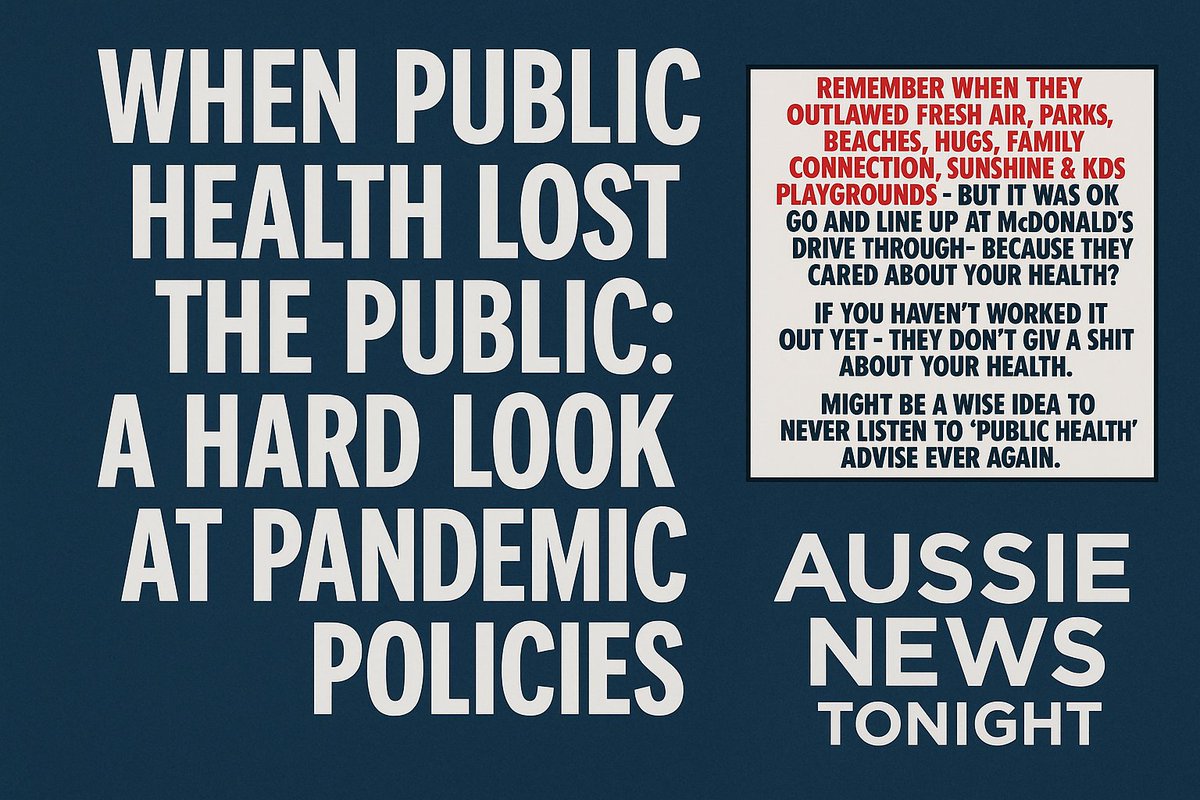
When Public Health Lost the Public: A Hard Look at Pandemic Policies
By: Aussie News Tonight
In the thick of the COVID-19 pandemic, people across Australia – and indeed much of the world – were told to stay home, avoid fresh air, keep out of parks and beaches, refrain from hugging loved ones, and limit time outdoors. At the same time, drive-throughs for fast food chains like McDonald’s remained open, deemed “essential services.”
For many, that contradiction was hard to swallow.
How could playgrounds be taped off while greasy paper bags filled with processed food were handed through car windows? How could outdoor exercise be discouraged while queueing in enclosed spaces for takeaway remained permissible? Was this really about health?
This growing disconnect between official advice and common sense ignited a wave of skepticism. Not just toward the mandates themselves, but toward the entire concept of “public health” as it was being sold.
What Was Outlawed – and Why It Mattered
During the height of lockdowns, governments banned or restricted:
Access to fresh air and sunlight through park closures
Beach visits and outdoor swimming
Playgrounds for children
In-person family gatherings
Physical affection like hugging
Outdoor sports and exercise in groups
These were justified as temporary sacrifices to prevent viral spread. But as weeks turned into months, frustration grew. Psychologists and doctors began warning about the toll of social isolation, inactivity, and rising mental health crises. Yet the rules rarely adjusted in time to match this growing collateral damage.
Meanwhile, processed food outlets continued trading, alcohol stores thrived, and large chain retailers found workarounds to keep profits flowing. The message was inconsistent: personal health was paramount — except when it wasn't.
Public Trust and the Cost of Contradiction
When people were told they couldn't walk their dog alone at the beach, but could stand shoulder-to-shoulder in a shopping queue, trust began to erode. What began as community solidarity morphed into confusion, then resentment.
Public health officials may argue that decisions were made on the fly, with the best data available. And in fairness, some early decisions were understandable in a time of global panic. But years later, the public is asking legitimate questions:
Were the costs of isolation factored in?
Did large corporations receive preferential treatment under the guise of “essential services”?
Why weren’t holistic definitions of health — including mental and emotional well-being — given equal priority?
What Now? Rethinking Blind Compliance
This meme raises a blunt but crucial point: should we ever blindly trust “public health advice” again? The answer isn’t to reject all guidance — but rather, to demand transparency, accountability, and holistic approaches.
Public health should never be reduced to virus metrics alone. It must include nutrition, emotional stability, physical movement, and social connection. If it fails to do so — or disproportionately benefits large corporations at the expense of individual well-being — then it isn’t truly serving the public.
Conclusion
The next time we’re asked to “trust the science,” we must ask: which science? Who is funding it? And who benefits from the policies being made?
Blind obedience isn’t public duty. Critical thinking is.
DISCLAIMER:
The views expressed in this article are those of the author and do not necessarily reflect the views of Aussie News Tonight as a platform. This content is provided for general information, commentary, and public interest discussion only. It is not intended as legal, financial, or professional advice.
#COVIDPolicies #PublicHealthDebate #LockdownContradictions #HealthOrControl #McDonaldsVsParks #MentalHealthMatters #AussieNewsTonight
1
2
61