
The Israelites' 40-year delay entering the Promised Land wasn't due to a lack of faith, but the paralyzing power of lies, false news, and mass hysteria. This teaches a timeless lesson about how easily we can be derailed.
#HistoryLessons #CriticalThinking
6

What if the most significant victory of the Vietnam War was actually a defeat? The Tet Offensive remains one of history's greatest lessons in strategy: battlefield success means little if you lose confidence, credibility, and the will to continue.
A USA 250 reflection on the enduring power of perception.
Happy Birthday, USA.
If we can hold on to it.
#USA250 #VietnamWar #TetOffensive #Leadership #Strategy #FlightPlan #HistoryLessons #singularitydrift #singularitydriftseries #stayinthegoddamndrift #deceptionpoint #jackcarr #cryhavoc
USA 250: "Victory in Defeat: The Tet Offensive and the Collapse of Will." joechristman.wordpress.com/2…
1
14

23h
THE TIMELINE OF COLLAPSE: History proves that moral decay always precedes political downfall. The elites have already lost their ethical foundation—their loss of influence is merely a matter of time. The real question is: how much more crisis do nations need to finally wake up? 🏛️📉👁️ #Geopolitics #HistoryLessons #Philosophy x.com/GBX_Press/status/20656…
 GBX
GBX
2
2
39

Jun 12
You didnt get any historylessons? Pls compare the flag of Today and of those times you refer.
1
55

Jun 12
👕💥Official Merch Store💥👕 streamlabs.com/ninathemystic…
Believing ancient stories or religious texts often leads us to worship advanced beings as gods. Knowledge, not just high-tech, defines power. History shows this: using scientific #KnowledgeIsPower #HistoryLessons

"मुंबई में ₹12 और दिल्ली में ₹5 में भरपेट खाना मिलता है!"याद है न ग़रीबों का यह क्रूर मज़ाक? मनमोहन सरकार के समय जब ₹16/₹32 के पैमाने से लोगों की सरकारी मदद छीनी जा रही थी, तब इनके नेताओं के ये बयान थे। जनता की याददाश्त कमज़ोर नहीं है! 🧠👇#PoliticalHypocrisy #HistoryLessons
2
117

History is more than a record of the past; it provides essential context for the future.
Catch this thought-provoking segment and dive into 700 years of Indian history in the latest episode of "Rubaru" with Moid Rasheedi. -
In this clip, renowned historian Prof. Irfan Habib looks back at the 1947 Partition to explore what happens when religion and politics mix. He breaks down how faith has historically influenced state decisions and the real-world impact that leaves on a nation's trajectory.
#IrfanHabib #IndianHistory #RekhtaRubaru #HistoryLessons #JashneRekhta
11

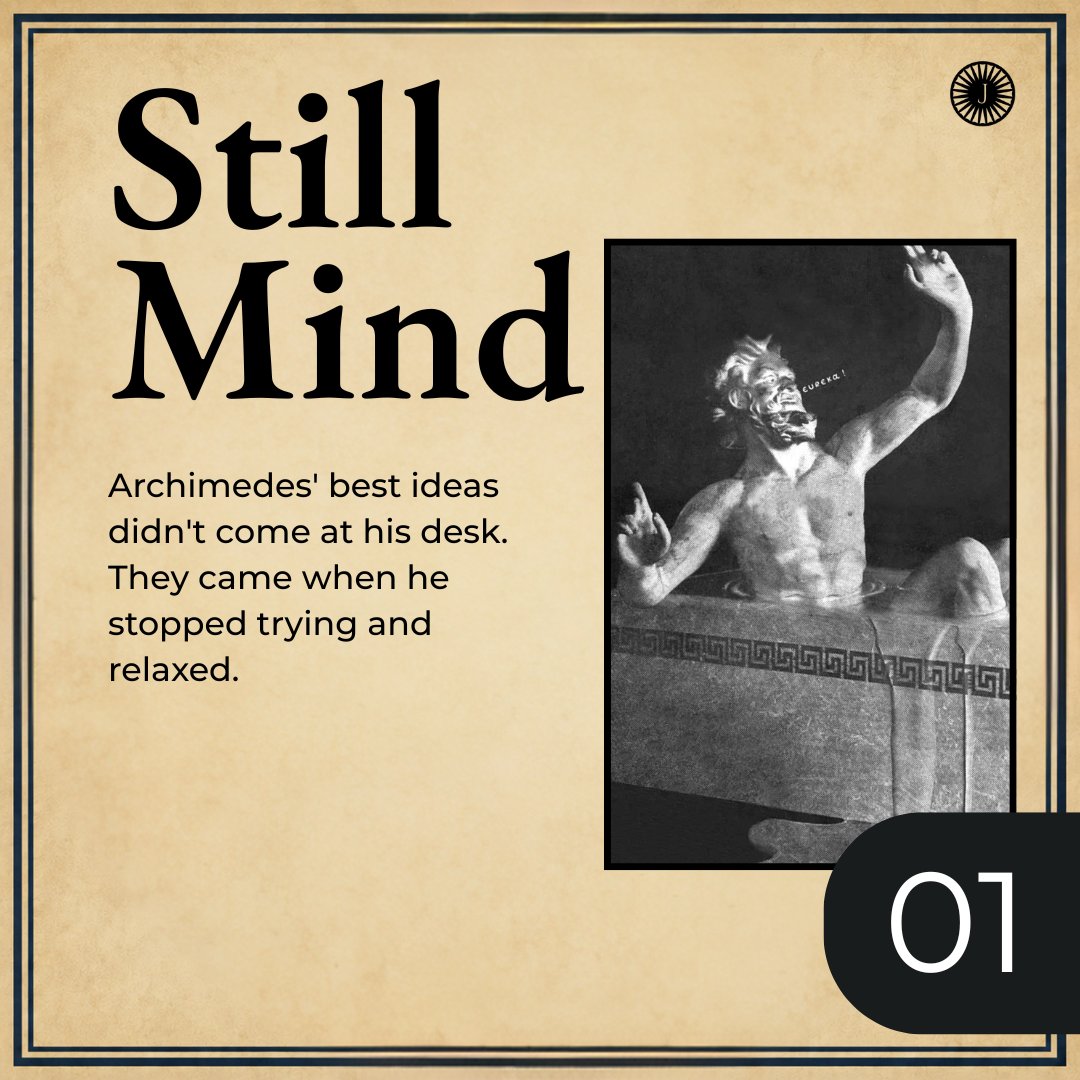
Some breakthroughs don’t come from pushing harder, they come from thinking deeper.
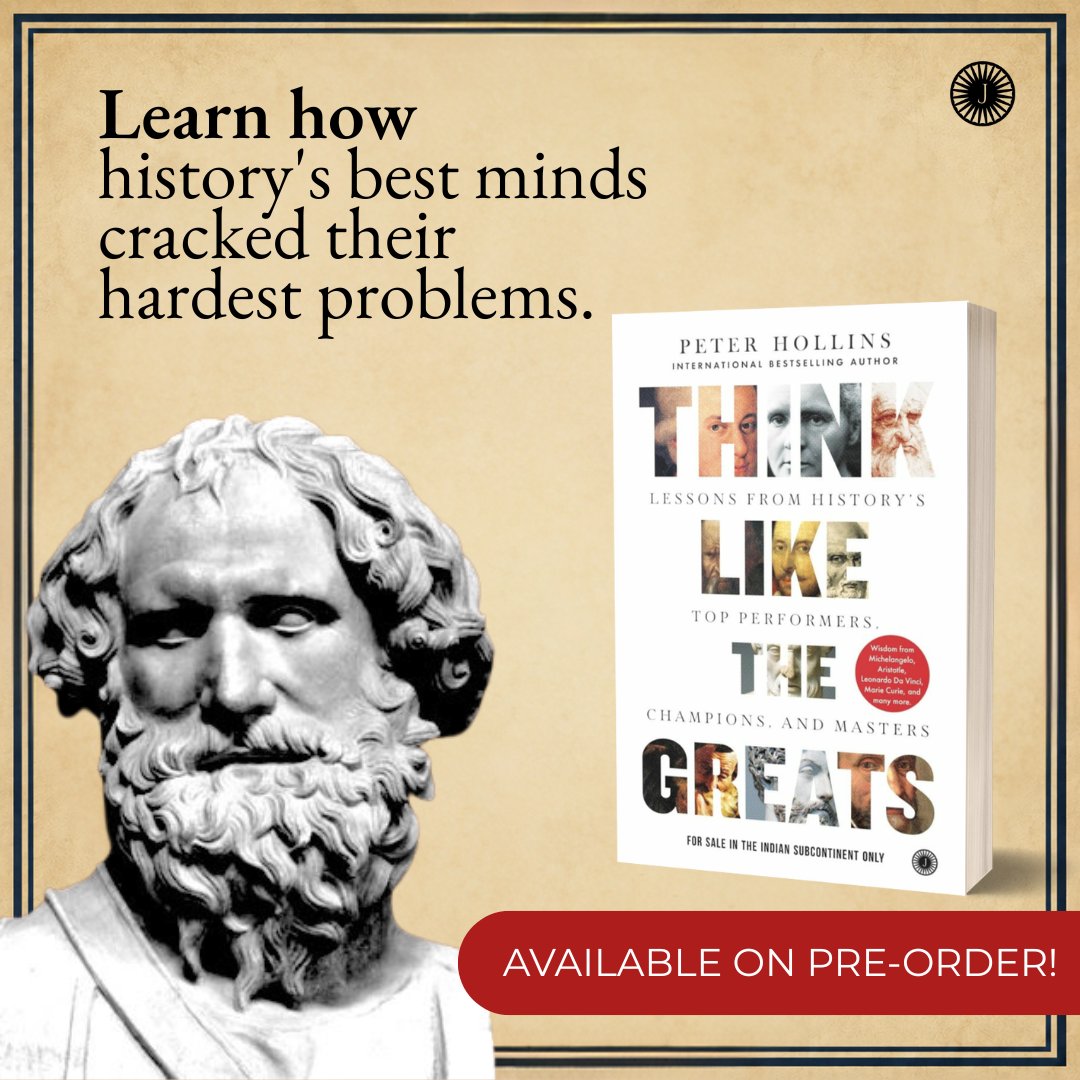
Think Like the Greats by Peter Hollins explores how history’s sharpest minds solved difficult problems, turned ideas into action, and changed the world through curiosity, focus, and fearless experimentation.
From Archimedes’ “Eureka” moment to his practical genius in building machines, this book reveals how great thinking works — and how you can apply it to your own life. 💡📘
Pre-order your copy of Think Like the Greats today and learn how history’s best minds solved their hardest problems. 📖✨
#ThinkLikeTheGreats #PeterHollins #Archimedes #EurekaMoment #GreatMinds #ProblemSolving #DeepWork #CreativeThinking #MindsetBooks #PersonalGrowth #SelfHelpBooks #HistoryLessons #JaicoBooks #BookstagramIndia #PreOrderNow


1
117
Hot_Products retweeted

26 Sep 2025
Strategic Miscalculation: The Parallel of Adversaries Created by Design
#Geopolitics #HistoryLessons #ForeignPolicy #StrategicFailure #Israel #Hamas #PLO #Afghanistan #Mujahideen #AlQaeda #USForeignPolicy #MiddleEast
facebook.com/Ostrakizem/post…
65
19
366

इतिहास गवाह है — जब सत्ता अहंकार में अंधी हो जाती है और शिक्षकों का अपमान करती है, तब परिणाम दूरगामी होते हैं।
धनानंद ने आचार्य चाणक्य का अपमान किया था, और उसी अपमान ने उसके साम्राज्य के पतन की नींव रख दी।
#Chanakya #TeacherRespect #HistoryLessons
1
1
11

"🚨 On June 7, 1942—the Battle of Midway ended with a *major* upset! 🇺🇸 16 U.S. planes took out 4 Japanese carriers. A turning point in WWII! #WWII #HistoryLessons"
7

Jun 6
As we move further from the Jim Crow era, it's striking how some modern Black individuals mirror the behavior of white racists from that period. #SocialCommentary #HistoryLessons
3
7
220

History is more than a record of the past; it provides essential context for the future.
Catch this thought-provoking segment and dive into 700 years of Indian history in the latest episode of "Rubaru" with Moid Rasheedi. - youtu.be/gvFRzfNlyRg
In this clip, renowned historian Prof. Irfan Habib looks back at the 1947 Partition to explore what happens when religion and politics mix. He breaks down how faith has historically influenced state decisions and the real-world impact that leaves on a nation's trajectory.
@JashneRekhta @Soofinama
#IrfanHabib #IndianHistory #RekhtaRubaru #HistoryLessons #JashneRekhta
1
7
34
3,196

Jun 2
History's stark lesson: Governments falter when they prioritize money. Empires don't collapse from lost ideals, but from mortgaging their future to fund the present. #HistoryLessons #Economics #Sociology
2
6
14
205

May 26
Thomas Jefferson understood Islam's threat from the start. He learned pirates attacked US ships because the Quran permitted war on non-believers. This remains the core issue. #HistoryLessons #AmericanHistory #Islam #ThomasJefferson #PoliticalInsight #CulturalAwareness #Geopolitics #NationalSecurity
1
23

May 16
The Nakba reminds us how quickly ordinary civilians can lose homes, security, and stability during conflict. #HistoryLessons #Nakba78 #Humanity
1
2
16

इतिहास गवाह है, जिस समाज ने अपनी रक्षक प्रकृति और गौ वंश का अनादर किया, उसका पतन सुनिश्चित हुआ। आइए, समय रहते अपनी भूल सुधारें और गौ माता को उनका गौरव लौटाएं।
@rashtrapatibhvn @PMOIndia #HistoryLessons
#gauhatyabandho #gaumatarashtramata
1
4
5
71

Post 1: The Structure of Conflict
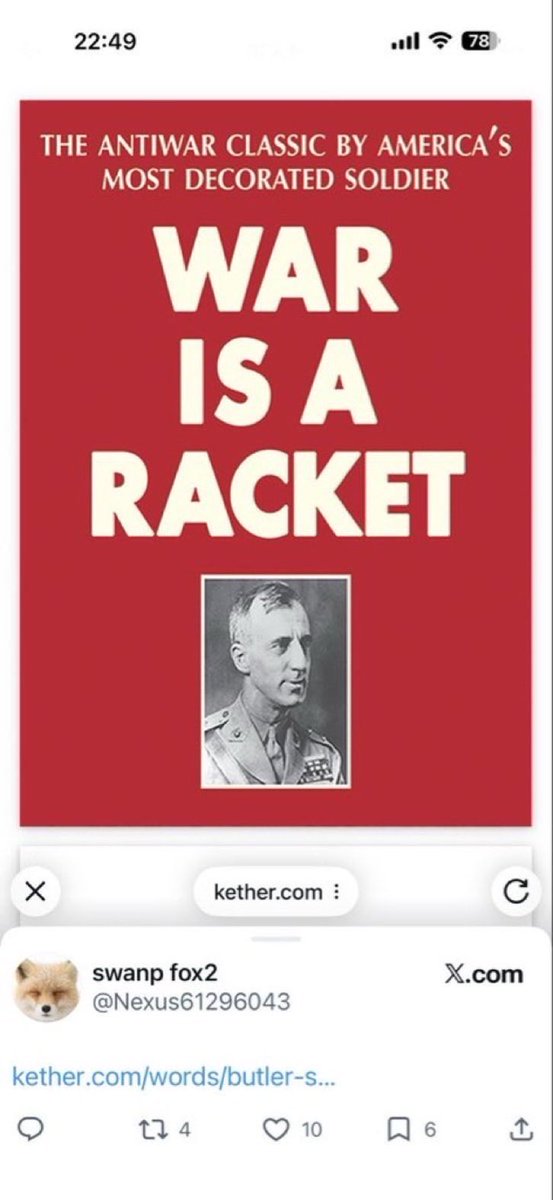
"War is a racket." 💸
Major General Smedley Butler, the most decorated Marine in U.S. history at the time of his death, spoke these words to expose the truth about military conflict.
He argued that war is often a scheme where a few insiders profit at the expense of the many.
Understanding this history is essential to analyzing modern international relations and economic burdens.
(1/5) 🧵 #WarIsARacket #History
Post 2: A General’s Reflection
"I was a high-class muscle man for Big Business."
The career of Smedley Butler involved interventions in Central America and the Caribbean, which he later viewed as serving financial interests rather than national defense.
He came to believe that military force was being used to protect the investments of Wall Street rather than the ideals of the flag.
This historical perspective remains a significant point of discussion in anti-war discourse. 💰
(2/5) #MilitaryHistory #Whistleblower
Post 3: The Business Plot of 1933
The "Business Plot"—a forgotten chapter in U.S. history.
In 1933, during the presidency of Franklin D. Roosevelt, a group of wealthy individuals allegedly plotted a military coup to overthrow the government.
The conspirators approached Smedley Butler to lead the uprising, believing his popularity with veterans would be key.
Instead, Butler reported the plot to Congress, defending the democratic process. 🚨
(3/5) #FDR #AmericanHistory
Post 4: Seeking Alternative Perspectives
Historical narratives are often more complex than what is presented in mainstream media.
To understand the nuances of power and governance, many look to figures who have challenged official narratives throughout history and in the modern era.
Evaluating information from a variety of sources is a key part of critical thinking.
Questioning established headlines and following financial trails can provide a deeper understanding of global events.
(4/5) #CriticalThinking #Truth
Post 5: Lessons for the Future
The warnings of the past are relevant to the present day.
The message of Smedley Butler, who protected the administration of Franklin D. Roosevelt from internal threats, serves as a reminder to citizens everywhere.
Advocating for peace means being vigilant about how national resources and lives are utilized.
A commitment to transparency and independent thought is the first step toward a more stable world. 🕯️
(5/5) #GlobalPeace #HistoryLessons

2
2
93
Post 1: The Structure of Conflict
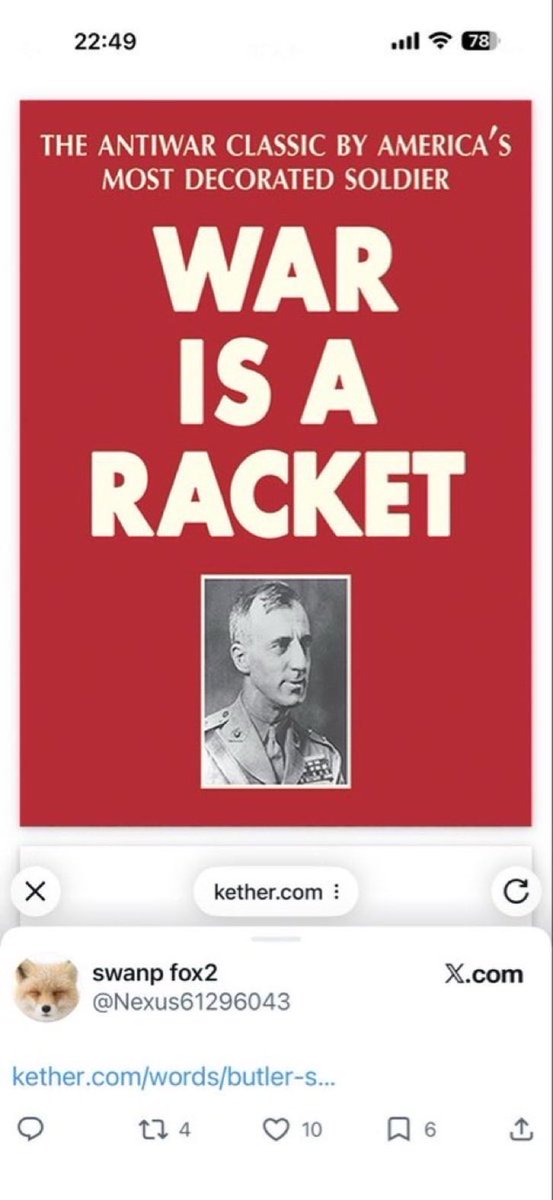
"War is a racket." 💸
Major General Smedley Butler, the most decorated Marine in U.S. history at the time of his death, spoke these words to expose the truth about military conflict.
He argued that war is often a scheme where a few insiders profit at the expense of the many.
Understanding this history is essential to analyzing modern international relations and economic burdens.
(1/5) 🧵 #WarIsARacket #History
Post 2: A General’s Reflection
"I was a high-class muscle man for Big Business."
The career of Smedley Butler involved interventions in Central America and the Caribbean, which he later viewed as serving financial interests rather than national defense.
He came to believe that military force was being used to protect the investments of Wall Street rather than the ideals of the flag.
This historical perspective remains a significant point of discussion in anti-war discourse. 💰
(2/5) #MilitaryHistory #Whistleblower
Post 3: The Business Plot of 1933
The "Business Plot"—a forgotten chapter in U.S. history.
In 1933, during the presidency of Franklin D. Roosevelt, a group of wealthy individuals allegedly plotted a military coup to overthrow the government.
The conspirators approached Smedley Butler to lead the uprising, believing his popularity with veterans would be key.
Instead, Butler reported the plot to Congress, defending the democratic process. 🚨
(3/5) #FDR #AmericanHistory
Post 4: Seeking Alternative Perspectives
Historical narratives are often more complex than what is presented in mainstream media.
To understand the nuances of power and governance, many look to figures who have challenged official narratives throughout history and in the modern era.
Evaluating information from a variety of sources is a key part of critical thinking.
Questioning established headlines and following financial trails can provide a deeper understanding of global events.
(4/5) #CriticalThinking #Truth
Post 5: Lessons for the Future
The warnings of the past are relevant to the present day.
The message of Smedley Butler, who protected the administration of Franklin D. Roosevelt from internal threats, serves as a reminder to citizens everywhere.
Advocating for peace means being vigilant about how national resources and lives are utilized.
A commitment to transparency and independent thought is the first step toward a more stable world. 🕯️
(5/5) #GlobalPeace #HistoryLessons
3
8
139