
Balancing career ambitions with a Christ-centered life isn’t easy—most of us feel the friction. But what if I told you success isn’t about climbing higher but about serving deeper?
💥
Drop a 🔥 if you’ve ever felt this tension between ambition and faith.
Many professionals chase titles and accolades, but the Bible calls us to a different standard: work unto God, not just people. Colossians 3:23 reminds us to do everything heartily as to the Lord. When you see your work as worship, every task, every meeting, becomes sacred—an act of liturgy. 🎯Humility, not pride, is the key to true success. Jesus Himself exemplifies this, challenging the culture of self-promotion. When you lift others up and give credit freely, you reflect Christ’s humility—an act that multiplies your light without diminishing it. 🌟Maybe it’s time to dismantle the idol of worldly success and reframe your goals as stewardship for God's kingdom. Your career can be a vessel for His glory—if you align your ambition with His purpose.What’s one way you can serve or honor God at work this week? Let’s share ways to keep Christ at the center of our professional lives. 💬
#FaithAndWork #HumilityInLeadership #KingdomFocused #ServeWithPurpose
9
Balancing career ambitions with a Christ-centered life isn’t easy—most of us feel the friction. But what if I told you success isn’t about climbing higher but about serving deeper?
💥
Drop a 🔥 if you’ve ever felt this tension between ambition and faith.
Many professionals chase titles and accolades, but the Bible calls us to a different standard: work unto God, not just people. Colossians 3:23 reminds us to do everything heartily as to the Lord. When you see your work as worship, every task, every meeting, becomes sacred—an act of liturgy. 🎯Humility, not pride, is the key to true success. Jesus Himself exemplifies this, challenging the culture of self-promotion. When you lift others up and give credit freely, you reflect Christ’s humility—an act that multiplies your light without diminishing it. 🌟Maybe it’s time to dismantle the idol of worldly success and reframe your goals as stewardship for God's kingdom. Your career can be a vessel for His glory—if you align your ambition with His purpose.What’s one way you can serve or honor God at work this week? Let’s share ways to keep Christ at the center of our professional lives. 💬
#FaithAndWork #HumilityInLeadership #KingdomFocused #ServeWithPurpose
7

What if the one thing holding your team back isn't your strategy, your marketing, or your budget... but who you are as a leader?
When I sat down with Ryan Gottfredson on A New Direction to discuss his book, Becoming Better, we hit on a truth that a lot of leaders find incredibly uncomfortable to swallow.
The data shows that the companies that successfully make the leap from good to great have one major thing in common: a leader with the deep humility to admit, "I don't know everything."
The "Being Side" of Greatness
As leaders, we love to focus on our skills, our accolades, and our strategic plans. But what truly separates the best from the rest isn't what you do—it's who you are.
It takes massive courage to:
Welcome criticism and view it as genuinely constructive.
Check your ego at the door and execute brilliant ideas suggested by your team.
Pivot from managing operations to mastering your own mindset.
When I coach CEOs and executives, this is often where the real friction happens. At first, when I tell them the breakthrough they need is about them, not their business plan, they think I’ve got it all wrong.
But the ones who lean into that vulnerability? Their entire world changes. They start thinking differently, listening differently, and driving their organizations to heights they never thought possible.
Are you ready to look in the mirror and work on your "being side"?
Listen to the Full Episode Now:
🔗 Watch/Listen: jizso.net/and382
🍏 iTunes: ANDitunes.com
🎧 Spotify: Spotify Link
🎵 Amazon Music: ANDamazon.com
🧡 iHeart: ANDiheart.com
🔊 Pandora: ANDpandora.com
📻 TuneIn: ANDtunein.com
🎙️ On the go? Just say: “Alexa, play the podcast A New Direction with Jay Izso.”
Ready to bridge the gap from good to great? Let's talk about what's really standing in your way. DM me directly or drop me an email at jay@thecoachjay.com to start your leadership evolution today.
#Leadership #MindsetShift #GoodToGreat #ExecutiveCoaching #HumilityInLeadership #ANewDirection #PersonalGrowth
111

May 19
Today, Telangana Minister Seethakkan reminded us that learning doesn’t stop when you achieve a title. Despite holding public office and already having an LLB, an LLM, and a PhD, she sat for the PG Law Common Entrance Test today to pursue another LLM, this time in Constitutional Law.
True leadership is about staying curious and humble. A beautiful reminder that education has no age limit, no boundaries, and no final destination.
@seethakkaMLA
#Inspiration #EducationMatters #HumilityInLeadership #Telangana

5
14
225

May 6
"A good leader takes a little more than their share of the blame
and a little less than their
share of the credit."——
Eleanor Roosevelt
#HumilityInLeadership #Integrity

9
119
211
1,770

30 Oct 2025
Khyber Pakhtunkhwa Chief Minister Sohail Afridi chose to walk to the assembly after roads were closed.
Along the way, he greeted schoolchildren, waved to rickshaw and taxi drivers, and continued his journey on foot—earning praise for his humility and connection with the public.
Disclaimer:
This video is shared for informational purposes only.
#SohailAfridi #KhyberPakhtunkhwa #KPChiefMinister #ViralVideo #PublicLeader #PakistanPolitics #HumilityInLeadership #DialoguePakistan
24
9
12
340

26 Oct 2025
وزیر اعلیٰ خیبر پختونخوا نے عوام سے معافی مانگ لی
dailykhabrain.com.pk/2025/10…
Tap on the link to read full story 👆
#khabraindigital #SohailAfridi #KhyberPakhtunkhwa #Karak #CMKPK #PublicApology #Leadership #PakistanPolitics #SohailAfridiSpeech #KPNews #HumilityInLeadership

148

15 Aug 2025
In June 1775, George Washington was appointed Commander-in-Chief of the Continental Army. His reaction? Humble, candid, and revealing:
“I do not think myself equal to the Command I am honoured with.”
At first glance, it might seem like modesty—or even fear. But the truth is more nuanced. Washington faced an untrained, loosely organized army, logistical chaos, and a war against the world’s greatest military power. He knew failure could mean ruin—not just for the revolution, but for his personal honor.
In letters to his stepson and wife, Washington confessed the heavy burden he felt: the trust was too great for his capacity, and he feared the personal cost. Yet, he accepted the role, not out of ambition, but out of duty.
This statement wasn’t indecision. It was calculated humility—a way to inspire confidence in Congress, officers, and soldiers alike, while acknowledging the monumental challenge ahead. He transformed self-doubt into purpose.
Once in command, Washington’s actions proved his resolve. He disciplined the army, organized supply lines, and led the Siege of Boston with steady determination. His early acknowledgment of limitations didn’t weaken him—it made him more credible, more relatable, and ultimately, more effective.
Washington’s lesson for us today: true leadership doesn’t ignore doubt—it harnesses it. Recognizing the weight of responsibility and facing uncertainty with humility can inspire trust and drive extraordinary results.
#Leadership #GeorgeWashington #History #1775 #Revolution #HumilityInLeadership
1
3
105

#HumilityInLeadership
Humility embodies quiet confidence that isn't propped up by bragging. You have confidence in your skills and in yourself. Humility is about being you and yourself. You don't have to announce it to everyone.
~@iDEASUG
#5amClub reflection
@SafariUbuntu

#HumilityInLeadership
5. Take responsibility:
A mistake in the team is blamed on the leader. Don't blame people, take responsibility.
~@iDEASUG
#5amClub reflection
@SafariUbuntu
3
4
75
#HumilityInLeadership
5. Take responsibility:
A mistake in the team is blamed on the leader. Don't blame people, take responsibility.
~@iDEASUG
#5amClub reflection
@SafariUbuntu
#HumilityInLeadership
Every time you go into learning, it doesn't mean you are failing at your work. It helps you maintain your excellence.
~@iDEASUG
#5amClub reflection
@SafariUbuntu
4
5
164
#HumilityInLeadership
Every time you go into learning, it doesn't mean you are failing at your work. It helps you maintain your excellence.
~@iDEASUG
#5amClub reflection
@SafariUbuntu
#HumilityInLeadership
4. Prioritise learning:
Everyone has room for growth. Be a life long learner. You need to continuously update yourself. How are you improving yourself? This is important for any leader who practices humility.
~@iDEASUG
#5amClub reflection
@SafariUbuntu
4
4
203
#HumilityInLeadership
4. Prioritise learning:
Everyone has room for growth. Be a life long learner. You need to continuously update yourself. How are you improving yourself? This is important for any leader who practices humility.
~@iDEASUG
#5amClub reflection
@SafariUbuntu
#HumilityInLeadership
3. Practice compassion:
Follow the golden rule. Treat others how you would like to be treated. If you live by this mantra then life should be good with the hope that you get reciprocation.
~@iDEASUG
#5amClub reflection
@SafariUbuntu
4
4
182
#HumilityInLeadership
3. Practice compassion:
Follow the golden rule. Treat others how you would like to be treated. If you live by this mantra then life should be good with the hope that you get reciprocation.
~@iDEASUG
#5amClub reflection
@SafariUbuntu
#HumilityInLeadership
2. Encourage new ideas:
They keep an open mind to new systems and processes. It helps employees improve their working conditions and structures. People are happy to approach because they know you will listen to their ideas.
~@iDEASUG
#5amClub
@SafariUbuntu
3
3
111
#HumilityInLeadership
2. Encourage new ideas:
They keep an open mind to new systems and processes. It helps employees improve their working conditions and structures. People are happy to approach because they know you will listen to their ideas.
~@iDEASUG
#5amClub
@SafariUbuntu
#HumilityInLeadership
1. Ask questions: Active listening & asking questions are ways of practicing humility in leadership. This is empowering for staff or team that their leader wants to know or learn better.
~@iDEASUG
#5amClub reflection
@SafariUbuntu
4
4
118
#HumilityInLeadership
1. Ask questions: Active listening & asking questions are ways of practicing humility in leadership. This is empowering for staff or team that their leader wants to know or learn better.
~@iDEASUG
#5amClub reflection
@SafariUbuntu
#HumilityInLeadership
The trait of humility demonstrates self-awareness and the ability to make decisions in any kind of space.
~@iDEASUG
#5amClub reflection
@SafariUbuntu
3
4
135
#HumilityInLeadership
The trait of humility demonstrates self-awareness and the ability to make decisions in any kind of space.
~@iDEASUG
#5amClub reflection
@SafariUbuntu
#HumilityInLeadership
It is the ability to consider other's opinions. They strive for continual growth and encourage teamwork.
Humility is one of the most critical qualities a leader should have.
~@iDEASUG
#5amClub reflection
@SafariUbuntu
4
5
132
#HumilityInLeadership
It is the ability to consider other's opinions. They strive for continual growth and encourage teamwork.
Humility is one of the most critical qualities a leader should have.
~@iDEASUG
#5amClub reflection
@SafariUbuntu
6
8
392

7 Aug 2025
Let us clothe ourselves in Humility, like the Prophet (PBUH).
Let us lead with humility, not ego.
And let us rise not through pride — but through prayer.
(n/n)
📍Thread Source: Jalsa Salana USA 2019 #Leadership #Sunnah #ProphetMuhammad #HumilityInLeadership
8
10
209

14 Jul 2025
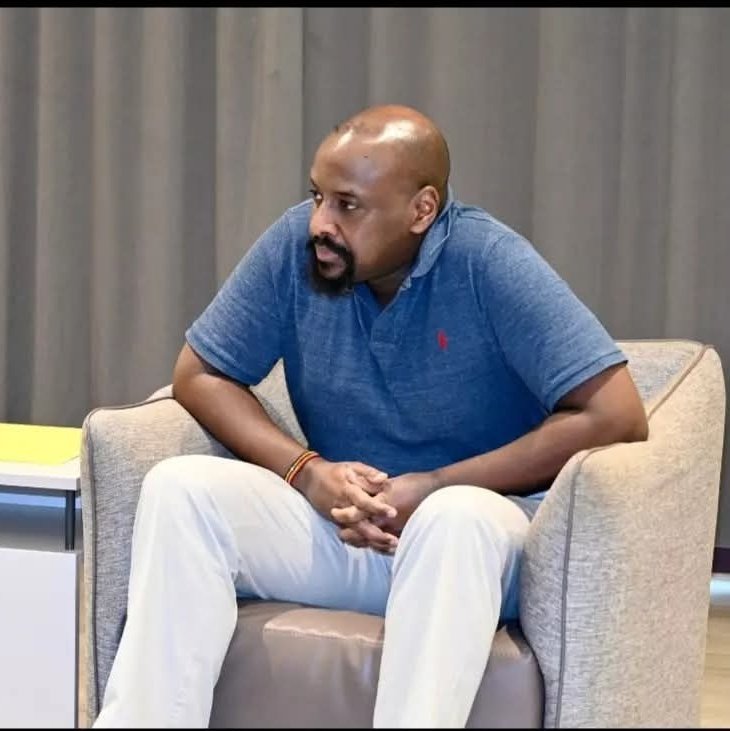
Meet Afande CDF Gen @mkainerugaba, the modern-day John the Baptist! A strong leader yet humble leader who leads with obedience, not opinions. A true leader of our times!
#HumilityInLeadership
#GenMuhooziKainerugaba
Muraregye 🩶
1
10
24
471

16 May 2025
“It is amazing what you can accomplish if you do not care who gets the credit.” –Harry S. Truman
Success happens when we drop the ego and work together—no envy, no scramble, just momentum. When everyone is vying for applause and spotlight, progress stalls.
President Truman had it right: real success doesn’t come with a name tag. It’s not about who gets the glory—it’s about who gets the job done.
Oftentimes, the best leaders shine not because they’re seeking attention, but because they're carrying the torch and lighting the way for others.
#LeadershipGoals #TeamworkWins #SuccessMindset #NoEgoJustResults #LeadByExample #StrongerTogether #SilentSuccess #ResultsOverRecognition #PowerOfTeamwork #HumilityInLeadership #CollaborationOverCompetition #ImpactOverImage #GreatLeadersServe #WeRiseByLiftingOthers #TrumanWisdom
1
2
16