
🇨🇻 Petite voix, de héros improbable à phénomène mondial en quelques heures seulement [Expresso das Ilhas] #Afropages twp.ai/4hsUZF

piensa que improbable y imposible era hace 20 años jajaja ahora está todo más fácil, creo que solamente son ajustes de tiempo entre ellos y de fechas en los lugares 🤞❤️
1
Bob Loblaw Esq. retweeted

"He's the most improbable, unstoppable scorer I've ever seen" -@LegsESPN on Jalen Brunson
3
68
676
22,622

Rob is making a lot of good points here, but just to add my two cents:
Given Germans' aversion to most things AI and given the German political landscape, "Germany [...] deploying a meaningful share of its €1 trillion defence expansion to this kind of thing" seems very, very improbable.
A joint European effort with joint debt guarantees (a la NextGenerationEU, a borrowing mechanism introduced during COVID) or some sort of pooled funding, coordinated by the EU commission, seems more likely.

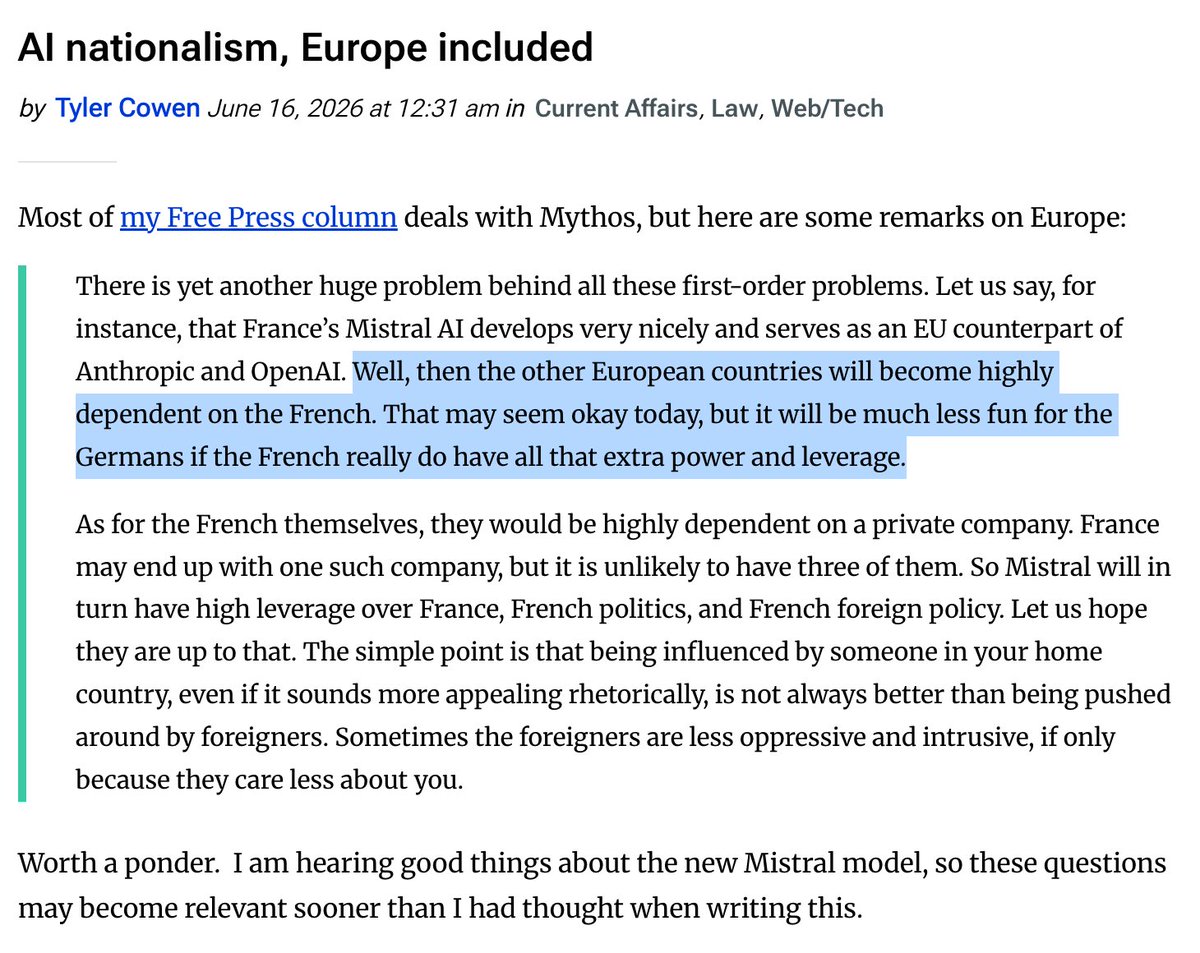
No chance this will persuade Germans:
1. They're more worried about US domination than French domination, as the US is both more powerful and in a more bullying mood.
2. In exchange for money, compute and staff Germany could require joint custody of weights and legal guarantees on model access. Not 100% solid but much better than the US, which is explicitly indicating they'll cut off access.
3. Even setting that aside, having 3 possible model suppliers (the US, France and probably China) puts you in a stronger negotiating position.
4. Germany has more leverage to bring to bear against France (in non-AI domains) than against the US.
5. In this situation middle powers will be motivated to stick together for pragmatic reasons - France would naturally prefer to be the leader of a non-US AI bloc rather than go it alone, as they lack the resources to compete individually.
This line of argument may sound good to Americans. It won't sound good to others.
The question is whether any grouping of middle powers have the will and capability to pull off a near-frontier fast-follower model, even if they try.
It's a heavy lift but not out of the question, especially if the US prompts an exodus of non-national staff who opt to return home and lead the effort themselves.
Or things reach the point that Germany is deploying a meaningful share of its €1 trillion defence expansion to this kind of thing.
7

Fantasy is the impossible made probable. Science Fiction is the improbable made possible.
~ Rod Serling
#ScriptwritersNetwork #screenwriting #scriptwriting #creativewriting #amwriting #writingcommunity #writing
Juan Carlos Costa retweeted

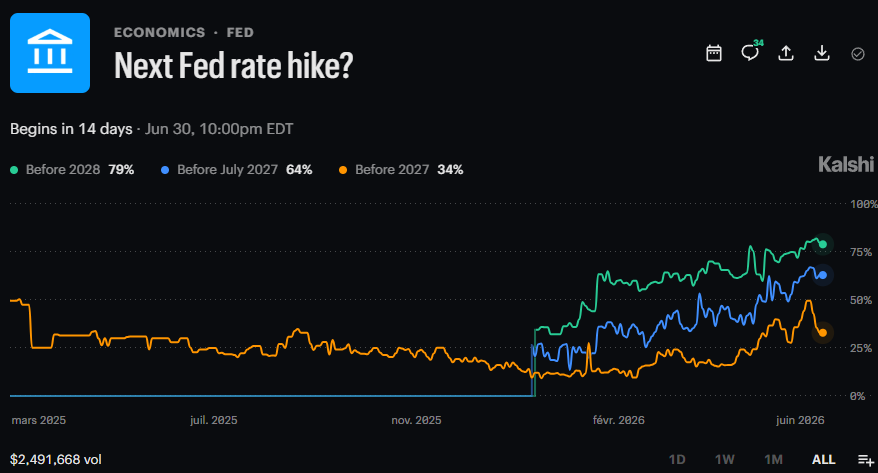
📊🏦📈 El mercado empieza a descontar un escenario que parecía improbable hace apenas unas semanas: una nueva subida de tipos por parte de la Reserva Federal. El 40% de los gestores ya espera al menos un aumento en los próximos 12 meses, frente al 16% de mayo, mientras que las expectativas de recortes se desploman. #Marketsbets #AI

📊MARKETS BET FED WILL HIKE AGAIN
Investor expectations for a Fed rate hike are rising. Bank of America’s June fund manager survey shows 40% expect at least one hike in the next 12 months, up from 16% in May. Rate-cut hopes fell sharply, with only 28% expecting cuts versus 50% last month. Prediction markets also show growing odds of a Fed hike before 2027.
kalshi.com/markets/kxfedhike…
2
3
34

You watched the video, he's 33 mate, gonna be nearly 40 for the next one, basically improbable to make it. This was his final chance I reckon. Those players you listed still are young. At least 2 or 3 world cups for them lads.
11
Angie retweeted

Hay alegaciones serias de corrupción contra Domenech pero a menos que los federales acusen, es altamente improbable que la Justicia de Puerto Rici haga algo. Ojalá me equivoque
14
22
119
3,198

Me encantaría que vuelvan, este año, el que viene, cuando sea. Pero la verdad que cada vez lo veo más improbable 😭
1
9

Altamente improbable indeed.

Hay alegaciones serias de corrupción contra Domenech pero a menos que los federales acusen, es altamente improbable que la Justicia de Puerto Rici haga algo. Ojalá me equivoque
15

Garnett being scared of the actual timeline because of all the improbable choice that Steven made ?? she’s accepting he’s growing up that’s literally mother coded i love them 🥹🥹🥹💕💕💕 #StevenUniverse
35
472
4,681

Ive seen him. What did he say that’ll overcome these “coincidences”?
-no collision alert(Karen had “Collision-Plus”, in that model)
-no braking event. That’s not impossible, but very improbable , from anyone that isn’t a trained stunt driver
-and then there’s the body..
1
10


Zapa retweeted

35m
2. Najib no country bumpkin, improbable he was deceived, says Justice Sequerah thestar.com.my/news/nation/2…
1
1
2
239
Betty 💙💛 retweeted

Hervé Renard sera le nouveau sélectionneur de la Tunisie 🇹🇳 sauf retournement de situation improbable (ce qui est toujours possible vu cette drôle de fédération)
Consciente d'être en grande difficulté, la FTF a proposé cette mission commando et un projet plus global qui dépasse la Coupe du Monde en lui accordant des garanties
Renard ou non, cela ne doit pas changer un point : les dirigeants ont pris en otage la sélection pour un Mondial en la considérant comme leur business personnel
En faisant venir un technicien de renom, ils espèrent s'en sortir mais personne n'est dupe sur le mal bien plus profond qui pèse sur le football tunisien


Pour sauver sa peau, la Fédération tunisienne de football 🇹🇳 a tenté le tout pour le tout en contactant Hervé Renard comme l'a annoncé M6
Et mon petit doigt me dit que ça pourrait se conclure demain...
Ce serait une mission commando un peu comme ce que la Fédération ivoirienne lui avait proposé après le limogeage de Gasset lors de la CAN 2023 (sauf qu'il n'avait pu se libérer de son engagement avec l'équipe de France féminine)
59
428
2,481
597,769

Rams' improbable worst-case scenario is one every team would envy
H/t: @Kris_Knox
#RamsHouse #LARams #NFLNews
(via @milroyigglesfan)
ramblinfan.com/rams-improbab…
14
Rams' improbable worst-case scenario is one every team would envy
H/t: @Kris_Knox
#RamsHouse #LARams #NFLNews
(via @milroyigglesfan)
ramblinfan.com/rams-improbab…
11