
IOB TENEREスノーボードセット。白基調でシンプル、星空の下滑ったら幻想的かも。冬の予定考えちゃう。
IOB TENERE スノーボード ビンディング付き
jp.mercari.com/item/m9850877…
5

boyfriend?????????janhif´fnhi8 b fepuia nb<iob´vpuavrb<a
13

There are many body sensations that Space Force or Air Force (iEEE MACAddress type shit WBAN IoB) can create to essentially let him know what's up. So in this case, I suspect that this had been going on. This is diverent than Havana Syndrome- it's targeted energy hits etc IYKYK
2
24


The Internet of Bodies (IoB) and Hacking Your DNA: Paving The Journey Toward Transhumanism | Eternal Affairs Media | the truth powered by The Truth
biselliano.info/2022/01/08/t…
9

Check out Vintage Don Loper Snakeskin Bi Fold Wallet IOB Unused Mens Designer Accessories ebay.io/m/mDYwjS #eBay via @eBay
6


PART 1: Human Bodies as 6G Terahertz Antennas in the Internet of Bio-Nano Things (IoBNT) & Internet of Bodies (IoB) 🚨
This is not conspiracy.
May 4

HELLO THEY ARE ALL IN THE SAME CLUB AND THEY ARE ALL COMPLICIT IN CRIMES AGAINST HUMANITY! THEY ARE ALL SICK GENOCIDAL SATANIST PEDOPHILES!!! HELLLOOOO
3

مساج_في_الرياض
💚🩵💙🧡💖🇸🇦🇷🇺🇲🇦🇻🇳
مساج_في_جدة
#riyadh
#jeddah
🏋️♂️🍅⛽️wa.me/84814436590
#سالب_الرياضً
🍉IOb🚡

5
akrati bhatnagar retweeted

Visit: iob.bank.in/en/iob-surya-pm-…
☀️ Power Your Home. Power a Greener Future.
Make the switch to clean energy with the IOB HL Surya Loan.
Exclusively for IOB Home Loan customers, this solar financing solution helps you install rooftop solar systems with ease—reducing energy costs while supporting a more sustainable lifestyle.
#IOB #IndianOverseasBank #IOBHLSuryaLoan #SolarLoan #GoSolar #RenewableEnergy #GreenEnergy #SustainableLiving #EnergySavings #GoodPeopleToGrowWith

1
20
44
345

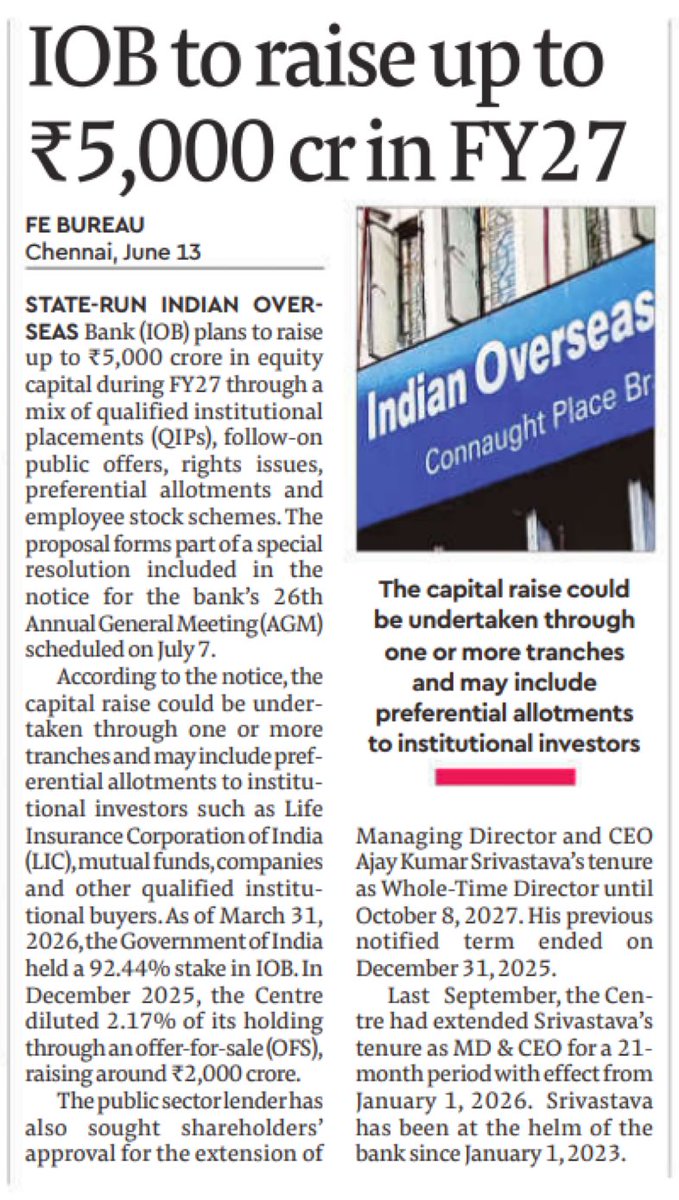
🚨 IOB PLANS ₹5,000 CR CAPITAL RAISE IN FY27
Indian Overseas Bank to raise up to ₹5,000 Cr via QIP, FPO, rights, preferential & ESOPs 🟢
🟢 Move aimed at strengthening capital base for future lending growth
🟢 Govt stake still high at 92.44% → strong dilution headroom
🟢 LIC mutual funds may participate via preferential allotment route
🔴 Fresh dilution pressure after ₹2,000 Cr OFS in Dec 2025
🔴 Earnings growth still dependent on credit cycle stability
🟢 MD & CEO tenure extended till Oct 2027 → leadership continuity
🟢 Signals long-term restructuring balance sheet expansion plan
Public sector banks quietly entering a multi-year capital expansion phase — is valuation re-rating next?
#IndianOverseasBank #PSUBanks #BankingSector #StockMarket #IndiaEconomy
2
3
308

Indian Overseas Bank Plans to Raise Up to ₹5,000 Crore in Equity Capital in FY27 Through QIPs, FPOs, Rights Issues and ESOPs — Shareholders to Approve at 26th AGM on July 7
The Capital Raise — Structure and Scale
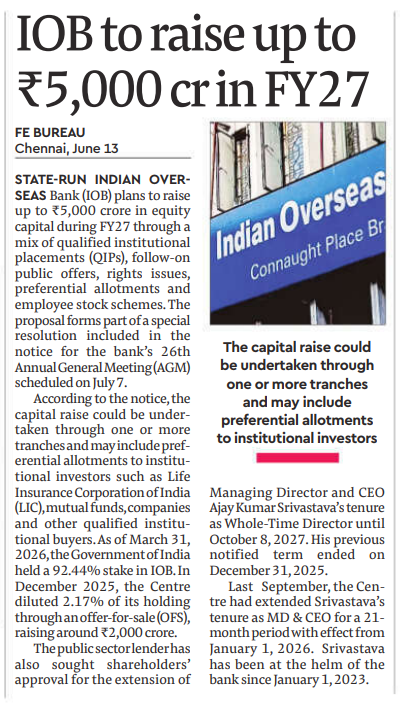
State-run Indian Overseas Bank (IOB) plans to raise up to ₹5,000 crore in equity capital during FY27
Proposal forms part of a special resolution included in notice for the bank's 26th Annual General Meeting (AGM) scheduled on July 7
Capital raise instruments being considered:
Qualified Institutional Placements (QIPs)
Follow-on Public Offers (FPOs)
Rights Issues
Preferential Allotments
Employee Stock Schemes (ESOPs)
Could be undertaken through one or more tranches
May include preferential allotments to institutional investors such as LIC, mutual funds, companies and other qualified institutional buyers
Government Shareholding — Dilution Trajectory
As of March 31, 2026: Government of India held 92.44% stake in IOB
In December 2025: Centre diluted 2.17% of its holding through an OFS — raising ~₹2,000 crore
New capital raise will further reduce government's majority stake in the public sector lender
Leadership — MD & CEO Continuity
Shareholders also sought approval for extension of Ajay Kumar Srivastava's tenure as MD & CEO in his capacity as Whole-Time Director
Extended until October 8, 2027
His previous notified term ended December 31, 2025
Centre had extended Srivastava's tenure as MD & CEO for a 21-month period with effect from January 1, 2026
Srivastava has been at the helm of the bank since January 1, 2023
Core Theme
IOB's ₹5,000 crore equity capital raise plan in FY27 — coming just months after the Centre's ₹2,000 crore OFS in December 2025 — reflects the ongoing capital deepening imperative for India's public sector banks as they scale lending operations and meet regulatory requirements. With the government still holding 92.44% after the OFS, there is significant headroom for dilution through multiple instruments, and the AGM approval for LIC and mutual fund preferential allotments signals a structured approach to broadening the institutional investor base while maintaining state control of a strategically important lender.
1
10
1,140

I though the same thing, unless she know the IOB, but 30 grams of carbs feels overcompensating
10
