
Jun 13
I NEED HIM TO MAKE ME PREGNANT IOOS

96

Jun 12
Another reason photographer Walter Ioos was a genius. Had anyone ever thought to photograph the female form in a shirt like that in that pose? 40 years later and, for me, this is the most iconic SI swimsuit photo ever.
1
9
471
2020denregs retweeted

Jun 10
Reggie Jackson on the balcony outside his home in New York City, 1980. Photo by Walter Ioos, Jr. He would return to California after the 1981 season.

4
15
150
9,400


Jun 7
High operating costs in a harsh marine environment make it a fair debate on efficiency, priorities, and alternatives. The Costs Are Real and Daunting
Annual ops: ~$44–55 million for the full system (ship time for servicing, maintenance, data handling, etc.).
This is expensive because the ocean is unforgiving — corrosion, biofouling, storms, extreme pressures, and remote locations demand specialized vessels, ROVs, and frequent interventions.
Over 25 years, that's hundreds of millions more on top of the original $368M build.
"So called beifits" ???
Ecosystems and economy: Data on fisheries, biodiversity, ocean acidification, upwelling — supporting sustainable fishing, aquaculture, and coastal management. Broader ocean observing systems (like IOOS) show economic returns estimated at $190–230M per year in direct user value, often 5x the investment, with much larger downstream benefits to the ~$400B U.S. ocean economy. cbe.miis.edu/publications/21…
The Center for the Blue Economy (CBE) at the Middlebury Institute of International Studies at Monterey (MIIS) is a legitimate academic research center focused on ocean and coastal economics. It's not a random advocacy group or think tank with obvious partisan funding — but like any source on ocean policy and spending, you should approach it with
🚨🚨🚨
Healthy skepticism on its conclusions about economic value.
Reasons for caution:
Incentive bias: Their whole center exists to promote the blue economy. Studies valuing ocean observing will naturally lean toward showing benefits (they found conservative positives, but assumptions matter — e.g., who counts as "users," how benefits scale).
2
36

Jun 6
For context, it's important to understand what is being cut here.
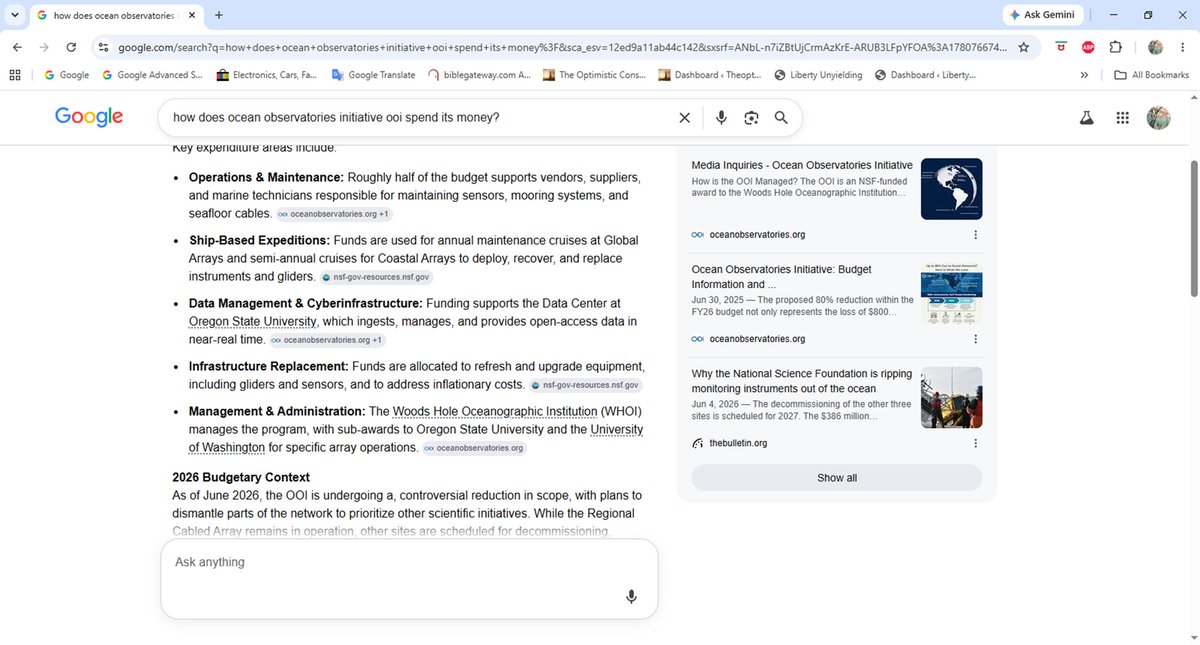
The National Science Foundation is a grant-making entity. It makes taxpayer-funded grants to recipients who then do the work of the Ocean Observatories Initiative (OOI). There's a PDF to study all the briefly summarized info here (bottom). Lines 10-21 on ES-1 (pg. 5) are your starting point.
The big OOI grant each year is to Woods Hole Oceanographic Institution, manager of the program. Woods Hole then makes grants, mainly to university programs in Oregon and Washington State. (Cf. Gov Inslee's former employment.)
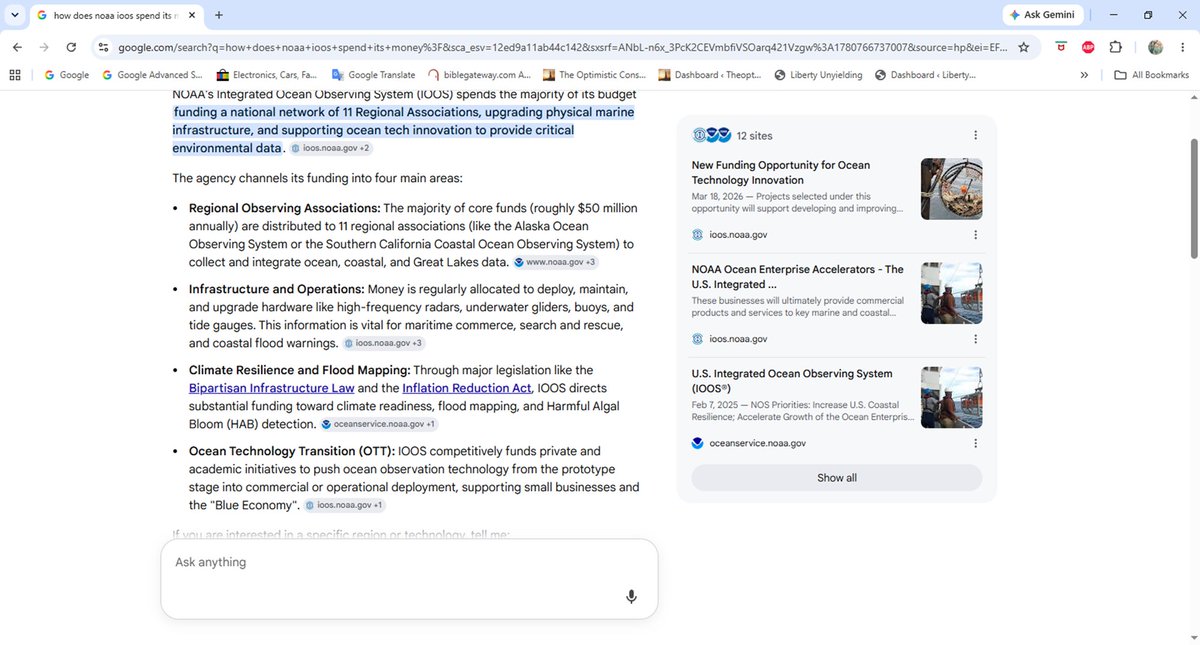
OOI is an auxiliary effort to NOAA's Integrated Ocean Observing System (IOOS), which spends its budget making grants and paying contractors to tend the IOOS apparatus. OOI has been in full operation (all arrays) since 2016. IOOS was launched in the 1990s as the US component of GOOS (below), and implemented in its current form ca. 2004.
See here (IOOS grant-making):
ioos.noaa.gov/about/funding-…
And here (IOOS history):
ioos.noaa.gov/about/ioos-his…
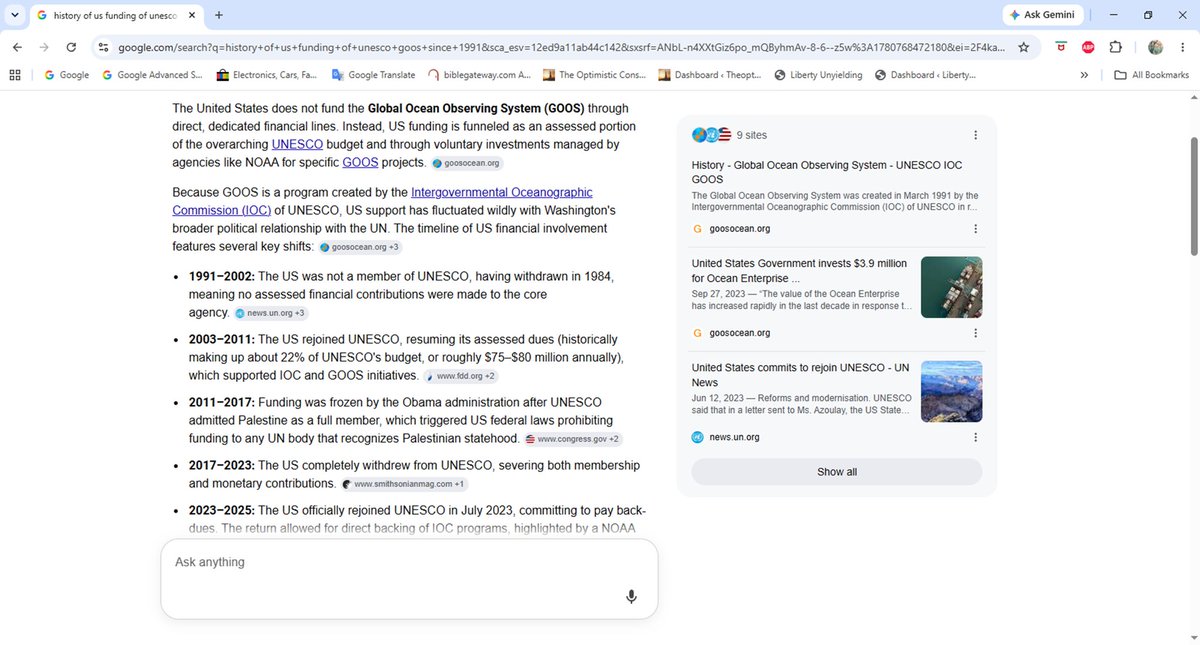
OOI and IOOS are the US programs. They constitute the direct US contribution to the UN Global Ocean Observation System (GOOS) managed by UNESCO, launched in 1991. The impetus behind GOOS was what we now call climate change, with all its attendant programmatic concerns and associations.
The US contributes funds to GOOS through our general contributions to UNESCO, when we are in member status with UNESCO. When we're contributing, the US share of UNESCO funding is typically abut 22%.
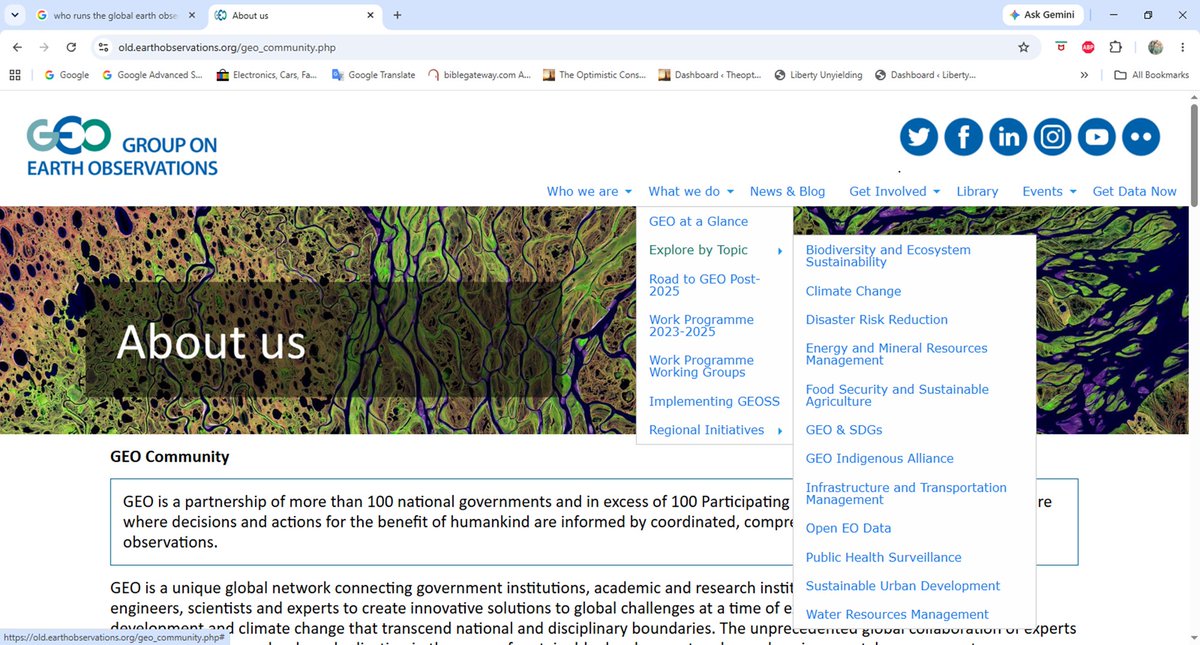
GOOS is affiliated now with the international Group on Earth Observations (GEO), a body comprising more than 100 national governments established in 2002-2004, basically to funnel money to various entities involved in climate research and policy. See the screen cap on the focus of GEO (the 4th screen cap).
This is a network of programs intended to fund things. Its function is to move money around.
As with USAID, it's legitimate to inquire into what it's doing with the money, and interrupt this model of operations for one that may serve the needs of the Untied States better.
I'm a friend of oceanographic research. I also think it matters how the taxpayer is funding it, and who's being paid by the taxpayer to do it, with what priorities.
I don't know that the OOI/IOOS network has been the entrenched political problem USAID was. But it's not illegitimate to, as the police would put it, stop, question, and frisk.
The policy PDF for OOI (April 2008) [Correction: the document is an environmental assessment report for OOI. But the executive summary and parts of the main document contain background essential to understanding how OOI fits in the nested oceanographic research programs described on pg. ES-1 (pg. 5)]:
nsf-gov-resources.nsf.gov/fi…
Screen caps with useful summaries. On Screen cap 4, see the drop-down menu under "What we do/Explore by topic" (right half of screen).
Searches on all the key terms will bring up the background info you may be interested in.
Jun 6

Donald Trump seems to think that if we just cover our eyes, the world’s biggest problems will disappear.
Playing peek-a-boo with reality is not a strategy—it’s a dangerous abdication of leadership.
nytimes.com/2026/06/01/clima…
1
4
7
317

mac、ioos関係の人は頼むからファイル名に日本語使うな
半角セリフ番号のみっていったら半角セリフ番号のみです
1
3
799