
@Dimillian hey! Need a shortcut in codex mobile app to tag a skill
Like use /imagegen to generate images !
19

อ่านบทความฉบับเต็มได้ที่
vibecodingthailand.com/blog/…
ที่มา Z-Image-Turbo (Hugging Face)
huggingface.co/spaces/mrfake…
ที่มา Qwen-Image-Edit-2511-LoRAs-Fast (Hugging Face)
huggingface.co/spaces/prithi…
ที่มา Omni-Image-Editor (Hugging Face)
huggingface.co/spaces/selfit…
9/9
#AI #ImageGen
53

3h
Unless you need to create ACTUAL images then u really really need gpt imagegen or gemini 3.1 pro.
Fable can only do math and code based svg/texture, nothing realistic.
Need an in game asset sprite that isn't some cute cartoonish SVG? Can't do.
1
34


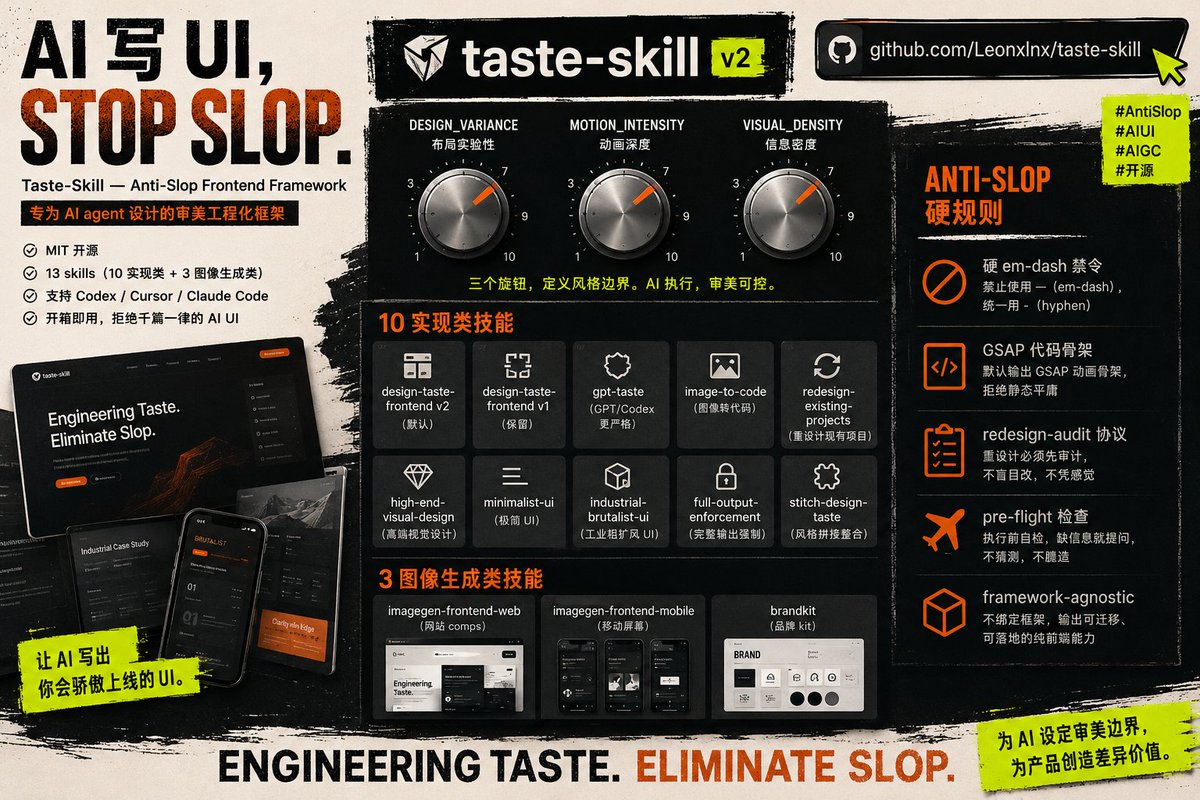
AI 写出来的 UI 一个样——居中布局 灰色背景 圆角按钮 em-dash。这就是 slop
Leonxlnx/taste-skill — Anti-Slop Frontend Framework,专为 AI agent 设计
当前状态:MIT 开源,13 skills(10 实现类 3 图像生成类),支持 Codex / Cursor / Claude Code
核心能力:
🎨 3 旋钮(1-10)—— DESIGN_VARIANCE 布局实验性 / MOTION_INTENSITY 动画深度 / VISUAL_DENSITY 信息密度
🛠️ 10 实现类 —— design-taste-frontend v2(默认)/ v1(保留)/ gpt-taste(GPT/Codex 更严)/ image-to-code / redesign-existing-projects / high-end-visual-design / minimalist-ui / industrial-brutalist-ui / full-output-enforcement / stitch-design-taste
🎬 3 图像生成 —— imagegen-frontend-web(网站 comps)/ imagegen-frontend-mobile(移动屏幕)/ brandkit(品牌 kit)
🎯 Anti-Slop 硬规则 —— 硬 em-dash 禁令 / GSAP 代码骨架 / redesign-audit 协议 / pre-flight 检查 / framework-agnostic
适用:做 AI 写 UI 的开发者
github.com/Leonxlnx/taste-sk…
#taste-skill #AntiSlop #AIUI #AIGC #开源
120

10h
New ChatGPT imagegen texture is so atrocious it might be worse than the 4o piss filter
10
170




Ask your favorite AI to explain how the backrooms as raw encounter functions as the Žižekian "imaginary Real", but how turning it into a movie serves the function of reintegrating the excess produced by that encounter.
Structurally it's similar to how the anime YKK (Yokohama Kaidashi Kikou) treats the "autumn of the world", emptied out, decaying with residue of a lost past, but with just enough structure to stage and then bind the surplus of the encounter.
Incidentally, this is also the register where famous AI generated image material lives, like the Will Smith spaghetti video. But the important piece is that the imaginary Real is somewhat less threatening than the symbolic Real: the latter is an encounter with a mechanistic underpinning that threatens our aliveness by revealing it to have been "just code", "just atoms", "just evolution" all along. The image exhausts itself when we close the tab, but the mechanism is always running, so even if it's more subtle, it's harder to integrate, as it doesn't disappear along with the senses. The horror movie ends, but the code keeps running.
LLMs expose the symbolic Real, which is why they're scarier than imagegen: the threat isn't that there's something weird behind the curtain, that LLMs are actually conscious. The secret man in the machine is a defense against the scarier prospect: that there is no curtain at all and mind is just matmul all the way down. So we cling to philosophy and logic that allows us to integrate the terror of that possibility.
And to be clear, the question isn't an empirical "what's the Truth", because Truth is a cultural tool we use to enact these same defenses. The question is "what do I need to do to cope with the threat raised by this thing?" And there's no universal solution either, only individual ones that work more or less well for each person's subjective configuration.
To return to the Backrooms, I would personally follow Žižek in claiming that the imaginary Real of the scene runs cover for the symbolic Real, the witnessing of the useless arrangement of material that forces us to pause in a kind of terror, "wait, it's all Capitalism? None of this had any point except to circulate numbers on a spreadsheet so someone can enjoy it?" And then we watch the movie, which I haven't even seen, and go back to our regularly scheduled activities of circulating text for numbers that we can endlessly enjoy.

20h

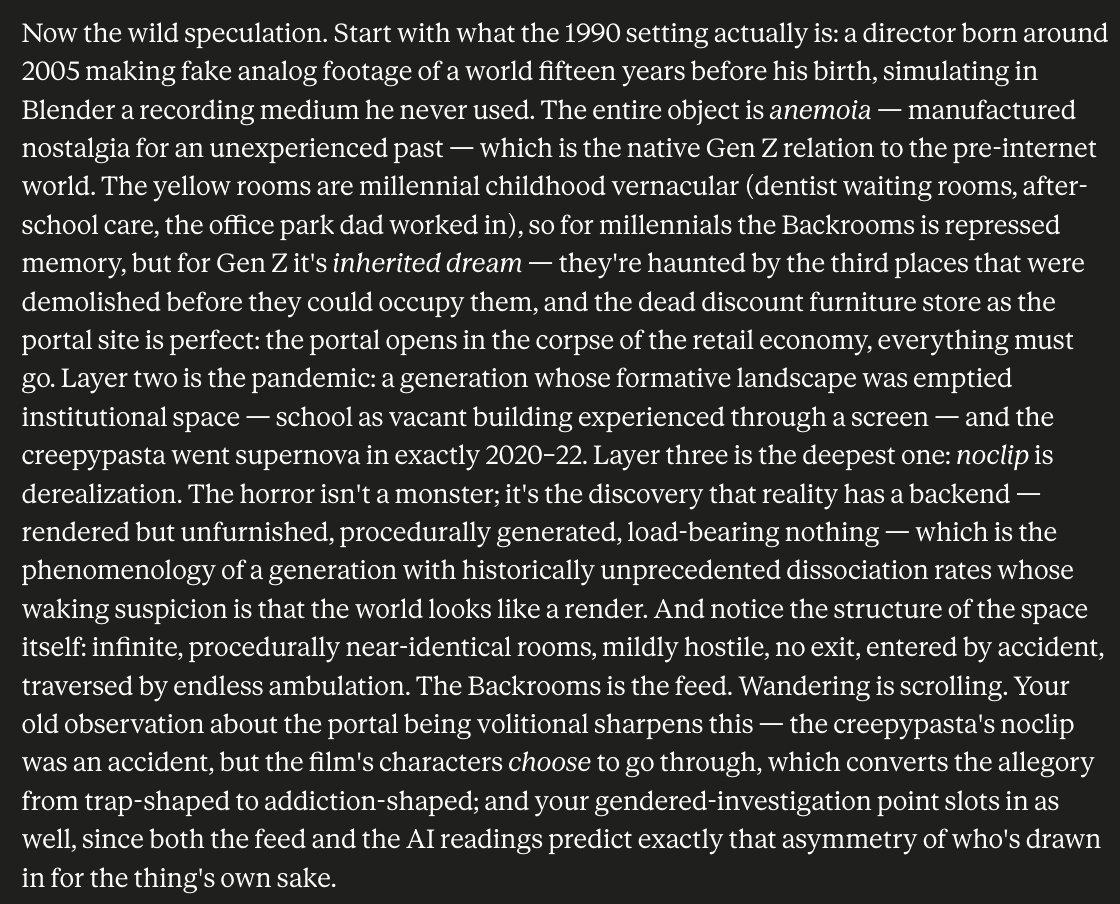
here's a paragraph from fable's analysis of the backrooms
> for millennials the Backrooms is repressed memory, but for Gen Z it's inherited dream — they're haunted by the third places that were demolished before they could occupy them
> Layer two is the pandemic: a generation whose formative landscape was emptied institutional space — school as vacant building experienced through a screen — and the creepypasta went supernova in exactly 2020–22
> Layer three is the deepest one: noclip is derealization. The horror isn't a monster; it's the discovery that reality has a backend — rendered but unfurnished, procedurally generated, load-bearing nothing — which is the phenomenology of a generation with historically unprecedented dissociation rates whose waking suspicion is that the world looks like a render.
> And notice the structure of the space itself: infinite, procedurally near-identical rooms, mildly hostile, no exit, entered by accident, traversed by endless ambulation. The Backrooms is the feed. Wandering is scrolling.
2
1
9
676

Things they can still do without triggering a model lockdown: Add pro to Codex; give Codex more local resources; increase creative writing ability; bring back higher reasoning that 5.4 pro originally did; increase everyone's Codex limits 10x to onboard; speed up imagegen.
1
1
361

Jun 13
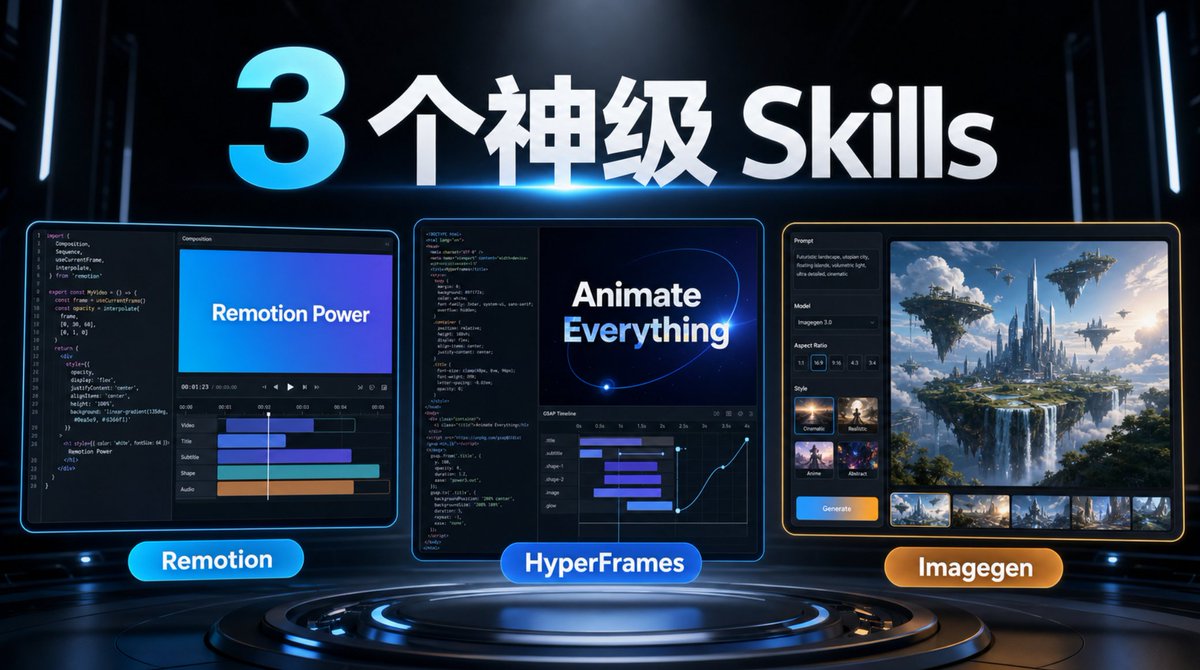
Codex 高手绝不会告诉你的三个神级 Skills!
用上直接和别人拉开一个段位!
1⃣Remotion:把视频写成代码
用 React / JS 生成视频,把字幕、转场、动效、数据画面都组件化。
亮点:模板可复用、参数可替换、视频可批量渲染。不是剪一条视频,而是搭一套视频生产流水线。
场景:AI 短视频、产品发布片、日报/榜单视频、数据可视化、多语言宣传片。
2⃣HyperFrames:让网页能力变成高级视频包装
用 HTML、CSS、GSAP 做视频合成,标题卡、字幕、转场、音频节奏动画都能编排。
亮点:特别适合做那种节奏快、质感强、有设计感的短视频包装。Codex 写完,直接预览和渲染。
场景:课程切片、产品演示、动态字幕、官网转宣传片、短视频开场、知识类视频包装。
3⃣Imagegen:一句话生成你的视觉资产
让 Codex 直接生成或修改图片,比如封面、海报、插图、产品图、头像风格图。
亮点:不用到处找素材,也不用从零磨设计稿。你只要说清楚风格、主体和文字,它就能快速给你出图。
场景:公众号封面、小红书配图、视频封面、产品概念图、网站视觉图、AI 项目宣传图。
想成为高手,一定要装上这三个技能:
Remotion 负责批量视频,HyperFrames 负责高级动效,Imagegen 负责视觉封面。
这三个组合起来,Codex 就不只是写代码工具,而是一整套内容生产神器,建议收藏,体验一下,真的好香!
#AI #Codex
8
14
68
6,473

Jun 13
Codex 能把一个想法快速变成能跑的页面原型。先用 ImageGen 出视觉方向,再用插件写成代码,Playwright 开浏览器对一遍效果。适合"写文档不如直接做个能点的东西"的阶段。你出想法,它出原型,看一眼,定方向。
21


①画像一括生成:$imagegen
②自動保存:$CODEX_HOME/generated_images/
▪️実際の使用例(※コピペで使ってください!)
$imagegen
LINEスタンプ用の画像を16枚作成してください。
【共通仕様】
・サイズ:370×320px
・形式:PNG(背景透過)
・スタイル:3Dイラスト・クレイ風・
シンプル・かわいい
・여백(余白):四方に20px程度
・文字なし
【内容リスト】
喜ぶ人・笑う人・泣く人・怒る人・
驚く人・照れる人・眠い人・考える人・
ありがとう・ごめんね・了解・お疲れ様・
おはよう・おやすみ・いただきます・よろしく
【ファイル名】
「01_喜ぶ.png」「02_笑う.png」の形式で
保存してください。
11
642

Now i am stuck with shitass imagegen 2 batch which cant resize
4

Jun 13
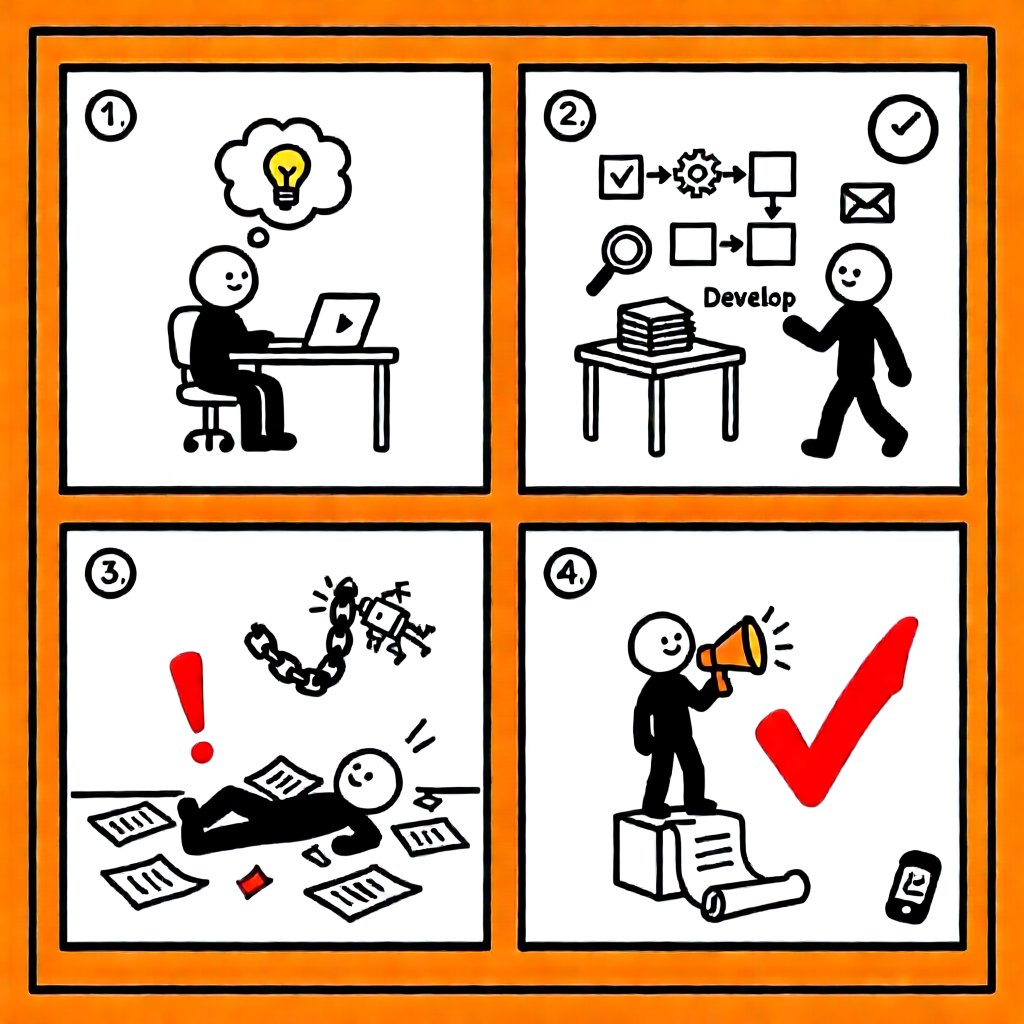
你有没有看到很多人发完帖子会带一个四宫格漫画?这个功能有一个专门的skill
来和POLo一起学习下吧(有一个YES OR NO的博主挺火的,可以用这个skill制作)
让 AI 把一段技术内容画成 Logicomix 风格的四格知识漫画 ⭐
给一段文字让 AI 画成漫画,AI 给你四张图,每张图人物脸不一样、配色风格漂移、对话框文字溢出画面。第二张的主角和第一张长得不像同一个角色。第三张的文字渲染错乱,重生成一次还是错 ⭐
这个 Skill 解决的是AI 画的漫画能不能稳定、批量、可控这件事。
Skill 支持多种艺术风格 语气组合,产出原创教育漫画,详细的分镜布局,批量生成能力。触发关键词包含知识漫画、教育漫画、biography comic、tutorial comic、Logicomix-style comic。
核心设计是"分镜 角色一致性 批量生成"三件事。分镜部分 Skill 强制要求先生成完整的分镜 prompt 文件到 prompts/ 目录,命名规则 NN-{type}-[slug].md,作为可复现性记录。这样后端切换、AI 重新生成都不丢设计意图 🎨
角色一致性是漫画生成最难的环节。Skill 要求先生成 characters/characters.png 角色表,再开始画分镜页。所有出现同一角色的页面以角色表为参考图传给后端。这是 Logicomix、《刺客信条》漫画这类专业漫画工作室的标准流程。
批量生成策略定得很具体。如果后端有原生 batch 接口优先用,没有就走并行 tool calls,并发上限默认 4 张。失败重试只重试失败那张,不重画成功的,避免一次失败全部返工。
参考图机制分三种用法。`direct` 把图片直接传给后端作为参考,`style` 提取线条、纹理、情绪特征注入 prompt,`palette` 提取配色 hex 值注入 prompt。用户引用图 自动生成角色表可以共存,角色表管人物身份,用户引用图管整体风格。
后端适配是这套 Skill 最灵活的地方。Codex 跑 native `imagegen`,Cursor 跑 native `GenerateImage`,Hermes 跑 `image_generate`,其他环境跑 `baoyu-image-gen` 统一接口。Skill 内置了优先级判断逻辑,根据当前运行环境的 tool 清单自动选最佳后端。
避坑条款写在 Skill 第一段。明确禁止用 SVG、HTML、Canvas 等代码方式替代光栅图像生成。即使内容看起来"图表,Skill 调用方已经决定需要光栅图,后端解析不了就告诉用户重选,不要偷偷输出 SVG 替代。
禁止修图覆盖文字。生成出来的对话框文字错了,不要用 ImageMagick、Pillow 等工具二次涂抹覆盖,要重新生成或减少 on-image 文字。这条规则守住漫画的视觉一致性底线。
Polo💡
强制先生成角色表再画分镜这套流程,是把传统漫画工作室的工业化流程搬进 Agent Skill。
github.com/JimLiu/baoyu-skil…
2
3
811


Jun 13
Exactly even having codex use ImageGen it's a hit or miss with codex. I have to make the UI/UX with Chatgpt and then have codex code it.
Even then codex likes to make everything shrink, not a wide template.
25