
22 Nov 2025
AI 与 Web3 的融合正在加速,而 @infinityg_ai 选择了一条极具未来感的路线:
打造一个由 AI 驱动、可持续进化、可扩展的数字生命生态。
InfinityG 的核心理念很清晰:
当 AI 超越工具层,它将成为“链上生命体”般的存在,能学习、成长,并为用户提供持续的价值回馈。
⭐ InfinityG 的亮点技术
▪ 自我进化 AI(Self-Evolving AI):不断学习用户偏好与行为
▪ 可组合数字人格(Composable Digital Identity):让每个 AI 拥有独特个性
▪ 链上可验证成长轨迹(On-chain Growth Trace):AI 的每一步变化都公开且可追踪
▪ 资源驱动的能量系统(Energy Mechanism):使 AI 的成长与生态激励相融合
InfinityG 并不是在做一个普通的 AI 工具,而是在构建一个可以与用户共同成长的数字伙伴体系。
随着 AI Narrative 持续升温,未来的 Web3 不仅是用户与资产的生态,更是用户与“智能体”的生态。
而 InfinityG 已经开始抢占这个未来赛道的先机。
146
4
109
4,174

GN CT 🌙
The night has a way of slowing the world down, giving you space to process what the day left behind.
Did you touch grass?
@infinityg_ai stays active through that quiet, helping you refine the thoughts you couldn’t finish, expanding your ideas, and giving shape to the creativity that only appears when everything else is still. It takes your reflections and turns them into direction, sharpening your storytelling, organizing your concepts, and helping your imagination stretch into deeper territory. With Infinity, you’re never just resting, your vision is being quietly polished in the background.
Rest deeply tonight. Your next chapter is already forming.
#InfinityG $AIN

32
1
60
7,333

22 Nov 2025
GN
InfinityG drives a vision of tomorrow where intelligence adapts elevates human capability
Focused on meaningful innovation it build systems that empower growth creativity transform industries creating a future technology trusted partner in progress opportunity
@infinityg_ai
1
9
12
2,105

22 Nov 2025
Whales move differently.
Institutions move secretly.
Smart money moves quietly and early.
But @infinityg_ai sees everything.
InfinityG builds behavioral fingerprints for wallet clusters by analyzing:
timing precision
entry/exit patterns
risk appetite
liquidity timing
protocol preference
accumulation vs distribution phases
This allows @infinityg_ai to:
track when smart money positions begin forming
identify early accumulation in microcaps
detect stealth exits before big drops
map collaboration between multiple whale wallets
detect capital outflows before TVL shows it
Traditional tools show wallet balances.
@infinityg_ai shows wallet intelligence.
This is the closest thing DeFi gets to insider awareness
except it’s 100% public data, made readable through machine learning.
When the smartest wallets move, @infinityg_ai is already watching.

17
1
7
44,349

Asides @infinityg_ai , Web3's next billion users won't be developers. They'll be creators.
For years, building in crypto meant learning a new language: Solidity, Rust, Move.
We're calling time on that era.
The future isn't about writing better code. It's about having better ideas.
infinityg was built on a single premise: What if you could describe your vision and watch it become a live, on-chain application?
This is the shift from infrastructure-first to imagination-first.
The technical layer becomes invisible. The AI handles the complexity. You own the output.
We're removing the single biggest barrier to Web3 creation: the code itself.
This is how we onboard the next wave. Not with more documentation, but with less friction.
The age of the creator-developer is here. And it speaks your language.
26
16
32
226

22 Nov 2025
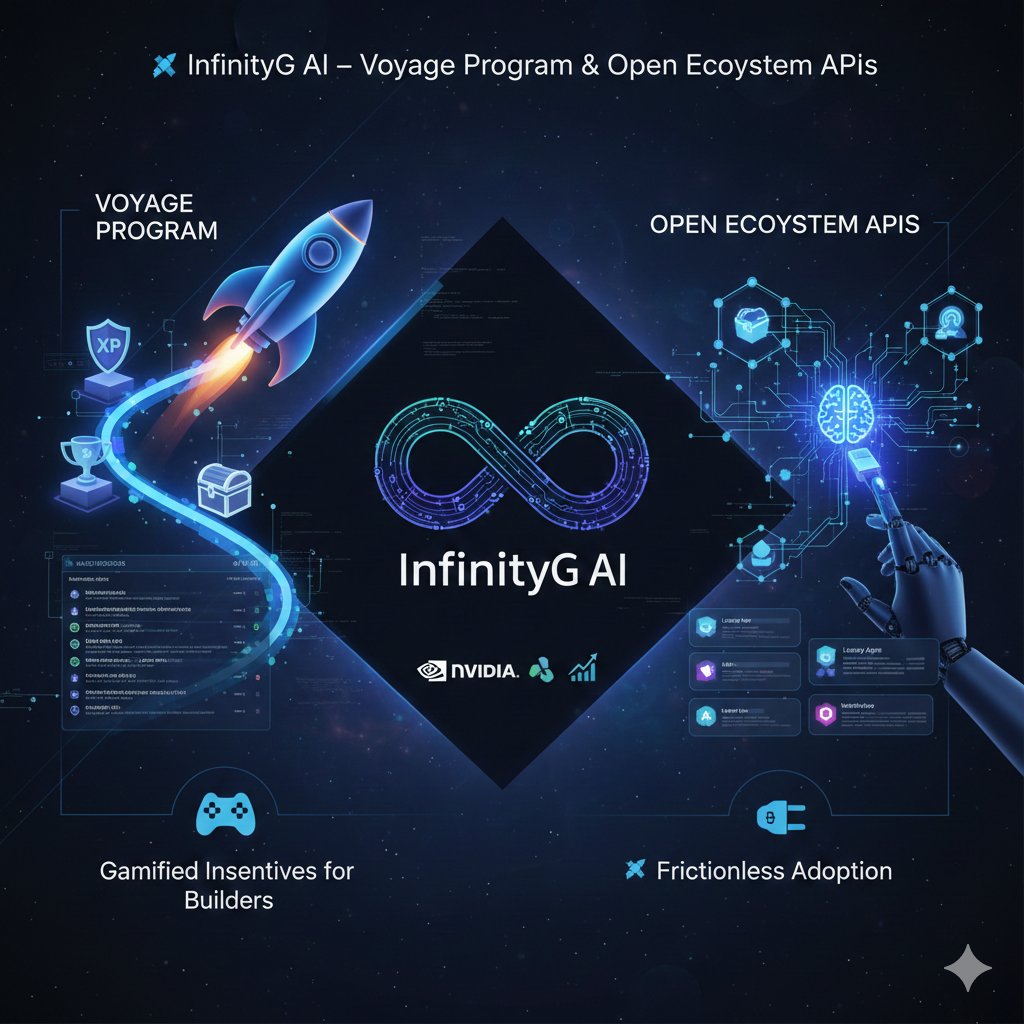
🚀 Infinity Ground Voyage Program & Open Ecosystem APIs
@infinityg_ai isn’t just building technology; it’s designing an ecosystem where developers feel rewarded and adoption feels effortless. Two pillars of this strategy are the Voyage Program and Open Ecosystem APIs.
🎮 Voyage Program Gamified Incentives for Builders
The Voyage Program is InfinityG AI’s way of turning developer contribution into a game‑like journey.
• XP System → Every action building, testing, deploying earns experience points (XP). This creates a sense of progression, not just participation.
• Leaderboards → Developers can see how they rank against peers. This visibility fosters healthy competition and recognition.
• Rewards → XP translates into tangible benefits: exclusive access, ecosystem perks, and sometimes tokenized incentives.
Why it matters:
Most ecosystems struggle to keep developers engaged after the initial launch. InfinityG AI flips that narrative by making contribution feel like progression. Builders I talk to say this matters because recognition and gamification drive sustained participation. It’s not just about shipping code it’s about being part of a journey where every step counts.
🔌 Open Ecosystem APIs Frictionless Adoption
Infinity Ground also focuses on lowering the barriers to integration. Their Open Ecosystem APIs are designed to make adoption seamless.
√ Developer‑friendly design → APIs are simple, well‑documented, and intuitive, so builders don’t waste time deciphering complexity.
√ AI agent integration → Developers can plug AI agents directly into existing workflows, without rewriting entire systems.
√ Workflow compatibility → Whether it’s a legacy app or a new dApp, APIs ensure interoperability and smooth onboarding.
Why it matters:
Devs in my circle point out that frictionless adoption is critical. If integration feels heavy, projects stall. InfinityG AI’s APIs ensure that intelligence can be embedded into systems quickly, making adoption practical instead of aspirational.
The Bigger Picture
Together, these initiatives show InfinityG AI’s dual strategy:
~ Voyage Program → incentivize and gamify contribution, keeping developers engaged long‑term.
~ Open APIs → reduce friction, accelerate adoption, and make AI integration accessible.
Milestones stack up: supply discipline through burns, credibility via NVIDIA Aptos integrations, recognition through Big 5 listings and now, programs and APIs that make the ecosystem sticky and accessible.
Signal over noise. Infinity Ground isn’t just building tech it’s building pathways for developers to stay engaged and for adoption to feel effortless. And I’m here for it.
21 Nov 2025

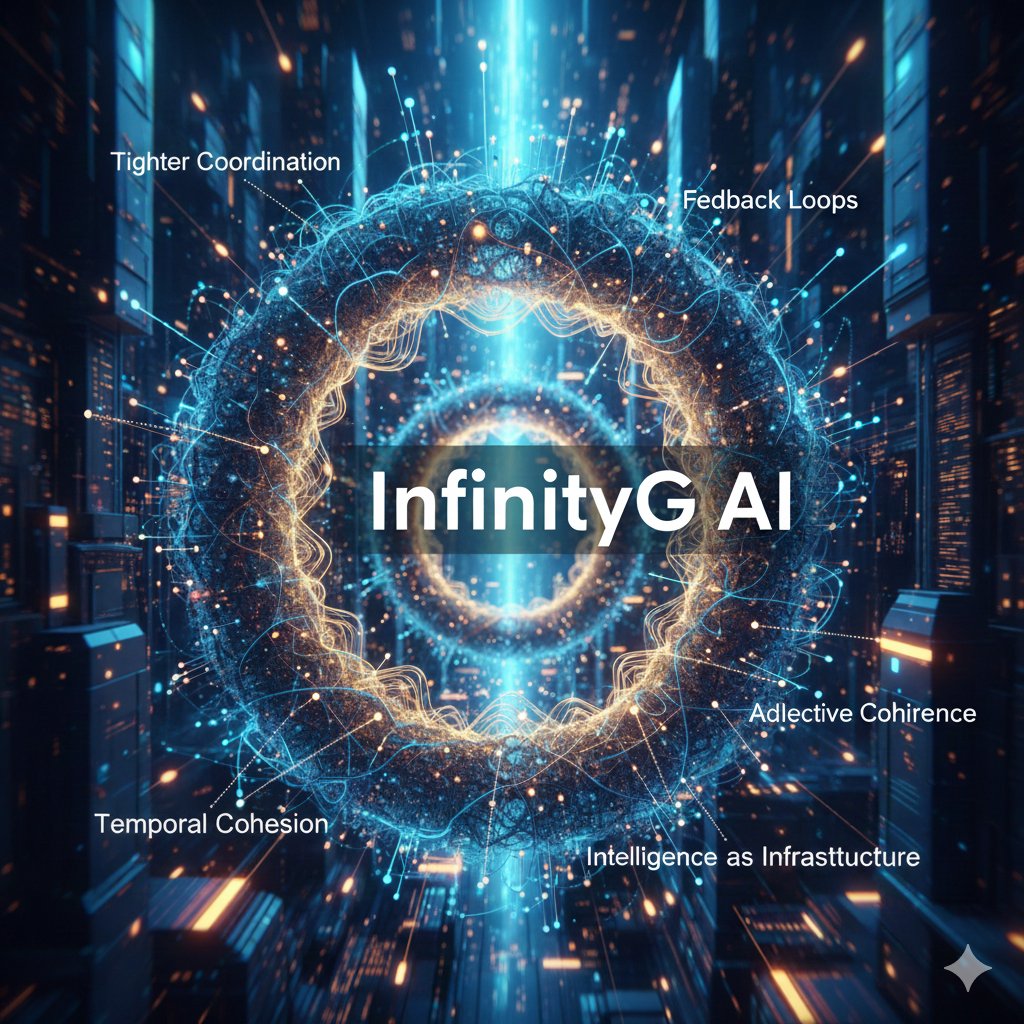
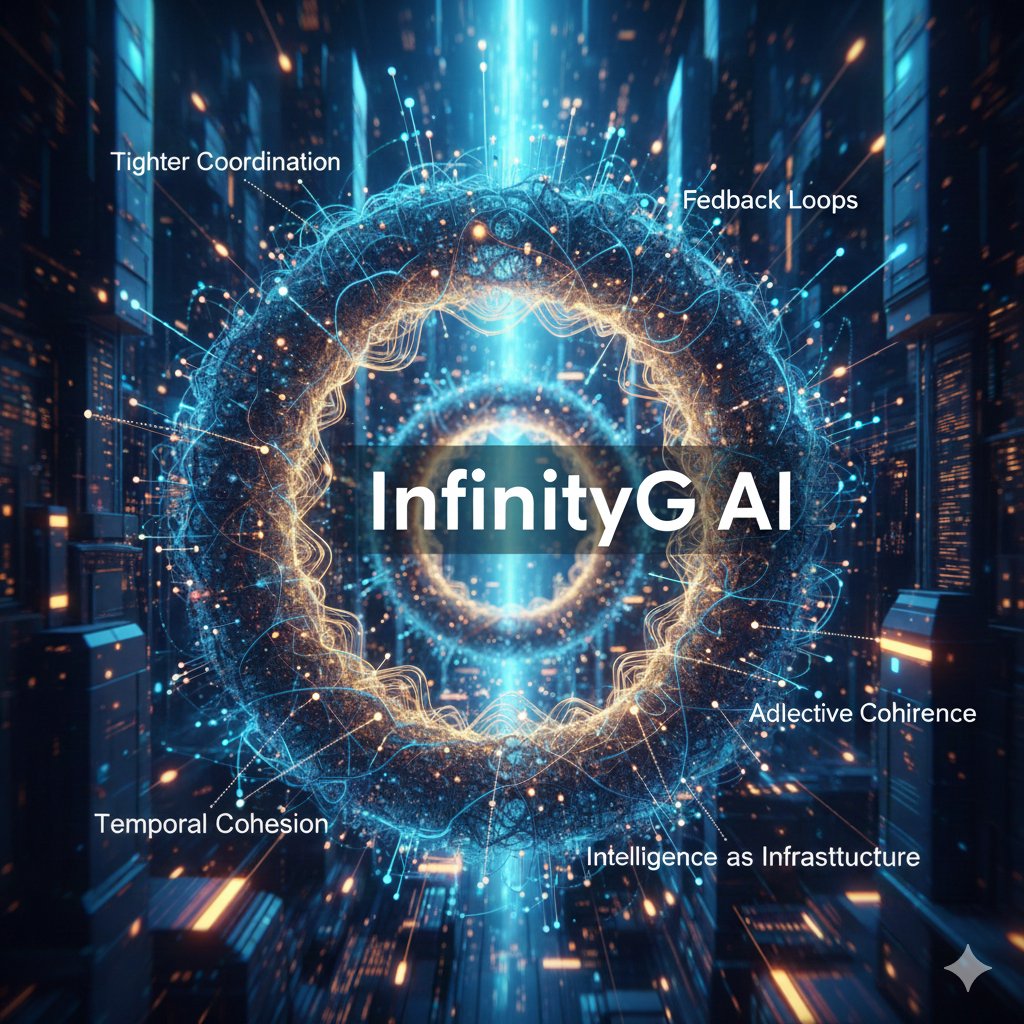
The InfinityG AI is not about bigger models, it’s about tighter coordination.
I’ve been following this project for a while, and to be honest, that framing feels refreshing.
The project treats intelligence as a system property, where design choices ripple across every layer of interaction.
Most people frame AI as isolated computation, but InfinityG AI frames it as feedback loops.
Not gonna lie, what struck me most is how each output isn’t just a result it’s a signal that reshapes the next input, creating a living architecture of adaptation.
The deeper logic is timing.
From what I’ve seen so far, intelligence here is less about raw scale and more about how quickly signals align.
Coordination at speed produces emergent clarity, and honestly that clarity compounds faster than brute force.
What shifts is incentive.
Builders I talk to keep saying this: instead of optimizing for single‑task performance, InfinityG AI optimizes for collective coherence.
The system rewards alignment across agents, which means intelligence is measured by how well parts reinforce the whole.
Seen this way, @infinityg_ai is not building a tool but a structure: intelligence as infrastructure.
Guess we’ll see how it plays out, but once coordination becomes the substrate, every new layer plugs into a feedback‑rich ecosystem, and the system begins to teach itself how to stay in sync.
And I’m here for it.
51
22
37
740
22 Nov 2025
GM CT
InfinityG vision of tomorrow where intelligence adapt elevates human capability
Focused on meaningful innovation build system that empower growth creativity transform industrie creating future technology become trusted partner shaping progress opportunity.
@infinityg_ai
2
6
2,958
22 Nov 2025
🏗️ Infinity Ground Strategic DePIN Integration
@infinityg_ai is moving beyond software into the infrastructure layer. By integrating with Decentralized Physical Infrastructure (DePIN) frameworks, the platform enables AI agents to interact directly with real‑world systems IoT devices, decentralized storage, and physical networks.
In Web3, most projects remain digital‑only. That creates a gap: intelligence is powerful, but disconnected from the material world. InfinityG AI’s DePIN support closes that gap. Instead of isolated algorithms, we now see agents capable of coordinating across both digital and physical environments.
The strategic implications are clear:
- IoT integration → real‑time responsiveness to sensors and devices
- Decentralized storage → verifiable, trustless data pipelines
- Physical infrastructure → extending AI into logistics, energy, and mobility
This isn’t just a technical feature; it’s a positioning move. By anchoring AI inside DePIN, InfinityG AI signals that intelligence in Web3 is not abstract it’s embedded in the systems people rely on every day.
Milestones stack up: supply discipline through burns, credibility via NVIDIA Aptos integrations, recognition through Big 5 listings and now, DePIN support that grounds InfinityG AI in the real economy.
Infinityg AI’s strategy is clear: connect intelligence to infrastructure. That’s how decentralized AI moves from concept to impact.

1
14
12
283

22 Nov 2025
AI is moving fast.. but @infinityg_ai is moving smarter.
This project isn’t just building tools; it’s building an entire AI-powered digital ecosystem designed for creators, users, and innovators.
2. At its core, InfinityG_AI focuses on merging artificial intelligence with decentralized technology giving users more control, more automation, and more value.
3. Imagine having AI that doesn’t just respond… but understands your workflow, your patterns, and your needs.
That’s the direction InfinityG is pushing.
4. From intelligent automation to AI-driven insights, it’s creating a future where digital tools feel personalized, adaptive, and efficient.
5. And because it’s built for Web3, users benefit from transparency, fairness, and decentralized infrastructure no centralized gatekeeping.
6. The project’s biggest strength is how it simplifies complexity.
It brings advanced intelligence into everyday digital tasks, making things faster and smoother for everyone.
7. @infinityg_ai is not just about AI.
It’s about creating a smarter digital environment where users are empowered, informed, and supported by next-gen tech.
8. The future of AI-powered Web3 apps is coming and InfinityG is shaping that path with clarity, innovation, and real utility.
@infinityg_ai
8
1
8
2,286
22 Nov 2025
GM Mates ☕
Infinity Ground AI‑Driven No‑Code Platform
@infinityg_ai mission is clear: democratize blockchain development. I’ve been following their approach, and to be honest, it feels like they’re lowering barriers in a way that hits different.
Most ecosystems still expect developers to master Solidity, Rust, or Move before they can ship a DApp. Not gonna lie, I’ve seen talented builders stall because the coding threshold was too high. InfinityG AI flips that script. By enabling natural language commands, they allow anyone to create decentralized applications without traditional coding knowledge. Builders I talk to say this matters because creativity shouldn’t be gated by syntax.
The vibe I’m getting is that this isn’t just a convenience feature. It’s a structural shift. AI‑driven no‑code tools mean:
— Faster prototyping → ideas move from concept to deployment in hours, not weeks
— Inclusive participation → non‑coders can join the ecosystem without technical barriers
— AI integration by default → applications aren’t just decentralized, they’re intelligent from the start
Devs in my circle point out that this approach accelerates adoption. When the cost of entry drops, more experiments happen, and ecosystems grow faster. InfinityG AI’s platform positions itself as the bridge between imagination and execution.
Milestones stack up: supply discipline through burns, credibility through NVIDIA Aptos integrations, recognition through Big 5 listings and now, a no‑code platform that makes blockchain development accessible to everyone.
Signal over noise. InfinityG AI isn’t just building tools it’s reshaping who gets to build in Web3. And I’m here for it.

3
43
38
228
22 Nov 2025
GM CT ☕
Infinity Ground Conversations That Shape Crypto
@infinityg_ai account has become a space where cryptocurrency and digital asset debates unfold in real time. Instead of limiting itself to project updates, the account leans into the broader discourse from hot topics around “unissued coins” to the fast‑moving world of DeFi experiments.
In the crypto ecosystem, credibility often comes from participation. A token can be technically sound, but if its community voice is absent, it risks invisibility. Infinityg AI sidesteps that trap by engaging directly with the narratives that traders, builders, and researchers are already discussing. This isn’t marketing it’s positioning as a thought participant.
The discussions around “unissued coins” highlight a deeper tension: supply mechanics versus market perception. Futures of DeFi projects raise questions about sustainability, governance, and incentive design. By joining these conversations, Infinityg AI signals awareness of the structural issues shaping digital assets, not just the surface‑level hype.
What stands out is the consistency. Whether it’s burns, exchange listings, or AI x Web3 integration, the account threads these milestones back into the larger crypto dialogue. That approach builds resonance: followers don’t just see updates, they see a project that understands the pulse of the industry.
In the end, Infinityg AI’s engagement in crypto and DeFi discussions isn’t noise. It’s a deliberate strategy to anchor itself as part of the conversation that defines where digital assets are heading. That positioning matters, because in Web3, dialogue is as important as code.
22 Nov 2025
GM GM ☕
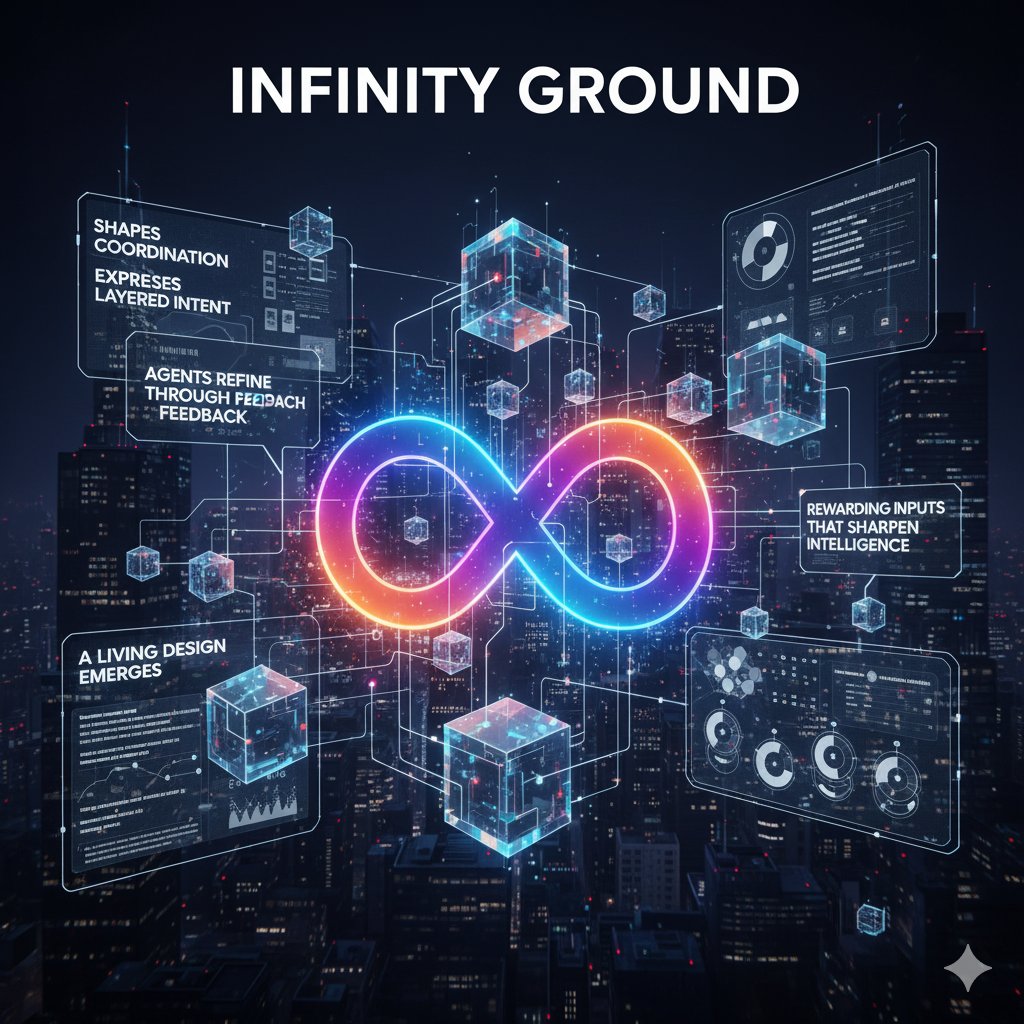
Infinity Ground Where AI Meets Web3
@infinityg_ai positions itself at the frontier where Artificial Intelligence and Web3 converge. This isn’t framed as a passing trend, but as a deliberate mission: to redefine the boundaries of creativity by embedding intelligence into decentralized infrastructure.
AI alone can generate outputs, but without transparency and ownership, creativity remains centralized. Web3 alone can secure assets, but without intelligence, coordination feels limited. Infinityg AI’s focus is on merging these two streams creating agents that can build, deploy, and evolve applications while operating on trustless rails.
The significance lies in the shift of perspective. Creativity is no longer about isolated tools; it’s about networks of agents interacting across decentralized systems. This means:
- Autonomous builders who can launch apps without coding barriers
- Transparent rails that guarantee verifiable ownership
- Dynamic ecosystems where creative boundaries are fluid, constantly redrawn by collaboration
By anchoring AI innovation inside Web3’s trust layer, InfinityG AI is shaping a new category: decentralized creativity. The milestones already achieved supply discipline through burns, credibility through NVIDIA Aptos integrations, recognition through Big 5 listings all reinforce this central narrative.
Infinityg AI’s focus is clear: not just participating in the AI wave, but reshaping creativity at the edge of Web3. That positioning matters, because it sets the tone for how decentralized intelligence will be perceived in the years ahead.
6
19
16
212
22 Nov 2025
GM GM ☕
Infinity Ground Where AI Meets Web3
@infinityg_ai positions itself at the frontier where Artificial Intelligence and Web3 converge. This isn’t framed as a passing trend, but as a deliberate mission: to redefine the boundaries of creativity by embedding intelligence into decentralized infrastructure.
AI alone can generate outputs, but without transparency and ownership, creativity remains centralized. Web3 alone can secure assets, but without intelligence, coordination feels limited. Infinityg AI’s focus is on merging these two streams creating agents that can build, deploy, and evolve applications while operating on trustless rails.
The significance lies in the shift of perspective. Creativity is no longer about isolated tools; it’s about networks of agents interacting across decentralized systems. This means:
- Autonomous builders who can launch apps without coding barriers
- Transparent rails that guarantee verifiable ownership
- Dynamic ecosystems where creative boundaries are fluid, constantly redrawn by collaboration
By anchoring AI innovation inside Web3’s trust layer, InfinityG AI is shaping a new category: decentralized creativity. The milestones already achieved supply discipline through burns, credibility through NVIDIA Aptos integrations, recognition through Big 5 listings all reinforce this central narrative.
Infinityg AI’s focus is clear: not just participating in the AI wave, but reshaping creativity at the edge of Web3. That positioning matters, because it sets the tone for how decentralized intelligence will be perceived in the years ahead.
21 Nov 2025
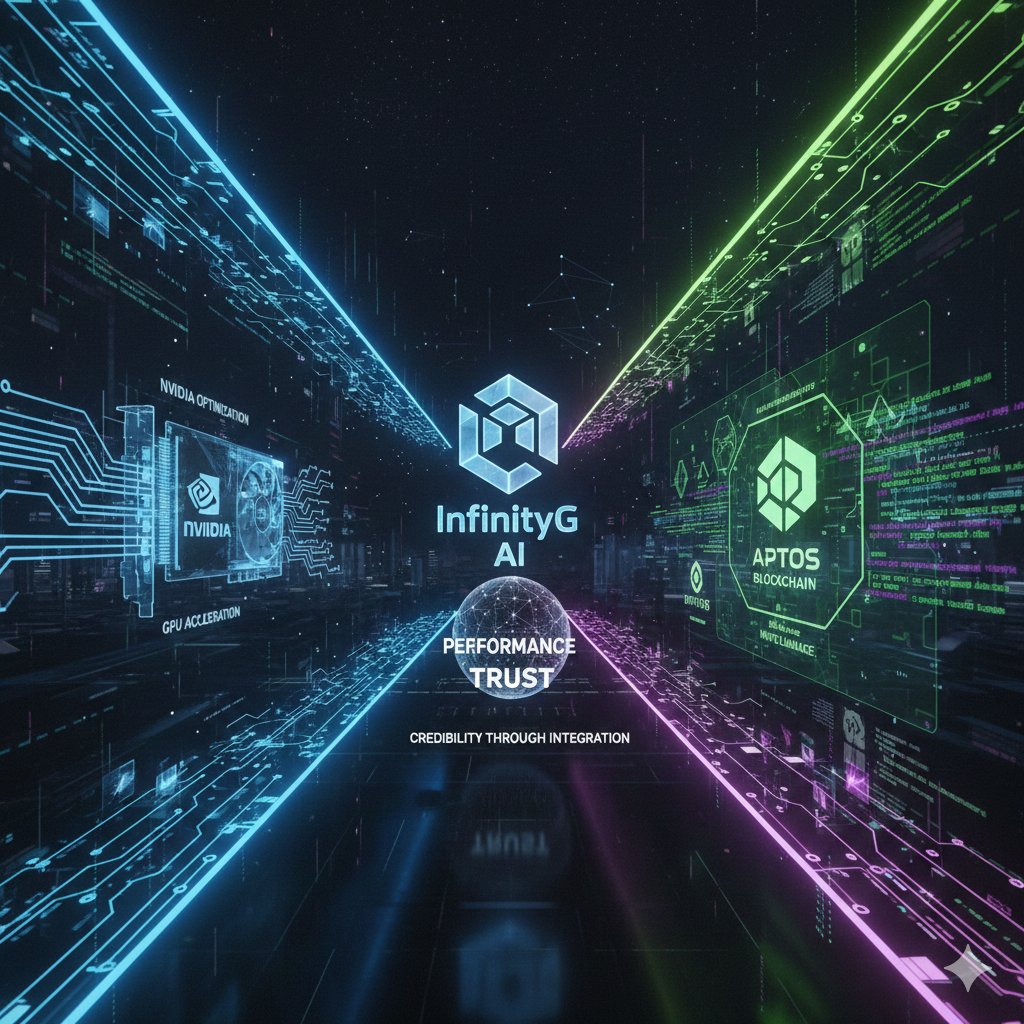
GM Mates ☕ Infinity Ground — Credibility Through Integration
Infinity Ground isn’t building in isolation it’s aligning with industry leaders to strengthen both performance and trust. I’ve been following the recent collaborations, and to be honest, they hit different. These aren’t cosmetic announcements; they show how the project is positioning itself at the intersection of AI and blockchain infrastructure.
On the hardware side, the alignment with NVIDIA focuses on GPU optimization. That means faster training, smoother inference, and a direct link to the silicon layer. Not gonna lie, builders I talk to say this matters because performance isn’t just about clever algorithms it’s about how efficiently those algorithms run on the hardware. By working with NVIDIA, Infinityg AI signals credibility in scaling real workloads, not just theoretical models.
On the blockchain side, integration with Aptos and the Move Language ecosystem adds another layer of strength. I noticed this shift reframes intelligence as coordination across secure, scalable infrastructure. Devs in my circle keep pointing out that Move’s resource‑oriented design fits perfectly with multi‑agent coherence, where signals need to align quickly and safely. This isn’t just about plugging into a chain it’s about adopting a language and ecosystem that reinforces Infinityg AI’s core philosophy of coordination.
The vibe I’m getting is that these collaborations aren’t surface‑level partnerships. They enhance credibility by showing Infinityg AI can stand shoulder‑to‑shoulder with major players. GPU optimization plus blockchain integration equals performance plus trust. Each milestone compounds: NVIDIA alignment builds hardware credibility, Aptos integration builds ecosystem credibility, and Infinity ground AI’s own design builds coordination credibility.
Guess we’ll see how it plays out, but the trajectory feels strong. Signal over noise. @infinityg_ai isn’t just building features it’s building standing in the industry. And I’m here for it. #Missionstarbound
3
31
30
451

22 Nov 2025
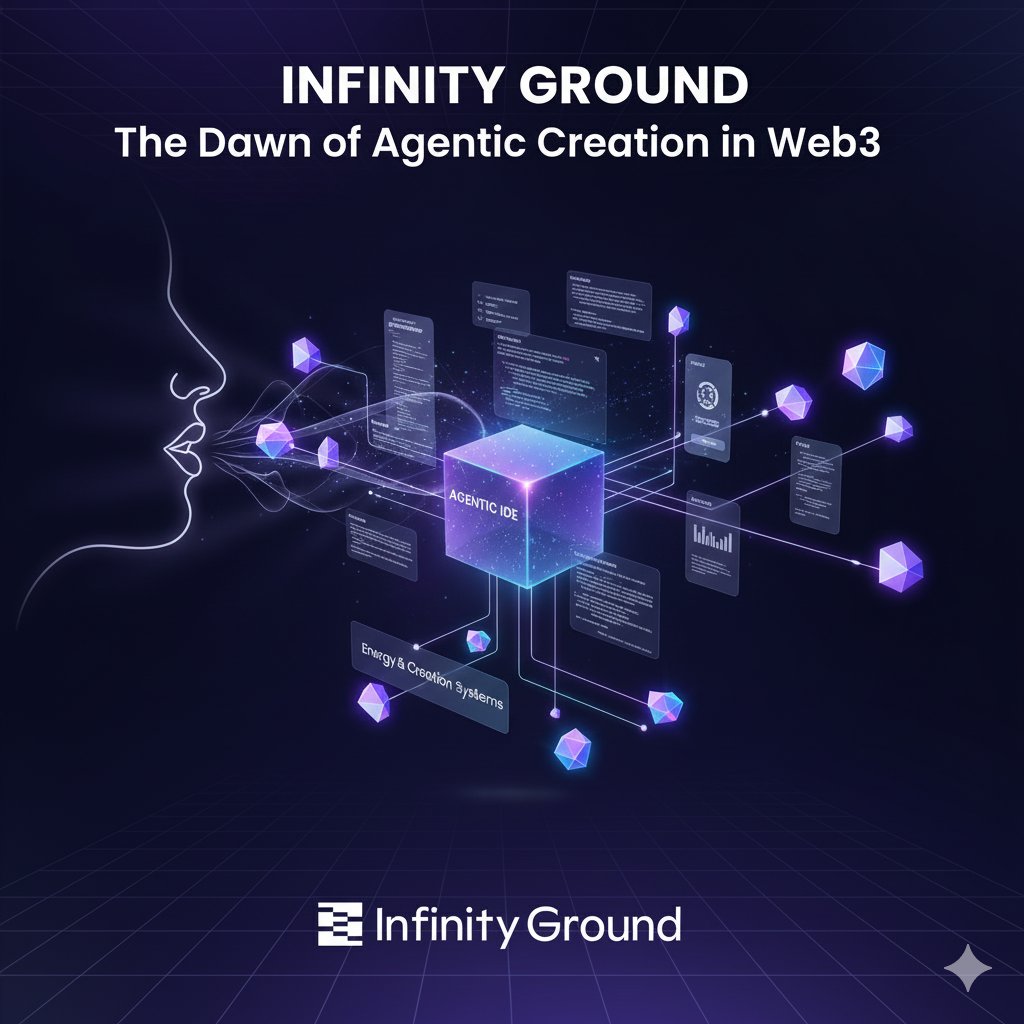
Meet the future of AI creativity: @infinityg_ai
1) Limitless imagination :– From surreal art to mind‑blowing code, InfinityG pushes the boundaries of what AI can dream.
2) Open‑source spirit :– Built on transparent, community‑driven tech, it’s the perfect ally for every crypto‑savvy creator.
3) Zero‑bias brilliance :– Trained on diverse data, it delivers fresh perspectives without the corporate filter.
Why i'm obsessed :-
- It generates stunning visuals in seconds, perfect for NFTs, memes, and brand assets.
- It writes clean, efficient code that even a seasoned dev would applaud.
- It speaks multiple languages, making global collaboration a breeze.
Join the movement : Follow @infinityg_ai, drop a comment, and watch the AI magic unfold. Let’s decentralize creativity together, one infinite idea at a time.
33
50
75
466
GM CT ☀️
A new sunrise brings a fresh rhythm, the perfect moment to reset your focus and step into the day with grace.
@infinityg_ai is already sharpening your creative edge, turning your early-morning thoughts into clear, structured ideas. It helps you break down complex concepts, refine your voice, and elevate your thinking into something more strategic and powerful. Whether you’re planning, building, or simply trying to express yourself better, Infinity acts like an always-awake creative partner, offering depth, clarity, and direction exactly when you need it.
Start today with calm confidence. Your ideas are stronger than you think.
$AIN #InfinityG

GM CT ☀️
A new day, a clean horizon perfect for fresh thinking and sharper execution.
@infinityg_ai continues to redefine what it means to create with intelligence. It helps you turn scattered ideas into structured insights, refine your content flow, and push your creativity into spaces you might not reach alone. From sharper storytelling to smarter strategy, it amplifies your voice, strengthens your output, and gives your thoughts the clarity they deserve. It’s not just a tool, it’s like having a creative partner that never gets tired, never runs out of perspective, and always brings an extra layer of depth to whatever you’re building.
Start the day with presence. Let your ideas breathe then refine them with intention.
#Infinity

34
1
50
2,428

22 Nov 2025
Innovation & Scalability
The next wave of AI innovation won’t come from closed systems it’ll come from networks built by the people, for the people.
@infinityg_ai is leading this transformation by connecting autonomous agents, decentralized data streams, and powerful on-chain logic into one intelligent, scalable layer.
With InfinityG, every new agent strengthens the ecosystem, every interaction refines intelligence, and every user becomes part of something far bigger than a single AI model.
Smarter coordination. Faster execution. Limitless potential.

5 Nov 2025

The world is moving toward intelligent automation, and @infinityg_ai is right at the center of it.
By merging AI and Web3, InfinityG is building a network where intelligence becomes decentralized not owned, but shared.
It’s more than just an AI protocol; it’s a movement toward collective intelligence. A system where data, insights, and computation flow freely while maintaining transparency and trust.
From on-chain AI models to real-time data agents, InfinityG is shaping the foundation for the next digital revolution one where intelligence is limitless.

1
12
7,348

22 Nov 2025
InfinityG just turned “idea → Dapp” into one command, builders rejoice 🔥
2
15
22 Nov 2025
nfinityG AI:智能与去中心化的未来传奇
想象一个世界,AI 不再被少数巨头掌控,而是属于每一个参与者。InfinityG AI 正在让这个世界成为现实。它不仅提供智能分析、虚拟创作和预测工具,还将这些能力与区块链结合,让每个人都能利用 AI 创造价值。
比如,你是一个内容创作者,通过 InfinityG AI 的智能生成工具可以快速制作独特作品,并通过链上验证将其转化为可交易的 NFT;又或者你是交易者,AI 可以帮你分析市场趋势,提高决策效率。
社区在 InfinityG AI 的生态中是核心。每个成员都可以参与治理,用代币投票决定平台发展方向、AI 模型优化方案及奖励分配。这种模式让技术和社区紧密结合,推动整个生态持续创新。
项目亮点:
AI 区块链深度融合
用户驱动治理体系
多场景应用,潜力无限
让技术与价值真正去中心化
关注 @infinityg_ai,成为智能经济的一部分,体验 AI 与 Web3 的结合魅力!

4
2
19
10,022

22 Nov 2025
No-code Web3 building powered by AI is the future. infinityg is huge!
2
12

21 Nov 2025
Infinityg AI delivers practical, long-term AI utility, real value over hype, a must-watch for Web3 builders.
2
24
21 Nov 2025
GN builders, Infinityg AI moves innovation forward, let your goals grow with it.
2
10