
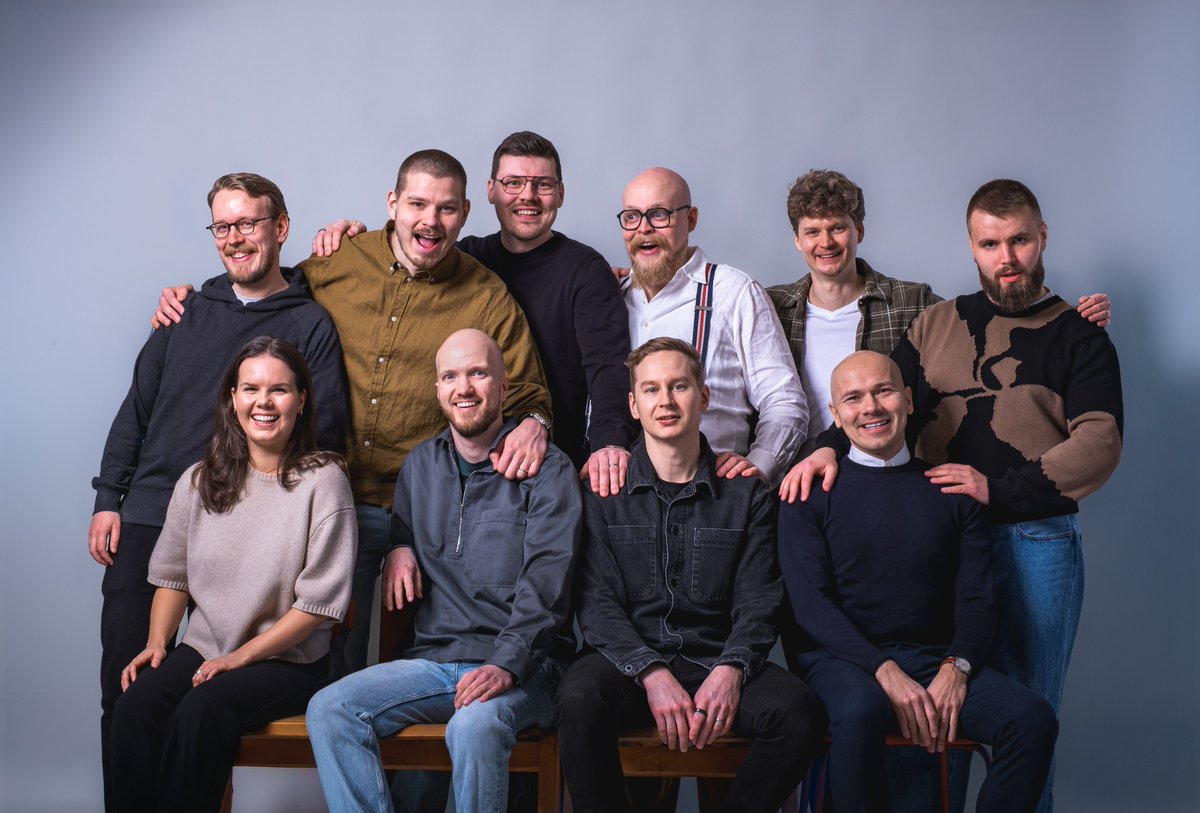
Finnish startup Rotomate raises €2.1M pre-seed to develop AI software for industrial maintenance arcticstartup.com/rotomate-r… via @ArcticStartup @KvantedVentures @RobinCapital @BusinessFinland @Accel #nordicmade #Finland #funding #startups #internetofthings #IoT #trending
43

RTing
linkedin.com/in/ravivsprasad
@IoTCommunity rated @RVP 2nd in #IoT #InternetOfThings
@kcore_analytics rated @RVP 12 in #QuantumComputing
@Onalytica rated @RVP 19th in #Telecom & 42 in #IIoT
39 in #CloudComputing
Alum @CarnegieMellon @IITKanpur @cmu_mse @CMU_ECE @CMUEngineering
Jun 14

How #GenAI is Disrupting #B2B Buying Decisions
buff.ly/OtvfJVp
#tech #AI #data #digital #innovation #disruption #leadership #business #management #governance #CIO #CTO #CDO #CEO #strategy #AIstrategy #digitalstrategy #digitaltransformation @HarvardBiz @IMD_Bschool @BetaMoroney @ChuckDBrooks @MikeFlache @Khulood_Almani @IngridVasiliu @JonBelsher @Timothy_Hughes @NafisAlam @YuHelenYu @RLDI_Lamy @MCLynd @OlKonol_oa @RigneySec @BenRothke @HWillert @AndrewinContact @TerenceLeungSF @Shi4Tech @enilev @Nicochan33 @SabineVdL @bimedotcom @IanLJones98 @FrRonconi @RiccardoBua @Eli_Krumova @NYIke @HaroldSinnott @SallyEaves @GlobalIQX @AntGrasso @AkwyZ @DinisGuarda @PVynckier @YvesMulkers @HaleChris @BillMew @RobMay70 @NigelTozer @m49D4ch3lly @Ronald_vanLoon @jeancayeux @NevilleGaunt @asokan_telecom @cybersecboardrm @RVP @QuePasaChico

5
Sharing
@IoTCommunity rated @RVP 2nd in #IoT #InternetOfThings
@kcore_analytics rated @RVP 12 in #QuantumComputing
@Onalytica rated @RVP 19th in #Telecom & 42 in #IIoT
39 in #CloudComputing
linkedin.com/in/ravivsprasad
Alum @CarnegieMellon @IITKanpur @cmu_mse @CMU_ECE @CMUEngineering

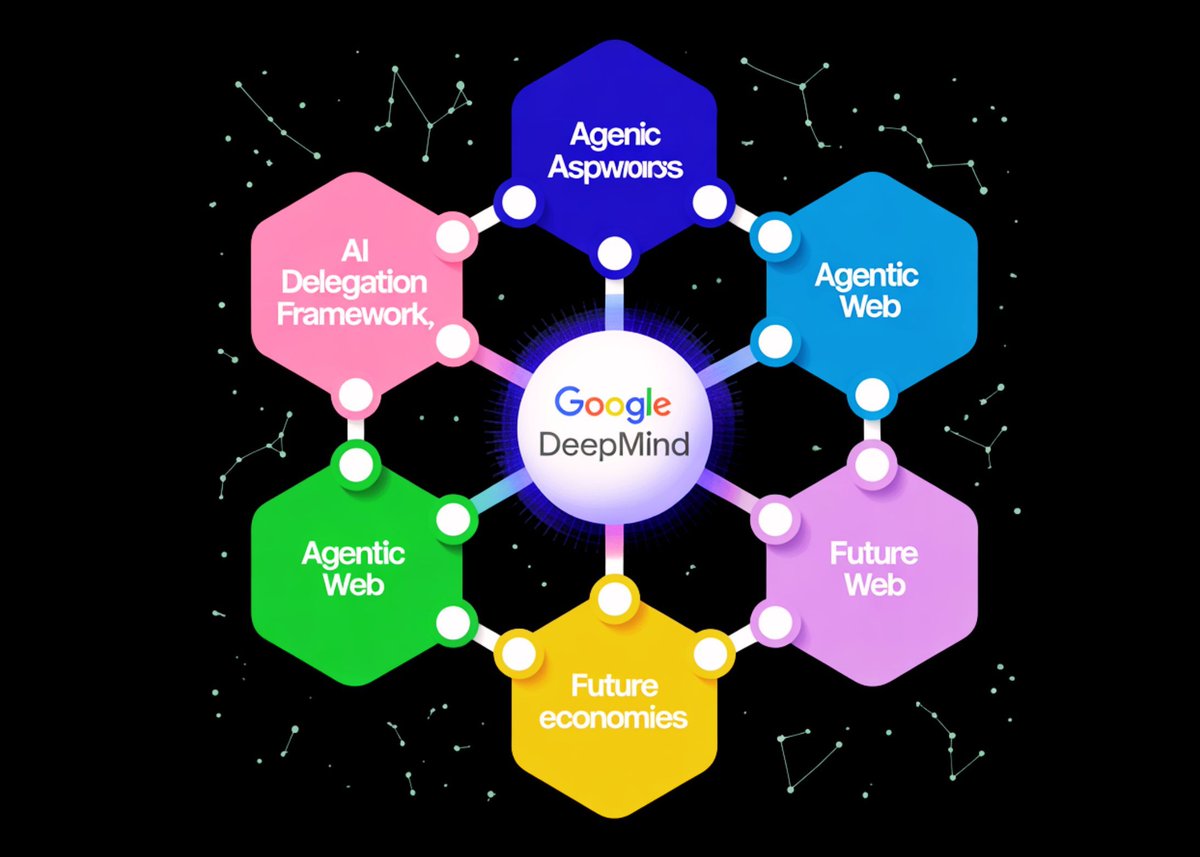
Google DeepMind Proposes New Framework for Intelligent #AI Delegation to Secure the Emerging Agentic Web for Future Economies
buff.ly/xe2RHnF via @Marktechpost
Cc @rvp @gvalan @HaroldSinnott @jeancayeux
4
RTing
linkedin.com/in/ravivsprasad
@IoTCommunity rated @RVP 2nd in #IoT #InternetOfThings
@kcore_analytics rated @RVP 12 in #QuantumComputing
@Onalytica rated @RVP 19th in #Telecom & 42 in #IIoT
39 in #CloudComputing
Alum @CarnegieMellon @IITKanpur @cmu_mse @CMU_ECE @CMUEngineering
Google DeepMind Proposes New Framework for Intelligent #AI Delegation to Secure the Emerging Agentic Web for Future Economies
buff.ly/xe2RHnF via @Marktechpost
Cc @rvp @gvalan @HaroldSinnott @jeancayeux
3
#RaviVisvesvarayaSharadaPrasad #Telecom #InfoTech retweeted
Sharing
@IoTCommunity rated @RVP 2nd in #IoT #InternetOfThings
@kcore_analytics rated @RVP 12 in #QuantumComputing
@Onalytica rated @RVP 19th in #Telecom & 42 in #IIoT
39 in #CloudComputing
linkedin.com/in/ravivsprasad
Alum @CarnegieMellon @IITKanpur @cmu_mse @CMU_ECE @CMUEngineering

#Data debt >> AI’s #value killer hidden in plain sight
buff.ly/pnAbPIV
#tech #digital #innovation #disruption #leadership #business #management #governance #CIO #CTO #CDO #CEO #AIStrategy #digitalstrategy #digitaltransformation #technicaldebt @Forbes @BobViolino

1
8
#RaviVisvesvarayaSharadaPrasad #Telecom #InfoTech retweeted
RTing
linkedin.com/in/ravivsprasad
@IoTCommunity rated @RVP 2nd in #IoT #InternetOfThings
@kcore_analytics rated @RVP 12 in #QuantumComputing
@Onalytica rated @RVP 19th in #Telecom & 42 in #IIoT
39 in #CloudComputing
Alum @CarnegieMellon @IITKanpur @cmu_mse @CMU_ECE @CMUEngineering
14h
‘Harvest now, decipher later’ >> The #quantum threat few are preparing for
buff.ly/liBS6dV
@CSOonline #tech #cybersecurity #data #datasecurity #encryption #cryptography #PQC #QDay #leadership #CIO #CTO #CDO #CISO #CEO #business #leadership #governance #quantumcomputing #HNDL #cyberthreats #GRC

1
6
RTing
linkedin.com/in/ravivsprasad
@IoTCommunity rated @RVP 2nd in #IoT #InternetOfThings
@kcore_analytics rated @RVP 12 in #QuantumComputing
@Onalytica rated @RVP 19th in #Telecom & 42 in #IIoT
39 in #CloudComputing
Alum @CarnegieMellon @IITKanpur @cmu_mse @CMU_ECE @CMUEngineering
Mar 15

Simple Explanation: How Light Node Participation Works in QNet
1: The network checks if your node is online
Every 4 hours, the QNet network verifies that your device is active.
But it’s not a simple internet ping.
Instead, it uses a secure cryptographic challenge to confirm your node is really participating.
Think of it like the network asking your phone:
“Are you really there? Prove it.”
2: Your phone gets a random check time
Each 4-hour period has 240 one-minute slots.
Your node is randomly assigned one of those minutes.
So:
- The network doesn’t check everyone at the same time.
- Your check happens once during the 4-hour window.
- You cannot predict when it will happen.
This prevents people from trying to cheat the system.
3: The challenge-response process
When your time arrives:
i: A genesis node sends a random cryptographic challenge to your device.
ii: Your device signs the challenge using a special key.
iii: Your device sends the signed proof back to the network.
If the response is valid, the network confirms:
✅ Your node is online
✅ Your node participated in the network
4: There are 3 chances to respond
If the first node doesn’t receive a reply:
- Two backup nodes try again.
So you actually have three chances to respond.
If all three fail, that round is missed.
5: Missing checks doesn’t instantly punish you
Your node only becomes inactive after:
5 consecutive missed rounds
Since each round is 4 hours, that means:
5 × 4 hours = 20 hours offline
Then the node becomes inactive.
You can simply press the reactivate button in the app to start again.
6: Your wallet is never exposed
The system uses two different cryptographic keys:
Wallet key
- Controls your funds
- Never used for ping checks
Ping key
- Created when your node registers
- Used only to sign participation responses
This keeps your wallet completely safe.
The cryptography used is Dilithium3, which is designed to resist attacks from future quantum computers.
7: Rewards are delayed slightly
Rewards are not sent instantly.
Here’s the process:
i: Participation data is collected.
ii: It’s added into something called a MacroBlock.
iii: The network finalizes it using consensus.
iv: Rewards are distributed one epoch later.
Since an epoch is 4 hours, rewards arrive about 4 hours after the participation window closes.
This delay ensures the network agrees on the data before paying rewards.
27
RTing
linkedin.com/in/ravivsprasad
@IoTCommunity rated @RVP 2nd in #IoT #InternetOfThings
@kcore_analytics rated @RVP 12 in #QuantumComputing
@Onalytica rated @RVP 19th in #Telecom & 42 in #IIoT
39 in #CloudComputing
Alum @CarnegieMellon @IITKanpur @cmu_mse @CMU_ECE @CMUEngineering

Post-quantum security levels aren't one size fits all 🧩
-Too low and the chain outlives its own cryptography
-Too high and the signature overhead breaks the bandwidth budget
ML-DSA-65 is where security and performance meet. Level 3 is the sweet spot 👇
asentum.com/docs/concepts/po…
3
RTing
linkedin.com/in/ravivsprasad
@IoTCommunity rated @RVP 2nd in #IoT #InternetOfThings
@kcore_analytics rated @RVP 12 in #QuantumComputing
@Onalytica rated @RVP 19th in #Telecom & 42 in #IIoT
39 in #CloudComputing
Alum @CarnegieMellon @IITKanpur @cmu_mse @CMU_ECE @CMUEngineering

NEW: Leading deepfake expert says he no longer trusts his own eyes in the age of AI, warns that within years our visual system could become “utterly useless.”
13
Sharing
@IoTCommunity rated @RVP 2nd in #IoT #InternetOfThings
@kcore_analytics rated @RVP 12 in #QuantumComputing
@Onalytica rated @RVP 19th in #Telecom & 42 in #IIoT
39 in #CloudComputing
linkedin.com/in/ravivsprasad
Alum @CarnegieMellon @IITKanpur @cmu_mse @CMU_ECE @CMUEngineering
NEW: Leading deepfake expert says he no longer trusts his own eyes in the age of AI, warns that within years our visual system could become “utterly useless.”
10
RTing
linkedin.com/in/ravivsprasad
@IoTCommunity rated @RVP 2nd in #IoT #InternetOfThings
@kcore_analytics rated @RVP 12 in #QuantumComputing
@Onalytica rated @RVP 19th in #Telecom & 42 in #IIoT
39 in #CloudComputing
Alum @CarnegieMellon @IITKanpur @cmu_mse @CMU_ECE @CMUEngineering

OpenSSH adds experimental Support for a composite Post-Quantum Signature: Scheme that combines ML-DSA 44 and Ed25519 #OpenSSH #Cryptography #PQC github.com/openbsd/src/commi…
6
RTing
linkedin.com/in/ravivsprasad
@IoTCommunity rated @RVP 2nd in #IoT #InternetOfThings
@kcore_analytics rated @RVP 12 in #QuantumComputing
@Onalytica rated @RVP 19th in #Telecom & 42 in #IIoT
39 in #CloudComputing
Alum @CarnegieMellon @IITKanpur @cmu_mse @CMU_ECE @CMUEngineering

"Harvest Now, Decrypt Later"" is the silent threat.
Adversaries scrape encrypted data TODAY to crack it when Quantum scales.
@quipnetwork
implements Post-Quantum Cryptography (PQC) to prevent this retroactive theft.
Secure the future history. #quipnetwork
#32
6
Sharing
@IoTCommunity rated @RVP 2nd in #IoT #InternetOfThings
@kcore_analytics rated @RVP 12 in #QuantumComputing
@Onalytica rated @RVP 19th in #Telecom & 42 in #IIoT
39 in #CloudComputing
linkedin.com/in/ravivsprasad
Alum @CarnegieMellon @IITKanpur @cmu_mse @CMU_ECE @CMUEngineering

Technology Now covers the topic of post quantum cryptography. We ask why the deadline for migrating to PQC enabled systems has been moved up and discover what a quantum computer actually needs to be cryptographically relevant. hpe.to/6016BDEF4K
10
RTing
linkedin.com/in/ravivsprasad
@IoTCommunity rated @RVP 2nd in #IoT #InternetOfThings
@kcore_analytics rated @RVP 12 in #QuantumComputing
@Onalytica rated @RVP 19th in #Telecom & 42 in #IIoT
39 in #CloudComputing
Alum @CarnegieMellon @IITKanpur @cmu_mse @CMU_ECE @CMUEngineering
Jun 11

Managing the #Quantum Threat Horizon > buff.ly/CL9rUa1
#tech #cybersecurity #data #datasecurity #encryption #PQC #QDay #leadership #CIO #CTO #CDO #CISO #CEO #business #leadership #governance #quantumcomputing #HNDL #cyberthreats
1
RTing
linkedin.com/in/ravivsprasad
@IoTCommunity rated @RVP 2nd in #IoT #InternetOfThings
@kcore_analytics rated @RVP 12 in #QuantumComputing
@Onalytica rated @RVP 19th in #Telecom & 42 in #IIoT
39 in #CloudComputing
Alum @CarnegieMellon @IITKanpur @cmu_mse @CMU_ECE @CMUEngineering
Jun 11
Managing the #Quantum Threat Horizon
An early-action checklist for #GRC practitioners
buff.ly/VYxCR12
#tech #cybersecurity #data #datasecurity #encryption #PQC #QDay #leadership #CIO #CTO #CDO #CISO #CEO #business #leadership #governance #quantumcomputing #HNDL #cyberthreats @CorixPartners @BetaMoroney @ChuckDBrooks @MikeFlache @Khulood_Almani @IngridVasiliu @JonBelsher @Timothy_Hughes @NafisAlam @YuHelenYu @RLDI_Lamy @MCLynd @OlKonol_oa @RigneySec @BenRothke @HWillert @AndrewinContact @TerenceLeungSF @Shi4Tech @enilev @Nicochan33 @SabineVdL @bimedotcom @IanLJones98 @FrRonconi @RiccardoBua @Eli_Krumova @NYIke @HaroldSinnott @SallyEaves @GlobalIQX @AntGrasso @AkwyZ @DinisGuarda @PVynckier @YvesMulkers @HaleChris @BillMew @RobMay70 @NigelTozer @m49D4ch3lly @Ronald_vanLoon @jeancayeux @NevilleGaunt @asokan_telecom @cybersecboardrm @RVP @QuePasaChico
1
RTing
linkedin.com/in/ravivsprasad
@IoTCommunity rated @RVP 2nd in #IoT #InternetOfThings
@kcore_analytics rated @RVP 12 in #QuantumComputing
@Onalytica rated @RVP 19th in #Telecom & 42 in #IIoT
39 in #CloudComputing
Alum @CarnegieMellon @IITKanpur @cmu_mse @CMU_ECE @CMUEngineering
#Quantum computers edge toward industrialization
buff.ly/XT1Ftmk
@InformationWeek #tech #cybersecurity #data #datasecurity #encryption #cryptography #PQC #QDay #leadership #CIO #CTO #CDO #CISO #CEO #business #quantumcomputing #HNDL

3
Sharing
@IoTCommunity rated @RVP 2nd in #IoT #InternetOfThings
@kcore_analytics rated @RVP 12 in #QuantumComputing
@Onalytica rated @RVP 19th in #Telecom & 42 in #IIoT
39 in #CloudComputing
linkedin.com/in/ravivsprasad
Alum @CarnegieMellon @IITKanpur @cmu_mse @CMU_ECE @CMUEngineering
The Clock Is Already Ticking >> Why Post-#Quantum Cryptography Can’t Wait
buff.ly/2rwskej
@Imperva #tech #cybersecurity #data #datasecurity #encryption #PQC #QDay #leadership #CIO #CTO #CDO #CISO #CEO #business #quantumcomputing #HNDL #cyberthreats

1
RTing
linkedin.com/in/ravivsprasad
@IoTCommunity rated @RVP 2nd in #IoT #InternetOfThings
@kcore_analytics rated @RVP 12 in #QuantumComputing
@Onalytica rated @RVP 19th in #Telecom & 42 in #IIoT
39 in #CloudComputing
Alum @CarnegieMellon @IITKanpur @cmu_mse @CMU_ECE @CMUEngineering
The Clock Is Already Ticking >> Why Post-#Quantum Cryptography Can’t Wait
buff.ly/2rwskej
@Imperva #tech #cybersecurity #data #datasecurity #encryption #PQC #QDay #leadership #CIO #CTO #CDO #CISO #CEO #business #quantumcomputing #HNDL #cyberthreats
3
Sharing
@IoTCommunity rated @RVP 2nd in #IoT #InternetOfThings
@kcore_analytics rated @RVP 12 in #QuantumComputing
@Onalytica rated @RVP 19th in #Telecom & 42 in #IIoT
39 in #CloudComputing
linkedin.com/in/ravivsprasad
Alum @CarnegieMellon @IITKanpur @cmu_mse @CMU_ECE @CMUEngineering
Managing the #Quantum Threat Horizon
buff.ly/VYxCR12
@CorixPartners @Corix_JC #tech #cybersecurity #data #datasecurity #encryption #PQC #QDay #leadership #CIO #CTO #CDO #CISO #CEO #business #leadership #governance #quantumcomputing #HNDL #cyberthreats #GRC
RTing
linkedin.com/in/ravivsprasad
@IoTCommunity rated @RVP 2nd in #IoT #InternetOfThings
@kcore_analytics rated @RVP 12 in #QuantumComputing
@Onalytica rated @RVP 19th in #Telecom & 42 in #IIoT
39 in #CloudComputing
Alum @CarnegieMellon @IITKanpur @cmu_mse @CMU_ECE @CMUEngineering
Managing the #Quantum Threat Horizon
buff.ly/VYxCR12
@CorixPartners @Corix_JC #tech #cybersecurity #data #datasecurity #encryption #PQC #QDay #leadership #CIO #CTO #CDO #CISO #CEO #business #leadership #governance #quantumcomputing #HNDL #cyberthreats #GRC