
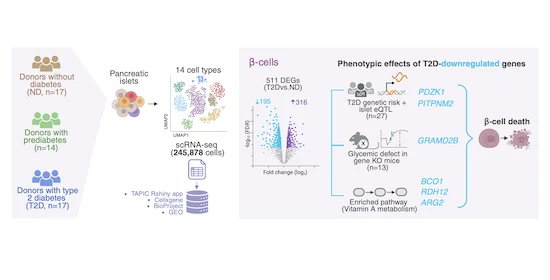
Single cell analysis of human pancreatic islets (n=48 donors) reveals increased population of senescent beta cell population and 511 differentially expressed genes in type 2 #diabetes Integration with proteomic/mouse model data reveals 58 candidate genes
link.springer.com/article/10…
4

Excited about our new preprint led by #CarolineWard, #TabithaBanksTibbs & #HenryThorpe and colleagues. Using AI to analyze >2 million human pancreatic islets profiling all 4 major endocrine cell types to map how #type1diabetes reshapes the islet.
biorxiv.org/content/10.64898…
1
2
2
135

It looks very similar, and you can even see a beach that looks like Haeuendae Beach at the top of the second picture next to the tall buildings, last picture has Oryukdo Islets near the breakwalls.
18

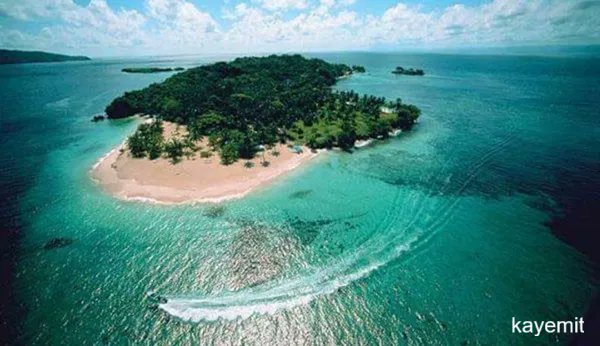
HISTORY OF CAYEMITTES (GRAND'ANSE)
||||
The history of Cayemittes, a group of islands located in the Grand'Anse department of Haiti, is deeply intertwined with the broader narrative of Haitian history, from indigenous settlements to colonial exploitation, revolution, and modern challenges. Situated off the southwestern coast of Haiti in the Gulf of Gonâve, Cayemittes consists of two main islands—Grande Cayemite and Petite Cayemite—along with several smaller islets. These islands have long been known for their rugged terrain, coral reefs, and fishing communities, but their story is one of resilience amid isolation and hardship.
Before European arrival, the islands were inhabited by the Taíno people, indigenous Arawak-speaking groups who lived across the Caribbean. The Taíno of Cayemittes likely engaged in fishing, agriculture, and trade with mainland communities, cultivating crops like cassava, maize, and sweet potatoes. Archaeological evidence suggests they built villages and used the islands' natural resources sustainably. However, their population was decimated following Christopher Columbus's arrival in 1492 on the nearby island of Hispaniola, which includes present-day Haiti and the Dominican Republic. Diseases, forced labor, and violence from Spanish colonizers led to the near-extinction of the Taíno by the mid-16th century.
In the 17th century, as Spain's control waned, French buccaneers and pirates began using Cayemittes as a hideout. The islands' secluded coves provided ideal spots for smuggling and raids. By 1697, under the Treaty of Ryswick, the western third of Hispaniola became the French colony of Saint-Domingue, and Cayemittes fell under French administration. The French developed sugar, coffee, and indigo plantations on the mainland, but the islands themselves were sparsely populated, serving mainly as fishing outposts and sources of salt and hardwood. Enslaved Africans were brought to the region in massive numbers, and some may have been transported to or escaped to Cayemittes, contributing to the islands' Creole culture.
The Haitian Revolution (1791–1804) profoundly affected Cayemittes. Sparked by slave uprisings on the mainland, the revolution led by figures like Toussaint Louverture, Jean-Jacques Dessalines, and Henri Christophe eventually overthrew French rule. While major battles occurred elsewhere, the islands provided refuge for revolutionaries and escaped slaves. After independence in 1804, Haiti became the world's first black-led republic, and Cayemittes was integrated into the new nation. However, the post-revolutionary period was marked by political instability, with divisions between the northern kingdom under Christophe and the southern republic under Alexandre Pétion. The islands, due to their remoteness, often escaped direct involvement but suffered from economic neglect.
Throughout the 19th century, Cayemittes remained a peripheral area, reliant on subsistence fishing, small-scale farming, and boat-building. The U.S. occupation of Haiti (1915–1934) brought some infrastructure improvements, such as roads and ports on the mainland, but the islands saw little development. During this time, residents faced exploitation from foreign interests and internal dictatorships. The Duvalier regime (1957–1986), under François Papa Doc and Jean-Claude Baby Doc Duvalier, enforced authoritarian control, with rural areas like Cayemittes experiencing repression and poverty. Many islanders migrated to mainland cities or abroad in search of better opportunities.
In the 20th and 21st centuries, natural disasters have shaped Cayemittes' history. The islands were devastated by hurricanes, including the 1954 Hurricane Hazel and the 2016 Hurricane Matthew, which destroyed homes, boats, and livelihoods. The 2010 earthquake, while centered elsewhere, exacerbated regional poverty. Today, Cayemittes is home to about 7,000 people, primarily fisherfolk and farmers. Efforts by NGOs and the Haitian government focus on sustainable development, education, and eco-tourism, highlighting the islands' pristine beaches and biodiversity. Despite challenges like climate change and limited access to services, the resilient spirit of Cayemittes' inhabitants endures, preserving a unique blend of African, Taíno, and French influences in their language, music, and traditions.
||||
IstwaVil.com
(This message was created with AI.)
||||
Kisa mond lan ekri sou Ayiti
AtikSouAyiti.com
36

🌿 GOOD NEWS | Marshall Islands
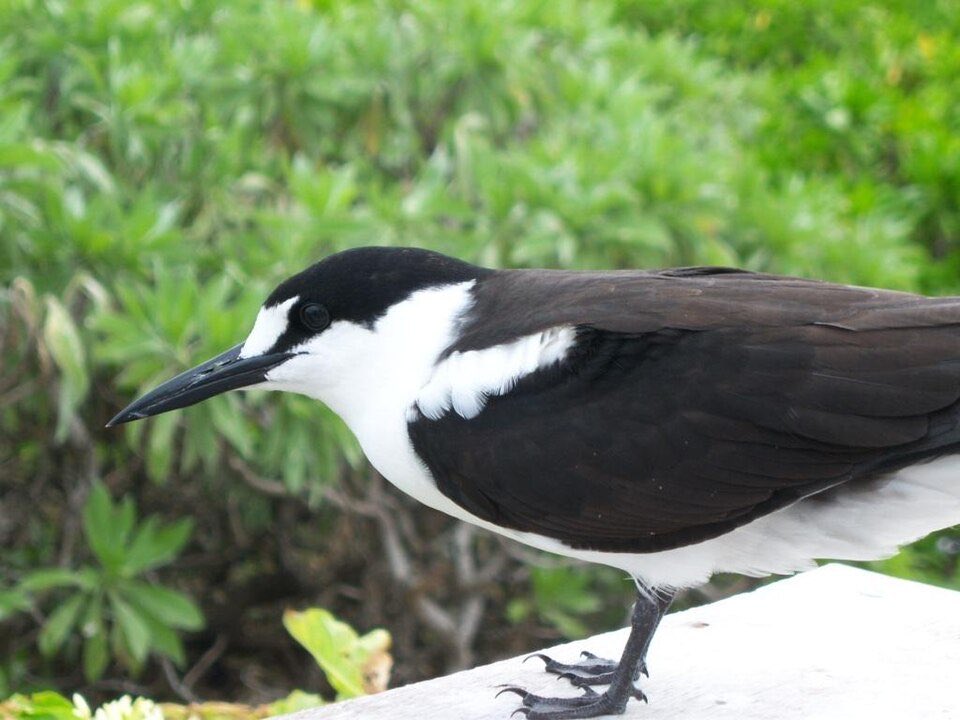
Two small islets in the Marshall Islands are experiencing a major ecological revival — one year after invasive black rats were successfully eradicated.
After only ONE YEAR:
• 2,000 Sooty Terns now nesting (previously zero)
• Hundreds of tern chicks being fed
• Thousands of native tree seedlings found across the island
The return of seabirds has restored the land-sea nutrient connection — seabird droppings now serve as natural fertilizer. The native forest is back, carbon absorption is back, the whole food web is rebuilding itself.
This is what happens when we remove the thing that was wrong, and let the ecosystem remember what it was always supposed to be.
#GoodNews #EcologicalRecovery #MarshallIslands #InvasiveSpecies #HoliReflect
10

The islands and islets that form a distinct archipelago off the NW coast of Europe - Great Britain; Ireland; Isle of Man; Orkney; Shetland, Anglesey, etc - are known around the world as the British Isles. Tellingly, there’s no single agreed alternative used in the Irish Republic.
32
Andrew retweeted

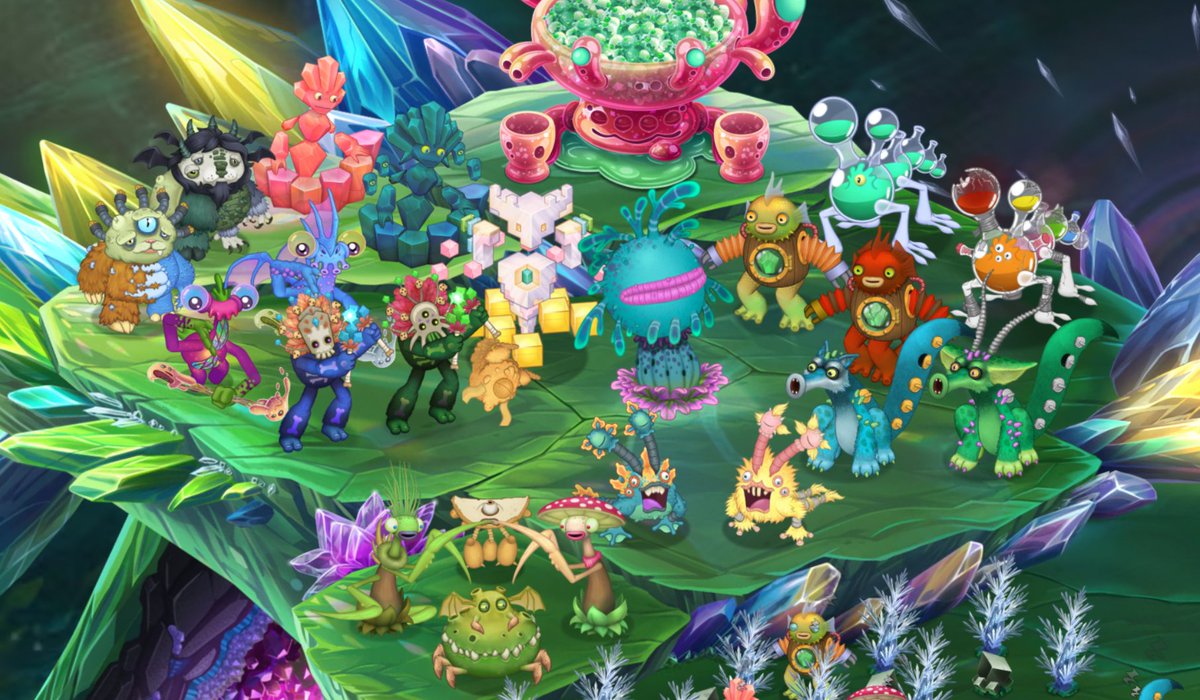
Dish Harmoniser decided to lock in and give me common Flasque and Nitebear at the same time, wow organising islets is alot harder then the regular islets and Poison Islet the best island in the game is gonna be even harder to do with Dragong, Flasque AND Oogiddy..
1
4
134

Ali yunus Balta 🇹🇷🇸🇩 retweeted

Jun 13
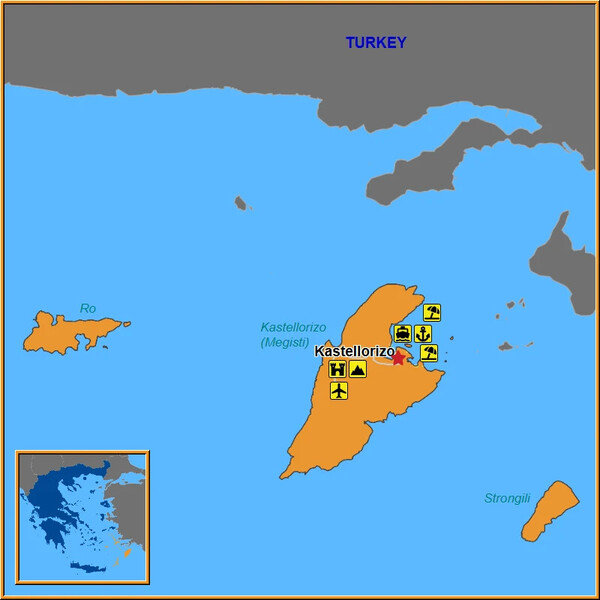
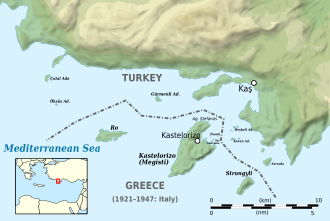
1.Fener/Karaada cannot have any archipelago effect. Deserted islets that do not generate economic value!
2.Fener/Karaada were ceded to Italy in 1932.This has nothing to do with the Lausanne!
This proves that the islets and rocks🇹🇷 were not ceded to any country in Lausanne!

9
15
108
5,945
Dilek Acar retweeted
Jun 13
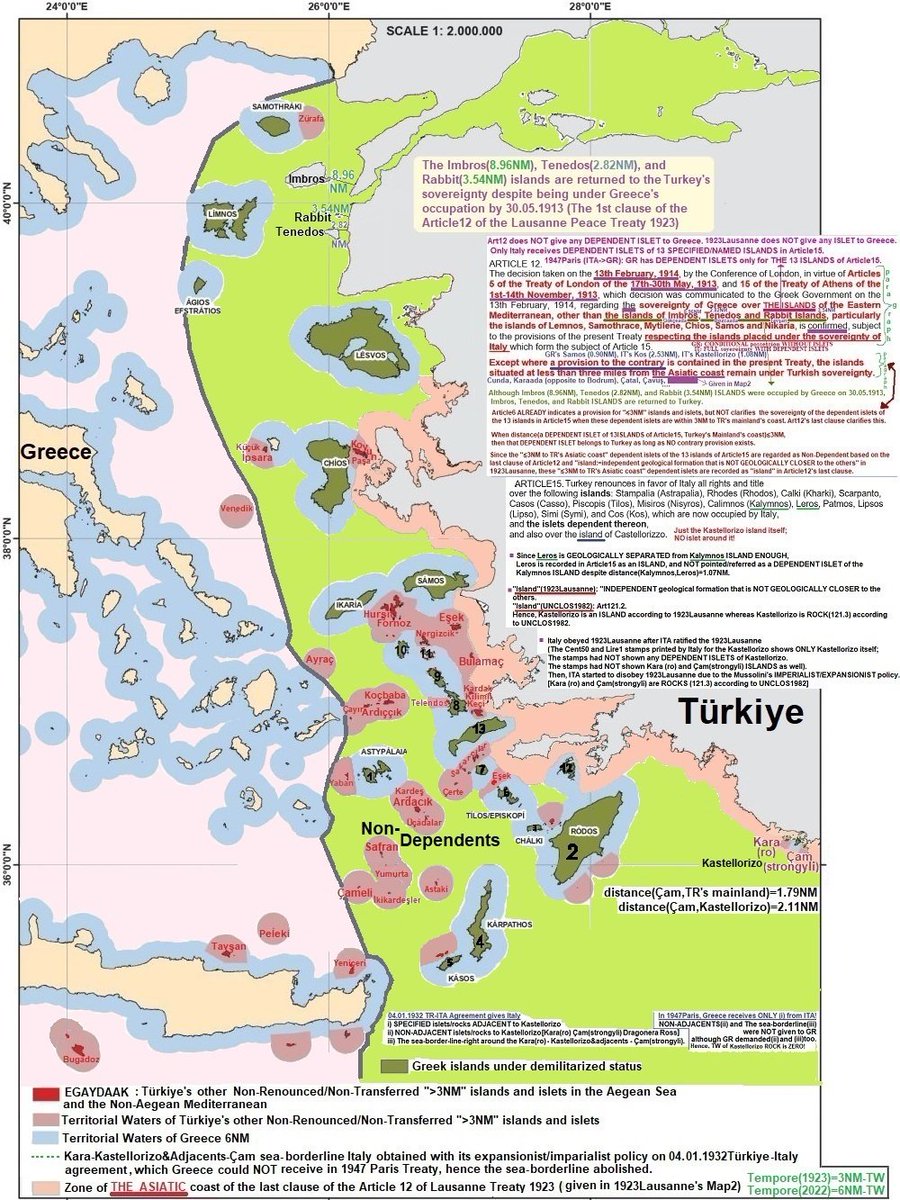
1- Furthermore, the islets and rocks marked in red below were not ceded to Greece by any agreement!
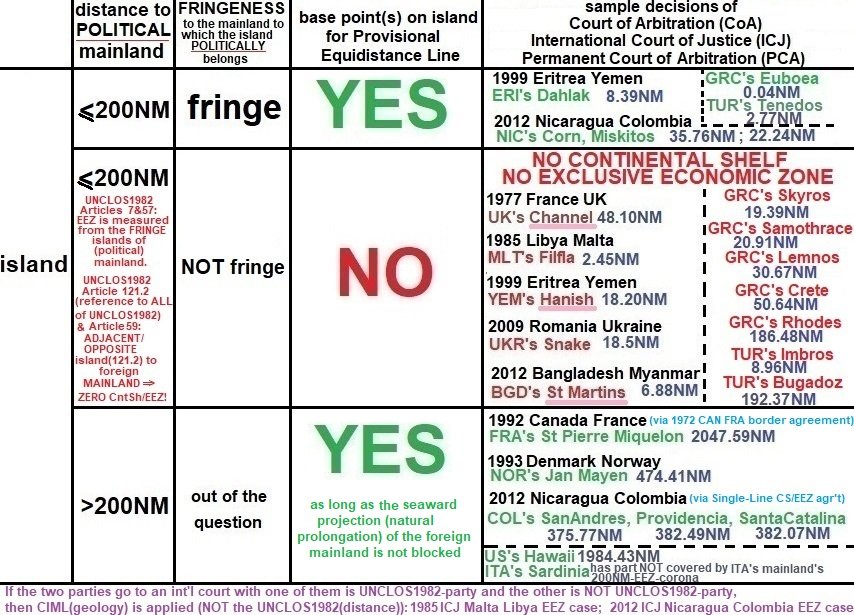
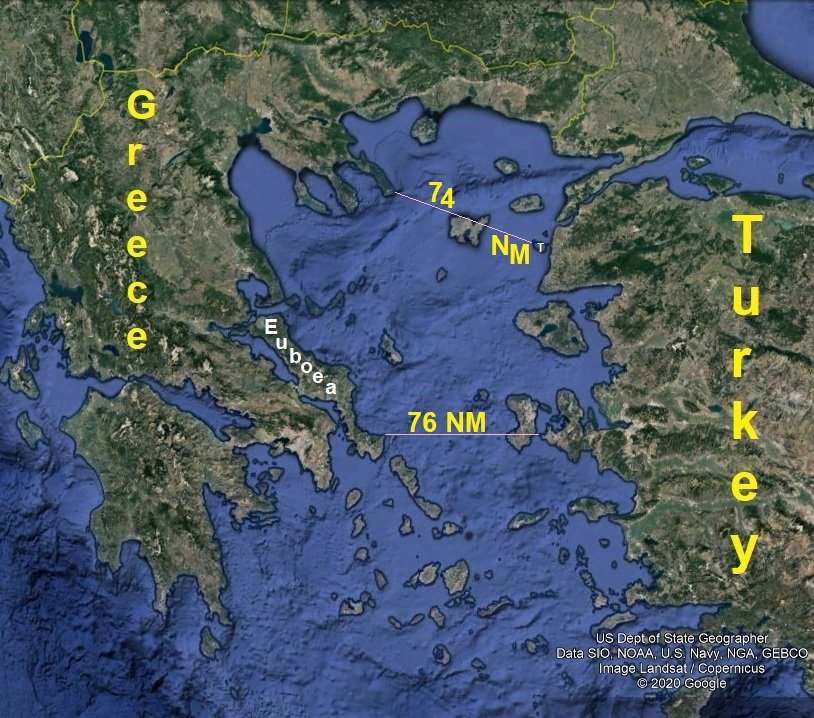
2- The islands located on the wrong side of the median line and which are a natural extension of the Anatolian peninsula have a "0" EEZ/CS effect.
A very arrogant ignoramus...
Jun 13

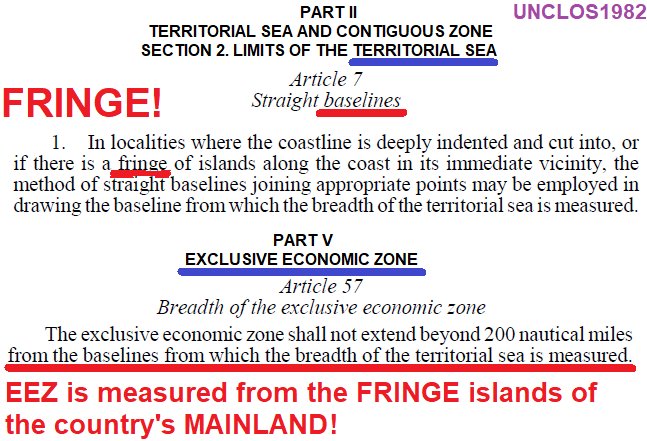
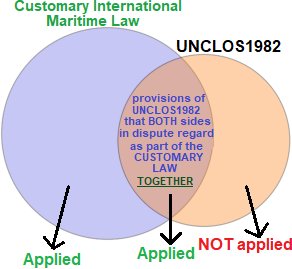
1- Türkiye is not a party to UNCLOS!
2- The Greeks are even in the wrong according to UNCLOS. According to UNCLOS/7, Sicily/Sardinia are "fringe" islands!
3- The only fringe island in the Aegean belonging to Greece is Euboea, and the equal distance is measured from this island.
39
28
107
3,672

3) ChatGPT's response in the screenshots echoes Turkish arguments (e.g., geological contiguity, 3-mile rule, name enumeration principle, and claims about "adjacent islets"). These reflect one side's interpretation but are contested. 👇
1
17
2) Turkey disputes aspects of maritime delimitation and has listed various small features as disputed ("152 islands, islets, and rocks"), but this is a Turkish position, not a settled legal fact.
Greece controls and administers them.👇
1
23

Jun 13
First, the 1932 Italy-Turkey Convention literally says the dispute came from interpretation of Lausanne. So "this has nothing to do with Lausanne" is nonsense. Get over it.
Second, if you admit Fener/Karaada were ceded to Italy in 1932, then you just admitted they stopped being Turkish. Italy then ceded the Dodecanese, Castellorizo and adjacent islets to Greece in full sovereignty in 1947.
Third, "deserted islet" does not mean "Turkish." At most, that is an argument about maritime zones, not sovereignty. Even rocks can have sovereignty and territorial sea.
Article 4 of the 1932 Convention also kills your trick: islands, islets and rocks belong to the state whose side of the agreed line they fall on, whether named or not.
So no, your "unnamed rocks stayed Turkish" theory is dead. Your own 1932 argument hands them to Italy, and the 1947 treaty hands them to Greece. lol
1
72