Matthew Eaton retweeted

May 29

1
4
22
571

Jun 11
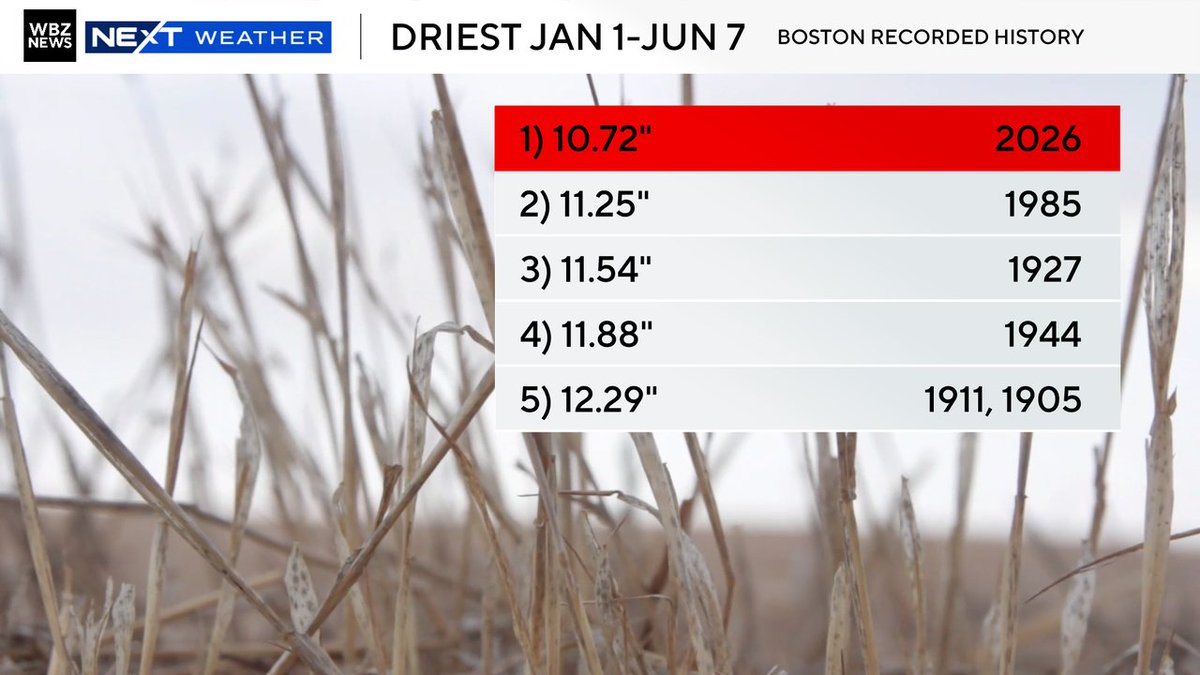
Yeah, I don't believe it's really the driest year on record either. Using KBOS for such a metric since the ASOS era is IMO very bad.
1
52

Congratulations to the winners and to everyone who KBOs!!
5
51

Jun 11
🧵 3/7
👑Meet Haumea (136108) — the elongated, ultra-fast-spinning dwarf planet in the Kuiper Belt.
Discovered 2003/2004 (as 2003 EL61), officially named 2008 after the Hawaiian goddess of fertility, childbirth, and the earth.
💞She spins every 3.915 hours — the fastest rotation of any large body — making her football-shaped. She’s one of the densest KBOs, hosts the first confirmed ring around a Kuiper Belt object (discovered 2017), has two icy moons (Hi’iaka & Namaka), and a large collisional family of fragments.
🔬🦠Scientifically: Born from a giant ancient impact; her family was scattered by Neptune’s migration.
🌿💫Shamanically: Rapid spin = accelerated evolution.
➡️Collision = sacred alchemy⬅️
From destruction comes fertile new creation. Haumea teaches us how to birth beauty from chaos.

29

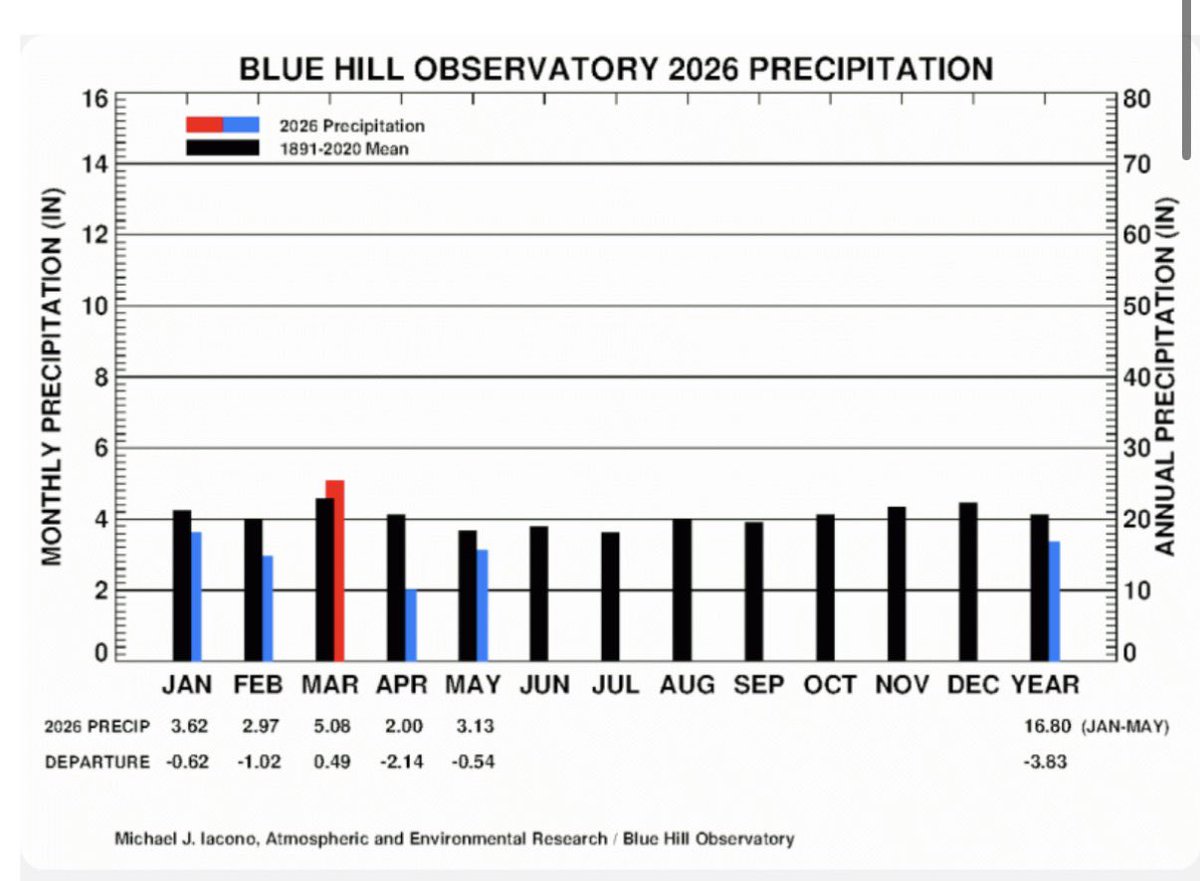
I feel like there needs to be a massive asterisk next to these states. BHO has over 16” because they measure QPF from snowstorms accurately. KBOS does not, which significantly distorts numbers. It’s been dry, but not record dry.
h/t: @ericfisher
Jun 8

Driest year (so far) on record in Boston with just a few chances of rain in the foreseeable future
1
4
1,815
I realize that… but it makes zero sense for BHO to have 6” more QPF than Boston in the same timespan. BOH melts their snow to get QPF, KBOS does not. It’s extremely inaccurate
2
152

An assistant professor of astronomy at the University of Regina in Canada, Dr. Samantha "Sam" Lawler made this statement during a scientific interview regarding her team's research into the outer solar system, specifically focusing on the strange orbital patterns of Kuiper Belt Objects (KBOs) and the ongoing search for the hypothetical "Planet Nine."
“I would love to claim that there’s a great application, but my work keeps pushing that dream further away. But what we’ve found is still really bizarre and exciting.”

4
4
41
3,960


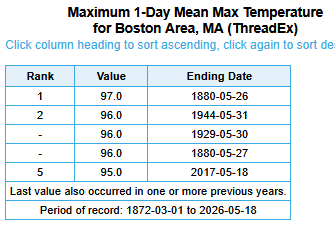
@BillKarins looks like a 96° for sure at KBOS.. Need to make sure those inter-hour 97°'s are not rounding error..
weather.gov/wrh/timeseries?s…
2
395

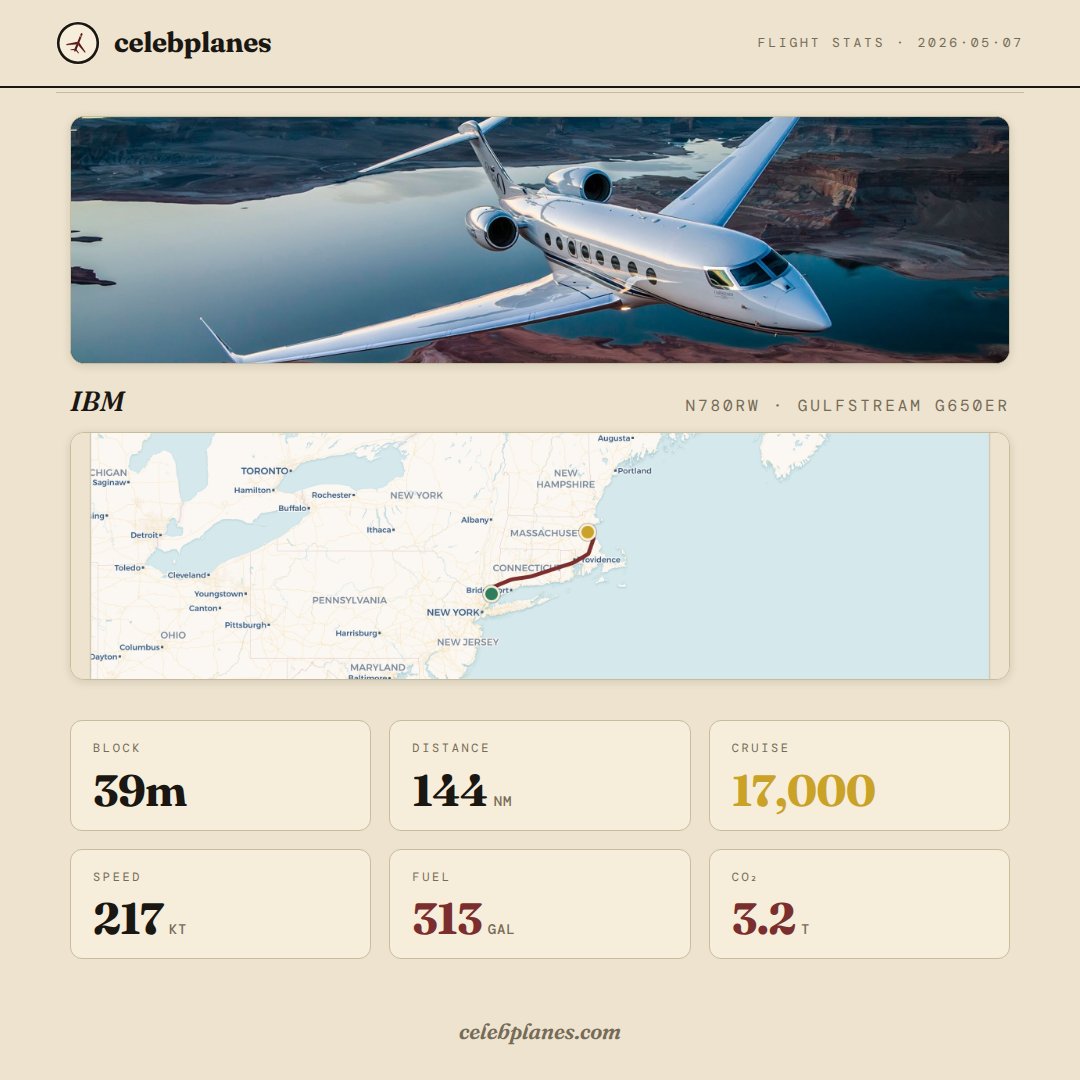
Wheels down for IBM at KBOS. 40m on N780RW, the Gulfstream G650ER. 17,000 ft cruise · ~313 gal.
This flight closed 24 hours ago. Public ADS-B data.
#celebplanes #celebjettracking #privatejet #avgeek #ibm #gulfstreamg650er
celebplanes.com/flight/563

2
2
7

May 1
Bro, this abstract doesn’t say anything close to what you said. 🤷♂️ I’m guessing you read only far enough to find what you thought confirms your misunderstanding, and thus you didn’t really read the paper. I know you didn’t read it, because there’s no way you could think this if you did. 🤷♂️ I mean, seriously. This was a peer reviewed publication in a top tier planetary science journal. Do you think it would really contain ridiculous claims like you think it does? Please try to engage in this discussion seriously.
Apparently you think that the cultural definition and the folk definition are two different things. They are exactly the same thing. Two different terms that mean exactly the same thing. It’s not just this way in astronomy. There are many folk taxonomies for biology and other topics, and they are always the cultural taxonomy, opposed to the scientific one. For example, in most folk taxonomies about animal, life, dolphins and whales were always classified as fish. So we cuttle fish, shellfish, and jellyfish. The scientific community had to fight the public to get them to give up those folk tax enemies and accept the scientific one, in which not everything living in the ocean is a “fish”.
The opposite to the cultural/folk taxonomy of planets is the scientific one — the one that came down from Galileo and has continued to evolve with the science, which is now called the geophysical definition. It came from the idea that planets are “other Earths” with geology and possibly life and civilizations.
The cultural/folk definition came from the idea that the cosmos is orderly and human-centric, as it was believed to be in geocentrism. When the public was finally forced to accept heliocentrism in the mid to late 1800s they did not accept the entire package; they smuggled in the orderly elements of geocentrism and astrology, creating the folk definition that is unhelpful for science. In that concept, only a few big primary planets reminiscent of geocentrism are called “planets”. They thought the asteroids are the result of a broken planet, because they did not believe an orderly cosmos would originally have asteroids. They also did not allow moons to be called planets, because in astrology the moons are in the same part of the sky as the primaries, so they serve no purpose in that orderly view of the cosmos, where the “planets” supposedly serve humanity. It was human-centric and completely unscientific.
That “cultural” or “folk” concept of planets is what the IAU unwittingly Incorporated into their 2006 definition. That happened because they weren’t familiar with the actual scientific development of the term “planet” both because they are not experts in that branch of science and because they did not take the time that was required to sort it out. They were in a big rush because they wanted to know if Mike Brown should be elevated into the pantheon of most famous astronomers with Le Verrier and Herschel. That was not a scientific concern. It was a purely cultural concern, and a pretty stupid thing to worry about if you ask me. A lot of astronomers did not feel that modern astronomers finding KBOs deserved to be put up to that level of veneration, so they thought it was urgent to quickly define “planet” in a way that kept these modern astronomers out of the pantheon of “planet discoverers who reshaped the Solar System”. So they thought about the cultural definition, made up an urban legend about why asteroids are no longer considered planets (completely disconnected from the real history but shaped to fit their preconceptions), then they broke the actual charter of the IAU to force an illegal vote in order to say that planets only include the ones that look like geocentric system except orbiting the sun. It was a total travesty!
The paper will walk you through that history with overwhelming evidence, because we exhaustively searched the entire literature on this topic, doing what the IAU should have done themselves.
2
2
4
48
Apr 30
The idea Ceres and other asteroids stopped being classified as planets 150 years ago was actually an urban legend invented in the 1990s by dynamicists who were trying to backfill some rationale to make KBOs like Pluto out to be non-planets. Most asteroids were not reclassified as non-planets until the 1950s, and that happened because advancements in planet formation theory led planetary scientists to distinguish between gravitationally rounded ones and lumpy ones that were too small. The large round ones like Ceres were retained as planets even until today. (Vesta was a borderline case so its status as planet/non-planet was left unresolved at that time.) This actual history with full documentation is at this link. It was published in Icarus in 2019, but this is the preprint. arxiv.org/pdf/1805.04115
1
1
2
56

Apr 29
Also, you diagram of KBOs has an error. Eris aka Xena is NOT larger than Pluto. It was initially thought to be so but in 2010 was found to be marginally smaller than Pluto. Because it's in hydrostatic equilibrium, it is a planet according to the geophysical definition.
2
59
Apr 29
Your reason is flawed because Pluto is not solar system debris. It is a planet because it is rounded by its own gravity, which is when complex geology begins. This makes it & other dwarf planets VERY different from tiny KBOs shaped only by their chemical bonds.
2
45

It always was subjective nonsense. And demoting Pluto did nothing to elevate or promote KBOs. You know what *would* do that? Correctly labeling more of them as planets.
5
91

Apr 27
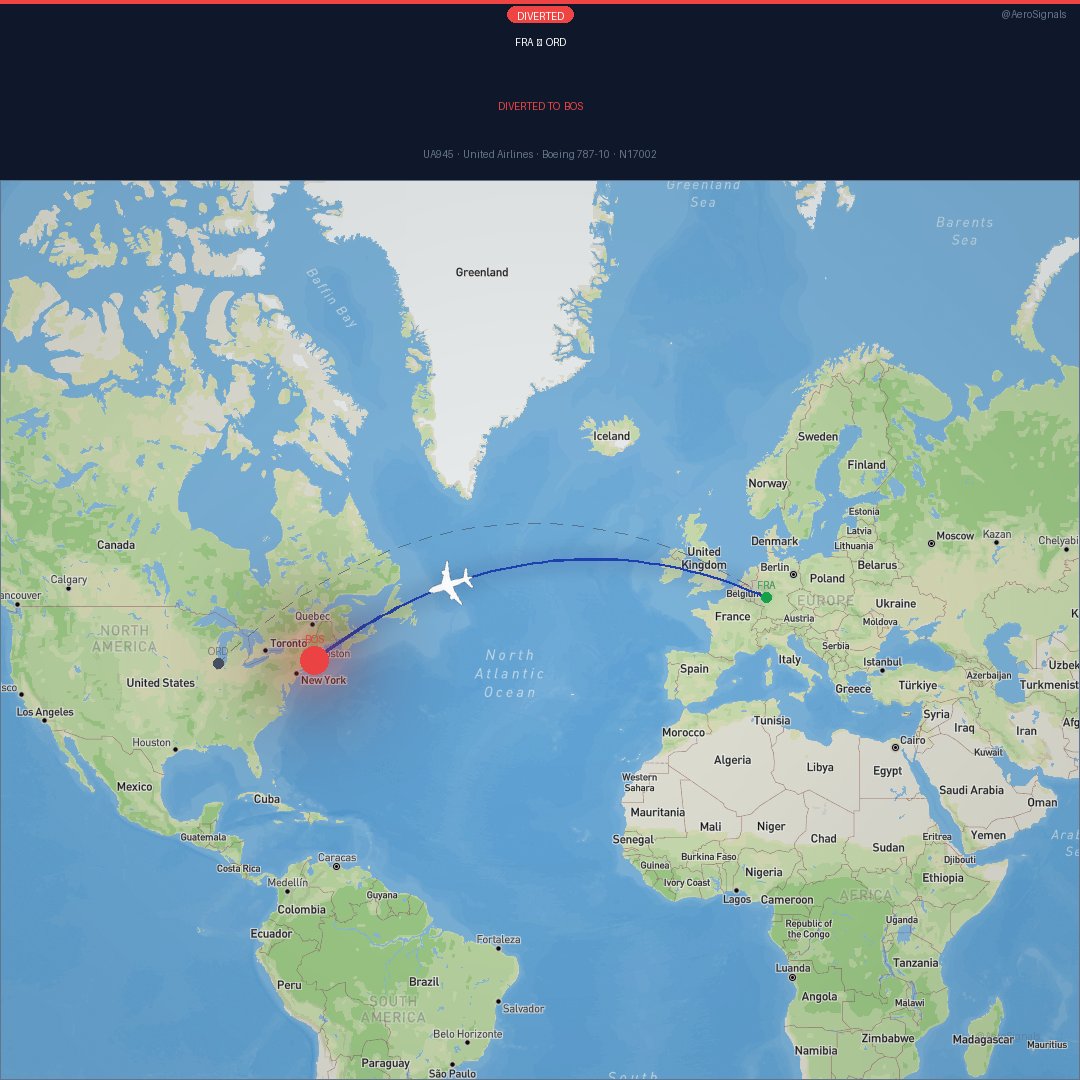
United Airlines UA945 (Boeing 787-10 • N17002) was flying from Frankfurt am Main (EDDF) to Chicago (KORD) but diverted, landing at Boston (KBOS).
Flight landed at 14:13 UTC on 27 Apr.
1
2
185



Apr 24
Stream Start: 1515Z
Off Blocks from KBOS: 1538Z
Estimated Takeoff from KBOS: 1558Z
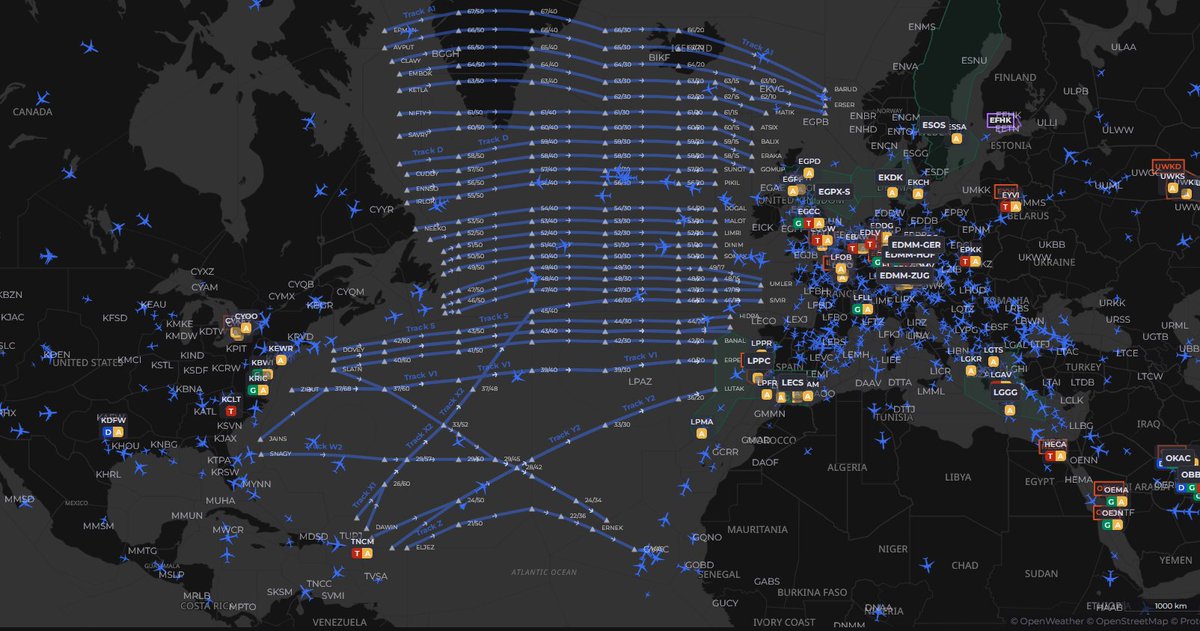
Then we ride the full #VATSIM ATC coverage for the 8 hour #crossthepond flight to Oslo Lufthavn (ENGM) in Oslo, Norway.
#virtualpilot #wolfair #virtualairline #virtualairlines #msfs2024 #flightsim

2
17