KEIVXM retweeted

May 16
Edging : Zavian 🥵💦
Got this handsome young lean guy working out in the gym and using grindr. And I approached him for his never forgettable experience. He was hesitant at first but you can see how badly he is on the edge again and again and wanted to cum 💦. At last I milked out a thick load of protein that he had been collecting for days😈.
My full videos on:
Onlyfans.com/indianedgerr
Top4fans.com/indianedgerr
UPI: Official.me/indianedgerr
#edging #milking #cumcontrol #chudai
19
509
3,391
147,112
Tom Bombadil retweeted

8 Jun 2025
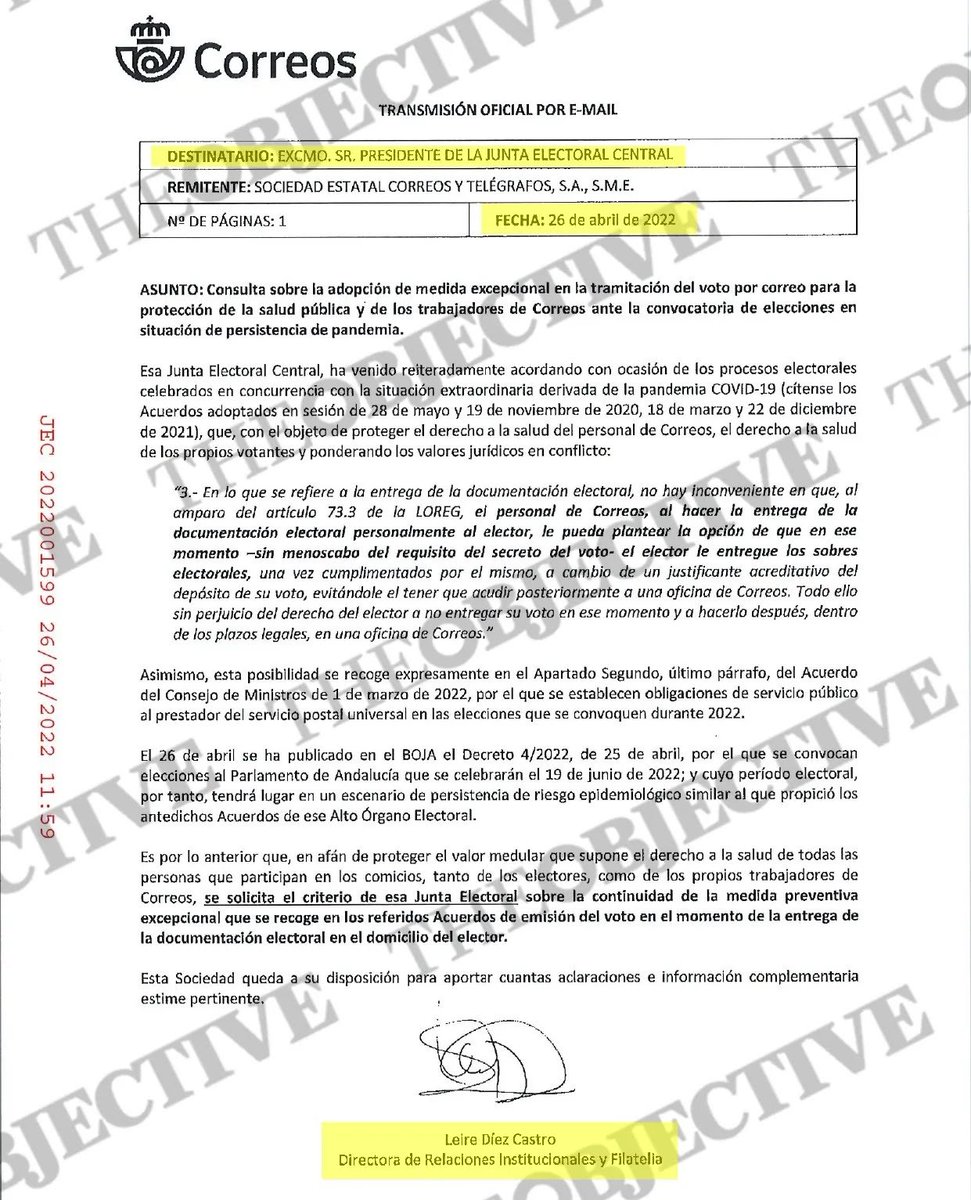
La PRUEBA de que LEIRE "LA FONTANERA" MANIPULABA EL VOTO POR @CORREOS 👇😱
Lean la noticia de @TheObjective_es 🧐
@sanchezcastejon robó las Elecciones de Julio de 2023
8 Jun 2025

Un ‘email’ a la Junta Electoral demuestra que Leire Díez intervino en el voto por correo.
✍️ Una noticia de Enrique Morales (@_enriquemorales) y Fran Serrato (@FcoSerrato)
buff.ly/dR16Aub
172
7,419
8,788
156,104

Those who remained loyal and faithful to the Romanov family.
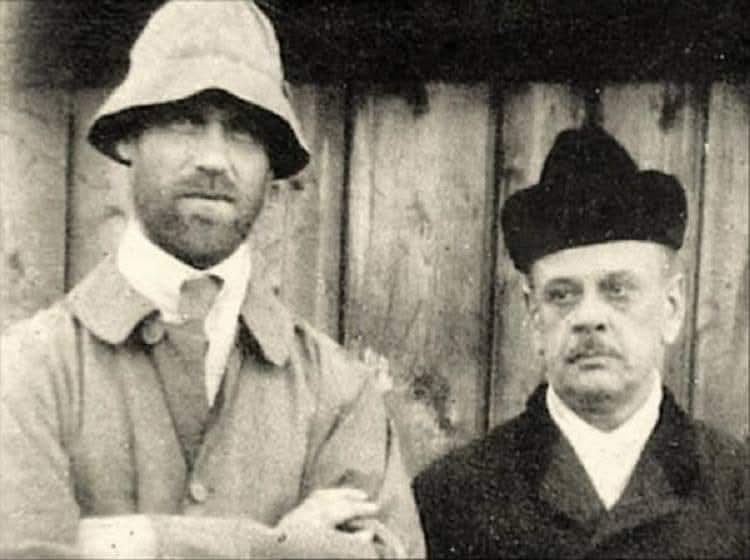
BRIAN JOHNSON.
Years ago I read that after the Bolsheviks shot Brian, Grand Duke Michael extended his arms out towards him to embrace his dear and faithful friend and to bid him a final farewell. Those words and the image it elicits is beyond heartbreaking.
Brian Johnson is the epitome of heroism, loyalty, devotion and true friendship.
I believe there is now an active search to locate the remains of Grand Duke Michael and Brian Johnson.
I took the liberty of copying only (with edits) the following article on Brian Johnson, the British friend and assistant to Grand Duke Michael.
“In his homeland he was not even a footnote in history. In his adopted country he was officially an enemy of the people. Now he has been elevated to something almost approaching martyrdom.
Brian Johnson, valet and private secretary to Grand Duke Mikhail Romanov, younger brother of Tsar Nicholas II, died alongside his master in a hail of bullets on the outskirts of Perm in Russia on June 12, 1918. The Tsar and his famil were murdered a month later at Ekaterinberg.
Now the Russian government has declared that along with the Russian Imperial family Johnson was a victim of the Bolshevik revolution and that like them he was unlawfully killed by the Cheka, the forerunners of the KGB.
According to Russian state prosecutors: “The analysis of old archive material leads to the conclusion that these persons were subject to persecution in the form of arrest, exile and surveillance by the Cheka without being charged with any specific crime, on account of their class and status.” Henceforth all existing records on Brian Johnson in Russia will be amended to remove the stain of guilt from his name. But this gesture of atonement, magnanimous as it is, prompts more questions than answers, not the least of which is: who was Brian Johnson? So little is known of the British servant of the Russian empire that even experts on that period in history have never heard of him. “I’m afraid the name means nothing to me,” admitted Robert Service, Professor of Russian history at Oxford University and the author of a biography of Lenin. “I’ve never heard of this fellow.” What is certain is Johnson, a British commoner, died a horrendously violent death alongside his noble employer and that he played a ¬significant role in the last days of the Romanovs. His father Nicholas was British and his mother was a Russian teacher of music at the Imperial Court. How Nicholas came to be in Russia is not known but his presence there as a Briton was far from unusual. “Relations between Russia and Britain were extremely warm and friendly at that time,” says Professor Service. "We were allies and there was a great deal of trade between the countries. Russia supplied wheat, oil and timber and Britain as an indust¬rialised nation sold them our manufactured goods and machinery. There were lots of Britons living in Russia. “The liberal class was very Anglophile, as was the Imperial family, who all spoke several languages including English. The British and Russian royal families were closely related through Queen Victoria and there was genuine affection between them. "It remained on George V’s conscience for the rest of his life that he had not done more to help his cousin, the Tsar, get out of Russia. But there was strong anti-tsarist feeling in Britain at the time and the King was advised that it would compromise the country’s relations with Russia if the Tsar and his family were allowed to seek refuge here.” Brian Johnson began working as private secretary to Grand Duke Mikhail in 1912 but the two men were already friends thanks to a shared love of music. Johnson was also a talented pianist, an aptitude ¬inherited from his mother and spoke three -languages. He is described as being “round-faced and not very tall”. Grand Duke Mikhail was tall and lean.
1
2
Tal Brosas retweeted

Jun 12
1. Ano Na
VOTE ANO NA!!!
why I think this song should win:
1. It fits BINI’s current sound (a slight lean towards RnB and afrobeats tracks)
2. It’s a tagalog song (which let’s admit has public favor) but feels very modern.
3. It’s catchy as hell and is great dance track (also guitar solo? *chef’s kiss*)
My notes would be that the rap just needs refinement but I love that she included sing-rap in there.
Greaaat potential. 💯💯💯
1
2
8
508
imnotLN retweeted

Jun 12
The way Karina subtly adjusted her shoulder so Winter can lean properly
 𝐅⋆🍋
𝐅⋆🍋
3
936
8,791
110,423
RD retweeted

Jun 13
⭕️ Mi artículo hoy en @TheObjective_es. Sección #FugasDelErario. LEAN, PAGAN USTEDES…
La Aecid ha enviado nueve millones de euros a Jordania en los últimos meses. “Empoderamiento femenino”, participación política de las mujeres, justicia, agua, etc.
theobjective.com/espana/2026…
35
894
1,162
14,959

Low clouds lean over a golden desert plain beside the open field as the landscape breathes slowly. The landscape feels full of gentle color. 😌🌟
Chika retweeted

[Translation]
🍓*Push Thomas's back to lean to the front*
🎤Alright
🍓Look up... and also, we need to have a sound effect
🎤Sound effect? How would the sound be?
🍓It will be, 'Ribbit Ribbit.'
🎤Ahh, so this pose is a frog pose
🍓And please hop to the front 1 time
🎤Oh! You want him to hop to the front 1 time, because it's standing still now
🍓Yes, to the front 1 hop
🎤What did you say? Oh, you can hop 3 times. Lovely!
🍓😂
🎤You are really spoiling your fans. Ok! So it will be, 'Ribbit Ribbit Ribbit' and 3 hops. That's lovely. Only 1 hop, your fans will probably can't snap it yet.
🦊🫥😈
🎤Ok, are you ready? 3 hops, ok?
🍓Bend your knees down a bit
🎤Ahh, bend your knee a bit. Alright! Fans, are you ready? Camera on, Go!
🦊🫥🐸Ribbit *hop* Ribbit *hop*
LABXSKIN WITH TMK
#LABXxThomasKong

2
5
78
ds retweeted

Jun 13
you tell ppl yr a sadomasochist and they assume u lean towards masochism. no dude i wanted to tie YOU up and sexually torture YOU
16
375
3,436
43,934

Trust in the Lord with all your heart, And lean not on your own understanding,In all your ways acknowledge Him, And He shall direct your paths.
Proverbs 3:5-6
Happy Sunday ☺️

O G retweeted

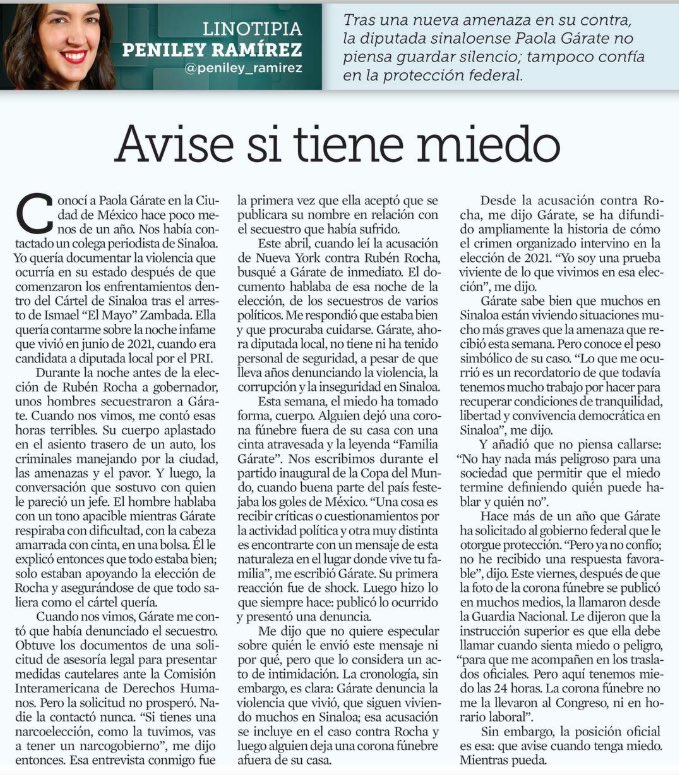
Lean a @peniley_ramirez sobre amenazas a @PaolaGarateV, muy grave:
Avise si tiene miedo
“Gárate denuncia la violencia que vivió, que siguen viviendo muchos en Sinaloa; esa acusación se incluye en el caso contra Rocha y luego alguien deja una corona fúnebre afuera de su casa”
2
254
292
1,688
NoLa retweeted

Chapter 15 is now free: the full draft Constitution for a new Western Australia.
Lean government. Local power. Citizen oversight. Strong anti-corruption. Resource royalties for the people. Enforceable rights.
No slogans — just the blueprint.
Read it. Critique it. Share it.

107
132
562
723,491
Debby retweeted

Trust in the Lord with all your heart and lean not on your own understanding
1
1
3

It all connects so perfectly when you play through Requiem multiple times and really lean into Leon’s perspective. This story is fundamentally about giving him the closure he’s carried for 30 years. Returning to Raccoon City, facing his deepest guilt, curing the T-virus for himself and Sherry, and finally being able to save Grace it all builds toward that quiet sense of peace. In the good ending, you can see the change in everything: his gentle smile, his lighter posture, the way his body looks relaxed yet tired from the fight, and the uplifted tone in his voice. He just seems so much less burdened, like a heavy weight has finally lifted. He’s genuinely eager and excited to share the good news about Emily with Grace, and there’s this beautiful, cathartic moment where he realizes he was finally able to make a real difference he saved someone when it mattered most. That “place to return to” Nakanishi mentioned feels like the internal sanctuary Leon has earned not necessarily a physical home, but the emotional peace and closure he’s found within himself after confronting his past. The ring, as a small symbolic detail in that final moment, fits right into that theme. It’s about Leon finally finding his way home to himself.
4

I’m with you Glen I’m a ‘never go back’ man however this is a really unique situation as has been eluded to by Matt on a recent interview. I agree an injury free (we have a great medical team) lean on form Dipo challenging Stones would be unreal!
8