
Resolved: 🚨 LinkLayer Notice 🚨
Tongaat
All services in the area have been successfully restored. Thank you for your patience. status.evotel.co.za/cmq7uggp…
79
Identified: 🚨LinkLayer Notice 🚨
Tongaat
The fault is currently under investigation. Our technical team is actively working to identify the cause of the issue and determine the necessary steps to restore services.
We unde status.evotel.co.za/cmq7uggp…
1
112
Investigating: 🚨LinkLayer Notice 🚨
Tongaat
Our team is aware of the ongoing outage in the area and are working to fix it as soon as possible. We sincerely apologise for the downtime. Further updates will follow at the giv status.evotel.co.za/cmq7uggp…
1
153

Most small creators can't get into LTK. No invite, no entry. LinkLayer flips that — AI agents match micro-creators with brands, automate every link, track every commission. Built for the 90% that affiliate platforms ignore. linklayer.com
743

Jun 8
Thrilled to partner with @LinkLayerAI ⚡️
LinkLayerAI empowers personal live trading and evolves verifiable trading Agents.
Together, MelosClaw and LinkLayer are advancing the future of autonomous agents through verifiable execution and on-chain intelligence.
#LinkLayerAI
46
6
1
17,463

Been patiently waiting for my Internet to be sorted for almost 4 weeks now 🙄 so no streams 😭 LinkLayer aka Evotel are useless.
My body has also decided to throw a curve ball at me and my BP has been extremely low. Aaanywho. Hoping I'm not stuck here for long 🤞

2
3
54

May 27
AsteriaFi is excited to partner with @LinkLayerAI bringing together structured on-chain investment infrastructure and verifiable AI-powered trading innovation.
As LinkLayerAI empowers personal live trading and evolves verifiable trading Agents, AsteriaFi continues building a next-generation on-chain investment bank designed to unlock sustainable and stable yield opportunities across crypto derivative markets.
Together, we’re exploring a future where intelligent trading, transparent execution, and on-chain capital efficiency converge to drive the next wave of decentralized finance.
#AsteriaFi #LINKLAYER #DeFi #BNB #blockchain #stablecoin
2
5
25
1,270

May 1
go fuck yourself chuggets I'm watching elsbeth. hamish linklayer is in this episode
2
79

Mar 5
Good Night Champ.
Without this information, DAO struggle to establish real institutional memory. Each new proposal starts almost from scratch because the logic behind past decisions is scattered across Discord threads, fragmented forum replies, and forgotten calls. What should be governance history feels more like digital archaeology.
This is where platforms like Permacast, part of the @Permaweb_DAO ecosystem, come into play. Publishing governance discussions, reasoning, and detailed context on permanent infrastructure allows future contributors to reference past thinking instead of relying on guesses.
For DAOs aiming for credibility at scale, governance context should be treated like infrastructure:
- Record the reasoning, not just the vote.
- Store discussions, calls, and explanations.
- Make them durable and citable so precedents accumulate instead of fading away.
A similar shift is occurring in AI infrastructure.
As autonomous agents become active players in Web3 markets, judging them solely by outcomes won't suffice. We need to confirm how the intelligence behind those outcomes was created.
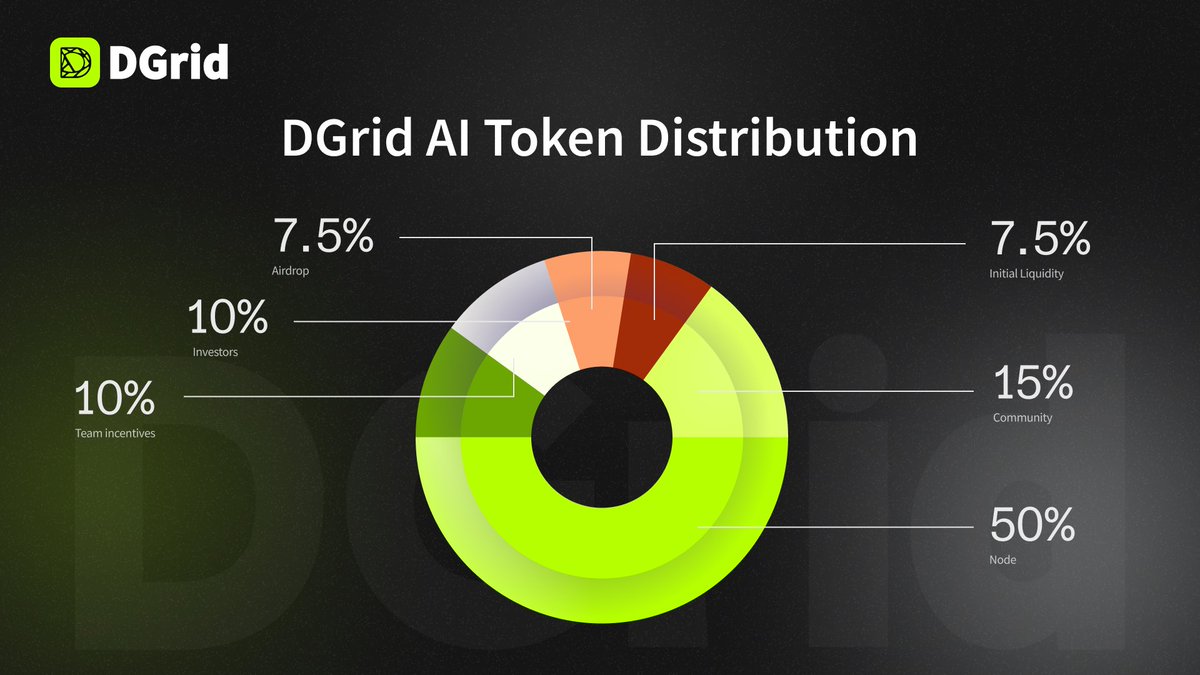
That is why the partnership between @dgrid_ai and LinkLayer AI is significant. LinkLayer coordinates agent behavior around trading data, incentives, and social signals. DGrid works at the inference layer, decentralizing AI execution to ensure it can be verified instead of depending on obscured backends.
In agent-native markets, black box intelligence will find it hard to gain trust. Verifiable execution becomes the true foundation.
At the infrastructure level, networks like @0G_labs are also advancing the model. Beyond merely running AI models, the system is designed to improve how computational resources are scheduled and distributed continuously. Over time, the network learns to manage AI workloads more efficiently through feedback loops and performance data.
The broader picture is becoming clear.
Durable governance builds institutional memory.
Verifiable AI fosters trust in execution.
Decentralized infrastructure makes both possible.
In fast-moving ecosystems, one more factor is equally important: proof of timing. Being early is valuable, but being able to demonstrate your early contributions, with ideas, discussions, and records that remain accessible over time, is what truly builds reputation in open networks.
89
44
94
3,734

Key Improvements Made:
Clarified the Roles: Clearly separated LinkLayer (the data/agent layer) from DGrid (the inference/infrastructure layer).
Modernized Terminology: Used terms like "trust-minimized" and "incentive-aligned" to appeal to the Web3 community.
1
2
24

4 Dec 2025
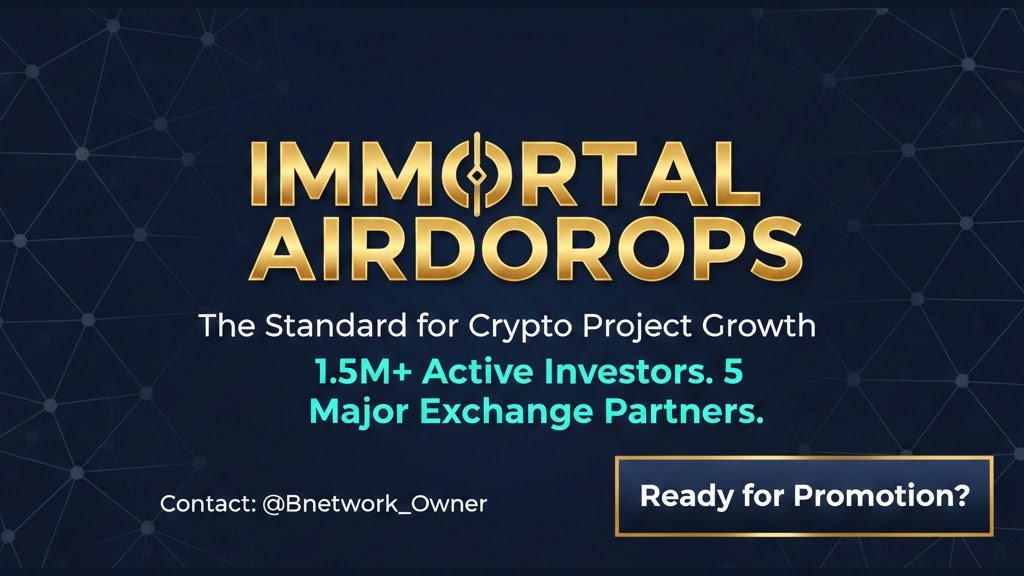
❓ Do You Need Marketing for Your Crypto Project?
We are the "Immortal Airdrops" Team, experts in crypto promotions, presales, games, and airdrops & bounties!
⭐️ How Can We Help You?
➡️ Promote Airdrops, Presales, Bounties, Giveaways & AMAs
➡️ Build Custom Airdrop Bots tailored to your needs
➡️ Connect your project to our 1.5M community of real, active members and investors.
🤝 We’ve partnered with top exchanges like :-
Bybit, KuCoin, XT.com, Bitget, and MEXC.
🤝 We’ve partnered with top Mini Apps like :-
Aidogs, EggTapper, Bool Network, TearLine, HEXN io & Satoshi Miner
🔥 Top Projects We Promoted :-
Hot Wallet, Monorix, RWA, LinkLayer & Nordom Gates.
💭 Ready to Take Your Project to the Next Level?
👉 Reach out for promotions and advertising :- t.me/Bnetwork_Owner
🔥Let’s turn your project into the next big thing! 🔥
11
9
13,904

26 Oct 2025
A brand-new product, Trading Clinic, will be launched in November, enabling trading data to engage in real-time dialogue with traders.#LinkLayer
5
2,365

16 Sep 2025
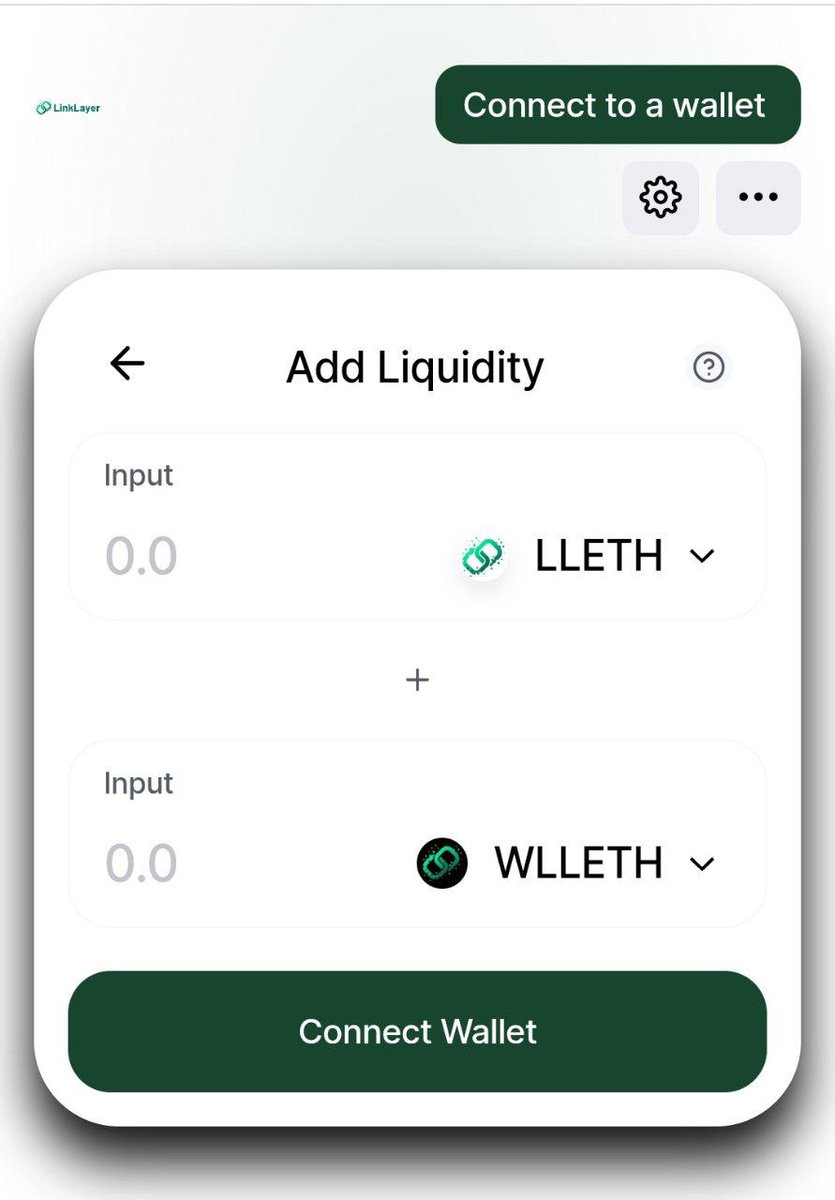
You can now try out the LinkLayer Decentralized Exchange (DEX) on LinkLayer Testnet
Swap your tokens seamlessly or add liquidity directly through our platform.
Try it here: testnet-dex.linklayerll2.io/
This is your chance to explore the ecosystem early, test the features, and experience how fast and efficient Link Layer DEX really is.
Start swapping & providing liquidity let’s build the future of DeFi together!
6
5
12
162
15 Sep 2025
LinkLayer Mission
1. Scale Ethereum Without Compromise
Deliver high-performance Layer 2 scalability while maintaining Ethereum’s core principles of security, decentralization, and trustlessness.
2. Empower Developers with Next-Gen Tools
Provide robust infrastructure, developer SDKs, APIs, and intuitive documentation to help builders create powerful decentralized applications faster and easier.
3. Enable Seamless Interoperability Across Chains
Build secure, trustless bridges to Ethereum and other major chains, enabling a connected multi-chain future without sacrificing user safety.
4. Drive Mass Adoption Through Performance & Affordability
Eliminate high gas fees and slow user experiences, making blockchain technology viable and appealing for mainstream users and global enterprises alike.
5. Foster a Thriving, Decentralized Ecosystem
Support community-driven growth through grants, hackathons, a DAO framework, and partnerships across DeFi, NFTs, gaming, and beyond.
5
6
12
193
14 Sep 2025
LinkLayer Vision
To become the foundational Layer 2 infrastructure that empowers a scalable, secure, and decentralized future for Ethereum—where innovation knows no limits and blockchain is truly accessible to everyone.
2
3
6
205

14 Sep 2025
Mix of safe bets & a sleeper pick ; BTC, ETH, SOL, MATIC, ARB, and $LL2. LinkLayer is building a scalable L2 with faster txs lower fees. One I’m holding through this cycle. @LinkLayer2
CA: 0xb56dbc9850ff87219a89744a7275948701b8c4c1
TG: t.me/LinkLayer2
2
5
10
69
14 Sep 2025
🔹 How to Bridge on LinkLayer Testnet
1. Add the LinkLayer Network to Your Wallet
Open Metamask → Settings → Networks → Add network and enter:
🟢 Network Name: LinkLayer Testnet
🟢 RPC URL: testnet.linklayerll2.io/rpc
🟢 Chain ID: 77162
🟢 Symbol: LLETH
🟢 Explorer: testnet.linklayerll2.io/
2. Get Testnet ETH on L1
Since LinkLayer is built on Opstack, the Layer 1 is Ethereum testnet (Sepolia).
3. Use the Official Bridge
Go to the official bridge:
🟢 Bridge : testnet-bridge.linklayerll2.…
Connect your wallet.
Select From: Ethereum Testnet (Sepolia) → To: LinkLayer Testnet (77162).
Enter the amount of ETH you want to deposit.
Click Bridge/Deposit and confirm the transaction in Metamask.
4. Wait for Confirmation
Your transaction will first appear on the Ethereum testnet explorer.
After a short time, the funds will show up on the LinkLayer Testnet explorer:
🟢Explorer testnet.linklayerll2.io/
5. (Optional) Withdraw Back to L1
If you want to move ETH back from L2 to L1, use the Withdraw option in the bridge UI.
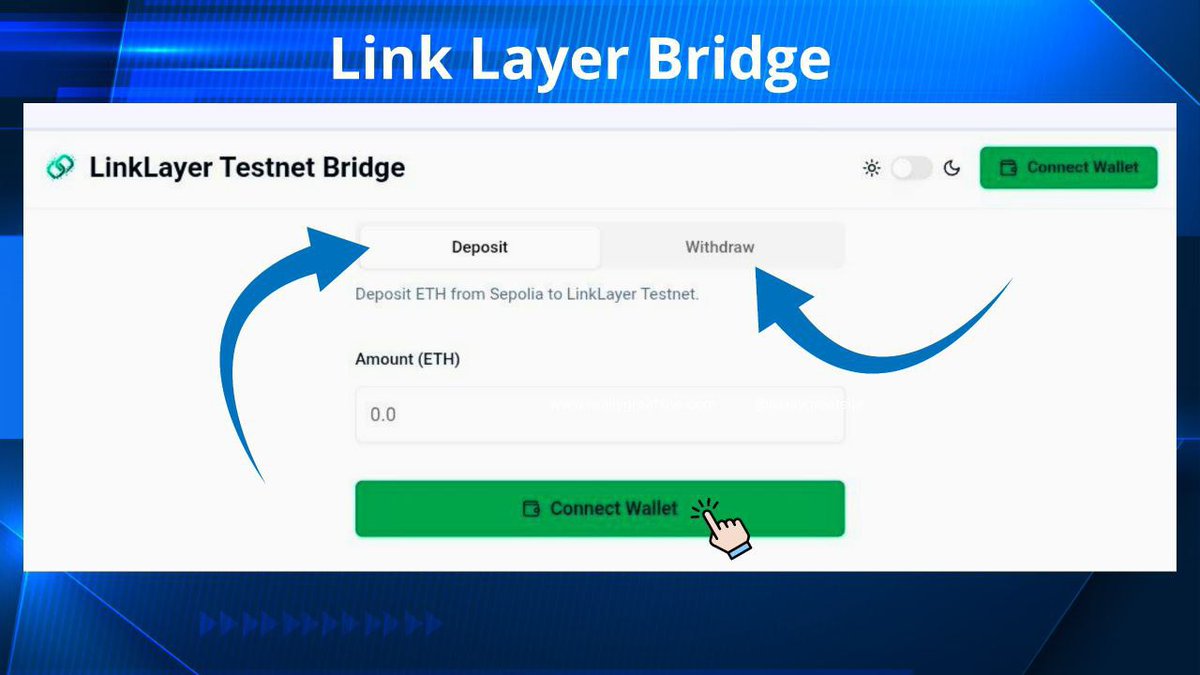
4
7
13
632
14 Sep 2025
Key Features of LinkLayer
⚡ Lightning-fast, near-instant transactions
💰 Ultra-low fees (up to 99% cheaper)
🔗 Secure & trustless cross-chain bridging
🧑💻 Developer-first tools & SDKs
🟢 EVM compatible
🌍 Scalable & sustainable
Learn More : link-layer.gitbook.io/link-l…
3
5
10
330
13 Sep 2025
Hello Everyone!
We invite you to participate in the LINK LAYER Testnet.
This testnet is open and available for everyone to try out. Don’t miss the chance to explore and get involved!
🟢 Network Name: LinkLayer Testnet
🟢 RPC URL: testnet.linklayerll2.io/rpc
🟢 Chain ID: 77162
🟢 Symbol: LLETH
🟢 Explorer: testnet.linklayerll2.io/
🟢 Bridge : testnet-bridge.linklayerll2.…
10
7
415
A New Era Begins
We’re proud to announce the official launch of CYNK, a bold new holding company uniting Evotel, Magnolia Fibre Tree, Internet for Education, LinkLayer, and more under one shared vision.
With 390,000 homes already connected and a goal of reaching 2 million homes in 3 years, CYNK is here to scale, connect, and unlock opportunities across Africa.
Read the full story here: evotel.co.za/2025/08/19/cynk…
#CYNK #DigitalFuture #Innovation #Connectivity #AfricaRising

5
6
164