
May 15
Very wise words! Let's see what the future brings.
$LNQ by @linq_ai is surely well prepared with their decentralized compute solution #LinqProtocol
$LNQ 🚀
May 15

I answered a question that came up in TG but figured I'd share this for all $LNQ holders to understand our perspective:
So I've been programming SaaS apps for a long time and I've been playing with AI coding tools since pre-cursor GPT3.5 era and I was experimenting with those models writing code etc way back. We've also been shipping production software with and without AI over the course of the last 2 years.
When we built Marketr it cost us like 12 months and almost 10 devs UI/UX designers.
That was not even 2 years ago. Today I reckon I need 2 devs and a month to build a product like that from scratch. I've watched non-technical people do really impressive things via coding agents, things they have no right being able to do without deep technical knowledge.
So do I think SaaS is dead and there's 0 money in it? No, of course there still will be. But development cost for simple-to-medium applications have fallen -70-90% and so I expect this is have an enormous impact on SaaS even if just by means of explosive competition for every niche/app.
I have said this before but like if you're buying into projects for more than $200 you should sincerely watch a tutorial on claude code and try and use a $200/mo plan with claude to literally see if claude can build the software behind the project you're buying into. I can imagine to people who haven't been watching this evolution so closely that this suggestion sounds like a fools errand but I would bet you would be incredibly surprised.
The thing is also SaaS is harder to moat than ever - the code itself is worth very very little as it can be replicated and rebuilt so quickly. Some code is still very hard to write, as in claude will not one shot Render or Akash or LinqProtocol (although I think businesses who want to survive the next 5 years need to seriously be thinking about how to protect their company in the case even complex code like LP is one-shottable in 2032) - but some code is no longer hard to write, and a lot of projects consistent primarily of this with 0 idea about how to build a moat around themselves.
So 'SaaS is dead' is likely a bit hyperbolic, but you cannot drop the cost of development this much in a financial ecosystem and not expect a crazy phase shift in what the SaaS space looks like in a few months to years.
We've always tried our best to look ahead not to the problems of today but the problems we'll have next year. I couldn't tell you how happy I am we went all in on LP - it may well have been the most important decision this project has ever made. There's tons of opportunity in the new AI era and this is where our focus is.

2
93

May 15
I answered a question that came up in TG but figured I'd share this for all $LNQ holders to understand our perspective:
So I've been programming SaaS apps for a long time and I've been playing with AI coding tools since pre-cursor GPT3.5 era and I was experimenting with those models writing code etc way back. We've also been shipping production software with and without AI over the course of the last 2 years.
When we built Marketr it cost us like 12 months and almost 10 devs UI/UX designers.
That was not even 2 years ago. Today I reckon I need 2 devs and a month to build a product like that from scratch. I've watched non-technical people do really impressive things via coding agents, things they have no right being able to do without deep technical knowledge.
So do I think SaaS is dead and there's 0 money in it? No, of course there still will be. But development cost for simple-to-medium applications have fallen -70-90% and so I expect this is have an enormous impact on SaaS even if just by means of explosive competition for every niche/app.
I have said this before but like if you're buying into projects for more than $200 you should sincerely watch a tutorial on claude code and try and use a $200/mo plan with claude to literally see if claude can build the software behind the project you're buying into. I can imagine to people who haven't been watching this evolution so closely that this suggestion sounds like a fools errand but I would bet you would be incredibly surprised.
The thing is also SaaS is harder to moat than ever - the code itself is worth very very little as it can be replicated and rebuilt so quickly. Some code is still very hard to write, as in claude will not one shot Render or Akash or LinqProtocol (although I think businesses who want to survive the next 5 years need to seriously be thinking about how to protect their company in the case even complex code like LP is one-shottable in 2032) - but some code is no longer hard to write, and a lot of projects consistent primarily of this with 0 idea about how to build a moat around themselves.
So 'SaaS is dead' is likely a bit hyperbolic, but you cannot drop the cost of development this much in a financial ecosystem and not expect a crazy phase shift in what the SaaS space looks like in a few months to years.
We've always tried our best to look ahead not to the problems of today but the problems we'll have next year. I couldn't tell you how happy I am we went all in on LP - it may well have been the most important decision this project has ever made. There's tons of opportunity in the new AI era and this is where our focus is.
1
4
20
1,228

May 15
I answered a question that came up in TG but figured I'd share this for all $LNQ holders to understand our perspective:
So I've been programming SaaS apps for a long time and I've been playing with AI coding tools since pre-cursor GPT3.5 era and I was experimenting with those models writing code etc way back. We've also been shipping production software with and without AI over the course of the last 2 years.
When we built Marketr it cost us like 12 months and almost 10 devs UI/UX designers.
That was not even 2 years ago. Today I reckon I need 2 devs and a month to build a product like that from scratch. I've watched non-technical people do really impressive things via coding agents, things they have no right being able to do without deep technical knowledge.
So do I think SaaS is dead and there's 0 money in it? No, of course there still will be. But development cost for simple-to-medium applications have fallen -70-90% and so I expect this is have an enormous impact on SaaS even if just by means of explosive competition for every niche/app.
I have said this before but like if you're buying into projects for more than $200 you should sincerely watch a tutorial on claude code and try and use a $200/mo plan with claude to literally see if claude can build the software behind the project you're buying into. I can imagine to people who haven't been watching this evolution so closely that this suggestion sounds like a fools errand but I would bet you would be incredibly surprised.
The thing is also SaaS is harder to moat than ever - the code itself is worth very very little as it can be replicated and rebuilt so quickly. Some code is still very hard to write, as in claude will not one shot Render or Akash or LinqProtocol (although I think businesses who want to survive the next 5 years need to seriously be thinking about how to protect their company in the case even complex code like LP is one-shottable in 2032) - but some code is no longer hard to write, and a lot of projects consistent primarily of this with 0 idea about how to build a moat around themselves.
So 'SaaS is dead' is likely a bit hyperbolic, but you cannot drop the cost of development this much in a financial ecosystem and not expect a crazy phase shift in what the SaaS space looks like in a few months to years.
We've always tried our best to look ahead not to the problems of today but the problems we'll have next year. I couldn't tell you how happy I am we went all in on LP - it may well have been the most important decision this project has ever made. There's tons of opportunity in the new AI era and this is where our focus is.
4
3
14
1,615
May 9
Decentralized compute is incredibly complex, the sheer scale of economic and software innovation required to make it even semi-comparable to centralised solutions is insane. I can count on one hand the projects that even stand a real chance and LP is one of them.
10
7
25
1,396
May 6
There's something insanely cool about watching a computer on your desk turn into a LinqProtocol node
3
2
9
2,036
Apr 25
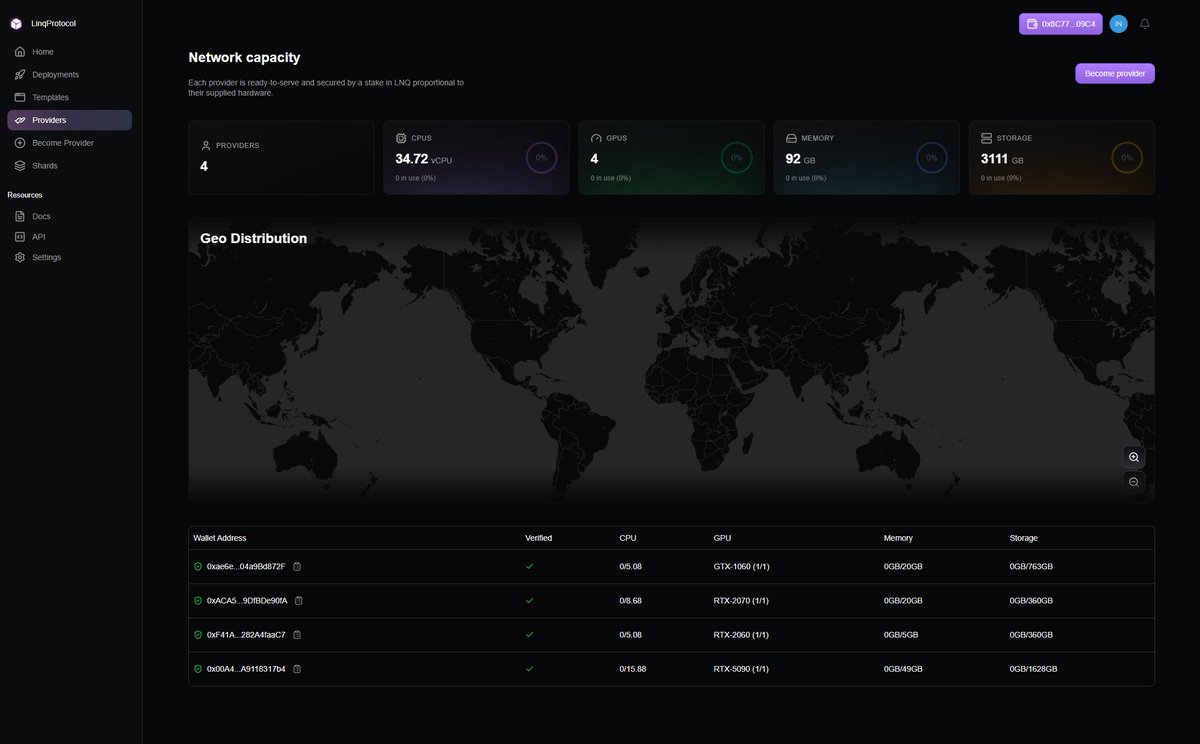
Anthropic’s Claude is so popular that servers are often overloaded, showing how AI providers are moving away from cheap flat-rate plans toward tighter limits, higher pricing, and usage-based monetization.
Time is about to come for #LinqProtocol to shine!
$LNQ by @linq_ai 🚀

3
3
5
260
Development update 🛠️
We just shipped GPU support on #LinqProtocol
↳ Select your Shard Type
↳ Configure GPU resources
↳ Deploy on-chain in seconds
Will be available on the dashboard in the next testing phase 👀
9
14
46
1,280
"We are building that marketplace and unlike the projects that preceded us, we are already running production workloads."
That makes #LinqProtocol soo strong!Great future ahead of $LNQ 🚀
1
4
83
Custom Domain Integration: Complete ✅
We have finalized the integration for custom domains on #LinqProtocol. This update allows for a seamless connection between your domains and deployments.
The process is simplified into 3 steps:
1. Add your custom domain
2. Verify DNS settings to point to your deployment
3. Activate your domain
This update will be available on the LinqProtocol dashboard during the next phase of testing.👀
8
7
23
727
Mar 24
Building a big vision a little bit at a time, apps like Lumo and Aura help attract compute demand for LinqProtocol making it more attractive for providers as there's existing demand when provider registration opens up.
3
103
4/4
Lumo is built on #LinqProtocol
We’re hosting it as a ready-to-use platform on our decentralized compute marketplace.
It will also be available as a self-hostable template so anyone can run their own instance.
Get started for free → getlumo.linqai.com/
1
1
9
531

Mar 20
LinqProtocol is really goated, all built by @linq_ai that combines decentralized physical infrastructure with tools like real Kubernetes clusters, marketplaces and features like Aura to create cool solutions where:
> Providers earn directly
> developers get cheaper/reliable compute, and
> the network grows through participation rather than corporate investment
This builds a future where compute becomes democratized, open infrastructure, shifting from renting power from Big Tech to a shared, blockchain network
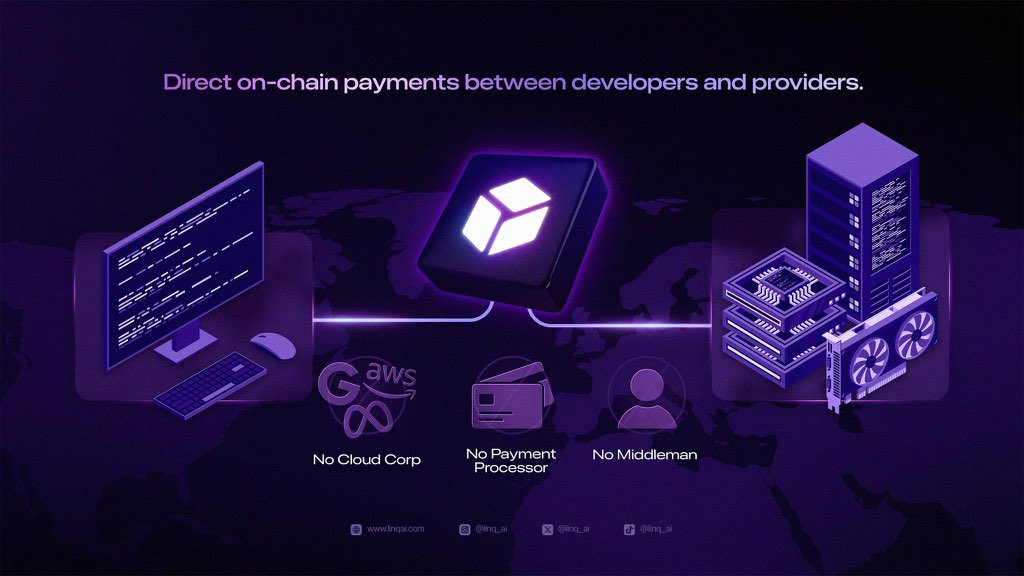
We are redefining the developer provider relationship.
LinqProtocol enables on chain payments between developers and compute providers, removing centralized intermediaries entirely.
Direct. Secure. Scalable. 💻
Powered by #LinqProtocol
3
2
14
201
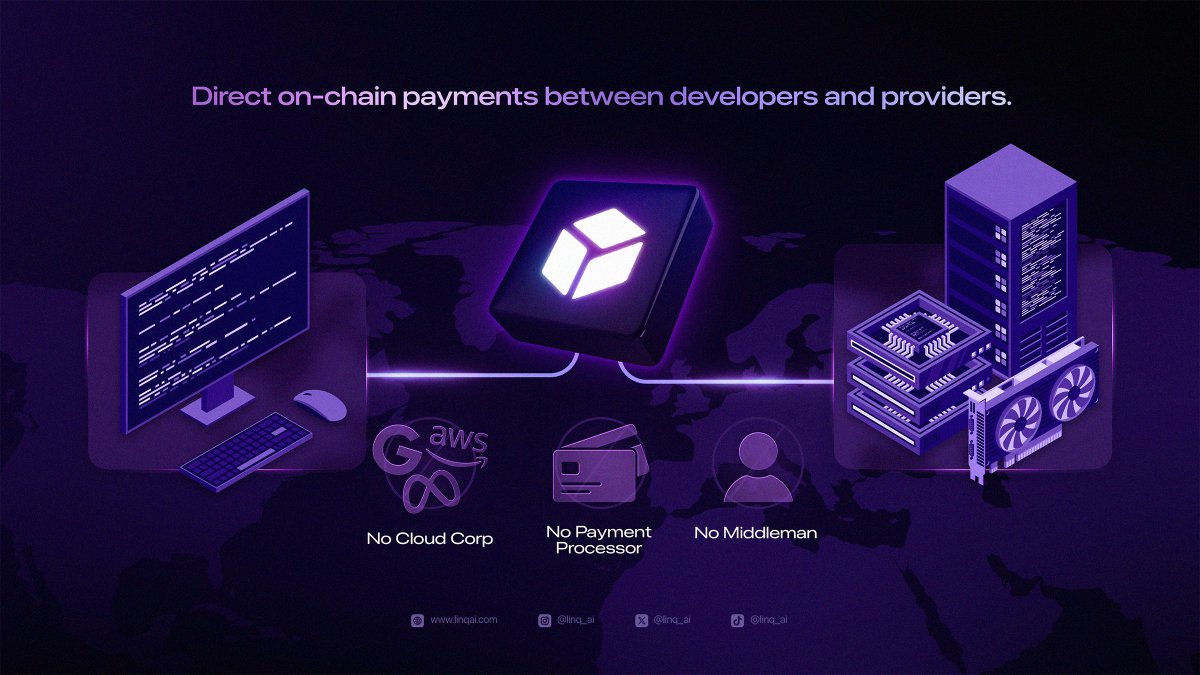
We are redefining the developer provider relationship.
LinqProtocol enables on chain payments between developers and compute providers, removing centralized intermediaries entirely.
Direct. Secure. Scalable. 💻
Powered by #LinqProtocol
4
8
32
936
Kubernetes and Decentralized Compute – Part 4 ☸️
LinqProtocol combines global provider infrastructure with Kubernetes orchestration, enabling stable scheduling across distributed nodes.
Instead of relying on a single data centre, compute is sourced from a globally distributed network of providers, bringing resilience and scalability by design.
🟪 Deploy with familiar Kubernetes workflows
🟪 Scale seamlessly across CPU & GPU providers worldwide
🟪 Access globally distributed compute infrastructure
🟪 Settle trustlessly through smart contracts
#LinqProtocol
6
9
29
613
Mar 14
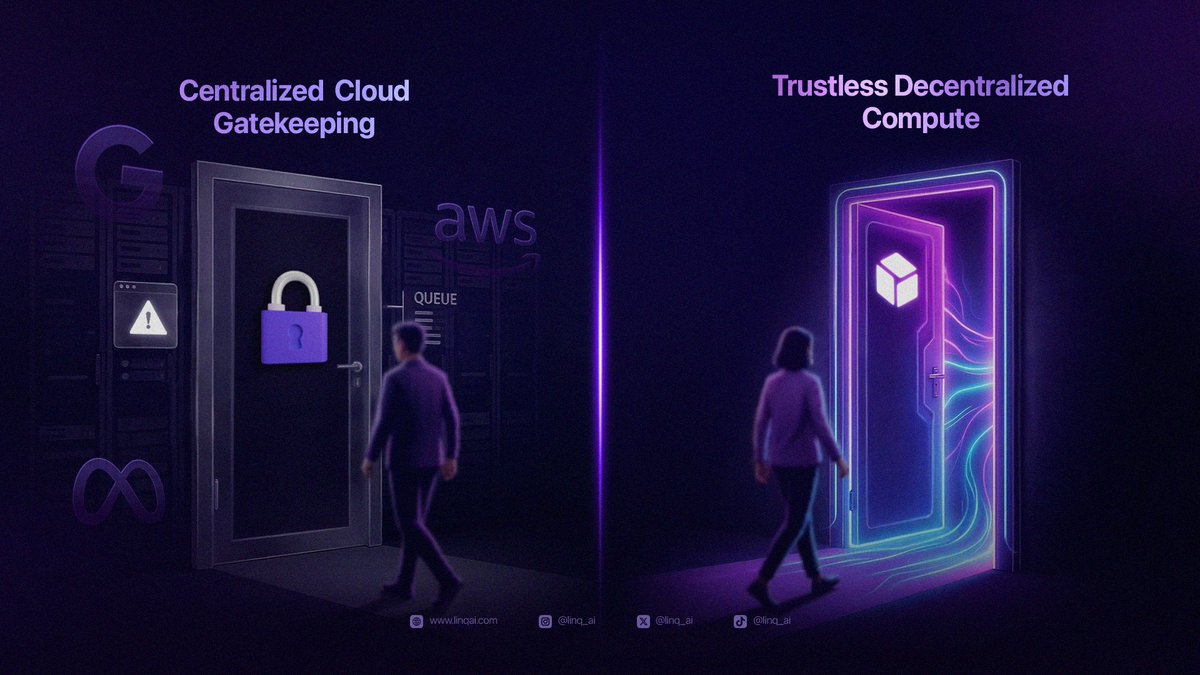
That annoying “in the queue” message says a lot when you think about it
With centralized systems, you’re basically waiting on gatekeepers that control the resources, the pricing, and the rules
Decentralized networks change that
With $LNQ and LinqProtocol, the rules are written in code
> transparent, automatic, and fair.
> No middlemen deciding who gets access
> Both users and providers become real stakeholders in the network
it’s about @linq_ai turning compute from something you rent from Big Tech into shared infrastructure cheaper, more transparent, and actually owned by the people who participate in it, not a single corporation
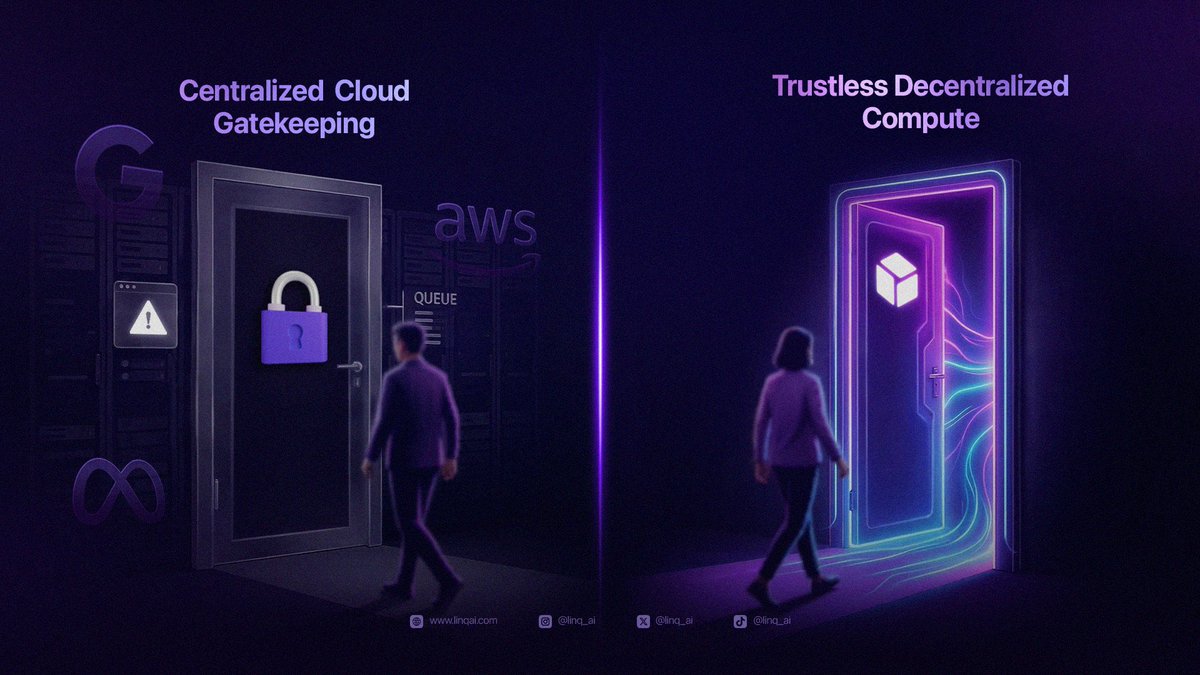
"Your request is in the queue." ✋
In the centralized world, you're a ticket number. In the decentralized world, you're a participant.
LinqProtocol replaces gatekeepers with smart contracts and transparent onchain settlement.
Compute becomes open infrastructure. 🚪
#LinqProtocol
4
3
20
347
"Your request is in the queue." ✋
In the centralized world, you're a ticket number. In the decentralized world, you're a participant.
LinqProtocol replaces gatekeepers with smart contracts and transparent onchain settlement.
Compute becomes open infrastructure. 🚪
#LinqProtocol
11
9
25
947
Capabilities of Kubernetes – Part 3 ☸️
Kubernetes allows complex applications to run as distributed systems, coordinating multiple containers within a single environment.
By unifying web servers, databases, and APIs, Kubernetes creates a high-performance deployment ecosystem.
Deployment Specs:
• Scheduling → Maximises resource efficiency and stability.
• Persistence → Retains data across restarts and migrations.
• Auto-Scaling → Adjusts capacity based on real-time demand.
#LinqProtocol leverages these production-grade capabilities to ensure reliability across our decentralized compute marketplace.
4
11
27
739
Kubernetes in LinqProtocol – Part 2 ☸️
Kubernetes currently powers over 90% of global container orchestration, forming the backbone of many of the world’s most resilient systems.
The same technology used to scale infrastructure at @Google and @Airbnb now underpins our decentralized compute network.
LinqProtocol adopts this standard to bridge the gap between decentralization and enterprise-grade reliability. By running real Kubernetes clusters, we provide infrastructure capable of supporting large-scale AI workloads and high-throughput applications without compromising performance or security.
#LinqProtocol
7
14
29
700