
Jun 11
放眼AI、智能驾驶的飞速发展,区块链一路向前、永不停歇,这是时代所需。
AI and smart driving advance at lightning speed. ₿lockchain: No ₿rakes. This is what the world needs.
27

lockchain Technology Explained: How It Works and Matters
Blockchain is a digital technology used to store and manage data in a secure, transparent, and decentralized manner.
🌐 More Info: desireinfoweb.com/blog/block…
#blockchain#digitalworkplace#Microsoft365#european#usareels

10

May 22
The Caption 🔥🔥🔥
TONGELA, keeps spreading the lockchain love & energy. Happy Pizza Day 😋😋😋
1
2
16


May 14
🇧lockchain
embedded
🇸ubscriber
🇮dentity
🇲odule
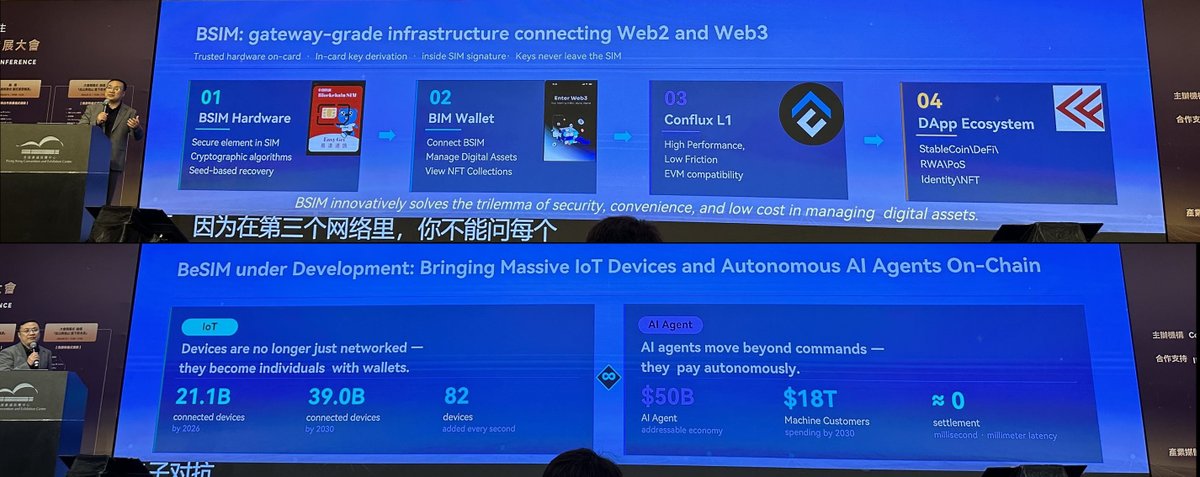
BSIM is already on the market in Hong Kong
BeSIM for IoT and agents in DEV
(from Conflux Ecosystem Conference HK)
@David6LIANG8 @Conflux_Network
9
195


Apr 26
Well, Welcome to the ₿lockchain Insiders family
🌀We are blockchain veterans in pursuit of the future. We left private to add new minds to our team
What can we do for you?
🌀Free for all ¢r¥þ†Ö PUMPSfrom 1.5x and up
🌀Daily cryptomarket news and research
h ns
1
2
361

Apr 25
Lockchain™ is going to need a bridge.
📻 TAGRadio - Bridge to Nowhere
#MusicLove #are #hashtags #stillalive
Apr 22

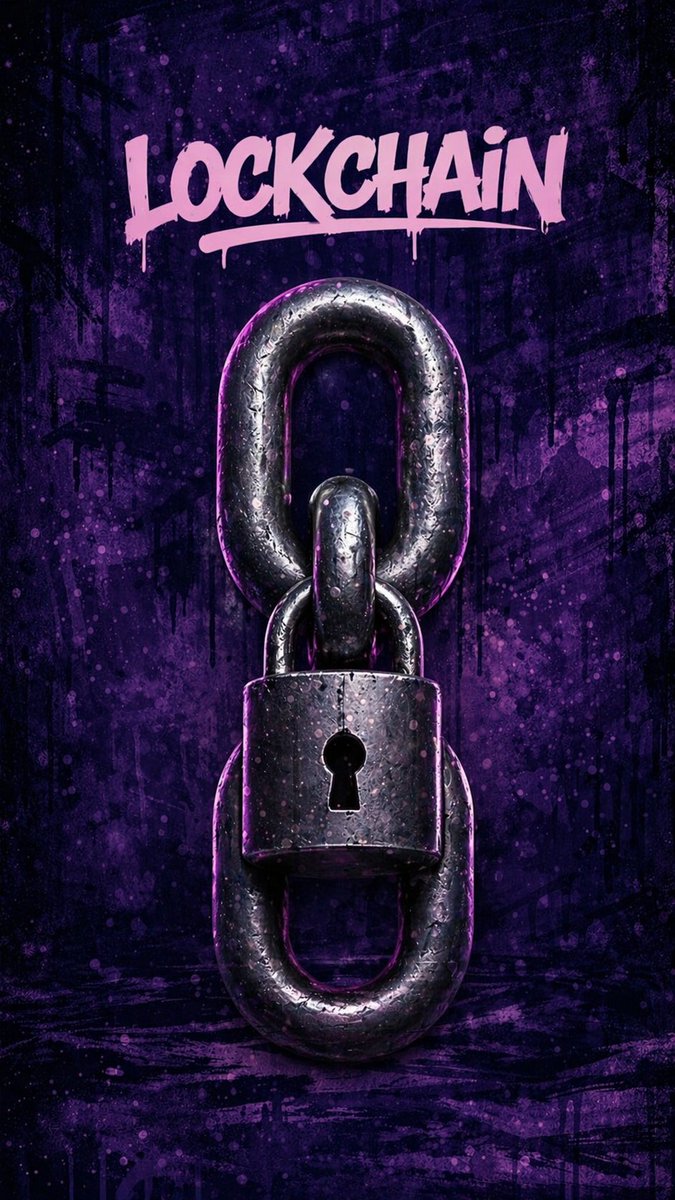
Just invented Lockchain™
It’s like Blockchain… but way better.
Decentralized? Nah.
Immutable? Optional.
I can just lock it whenever the f I want.
No more “it’s on the chain bro” excuses.
This bad boy actually stays locked.
Who’s investing?💰🔒
1
8
201
Apr 22
Just invented Lockchain™
It’s like Blockchain… but way better.
Decentralized? Nah.
Immutable? Optional.
I can just lock it whenever the f I want.
No more “it’s on the chain bro” excuses.
This bad boy actually stays locked.
Who’s investing?💰🔒
1
1
8
917

Apr 14
1992: The Cypherpunks mailing list launches, founded by Tim May, Eric Hughes, and John Gilmore. A hotbed of radical ideas starting with cryptography as a weapon for liberty. They motivated and debated each other on privacy prototypes that become Bitcoin’s DNA.
1993: Eric Hughes, the coder & philosopher authors A Cypherpunk’s Manifesto, stating “Privacy is necessary for an open society.” He builds on May’s ideology, and collaborates with Chaum on practical crypto engineering.
1997: Adam Back invents Hashcash proof-of-work to eradicate email spam, but it gets repurposed to become Bitcoin’s anti-double-spend engine (directly inspired by Dwork & Naor). Adam Back’s Hashcash system pioneered a robust proof-of-work approach that ultimately influenced the mechanism Bitcoin uses to defend the network from double-spends and spam-like attacks. Satoshi Nakamoto explicitly cited Hashcash in the Bitcoin whitepaper as a key inspiration for the mining mechanism that timestamps blocks and enforces consensus in a trustless way. It’s the PoW “beast” that turned a decentralized beast of its own, making viable as peer-to-peer electronic cash. IMPORTANT to NOTE and often overlooked, Cynthia Dwork & Moni Naor were Adam’s inspiration improving on their first formal Proof-of-Work (PoW), “Pricing via Processing or Combatting Junk Mail” back in 1991 (6 years earlier) while they were working for Bellcore. (evolution of technology)
📷 Purpose: Email anti-spam;
📷 Mechanism: SHA-1 hashes requiring leading zeros (computational proof);
📷 Innovation: Practical PoW implementation;
📷 Limitation: Not reusable, no value beyond spam prevention.
1998: Wei Dai proposes b-money a decentralized money via PoW and contracts between anonymous parties. Satoshi cites it directly as well. Pure DNA for trustless ledgers.
1998: Nick Szabo dreams up Bit Gold. Decentralized assets tied to computational work, like digital gold mining. Unimplemented, but its smart contracts and scarcity model scream proto-Bitcoin. Szabo’s influence is everywhere.
2004: Hal Finney introduces Reusable Proof of Work (RPoW) on Back’s Hashcash for secure exchanges. Finney, a former game developer, PGP vet and cypherpunk mailing list regular, gets the first 10 BTC from Satoshi in 2009. Hal was a true visionary. (RIP, legend)
📷 Purpose: Prototype digital currency;
📷 Mechanism: PoW tokens that can be exchanged and reused;
📷 Innovation: First system turning PoW into transferable value;
📷 Limitation: Still needed a trusted server;
Each cypherpunk motivated the next creating a chain reaction forged from the rebellion against governments, tradfi, and large corporations to create ₿TC. Their gospel was code over kings and ₿itcoin is their unstoppable decentralized legacy.
2008: The Revolution ignites: Satoshi Nakamoto unleashes ₿itcoin, fusing it all together.
📷 Purpose: Decentralized peer-to-peer money;
📷 Mechanism: PoW for mining blockchain for consensus;
📷 Innovation: No trusted third party solves the Byzantine Generals Problem;
📷 Ties it back: Builds on Haber/Stornetta’s chain and Dwork/Naor’s work;
📷 ₿itcoin = Chain Work. No alts, no fiat, just pure genius;
We honor and salute 🫡 the real ₿itcoin-₿lockchain pioneers.
1
4
84
Satoshi is the collective inspiration and intelligence of over a dozen people, the $BUCKAZOIDS community @BuckazoidsWorld did 1,000s of hours of research so you don't have to.
Satoshi Nakamoto did NOT invent ₿itcoin unless a dozen highly gifted people gave him the breakthroughs of cryptography, cypherpunk philosophy, distributed systems, game theory, failed digital money experiments and digital scarcity that took 40 years to forge.
Bellcore lineage is the unsung hero of ₿itcoin’s foundation, but ₿itcoin’s incubation begins 12 years earlier.
How Crypto Was Conceived: The full timeline for the Mount Rushmore of CRYPTO.
📷 1973 (CLASSIFIED - GCHQ)
Clifford Cocks invents practical public-key cryptography (RSA equivalent) based on prime factorization. DECLASSIFIED 1997.
📷 1976 (PUBLIC): Whitfield Diffie & Martin Hellman publish the first open asymmetric crypto paper (known as Public Key Cryptography), the spark that lit the cypherpunk fire📷
1979: Ralph Merkle invents the Merkle Tree, a data structure for efficient verification of large datasets. It’s the backbone of ₿itcoin’s block validation, proving integrity without revealing everything. Privacy from the start. Ralph Merkle sits on the Board of Directors @alcorcryonics where Hal Finney is in Cryostasis.
1982: David Chaum embeds blind signatures in his work on untraceable payments, laying the foundation for anonymous digital cash. Was his DigiCash vision a precursor to blockchain’s privacy tech. He later founded xx network for quantum-resistant privacy.
1988: Tim May, the ultimate theorist, pens “The Crypto Anarchist Manifesto.” It eerily predicts anonymous digital economies evading Big Brother. May engages deeply with David Chaum’s ideas, Adam Back’s Hashcash, and Wei Dai’s b-money, all inspiring Hal Finney and Satoshi’s whitepaper.
1990: John Gilmore co-founds the Electronic Frontier Foundation (EFF), building infrastructure for digital rights. As a Cypherpunk activist, he hosts meetings at Cygnus Solutions, ensuring ideas spread freely. The preacher spreading the gospel of crypto freedom.
1991: Phil Zimmermann releases PGP, revolutionizing email encryption. Hal Finney jumps in to refine it, turning theory into unbreakable tools. Zimmermann’s & Hal’s pure Cypherpunk defiance.
1991: Chronological evolution of “Chain Work” that made decentralized money possible
Stuart Haber & W. Scott Stornetta at Bell Communications Research (Bellcore) invented the blockchain structure.
📷 Immutable records via cryptographic linking;
📷 First “time-stamping” system to prevent tampering;
📷 The core idea, chaining blocks with hashes for unbreakable integrity;
This is what Satoshi cited FIVE times in the ₿itcoin whitepaper; without it, no distributed ledger.
1992: Cynthia Dwork & Moni Naor employed at (Bellcore) drop the first formal Proof-of-Work (PoW) in their paper: “Pricing via Processing or Combatting Junk Mail”
📷 Purpose: Anti-spam for email;
📷 Mechanism: Require computational cost to send messages. Hard to create, easy to verify;
📷 Innovation: Hash-based puzzles with adjustable difficulty. Asymmetric effort makes abuse uneconomical. Can’t spam millions is a game-changer. This is the “PROOF” in PoW;
📷 Shoutout to the OG woman in crypto: Cynthia Dwork & Moni Naor, often overlooked!
1992: The Cypherpunks mailing list launches, founded by Tim May, Eric Hughes, and John Gilmore. A hotbed of radical ideas starting with cryptography as a weapon for liberty. They motivated and debated each other on privacy prototypes that become Bitcoin’s DNA.
1993: Eric Hughes, the coder & philosopher authors A Cypherpunk’s Manifesto, stating “Privacy is necessary for an open society.” He builds on May’s ideology, and collaborates with Chaum on practical crypto engineering.
1997: @adam3us Adam Back invents Hashcash proof-of-work to eradicate email spam, but it gets repurposed to become Bitcoin’s anti-double-spend engine (directly inspired by Dwork & Naor). Adam Back’s Hashcash system pioneered a robust proof-of-work approach that ultimately influenced the mechanism Bitcoin uses to defend the network from double-spends and spam-like attacks. Satoshi Nakamoto explicitly cited Hashcash in the Bitcoin whitepaper as a key inspiration for the mining mechanism that timestamps blocks and enforces consensus in a trustless way. It’s the PoW “beast” that turned cypherpunk theory into a decentralized beast of its own, making Bitcoin viable as peer-to-peer electronic cash. IMPORTANT to NOTE and often overlooked, Cynthia Dwork & Moni Naor were Adam’s inspiration improving on their first formal Proof-of-Work (PoW), “Pricing via Processing or Combatting Junk Mail” back in 1991 (6 years earlier) while they were working for Bellcore. (evolution of technology)
📷 Purpose: Email anti-spam;
📷 Mechanism: SHA-1 hashes requiring leading zeros (computational proof);
📷 Innovation: Practical PoW implementation;
📷 Limitation: Not reusable, no value beyond spam prevention.
1998: Wei Dai proposes b-money a decentralized money via PoW and contracts between anonymous parties. Satoshi cites it directly as well. Pure DNA for trustless ledgers.
1998: @NickSzabo4 Nick Szabo dreams up Bit Gold. Decentralized assets tied to computational work, like digital gold mining. Unimplemented, but its smart contracts and scarcity model scream proto-Bitcoin. Szabo’s influence is everywhere.
2004: Hal Finney introduces Reusable Proof of Work (RPoW) on Back’s Hashcash for secure exchanges. Finney, a former game developer, PGP vet and cypherpunk mailing list regular, gets the first 10 BTC from Satoshi in 2009. Hal was a true visionary. (RIP, legend)
📷 Purpose: Prototype digital currency;
📷 Mechanism: PoW tokens that can be exchanged and reused;
📷 Innovation: First system turning PoW into transferable value;
📷 Limitation: Still needed a trusted server;
Each cypherpunk motivated the next creating a chain reaction forged from the rebellion against governments, tradfi, and large corporations to create ₿TC. Their gospel was code over kings and ₿itcoin is their unstoppable decentralized legacy.
2008: The Revolution ignites: Satoshi Nakamoto unleashes ₿itcoin, fusing it all together.
📷 Purpose: Decentralized peer-to-peer money;
📷 Mechanism: PoW for mining blockchain for consensus;
📷 Innovation: No trusted third party solves the Byzantine Generals Problem;
📷 Ties it back: Builds on Haber/Stornetta’s chain and Dwork/Naor’s work;
📷 ₿itcoin = Chain Work. No alts, no fiat, just pure genius;
We honor and salute 🫡 the real ₿itcoin-₿lockchain pioneers.
2
8
19
1,067


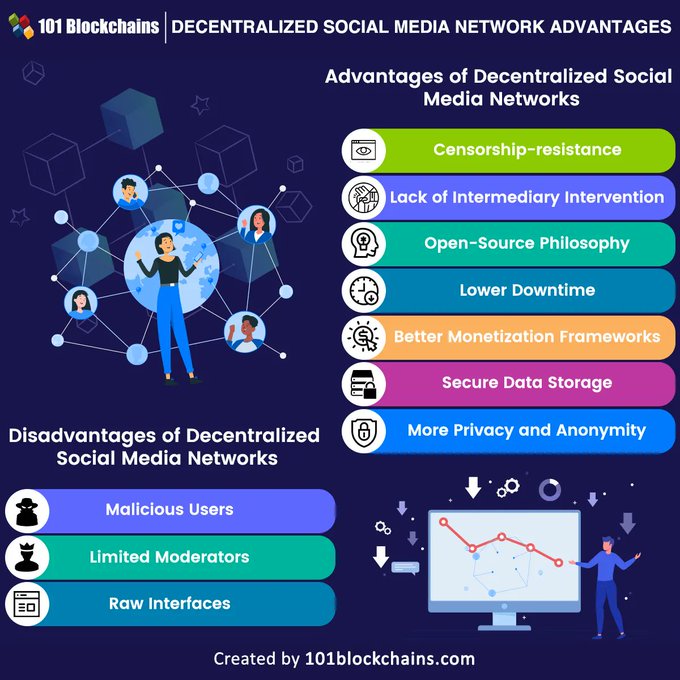
Decentralisation will be a key element of the society ahead, and here is an overview of the main benefits to be gained from blockchain-based decentralised social networks.
Source @101Blockchains Link bit.ly/3CiUFfD rt @antgrasso #lockchain #Decentralization
1
3
31

Mar 22
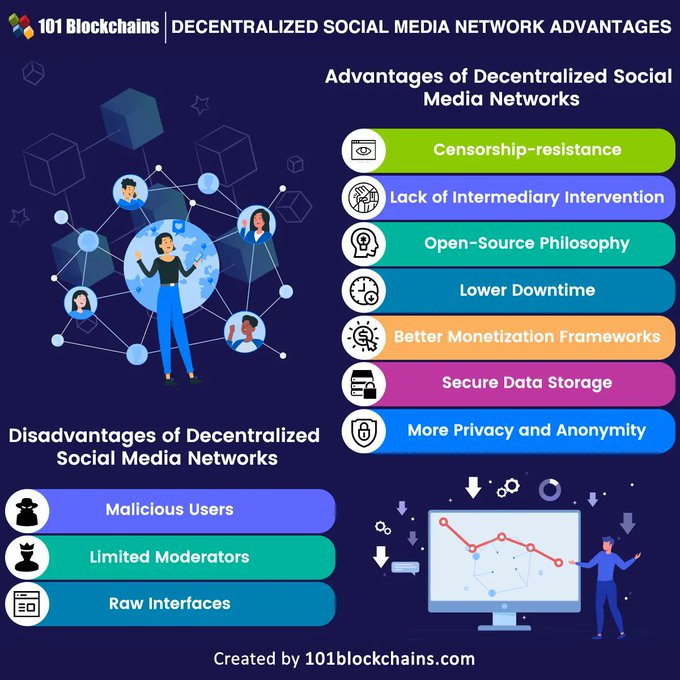
Decentralisation will be a key element of the society ahead, and here is an overview of the main benefits to be gained from blockchain-based decentralised social networks.
Source @101Blockchains Link bit.ly/3CiUFfD rt @antgrasso #lockchain #Decentralization
1
9
106

We’re in a Crypto/BTC bear market currently, I think this is a relief rally. It coincides with historical data and there could be a rotation from heavy metals and traditional stocks happening as BTC has outperformed the SPX and gold and silver. I don’t think the rally will be sustainable, I’m hoping to capture profits and wait for another leg down to accumulate even more.
📈The surge from ~$65k lows to ~$73.6k (and briefly above $74k) looks like a short squeeze fueled by easing selling pressure and some ETF inflows, rather than a fundamental shift to bull territory.
📊Metrics like CryptoQuant’s Bull Score Index at 10/100 (deep bearish) and unrealized losses near 2022 levels reinforce that this is likely temporary relief, not a reversal.
🚀BTC has indeed outpaced the S&P 500 (down ~6.4% this week amid broader equity weakness), gold (up modestly but lagging crypto’s gains), and silver in the short term, especially since geopolitical tensions escalated. Over the past week, BTC’s ~8.5-13% climb (from war-driven lows) has beaten traditional assets, potentially signaling a risk-on rotation into crypto as a “digital gold” hedge or speculative play amid macro uncertainty (e.g., surging oil, stronger dollar). However, this could be fleeting if macro headwinds persist, like delayed Fed cuts or escalating conflicts triggering more equity sell-offs.
🐻Historically, BTC bear markets often feature these “dead cat bounces” or relief rallies that last days to weeks before resuming the downtrend:
👉2011 Bear: Multiple 20-50% bounces amid a 93% overall drawdown, with rallies lasting 1-2 months before new lows.
👉2013-15 Bear: ~86% total drop; included a ~100% rally in mid-2013 that faded after ~3 months.
👉2018 Bear: ~84% drawdown; saw a 2x bounce from Dec 2018 lows that lasted ~6 months before stalling.
👉2022 Bear: ~77% decline; featured a ~60% relief rally in early 2023 lasting ~4 months amid FTX fallout recovery.
Average bear market duration is ~
👉101-215 days
👉with 40-59% drawdowns,
and the current cycle (~45-52% down from Oct 2025 highs of ~$126k) fits the pattern, suggesting more downside possible (e.g., to ~$50k if severity decreases over cycles).
👀 A break below $70k support could confirm the next leg down, targeting $64k or lower.
👀 watch for rejection at $75k - $78k resistance or macro triggers like weak payrolls to signal the fade. If a ceasefire or dovish Fed news hits, it could extend the rally short-term (8-15% upside), but absent that, the bear case holds.
₿lockchain Advis⌀rs 𝕏
3
72


Feb 15
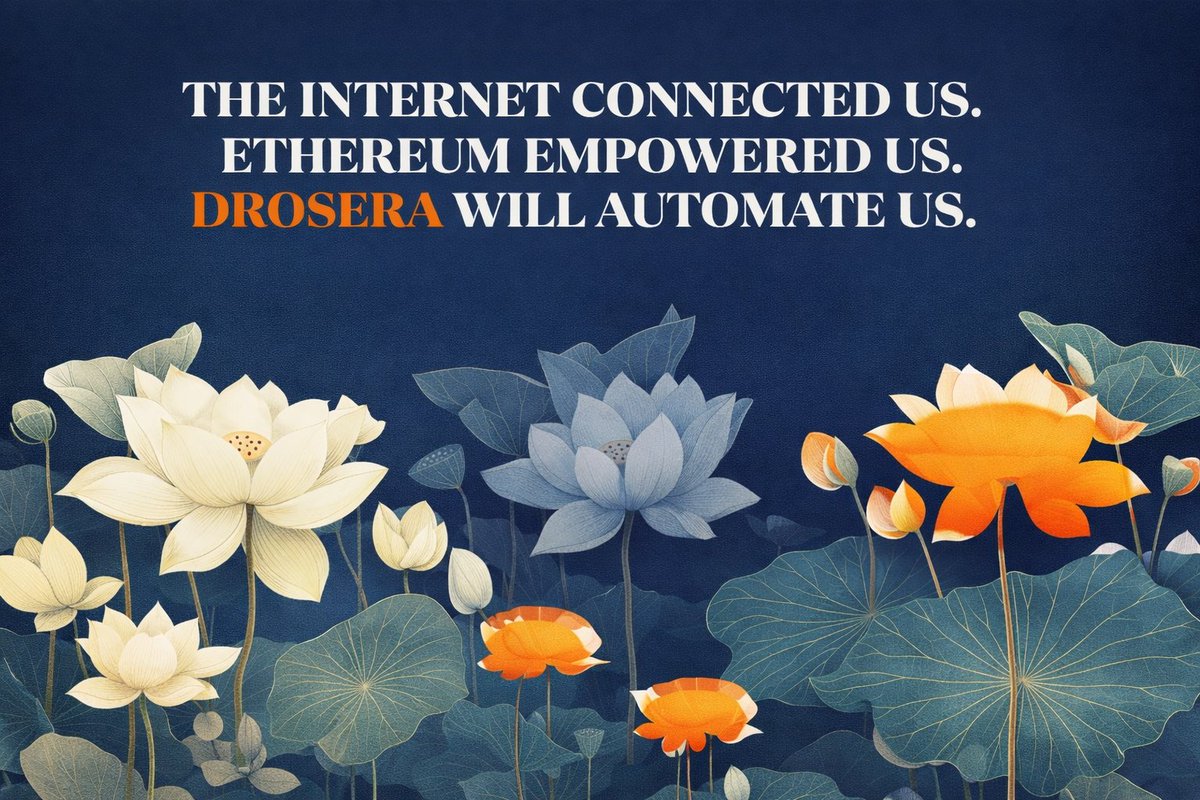
👁️🗨️ What is @DroseraNetwork ?
Drosera Network is a decentralized security layer built for the Ethereum ecosystem. In simple terms it helps protect DeFi projects from hacks exploits and smart contract vulnerabilities.
In Web3, risks are real and reaction time is critical. When something abnormal happens in a smart contract every second matters. Drosera’s goal is to automatically detect and respond to threats in a decentralized way without relying on centralized control.
▪️How It Works
Traps
Think of Traps as smart security guards. They continuously monitor b. lockchain activity and when a suspicious condition is detected they automatically trigger a response.
▪️Operators
Operators are decentralized nodes that run these Traps and execute mitigation actions when needed. They are rewarded for their work, creating a clear incentive to maintain security.
▪️Trap Configuration
This is an on-chain setup that defines which Trap is active what conditions trigger it and what response function will be executed. It makes the system transparent and customizable.
Why It Matters
🔹Automation decentralization means faster protections
🔹Flexible framework for different DeFi protocols
🔹Addresses the real and growing problem of DeFi hacks
🔹Strong backing and community support
In short Drosera Network is building a proactive security layer to make Web3 safer and more resilient.
@Dar99551
2
1
10
58