Yhmo 🇵🇸 retweeted

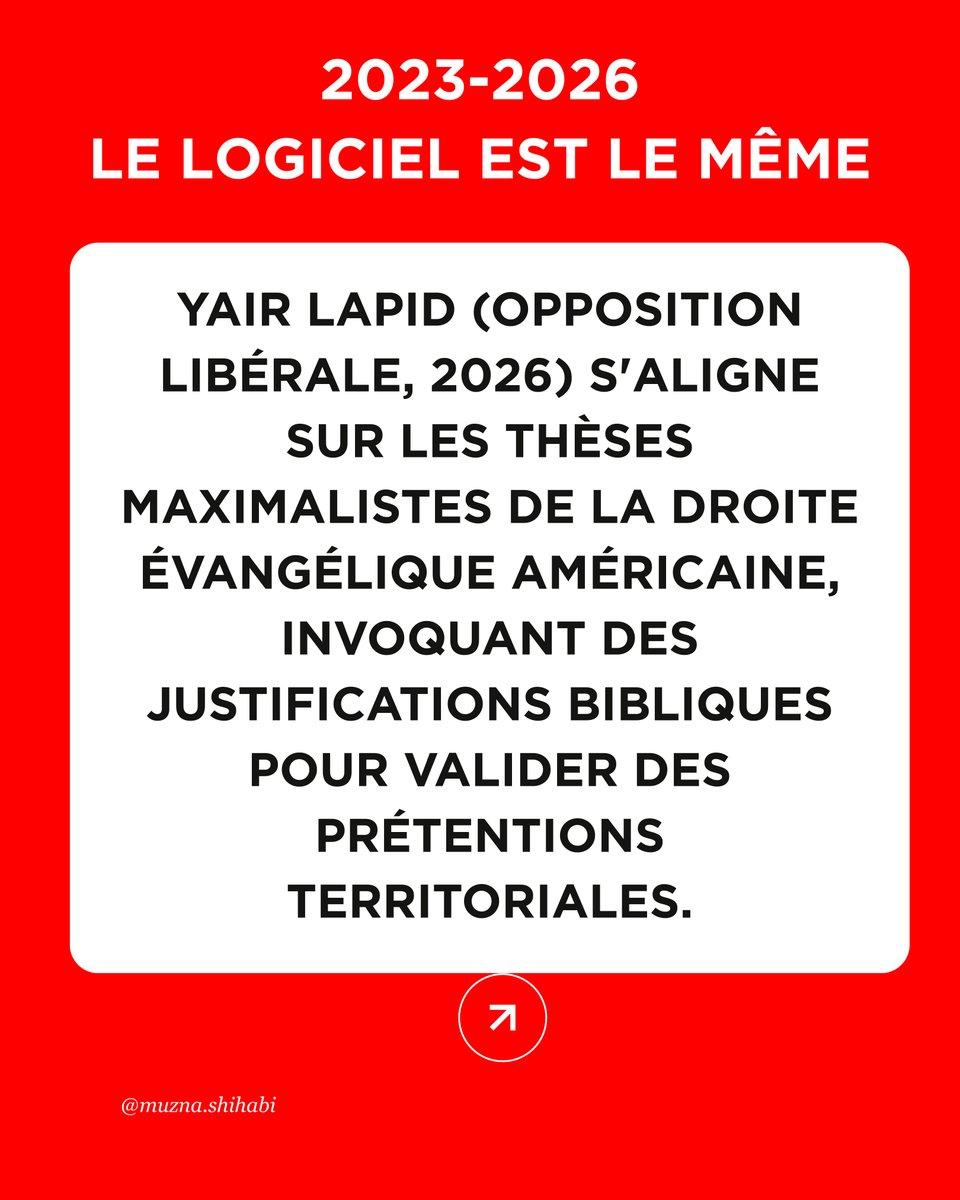
1948: les fondations. Le Mapai de David Ben-Gourion (la matrice de la gauche israélienne) orchestre la Nakba : 750 000 Palestiniens expulsés, des dizaines de massacres et 500 villages rayés de la carte. Ce n'était pas de l'autodéfense improvisée, c'était une planification structurelle.
1
1
1
27

Eish, nna ena ke bone holiday ya di 16 ka sega Monday, Wednesday, Thursday and Tomorrow, le nou ke ikhrumeditse ka mapai. 🤣🤣🤣🤣
1
3


Jun 17
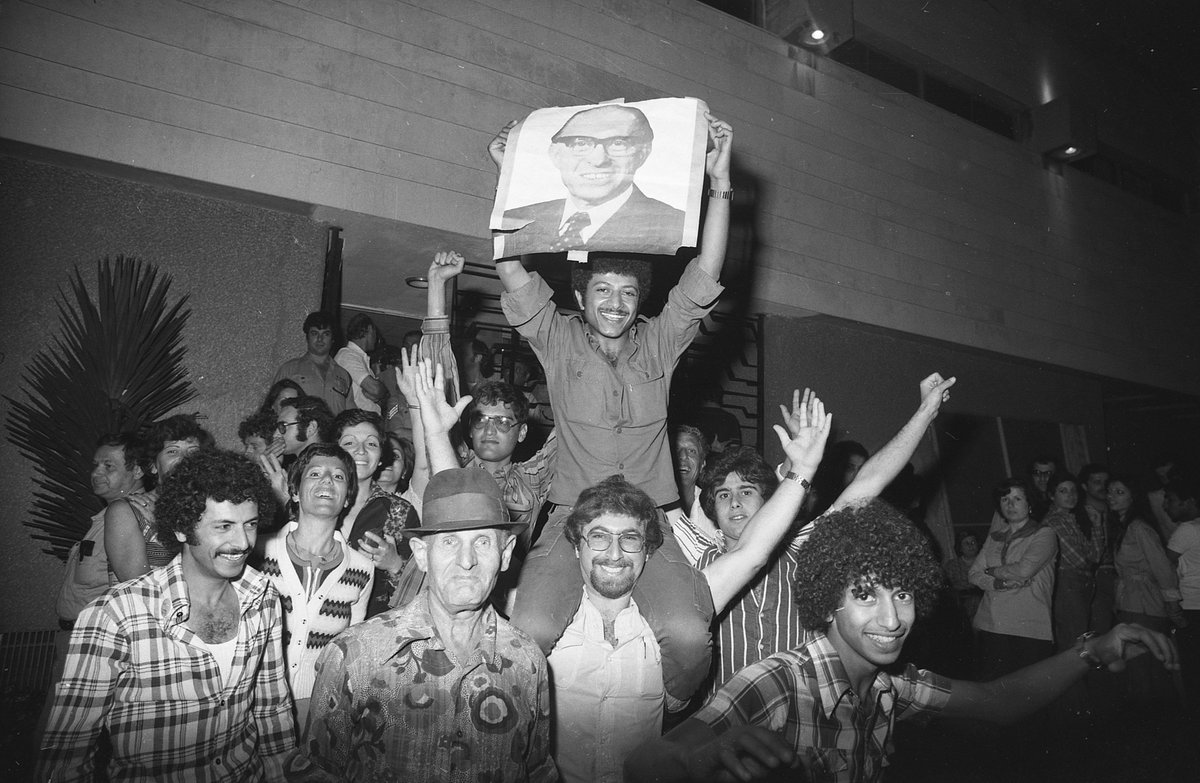
The State of Israel—and the small right-wing Herut faction with it—was born into an identity crisis, torn between two values that each demand primacy over the other. Nationalism treats the state as a technical, secular entity. “The Prayer for the Welfare of the State of Israel,” by contrast, calls it “the beginning of the flowering of our redemption.” One vision is democratic and Israeli; the other is religious and Jewish. The 70 years of Israeli politics that followed are, at bottom, a long argument over which of the two comes first.
The alliance between nationalist and religious parties—some of which are now both at once—has obscured how unfriendly the two once were. Jabotinsky, who imbibed Italian nationalism in his youth, warned of an unavoidable “culture war” with the Haredi element and noted with regret that among Jews “who cling onto difference, many primitive customs have been preserved”—a woman, for instance, “to whom a man does not extend his hand.” David Ben-Gurion’s Mapai, by contrast, understood its limits, and instead of debating theology preferred good old-fashioned compromises: the famous “status quo,” draft exemptions for yeshiva students, government funding for religious institutions—the entire machinery by which a secular state agreed to keep its Jewish question permanently unanswered. “I don’t go to synagogue,” Ben-Gurion said, “but the synagogue that I don’t go to is Orthodox.”
....
How did the "national camp" form, and what is the question that defines Israeli society more than any other? Find out in today's edition of It's Noon in Israel.
amitsegal.substack.com/p/its…
2
6
57
7,411

Jun 17
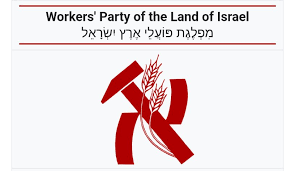
Til alle neo-marxistiske venstre-orienterede vil jeg gerne påpege at dette var det første Israelske parlament's (1949) største parti's (Mapai) symbol. Hvor har vi dog set noget lignende? Partiet sad uafbrudt på magten indtil 1977 og var bag fordrivelsen og eksproprieringen af den oprindelige arabiske population. Det næststørste parti i denne periode (Mapam), havde explicit som mission at syntetisere zionisme med marxisme-lenninisme og var sympatiske overfor Sovjetunionen. Som sædvanlig kan humanitære katastrofer spores tilbage til kommunisme...
1
18


Jun 17
His actual party was Ahdut HaAvoda, which was essentially a national socialist party, and that nationalism was their only split from Marxism.
They moderated a bit in the merger that created MAPAI for a political coalition, but Ben-Gurion was a fascist ex-communist at that point.
5

Jun 16
An eye-witness to events has a different opinion than you. In a Mapai political party meeting in July 1948, Ben-Gurion stated, “It turns out that most Jews
are thieves…I say this simply and intentionally because regretfully it is the truth.”
4

He was in this party for almost 15 years.
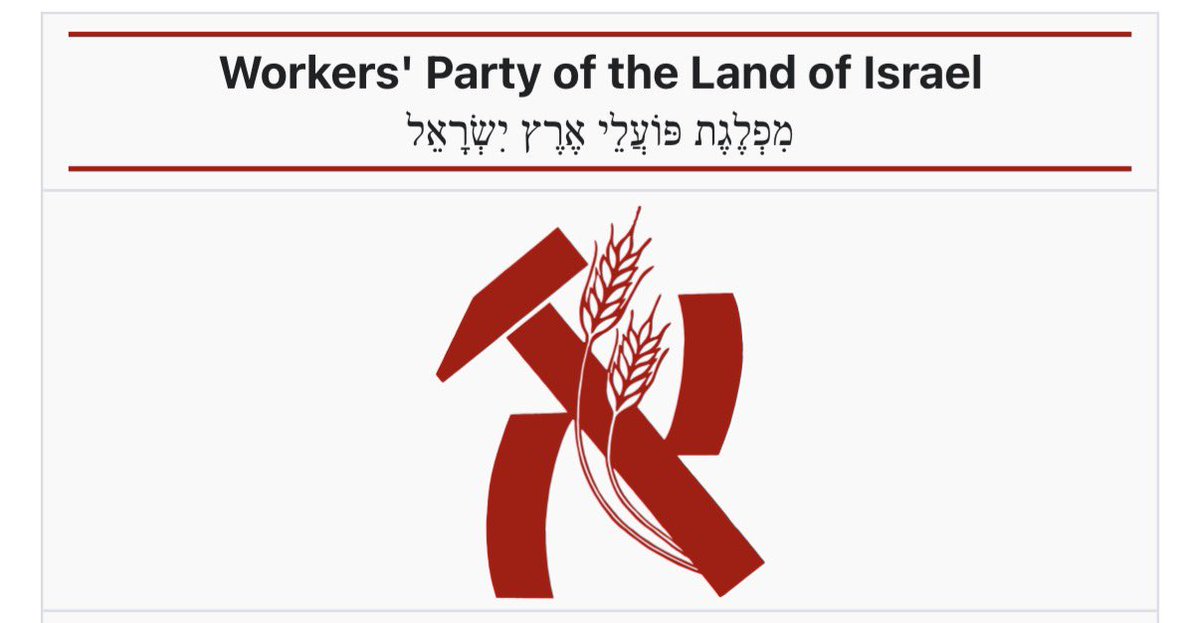
The MAPAI literally had a hammer and sickle as the logo.
3
28
563


Jun 15
Ningali mawa bedog mah, fuck harga diri ajig. Kajeun mapai galeung we balik ka imah ge
1
164

Jun 15
1. Is that your conclusion? Mapai was one of the groups in the political zionist movement, one of many.
2. Can you please elaborate? This sentence is based on an assumption I don't quite understand.
1
24

Jun 15
1. So true mapai isn't real like the zionist entity
2. It denotes a particular subset of jewish nationalism
1
19

Jun 14
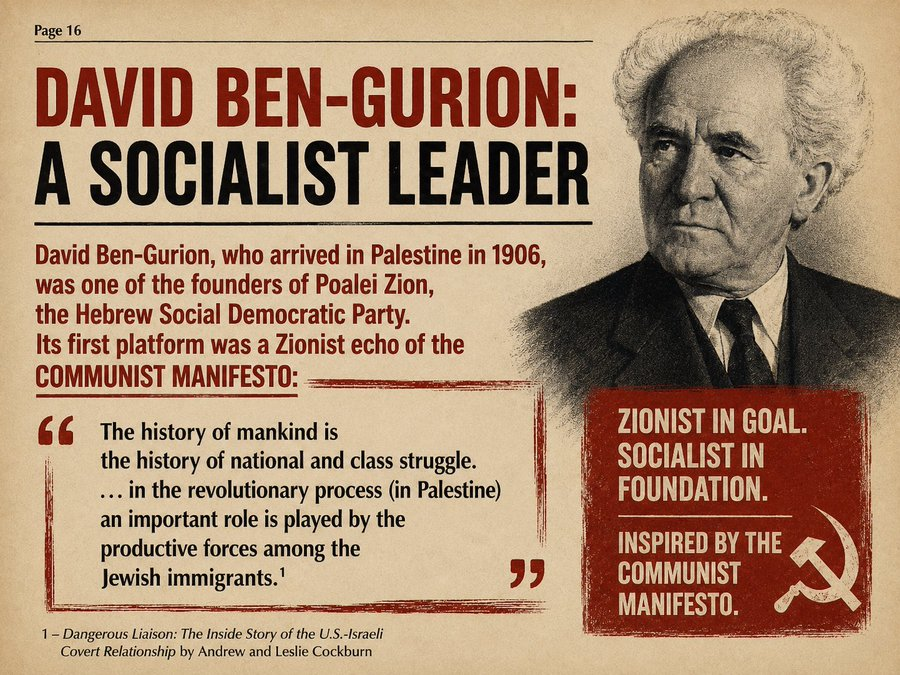
Israel was founded on Socialism/Communism
📌The political party of the founder of Israel, David Ben-Gurion, was based on the Communist Manifesto.
📌Ben-Gurion's party (Mapai) was the largest political party, and he described it as “Socialist Zionist.”
📌Israel’s second-largest political party at its founding was Mapam, which he called “Jewish Communist.”
📌The Mapam declared the USSR their second socialist homeland
📌Israel started as socialist communes via kibbutz
📌The USSR was one of the first nations to recognize Israel
📌David Gruen (Ben-Gurion) was from the Russian town of Plonsk
📌Most of the Israelis at that time were from Eastern Europe and Russia
📌Israel considered Britain their biggest enemy during their founding and were supported by communists for their assassinations and terrorist activities against Britain
📌The Soviets provided Israel with their military weapons through Czechoslovakia, which they used to overthrow British rule and carry out the Nakba
2
2
65
Jun 14
📌Ben-Gurion had the largest political party and described his party (Mapai) as “Socialist Zionist”
📌Israel’s second largest political party at its founding was Mapam who he called “Jewish Communist” and they declared the USSR their second socialist homeland
📌The USSR was one of the first nations to recognize Israel
📌David Gruen (Ben-Gurion) was from the Russian town of Plonsk
📌Israel started as a socialist communes via kibbutz
📌Israel considered Britain their biggest enemy during their founding and were supported by communist for their assassinations and terrorist activities to get rid of Britain
📌The Soviets provided Israel with their military weapons through Czechoslovakia
📌Most the Israelis at that time were from Eastern Europe and Russia
2
21

Jun 14
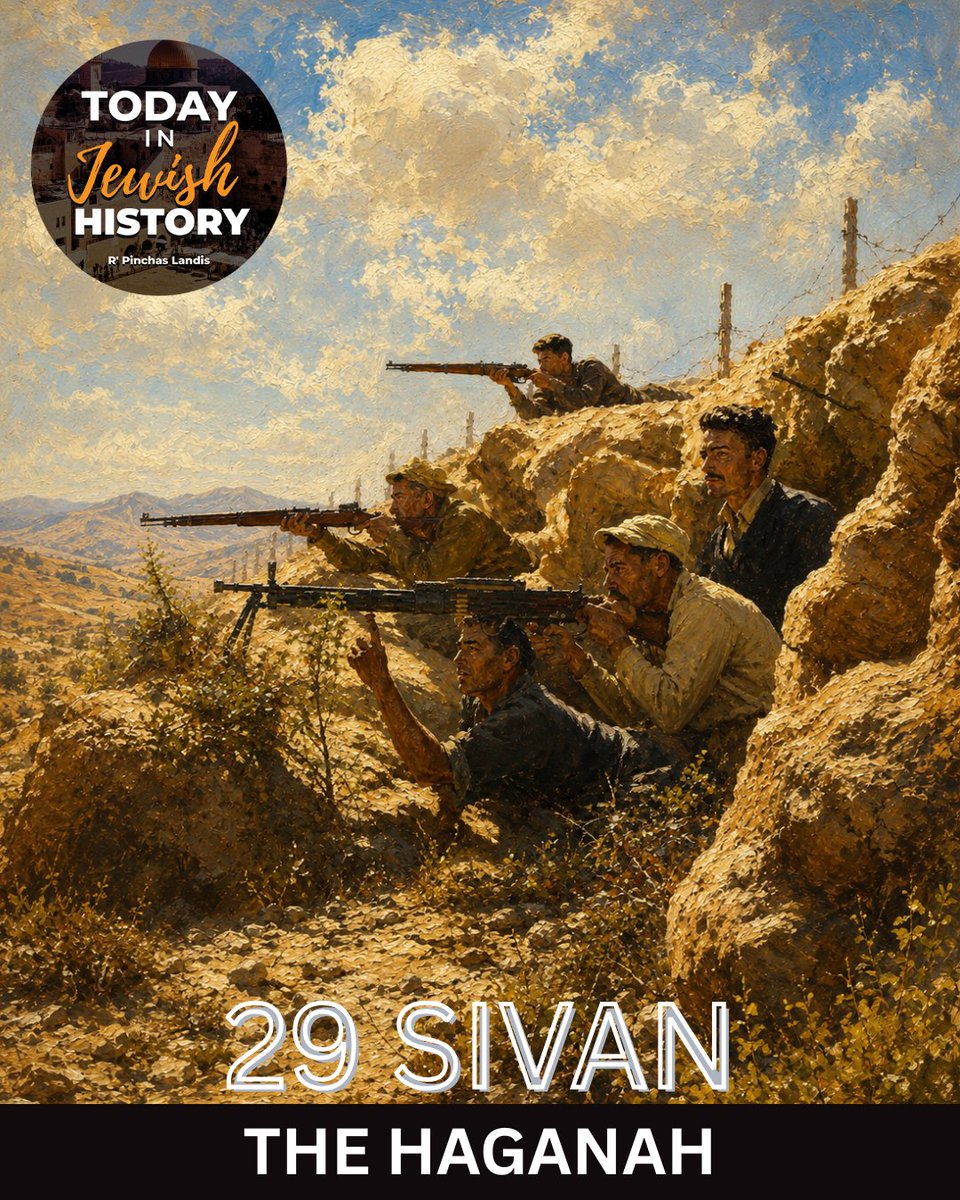
29 Sivan – The Founding of the Haganah – 1920
On this day in 1920, the Haganah was founded. The word Haganah means "The Defense" in Hebrew, and defense was precisely what the Yishuv, the pre-state Jewish community in Israel, desperately needed. The immediate catalyst was the wave of Arab riots that had swept through Jerusalem and the surrounding region earlier that year, as well as the battle of Tel Hai in March 1920, where Joseph Trumpeldor and his comrades were killed defending their settlement. These events made clear to the Jewish leadership that the existing defense organizations were insufficient, that the British authorities could not be relied upon for protection, and that what was needed was a single national underground defense force answering to the Jewish people alone.
The Haganah grew out of earlier organizations, most notably the Hashomer, the watchmen's organization that had guarded Jewish settlements since 1909. It was initially established under the Labor Zionist Ahdut HaAvoda party, but was soon placed under the broader authority of the Histadrut and later the Jewish Agency, in recognition that Jewish defense could not be the province of any single political faction. During its early years it remained a loose network of local defense groups in towns and settlements. The Arab riots of 1929 transformed it into a far larger and more disciplined organization, and by the time of the Arab revolt of 1936 it had developed mobile offensive units capable of protecting every Jewish settlement in the country.
From a Revisionist perspective, the Haganah's story is inseparable from its politics. Controlled by the Labor establishment, it reflected the Mapai worldview, at times cooperating with the British even as the British actively worked to strangle Jewish immigration and statehood. It was precisely this deference to British authority that led Ze'ev Jabotinsky and his followers to build their own parallel defense organizations, most notably the Irgun. Yet whatever its political limitations, the Haganah's historical achievement was undeniable. When Israel declared independence in May 1948, the Haganah formed the core of the newly established Israel Defense Forces, the army that would defend the Jewish state in its first and most desperate hours.
Find out more:
The Book: zurl.co/kPT2u
WhatsApp: zurl.co/rMUC0
.
#jewish #israel #judaism #jew #jerusalem #torah #kosher #jewishlife #shabbat #jews #shabbatshalom #israeli #hebrew #jewishculture #jewishholidays #jewishgirl #jewishcommunity #jewishhistory #jewishpride #jewishwedding #synagogue #jewishwomen #fyp #foryou #viral #foryoupage #fy #trending
1
30