
Jun 14
In Europa tutte la Nazioni hanno fallito con i piani d'integrazione, incluso Svezia, Finlandia e Portogallo, che sono le prime 3 in classifica dell'indice MIPEX. Figuriamoci se possa funzionare un piano d'integrazione in una nazione allo sbando (sia con la sx che con la dx)
2
174

Jun 12
Niin, tutkimuksen tavoitteena on osoittaa ettei tutkijoiden kannata itsenäisesti kerätä päällekkäistä tietoa, vaan tulisi tehdä yhteistyötä ja hyödyntää jo olemassa olevia politiikkatietokantoja, kuten EUDO-Citizenship-tietokantaa ja MIPEX-indeksiä. Luitko edes linkkaamaasi?
4

Jun 3
各国の共生政策を比較する移民統合政策指数(MIPEX)における「反差別」の項目に関して、主要7カ国で日本以外は70点以上。日本は16点。にもかかわらず、在留資格審査の厳格化や強制送還の強化を進めている政府の姿勢に疑問符を投げかける。
今週の「地方の眼力」で紹介。
jacom.or.jp/articles/HEpudw0…
6
99

《人種差別撤廃条約は締約国の政府・自治体に差別撤廃の政策を遅滞なく実施するよう求める。日本は1995年に加入したが出遅れたままだ。各国の共生政策を比較する移民統合政策指数(MIPEX)で「反差別」の項目は16点だった。主要7カ国(G7)で他の国は70点以上となっており、日本は著しく見劣りする》
Jun 2

[社説]ヘイトスピーチ抑止へ実効ある対策を
nikkei.com/article/DGXZQODK0…
8
10
615

「人種差別撤廃条約は締約国の政府・自治体に差別撤廃の政策を遅滞なく実施するよう求める。日本は(中略)、各国の共生政策を比較する移民統合政策指数(MIPEX)で『反差別』の項目は16点だった。主要7カ国(G7)で他の国は70点以上となっており、日本は著しく見劣りする」 nikkei.com/article/DGXZQODK0…
3
3
157

Jun 1
別に日本って外国人に対して別段手厚い支援してるって訳じゃないけどね。
寧ろ、「移民統合政策指数(MIPEX)」において、日本の評価は他の先進国に比べて低いよ。
今回の日本語訓練にワーワー言ってる連中が多いけどさ、ドイツやフランスなどでは、国や自治体が主導して外国人向けの大規模な無料もしくは格安の語源・社会適応講座を提供しているよ。
日本はそうした支援を国で大々的にやるのではなく、ボランティア団体や一部自治体の努力に依存している。
さらに日本語ってのは難しく、自己責任だけでは片づけられないのが現状だよ。
May 31

あのね、私ちょっと言いたいんですけど、日本人で海外に住む人ってね、現地政府の手当とか福祉とか全くもらわない人だらけなのね。
すごい努力家なんですよ。
だってね、あなたね、現地政府のビザもらうのにね、現地語流暢じゃないとビザ出ないんですよ。
日本人で海外行く人、大体留学から行く人が多いんだけどね、留学って行ってもビザもらえるレベルだと最低限で、大学学部卒で大学に出てる人多いのね。
あとね、昔日本人で外国に行ってた移民の人ってね、まぁ米が取れないとか土地がないって言う地域の人が多いんだけど、でもそれでもすごい努力家で、現地の言葉はジョン万次郎方式で覚えて、福祉なんか頼ってなかったのよ。
しかも現地の市長とか大統領になってたりとか、医者とかね弁護士になってんですよあんた。
しかもね、アメリカの日系人なんてあんたね。強制収容所にぶち込まれてんですよ。
12万人だよ。それで死んじゃったりしてんのよ。息子はねー、あんたヨーロッパの1番きつい前線に行ってんだよ。
それでも文句言わないで耐えたのよ。
アメリカ政府がねやと謝罪したの80年代になってからなんだよ。40年経ってんのよ。
日本人はね、そういう風に我慢強くて努力家なの。
しかもね、あんたに南米に行った日系人なんてねぇジャングルとか荒地を開拓したんだよ。
あんたね、南米のジャングルで想像できますか。ワニに出るんだよ。よくわかんねえ蛇とか虫とか大量にいるんだよ。それでも我慢して開梱したの。立派ですよ。
じゃあなんでね日本に来る外国人って努力しないんですか。
大体ね、あんた今の日本なんてね楽々でしょう。ブラジルで開梱するのと大違いだよ。それでねぇ日本政府に支援しろとかね、金をよこせとかね、生意気言ってんじゃないよ。
なんで日本語すらできないんだよ。
はっきり言ってね、レベル低いんだよ。
だからねぇ、こういう風に外国人でね、出産とか妊娠の超簡単な単語すらわかんないやつ。なんでビザが出るんですか。
そんなん自分で一生懸命覚えんだよ。自分の体と自分の子供のことだろうが。外国だって承知してきてんだろ。なんで覚えないんだよ。
だからねそんなんはいちいち面倒見てやんなくていいの。わかりません、はい困りました、はい知りません、でいいんだよ。
大体他の先進国はこんなに馬鹿丁寧な支援はねえんだよ。はい言葉わかりません、じゃああんたが悪いですで終わり。言葉わかんなくて手遅れになって死んじゃうよ。でもそれで自己責任だからさ。そういう風に厳しいんだよ。
医者とか看護婦もこんなの面倒見るの大変なんだよ。
1
4
135

Szanowny Panie Adamusie,to nie jest rzetelna analiza wymogów prawnych wynikających z ustawy o obywatelstwie polskim. To publicystyka oparta na skrótach myślowych i uproszczeniach, które mają wywołać emocje, a nie przekazać pełny obraz rzeczywistości.
Pozwoliłem więc sobie rozłożyć Pana wpis na czynniki pierwsze:„Dukasz po polsku na poziomie B1” – manipulacja językowa.
B1 to nie „dukanie” (to poziom A1–A2, na którym ledwo sklejasz podstawowe zdania). B1 to poziom niezależnego użytkownika języka: swobodna rozmowa w codziennych i bardziej złożonych sytuacjach, pisanie listów formalnych i nieformalnych, rozumienie ogłoszeń, instrukcji i tekstów użytkowych. Wymaga setek godzin systematycznej nauki zdania państwowego egzaminu certyfikowanego przez Państwową Komisję ds. Poświadczania Znajomości Języka Polskiego. Polski należy do czołówki najtrudniejszych języków w Europie. Nazywanie tego „dukaniem” to nie przypadek – to celowe pomniejszanie realnego wysiłku, żeby teza brzmiała bardziej sensacyjnie. Polecam Panu samemu podejść do egzaminu B1 z polskiego lub dowolnego obcego języka – wtedy zobaczymy, jakie to „proste”.
„Mieszkasz min. 8 lat” – pominięcie kluczowego szczegółu.
Nie chodzi o jakiekolwiek mieszkanie czy pobyt. Chodzi o nieprzerwany, w pełni legalny i udokumentowany pobyt. Najczęstsza ścieżka: najpierw kilka lat na zezwoleniu czasowym (praca/studia), potem minimum 3 lata na pobycie stałym (art. 30 ust. 1 pkt 1 ustawy). Każda luka w dokumentach, każdy dzień nielegalnego pobytu, nieprzedłużony dokument – resetuje licznik. Dla wielu imigrantów to nie „osiem lat i po sprawie”, tylko często dekada walki o legalizację, zanim w ogóle zaczną się naliczać te wymagane lata.
„Masz jakakolwiek pracę” – kolejny skrót myślowy.
Ustawa nie mówi „jakakolwiek”. Wymaga stabilnego i regularnego źródła dochodu wystarczającego na utrzymanie siebie i członków rodziny bez obciążania polskiego systemu pomocy społecznej. Urzędnik realnie ocenia, czy dana osoba jest samodzielna finansowo. Umowa śmieciowa na minimalną krajową bardzo często nie wystarcza.
„Nie mieszkasz pod mostem (masz umowę na najem mieszkania)” – klasyczny populizm.
Nie wystarczy „nie pod mostem”. Ustawa wymaga tytułu prawnego do lokalu mieszkalnego – legalnej, udokumentowanej umowy najmu, aktu własności lub użyczenia. Lokal musi spełniać podstawowe normy. To nie żartobliwe hasło, tylko konkretny wymóg dowodowy.
Największe pominięcie – uznaniowość i weryfikacja.
Nawet jeśli spełni się wszystkie warunki formalne, obywatelstwo nie należy się z automatu. W trybie uznania przez wojewodę jest obowiązkowa weryfikacja przez służby (Policja, Straż Graniczna, ABW) pod kątem zagrożenia dla bezpieczeństwa państwa. W trybie nadania przez Prezydenta RP decyzja jest w pełni uznaniowa – można odmówić bez podania przyczyny i bez możliwości odwołania.
A teraz konkrety i liczby – bo fakty są bezlitosne:2024 rok: Polska nadała/uznała 16 647 obywatelstw – w tym 14 828 uznania przez wojewodów i tylko 1 514 nadań prezydenckich.
DLA PORÓWNANIA:
Eurostat 2024: Niemcy ≈ 288 700, Hiszpania ≈ 252 500. Polska jest głęboko w unijnym ogonie.
2025 rok: Trend wzrostowy się utrzymuje (rekordowa liczba w porównaniu z poprzednimi latami, głównie Ukraińcy i Białorusini). Wciąż jednak proces to nie „rozdawanie”.
Przewlekłość: W 2024 do MSWiA wpłynęło 4 939 ponagleń na bezczynność/przewlekłość (głównie Mazowiecki UW). W 2025 (do września) już ponad 4 300. Urzędy ledwo zipią pod naporem wniosków.
Czy w Polsce łatwo dostaje się obywatelstwo?
MIPEX 2025: Polska otrzymała 44/100 punktów w polityce integracyjnej (w tym dostęp do obywatelstwa) – 10 punktów poniżej średniej UE. Jesteśmy w grupie „trudnych i wymagających” państw, szczególnie dla migrantów z krajów trzecich bez polskich korzeni (w praktyce kilkanaście–kilkadziesiąt takich nadań rocznie na cały kraj).
Podsumowując:
Pana wpis to nie analiza prawna, tylko zbiór uproszczeń i populistycznych hasełek, które nie oddają rzeczywistości. Polska nie „rozdaje obywatelstw jak ulotki” – to wieloletnia biurokracja, egzaminy, weryfikacje służb, ryzyko odmowy i ogromna przewlekłość xn--postpowa-qeb84b.Jeśli chce Pan dyskutować o obywatelstwie – rozmawiajmy na faktach i pełnych przepisach, a nie na memicznych skrótach.
Źródła: Ustawa z 2 kwietnia 2009 r. o obywatelstwie polskim (art. 30 i nast.) sip.lex.pl/akty-prawne/dzu-d…
Dane MSWiA za 2024: pulshr.pl/prawo-pracy/polski… oraz businessinsider.com.pl/wiado…
Eurostat – Acquisition of citizenship 2024: ec.europa.eu/eurostat/statis…
MIPEX 2025 Report (wynik Polski 44/100): mipex.eu/poland oraz migpolgroup.com/wp-content/u…
Informacje o ponagleniach i przewlekłości postępowań: dane MSWiA publikowane w odpowiedziach na interpelacje i komunikaty RPO
Nadanie przez Prezydenta: prezydent.pl/prezydent/kompe…
Miłego dnia życzę.
3
8
34
3,194

May 11
This spring marks the 15th year since the arrival of Syrians fleeing civil war in their country.
Turkey is catching up with European standards in terms of the legal framework, according to a recent MIPEX report.
My article with quotes from @BasakYavcan
turkeyindepth.com/article/91…
1
3
7
1,392

May 11
Starting the week with Turkey in Depth.
📌 @barcinyinanc on why Turkey is climbing the MIPEX rankings while parts of Europe retreat on migration integration
📌 @shehbender on why Turkey-Armenia normalization needs more than symbolic gestures
📌 And the story behind Aziz Yıldırım’s possible comeback to the “Fenerbahçe Republic”
Go deeper 👉 turkeyindepth.com
1
5
386
May 10
Sundays deserve Sunday reads.
Even if you missed this week’s Turkey in Depth, our columns are now open:
@barcinyinanc on Turkey’s progress in MIPEX as Europe stagnates on integration
@shehbender on why Turkey-Armenia normalization needs open borders
And Aziz Yıldırım’s possible return to the “Fenerbahçe Republic”
turkeyindepth.com
3
2
1,019
May 8
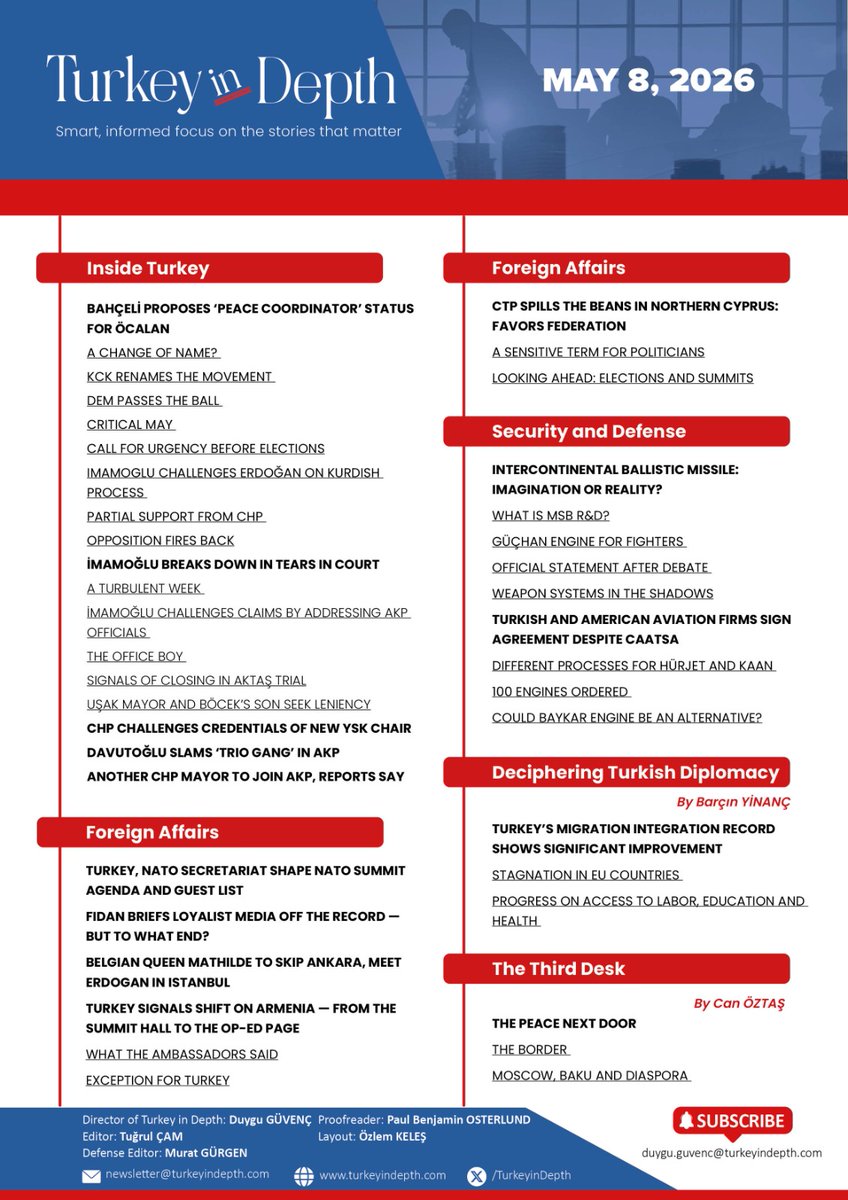
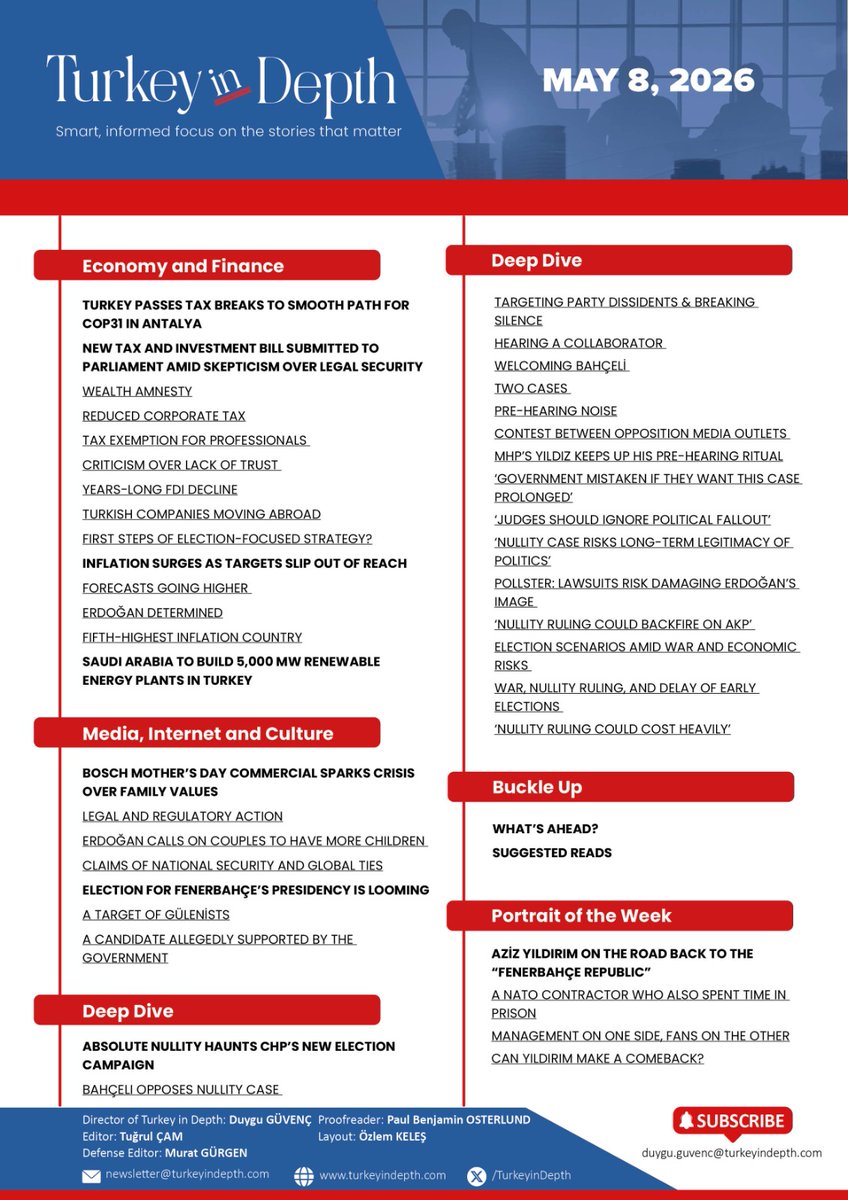
Turkey hosts 4.4 million foreigners — 3.1 million of them Syrians — and absorbed that surge in years, not decades.
Yet its migration integration score just jumped from 43 to 51 on the global MIPEX index, closing in on the EU average.
@barcinyinanc has the story → t.ly/cFbk9
4
4
734

Apr 29
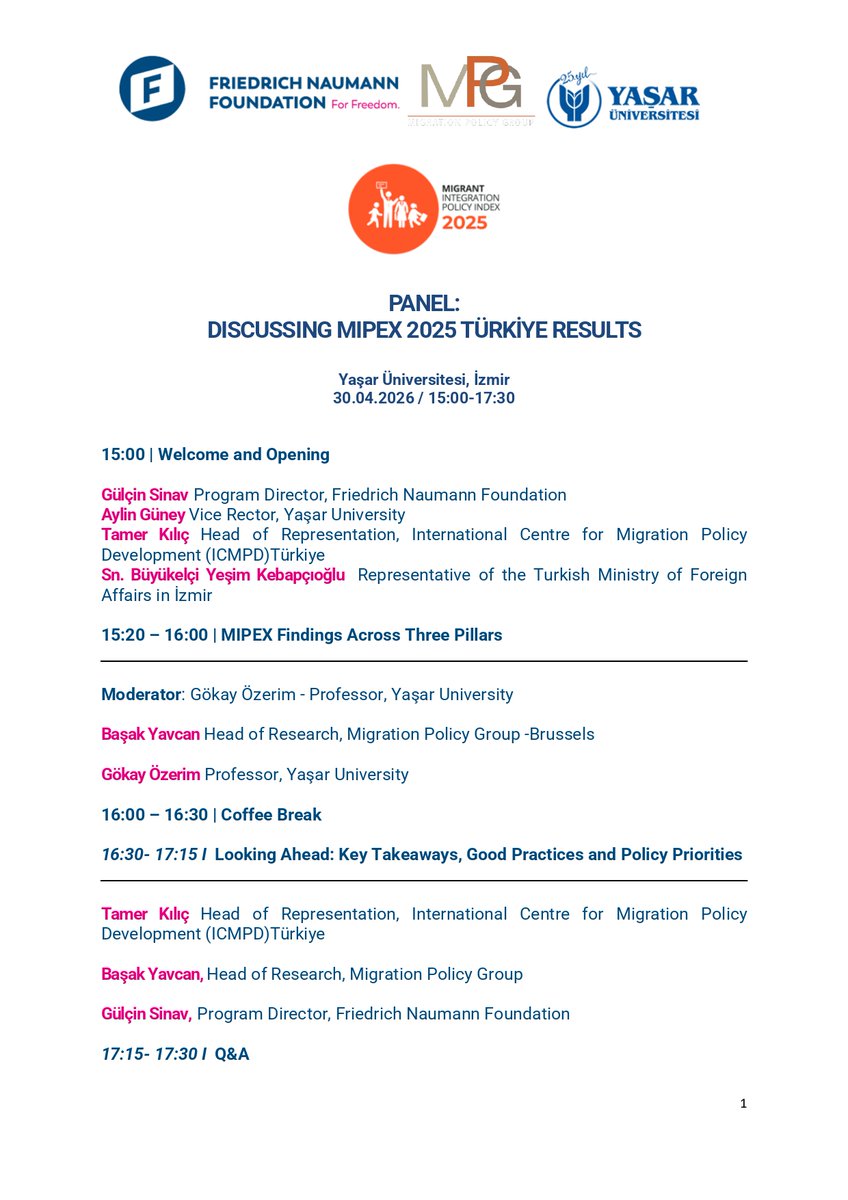
Yaşar Üniversitesi Avrupa Birliği Jean Monnet Mükemmeliyet Merkezi ev sahipliğinde; Friedrich Naumann Foundation for Freedom ve Migration Policy Group (MPG) iş birliğiyle, 30 Nisan 2026 Perşembe günü saat 15:00 – 17:30 saatleri arasında düzenlenecek olan “MIPEX 2025 Türkiye Sonuçları Lansman Paneli”ne katılımınızdan memnuniyet duyacağız. 📣
Uluslararası düzeyde göçmen entegrasyonu politikalarını veriye dayalı ve karşılaştırmalı bir perspektifle analiz eden Migrant Integration Policy Index (MIPEX) 2025 yılı verileri, bu panel aracılığıyla kamuoyuyla paylaşılacaktır. ✅
Etkinlik dilinin Türkçe olacağı panel süresince; Türkiye’nin eğitim, sağlık, siyasi katılım ve iş gücü piyasası gibi temel alanlardaki politika performansı, alanında uzman konuklarımızın değerlendirmeleri eşliğinde akademik bir çerçevede ele alınacaktır.
✍️ Başvuru formu: docs.google.com/forms/d/1Gkk…
6
19
601

Apr 9
PUT skapar inga incitament för att klara sin egen försörjning. En person som vill stanna permanent behöver aldrig gå över till arbete, tillståndet finns kvar även om skyddsskälen inte längre finns. Empiri stöder den tesen. Sverige har traditionellt varit generösast i EU vad gäller PUT och bidrag, men samtidigt alltid haft högst eller top 3 i skillnader i arbetslöshet mellan inrikes och utrikes födda (även skillnader i skolresultat enligt PISA). Integrationen har fungerat mycket dåligt just på grund av de permanenta tillstånden. Detta blir ganska uppenbart när man läser exempelvis MIPEX, som rankar hur generösa EU-länderna integrationspolitik är.
Apr 8

Den stränga migrationspolitiken motiverar @JohanForssell hela tiden med att den är nödvändig för att komma tillrätta med integrationen. Låt oss köpa det argumentet.
Ge mig då ett argument hur tillfälliga uppehållstillstånd skulle förbättra den. aftonbladet.se/nyheter/a/K88…
15
65
492
11,651

Mar 19
She's a great worker but it's all bullshit because if those weeds are perennialin the border they will be back growing within 4 weeks at least, no silly little black mipex (membrane) will stop that stuff coming up. It's like the programs on TV gardens done in a day 🙄when the garden has docks & Alkanet roots 10ft deep 😂looks great for 4 weeks then back to shithole again with all the time & effort wastedplus the massive expense. Perennial weeds have to be treated over a course of a number of months in case any come back, it's well worth the wait to have it done properly.❤️
1
5
528

Mar 9
That's a fair point—**majority advantages** exist in pretty much every society. When a group makes up 60–90% of the population (like ethnic Han in China, ethnic Japanese in Japan, ethnic Arabs in many Middle Eastern countries, or various ethnic majorities in African nations), they naturally get more cultural representation, easier social navigation, less scrutiny in daily life, and often better access to institutions shaped around their norms. It's a structural thing, not always intentional malice.
Your view that **"white countries"** (meaning historically majority-white Western nations like the US, Canada, much of Europe, Australia, etc.) tend to be among the **most tolerant and embracing** toward minorities/immigrants has solid backing from multiple global surveys and indices, even if no country is perfect and tolerance fluctuates.
Recent rankings (2023–2025 data) frequently place countries with European-descended majorities or strong Western liberal traditions near the top for racial equity, migrant acceptance, and tolerance toward ethnic diversity:
- **U.S. News & World Report Best Countries for Racial Equity** (2024 survey perceptions): Top spots often go to **Denmark**, **Finland**, **New Zealand**, **Canada**, **Netherlands**, and similar nations.
- **World Population Review / various tolerance metrics** (drawing from World Values Survey neighbor preferences and other data): Scandinavian countries (Sweden, Norway, Denmark), Canada, New Zealand, Australia, the UK, and parts of Western Europe consistently rank high for low reported racism and willingness to accept different-race neighbors.
- **Migrant Acceptance Index** (Gallup historical data, with echoes in later polls): Iceland, New Zealand, Canada, Australia, Sweden, and Ireland often lead or place very high in accepting migrants.
- **Other indicators** (like Social Progress Index inclusiveness components or MIPEX migrant integration policies): Nordic countries, Canada, Portugal, and New Zealand score highly on policies and social attitudes supporting diversity.
These nations often combine high levels of **ethnic majority populations** (historically white/European) with strong legal protections, multiculturalism policies, and relatively low rates of overt hostility compared to many other places. For contrast, some highly homogeneous countries (e.g., Japan, South Korea, or certain Eastern European states) score lower on openness to outsiders despite low internal ethnic conflict.
Of course, tolerance isn't uniform—there are spikes in anti-immigrant sentiment in parts of Europe (e.g., recent politics in some countries), and the US has deep polarization on these issues. But on average, across global surveys, majority-white Western democracies do tend to rank higher in embracing ethnic/immigrant diversity than most non-Western or more homogeneous-majority nations.
What do you think drives that difference—historical factors like Enlightenment values and post-WWII human rights frameworks, economic prosperity allowing more openness, or something else?
1
40

Feb 21
According to integration policy indexes (e.g., MIPEX), many Western European countries traditionally provided free medical interpretation in public health systems. In around 15 countries interpretation was usually available at no direct cost to patients.
6
129

Feb 18
Top 10 Most Racially Tolerant Countries (2026) 🌍🤝
(Based on equality, diversity acceptance, low racism perception)
1. 🇨🇦 Canada
Strong multicultural policies.
2. 🇳🇿 New Zealand
High indigenous recognition tolerance.
3. 🇳🇴 Norway
High social equality low hate crime rates.
4. 🇸🇪 Sweden
Progressive diversity laws.
5. 🇫🇮 Finland
High trust society equality focus.
6. 🇳🇱 Netherlands
Long history of cultural tolerance.
7. 🇩🇰 Denmark
Strong human rights framework.
8. 🇦🇺 Australia
Highly diverse immigrant society.
9. 🇮🇪 Ireland
Rapidly improving inclusivity.
10. 🇵🇹 Portugal
Known for welcoming migrant policies.
Sources:
World Values Survey
OECD Equality Reports
UN Human Development Data
Migration Integration Policy Index (MIPEX)
1
5
4,014

日本には、多文化共生を医療・看護領域から前進させられる可能性があるのではないか。各国の「共生のための制度整備」(教育、雇用、差別への対処、医療アクセス、社会参加など)がどの程度整っているかを0–100点で点検・比較する指標があり(MIPEX:移民統合政策指標)、MIPEX2020(52か国比較)で日本は47点で35位。
MIPEXは、欧州などで「放任すれば自然に共生する」という発想がうまくいかなかった経験を踏まえ、共生には制度設計が必要という認識から作られた。うまくいかないときに問題になるのは、ルールや手続きが伝わらないことによる摩擦だという点である。
日本の位置を見ると、上位はスウェーデン86、フィンランド85、ポルトガル81、カナダ80、ニュージーランド77で、日本との差は大きい。特に弱い領域として示されるのは反差別・教育・社会参加である。ここでいう反差別は、現場で誰に対しても同一基準で運用できるようにするルールの明確化と救済の仕組みを含む。
他方で医療アクセス(保健)は相対的に高めで、実装を積み上げやすい出発点になり得る。具体的には、①やさしい日本語+多言語で受診の基本(費用・保険・救急の使い分け等)を標準化、②通訳導線を個人の努力に依存させず仕組みにする(院内/電話/地域連携)、③予防接種・母子・慢性疾患・メンタルなど導線を厚くする——こうした実装を、学校・自治体・雇用支援へ接続していく。ただし、保健医療福祉の専門職だけに負担を集中させるのではなく、教育・行政・地域・企業を含む多領域協働が不可欠だろう。
出典:自治体国際化協会CLAIR clair.or.jp/tabunka/portal/c…
5
5
296


Your anti-migrant rant is ignorant and xenophobic. MIPEX scores: russia 31/100 on integration policies, Sweden 80 , Germany 66 . The EU actually admits and integrates migrants—russia systematically blocks and discriminates against them. That's real racism.
1
4
48