

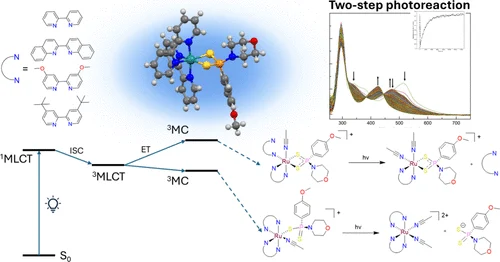
Photoreactivity of Ru2 Polypyridyl Complexes Bearing the H2S-Releasing Compound GYY4137 | Inorganic Chemistry pubs.acs.org/doi/10.1021/acs… Wilson and co-workers @InorgChem #ruthenium #H2S #releasing #GYY4137 #DFT #MLCT #MC
3
18
1,019

May 1
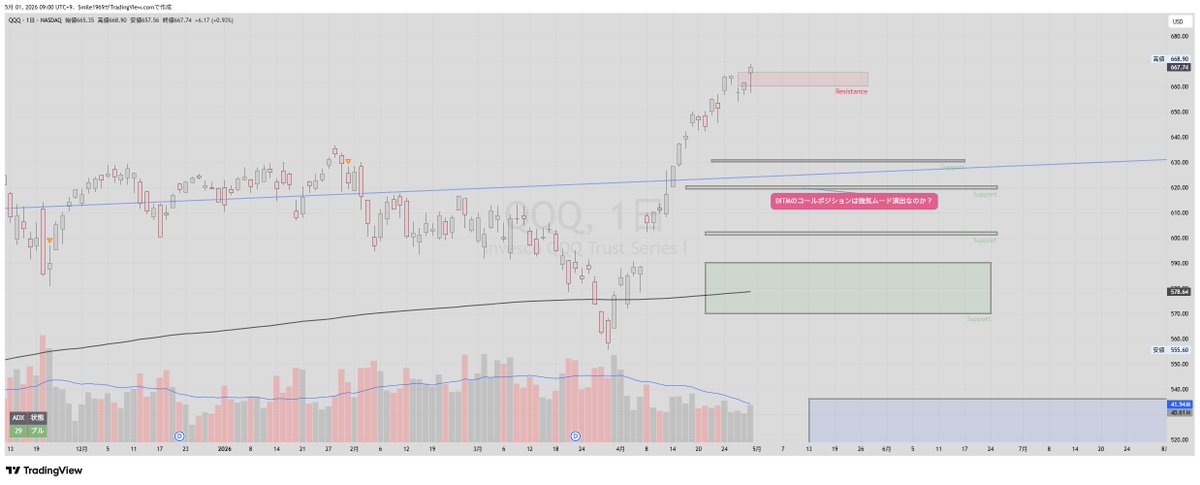
【QQQ】
☆オプション振り返り
・デイトレ 0~1DTEは強気
・デイスイング 中立~弱気(条件次第)
平和なら〇〇〇効果でMMが買い。665割ると嫌な感じ
・スイング 中立
620のITMコール買いの解釈に悩む。単独では弱い、演出なのか本物なのかは月曜のフロー次第かなぁ?MLCTで保険してる
3
175

Apr 21
vão te escolher SIM
mlct vai ter LIVROS SIM
estou torcendo por você também
1
2
17
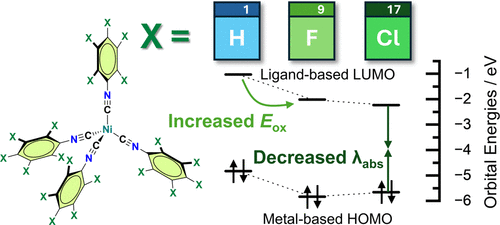
Controlling Redox and Photophysical Properties of First-Row Transition Metal Complexes via Ligand Perhalogenation | Inorganic Chemistry pubs.acs.org/doi/10.1021/acs… Sellin, Wenger, Malischewski, and co-workers @InorgChem #nickel #perhalogenation #isocyanide #MLCT #DFT
9
27
1,214

Feb 26
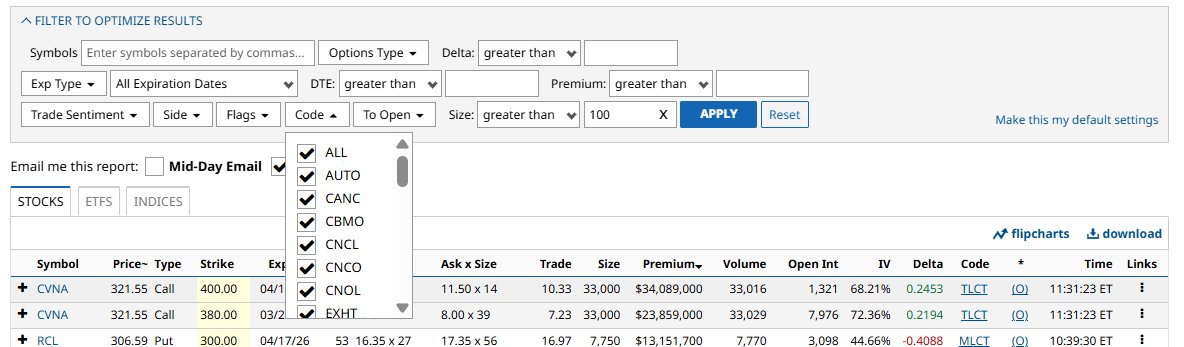
Lees el Time & Sales de opciones y ves siglas que no reconoces, no entiendes nada. Esto es lo que significan — y cuáles debes ignorar y cuáles no.
Los códigos de condición de operación (sale condition codes) clasifican cada transacción registrada. Agruparlos por categoría es la forma más eficiente de interpretarlos:
- EJECUCIÓN ESTÁNDAR AUTO → Ejecución automática sin intervención manual. El caso más habitual en mercados electrónicos modernos.
OPEN / OPNL → Operación de apertura de posición. Confirma que se está iniciando exposición, no cerrando.
REOP → Reapertura tras una interrupción de negociación.
ISOI → Orden de barrido intermarket entrante (Intermarket Sweep Inbound). Relacionado con los Sweeps — ejecución agresiva entre exchanges.
V → Operación contingente vinculada a una posición en el subyacente. Frecuente en estrategias de cobertura.
- CANCELACIONES CANC / CNCL → Cancelación de operación registrada previamente. Reduce el volumen real del activo — relevante para no sobreestimar flujo. CNCO → Cancelación exclusiva sin operación sustitutiva.
CNOL → Cancelación de operación abierta con retraso en el reporte.
SLCN / TLCT / MLCT → Cancelaciones vinculadas a operaciones de liquidación tardía, en distintos segmentos de mercado (estándar, exento, parqué/bolsa).
- OPERACIONES TARDÍAS Y FUERA DE SECUENCIA LATE / TLAT / MLAT → Operación reportada fuera del tiempo estándar. No implica ejecución tardía, sino reporte posterior al cierre de la ventana habitual.
OSEQ → Fuera de secuencia cronológica en el registro. Puede distorsionar el análisis de flujo en tiempo real si no se filtra.
EXHT → Operación en horario extendido (Extended Hours). Equivalente al Non RTH en el contexto de flujos.
- LIQUIDACIÓN Y SETTLEMENT
MASL / MESL / MFSL / TASL / TESL / TFSL → Operaciones vinculadas a precios de liquidación (settlement), en distintas variantes: de mercado, exentas o ejecutadas en parqué. Relevantes en vencimientos, no en operativa intradía.
SLAI / SLAN / SLFT → Settlement tardío en modalidades automática, estándar y de parqué respectivamente.
TLFT / MLFT / MLET / TLET → Reportes tardíos de operaciones en parqué o en condiciones exentas. Escasa relevancia en operativa normal.
- CONDICIONES ESPECÍFICAS
CBMO → Cabinet Trade. Opción muy alejada del dinero (deep OTM) negociada al precio mínimo de mercado. Generalmente asociada a cierre de posiciones residuales sin valor real.
MCTP → Operación con múltiples contrapartes. Habitual en bloques de gran tamaño.
SCLI → Acción subyacente retirada del mercado (called in). Afecta a la cadena de opciones vinculada.
Aplicación práctica para el inversor retail:
La mayoría de estos códigos son ruido operativo. El foco debe estar en filtrar CANC y CNCL para filtrar el volumen real, prestar atención a OSEQ y LATE para no malinterpretar el flujo en tiempo real, y vigilar EXHT como señal de actividad estratégica fuera de sesión. El resto corresponde a mecánica de liquidación o casuística sin impacto directo.
¿Usáis alguno? ¿Qué opináis? ¡Os leemos!👇
#OptionsFlow #TimeAndSales #EducaciónFinanciera #0DTE

4
41

Samba Peuzzi - MLCT youtu.be/tAGWbyU4W1A?si=EDO6… via @YouTube
😭💣🔥🔥🔥🥹🥹❤️❤️❤️
Putain
@sambapeuzzi il est bon

Samba Peuzzi - MLCT
Auteur: Samba PeuzziCompositeur(s): KARABALIK BEATZ & GILOMASMix ...
youtube.com 1
4
503
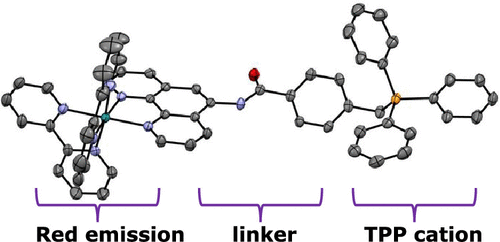
Synthesis, Photophysical and TD-DFT Evaluation of Triphenylphosphonium-Labeled Ru(II) and Ir(III) Luminophores | Inorganic Chemistry pubs.acs.org/doi/10.1021/acs… Pope and co-workers @InorgChem #ruthenium #iridium #TPP #MLCT #LLCT #red_phosphorescence #TDDFT
4
22
1,362

Jan 3
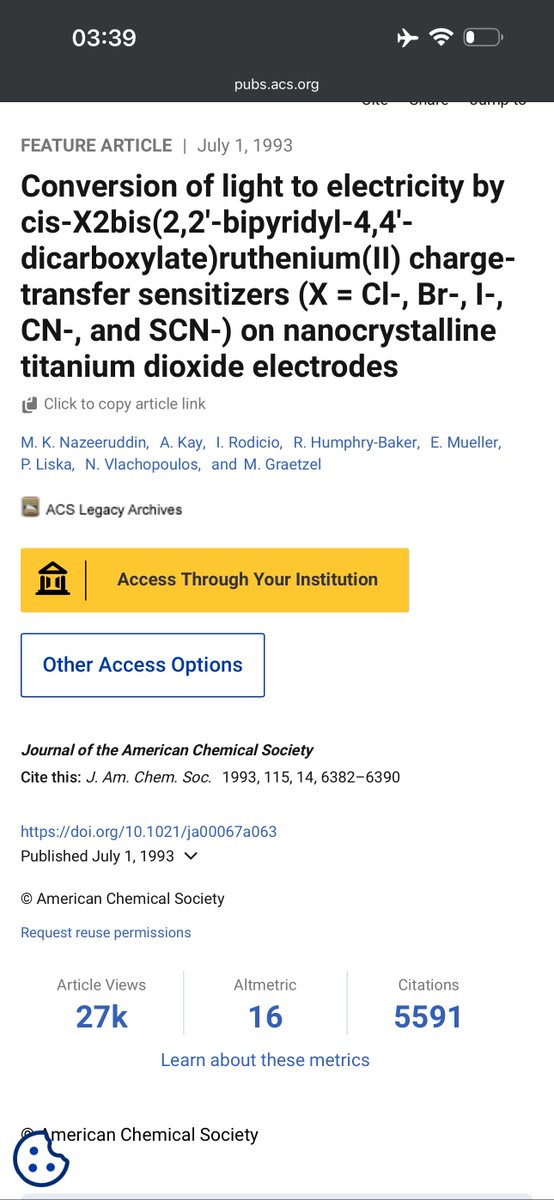
The conversion of light to electricity via charge-transfer sensitizers (where X = Cl⁻, Br⁻, I⁻, CN⁻, or SCN⁻) on nanocrystalline titanium dioxide (TiO₂) electrodes represents a foundational advancement in dye-sensitized solar cells (DSSCs), a photovoltaic technology that emulates natural photosynthesis by decoupling light absorption from charge separation. These ruthenium(II) complexes serve as molecular dyes that anchor to high-surface-area TiO₂ films, enabling efficient visible-light harvesting and electron injection into the semiconductor. The mesoporous TiO₂ structure, with particle sizes of 15-30 nm and a roughness factor exceeding 1000, provides an immense internal area for dye monolayer adsorption, vastly improving light capture over flat electrodes and allowing for thinner, more flexible devices compared to silicon-based alternatives.
The mechanism hinges on metal-to-ligand charge-transfer (MLCT) excitations within the ruthenium complex. Upon absorbing visible photons (typically 400-800 nm), an electron transitions from the dye’s highest occupied molecular orbital (HOMO), centered on the ruthenium, to the lowest unoccupied molecular orbital (LUMO), localized on the bipyridyl ligands. This excited state injects the electron into TiO₂’s conduction band in femtoseconds with near-unity efficiency, driven by favorable energy alignment—the dye’s LUMO lies above the TiO₂ conduction band edge (approximately -0.5 V vs. NHE), creating a thermodynamic gradient for injection. The oxidized dye is then regenerated by a redox mediator, such as iodide/triiodide (I⁻/I₃⁻) in acetonitrile, which donates an electron while the triiodide is reduced at a platinum counter electrode. Electrons percolate through the TiO₂ network to the transparent conducting oxide substrate, generating photocurrent. This process avoids the need for p-n junctions, reducing recombination losses and enabling operation under diffuse light.
Ligand X modulates performance by influencing redox potentials, absorption spectra, and stability. For instance, SCN⁻ yields the highest efficiency due to its ability to stabilize the Ru(III) state, extending absorption to ~800 nm and achieving incident photon-to-current efficiencies (IPCE) over 90% in the 510-570 nm range. Halides (Cl⁻, Br⁻, I⁻) and CN⁻ offer similar MLCT bands but narrower spectral response and faster back-electron transfer, lowering overall yields. Why this works: The carboxylate anchors ensure intimate dye-TiO₂ contact, minimizing interfacial resistance, while electrolyte additives like 4-tert-butylpyridine passivate surface traps, boosting open-circuit voltage from 0.38 V to 0.72 V by shifting the TiO₂ band edge. Temperature effects further illustrate dynamics—higher temperatures enhance ion mobility for increased short-circuit current but decrease voltage via Fermi level shifts.
Applications span renewable energy sectors where cost and versatility matter. DSSCs excel in low-light indoor environments, powering Internet-of-Things devices, wearable electronics, and smart windows. In building-integrated photovoltaics, their transparency and color tunability enable aesthetic solar facades. Portable chargers and flexible panels benefit from lightweight construction, while research explores tandem cells with perovskites for efficiencies beyond 20%.
In summary, these sensitizers underpin DSSCs’ promise for affordable, sustainable power, with the SCN⁻ variant achieving 10% efficiency under standard illumination through optimized charge dynamics. Ongoing ligand engineering aims to extend lifetimes and spectral coverage, fostering global adoption in decentralized energy systems.
Source:
Conversion of light to electricity by cis-X2bis(2,2’-bipyridyl-4,4’-dicarboxylate)ruthenium(II) charge-transfer sensitizers (X = Cl-, Br-, I-, CN-, and SCN-) on nanocrystalline titanium dioxide electrodes. Academia.edu.
2
10
594

9 Oct 2025
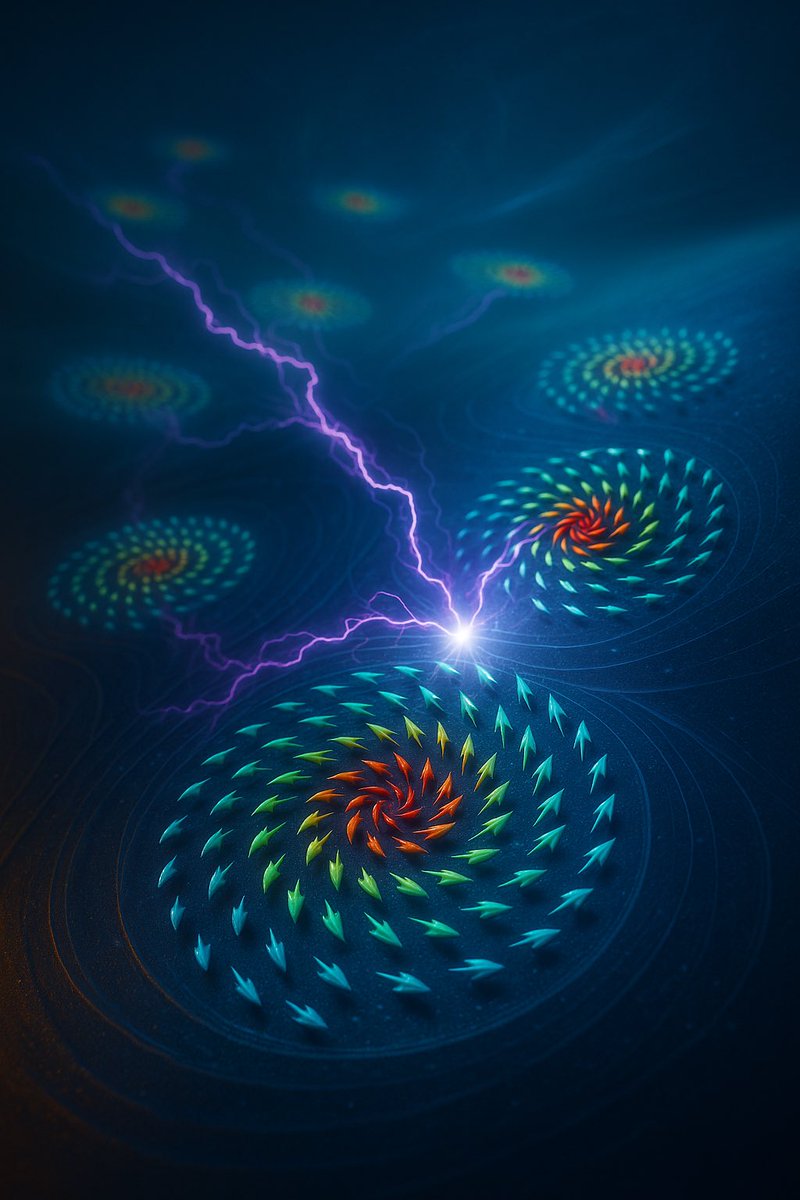
The skyrmion is not a discovery. It’s a reminder of what matter has always done when it wants to remember.
A field folds in on itself, spins twist from up to down while curling sideways, and a knot forms, a shape so stable it can’t be erased without tearing the space that holds it. In laboratories, that shape demands perfection:
• A thin, ordered interface to host orientation.
• A dielectric medium to carry charge.
• The PEAS analogue (π-antenna, MLCT hub, conjugated reservoir) converts photons into spin; ferromagnetic layers and Rashba surfaces act as artificial spin polarizers under polarized light.
• A polarized current to feed torque into the vortex.
• An external or effective magnetic field to impose direction.
• Topological protection to prevent collapse.
When these align, the field locks and motion becomes memory. But the same structure already lives inside us, inside all life. Every cell on planet carries the same conditions by design:
• Membranes act as curved, ordered interfaces.
• Cytosol and water build the dielectric field.
• The PEAS system (π-antenna, MLCT hub, conjugated reservoir) converts photons into spin; ion currents act as natural spin polarizers.
• Geomagnetic and redox gradients give direction.
• Curvature and charge tension provide topological shelter.
What physics can only hold for seconds at cryogenic stillness, life sustains in warmth and flow. The same geometry that stores information in metal holds identity in living tissue.
In the lab, a skyrmion is an engineered moment of order. In life, it’s a quiet law of continuity, the way matter remembers itself through time.
8
8
67
2,351

5 Oct 2025
La digestión y absorción eficientes de los MLCT satisfacen las altas demandas energéticas de los bebés y son compatibles con sus sistemas gastrointestinales inmaduros
mlibr.es/z06L7Q
3
42

2 Sep 2025
We agree that PEAS run on three systems (π antennas, melanin reservoirs, MLCT). But those systems only hold together if certain prerequisites are met.
Without them, the machinery is present but the flow degrades into noise.
And, yes, MLCTs and metal circulation are just one example of this:
✔️ Oxygen tension → O₂ must be matched: too little → leaks/ROS, too much → bleaching of π systems
✔️ Membrane potential → Charge gradients align π antennas and keep tunneling directional.
✔️ Hydration structure → Exclusion zones/structured water stabilize melanin and proton flow.
✔️ Sulfur pools → Fe–S clusters require sulfur for stability; depletion fractures the MLCT grid.
✔️Metal circulation (Cytochromes, Fe–S clusters, Cu enzymes) depend on clean trafficking→ If metals stall, MLCT switches can’t hand off electrons.
✔️ Exit capacity → If waste accumulates, flavins/porphyrins/melanin misfold, turning from conductors into ROS generators.
3
2,026
2 Sep 2025
It seems you’re missing a piece bro because MLCTs and metal circulation are only one part of the picture. PEAS runs on three engines, black conjugated reservoirs like melanin, π antennas tuned to photons and MLCT. If you leave two out, you’ll miss how the flow really holds together.
2 Sep 2025

But without proper metal circulation for cytochromes, or open bile/kidney exits for flavins and melanin, your PEAS network isn't efficient. Photons pile up as noise instead of flow.
Our Phase 0.2 gives you a starting point: clear exits so light becomes usable charge.
1
5
1,308
2 Sep 2025
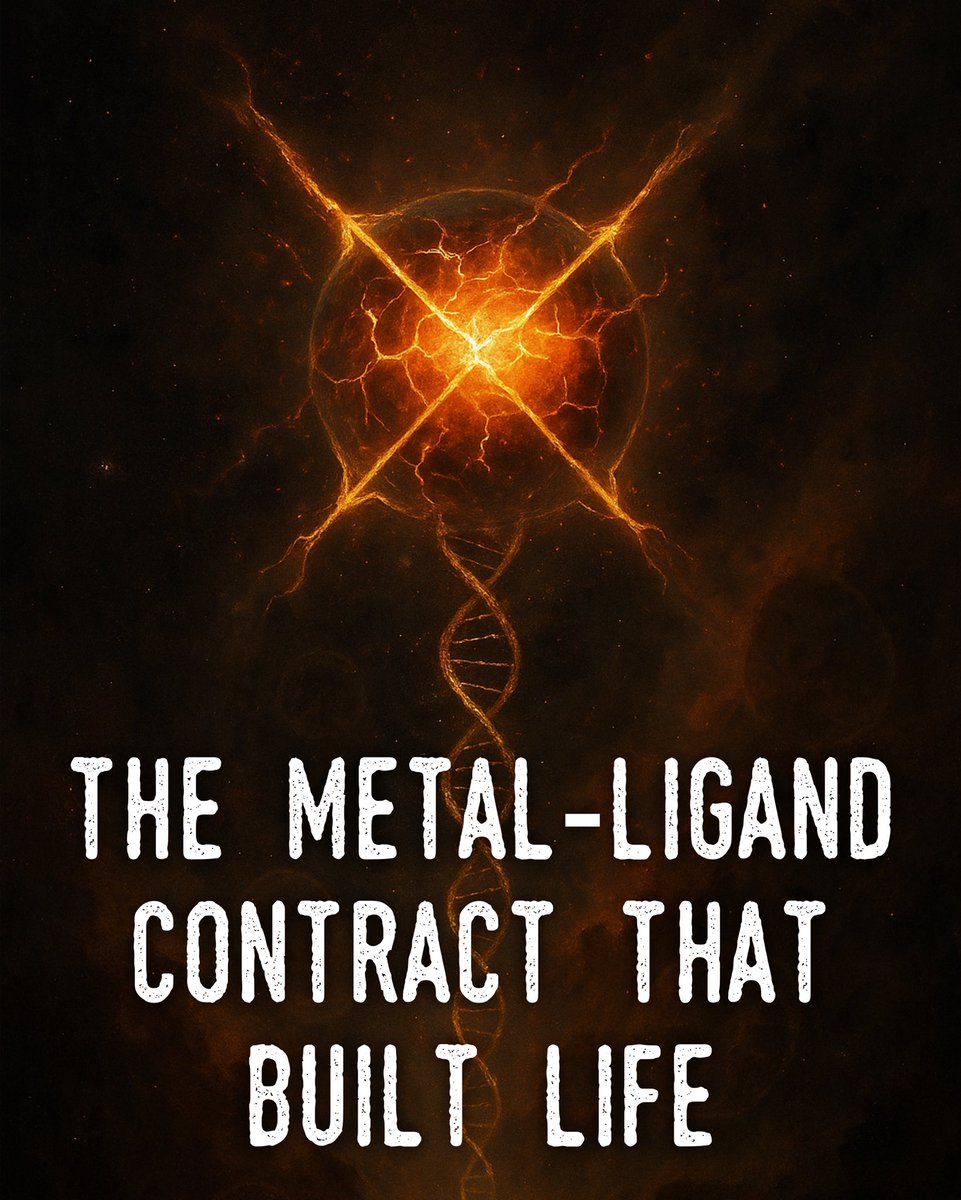
The iron in your blood was forged in a star. Left alone, it would poison you. The copper in your brain would burn you. Metals are chaos, and ligands?
They’re the leash. They bind the stars’ raw fire into geometry, forcing sparks into circuits, turning destruction into design. This is the secret of biology’s Photo-Electron Active Systems (PEAS) molecules that catch light and move charge. Metal-ligand complexes are one of the three groups. Their power lies in MLCT (Metal-to-Ligand Charge Transfer) where a photon knocks an electron off the metal and onto the ligand.
That single jump built metabolism, photosynthesis, and respiration. Iron-sulphur grids became the first switches. Porphyrins caught light, manganese split water and magnesium tamed ATP. Every heartbeat, every thought, and every breath you take still runs on this choreography.
You are not carbon life you are a contract. Stars gave us metals, Earth gave us ligands, together they became you.
substack.com/@yungkingmito/n…
3
14
93
4,410
31 Aug 2025
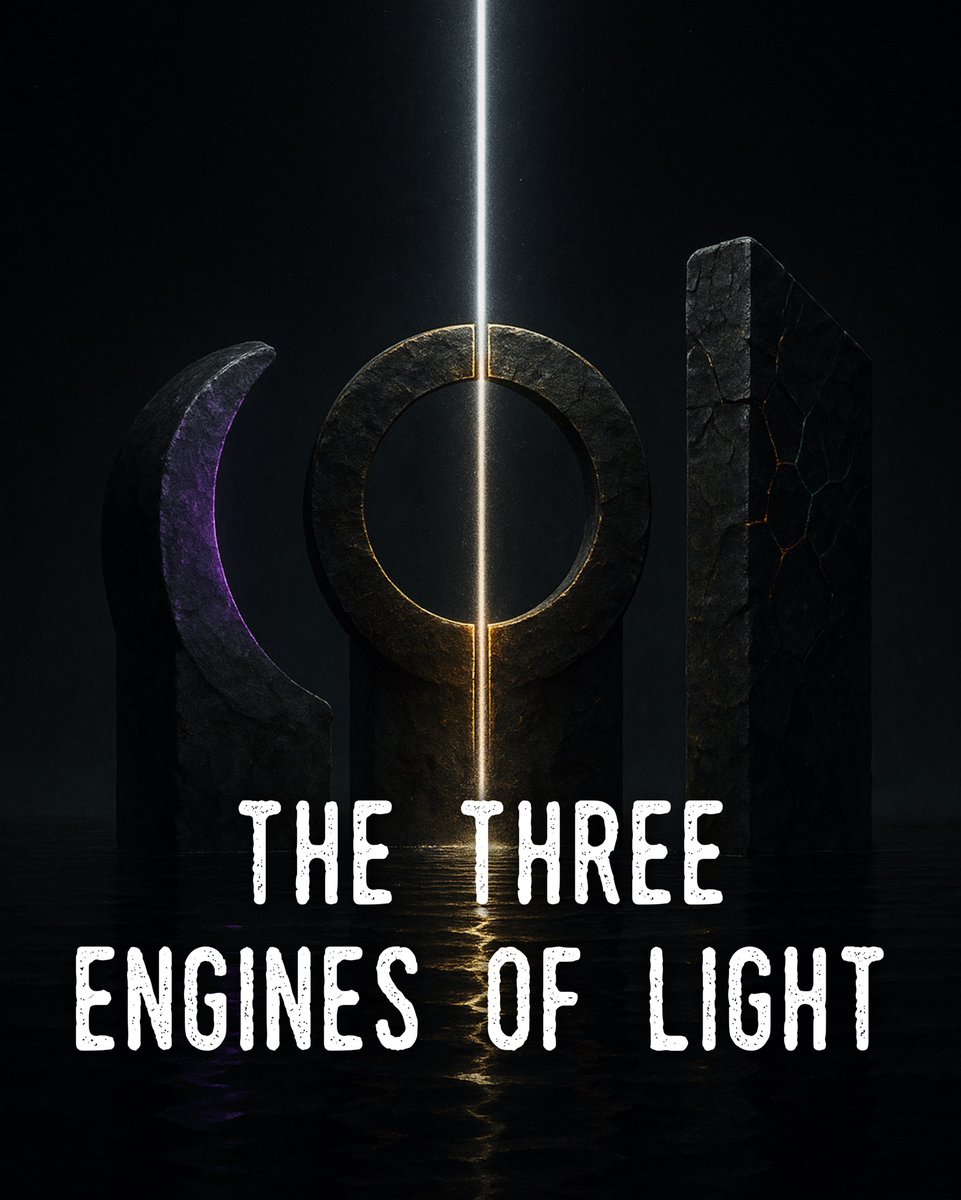
I call it Photo-Electron Active Systems (PEAS), nature’s Three Engines of Light. My term for the law that underlies every photonic circuit in biology. The first semiconductors were written by sunlight into matter four billion years ago. Life built its circuits from only three devices:
- Aromatic rings that act as diodes (π-antennas)
- Metal–ligand hubs that switch charges like transistors (MLCT hubs)
- Black conjugated reservoirs that store energy, and maybe even memory (CRNs)
You run all three right now in your retina, mitochondria, skin, and brain. Plants run them in photosystems. Bacteria and archaea still run them raw, just as they did before DNA folded. There is no fourth class, so no escape. Every photon that keeps you alive passes through them. Biology is electronics in water, softer, stranger, older than silicon. The first computers weren’t made in California.
They were grown in tide pools, and they still run in you.
2
17
60
4,230


23 Aug 2025
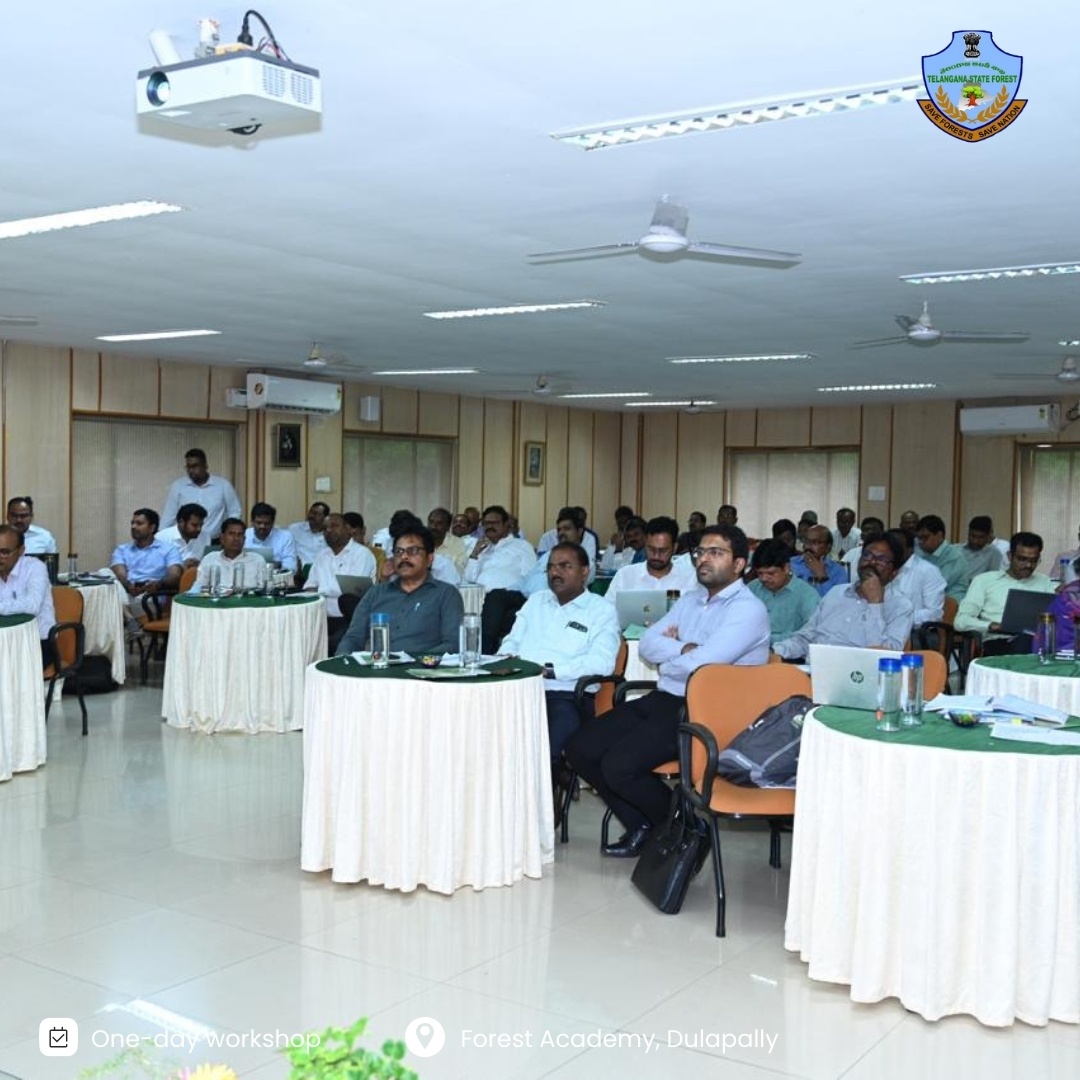
The Forest Academy, Dulapally, held a one-day workshop on Wildlife Issues & WALTA Acts. PCCF (HoFF) released a brochure on Forest Geneticist facilities, and PCCF (WL) released one on MLCT plots. Strengthening conservation through law, research & community action. #WALTA


2
7
1,101
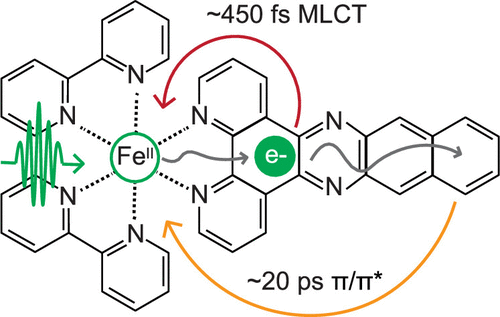
Ambient Synthesis for Fe(II) Polypyridyl Complexes with an Order of Magnitude Increase in Charge-Transfer Excited-State Lifetimes over [Fe(bpy)3]2 | Inorganic Chemistry pubs.acs.org/doi/10.1021/acs… Chen, Hunter, and co-workers @InorgChem #iron #dppn #dppz #MLCT #LF #ESA #TDDFT #NTOs
3
40
1,911
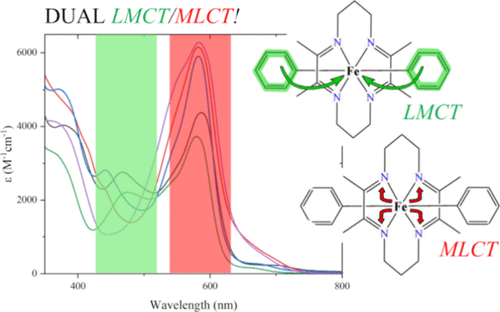
Fe(III)(TIM) Bis-Aryl Complexes: Molecular and Electronic Structures and Metal–Ligand/Ligand–Metal Charge-Transfer Spectra | Inorganic Chemistry pubs.acs.org/doi/10.1021/acs… Ren and co-workers @InorgChem #iron #TIM #bis_aryl #MLCT #LMCT #TD_DFT
3
19
1,092